Tai Qi Gong: Ancient Practice for Modern Balance
Sep 17, 2026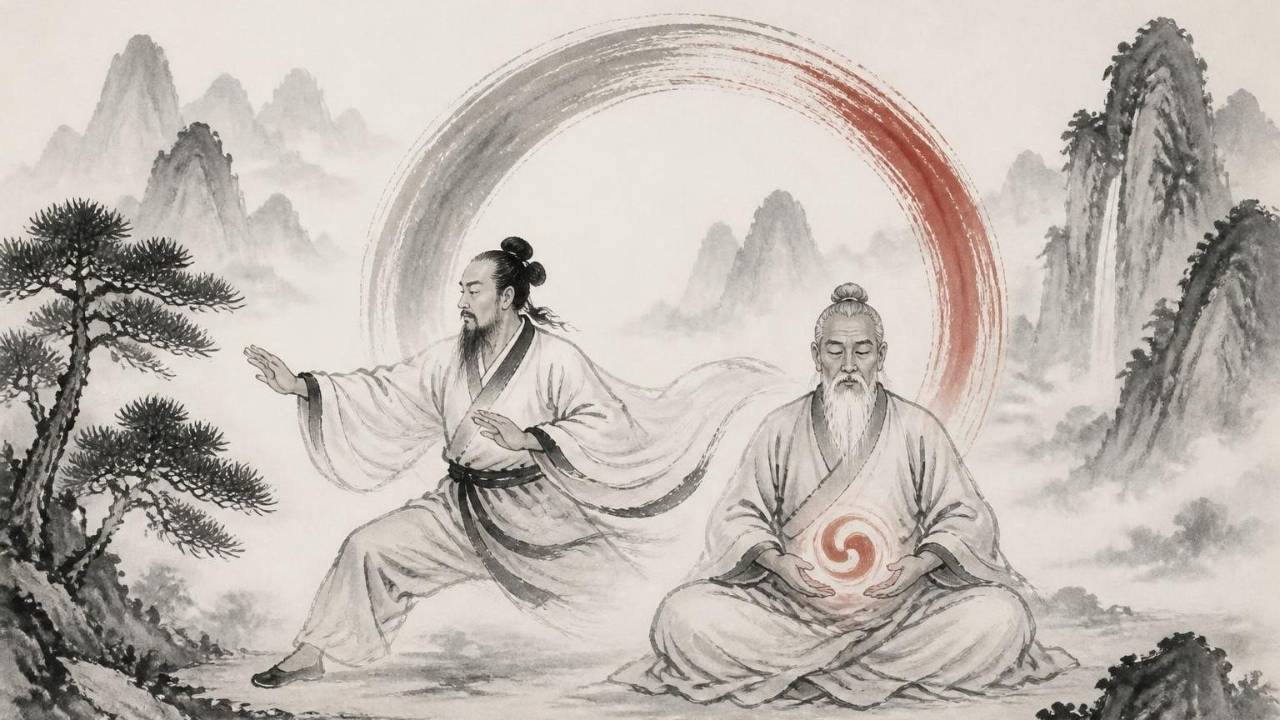
When people first encounter the phrase "tai qi gong," they often wonder if it's a typo or a unique practice altogether. The truth is, tai qi gong represents a beautiful convergence of two deeply interconnected ancient Chinese disciplines: Tai Chi and Qi Gong. Both rooted in Taoist wisdom, these practices work together to cultivate your internal energy, strengthen your body, and settle your mind. In today's fast-paced world, where stress and disconnection have become the norm, tai qi gong offers a pathway back to balance, vitality, and inner calm.
The Foundation of Tai Qi Gong
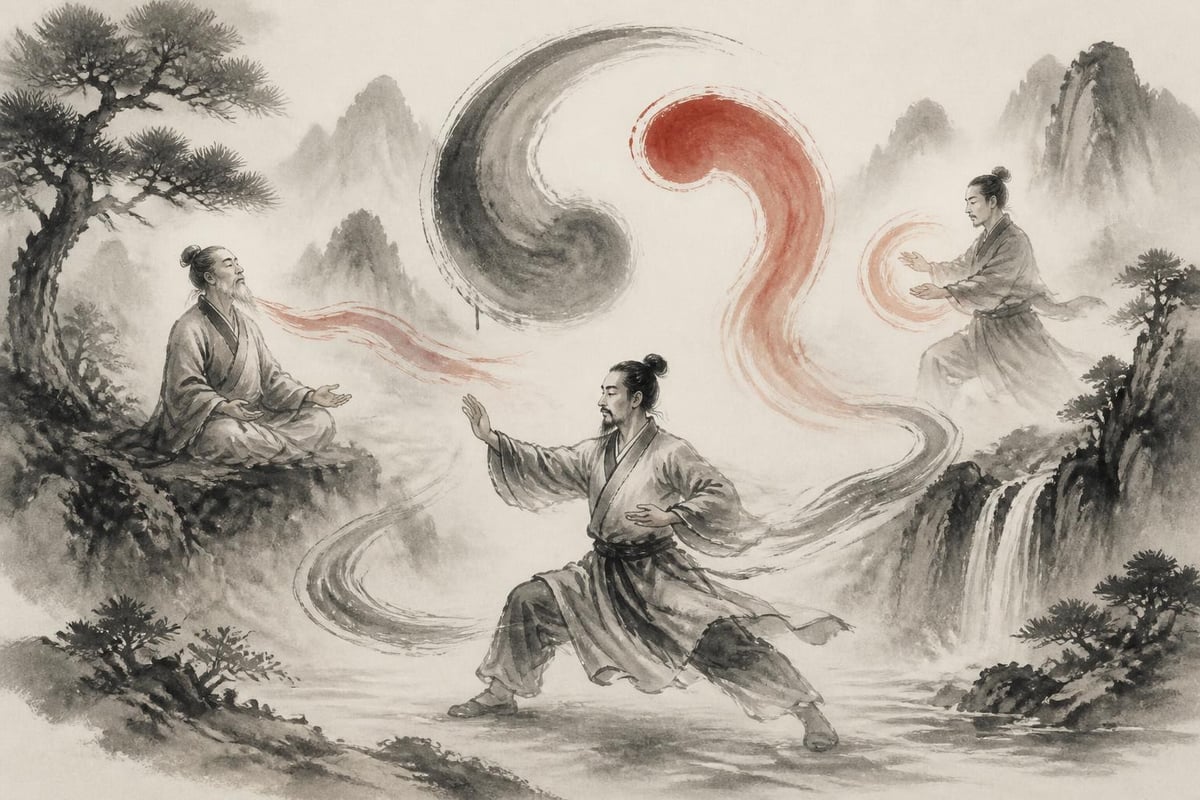
Understanding tai qi gong begins with recognising how Tai Chi and Qi Gong complement each other within the Taoist tradition. Qi Gong focuses primarily on cultivating and circulating qi (life energy) through simple, often stationary movements combined with breath work and meditation. Tai Chi, on the other hand, expresses these same energy principles through flowing, continuous sequences of graceful movements.
When practised together as tai qi gong, these disciplines create a comprehensive system for health and wellness. The Wudang tradition, in particular, preserves authentic teachings that have been refined over centuries.
What Makes Tai Qi Gong Different
The synergy of tai qi gong goes beyond simply practising Tai Chi one day and Qi Gong the next. It's about understanding how these practices inform and enhance each other:
- Qi Gong builds your foundation by teaching you to sense, gather, and direct energy through your body
- Tai Chi expresses that energy through coordinated, flowing movement patterns
- Together, they develop both internal power and external grace
Many students find that starting with basic Qi Gong exercises helps them understand the energy work underlying Tai Chi forms. This integrated approach, particularly as taught in the Wudang tradition by Master Gu, a 15th-generation San Feng Pai Wudang Taoist Master, creates a more complete practice than either discipline alone.
The Physical Benefits of Tai Qi Gong
The gentle, flowing nature of tai qi gong makes it accessible to nearly everyone, regardless of age or fitness level. Yet don't let the soft appearance fool you. These practices build genuine strength, flexibility, and coordination.
Building Strength Without Strain
| Physical Benefit | How Tai Qi Gong Helps | Typical Timeline |
|---|---|---|
| Balance & Stability | Slow, controlled movements strengthen stabilising muscles | 4-8 weeks |
| Joint Flexibility | Circular motions gently increase range of motion | 6-12 weeks |
| Core Strength | Maintaining posture through forms engages deep muscles | 8-16 weeks |
| Coordination | Complex patterns improve motor control and body awareness | 12+ weeks |
Tai qi gong practices offer measurable physical improvements when practised consistently. Regular practice helps maintain bone density, supports cardiovascular health, and improves overall physical function. The slow, deliberate movements allow you to work deeply without the impact or strain of conventional exercise.
Supporting Mobility and Independence
One of the most significant benefits of tai qi gong is its impact on balance and fall prevention, especially important as we age. The practice trains your body to move with awareness, strengthening the neural pathways that help you catch yourself when you stumble.
Key mobility improvements include:
- Enhanced proprioception (knowing where your body is in space)
- Stronger leg muscles and ankles
- Better weight-shifting ability
- Improved reaction time
These benefits accumulate over time, supporting your independence and confidence in daily activities. Whether you're navigating icy pavements in winter or simply moving through your home, tai qi gong helps you feel more stable and secure.
Energy Cultivation Through Tai Qi Gong
At the heart of tai qi gong lies the concept of qi (pronounced "chee"), the vital energy that flows through all living things. Practitioners of tai qi gong often report clear sensations of warmth, tingling, and vitality as their practice deepens.
Understanding Qi in Practice
When you first begin tai qi gong, the idea of "energy work" might seem abstract. You're learning movements, paying attention to your breath, trying to remember sequences. But somewhere along the way, something shifts. You might feel warmth in your hands during a Qi Gong standing meditation. You might notice a sense of fullness in your lower abdomen. These are signs that you're beginning to sense and work with qi.
The Wudang approach to tai qi gong emphasises natural, gradual development. There's no forcing or straining. Instead, you learn to:
- Relax deeply to allow energy to flow freely
- Breathe naturally to nourish and move qi
- Focus your intention to guide energy through specific pathways
- Move with awareness to express energy outwardly
The Dantian: Your Energy Centre
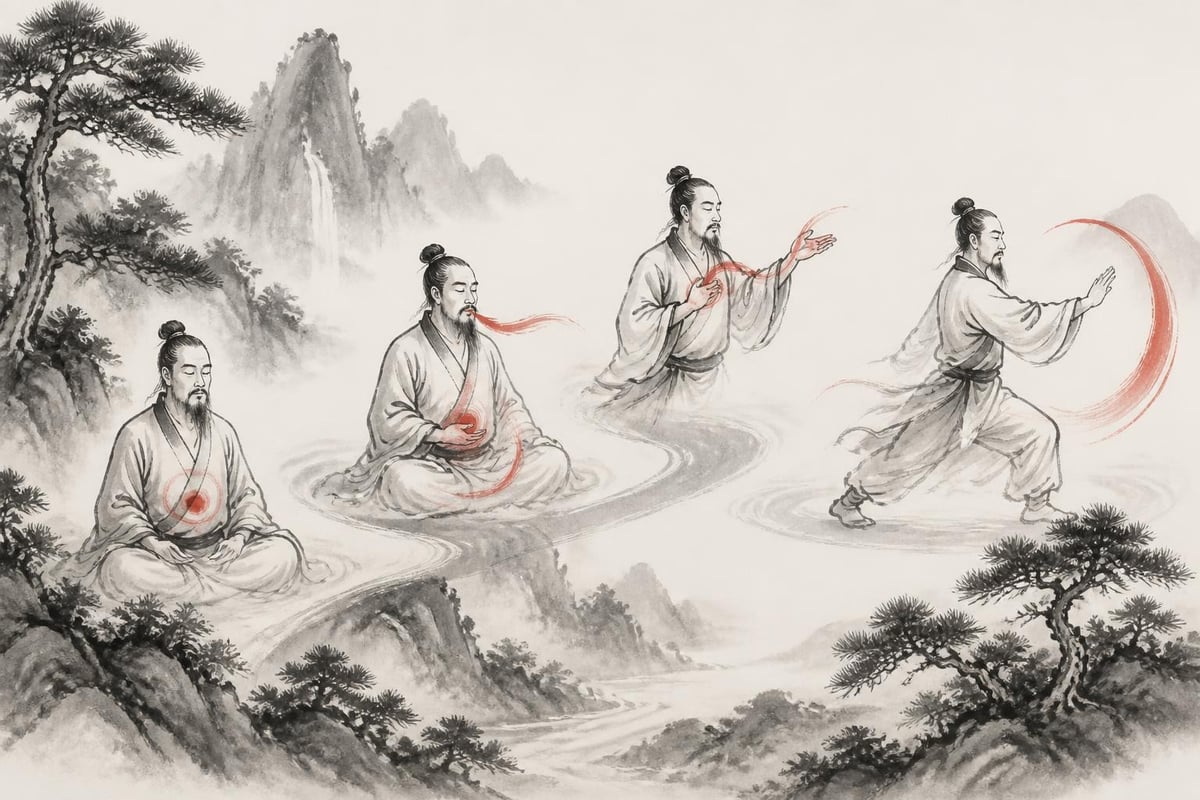
Central to tai qi gong practice is the concept of the dantian (energy centre), located in your lower abdomen, about three finger-widths below your navel. This area serves as the reservoir and furnace for your qi. Most Qi Gong exercises and Tai Chi forms emphasise:
- Breathing into the lower dantian
- Initiating movement from this centre
- Returning awareness to this point between exercises
- Building and storing energy in this area
As you develop sensitivity to your dantian through tai qi gong, you often experience better grounding, stronger digestion, and a more stable emotional state. Many students describe feeling more "centred" in their daily lives.
Mental and Emotional Wellness
While the physical benefits of tai qi gong are well-documented, the mental and emotional benefits can be even more profound. As anxiety and stress continue to challenge so many people, these practices offer genuine relief.
Calming the Busy Mind
Tai qi gong serves as a moving meditation. Unlike sitting meditation, where a restless mind might feel more pronounced, the gentle movement and breath coordination in tai qi gong give your mind something constructive to focus on. This creates what practitioners call "active stillness," a state where your body moves but your mind settles.
Mental benefits you might notice:
- Reduced anxiety and worry
- Better sleep quality
- Improved focus and concentration
- Greater emotional resilience
- Enhanced creativity and problem-solving
The slow, repetitive nature of tai qi gong movements activates your parasympathetic nervous system, the "rest and digest" response that counters chronic stress. Over time, regular practice can help shift how your body responds to stressful situations.
Building Emotional Balance
Taoist philosophy, which underlies tai qi gong, teaches that emotions are natural energy flows. Rather than suppressing or being overwhelmed by feelings, you learn to acknowledge them, understand their message, and allow them to flow through without getting stuck.
The practice of tai qi gong supports this emotional intelligence by:
- Creating space between stimulus and response
- Teaching you to observe sensations without judgement
- Developing patience through gradual progress
- Connecting you with something larger than immediate concerns
Many students find that our Qi Gong course becomes a reliable tool for emotional regulation, helping them navigate life's challenges with greater equanimity.
Starting Your Tai Qi Gong Journey
Beginning tai qi gong doesn't require special equipment, unusual flexibility, or previous experience. What matters most is your willingness to show up consistently and practise with patience. Our Qi Gong Training Guide is a good companion piece if you'd like a more detailed roadmap for building your practice.
What to Expect in the Beginning
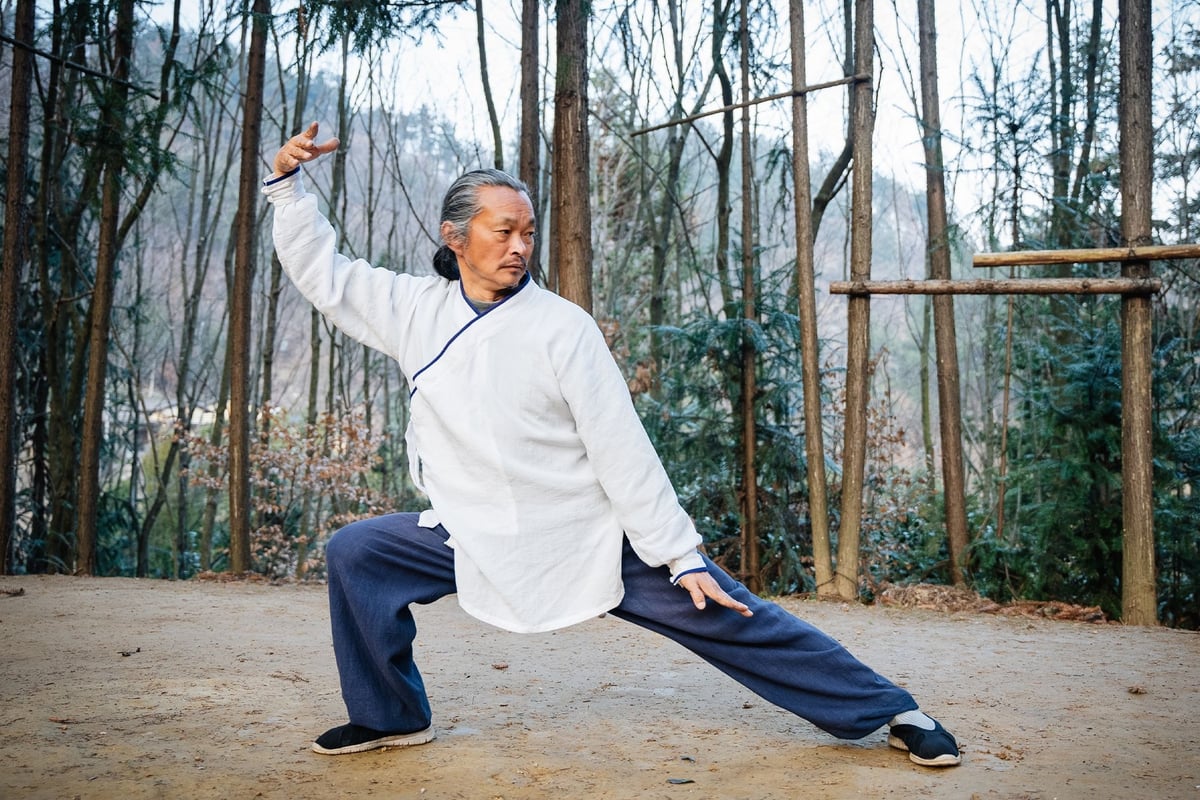
Your first weeks of tai qi gong will focus on foundational principles. You'll learn basic stances, how to align your posture, and simple movements that introduce the feeling of moving with awareness. This might include:
- Standing meditation to develop stillness and root
- Basic Qi Gong exercises like "Lifting the Sky" or "Supporting the Heavens"
- Simple weight-shifting drills
- Breath coordination practices
- Introduction to basic Tai Chi movements
Don't expect to "get it" right away. Tai qi gong is a practice of refinement that deepens over time. What feels awkward in week one becomes natural in week six. What seems impossible in month two becomes effortless in month six.
If you're ready to begin with structured guidance, our free Taoist course offers a supportive introduction to these practices, helping you build a foundation with clear instruction and community support.
Creating a Sustainable Practice
The key to experiencing the benefits of tai qi gong is consistency, not intensity. It's far better to practise 10-15 minutes daily than to do an hour once a week.
| Practice Element | Beginner Approach | Intermediate Approach | Advanced Approach |
|---|---|---|---|
| Session Length | 10-15 minutes | 20-30 minutes | 30-60+ minutes |
| Frequency | 5-6 days/week | Daily | Daily, possibly twice |
| Focus | Learning basics | Refining form | Internal work |
| Variety | 2-3 exercises | Full routine | Multiple forms |
Tips for building your practice:
- Choose the same time each day to establish a habit
- Start with just one or two exercises and master them
- Practise in comfortable clothing that allows free movement
- Find a quiet space where you won't be interrupted
- Be patient with yourself on difficult days
The Wudang Lineage and Authentic Teaching
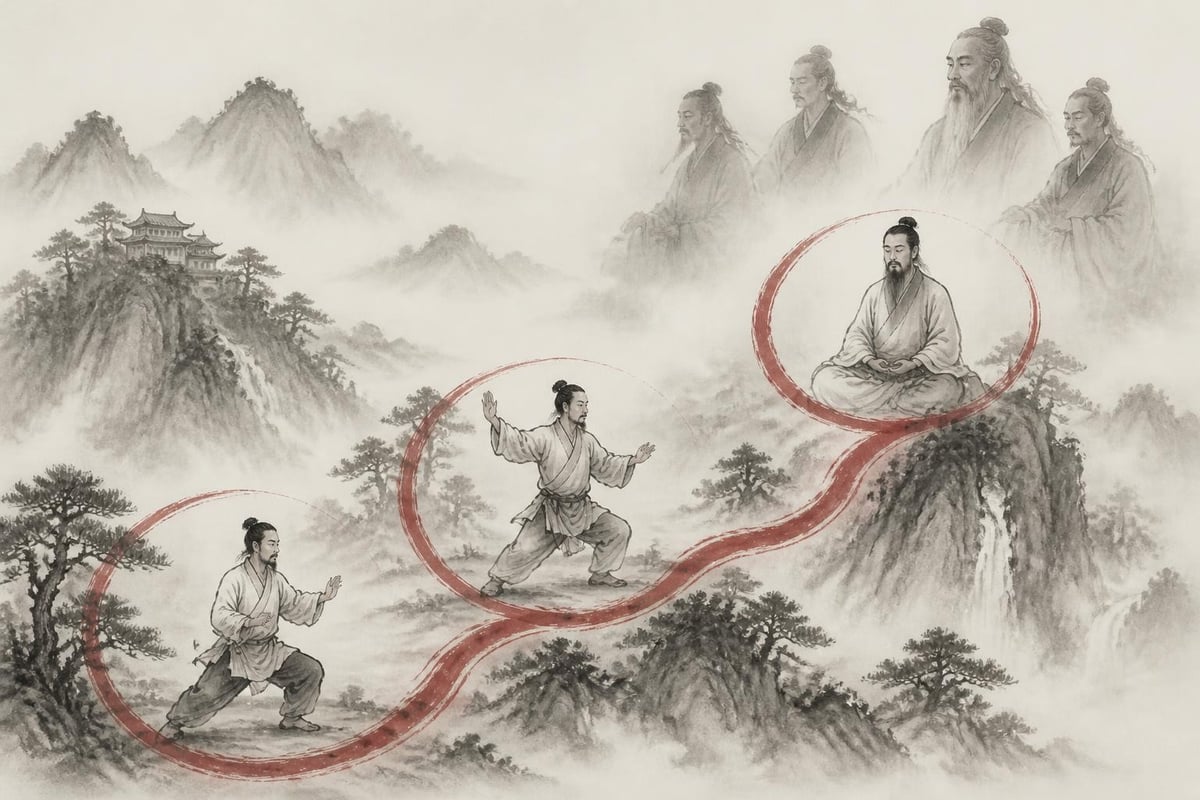
Not all tai qi gong instruction is created equal. The Wudang tradition, originating from the legendary Wudang Mountains in China, represents an authentic lineage that has preserved these teachings for generations. When you learn from a master trained in this tradition, you're connecting with centuries of refined knowledge.
What Authentic Wudang Teaching Offers
The Wudang approach to tai qi gong emphasises internal development over external performance. Rather than focusing solely on perfect form, authentic instruction guides you to understand the principles behind each movement:
- How energy flows through specific pathways
- Why certain postures create particular effects
- How breath and movement coordinate
- What intention and visualisation contribute
- How practices build upon each other progressively
This depth of understanding transforms tai qi gong from a set of exercises into a comprehensive system for cultivation and growth.
Learning in the Modern Era
You don't need to travel to remote mountains to access authentic Wudang teachings. Online learning platforms make it possible to study with genuine masters while maintaining your daily routine. The key is finding instruction that offers:
- Clear demonstrations from multiple angles
- Detailed explanations of principles, not just movements
- Progressive curriculum that builds systematically
- Community support and shared learning
- Opportunities for feedback and correction
Our Tai Chi course and broader curriculum provide this comprehensive approach, allowing students worldwide to access authentic teachings.
Integrating Tai Qi Gong Into Daily Life
The true test of any practice is whether it improves your daily life. Tai qi gong offers not just the benefits you experience during practice, but tools and awareness you can apply throughout your day.
Beyond Formal Practice
As tai qi gong becomes part of you, its principles naturally extend into other activities:
- Breathing techniques help you manage stress during difficult conversations
- Grounding practices support you when facing uncertainty
- Movement principles improve your posture and reduce tension at your desk
- Energy awareness helps you recognise when you're depleted and need rest
- Mindful presence enriches simple activities like walking or cooking
Many practitioners find that concepts from our Daoist Philosophy course naturally emerge through tai qi gong practice, offering wisdom for navigating work, relationships, and personal growth.
Tai Qi Gong and Modern Wellness
Tai qi gong complements rather than conflicts with modern approaches to health. Many people successfully integrate these practices alongside other movement and wellbeing routines. As with any new movement practice, it's worth checking with your healthcare provider before beginning, particularly if you have cardiovascular concerns, have had recent surgery, or have conditions affecting balance.
The gentle, non-competitive nature of tai qi gong makes it an ideal foundation or supplement to other wellness activities. It builds body awareness that enhances athletic performance, provides active recovery between more intense workouts, and offers tools for managing the mental side of health.
Common Questions About Tai Qi Gong
Is Tai Qi Gong Safe for Everyone?
Tai qi gong is generally safe for most people, including older adults and those with chronic conditions. The slow, controlled movements minimise injury risk, and you can easily modify practices to match your current abilities. As above, it's wise to consult with your healthcare provider before beginning if you have specific health concerns.
How Long Before You Notice Benefits?
Many people report feeling calmer and more relaxed after their very first tai qi gong session. Physical benefits like improved balance and flexibility typically become noticeable within 4-8 weeks of regular practice. Deeper benefits related to energy cultivation and mental clarity often emerge over several months. Our Chi Gong Practice guide covers this progression in more detail if you're curious about what to expect.
The timeline varies based on:
- How often you practise
- The quality of your instruction
- Your body's starting condition
- Your sensitivity to subtle energy
- Your consistency over time
Can You Learn Tai Qi Gong Online?
Yes, absolutely. While in-person instruction offers certain advantages, quality online programmes can provide excellent learning experiences. The key is finding instruction that includes clear visual demonstrations, detailed explanations, and opportunities for community interaction.
Many students appreciate the flexibility of online learning, which allows them to practise at convenient times, review lessons as needed, and progress at their own pace. Our online community can also provide motivation and shared wisdom.
Deepening Your Practice Over Time
One of the beautiful aspects of tai qi gong is that it offers endless depth. Even after years of practice, you continue to discover new layers of understanding and refinement.
The Journey of Mastery
Tai qi gong practice typically unfolds in stages:
Beginner Stage (Months 1-6)
- Learning basic movements and sequences
- Developing body awareness and coordination
- Understanding fundamental principles
- Building a consistent practice habit
Intermediate Stage (Months 6-24)
- Refining form and technique
- Beginning to sense and work with qi
- Exploring more complex sequences
- Integrating principles into daily life
Advanced Stage (Years 2+)
- Focusing on internal energy development
- Teaching and sharing with others
- Exploring subtle aspects of practice
- Deepening philosophical understanding
Each stage brings its own rewards and challenges. The key is accepting where you are while remaining open to growth.
Finding Your Path
While traditional forms and sequences provide structure, tai qi gong ultimately becomes deeply personal. You'll discover which practices resonate most strongly with you, which times of day work best for your practice, and how to adapt teachings to your unique needs and circumstances.
Some practitioners gravitate toward the meditative aspects, others toward the physical, still others toward the energy work. Our comprehensive curriculum allows you to explore all these dimensions and find your own balance.
Living the Principles
Beyond the physical practice, tai qi gong embodies Taoist principles about living in harmony with natural rhythms and universal patterns. These principles offer guidance for navigating modern life with greater ease and wisdom.
Key Principles in Practice
Wu Wei (Effortless Action)
Rather than forcing outcomes, you learn to work with circumstances, finding the path of least resistance while remaining effective.
Balance of Yin and Yang
Recognising that activity needs rest, effort needs ease, and strength requires flexibility helps you avoid extremes.
Connection with Nature
Aligning your practice and life with natural cycles, seasons, and rhythms supports your wellbeing.
Cultivation over Time
Understanding that real growth comes through patient, consistent effort rather than dramatic breakthroughs.
These principles, explored through our Taoist meditation course, provide a framework for approaching not just practice but all of life with greater wisdom and skill.
Tai qi gong offers a time-tested path to better health, clearer thinking, and deeper peace in our complex modern world. By integrating the flowing movements of Tai Chi with the energy cultivation of Qi Gong, you gain practical tools for managing stress, building vitality, and living with greater balance. If you're ready to explore these transformative practices with authentic guidance, Taoist Wellness Online provides comprehensive instruction from Master Gu, a 15th-generation Wudang master, along with a supportive global community of fellow practitioners on the same journey toward wellness and wisdom.