Tai Chi Instructions: A Practical Guide to Begin
Sep 14, 2026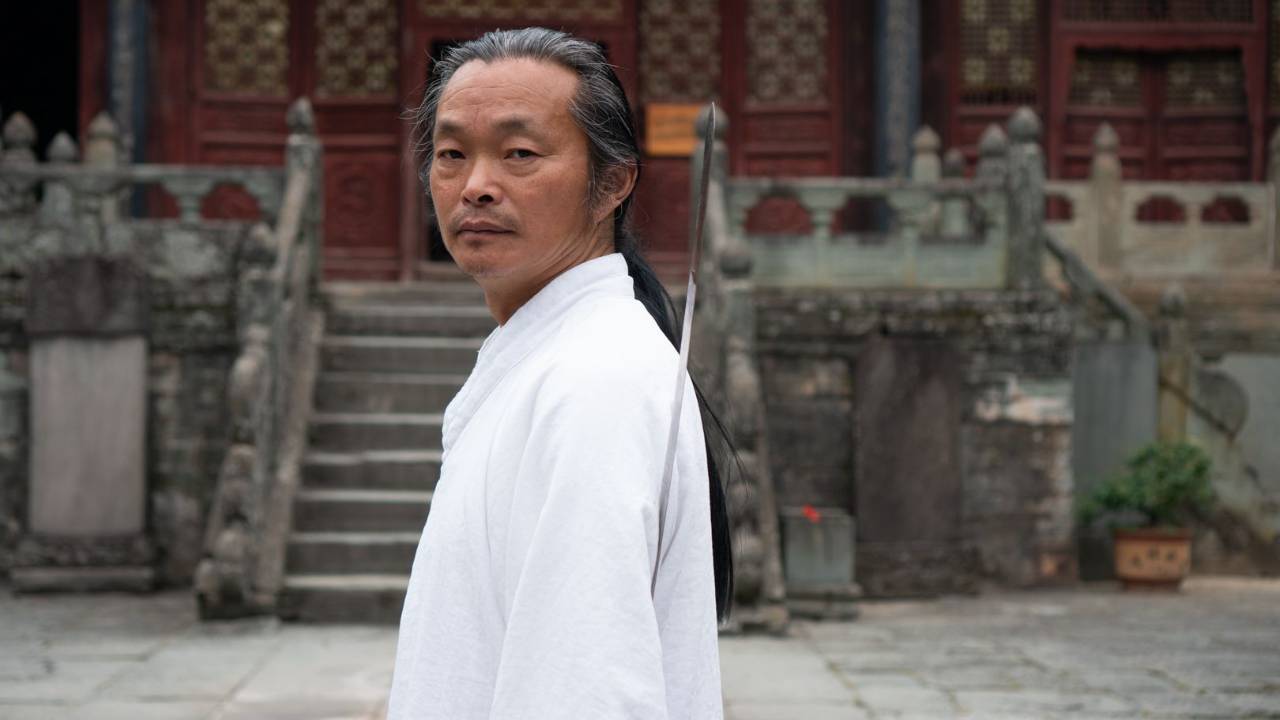
Starting a tai chi practice can feel like stepping into a conversation that's been going on for centuries. You might wonder where to place your feet, how to move your hands, or what to focus on first. Good tai chi instructions give you a clear path forward while honouring the depth of this ancient practice. Whether you're learning online or in person, understanding the fundamentals helps you build confidence and creates a foundation for lifelong growth. This guide offers practical direction for anyone ready to begin their journey.
Understanding the Foundation of Tai Chi Instructions
Tai chi instructions start with stillness before movement. You're not just learning choreography; you're discovering how your body naturally wants to move when tension releases and awareness deepens.
The Wudang tradition emphasises internal cultivation alongside external form. This means every instruction serves two purposes: shaping your physical practice and guiding your inner experience. When a teacher tells you to "sink your weight," they're inviting you to feel gravity, release unnecessary effort, and connect with the ground beneath you.
The Three Essential Elements
Quality tai chi instructions always address these core components:
- Posture and alignment that supports natural breathing and energy flow
- Breath coordination that connects movement with life force (qi)
- Mindful awareness that keeps you present throughout each form
These elements work together. Your posture affects your breathing, your breathing influences your mind, and your mental state shapes how you hold yourself. Tai chi's holistic approach to body and mind has been studied for its measurable benefits to overall wellbeing.
Setting Up Your Practice Space and Mindset
Before diving into specific movements, create conditions that support learning. You don't need much - just enough room to extend your arms and step comfortably in any direction.
Choose a quiet space where you won't be interrupted. Early morning offers fresh energy and fewer distractions, though any time you can practise consistently works well. Some students prefer outdoor settings where they can feel natural elements; others find focus easier indoors.
Mental Preparation Matters
Tai chi instructions work best when you approach them with patience and curiosity rather than judgement. You're not performing; you're exploring.
Take a few moments before each session to settle your mind. Stand quietly, notice your breathing, and set aside the day's concerns. This transition time helps you shift from doing mode into being mode. If you're looking for a simple way to begin building this kind of practice, our free Taoist course introduces Tai Chi, Qi Gong, Meditation, and Taoist Wisdom in an accessible, self-paced way.
Core Posture Principles in Tai Chi Instructions
Your standing posture forms the root of everything that follows. Proper alignment lets energy flow freely while protecting your joints from strain.
The Basic Stance
Stand with feet shoulder-width apart, toes pointing forward. Feel your weight distributed evenly across both feet, neither too far forward on your toes nor back on your heels.
Let your knees soften slightly - never locked, never deeply bent in neutral stance. Imagine a thread gently lifting the crown of your head toward the sky while your tailbone drops toward the earth. Your spine lengthens naturally between these two points.
| Posture Element | What to Do | Why It Matters |
|---|---|---|
| Feet | Shoulder-width, parallel | Creates stable foundation |
| Knees | Softly bent | Protects joints, allows movement |
| Pelvis | Slightly tucked | Aligns spine, opens lower back |
| Chest | Relaxed, not puffed | Allows natural breathing |
| Shoulders | Dropped, away from ears | Releases upper body tension |
| Head | Crown lifting gently | Lengthens spine, improves balance |
Many beginners unconsciously tense their shoulders or hold their breath. Good tai chi instructions remind you repeatedly to release and relax, because these habits run deep. Our 13 Principles of Tai Chi goes further into the internal principles that shape posture like this throughout a practice.
Breathing Coordination in Movement
Tai chi instructions emphasise natural breathing that supports rather than forces movement. You're not controlling your breath so much as allowing it to flow in harmony with your body.
Natural Breath Patterns
Generally, opening movements pair with inhalation and closing movements with exhalation. When your arms rise or expand outward, you breathe in. When they lower or draw inward, you breathe out.
This pattern mirrors natural reflexes. Watch a baby stretch and yawn - the expansion naturally draws breath in. The same principle applies to tai chi forms, though you'll eventually move beyond rigid rules into intuitive flow.
- Start with normal breathing; don't force depth or pace
- Let movement lead and breath follow naturally
- Notice the pause between breaths, where stillness lives
- Trust your body's wisdom about when and how to breathe
Learning to breathe this way is one of the simplest entry points into the practice, which is part of why our Tai Chi Easy approach focuses on making these fundamentals feel natural rather than technical.
Weight Shifting and Root Development
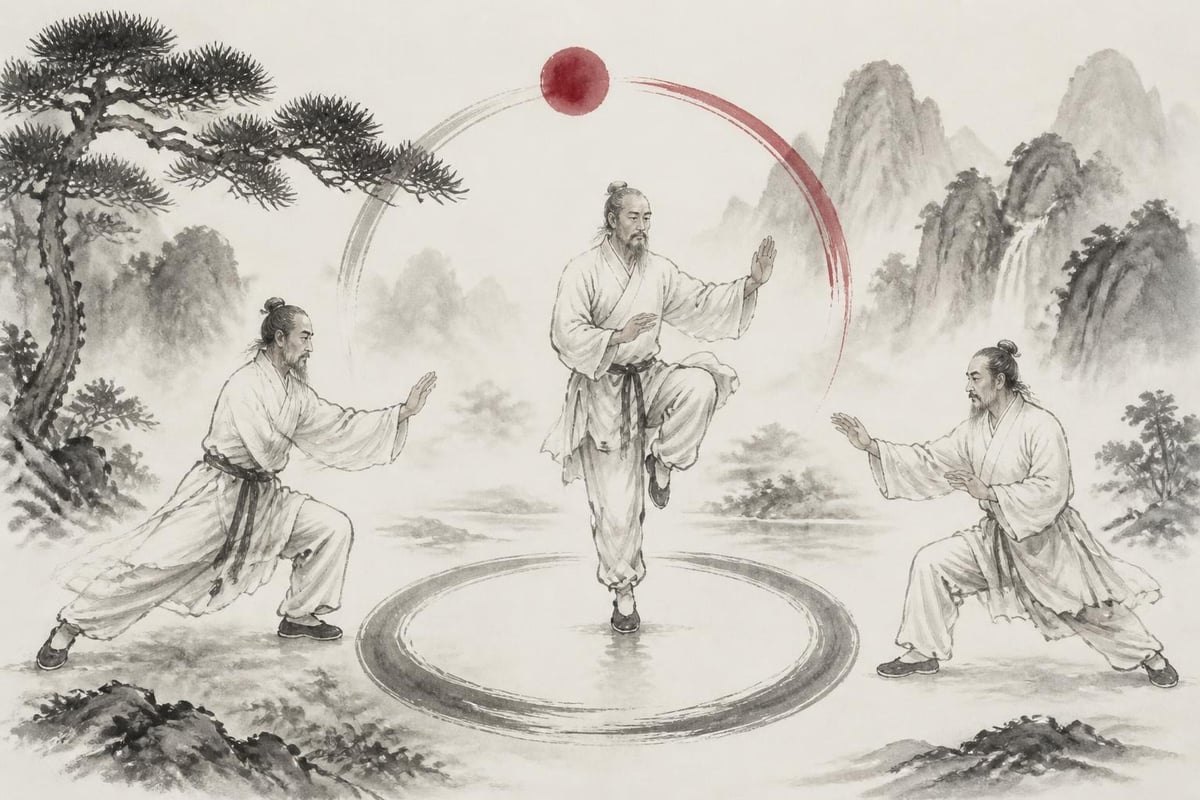
One of the most important aspects of tai chi instructions involves learning to shift your weight completely from one foot to the other. This skill underpins every movement and develops your "root."
The 100% Principle
In most movements, your weight should be entirely (or nearly entirely) on one leg or the other. This creates clear distinction between your "substantial" leg (bearing weight) and your "insubstantial" leg (free to move).
Practise this fundamentally:
- Stand with weight evenly distributed on both feet
- Slowly shift weight completely onto your right foot
- Feel your left foot become light, able to lift easily
- Shift weight completely onto your left foot
- Notice how your right foot becomes free
- Move slowly between sides, feeling the transition
The middle point, where weight distributes 50/50, passes quickly. You're always moving toward fullness on one side or the other.
Developing Your Root
Your root isn't just physical balance. It's energetic connection with the earth that creates stability in both body and mind. Strong roots let branches move freely without toppling the tree.
As you practise weight shifting, imagine energy sinking down through your substantial leg into the ground. This "sinking" appears in tai chi instructions constantly because it counterbalances our tendency to rise up and tighten when we concentrate.
Hand and Arm Movements in Tai Chi Forms
The graceful arm movements that characterise tai chi follow specific principles, though they may look effortless. Understanding these principles helps you interpret tai chi instructions accurately.
Relaxed Extension
Your arms should never lock at the elbows. Maintain a gentle curve, as if you're holding a large balloon between your hands and chest. This rounded quality keeps energy flowing and protects your joints.
When extending your arms forward or to the side, lead with your centre rather than reaching from your shoulder. The movement originates in your core and flows outward through your arm like water through a hose. Our Tai Chi course builds these movement principles step by step, so you're never guessing at what a cue like this should feel like.
Hand Positions and Energy
Different forms use different hand positions - some open palmed, some forming gentle fists, some with fingers pointing specific directions. Each position serves both practical martial applications and energetic purposes.
The most common hand position keeps fingers gently extended but not rigid, thumb naturally curved, and palm slightly hollowed. Imagine holding a small bird - firm enough that it won't escape, gentle enough that you won't harm it.
Learning Your First Movements
When you begin studying tai chi instructions for actual forms, start with simple sequences that teach fundamental principles. The Wudang tradition often begins with basic exercises that build awareness before complex choreography.
Commencing Form
This opening movement appears in many styles and teaches essential coordination:
- Stand in neutral posture, arms relaxed at sides
- Inhale as you slowly raise both arms forward to shoulder height
- Exhale as you gently press palms downward, returning to start
- Coordinate breath, movement, and awareness
This simple sequence contains profound lessons. Are you lifting from your shoulders or from your centre? Does your breath flow naturally or do you force it? Can you move slowly without tension?
Single Whip Exploration
Single Whip is a signature posture that develops turning, weight shifting, and arm coordination simultaneously.
The movement involves rotating your torso, shifting weight completely from one leg to the other, and coordinating opposing arm positions - one forming a "hook" hand, the other extending palm outward.
Tai chi instructions for Single Whip can fill entire sessions because this one posture contains so many learning opportunities. Don't rush to "get it right." Explore each component separately before combining them.
Common Mistakes and How to Correct Them
Even with clear tai chi instructions, certain patterns trip up most beginners. Recognising these helps you progress more smoothly.
| Common Mistake | Why It Happens | How to Correct |
|---|---|---|
| Holding breath | Concentration tension | Set reminder to breathe every few movements |
| Raised shoulders | Upper body tension | Check shoulder position frequently; practise shoulder rolls |
| Locked knees | Trying too hard for "correct" stance | Gentle bounce to remind knees to soften |
| Looking down | Lack of confidence | Fix gaze on horizon; trust your body awareness |
| Rushing movements | Impatience or discomfort with slowness | Count breath cycles for each movement |
The urge to rush through forms is particularly strong in our fast-paced culture. Quality tai chi instructions emphasise that slower practice develops deeper skill. If a movement takes three seconds, try five. Then try seven. Master Gu covers several more of these common early corrections in the video below, worth a watch if you recognise any of these patterns in your own practice.
Building a Sustainable Practice Routine
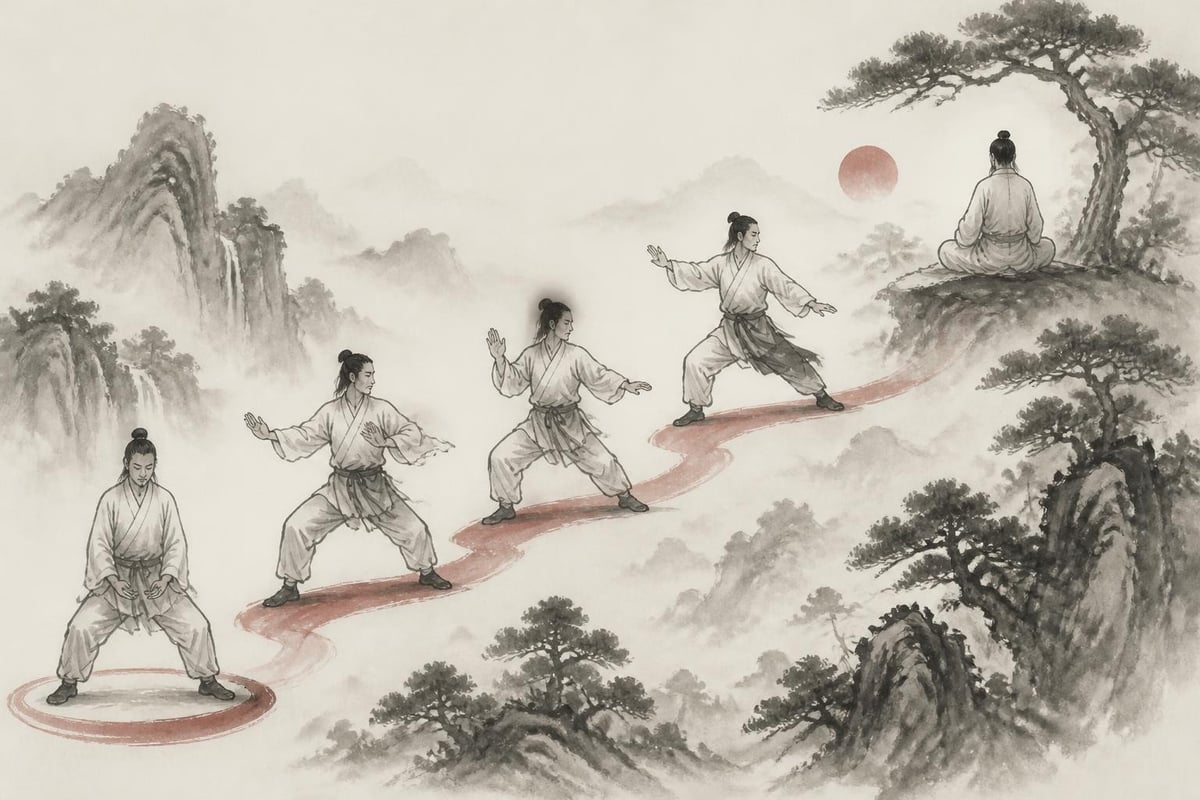
Learning tai chi isn't about perfecting forms in a weekend. It's about establishing a practice that grows with you over months and years.
Frequency and Duration
Twenty minutes of daily practice serves you better than two hours once a week. Consistency builds body memory and allows principles to integrate naturally into your movement patterns.
Start with whatever time you can commit to consistently. Ten minutes each morning counts. As practice becomes part of your rhythm, you'll naturally want to extend your sessions.
Progressive Learning
Follow tai chi instructions in logical sequence:
- Weeks 1-2: Focus entirely on standing posture and weight shifting
- Weeks 3-4: Add basic arm movements while maintaining posture awareness
- Weeks 5-8: Learn simple forms, practising sections separately
- Months 3-6: Combine sections into flowing sequences
- Ongoing: Deepen understanding of principles within familiar forms
This progression respects how humans actually learn complex physical skills. Each stage builds genuine competence before adding new challenges.
Working with Tai Chi Instructions from Different Sources
You might learn from videos, books, online courses, or in-person classes. Each source has strengths and limitations.
Video and Online Learning
Video tai chi instructions let you pause, replay, and practise at your own pace. You can study details carefully and match your own rhythm. However, you miss personalised feedback on your specific patterns.
When learning from video, watch each section multiple times before attempting it. First viewing, just observe. Second viewing, notice details of posture and breath. Third viewing, begin moving along slowly.
The comprehensive curriculum at Taoist Wellness Online provides structured video instruction combined with community support, helping bridge the gap between self-paced learning and personalised guidance.
The Value of Authentic Teaching
Tai chi has been passed down through lineages for centuries. Learning from teachers who studied with masters preserves the integrity of these practices. Master Gu's background in the Wudang tradition, as a 15th-generation San Feng Pai Wudang Taoist Master with over 25 years of teaching experience, ensures that tai chi instructions maintain their authentic depth and purpose.
Authentic teaching addresses not just what to do, but why - connecting physical forms to energetic principles and philosophical foundations. This context transforms tai chi from exercise into a complete wellness practice. Our Daoist Philosophy course is a natural next step if you'd like to explore these foundations further.
Adapting Tai Chi Instructions to Your Body
Not every body moves the same way. Good tai chi instructions provide principles that you adapt to your unique structure and limitations.
As with any new movement practice, it's worth checking with your healthcare provider before starting, particularly if you have existing joint, balance, or health concerns.
Working with Physical Limitations
If you have knee issues, keep your stances higher. If balance challenges you, practise near a wall. If flexibility limits range of motion, work within your current capacity while gently expanding edges over time.
The goal isn't to look like someone else doing tai chi. It's to embody the principles in your own body, right now, exactly as you are.
Modifications and Variations
- Joint sensitivity: Reduce depth of stances and range of motion
- Balance concerns: Widen your stance for greater stability
- Fatigue: Practise sitting versions of movements
- Time constraints: Choose shorter forms or practise sections separately
Tai chi instructions should empower rather than discourage you. If something doesn't work for your body today, find the version that does.
Deepening Your Understanding Over Time
As your practice matures, the same tai chi instructions reveal new layers. A cue that meant one thing in your first month carries different significance a year later.
Returning to Basics
Advanced students regularly return to foundational exercises. They're not reviewing - they're discovering what they couldn't perceive earlier. Your body understands more as your sensitivity develops.
That simple weight shift you practised initially? Years later, you feel subtle energetic currents flowing through the transition. The instruction hasn't changed, but your capacity to receive it has.
Integration with Daily Life
Eventually, tai chi principles extend beyond practice sessions. You notice when you're holding tension unnecessarily. You catch yourself breathing shallowly during stress. You apply the same patient awareness to challenges that you bring to learning new forms.
This integration is the ultimate purpose of tai chi instructions - not to create a separate "practice life," but to transform how you inhabit your body and move through your world every day.
Resources for Continued Learning
Your tai chi journey extends far beyond initial instructions. Surround yourself with resources that support ongoing growth.
Building Community
Learning alongside others creates motivation and shared insight. You notice things in fellow students' practice that inform your own. You hear questions you hadn't thought to ask.
The supportive community at Taoist Wellness Online connects practitioners worldwide, offering a space to share experiences and learn from each other's journeys.
Complementary Practices
Tai chi instructions often become more accessible when combined with related practices:
- Qi Gong develops energy awareness that enhances form work
- Taoist meditation cultivates the mental clarity tai chi requires
- Walking practice applies tai chi principles to everyday movement
- Philosophical study deepens understanding of underlying concepts
Each practice enriches the others, creating a comprehensive approach to wellness and self-cultivation. Our Qi Gong course is a natural companion if you'd like to build on what you learn here.
Clear tai chi instructions give you direction while honouring the personal nature of this journey. With proper foundation in posture, breathing, and mindful movement, you're equipped to begin a practice that can serve you for decades. Whether you're drawn to tai chi for physical health, mental clarity, stress relief, or spiritual growth, the path starts with simple, patient attention to basic principles. Taoist Wellness Online offers authentic Wudang instruction with Master Gu, providing the guidance, community, and resources you need to develop a transformative practice that brings balance and vitality to your daily life.