Tai Chi for Strength: Build Power Through Gentle Motion
Sep 19, 2026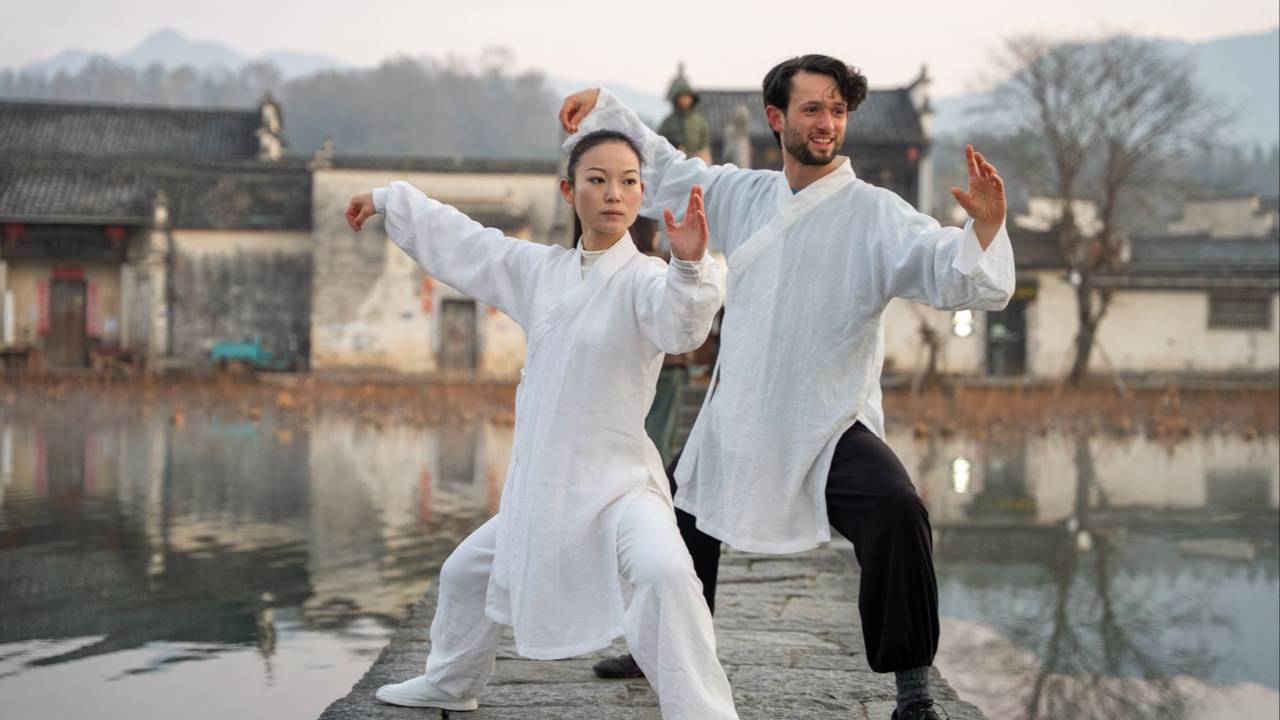
Most people think of strength training and picture heavy weights, loud gyms, and muscle strain. But what if true strength comes from something quieter? Tai chi for strength offers a different path - one that builds power through controlled movement, deep stances, and sustained muscle engagement. This ancient practice develops functional strength that supports your daily life, protects your joints, and grows more accessible with age rather than less. When you slow down and move with intention, your body discovers reserves of power you didn't know existed.
Understanding How Tai Chi Builds Muscular Strength
Tai chi for strength works differently than conventional resistance training, yet the muscular demands are real and measurable. Each posture requires you to hold your body weight in specific positions, often on one leg, while moving the other limbs through controlled patterns. This creates sustained isometric and eccentric muscle contractions that build endurance and strength simultaneously.
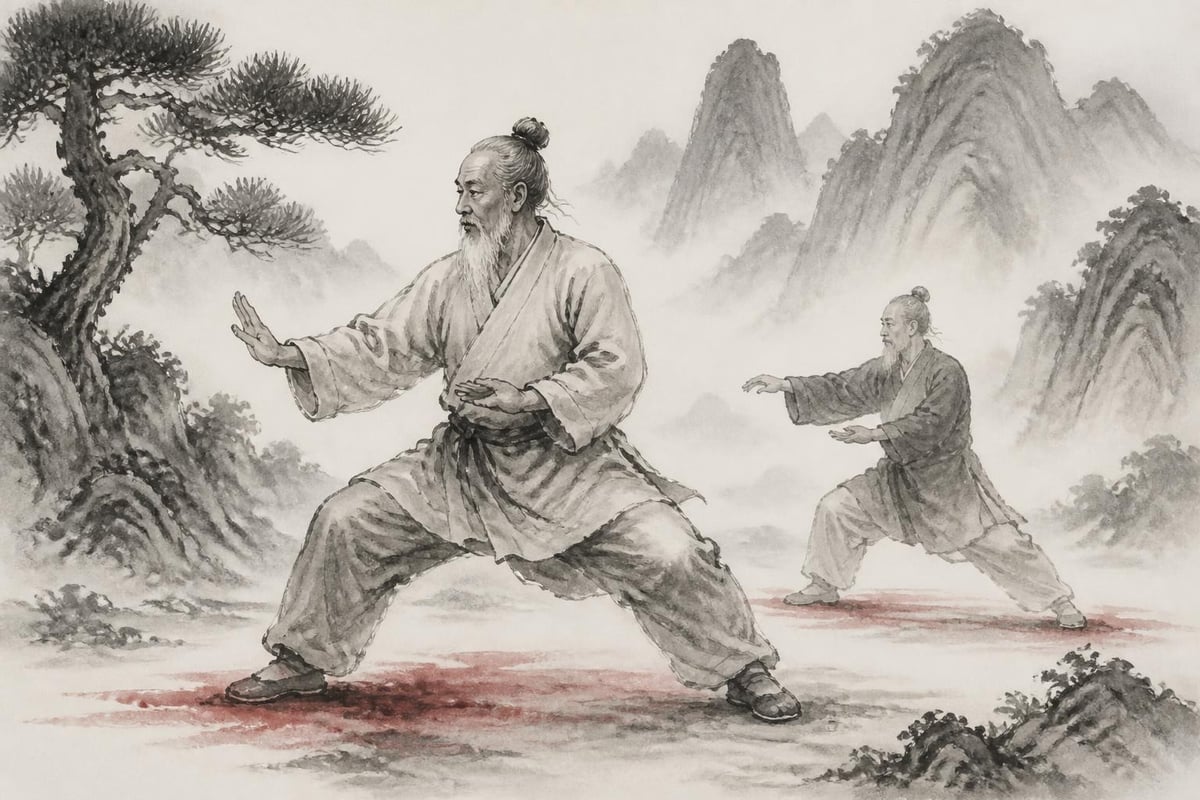
The slow pace intensifies the challenge. When you sink into a low stance and hold it while shifting your weight, your quadriceps, glutes, and core muscles work continuously without rest. There's nowhere to hide, no momentum to carry you through. Your muscles must support and stabilise every moment of the movement.
The Science Behind Slow Movement and Muscle Activation
Research has shown that tai chi produces measurable improvements in lower-limb strength, particularly in older adults, with benefits documented for grip strength, gait speed, and overall muscle performance, especially in populations dealing with sarcopenia or age-related muscle loss.
What makes this fascinating is the mechanism. Slow, controlled movements require constant muscular tension without the explosive bursts typical of conventional strength work. Your muscles must fire steadily, recruiting both fast-twitch and slow-twitch fibres to maintain control and balance throughout each transition.
Key strength-building elements in tai chi practice include:
- Deep stances that challenge leg strength and hip stability
- Single-leg balance positions that engage the entire kinetic chain
- Controlled weight shifts requiring core and lower-body coordination
- Sustained holds that build muscular endurance
- Rotational movements that strengthen obliques and deep stabilisers
The beauty of this approach is that it builds strength in functional patterns - the same movement sequences your body uses to stand from a chair, climb stairs, or catch yourself from a fall.
Wudang Tai Chi Principles for Cultivating Internal Power
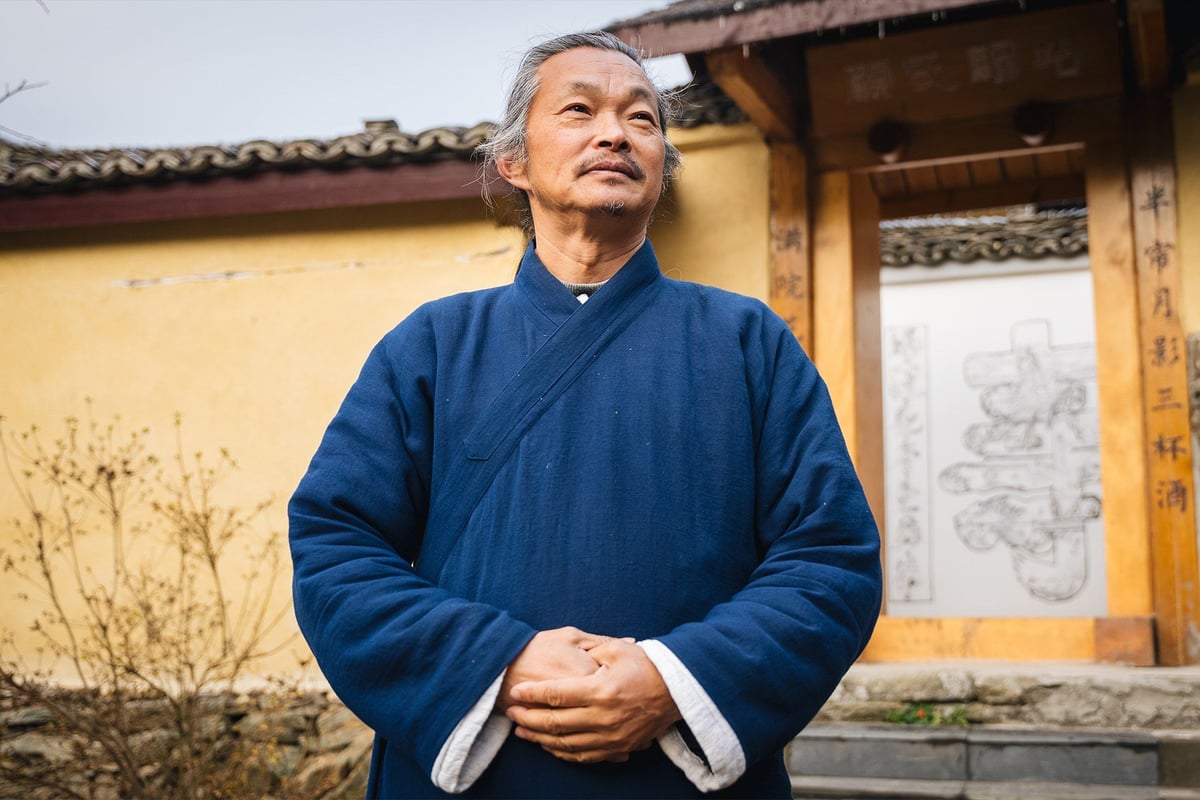
Wudang tai chi, practised and taught by authentic lineage holders like Master Gu, a 15th-generation San Feng Pai Wudang Taoist Master, emphasises the development of internal strength or "nei jing." This isn't mystical - it's about training your body to generate power from your centre, coordinate muscle groups efficiently, and move with structural integrity.
Internal strength differs from isolated muscle development. Instead of focusing on individual muscles, Wudang principles teach you to connect your whole body into unified movement. When you push, the power originates from your feet, travels through your legs and core, and expresses through your hands. Every part contributes.
| External Strength Approach | Internal Strength Approach |
|---|---|
| Isolated muscle groups | Whole-body integration |
| Maximum force output | Efficient force transfer |
| Visible muscular effort | Relaxed power generation |
| Joint compression | Joint space preservation |
| Peak performance focus | Sustainable long-term practice |
Building Strength Through Rooting and Structure
The Wudang approach to tai chi for strength begins with rooting - establishing a stable, grounded connection through your feet and legs. When your structure is aligned, your skeleton bears the load efficiently, allowing your muscles to work without strain or compensation.
This structural strength shows up immediately in daily life. You feel more stable on uneven ground. You can carry shopping or grandchildren without your back complaining. Your posture improves naturally because your body understands how to organise itself around a central axis.
Our Tai Chi course teaches these foundational principles step by step, ensuring students develop proper structure before advancing to more complex movements.
Developing Leg Strength Through Stance Work
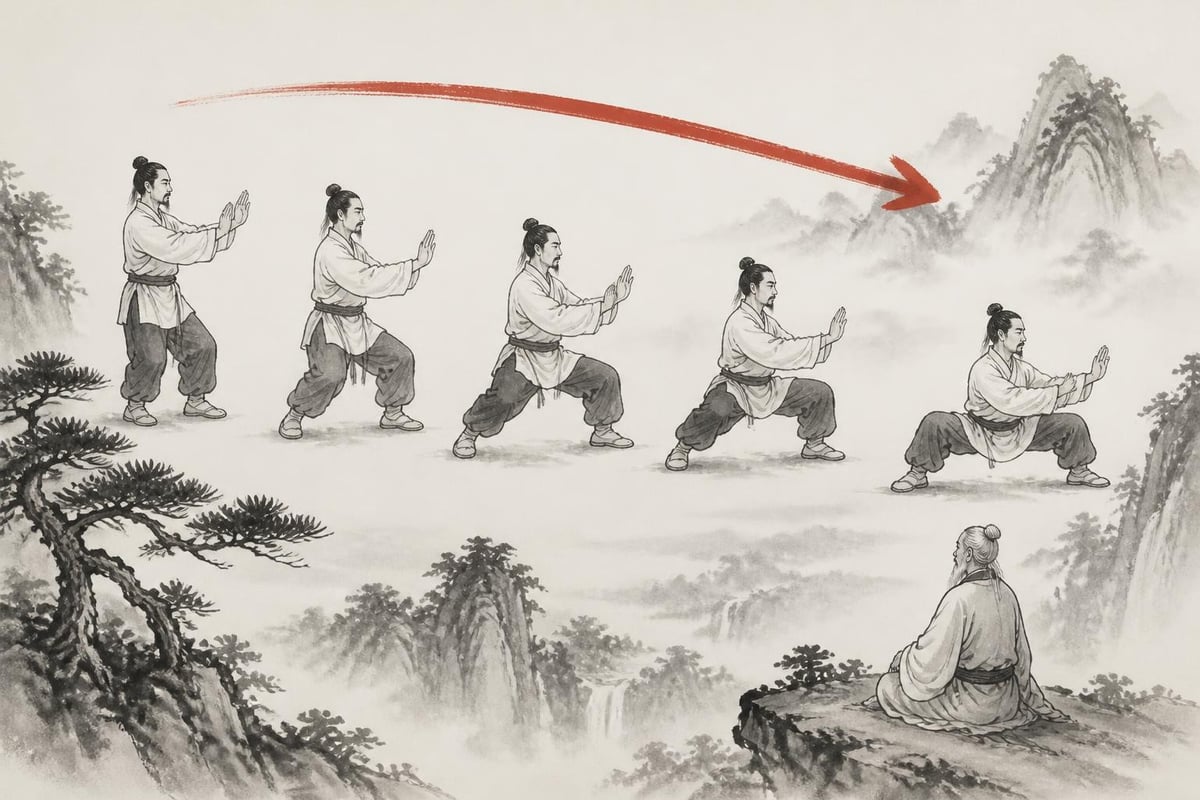
Your legs contain some of your body's largest muscle groups, and tai chi stance work gives them a thorough workout. The characteristic low stances - horse stance, bow stance, empty stance - require sustained muscular effort that builds both strength and endurance.
Progressive Stance Training
When you first begin stance practice, you might hold a position for 30 seconds. Over time, you gradually extend the duration to several minutes. This progressive overload builds strength just as effectively as adding weight to a barbell, but with far less impact on your joints.
Here's how different stances target specific muscle groups:
- Horse Stance (Ma Bu): Quadriceps, glutes, adductors, calves, core stabilisers
- Bow Stance (Gong Bu): Front leg quadriceps and glutes, rear leg hip flexors and calves
- Empty Stance (Xu Bu): Single-leg balance, standing leg strength, proprioception
- Cat Stance: Hip stabilisers, ankle strength, weight transfer control
The transitions between stances may be even more demanding than the holds themselves. Moving smoothly from one position to another while maintaining your centre requires exceptional control and coordination. Our Chen Style Tai Chi guide explores how another tradition approaches this same stance work, if you're curious about the wider tai chi landscape.
Core Strength and Stability in Tai Chi Practice
Every tai chi movement engages your core - not through crunches or planks, but through constant rotational control and spinal alignment. Your abdominal muscles, obliques, and deep spinal stabilisers work continuously to maintain your upright posture while your arms and legs move through their patterns.
This type of core work translates directly to real-world strength, and is part of why tai chi is widely recognised for improving balance and reducing fall risk - outcomes that depend heavily on core stability and strength.
Rotational Power and Spinal Flexibility
Tai chi movements spiral and turn, asking your torso to rotate smoothly while your hips remain stable. This develops rotational strength that protects your spine during daily activities like reaching for something in the back seat or turning to look behind you.
Unlike isolated core exercises, tai chi trains your core in coordination with your limbs and breath. Your centre initiates movement, your limbs follow, and your breathing supports the flow. Everything connects.
Upper Body Strength Through Mindful Arm Patterns
While tai chi for strength is often associated with lower-body development, the arm movements provide significant upper-body conditioning as well. Holding your arms extended, moving them slowly through space, and maintaining specific hand positions all require sustained muscular effort.
The key is maintaining relaxation within effort. Your shoulders stay down and open, even as your arms move through their patterns. This teaches your muscles to work efficiently without unnecessary tension - a skill that reduces chronic shoulder and neck pain.
Benefits of tai chi arm work include:
- Shoulder stability and rotator cuff strengthening
- Postural muscle endurance in the upper back
- Grip strength from specific hand positions and energy work
- Arm endurance without joint compression
- Coordination between upper and lower body movement
When practised correctly, your arms never collapse or lock out. They maintain a gentle curve, as if holding a large ball. This constant engagement builds endurance strength that lets you work overhead or hold objects for extended periods without fatigue.
Building Bone Density and Joint Health
Strength isn't just about muscles. Your bones need loading to stay dense and resilient, and your joints need movement to stay healthy. Tai chi for strength addresses both needs through weight-bearing exercise and full range-of-motion patterns.
The stance work provides the bone-loading stimulus. When you hold your body weight in a low position, your leg bones experience compression that signals them to maintain or increase density. This is particularly valuable as we age and bone density naturally declines.
For joints, the gentle, controlled movements keep them mobile without the impact forces that can accelerate wear. You move through your full available range, lubricating the joint surfaces and maintaining the health of cartilage and connective tissue.
| Joint Health Benefit | How Tai Chi Delivers It |
|---|---|
| Synovial fluid production | Gentle movement through full range |
| Cartilage nutrition | Weight-bearing compression and release |
| Proprioception | Balance challenges and varied positions |
| Muscular support | Strength in surrounding stabilisers |
| Reduced inflammation | Low-impact, regular movement |
Strength Training for Different Ages and Abilities
One of tai chi's greatest gifts is its adaptability. The same principles that build strength in a 30-year-old athlete also serve a 70-year-old recovering from surgery. You simply adjust the depth of your stances, the duration of your holds, and the complexity of your movements. Our Tai Chi for Seniors guide goes further into how this adaptability works in practice.
George explores exactly this idea, why modern comfort can leave us weaker than we realise, and how tai chi reverses it, in the video below.
Starting Where You Are
If standing in a low stance is currently beyond your ability, you begin higher. If balance on one leg feels unstable, you keep more weight on both feet. The practice meets you exactly where you are and guides you forward from there.
This progressive approach makes tai chi for strength accessible across the lifespan. You're not competing against others or trying to match someone else's standard. You're cultivating your own capacity, step by patient step.
Our free Taoist course offers an excellent introduction for beginners, teaching simple Tai Chi and Qi Gong practices that help you reclaim focus, move with confidence, and build a calmer, more energised daily routine with Master Gu's guidance.
Integrating Breath and Movement for Complete Body Strength
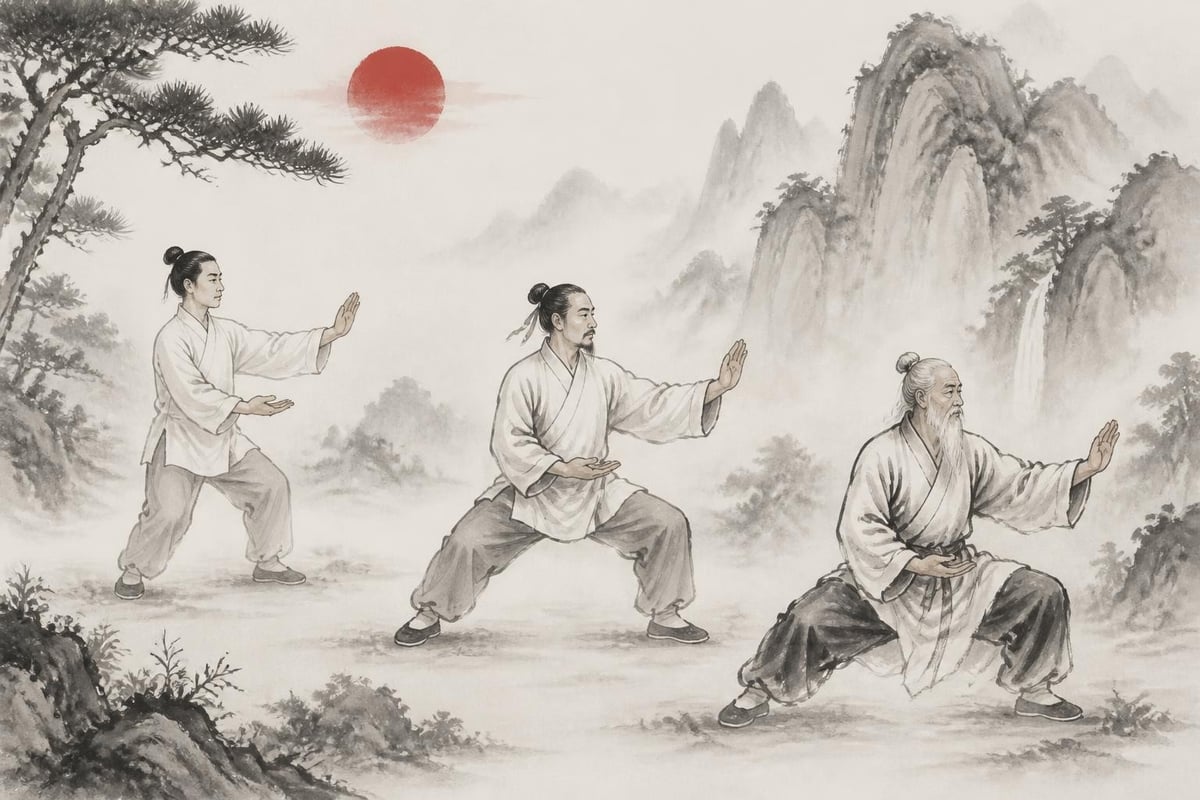
In Wudang tai chi, breath and movement synchronise. You don't just add breathing on top of your physical practice - the breath and body move as one. This integration develops a different kind of strength: the ability to maintain effort while staying relaxed, to work hard while breathing easily.
When your breath is shallow or held, your muscles tense unnecessarily. When your breath flows smoothly, your muscles can work efficiently. This mind-body connection is what transforms tai chi from simple exercise into a practice that strengthens your entire system.
Abdominal Breathing and Core Activation
Deep abdominal breathing naturally engages your core muscles. As you inhale, your diaphragm descends and your lower abdomen expands. As you exhale, your abdominal muscles gently contract to support the breath release. This continuous engagement strengthens your deepest core muscles without a single crunch.
The coordination of breath with movement also supports cardiovascular efficiency, with regular practice associated with measurable improvements in cardiovascular health markers, showing that this gentle practice offers whole-system benefits.
Creating a Sustainable Strength-Building Practice
Unlike training methods that peak in your youth and become harder to maintain as you age, tai chi for strength grows more accessible over time. The emphasis on internal development, structural alignment, and relaxed power means you can continue building strength well into your later decades.
Practical Guidelines for Progress
To build strength through tai chi, consistency matters more than intensity. Three to four practice sessions per week, each 20 to 40 minutes, will produce noticeable improvements within a few months.
Weekly practice structure might include:
- Two longer form practice sessions (30-40 minutes)
- Two stance training sessions (15-20 minutes)
- Daily short check-ins with basic movements (5-10 minutes)
- Optional qi gong for recovery and energy cultivation
Track your progress not by how much weight you can lift, but by how long you can hold your stances, how stable you feel in single-leg positions, and how your daily activities become easier. These functional improvements matter more than any external measure.
The Role of Qi Gong in Supporting Strength Development
While distinct from tai chi, qi gong complements your strength-building practice beautifully. Our Qi Gong course teaches practices that enhance energy flow, support recovery, and prepare your body for more demanding tai chi work.
Qi gong movements are often simpler and more repetitive than tai chi forms, making them ideal for warming up, cooling down, or practising on days when you need something gentler. Yet they still build strength, particularly in maintaining specific arm positions and coordinating breath with movement.
The combination of tai chi and qi gong creates a complete practice that addresses strength, flexibility, energy cultivation, and mental clarity. You're not just building bigger muscles - you're developing a body that moves well, feels good, and serves you reliably for years to come.
Strength Beyond the Physical: Mental Resilience and Focus
Holding a low stance for several minutes requires more than muscular strength. It demands mental fortitude, the ability to stay present with discomfort, and the willingness to breathe through challenge. These qualities strengthen your mind as surely as the physical practice strengthens your body.
This mental strength transfers to everything else in your life. When you know you can hold a difficult posture for three minutes, you discover you can also sit through a challenging conversation, persist through a complex project, or remain calm when circumstances feel overwhelming.
Mental strength benefits of regular practice:
- Improved concentration and sustained attention
- Greater emotional regulation under stress
- Increased patience with processes and timelines
- Enhanced ability to stay present with difficulty
- Deeper confidence in your capabilities
Our community provides support for both the physical and mental aspects of practice, connecting you with others walking the same path.
Addressing Common Misconceptions About Tai Chi and Strength
Some people dismiss tai chi as "too gentle" to build real strength. This misunderstanding comes from watching the graceful, flowing movements without experiencing the muscular demands firsthand. Stand in a deep horse stance for three minutes, and you'll quickly discover how challenging "gentle" practice can be.
Another misconception suggests tai chi is only for older adults or people with limitations. While tai chi does serve these populations beautifully, it also challenges younger, athletic individuals. The practice simply meets everyone at their own level and provides room for continuous growth.
Why Slow Doesn't Mean Easy
The slower you move, the more control you need. Speed creates momentum that carries you through movements. When you remove speed, your muscles must provide all the force and stability. This makes slow practice considerably more demanding than fast movement.
Additionally, the continuous nature of tai chi means you rarely get to rest completely. Even transitions between postures require muscular engagement and balance control. Your body works throughout the entire practice session.
Long-Term Strength Development and Ageing Well
Perhaps the most compelling aspect of tai chi for strength is how it supports healthy ageing. While conventional strength training often becomes harder to maintain as joints wear and recovery slows, tai chi adapts to your changing needs while continuing to build functional capacity. As with any new movement practice, it's worth checking with your healthcare provider before beginning, particularly if you have existing joint or balance concerns.
Functional Strength for Daily Living
The strength you build through tai chi shows up in practical ways:
- Rising from a chair without using your hands
- Walking up stairs without holding the railing
- Carrying shopping or luggage without strain
- Maintaining balance on uneven surfaces
- Recovering quickly when you stumble
- Standing or walking for extended periods without fatigue
These capabilities matter far more than how much you can bench press. They determine whether you can live independently, travel confidently, and engage fully in activities you enjoy.
Building a Complete Wellness Practice
Tai chi for strength works best within a broader context of wellness practices. The traditional Taoist approach includes not just physical movement but also meditation, philosophical study, and lifestyle cultivation. Each element supports the others, creating a comprehensive path to health and vitality.
When you combine strength-building tai chi practice with meditative awareness, you develop both physical power and mental clarity. When you add Taoist philosophy, you gain perspective on why you're cultivating these qualities and how they serve your larger life purpose.
This integrated approach is what Taoist Wellness Online offers through its comprehensive curriculum. You're not just learning exercises - you're being introduced to an entire system of wellness that has supported human flourishing for thousands of years.
Tai chi for strength offers a sustainable, accessible path to building power and resilience at any age. Through mindful movement, deep stances, and internal cultivation, you develop functional strength that supports everything you do. If you're ready to explore this transformative practice with authentic guidance, Taoist Wellness Online provides comprehensive courses in Wudang Tai Chi, Qi Gong, and Taoist wisdom under the expert instruction of Master Gu, helping you build not just physical strength but complete wellness that lasts a lifetime.