Tai Chi Meaning: Ancient Wisdom for Modern Balance
Nov 01, 2026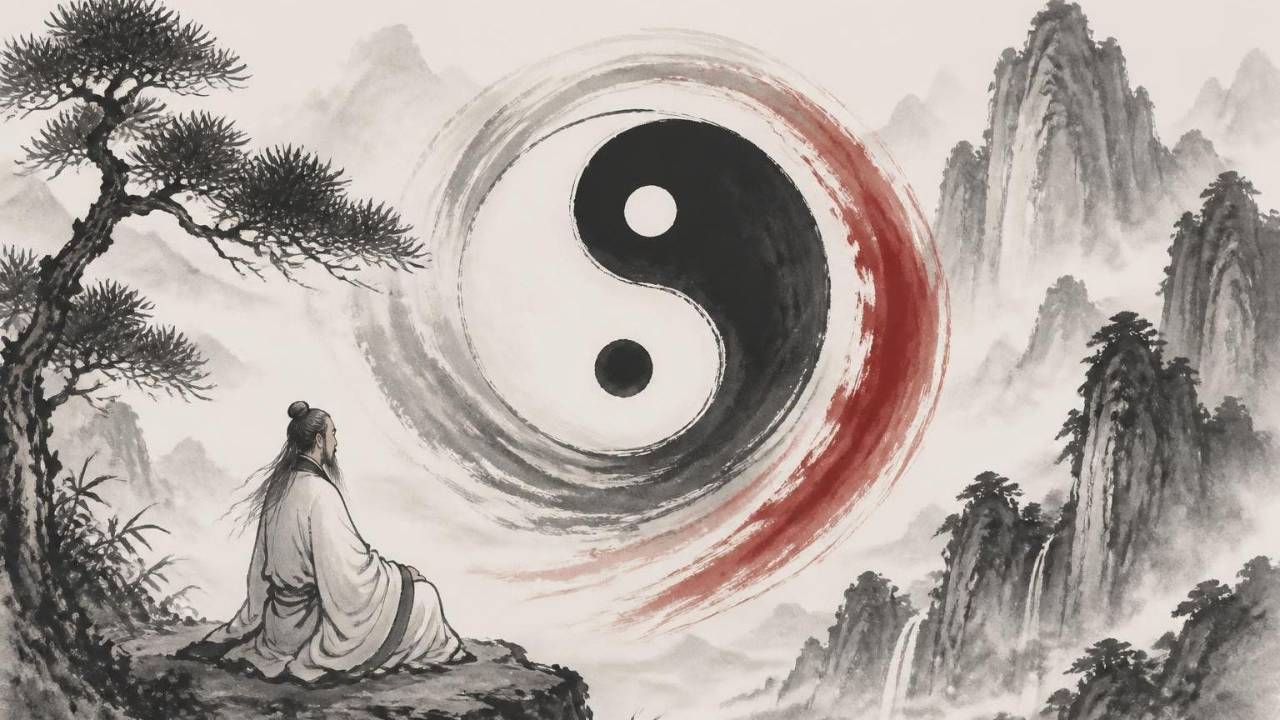
When you first hear the words "tai chi", you might picture slow, flowing movements in a park at dawn. But the tai chi meaning goes much deeper than what meets the eye. This ancient practice carries centuries of wisdom, a philosophy of balance and a gentle path to physical and mental wellbeing that many people still find relevant today. Understanding what tai chi truly means can change not just how you move, but how you approach daily life.
The Philosophical Foundation of Tai Chi Meaning
The tai chi meaning begins with the Chinese characters themselves. "Taiji" (太極) is commonly translated as "Supreme Ultimate" or "Grand Extreme", a concept that sits at the heart of Daoist philosophy. It is more than a poetic name - it points to a view of how everything in the universe fits together. If you would like a simple introduction, see our article on what tai chi is.
Taijiquan is recognised internationally as part of China's intangible cultural heritage, which reflects its cultural significance and philosophical roots. The taiji concept represents the state before yin and yang separated, the source from which all duality emerges. When we practise tai chi, we are engaging with this ancient understanding of how opposites work together.
Yin and Yang in Motion
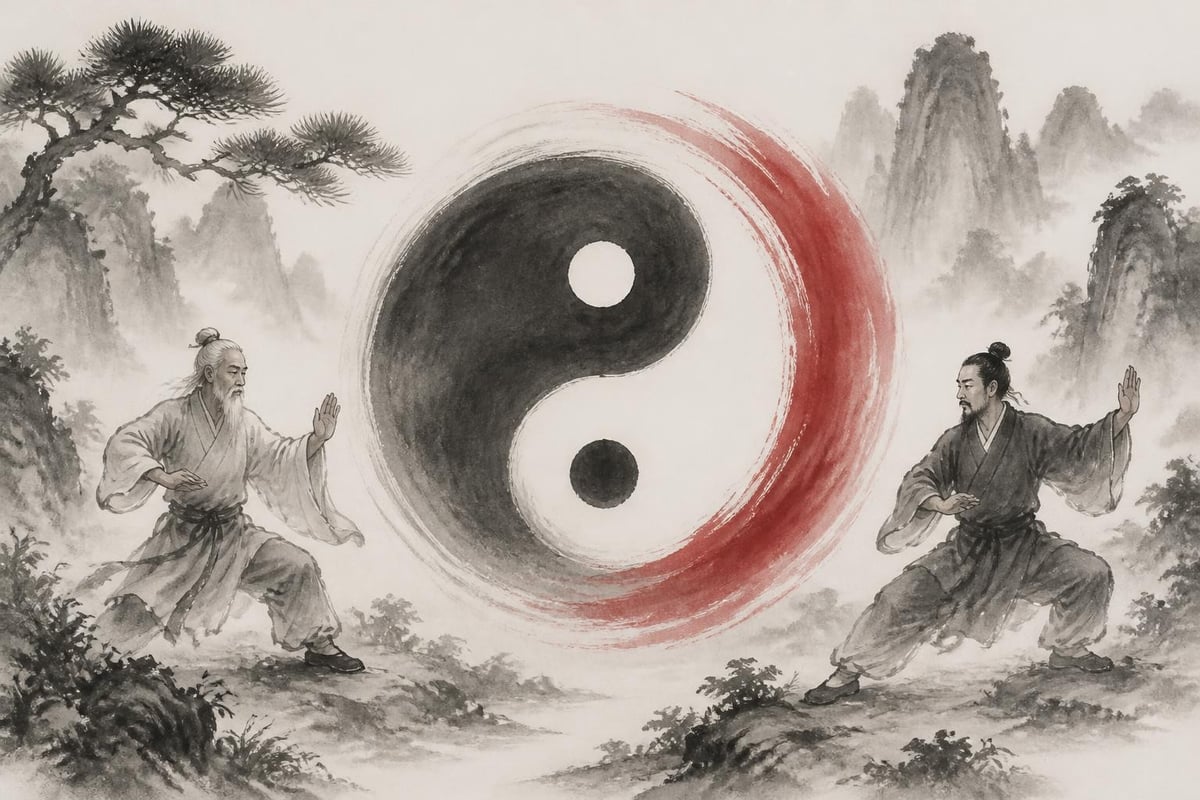
At the core of tai chi meaning lies the interplay of yin and yang. These are not opposing forces fighting each other. They are complementary qualities that create wholeness together.
In tai chi practice, this can show up as:
- Soft movements balanced with steady strength
- Yielding that makes room for firmness
- Stillness within continuous motion
- Grounded stability supporting fluid transitions
Every movement in Wudang tai chi reflects this principle. When you shift your weight, you are not just moving from one foot to the other. You are practising a basic rhythm of nature, the constant flow between emptiness and fullness.
Master Gu explains the yin yang symbol (taijitu) in the short video below.
Understanding Tai Chi as an Internal Martial Art
Many people today practise tai chi for health and relaxation, but knowing its martial arts origins adds to the tai chi meaning. Tai chi developed as an internal martial art, distinct from external styles that rely mainly on muscular force.
In Chinese tradition, the "internal" side refers to developing the mind-body connection and using awareness rather than brute strength. This focus is one reason tai chi can suit people of many ages and abilities.
| Internal Arts Characteristics | External Arts Characteristics |
|---|---|
| Emphasise relaxed, connected movement and awareness | Develop muscular power and speed |
| Emphasise relaxation and softness | Focus on tension and hardness |
| Use circular, flowing movements | Often use linear, direct techniques |
| Build strength from within | Build visible external strength |
Seen this way, even the gentlest practice carries martial wisdom. The slow movements are not just exercise - they train the body to move efficiently and the mind to stay present.
The Chuan Component: Martial and Meditative
The full term "taijiquan" (太極拳) adds "quan" or "chuan" (拳), meaning "fist" or "boxing". This shows that tai chi is a martial art, not only meditation in motion. Yet the martial side has a higher purpose.
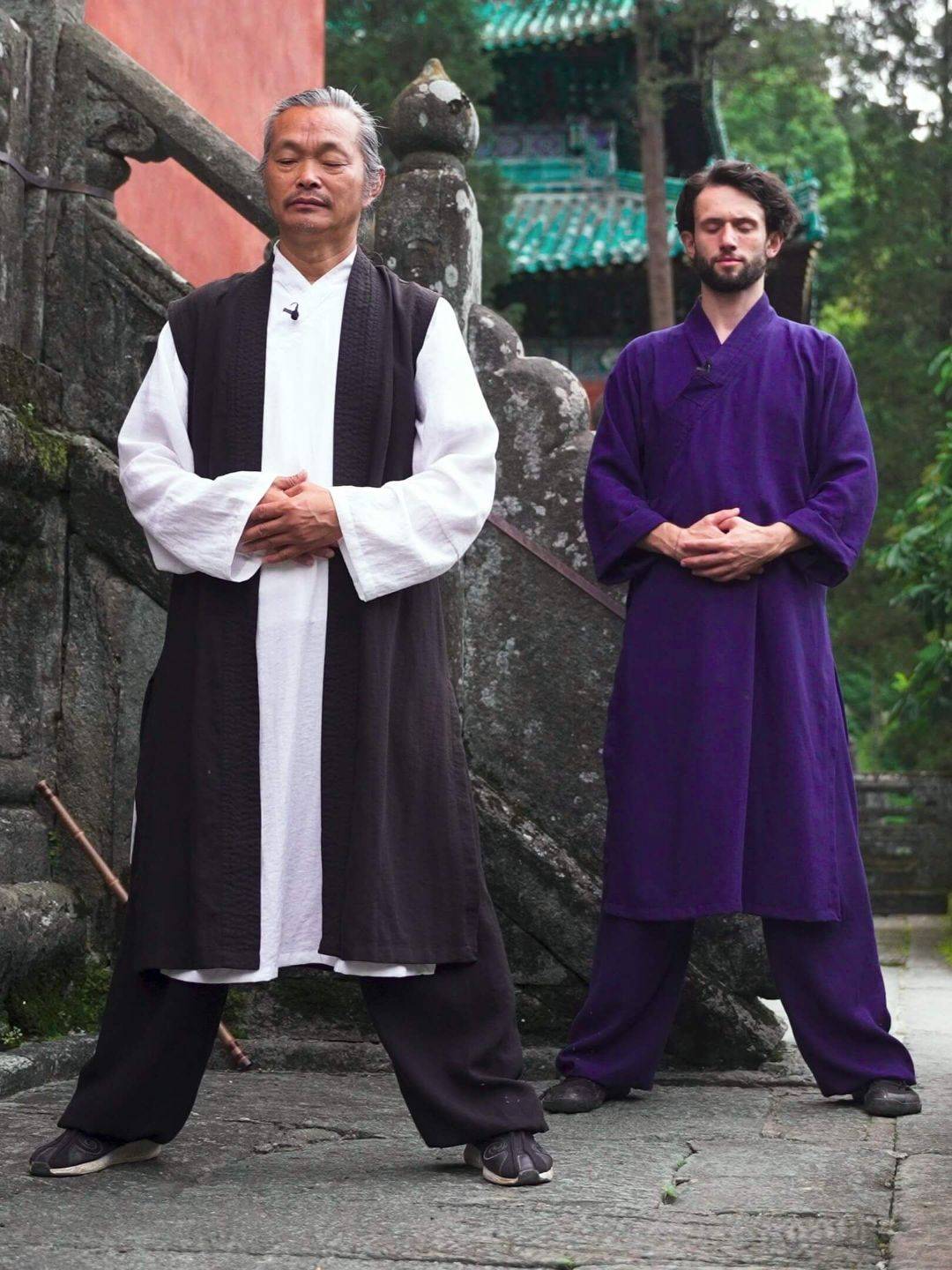
In the Wudang tradition, martial applications are a vehicle for deeper understanding. Traditionally, each posture was linked to practical applications, and practising them builds awareness, timing and calm under pressure. Our teacher Master Gu, a 15th-generation San Feng Pai Wudang Taoist Master with 25+ years of teaching experience, comes from this tradition. Our online courses focus on Tai Chi, Qi Gong, Taoist meditation and Taoist philosophy as wellbeing practices - we do not teach self-defence or partner work.
From Combat to Cultivation
The tai chi meaning has evolved over centuries from battlefield technique to wellness practice. This evolution has made it available to anyone looking for:
- Physical wellbeing through gentle, low-impact movement
- Mental clarity from focused, mindful practice
- Emotional balance by learning to flow with change
- Spiritual reflection through embodied philosophy
Modern practitioners can benefit from both sides. The martial foundation keeps movements precise, while the meditative quality creates space for rest and reflection.
Qi and Awareness in Tai Chi
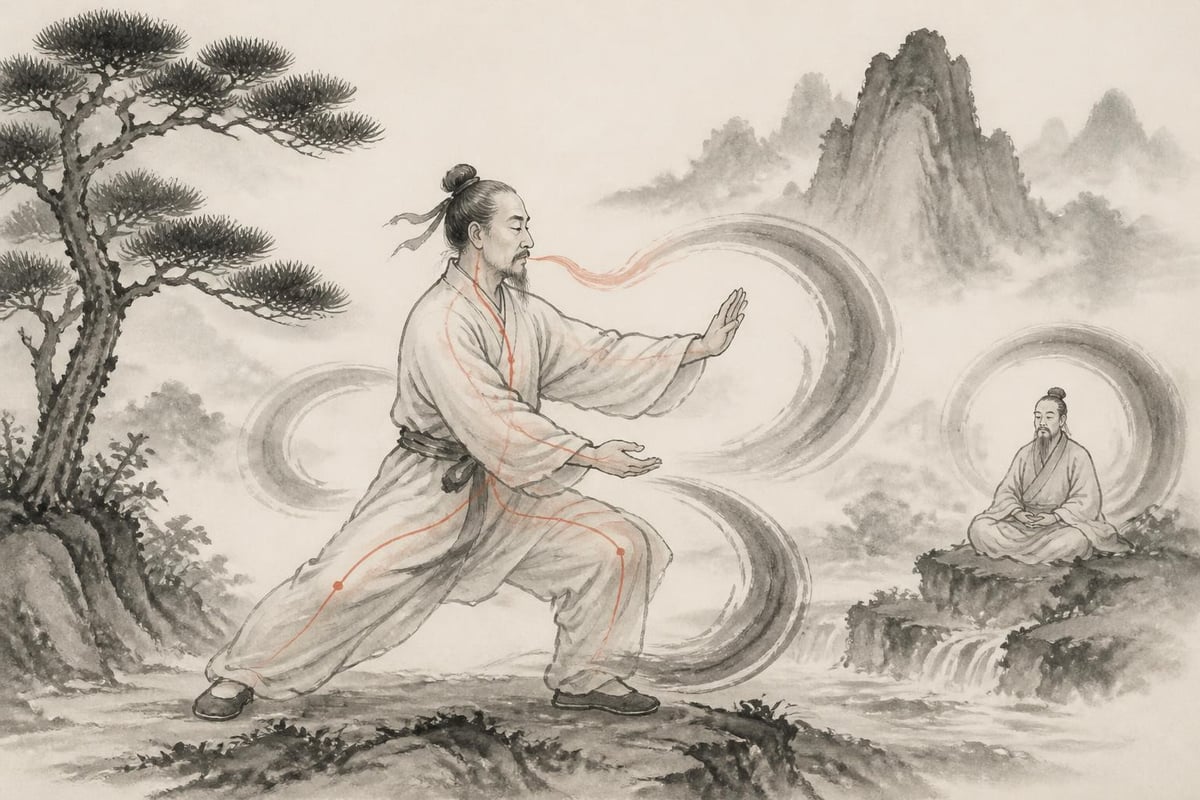
Central to tai chi meaning is the concept of qi, often translated as life energy or vital force. Western science does not have a direct equivalent, but in Chinese tradition qi is a way of describing the vitality that moves through all living things.
In our approach, we keep things simple. Practised in a relaxed way, tai chi invites:
- Relaxed, even breathing that follows the natural rhythm of the movements
- Soft, unhurried movement in place of effort and force
- Gentle attention to the centre of the body and to your posture
- Letting go of unnecessary tension as you practise
When you practise forms like those in our guide to basic tai chi movements, you are not just going through the motions. You are paying kind, steady attention to how your body moves and breathes.
If you are new to tai chi, please check with your healthcare professional before starting any new exercise. Move slowly, keep a wall or sturdy chair nearby if your balance feels uncertain, and stop if you feel dizzy or in pain.
Tai Chi Meaning in Daily Life
Understanding tai chi meaning can change how you approach everyday challenges. The principles you practise can carry over into your relationships, work and personal growth.
Practical applications include:
- Responding to stress with flexibility rather than resistance
- Finding efficiency in action by dropping unnecessary effort
- Staying centred when circumstances shift around you
- Recognising when to advance and when to yield
The philosophy behind tai chi includes wu wei, often translated as "effortless action" or "non-forcing". This does not mean passivity. It means working with situations rather than against them and with the natural rhythm of things.
Tai chi can sit alongside, but should not replace, professional support. If stress is affecting you, please also speak to your GP or a qualified professional.
If you would like to experience these ideas for yourself, our free Taoist course is a gentle introduction to Tai Chi, Qi Gong, meditation and Taoist wisdom with our teacher Master Gu.
The Health and Wellness Dimension
In modern times the tai chi meaning has widened to include health and wellbeing, and a growing body of research looks at its effects. Results vary from person to person, and tai chi is not a replacement for medical care.
Physical Benefits
Tai chi touches several areas of physical wellbeing at once:
| Area | What Some Studies Report |
|---|---|
| Balance | Better balance in older adults in some studies |
| Circulation and heart health | Gentle activity that some people find supports general wellbeing |
| Joint comfort | Gentle, low-impact movement that many people find comfortable |
| Muscle strength | Leg and core strength may improve with regular practice |
Studies suggest regular tai chi practice may support balance and reduce the risk of falls in older adults. The gentle, flowing movements work the muscles and coordination without the joint stress of high-impact exercise. Results vary.
Mental and Emotional Wellness
The mental side of tai chi reflects its meditative nature. The practice can encourage mindfulness, bringing attention into the present moment.
Some studies suggest that tai chi may:
- Help people feel calmer and less anxious
- Support sleep quality
- Support focus and memory
- Support an overall sense of wellbeing
Tai chi can sit alongside, but should not replace, professional support. If anxiety, low mood or poor sleep is affecting you, please also speak to your GP or a qualified professional.
Historical Evolution of Tai Chi Meaning
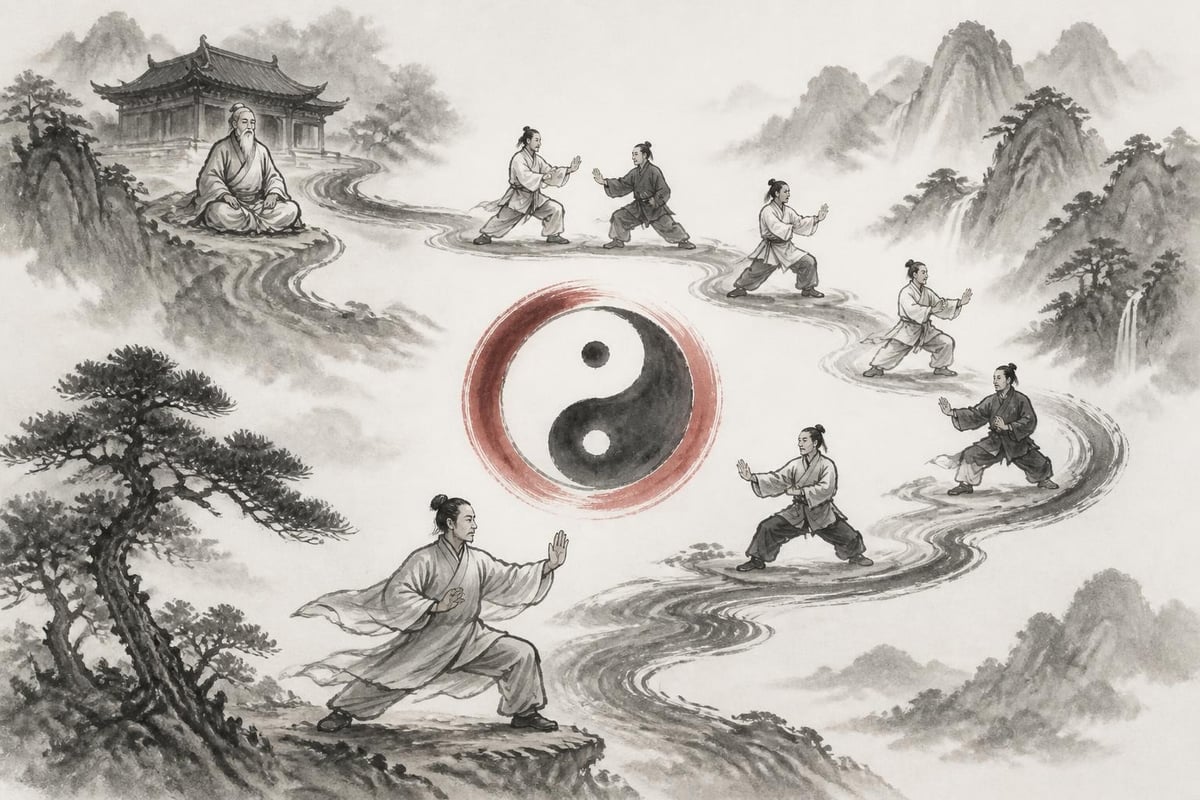
The tai chi meaning we know today has developed through centuries of refinement. Legends attribute tai chi's creation to various Daoist immortals and historical figures, but the practice grew from a rich tradition of Chinese internal martial arts.
The Wudang Mountains in China became a central hub for developing and preserving tai chi traditions. Daoist monks and martial artists refined techniques that balanced practical skill with spiritual reflection.
Lineage and Authenticity
Understanding tai chi meaning includes valuing authentic transmission. Traditionally, knowledge passed from teacher to student across generations.
Key aspects of authentic transmission:
- Teaching from qualified masters
- Preservation of complete forms and principles
- Understanding of both martial and meditative sides
- A connection to philosophical foundations
- Methods for developing awareness and relaxation
This emphasis on lineage helps practitioners receive the complete teaching rather than a simplified version that may lose important elements.
Different Interpretations and Approaches
The fundamental tai chi meaning stays consistent, but schools and teachers emphasise different aspects. Some focus on martial applications, others on health, and others on spiritual development.
The Wudang tradition keeps a balanced approach, recognising that all these dimensions support one another. Physical wellbeing supports meditation. Awareness of movement deepens relaxation. Philosophical understanding enriches physical practice.
Modern Adaptations
Today you may find tai chi taught mainly as:
- Gentle exercise for seniors
- A way to unwind
- Martial arts training
- A moving meditation practice
Each approach has value, yet the richest understanding comes from seeing how they fit together. The tai chi meaning includes all these dimensions, offering different entry points that lead towards the same understanding.
Connecting Practice to Philosophy
Perhaps the deepest layer of tai chi meaning appears when philosophy and practice come together. The movements become a physical expression of Daoist ideas, showing through the body what words can only approximate. To explore these ideas in more depth, see our Taoist philosophy course.
When you practise the form, you are expressing ideas about:
- Change: nothing stays static; flow is natural
- Balance: extremes create imbalance; the centre sustains
- Harmony: working with nature rather than against it
- Simplicity: less effort often goes further
- Presence: this moment is the only one we have
This integration can turn tai chi from something you do into a way you live. The principles can quietly influence your decisions, relationships and outlook.
Learning Tai Chi: Depth Over Time
Understanding tai chi meaning does not happen overnight. Like the practice itself, it deepens gradually with steady engagement. Beginners might see only the physical movements. With time, other layers can appear, including the philosophical side.
This gradual understanding reflects the Daoist idea of natural unfolding. You cannot force insight, but you can create the conditions for it through regular, mindful practice.
The learning path often unfolds something like this (everyone's pace differs):
- Months 1-3: learning basic movements and postures
- Months 4-12: developing smoother flow and coordination
- Years 1-3: becoming steadier and more relaxed in your movement
- Years 3-5: bringing together the martial, health and meditative sides
- Years 5+: deepening philosophical understanding and refinement
Every practitioner's path is unique. Patience and persistence reveal layers of meaning that rushed learning can miss.
The Role of a Qualified Teacher
Books, videos and articles provide valuable context, but understanding tai chi meaning is easier with a teacher who embodies the practice. A good teacher does more than demonstrate forms. They explain the principles behind them.
A good teacher helps you:
- Understand the principles behind each movement
- Connect movements to underlying ideas
- Avoid common misconceptions that limit progress
- Learn the teaching in a clear, logical order
Online learning cannot physically correct your posture. What our Tai Chi course offers is structured lessons you can repeat at your own pace, a monthly live session and Q&A with Master Gu and George, and a supportive community.
Tai Chi and Modern Science
Contemporary research is exploring tai chi's effects on a range of areas, and growing evidence is helping bridge ancient wisdom and modern understanding. Studies are often small and results vary.
Recent investigations have looked at:
- Balance and mobility
- Comfort in people living with long-term pain
- General cardiovascular fitness
- Mood and wellbeing
Science may not fully explain qi or other traditional concepts, but it continues to explore the practical benefits that make tai chi relevant for modern wellbeing.
Personal Experience Through Practice
The fullest tai chi meaning comes through personal experience. Reading about balance is different from feeling it. Understanding yin and yang intellectually is different from noticing their interplay in your own body.
Some practitioners report changes that go beyond physical fitness (results vary):
- Greater emotional steadiness during difficult times
- An improved ability to stay present and focused
- A deeper sense of connection to self and others
- Greater appreciation for life's simple moments
These changes tend to emerge from consistent practice. You do not force them - you create space for them.
The tai chi meaning weaves together philosophy, martial arts, health practice and reflection into a whole. Whether you are drawn to its gentle movements, its wisdom or its documented wellbeing benefits, tai chi offers a gentle path towards balance. If you are ready to explore it with guidance, Taoist Wellness Online offers courses in Tai Chi, Qi Gong and Taoist meditation with our teacher Master Gu, a 15th-generation San Feng Pai Wudang Taoist Master with 25+ years of teaching experience, helping students around the world find a little more balance and calm.
Related reading