Tai Chi to Music: Harmony, Flow & Ancient Practice
Oct 22, 2026
Practising tai chi to music invites a new dimension into this ancient art - one where rhythm, breath, and intention come together into something greater than the sum of their parts. For some practitioners, music feels like a natural companion that guides the flow of movement and deepens a meditative state. For others, the silence of traditional practice holds its own special space. Exploring tai chi to music raises questions about how we relate to sound, timing, and the Taoist principles that underpin these centuries-old forms. Whether you're drawn to stillness or looking for a gentle rhythm to support your practice, understanding how music interacts with movement can change your relationship with both.
The Traditional Roots of Silent Practice
Classical Wudang tai chi has been practised for generations without musical accompaniment. In the mountains where these forms were refined, the natural soundscape - wind through pines, water over stone, birdsong at dawn - provided all the rhythm practitioners needed.
This silence isn't empty. It creates space for internal listening, where you tune into the subtle signals of your body and the quality of your breath. Tai chi is often described as a moving meditation, and as with seated meditation, external quiet can support inner awareness.
The Role of Natural Rhythm
Even without music, tai chi moves to a rhythm. Your heartbeat, your breathing, and the natural pace of your body all create an internal tempo. Wudang tai chi encourages practitioners to listen to these innate rhythms rather than impose external patterns.
- Breath as metronome: each posture can flow with the inhale or exhale
- Heartbeat as guide: slow, relaxed movement tends to feel calming
- Natural cycles: morning practice feels different from evening, each with its own pace
When you practise in silence, you learn to trust your body's wisdom about timing and flow.
How Music Influences Movement and Mind
Adding music to tai chi practice creates a different kind of experience - one that can support beginners, deepen relaxation, or provide structure during self-practice. The right music doesn't override your internal rhythm; instead, it offers a gentle framework that can help you settle into a consistent pace.
Research suggests that music engages several areas of the brain at once, and may influence mood, coordination and attention. When you practise tai chi to music, you bring these influences together with the calm, physical side of the forms, although everyone responds differently.
Tempo and Form Structure
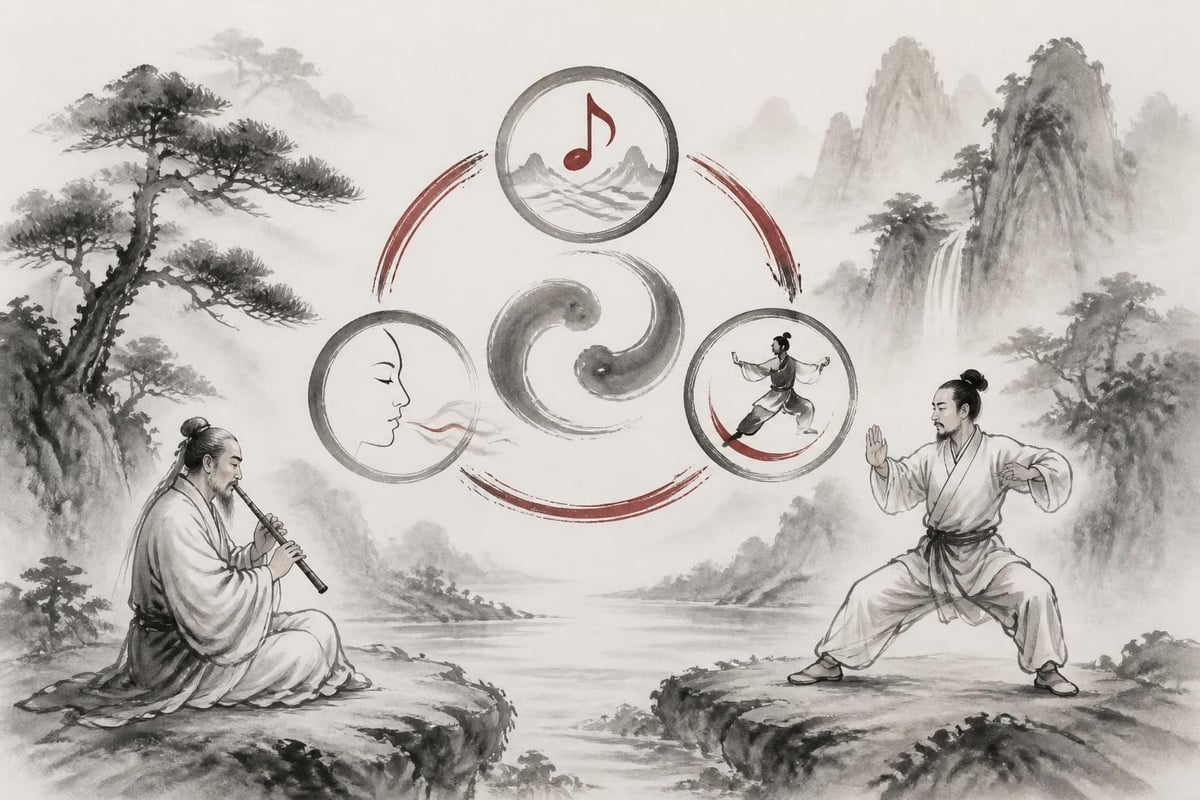
Different tai chi forms move at different speeds. Some sequences unfold slowly, like clouds drifting across the sky. Others have quicker transitions that build gentle warmth. Music with a compatible tempo can help you keep a steady pace, especially when you're learning new movements.
| Music Tempo (A Rough Guide) | Tai Chi Application | What You May Notice |
|---|---|---|
| 40-60 BPM | Slow, meditative forms | A deeper sense of relaxation |
| 60-80 BPM | Standard practice pace | Steady balance, coordination and focus |
| 80-100 BPM | Warm-up, transitional movements | A gentle feeling of warmth and energy |
The key is matching the music to the natural rhythm of the form, not forcing the form to match the music.
Choosing Music That Supports Practice
Not all music serves tai chi practice equally. The most helpful accompaniment tends to be instrumental, flowing, and spacious - music that creates atmosphere without demanding attention. Traditional Chinese instruments like the guzheng, dizi, or erhu naturally complement these ancient forms, though other gentle instrumental music can work beautifully.
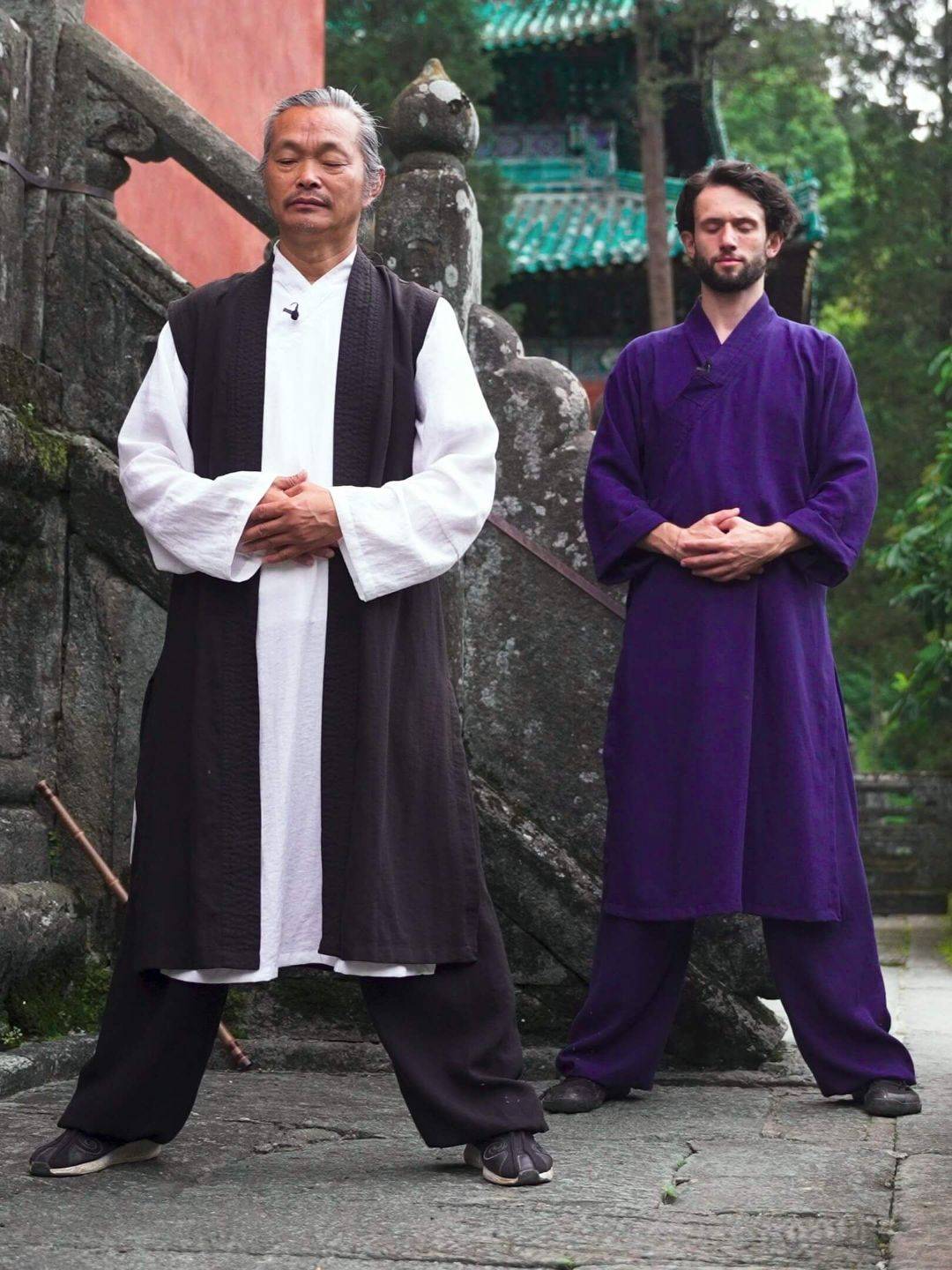
To hear how this can feel, you can watch Master Gu practise to gentle Chinese meditation music in the hour-long video below.
Qualities to Seek
- Minimal percussion: heavy drumming can disrupt the soft, continuous quality of tai chi movement
- Consistent dynamics: sudden loud passages can pull you out of a meditative flow
- Natural phrasing: music that breathes, with space between phrases
- Cultural resonance: traditional Chinese music often suits the character of the forms
Some practitioners find that nature sounds - running water, forest ambience, gentle rain - provide a lovely middle ground between silence and composed music. These sounds offer rhythm and texture without the associations of composed music.
Learning Without Music, Practising With Music
Many experienced instructors recommend learning new forms in silence first. This lets you concentrate fully on the details of each movement: where your weight shifts, how your spine aligns, the path your hands trace through space. Our practical guide to Tai Chi instructions is a good place to start, and our Tai Chi course teaches the forms step by step.
Once you've absorbed the basic structure, adding music can enhance your practice in specific ways:
- Consistency: music helps maintain a steady pace during solo practice
- Duration: a carefully chosen playlist can carry you through a complete session
- Atmosphere: the right soundscape deepens the calm, meditative quality
- Motivation: gentle, beautiful music can make it easier to return to your practice each day
Building Your Practice Ritual
Consider creating different playlists for different practice moods. Morning practice might suit lighter, brighter music. Evening practice could flow with deeper, more reflective sounds. Some days you might practise in complete silence, honouring the traditional approach.
Music and the Meditative State
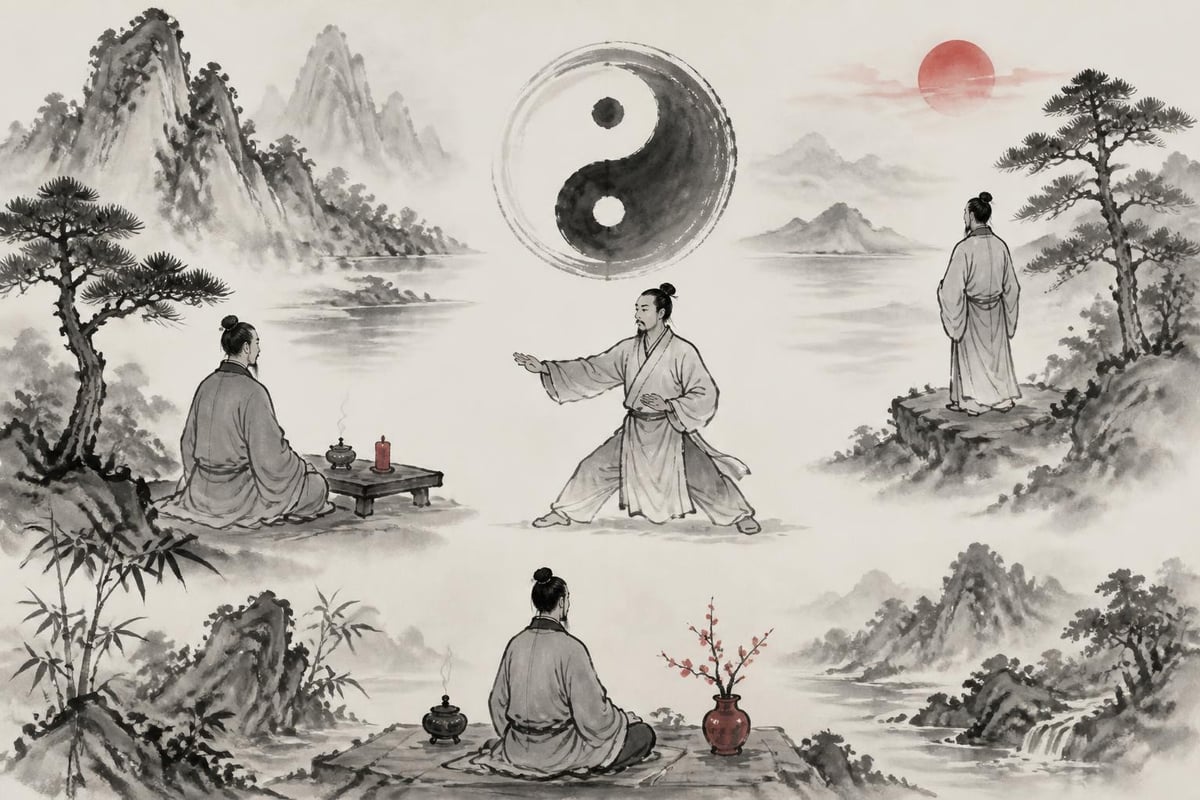
Tai chi cultivates what Taoists call wu wei - effortless action, the state where movement arises naturally without forcing. Music can either support this state or interfere with it, depending on how you engage with it.
When music is a gentle background, your conscious mind has something to rest on while your body moves through familiar forms. This can deepen the meditative quality, much as a candle flame helps focus the mind in seated meditation. If you enjoy that quiet, inward side of practice, our Taoist meditation course explores it in more depth.
The challenge comes when music demands too much attention. Lyrics, complex melodies, or emotional associations can pull you out of the present moment in your body. That's why instrumental music, especially pieces made for meditation or relaxation, tends to work best.
Rhythm, Breath, and Natural Flow
The most rewarding tai chi experiences often happen when your breath, movement, and awareness become one seamless flow. Music can support this or complicate it, depending on whether the musical rhythm fits your natural breathing.
Pay attention to how different tempos affect your breath:
- Too slow: you might find yourself holding your breath between movements
- Too fast: your breathing can become shallow or rushed
- Just right: each breath naturally accompanies a complete movement
Your breath is the bridge between body and mind. When you practise tai chi to music, the music should support this bridge, not distract from it. Always let your breathing stay natural and unforced.
Cultural Context and Personal Choice
Traditional practitioners often prefer silence, viewing music as an unnecessary addition to a complete practice. This perspective comes from deep respect for the lineage and the forms.
At the same time, tai chi has always adapted to meet people where they are. Teachers in the Wudang tradition share these practices with students of many backgrounds and abilities, and using music as a supportive tool for modern practitioners fits that spirit of skilful adaptation.
The question isn't whether tai chi to music is "right" or "wrong." Instead, ask yourself: does this music help me cultivate presence, refine my movement, and feel more relaxed? If so, it serves your practice. If it distracts you or pulls you away from awareness of your body, set it aside.
Group Practice Versus Solo Practice
Music plays different roles in group settings and solo practice. In a class, shared music creates a collective rhythm that helps synchronise movement and builds a sense of togetherness. Everyone moving to the same tempo can create a powerful feeling of connection and shared intention.
Solo practice offers more freedom to experiment. You can:
- Try different musical styles to see what resonates with you
- Practise the same form with music and without, and compare the experience
- Adjust the tempo to match your energy on any given day
- Choose silence when you want deeper inner focus
Many practitioners find that their relationship with tai chi to music changes over months and years. What serves you as a beginner might feel limiting later, and what felt distracting early on might become supportive as your practice matures.
Practical Guidance for Beginning with Music
If you're curious about adding music to your practice, start gently. Don't overthink it, but do pay attention to what you notice.
Simple Steps to Experiment
- Choose one familiar form: practise something you already know well
- Select instrumental music: aim for a slow, steady tempo to start
- Practise once with music, once without: notice the differences
- Adjust the volume: the music should be clearly audible but not dominant
- Trust your response: your body will tell you what works
The goal isn't to create a perfect soundtrack for every session. It's to discover whether and how music might serve your own path. As with any new exercise, please check with your healthcare professional first if you have existing health concerns.
If you'd like structured guidance as you explore, our free Taoist course offers foundational Tai Chi, Qi Gong and meditation practices with Master Gu, helping you build the skills to practise with confidence whether you choose music, silence, or a mix of both.
Music as a Bridge to Practice
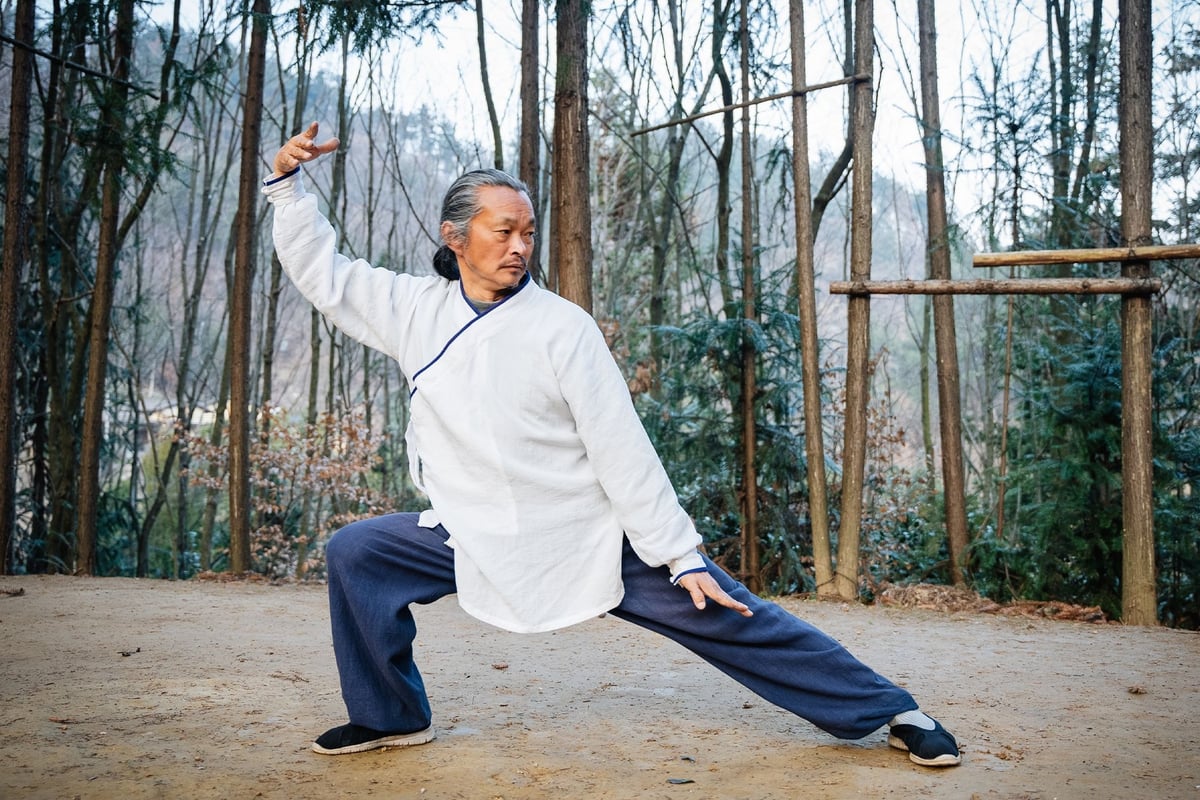
For some people, especially those new to mind-body practices, silence can feel uncomfortable. The quiet can reveal an inner restlessness that we normally cover with constant stimulation. Music can be a gentle bridge, making it easier to begin. Our article on Tai Chi relaxation offers more ideas for easing into practice.
As your comfort with inner awareness grows, you might naturally lean towards less accompaniment. Or you might find the right music continues to enhance your practice for years. Both paths are valid.
Supporting Consistency
One of music's greatest gifts is helping you build regular practice. If a particular playlist makes you look forward to your practice time, that's valuable. Consistency matters more than perfection when building a sustainable routine.
The forms themselves carry a great deal of wisdom about movement and awareness. Whether you practise tai chi to music or in silence, what matters most is practising with sincerity, patience, and gradual refinement.
Special Considerations for Different Practices
Not all Taoist wellness practices interact with music in the same way. Ba Duan Jin Qi Gong, for instance, consists of eight distinct exercises with clear beginning and ending points, so music with an obvious sectional structure can complement it nicely. You can explore flowing, gentle exercises like these in our Qi Gong course.
Flowing tai chi forms like those from the Wudang tradition move through continuous transitions, where one posture melts into the next. These forms often work better with music that's similarly continuous and seamless.
| Practice Type | Musical Approach | Why It May Work |
|---|---|---|
| Standing meditation | Silence or ambient nature sounds | Supports deep stillness and inner focus |
| Qi Gong sets | Structured instrumental pieces | Clear sections can match the exercise sequence |
| Flowing tai chi forms | Continuous, gentle instrumental | Supports seamless transitions |
| Moving meditation | Minimal soundscape or silence | Keeps awareness on subtle sensations |
Understanding these distinctions helps you make choices that honour each practice's unique qualities.
Listening to Your Own Wisdom
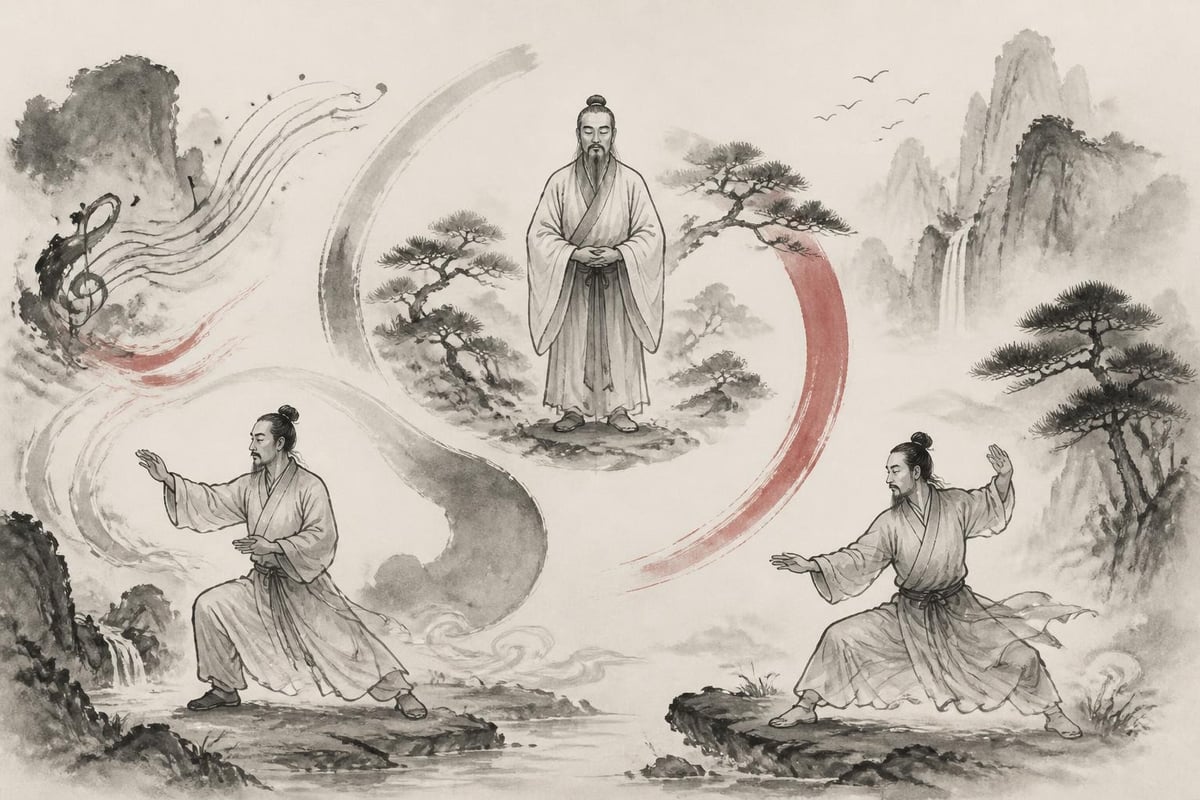
The Taoist approach to practice emphasises direct experience over rigid rules. Guidelines matter less than what you actually discover when you pay attention, and that applies perfectly to the question of tai chi to music.
Try both approaches. Notice what happens in your body, your breath, your mind. Some days you might want the structure of music, and other days silence might call to you. Your needs will shift with the seasons, your energy, and your life circumstances.
This flexibility isn't indecision. It's alignment with the Taoist understanding that everything changes, everything flows, and clinging to "the right way" creates tension. Your practice can be both disciplined and responsive.
Music and Memory
One benefit some people notice when practising tai chi to music is that it helps them remember a form. When you practise a form with particular music again and again, the movements and sounds become linked, which can make sequences easier to recall.
The effect works both ways: the music cues the movements, and moving while hearing the music strengthens the association. Over time, you might find you can practise silently and still "hear" the music in your mind, using it as a mental guide.
Creating Sacred Space with Sound
Music has been used in contemplative practices across every culture throughout history. Whether it's chanting, singing bowls, or traditional Chinese instruments, sound shapes the feeling of a special space.
When you practise tai chi to music, you're taking part in this ancient tradition of using sound intentionally. The music you choose becomes part of your practice environment, influencing not just the movements but the atmosphere you create.
That's why choosing music mindfully is itself a practice - an opportunity to clarify your intentions and create conditions that support your wellbeing.
Integration and Personal Path
Ultimately, the question of whether to practise tai chi to music reflects larger questions about how you relate to tradition, innovation, and your own inner authority. Authentic practice doesn't mean rigid adherence to one way of doing things. It means sincere engagement with these time-tested forms in ways that genuinely serve you.
Some days that might mean moving in complete silence, fully present to subtle sensations and inner quiet. Other days, gentle music might help you soften, relax, and stay with your practice when your mind wants to wander. Both approaches have their place, and both can be authentic expressions of this ancient art.
What matters is showing up, moving with awareness, breathing naturally, and gradually refining your practice. Whether you do this with musical accompaniment or in silence, you're taking part in a living tradition that continues to offer something valuable to those who practise sincerely.
Practising tai chi to music opens up possibilities for deeper engagement, whether you're just beginning or have years of experience with these forms. The key is to experiment mindfully and trust what your own experience teaches you. If you're ready to explore authentic Wudang practice, Taoist Wellness Online offers courses in Tai Chi, Qi Gong and Taoist meditation with Master Gu, a 15th-generation San Feng Pai Wudang Taoist Master with 25+ years of teaching experience, helping you build a practice that serves your path towards balance, vitality and inner peace.
Related reading