Is Tai Chi Walking Legit? The Truth About This Practice
Oct 17, 2026
You've probably heard about tai chi walking and wondered if it's the real deal or just another wellness trend dressed up in ancient-sounding language. It's a fair question. When something blends traditional practice with modern adaptation, scepticism is natural and healthy. The short answer is that tai chi walking has legitimate benefits and a growing body of encouraging research, but it's not quite what many people assume it is. Understanding what it involves, how it differs from traditional Tai Chi, and what the evidence suggests can help you decide if it's worth your time.
What Tai Chi Walking Actually Means
Tai chi walking isn't a separate martial art or a centuries-old secret technique. It's a modern term that describes bringing Tai Chi principles into the simple act of walking.
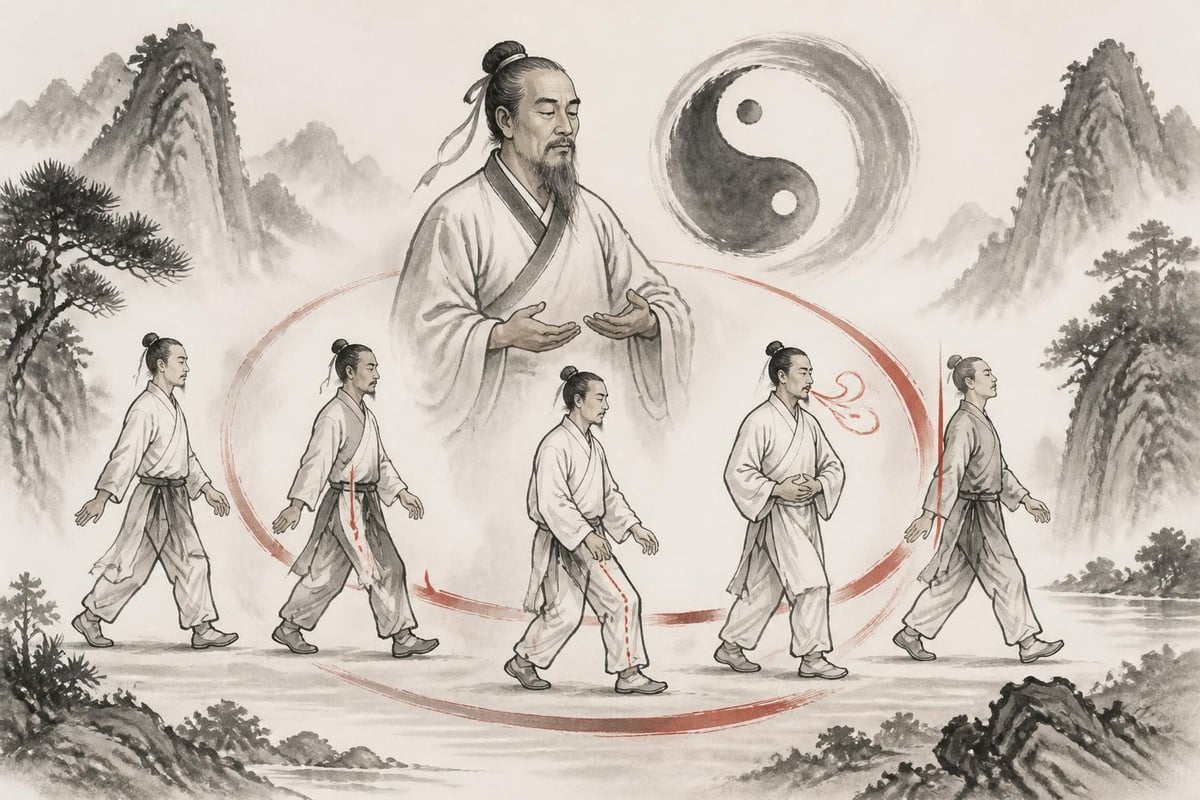
Think of it as mindful walking informed by Tai Chi's core elements: deliberate weight transfer, a rooted stance, relaxed posture, and breath awareness. When you practise tai chi walking, you're slowing down your normal stride and paying attention to how your body moves through space. If you'd like a fuller introduction, our guide to what tai chi walking is covers the basics.
The Core Components
Traditional Tai Chi forms, like those taught in Wudang Tai Chi, emphasise specific movements, while tai chi walking draws out the fundamental principles:
- Intentional weight shifting from one leg to the other
- Soft, bent knees that are kind to the joints and lower your centre of gravity
- Natural breathing that flows with your movement rhythm
- Present-moment awareness of physical sensations
- Relaxed shoulders and an upright spine to maintain alignment
The practice emerged as teachers and practitioners recognised that not everyone could commit to learning full Tai Chi forms, but could still benefit from applying its wisdom to everyday movement.
The Research Behind Tai Chi Walking
So is tai chi walking legit from a scientific standpoint? The evidence is nuanced but encouraging.
Most research doesn't isolate "tai chi walking" as a distinct intervention. Instead, studies look at traditional Tai Chi practice, mindful walking, or compare Tai Chi with conventional walking programmes. What we find is that elements common to tai chi walking are associated with encouraging results.
What Studies Suggest
Overviews of the research suggest that Tai Chi practice may improve balance, help reduce the risk of falls, support mental wellbeing, and support physical function in older adults. While that research focuses on full Tai Chi forms, the principles carried over into walking may well contribute similar benefits.
| Benefit Area | What Research Suggests |
|---|---|
| Balance & Fall Prevention | Improvements in stability and a lower risk of falls reported in many studies |
| Mental Wellbeing | Lower anxiety, better mood and a calmer stress response reported in some studies |
| Comfort & Mobility | Benefits reported for chronic pain, particularly musculoskeletal discomfort |
| Heart Health | Modest improvements in blood pressure and heart rate variability in some studies |
Recent comparative research suggests that when Tai Chi is compared with fitness walking programmes, both offer benefits, but in different ways. Tai Chi appears to excel at neuromuscular control and balance, while conventional walking may provide stronger cardiovascular conditioning at higher intensities. Results vary from person to person.
The Honest Limitations
It's important to acknowledge what we don't know. There aren't extensive randomised controlled trials specifically testing "tai chi walking" as described in popular media. Most evidence comes from:
- Traditional Tai Chi form practice
- General mindfulness-based movement interventions
- Walking programmes with added attention or balance components
That doesn't mean tai chi walking lacks legitimacy. It means the practice sits at the intersection of well-studied approaches rather than standing as a wholly separate, thoroughly tested intervention.
How It Differs From Traditional Tai Chi
If you're wondering whether tai chi walking can replace a complete Tai Chi practice, the answer is no, but that's not really the point.
Traditional Tai Chi, particularly the authentic Wudang forms taught by Master Gu, is a comprehensive system. It includes choreographed sequences, its martial roots, a close relationship with Qi Gong, and deeper philosophical dimensions rooted in Taoist wisdom.
What You Gain and Lose
Tai chi walking offers:
- Accessibility for beginners or those with mobility limitations
- Easy integration into daily routines (walking to the shops becomes practice)
- Immediate application without memorising forms
- A lower barrier to entry
Traditional Tai Chi provides:
- Systematic progression through established forms
- A connection to lineage and authentic transmission
- A natural pairing with Qi Gong and Taoist meditation
- Philosophical depth and a sense of tradition
- Community and structured learning
Think of tai chi walking as an entry point or complement, not a replacement. It's like learning scales on an instrument versus performing complete compositions. Both have value, but they serve different purposes.

Who Benefits Most From This Practice
Is tai chi walking legit for everyone? It's particularly valuable for certain groups, though nearly anyone can find something useful in it.
Older adults concerned about balance and falls often find it a gentle, welcoming practice. The deliberate pace and emphasis on stability speak directly to common challenges that come with ageing.
People living with chronic discomfort may find that gentler, more mindful movement patterns suit them better than high-impact activity. The practice encourages you to notice and respect your body's signals rather than pushing through discomfort.
Beginners intimidated by traditional Tai Chi can use tai chi walking as a bridge. You're developing body awareness and fundamental principles without the pressure of memorising sequences.
Special Considerations
Certain conditions call for caution or modification. Please check with your healthcare professional before starting, especially if you have:
- Advanced osteoporosis (ask about weight-bearing exercise)
- Recent joint surgery or injury (wait for medical clearance)
- Severe balance disorders (practise with support or supervision)
- An acute pain episode (rest first, then resume gently)
If you'd like to try it for yourself, our free 7-day Tai Chi Walking course offers a gentle, structured introduction to the foundational awareness that tai chi walking develops.
Practical Application: Making It Work
Knowing tai chi walking is legitimate is one thing. Practising it in a way that works for you takes a few practical details.
Getting Started Properly
-
Find your baseline. Walk normally for a few minutes and notice your natural gait, breathing, and where you hold tension.
-
Slow everything down. Reduce your pace to roughly half your normal walking speed. This feels awkward at first, and that's expected.
-
Focus on one element at a time. Start with weight transfer, then add breath, then posture. Trying to perfect everything at once creates frustration.
-
Practise in safe environments. Begin on flat, even surfaces without obstacles. Parks, quiet hallways, or your garden work well.
-
Keep sessions short at first. Five to ten minutes is plenty when starting. Quality of attention matters more than duration.
Common Mistakes to Avoid
Many people undermine their practice through well-intentioned but unhelpful habits:
- Forcing perfect form instead of exploring a comfortable, sustainable alignment
- Holding the breath while trying to coordinate movement (it's better to let breathing stay natural)
- Looking down constantly, which affects posture and spatial awareness
- Practising only when they remember rather than building a routine
- Skipping rest days, which can create fatigue rather than building capacity
George Thompson shares the common beginner mistakes and how to correct them in the short video below.
The Taoist approach emphasises effortless effort, finding ease within engagement. This isn't just philosophy; it's practical advice for sustainable practice.
Integrating Tai Chi Walking Into Your Life
The question "is tai chi walking legit" often really means "will this fit into my life and make a difference?" The answer depends largely on how you weave it in.
Daily Opportunities
You don't need special time carved out if you turn existing walking into practice:
- Walking from your car to the office entrance
- Moving between rooms in your home
- Evening strolls around your neighbourhood
- Walking your dog (they'll adjust to the slower pace)
Not sure where to practise? Our guide to finding tai chi walking locations has plenty of ideas.
Start with one regular walk a day where you apply tai chi principles. As it becomes natural, expand to other walking moments.
Combining With Other Practices
Tai chi walking works beautifully alongside:
- Gentle flowing movement from our Qi Gong course
- Calm focus from Taoist meditation
- Conventional walking or hiking for cardiovascular fitness
- Strength training for muscular health
| Practice Combination | Primary Benefit | Time Investment |
|---|---|---|
| Tai chi walking + Qi Gong | Gentle mobility and ease | 20-30 min/day |
| Tai chi walking + Meditation | Mental clarity and physical calm | 15-20 min/day |
| Tai chi walking + Regular exercise | Well-rounded fitness | 30-45 min/day |
It also helps to share the journey. You can swap ideas with fellow students in our friendly global community, where people talk about what works in real life rather than ideal conditions.
Measuring Your Progress
Without clear markers, it's hard to know if tai chi walking is working for you. Subjective benefits matter, but tracking specific changes helps maintain motivation and adjust your approach.
What to Track
Physical markers:
- Balance confidence (can you stand on one foot a little longer?)
- Joint comfort during and after walking
- Overall energy levels through the day
- Sleep quality
Mental indicators:
- Ability to stay present during practice
- Response to everyday stress
- Mental clarity and focus
- Mood steadiness
Functional improvements:
- Ease with daily activities (climbing stairs, carrying shopping)
- Less worry about falling or unsteadiness
- Better posture without conscious effort
- Smoother, more coordinated movement
Keep notes weekly rather than daily. Improvements often happen gradually, and daily ups and downs can hide genuine progress.
Realistic Timelines
Everyone is different, so treat these as a rough guide to what you may begin to notice:
- 2-3 weeks: often a growing comfort with the slower pace and deliberate movement
- 4-6 weeks: some people notice improved body awareness and balance confidence
- 8-12 weeks: some people notice steadier balance, greater ease and better stress management
- 3-6 months: settled habits, and sometimes an interest in deeper practice
Remember that traditional Tai Chi, as taught through authentic lineages like the Wudang tradition, is considered a lifelong practice. Tai chi walking can be the same, deepening over years rather than reaching a finish line.
When to Progress Beyond Tai Chi Walking
If tai chi walking resonates with you, there may come a point where exploring fuller practices makes sense. You might feel ready when:
- The basic principles feel natural and need little conscious attention
- You're curious about the energetic and philosophical dimensions
- You want structured progression and the company of fellow learners
- You sense tai chi walking has given you what it can at its current level
This isn't abandoning what works. It's honouring the foundation you've built and expanding on it. Many practitioners keep tai chi walking as a daily practice while also learning traditional forms, finding that each enriches the other.
Taoist Wellness Online offers a comprehensive curriculum that includes Tai Chi forms, Qi Gong, meditation, and philosophical study. For those who discovered the value of mindful movement through tai chi walking, it's a natural next step with Master Gu, a 15th-generation San Feng Pai Wudang Taoist Master with 25+ years of teaching experience.
Addressing Common Questions
Is tai chi walking just slow walking?
Not quite. While the pace is slow, the distinguishing features are the intentional weight shifting, postural alignment, natural breathing, and cultivated awareness. Regular slow walking doesn't typically include these elements.
Can I learn this from videos alone?
You can learn the basics, but it helps to follow a clear, structured path. Good lessons, a supportive community and the monthly live session and Q&A in Taoist Wellness Online can all help you notice and refine your habits.
How slow should I actually walk?
Slow enough that you can feel each phase of weight transfer and keep your breathing steady. The right speed varies from person to person, so let comfort be your guide.
Does it matter what shoes I wear?
Choose flat, flexible shoes with good ground feel, or practise barefoot on safe surfaces. Avoid very thick cushioning that disconnects you from the ground, or unstable shoes that compromise balance.
Can tai chi walking help with specific conditions?
Research suggests Tai Chi-based movement may offer benefits for balance, comfort and general wellbeing, and some studies have looked at conditions such as chronic pain and anxiety. However, it's not a substitute for medical treatment, so please speak to your healthcare professional about exercise for any specific condition.
Tai chi walking can sit alongside, but should not replace, professional support. If you're struggling with anxiety, low mood or stress, please also speak to your GP or a qualified professional.
Making Tai Chi Walking Your Own
The legitimacy of tai chi walking ultimately shows up in your own experience. Research gives some confidence that the approach has merit, but your body and mind provide the final evidence.
Approach it as an experiment rather than a commitment. Try it consistently for six weeks. Notice what changes and what doesn't. Adjust based on your observations. The practice should feel nurturing, not punishing.
Some people find tai chi walking becomes a beloved daily ritual. Others use it as a gateway to deeper Taoist practices. Still others take what's useful and blend it with their existing routines.
There's no single right way, which fits Taoist wisdom beautifully: the path that works for you is the authentic path, however it compares with others' experiences.
If you're drawn to explore further, our reading list offers resources on Taoist philosophy and practice that deepen understanding of the principles behind these movement approaches.
Is tai chi walking legit? The research and the experience of many practitioners suggest it can be, especially when it's understood as a mindful movement practice rooted in Tai Chi principles rather than a miracle cure. If you're ready to explore authentic Tai Chi, Qi Gong, and Taoist meditation, Taoist Wellness Online offers courses with Master Gu, a 15th-generation San Feng Pai Wudang Taoist Master with 25+ years of teaching experience, along with a supportive global community and a monthly live session and Q&A for practitioners at every level.