Reverse Breathing Technique Explained: Ancient Practice
Oct 21, 2026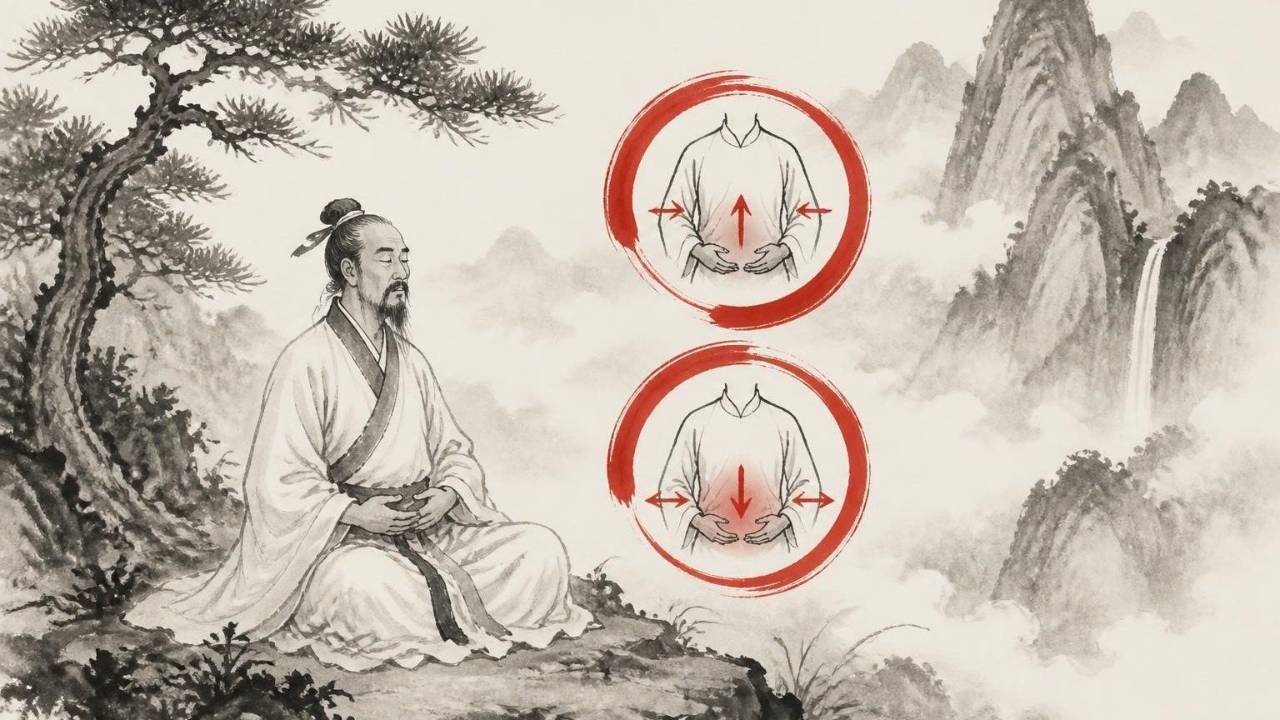
When you first encounter the reverse breathing technique explained in Daoist practice, it might seem counterintuitive. In normal breathing, your lower abdomen expands as you breathe in. In reverse breathing, the pattern is turned around. This ancient method, also known as "true person breathing," belongs to the Wudang Daoist meditation tradition and offers a gateway to deeper body awareness and a steadier sense of presence. Understanding it takes patience, respect for tradition, and gentleness, because what feels "reversed" can become a valuable tool when practised softly and correctly.
What Makes Reverse Breathing Different
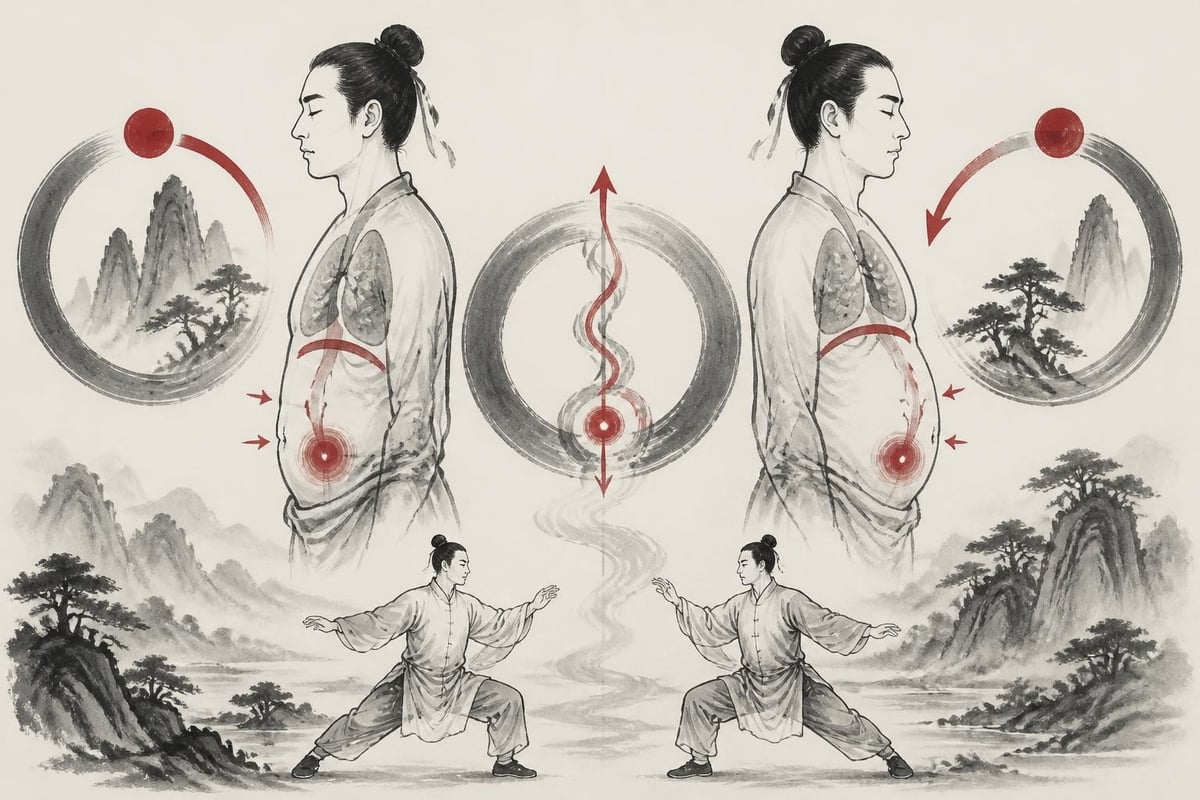
Reverse breathing stands apart from the natural breathing you've done since birth. In normal breathing, as you inhale, your lower dantian area comes out and your belly expands. As you exhale, the air goes out and the belly softens back in. The whole process feels effortless and automatic.
With reverse breathing, the pattern is intentionally turned around. As you inhale, your lower abdomen goes inward instead of out. In his lesson, Master Gu also describes starting the inhalation with a light tensing, or lifting, of the perineum (sometimes described as "raising the buttocks"), as taught in an earlier lesson. This should always be light and gentle, never forced.
This isn't the same as paradoxical breathing, which can sometimes happen with breathing difficulties. If you ever notice unusual or uncomfortable breathing in daily life, please speak to your healthcare professional.
The Mechanics Behind the Method
Understanding the basics helps you practise safely. The key idea is subtle: the lower belly draws gently inward on the inhale, and you release on the exhale. For the exact pattern, it's best to follow the lesson itself.
Key components include:
- A gentle abdominal draw: the lower belly moves inward on the inhale, instead of expanding
- A light lift of the perineum at the start of the inhale, as taught in the lesson, never clenched or strained
- A gentle release on the exhale, following the lesson's guidance
- Relaxed shoulders, throat and jaw: no tension anywhere else
- Calm attention: awareness stays with the sensation of breathing
With time the pattern can become more familiar, though it asks for steady attention in the early stages.
Historical Context in Wudang Traditions
Reverse breathing in the Wudang lineage carries generations of refinement. Master Gu brings these teachings from centuries of accumulated wisdom, passed from teacher to student.
The practice is also called "true person breathing." In Daoist circles, those who reach a high level through practice become known as "zhen ren," which literally means "true person." The name reflects the idea of returning to a more natural, original way of being.
Reverse breathing is taught as part of a step-by-step series of lessons, and an introduction is only the beginning. Some practitioners never learn reverse breathing at all, while others make it a part of their practice.
Traditional Associations
| Practice Area | How Reverse Breathing Is Traditionally Used |
|---|---|
| Meditation | To settle the mind, often with gentle imagery or a calming phrase |
| Energy awareness | To make the flow of qi easier to sense, in the Daoist view |
| Tai Chi forms | Not used - natural breathing is kept during the forms |
Physical Effects and Applications
Some practitioners find that reverse breathing brings a greater awareness of their core and the movement of their breath. The conscious coordination of breath and abdomen may support a sense of better posture over time, although scientific research on this specific technique is limited and results vary from person to person.
Things practitioners often report include:
- A stronger sense of core awareness
- Greater awareness of internal physical sensations
- A feeling of being more grounded and focused
Energy Cultivation Perspective
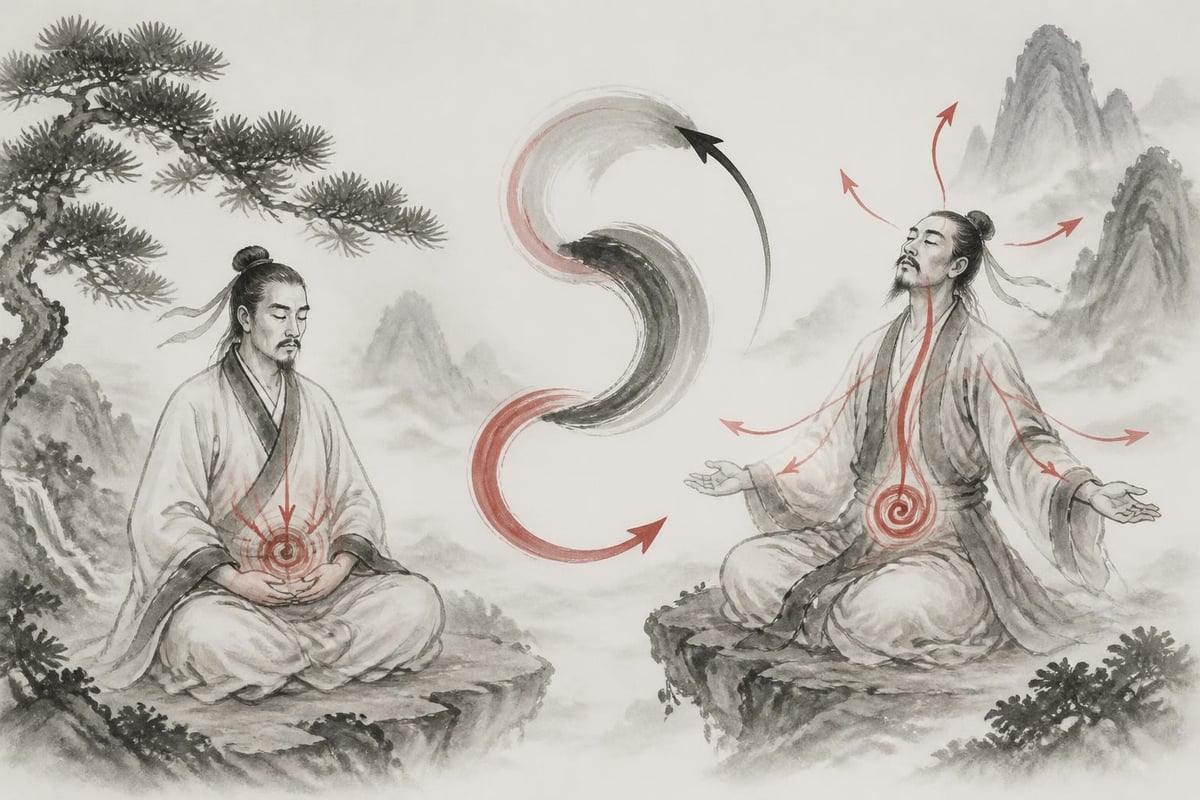
In the Daoist view, reverse breathing follows the microcosmic orbit: the breath is imagined travelling up the back and down the front. In the lesson, Master Gu explains that this reversal makes the flow of qi feel more obvious than it does in normal breathing, and that you can feel the reverse movement more strongly.
He also offers gentle tools to support the practice. One is a calming phrase, "xin ping, qi he," which means an even heart and harmonious qi. Another is imagery, such as imagining heavenly rain coming down to nourish the three dantian fields. These are optional aids, not requirements, and the emphasis is always on relaxation. There's no need to chase or look for sensations.
How to Practise Safely
Safety matters with any breathing technique. Reverse breathing should never feel forced or cause discomfort. Your practice should feel like gentle exploration, not effort.
Start by making sure you're comfortable with natural breathing. Spend time simply observing your breath without changing it. Notice how your belly naturally expands on the inhale and softens on the exhale. This baseline awareness helps you understand what you're intentionally reversing.
Step-by-Step Learning Process
- Find a comfortable seated position with your spine naturally upright
- Place one hand on your chest and one on your belly to notice movement
- Breathe naturally for several minutes to settle your mind and body
- As you inhale, gently draw your lower belly inward, with only a light lift at the perineum as taught in the lesson
- Release gently as you exhale, following the lesson's guidance
- Practise for only 2-3 minutes at first, then return to natural breathing
- Build up gradually over weeks and months, not days
Please check with your healthcare professional before trying this. Do not practise reverse breathing if you are pregnant or have recently had abdominal surgery, and speak to your healthcare professional first if you have a hernia, a pelvic floor concern, a heart or breathing condition, high blood pressure, or any other health concern. This technique changes the way you use your abdomen and may not suit every body or situation. If you ever feel dizzy, uncomfortable or short of breath, stop and return to natural breathing.
Common Mistakes to Avoid
Many beginners try too hard. The Wudang approach emphasises gentleness above all. The abdominal movement and the light lift at the perineum should feel subtle, never like a forceful squeeze.
Watch for these common errors:
- Holding your breath or creating tension in your throat
- Clenching the pelvic floor or forcing your belly with too much muscular effort
- Practising for too long before your body has adapted
- Combining it with vigorous exercise
- Forgetting to return to natural breathing between sessions
Your shoulders should stay relaxed throughout. If you notice tension in your neck, jaw, or upper back, you're probably trying too hard. Return to natural breathing and begin again with less effort.
Reverse Breathing and Tai Chi Practice
It's easy to assume that reverse breathing belongs inside Tai Chi practice, but it doesn't. In his lesson, Master Gu is clear that while practising Tai Chi, even in a classic movement such as Brush Knee and Push, we don't use reverse breathing. Instead, the breath flows naturally from the dantian: you simply inhale and exhale.
So keep reverse breathing as a separate practice, and let your breath stay natural while you move through a form. For more on how breath works in Tai Chi, see our guide to Tai Chi breathing.
Qi Gong and Meditation
Breath awareness runs through Qi Gong and meditation as well, and reverse breathing is best understood as a meditation-style practice that sits alongside them. If you'd like structured guidance, our Taoist meditation course includes a lesson introducing reverse breathing, which is a good place to begin.
Mental and Emotional Effects
Beyond the physical, many people find that reverse breathing affects their state of mind. The extra attention it needs naturally draws focus inwards, which can make it a useful companion to meditation practices that cultivate deeper awareness.
Many practitioners report feeling more grounded and centred after a short session. Experiences vary, and it isn't a treatment for any condition.
| What You May Notice | How It May Develop |
|---|---|
| Better concentration | Sustained attention on the breath trains focus |
| A steadier mood | Slow, gentle breathing may help you feel calmer |
| Present-moment awareness | Physical sensation anchors your attention in the now |
| Less mental chatter | An active practice gives a busy mind something to do |
Meditation and breathing practices can sit alongside, but should not replace, professional support. If you're struggling with anxiety, low mood or stress, please also speak to your GP or a qualified professional.
Building Inner Stillness
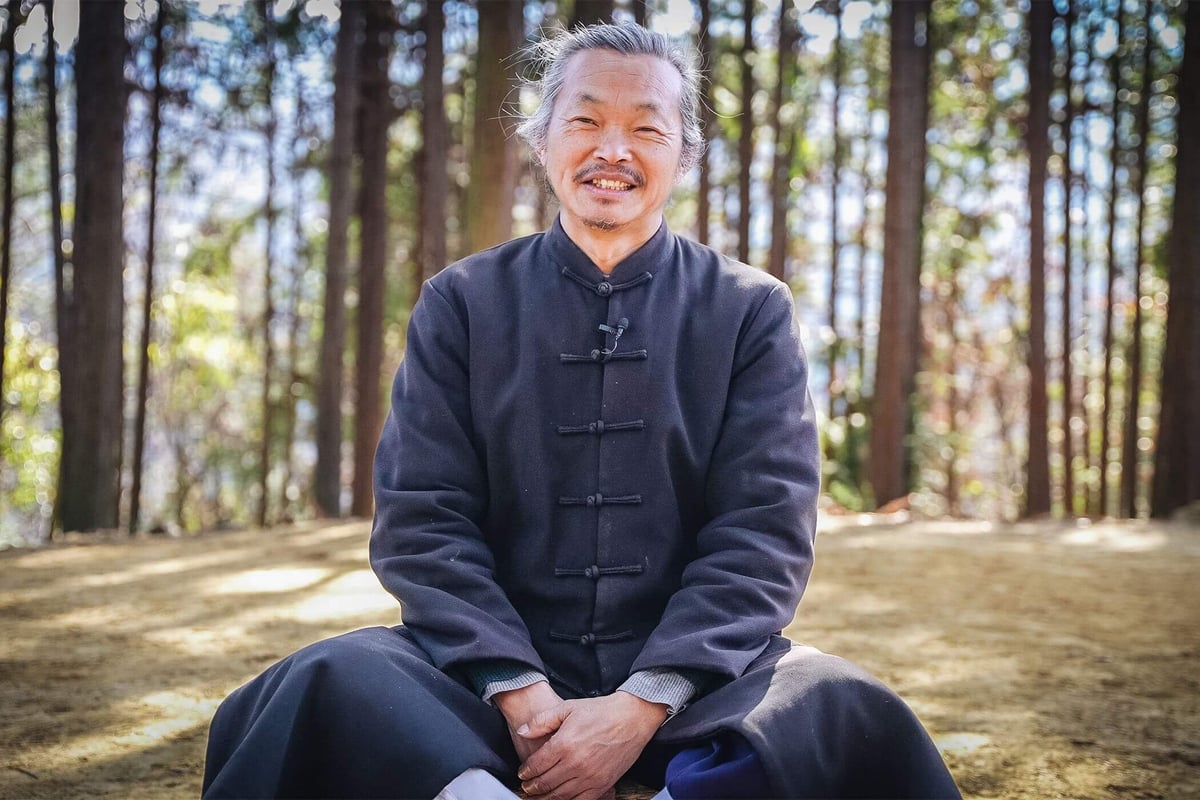
Breath can be a bridge between active practice and stillness. In Taoist meditation, gentle breathing methods are often used to settle the mind before moving into quieter, more natural breathing. George Thompson guides a related Taoist practice, True Breathing, in the video below, which shows how slow, soft breathing can lead into spacious awareness.
As always, go gently and return to natural breathing whenever you wish.
When to Practise and When to Rest
Timing matters. Morning practice, when your mind tends to be clearer and your body has less accumulated tension, is a lovely time for many people.
Avoid practising immediately after a large meal. Abdominal movement can feel uncomfortable on a full stomach, so it's wise to wait at least two hours after eating.
Good times to practise include:
- Early morning, before breakfast
- Mid-afternoon, during a natural energy dip
- During seated meditation, as appropriate to your level
- Whenever you feel scattered and need to settle
Evening practice can suit some people, while others find it too stimulating before sleep. Experiment gently and adjust to how your body responds.
Knowing Your Limits
Reverse breathing isn't meant for constant use. Even experienced practitioners typically alternate between reverse and natural breathing. Continuous use can create tension and leave you tired.
Listen to your body. If you experience dizziness, pressure in your head, or unusual fatigue after practice, you're probably doing too much. Reduce the duration, or take a break for several days before resuming gently. Some days natural breathing simply serves you better, and the Taoist approach values flexibility over rigid schedules.
Progressing Gradually
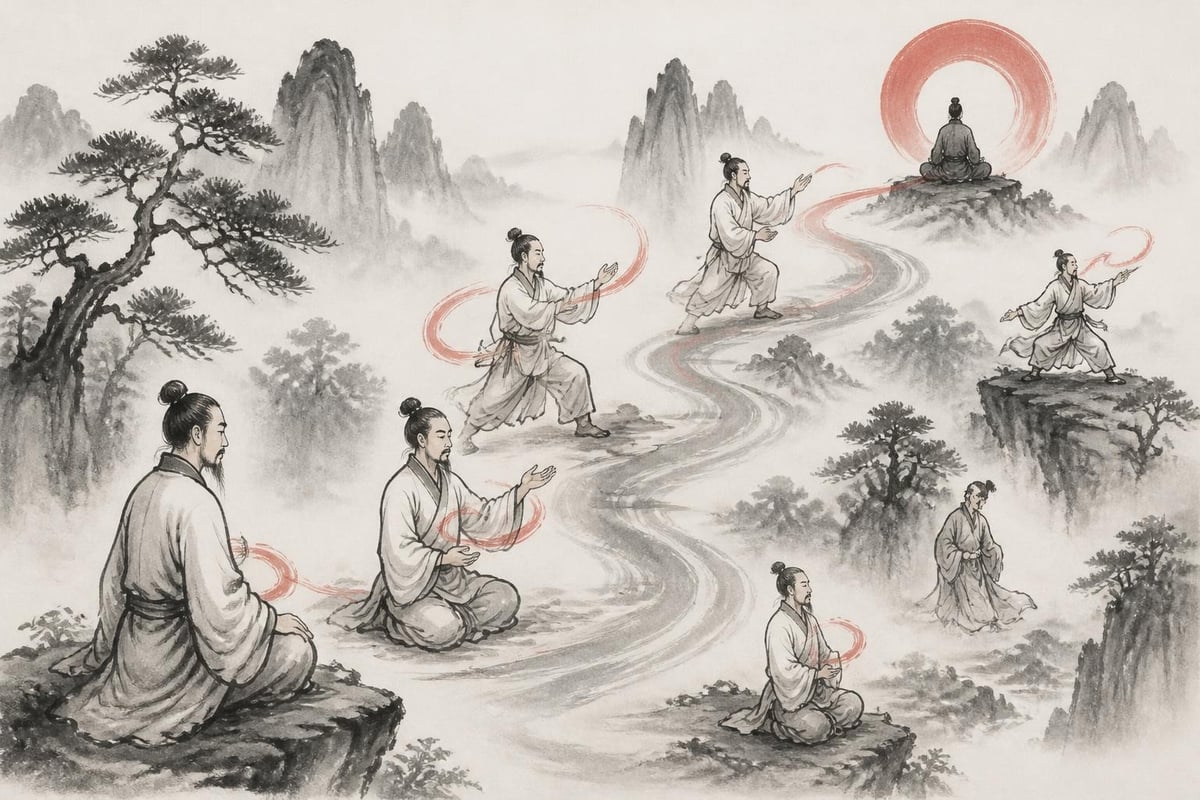
As the basic pattern becomes comfortable, practice can slowly become more refined, but there's no race. A gradual, patient approach is the safest and most enjoyable one.
A Rough Guide to Progress
| Stage | What It Often Feels Like | Rough Time Frame |
|---|---|---|
| Beginner | Learning the basic pattern, building coordination | Often several months of regular practice |
| Intermediate | Smoother, more relaxed use within meditation | Often a year or more |
| Experienced | Subtle, spontaneous use alongside natural breathing | Several years of steady practice |
These timeframes vary greatly from person to person. Practising without clear guidance can mean it takes longer and makes unhelpful habits more likely, so follow well-structured lessons and go at your own pace.
Addressing Common Concerns
Many students worry they're doing it wrong when they first learn reverse breathing. This often shows healthy awareness rather than a real problem. In his lesson, Master Gu acknowledges that you may find it a little difficult at first because you're used to breathing the normal way, and that's completely natural.
Frequently asked questions include:
- Should I practise every day? Start with 2-3 short sessions a week and increase gradually as it feels comfortable
- How long before I notice anything? Many people notice greater awareness within weeks, but experiences vary
- Should I use it while doing Tai Chi? No - keep your breathing natural during Tai Chi forms
- Is some discomfort normal? Mild muscle tiredness can be, but pain, pressure or dizziness is not - stop and rest
Remember that every practitioner's journey is different. Your body, your movement history and your natural breathing patterns all shape how it develops, and comparing yourself with others rarely helps.
Cultural and Philosophical Context
Taoist philosophy adds depth to the mechanical side of practice. The Dao teaches that opposites contain and create each other. Reversing natural breathing reflects this principle, using an apparent contradiction to explore deeper harmony.
The technique also reflects the Taoist value of working skilfully with nature rather than forcing outcomes. You're not fighting your body's wisdom but widening its vocabulary. Natural breathing always remains your foundation, and reverse breathing is simply one more tool.
Modern Adaptation
Today's practitioners can enjoy this ancient wisdom while adapting it to modern life. You don't need to live in a mountain monastery to practise well. Consistency matters more than perfect conditions, and technology now makes authentic teaching available to people who once couldn't reach it.
Finding Qualified Guidance
Articles like this one give useful context, but clear, structured instruction is the best way to learn a breathing practice well. Online learning has one limitation: a teacher can't see you or physically adjust you through a screen. That's why it's important to go slowly, follow guided lessons closely, and stop if anything feels uncomfortable.
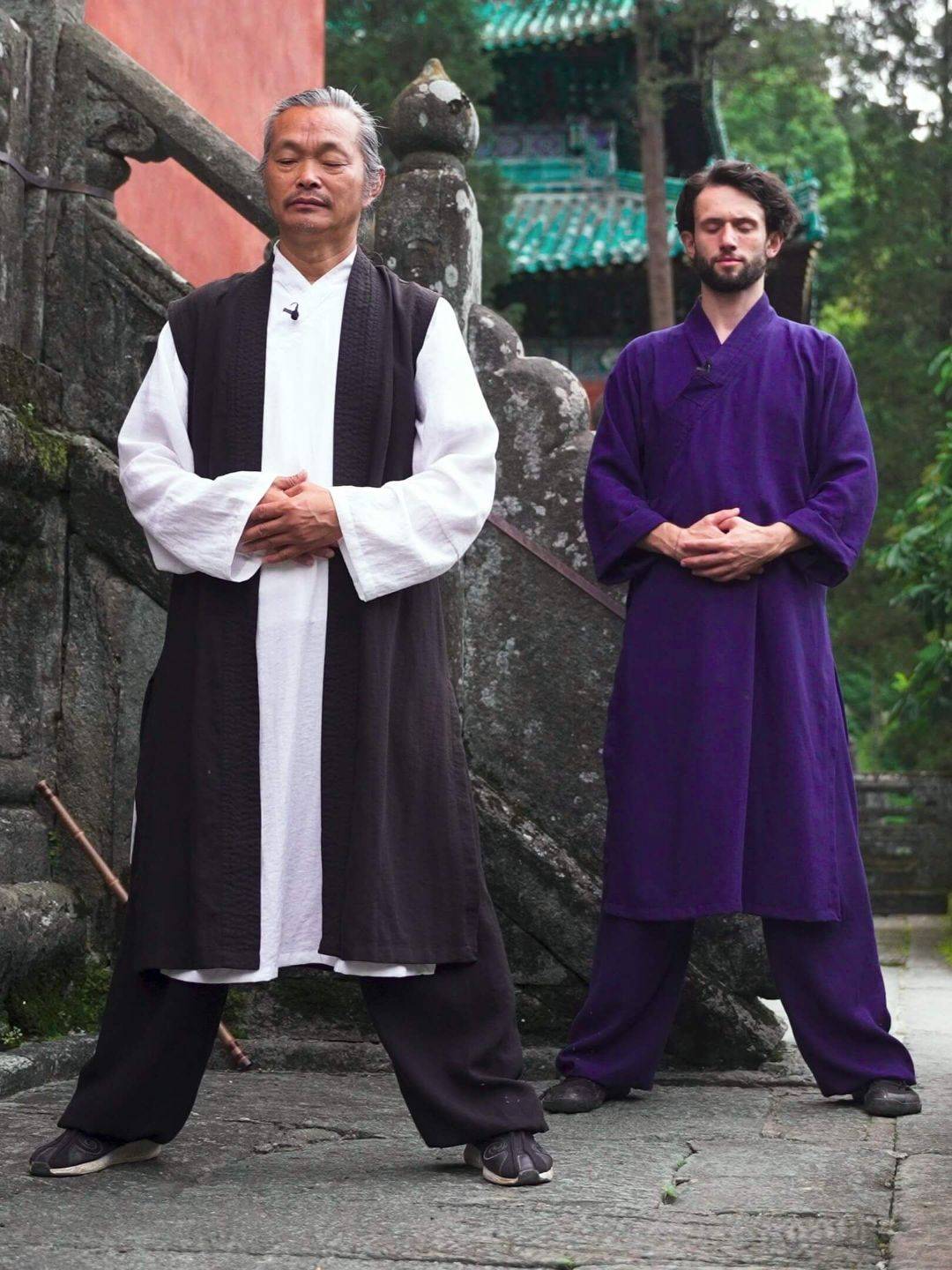
If you'd like to experience Wudang-style guidance first, our free Taoist course offers a gentle introduction to Tai Chi, Qi Gong and meditation with Master Gu, so you can see whether the teaching style suits you.
Community Support
Practising alongside others brings encouragement and shared learning. Other people's questions often shine a light on things you hadn't considered, and their progress can inspire your own. You can connect with fellow practitioners from around the world who share an interest in authentic Wudang practice and swap experiences as you explore breath, movement and meditation together.
Reverse breathing, as taught in the Wudang tradition, can be a rewarding tool for body awareness, focus and calm when approached with patience, gentleness and proper care. Rather than forcing results, let your practice unfold naturally over time. Taoist Wellness Online offers courses in Tai Chi, Qi Gong and Taoist meditation with Master Gu, a 15th-generation San Feng Pai Wudang Taoist Master with 25+ years of teaching experience, a monthly live session and Q&A, and a supportive global community to help you practise safely and at your own pace.