Guan Dao: The Legendary Weapon of Chinese Martial Arts
Oct 20, 2026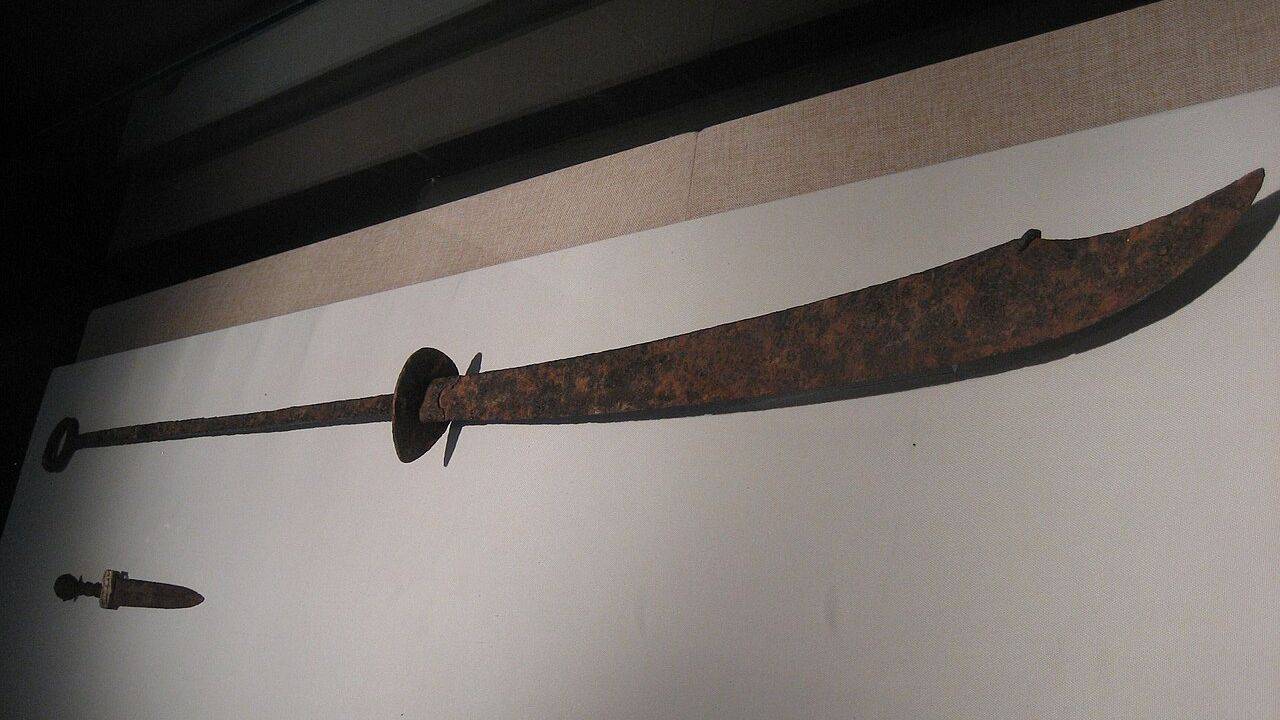
The guan dao stands as one of the most recognisable weapons in Chinese martial arts history, a curved-blade polearm that carries centuries of military tradition and cultural symbolism. Also known as the yanyuedao (crescent moon blade) or simply the guandao, this distinctive weapon has moved beyond its battlefield origins to become an enduring symbol of strength, loyalty, and martial skill. For students of traditional Chinese martial arts, understanding the guan dao means exploring not just a physical weapon, but a living connection to ancient wisdom, legendary heroes, and the philosophy that shapes Wudang Tai Chi and other internal arts today.
The Historical Origins of the Guan Dao
The guan dao emerged during China's medieval period, though its exact origins remain a subject of scholarly debate. While popular legend associates this polearm with the Three Kingdoms era (220-280 CE), historical evidence suggests the weapon's development came later, during the Song dynasty (960-1279 CE).
Military Function and Design Evolution
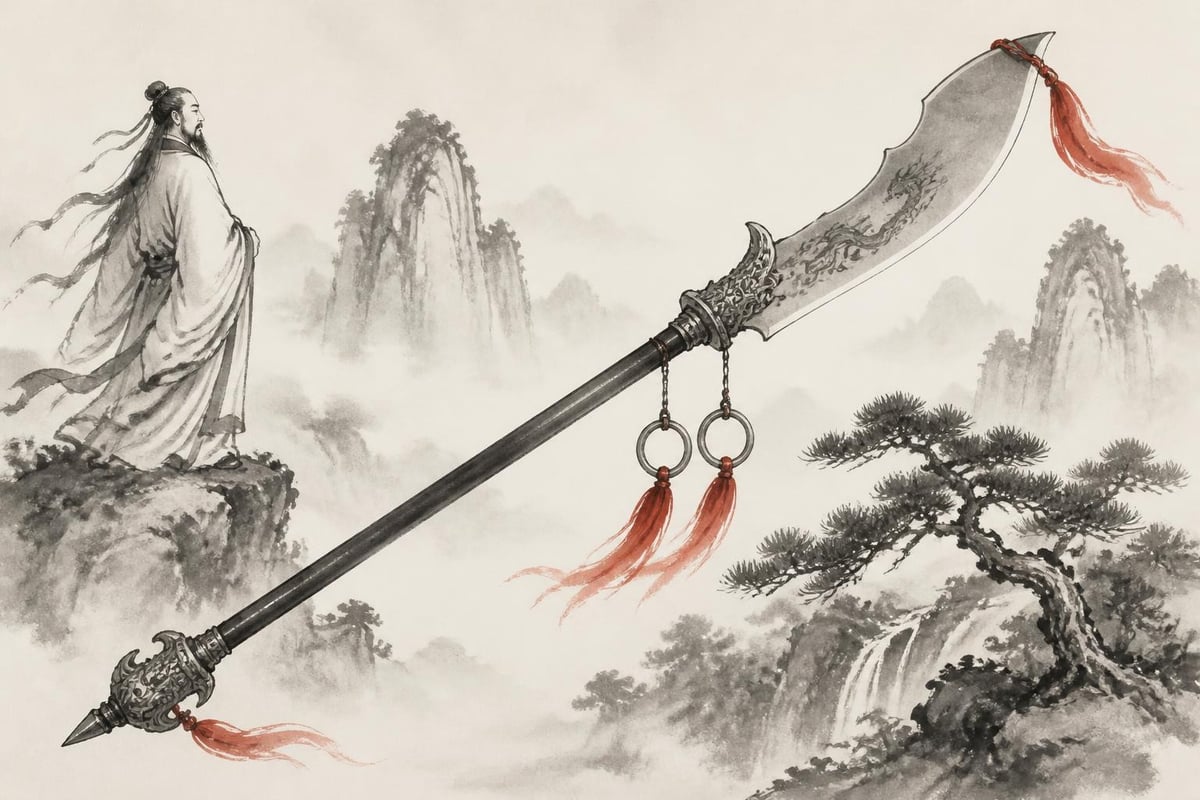
The practical guan dao served as a cavalry weapon designed for sweeping strikes from horseback. Its distinctive features include:
- A long wooden shaft, typically 1.5 to 2 metres in length
- A heavy, curved blade mounted at one end
- A weighted pommel or spike at the opposite end for balance
- Metal rings attached near the blade that produced sound during movement
- Decorative elements including tassels and blade engravings
The weapon's design reflected sophisticated metalworking knowledge. Chinese weapon makers developed advanced techniques for creating large, durable blades that could withstand the stresses of combat while keeping a sharp edge.
Weight and handling made the guan dao a strength-building tool as much as a weapon. Historical examples are said to have weighed between 2 and 9 kilograms, demanding considerable physical conditioning to wield effectively.
The Legend of Guan Yu and Cultural Significance
The guan dao's most famous association connects it to Guan Yu, the legendary general of the Three Kingdoms period. Though historical records don't confirm that Guan Yu actually wielded this type of weapon, literature and folklore firmly established the connection.
The Green Dragon Crescent Blade
According to the classic novel Romance of the Three Kingdoms, Guan Yu carried the Green Dragon Crescent Blade, a guan dao of mythical proportions. This legendary weapon supposedly weighed 82 Chinese pounds and possessed supernatural qualities.
The story elevated both the general and his weapon to mythological status. Guan Yu became revered as Guan Di, a god of war and protector deity, worshipped across China and beyond. His iconic weapon became equally symbolic.
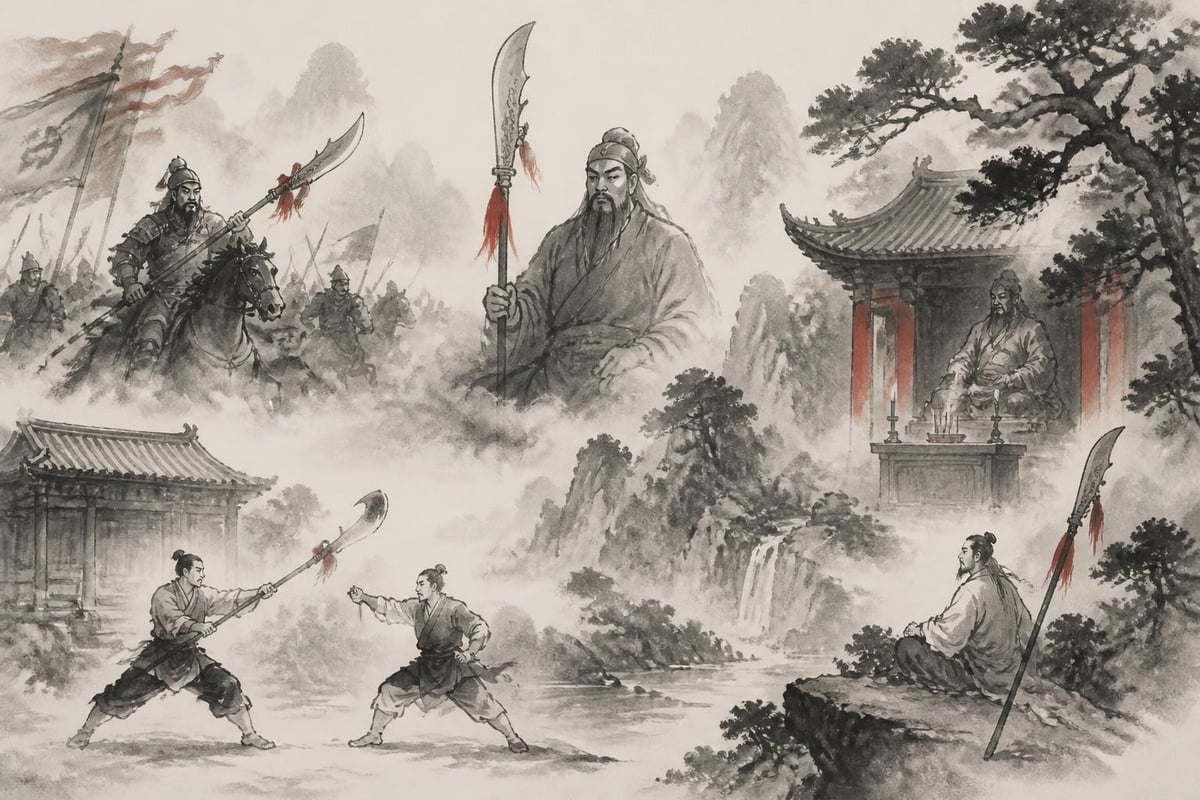
You can still see ceremonial guan dao at temples dedicated to Guan Yu, where they remain on display as sacred objects rather than functional weapons. These representations continue to influence how practitioners approach the weapon in modern training.
Symbol of Righteousness and Loyalty
In Taoist and Buddhist traditions, Guan Yu embodies righteousness, loyalty, and protective power. The guan dao, by extension, represents:
- Moral integrity in the face of adversity
- Strength tempered by wisdom
- Protection of the community and just causes
- Balance between force and restraint
This philosophical dimension makes the guan dao relevant beyond combat, connecting it to the deeper principles explored in Taoist philosophy and the internal martial arts.
Guan Dao in Traditional Martial Arts Practice
While the guan dao began as a battlefield weapon, its role evolved significantly as Chinese martial arts developed. Today, the weapon appears mainly in traditional forms (taolu) and conditioning exercises.
Training Benefits and Physical Cultivation
Practising with a guan dao is associated with distinctive physical benefits:
- Full-body strength development, particularly in the legs, core, and shoulders
- Coordination training through complex movement patterns
- Balance refinement from managing the weapon's weight distribution
- Stamina from sustained practice sessions
- Posture awareness through careful stance work
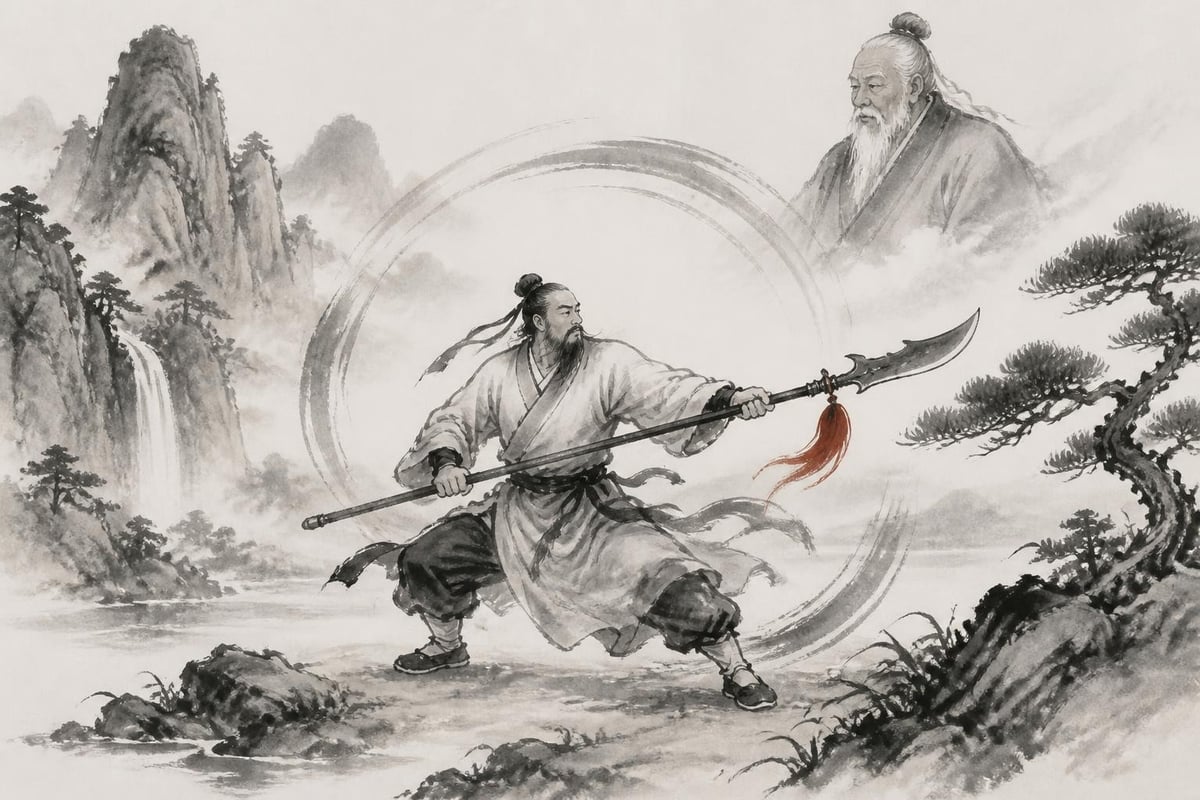
The weapon's weight naturally encourages practitioners to develop rooted stances and good body mechanics. You can't muscle through guan dao techniques; the weapon calls for efficient movement that begins from the centre, much like the principles emphasised in Wudang Tai Chi forms.
Traditional Forms and Techniques
Guan dao forms include several characteristic techniques:
| Technique Type | Description | Training Focus |
|---|---|---|
| Sweeping cuts | Wide, horizontal arcs | Hip rotation and power transfer |
| Vertical chops | Downward strikes | Core stability and control |
| Blocks and parries | Defensive redirections | Timing and spatial awareness |
| Spins and turns | Circular body movements | Balance and managing momentum |
| Thrusts | Forward piercing motions | Extension and retraction |
Each movement pattern teaches specific martial principles while building the practitioner's physical capacity. The weapon becomes a teacher, revealing weaknesses in structure and highlighting where tension blocks natural movement.
Integration with Internal Martial Arts Philosophy
The guan dao holds special significance within the context of internal martial arts like Tai Chi and Qi Gong, where a weapon is treated as an extension of the body and its intention. For more on how Taoist ideas and martial training connect, see our article on Taoism and the martial arts.
Relaxed Movement and Breath Awareness
Weapon practice in the internal tradition encourages qualities that many people also value in Qi Gong:
- The weapon's weight encourages rooted, well-aligned stances
- Smooth, continuous movement supports a sense of flow
- Relaxed, focused attention keeps the mind present
- Natural breathing coordinated with movement deepens the mind-body connection
- Grounded footwork builds a feeling of stability
These principles align with the gentle, relaxed approach taught in Qi Gong, where ease and awareness take precedence over external force. If you'd like to try that approach for yourself, our free Taoist course is an easy introduction.
Wu Wei and Effortless Power
The Taoist concept of wu wei (effortless action) applies beautifully to guan dao practice. Rather than forcing the heavy weapon through its movements, skilled practitioners learn to:
- Work with the weapon's natural momentum
- Use circular motions that conserve and redirect effort
- Time movements to flow with gravity rather than against it
- Keep the grip soft while generating power
- Stay centred whatever the weapon's position
This approach turns weapons practice from purely physical training into a moving meditation that cultivates presence and harmony.
To be clear, we don't teach the guan dao at Taoist Wellness Online. Our courses cover Tai Chi, Qi Gong, Taoist meditation and Taoist philosophy with Master Gu. But the principles that make guan dao practice work - a rooted stance, relaxed power and calm focus - sit at the heart of that teaching.
Modern Practice and Cultural Preservation
Today, the guan dao continues to appear in various contexts, from martial arts schools to cultural performances and film.
Contemporary Training Approaches
Modern practitioners work with the guan dao in several ways:
- Traditional forms passed down through established lineages
- Strength training using the weapon as a conditioning tool
- Performance routines for demonstrations and competitions
- Historical research and reconstruction of older techniques
- Spiritual practice connecting to the weapon's symbolic meaning
Many schools use lighter training versions for beginners, gradually increasing weight as students develop strength and technique. If a traditional weapon form appeals to you, the Taiji sword is a gentler place to begin, and our Tai Chi course includes an advanced Wudang Taiji Sword form. You can read more in our introductory guide to the Wudang San Feng Tai Chi Sword.
The Weapon in Popular Culture
The guan dao maintains strong visibility in popular culture through:
| Medium | Representation | Impact |
|---|---|---|
| Historical films | Guan Yu's legendary battles | Reinforces heroic associations |
| Martial arts cinema | Spectacular fight choreography | Introduces the weapon to new audiences |
| Video games | Character weapons and abilities | Modernises traditional imagery |
| Opera and theatre | Stylised combat sequences | Preserves performance traditions |
| Temples and museums | Sacred and historical displays | Maintains cultural memory |
These representations keep the guan dao alive in contemporary imagination, though they sometimes put spectacle ahead of authentic martial principles.
Training Considerations for Modern Practitioners
If you're interested in traditional weapons practice, several factors deserve consideration.
Physical Prerequisites and Safety
Before beginning heavy weapon training, it helps to:
- Build foundational strength through bodyweight exercises and basic empty-hand work
- Develop flexibility in the shoulders, hips, and spine
- Build stamina to sustain practice sessions
- Learn basic stances from empty-hand training
- Understand proper warm-up and conditioning
Safety comes first. The weapon's weight and momentum can cause injury if handled carelessly, so always learn under qualified instruction, start with lighter training tools, and progress gradually. As with any new exercise, please check with your healthcare professional first if you have existing health concerns.
Finding Authentic Instruction
Good instruction for any traditional weapon means finding teachers with a genuine lineage and understanding. Look for instructors who:
- Demonstrate clear technical skill in fundamental techniques
- Explain underlying principles rather than just movements
- Emphasise safety and steady progression
- Connect weapons work to the broader martial philosophy
- Maintain respect for the weapon's cultural significance
The Wudang tradition emphasises authentic transmission of knowledge through lineage holders like Master Gu, helping preserve the depth and integrity of classical Chinese martial arts.
Building a Practice Routine
An effective routine for traditional weapons training balances several elements:
- Fundamental stance work as the foundation
- Basic technique drills to build skill
- Form practice to bring it all together
- Conditioning exercises integrated throughout
- Rest and recovery, essential for avoiding injury
Consistency matters more than intensity. Short, regular sessions build skill more effectively than occasional marathon training.
The Philosophical Dimensions of Weapons Training
Beyond physical benefits, traditional weapons practice offers opportunities for personal development.
Character Development Through Challenge
Working with a demanding weapon can cultivate:
- Patience as skills develop slowly over time
- Humility when facing physical limitations
- Perseverance through plateaus and difficulties
- Respect for the tradition and those who preserved it
- Self-awareness as the weapon reveals tension and imbalance
These qualities reach far beyond the training hall, influencing how practitioners meet daily challenges and relationships.
Meditation in Motion
When approached mindfully, weapon practice can become a form of moving meditation. The weapon's weight anchors attention in the present moment, making it hard to practise while mentally distracted.
This quality aligns with the principles of Taoist meditation, where sustained focus and body awareness nurture inner stillness. The rhythmic sound of the weapon's rings can even serve as a meditative anchor, much as the breath does in seated practice.
Connecting to Lineage and Tradition
Learning traditional forms creates a living connection to previous generations of practitioners. Each movement carries the accumulated wisdom of countless martial artists who refined and passed on the art.
This sense of continuity gives meaning beyond personal achievement, connecting individual practice to something larger. For many practitioners, it becomes one of the most rewarding aspects of traditional training.
Practical Applications Beyond Combat
While the guan dao no longer serves its original military purpose, traditional weapons training can offer surprisingly relevant benefits for modern life.
Strength and Conditioning
The physical demands may translate to everyday fitness:
- Core stability, which supports good posture
- Grip strength, useful in daily activities
- Leg strength, supporting general fitness
- Shoulder mobility, supporting upper body comfort
- Stamina and a general sense of vitality
Results vary from person to person, and these benefits sit well alongside gentler practices like Tai Chi and Qi Gong, creating a well-rounded approach to physical wellbeing.
Mental Focus and Stress Relief
The concentrated attention that safe, effective practice requires can offer:
- Mental clarity through sustained focus
- A release from daily tension through movement and mindfulness
- Confidence from mastering challenging skills
- Creativity in expressing techniques personally
- Joy in the simple pleasure of movement
Many practitioners find traditional training a welcome contrast to sedentary, screen-dominated modern life. It can sit alongside, but should not replace, professional support - if you're struggling with stress, anxiety or low mood, please also speak to your GP or a qualified professional.
Cultural Connection and Appreciation
Engaging seriously with the guan dao opens doors to:
- Chinese history and military traditions
- Classical literature like Romance of the Three Kingdoms
- Religious customs surrounding Guan Yu worship
- Artistic expression in opera, film, and visual arts
- Philosophical teachings from Taoism and Buddhism
This cultural richness adds depth to practice, turning physical training into a gateway to broader learning and appreciation.
The guan dao represents far more than a historical weapon; it embodies centuries of martial tradition, cultural meaning, and philosophical depth. Whether you approach it as a piece of history, a symbol of loyalty, or a connection to Chinese heritage, this distinctive polearm offers much to reflect on. If you're drawn to explore Chinese practices more deeply, Taoist Wellness Online offers courses in Tai Chi, Qi Gong and Taoist meditation with Master Gu, a 15th-generation San Feng Pai Wudang Taoist Master with 25+ years of teaching experience, within a supportive global community.