Wudang Tai Chi Form 8: Ancient Practice for Modern Life
Aug 08, 2026
The Wudang Tai Chi Form 8 offers a gentle gateway into the profound world of Wudang movement arts. This compact sequence distils centuries of mountain wisdom into eight essential movements that anyone can learn, regardless of experience level. Unlike longer forms that require significant time commitment, this shorter practice fits naturally into busy modern lives while still delivering the core benefits of Tai Chi: improved balance, mental clarity, and enhanced energy flow. Whether you're new to these practices or seeking to deepen your understanding, this form provides a foundation that supports both immediate wellbeing and long-term cultivation.
Understanding the Wudang Tai Chi Tradition
The Wudang Mountains have served as a sanctuary for Taoist practitioners for over a thousand years. Within these misty peaks, masters developed movement arts that blend martial skill with deep spiritual cultivation.
The wudang tai chi form 8 emerged from this lineage as a teaching tool designed to introduce students to fundamental principles without overwhelming them. Traditional Wudang practice emphasises internal development over external performance, focusing on the cultivation of qi (vital energy) through mindful, deliberate movement.
The Philosophy Behind Short Forms
Short forms like the eight-movement sequence serve a specific purpose in traditional training. They concentrate essential wisdom into a manageable package.
Benefits of shorter sequences include:
- Easier memorisation allowing students to focus on quality rather than remembering complex choreography
- Deeper practice of core principles without mental fatigue
- Practical integration into daily routines without requiring extensive time blocks
- Foundation building that prepares students for more advanced work
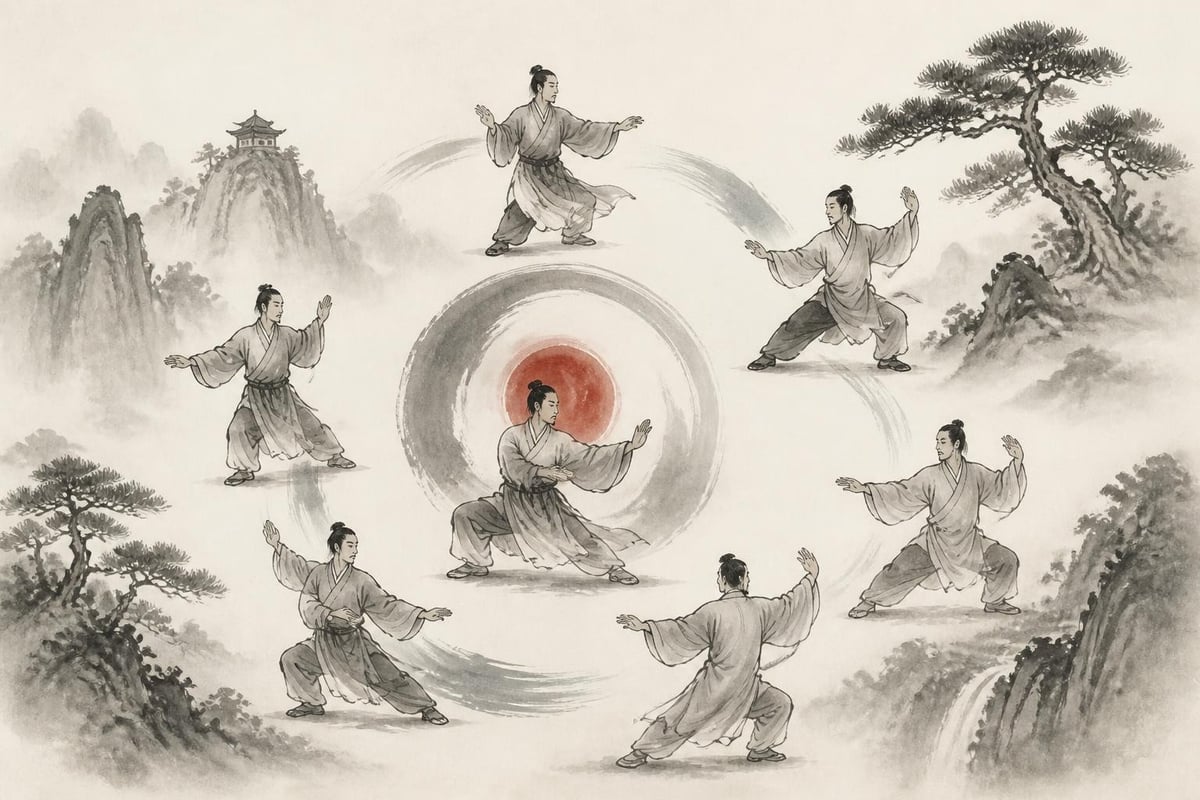
The philosophy mirrors Taoist teachings about simplicity. Just as Lao Tzu taught that "the Tao that can be told is not the eternal Tao," the most profound movements often appear the simplest. Each of the eight postures contains layers of refinement that reveal themselves through patient, consistent practice. Our guide to Baduanjin How To: Complete Guide to the Eight Brocades explores this same principle of concentrated simplicity in another cherished eight-movement sequence.
The Eight Movements Explained
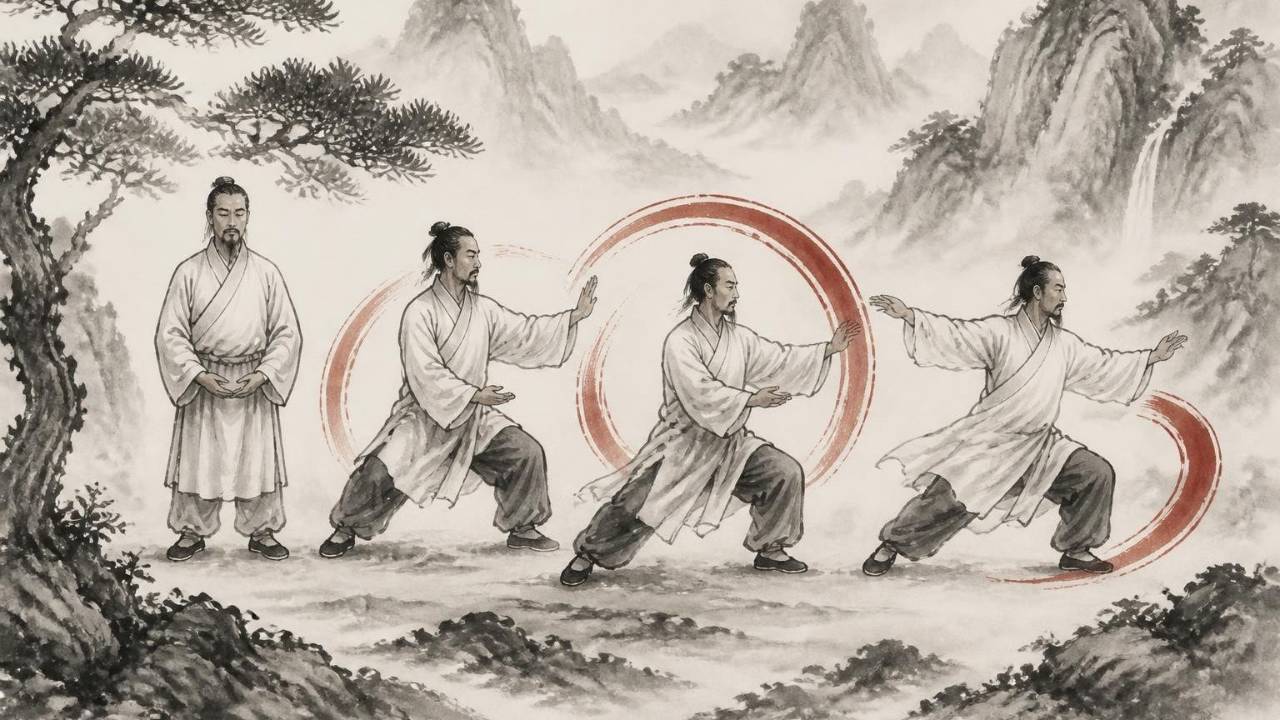
The wudang tai chi form 8 follows a logical progression that guides practitioners through a complete energetic cycle. Each movement builds upon the previous one while preparing for the next.
Opening and Foundational Postures
The sequence typically begins with a standing meditation posture that establishes proper alignment and internal awareness. Your feet root into the earth while your spine lengthens upward, creating a connection between ground and sky.
The opening movements establish the fundamental principle of sung, or relaxed sinking. This isn't collapse or limpness but rather a release of unnecessary tension while maintaining structural integrity.
| Movement Phase | Primary Focus | Energy Quality |
|---|---|---|
| Opening stance | Grounding and centring | Gathering |
| First transitions | Establishing flow | Rising |
| Mid-sequence | Energy circulation | Flowing |
| Closing movements | Integration | Settling |
Core Sequence Elements
The middle movements of the wudang tai chi form 8 introduce rotating patterns that engage the waist as the body's central axis. These rotations massage internal organs while training the practitioner to move from the centre rather than from isolated limbs.
Key characteristics of the core movements:
- Waist-led rotation that initiates all upper body movement
- Weight shifting between legs with clear distinctions between substantial and insubstantial
- Coordinated breathing that supports rather than forces the movement
- Gentle spiralling through joints to promote qi circulation
Each posture name often reflects natural imagery, connecting practice to the living world. You might encounter references to clouds, water, or animal movements, all pointing toward qualities you embody through the form.
Closing and Integration
The final movements of the sequence guide energy back to the lower dantian (energy centre below the navel) and return you to a neutral, grounded state. This closure completes the energetic circuit established at the beginning.
The closing isn't an ending but rather a return to stillness that carries the practice's effects forward into daily life. Many practitioners report feeling more centred and calm for hours after completing the form.
Physical and Mental Benefits
Practising the wudang tai chi form 8 regularly creates measurable changes in both body and mind. The sequence works on multiple levels simultaneously.
Physical Improvements
The gentle, flowing movements strengthen muscles without strain while improving flexibility through natural range of motion. Unlike high-impact exercise, Tai Chi builds resilience in joints and connective tissues.
Observable physical benefits include:
- Improved balance and stability through single-leg weight shifts
- Enhanced postural alignment from mindful attention to structure
- Increased joint mobility without forcing or stretching
- Better coordination between upper and lower body
- Strengthened leg muscles through sustained, controlled movements
The practice particularly benefits those recovering from injury or managing chronic conditions. The low-impact nature allows movement without aggravating existing problems while gradually rebuilding strength and confidence.
Mental and Emotional Wellbeing
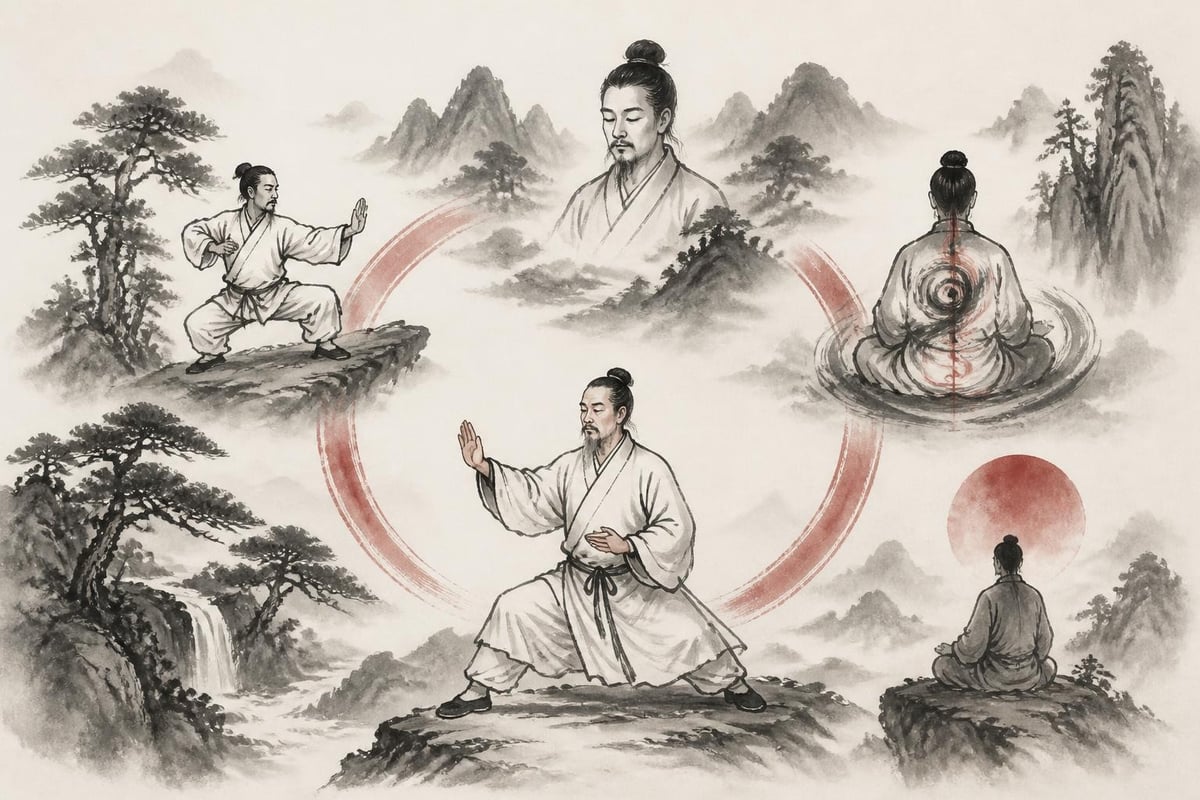
The meditative quality of the wudang tai chi form 8 naturally quiets mental chatter. As you focus on coordinating breath, weight, and movement, worried thoughts have less space to dominate awareness.
Research continues to validate what practitioners have known for generations: these movement practices reduce stress markers, improve mood, and enhance cognitive function. Our Tai Chi course explores these connections in depth, showing how ancient wisdom aligns with modern understanding of mind-body health.
| Benefit Category | Specific Effects | Timeline for Noticing |
|---|---|---|
| Stress reduction | Lower cortisol, calmer nervous system | 2-4 weeks |
| Mental clarity | Improved focus, reduced mental fog | 3-6 weeks |
| Emotional balance | More stable mood, better regulation | 4-8 weeks |
| Sleep quality | Deeper rest, easier falling asleep | 2-6 weeks |
Learning the Form Effectively
Approaching the wudang tai chi form 8 with patience and curiosity serves you better than rushing to "master" it quickly. The form reveals its depths gradually.
Starting Your Practice
Begin by learning just one or two movements at a time. Focus on understanding the basic shape and flow before adding complexity.
Essential starting points:
- Find proper instruction from someone trained in authentic Wudang methods
- Practise in comfortable clothing that allows free movement
- Choose a quiet space where you won't be interrupted
- Start with shorter sessions of 10-15 minutes rather than forcing long practices
- Move at your own pace without comparing yourself to others
Many students find that joining a community of practitioners provides encouragement and shared learning. Our global community connects people around the world who are walking similar paths.
Common Beginner Challenges
New practitioners often struggle with coordinating multiple elements simultaneously. This is completely normal and resolves with consistent practice.
You might notice your mind wandering or forgetting sequences. Rather than viewing this as failure, see it as an opportunity to practice returning attention to the present moment. This return is the actual practice, not achieving perfect performance.
Typical challenges and solutions:
- Tension in shoulders: Regularly check and release, allowing arms to feel heavy
- Holding breath: Make audible breathing sounds initially to maintain awareness
- Rushing movements: Count slowly or practise to slow music
- Poor balance: Use a wall or chair for support while building strength
- Frustration with progress: Remember that small, consistent effort compounds over time
Deepening Your Understanding
After learning the basic sequence, the real work begins. The wudang tai chi form 8 becomes a vehicle for exploring increasingly subtle aspects of movement and energy.
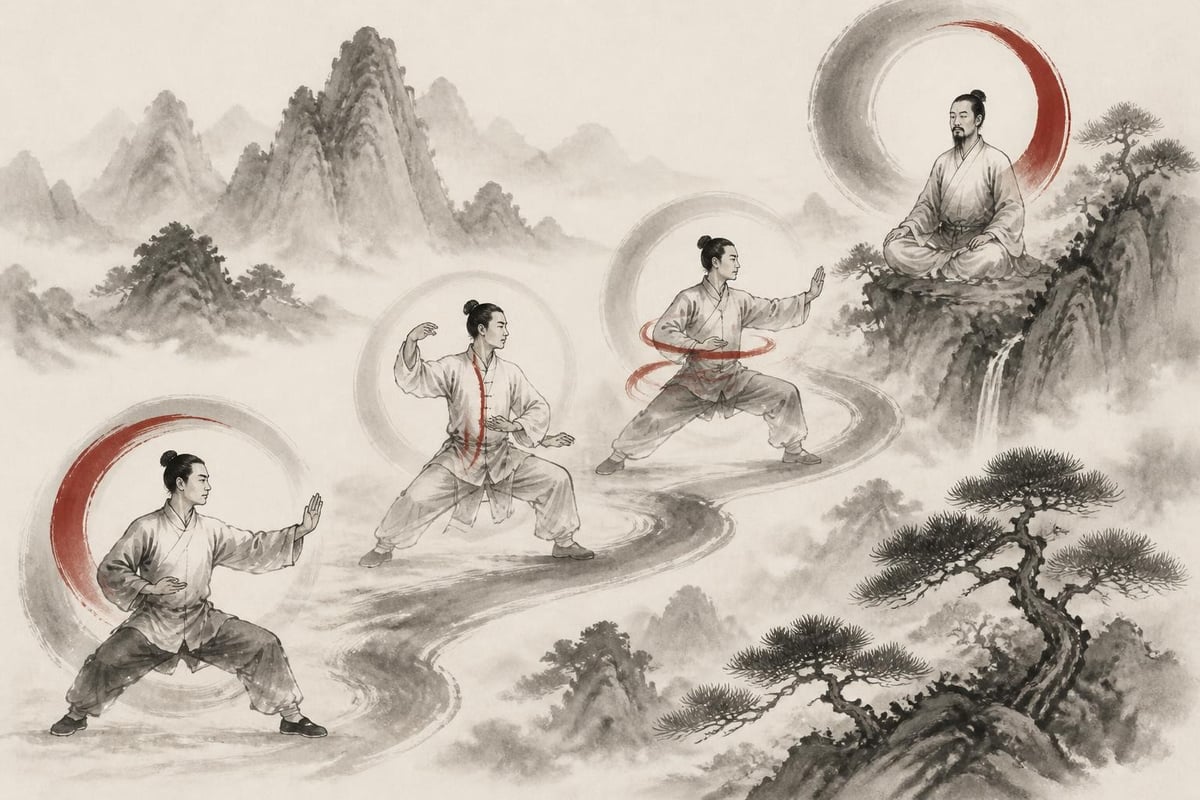
Pay attention to weight distribution, ensuring clear transitions between legs. Notice how rotating from the waist naturally moves the arms without muscular effort. Feel the connection between your breath pattern and movement speed.
Advanced practitioners work with principles of spiralling energy, internal listening, and refined energetic pathways. These aren't separate from the basic movements but rather deeper dimensions of the same practice. Our article on Tai Chi Principles: Ancient Wisdom for Modern Practice unpacks these internal principles in more depth. For those seeking to explore the philosophical foundations that inform this practice, why not try our Taoist Philosophy course.
Integrating Form 8 Into Daily Life
The wudang tai chi form 8 fits naturally into various daily routines. Its brevity makes it accessible even on busy days.
Morning Practice
Many practitioners begin their day with the form, using it to transition from sleep to activity with grace rather than jarring themselves awake. Morning practice sets a calm, centred tone that influences the hours ahead.
The movements gently wake up your body while the focused attention clears mental cobwebs. You step into your day already grounded rather than rushing into reactivity.
Evening Wind-Down
Others prefer practising in the evening as a way to release accumulated tension and prepare for restful sleep. The slow, mindful movements help shift from doing mode into being mode.
Evening practice doesn't require changing clothes or going to a gym. You can practise right in your living room, making it easy to maintain consistency.
Short Practice Sessions Throughout the Day
Some people run through the wudang tai chi form 8 during work breaks or between activities. These brief sessions serve as reset points, interrupting patterns of tension and stress accumulation.
Strategic timing options:
- Mid-morning to counter sitting stiffness
- Lunch break to digest food and refresh energy
- Mid-afternoon to overcome the post-lunch energy dip
- Before dinner to transition from work to personal time
- Before bed to release the day and prepare for sleep
The form's flexibility allows adaptation to your specific needs and schedule. There's no single "right" time to practise, only the time that works for you.
The Role of Breath in Form 8
Breathing patterns interweave with physical movements in the wudang tai chi form 8, creating a unified practice that engages your whole being. Understanding this relationship deepens your practice significantly.
Natural Breathing Principles
Traditional Wudang teaching emphasises natural breathing rather than forced patterns. Your breath should flow smoothly without holding or gasping.
As movements expand or rise, breath naturally enters. As movements contract or descend, breath naturally releases. This isn't something you force but rather allow to emerge through patient attention.
Breathing guidelines:
- Breathe through your nose when possible
- Keep your breath quiet and smooth
- Allow your lower abdomen to expand on inhale
- Release completely on exhale without forcing
- Never hold your breath during movement
- Let movement pace follow breath, not the reverse
Coordinating Breath and Movement
Initially, students often focus so much on remembering movements that breathing becomes shallow or irregular. This improves naturally as the sequence becomes familiar.
Eventually, breath and movement merge into a seamless whole. You aren't coordinating separate elements but rather expressing a unified flow that includes both physical form and energetic breath.
Why not try our Qi Gong course, which explores breath work in greater detail, offering practices that complement and enhance your Tai Chi training.
Building Long-Term Practice Sustainability
Consistency matters more than intensity when cultivating the benefits of the wudang tai chi form 8. A sustainable practice unfolds over years, not weeks.
Setting Realistic Expectations
Many beginners approach Tai Chi with enthusiasm that leads to overly ambitious practice schedules. This often results in burnout rather than lasting change.
Sustainable practice principles:
- Start small: Five minutes daily beats an hour once weekly
- Build gradually: Add time or complexity slowly as practice stabilises
- Allow flexibility: Missing a day isn't failure; just return the next day
- Focus on process: Enjoy the practice itself rather than fixating on outcomes
- Celebrate small wins: Notice subtle improvements rather than waiting for dramatic changes
Tracking Your Progress
While Tai Chi isn't about achievement, noticing changes can provide encouragement. Keep a simple practice journal noting how you feel before and after sessions.
You might track:
- Days practised each week
- Duration of sessions
- Energy levels throughout the day
- Sleep quality
- Stress responses
- Physical sensations or insights during practice
Over months, patterns emerge that reveal the practice's impact. These observations fuel continued commitment during periods when motivation wanes.
Finding Support and Guidance
Learning the wudang tai chi form 8 from quality instruction makes an enormous difference in your understanding and progress. While videos and books provide information, personalised feedback corrects subtle errors before they become habits.
If you're ready to begin building a consistent practice with authentic guidance, our free 4-week Taoist Wellness course offers an accessible starting point. This four-week introduction helps you establish foundational skills and experience the benefits of regular practice under Master Gu's expert instruction.
Working with an experienced teacher who understands authentic Wudang methods ensures you're learning correct principles from the beginning. Master Gu's lineage traces directly back through generations of Wudang practitioners, preserving teachings that might otherwise be lost or diluted.
Common Questions About Practice
Students beginning the wudang tai chi form 8 often wonder about similar things. Addressing these questions directly can ease your path.
How Long Until I See Results?
This varies significantly based on your starting point, practice frequency, and what you're measuring. Some benefits appear within days: feeling calmer after practice, sleeping better, moving with less pain.
Other changes unfold over months: significantly improved balance, deeper energetic awareness, lasting shifts in stress response. The practice rewards both immediate attention and patient cultivation.
What If I Can't Remember the Sequence?
Forgetting movements is part of learning, not evidence of inadequacy. Each time you lose your place and find it again, you're actually strengthening neural pathways.
Use notes, videos, or practice with others when memory fails. With repetition, the sequence becomes automatic, freeing your attention for refinement.
Should I Practice Daily?
Daily practice builds momentum and allows the body to remember patterns more easily. However, three to four times weekly still provides substantial benefits.
The key is consistency over time rather than perfect adherence. Life happens, and flexibility prevents practice from becoming another source of stress.
Can I Practice If I Have Physical Limitations?
The wudang tai chi form 8 adapts to various abilities and conditions. Movements can be modified for those with balance issues, joint problems, or reduced mobility.
Always consult healthcare providers about new movement practices, especially if you have specific medical concerns. Many find Tai Chi perfectly suited for working with rather than against physical limitations.
The Energetic Dimension of Practice
Beyond physical movements, the wudang tai chi form 8 works with subtle energy often called qi or chi. This dimension might seem mysterious initially but becomes increasingly tangible through practice.
Sensing Qi Flow
New practitioners sometimes feel warmth in their palms, tingling in their fingers, or a sense of fullness in their lower abdomen during or after practice. These sensations indicate qi movement becoming noticeable to conscious awareness.
You don't need to force these experiences. They arise naturally as your sensitivity develops through consistent, relaxed practice.
Energy Pathways in the Form
Traditional Chinese medicine maps specific pathways (meridians) through which qi flows in the body. The movements of the wudang tai chi form 8 open and stimulate these pathways, promoting balanced circulation.
Primary energetic effects:
- Opening the mingmen (gate of life) point in the lower back
- Activating the central channel connecting crown to perineum
- Circulating energy through arm channels during hand movements
- Grounding excess energy through leg channels into the earth
- Gathering and storing refined energy in the lower dantian
Understanding these energetic dimensions adds depth to practice without requiring you to feel or manipulate energy directly. The movements themselves do the work when performed correctly.
The wudang tai chi form 8 offers a complete practice in a compact package, making ancient wisdom accessible to modern lives. Through eight simple movements, you can cultivate balance, clarity, and vitality while connecting to a tradition that has supported human wellbeing for centuries. Taoist Wellness Online provides authentic instruction from Master Gu, a 15th-generation San Feng Pai Wudang Taoist Master with over 25 years of teaching experience, helping students worldwide discover these transformative practices through comprehensive courses, live sessions, and supportive community. Whether you're just beginning or deepening existing practice, you'll find guidance that honours tradition while meeting you exactly where you are.