Tai Chi Principles: Ancient Wisdom for Modern Practice
Jul 28, 2026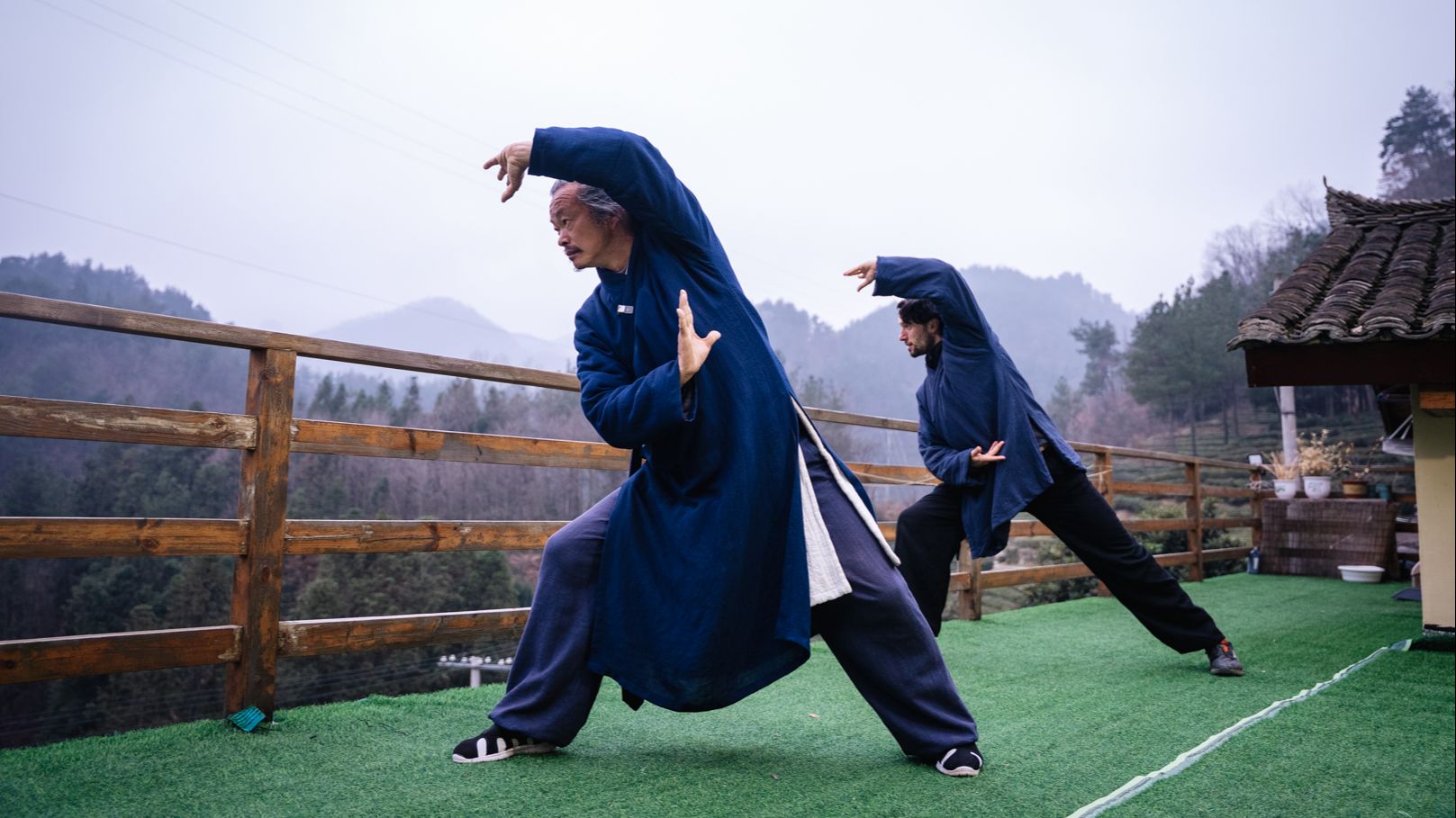
The beauty of tai chi lies not just in its graceful movements, but in the profound principles that guide every gesture, every breath, every shift of weight. These foundational concepts transform simple physical exercises into a complete system of wellness, connecting body, mind, and spirit in ways that continue to benefit practitioners for years. Understanding these principles helps you move beyond mere form memorisation and into a deeper, more authentic practice that honours the Wudang tradition.
The Foundation of Authentic Practice
Tai chi principles serve as the invisible architecture beneath every movement you make. They're not rigid rules, but gentle guidelines that help you discover natural alignment and effortless flow. When you practise with these principles in mind, your body begins to understand what cannot be forced or rushed.
Central equilibrium stands as perhaps the most fundamental concept. This principle asks you to maintain balance not just physically, but energetically and mentally. Your weight distributes evenly, your spine lengthens naturally, and your awareness stays centred in your body rather than scattered across worries or distractions.
Working with Substantial and Insubstantial
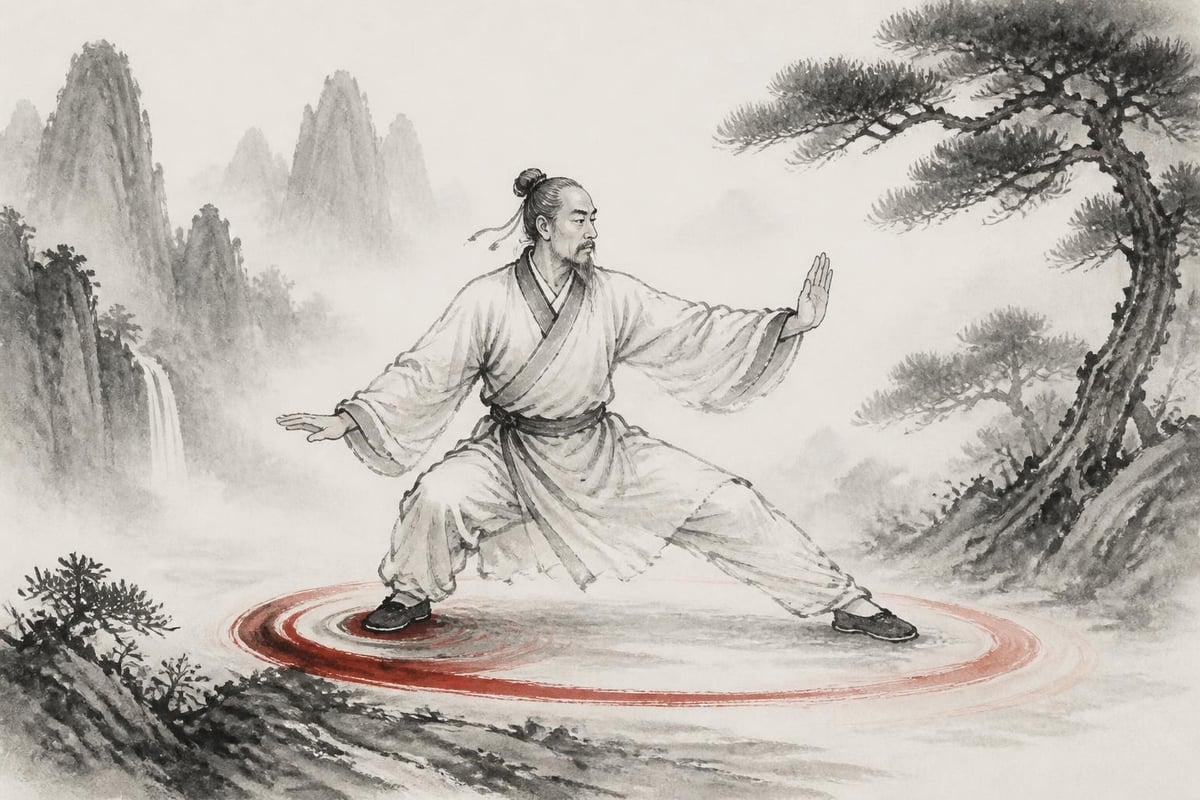
The distinction between full and empty, substantial and insubstantial, runs through every aspect of authentic practice. One foot holds your weight while the other remains light, ready to move. One hand yields while the other extends. This constant interplay creates the dynamic quality that makes tai chi both martial art and meditation.
- Full foot roots deeply, connecting you to earth energy
- Empty foot stays light, ready for the next transition
- Weight shifts happen smoothly, never rushed or jerky
- Upper body remains relaxed while lower body stays grounded
Understanding this principle changes everything. You stop trying to be strong everywhere at once and instead learn the power of strategic emptiness.
Mind and Body Integration
Separating mental focus from physical movement makes no sense in tai chi. The two merge completely, each supporting and informing the other. Your mind leads, your energy follows, and your body expresses what both have already understood.
Yi leads qi, consciousness guides energy. This ancient principle reminds us that where attention goes, life force flows. Before your hand moves, your intention has already travelled there. Before you step, your awareness has arrived at the destination. Our Tai Chi course helps students develop this mind-body connection through Master Gu's authentic Wudang teachings.
In the video below, Master Gu explains what Tai Chi is and the principles at its heart - a perfect grounding in the ideas explored throughout this article:
Relaxation Without Collapse
Many people misunderstand relaxation in tai chi. It doesn't mean going limp or losing structure. True sung (松), the Chinese term for this quality, means releasing unnecessary tension while maintaining alert, responsive structure.
Your shoulders drop but don't slump. Your knees bend but don't buckle. Your chest softens but your spine lengthens. This balanced relaxation allows energy to flow freely while keeping you ready to move in any direction at any moment.
| Area of Body | Common Tension | Relaxed State |
|---|---|---|
| Shoulders | Hunched upward | Naturally dropped, wide |
| Chest | Puffed or collapsed | Softly hollow, open |
| Lower back | Arched or rigid | Gently relaxed, lengthened |
| Knees | Locked or hyperextended | Softly bent, springy |
Alignment and Structural Principles
How you organise your body in space determines whether energy can flow freely or gets blocked at various points. Tai chi principles address alignment with specific, practical guidance that anyone can apply.
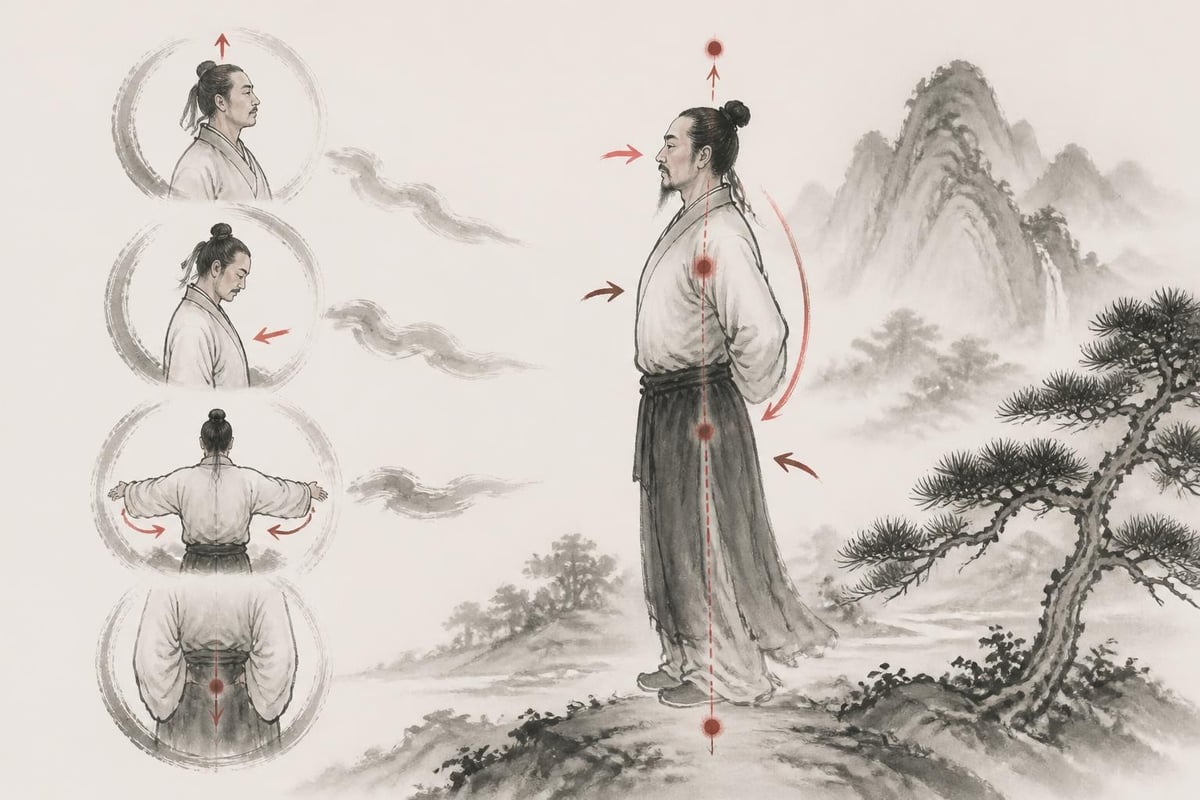
Suspend the head as if a golden thread gently lifts your crown toward heaven. This doesn't mean straining upward, but rather allowing your neck to lengthen naturally. Your chin tucks slightly, and the back of your neck stays long and free.
The tailbone tucks gently, releasing lower back compression and allowing your spine to stack more efficiently. Combined with slightly bent knees, this creates a stable, grounded base that can move in any direction without preparation or hesitation.
Creating Space Through the Torso
Your chest and back work together to create spaciousness through your torso. Depress the chest doesn't mean collapse it, but rather avoid puffing it forward. This allows your back to naturally round slightly, creating what practitioners call "holding the back."
When your chest stays soft and your upper back stays expansive, breathing becomes easier. Energy circulates more freely. Your arms can move from your centre rather than just from your shoulders. Everything connects.
Movement Quality and Flow
How you move matters as much as what moves. Tai chi principles emphasise continuity, smoothness, and natural rhythm rather than choppy, disconnected gestures. Every movement emerges from the one before and plants seeds for the next.
Continuous movement means eliminating stops and starts. Even at the end of a form section, your energy keeps circulating internally. Like a river that appears still on the surface while currents flow underneath, your external stillness contains internal motion.
- One movement flows seamlessly into the next
- Speed stays consistent throughout
- No jerky transitions or sudden changes
- Pauses contain internal awareness, not dead stops
Circular Over Linear
Straight lines rarely appear in nature or authentic tai chi. Instead, every gesture follows circular or spiral pathways. Your hand traces an arc rather than a line. Your waist rotates rather than simply bends. These circular movements protect your joints while generating surprising power.
The principle of moving as a cylinder helps you understand this. When your torso rotates, everything turns together. Your shoulders, hips, and waist move as one coordinated unit, like a section of bamboo rotating around its central axis.
Rooting and Connection to Earth
Without a strong root, a tree cannot grow tall or withstand storms. Similarly, tai chi practitioners develop deep energetic roots that connect them to earth's stable, nourishing energy. This principle of rooting goes beyond simple physical balance.
Your feet don't just stand on the ground; they sink into it. Your weight drops down through your legs rather than floating in your upper body. This creates a sensation of being anchored, stable, and connected. You can find detailed guidance on developing proper rooting through our About page, which covers Master Gu's approach to authentic Wudang practice.
The Role of Breath
Breathing might seem separate from rooting, but they connect intimately. Deep, natural breath helps you sink your qi, your life force, down into your lower dan tian (energy centre). This settling of energy creates a natural lowering of your centre of gravity.
Natural breathing in tai chi means allowing your breath to deepen and slow without forcing it. Your abdomen expands on the inhale, your lower back softens. On the exhale, everything gently settles deeper.
Integration Through Practice
Understanding tai chi principles intellectually offers a starting point, but embodying them requires patient, consistent practice. Each principle supports the others, creating an interconnected web of understanding that gradually transforms how you move and experience your body.
When you relax your shoulders, your chest naturally depresses. When your chest softens, your back can expand. When your back expands, your breath deepens. When your breath deepens, your mind settles. Everything connects to everything else in a beautiful, self-supporting system.
Common Challenges and Adjustments
Most students struggle with certain principles more than others. Some find relaxation easy but struggle with maintaining structure. Others achieve good alignment but move too stiffly. Recognising these patterns helps you focus your practice more effectively.
| Challenge | Sign You're Experiencing It | Adjustment to Try |
|---|---|---|
| Over-tensing | Shoulders creep upward during practice | Pause frequently to check shoulder position |
| Collapsing | Feeling tired or weak in postures | Engage legs more, lift from crown |
| Mental distraction | Forgetting the sequence | Practise shorter segments with full attention |
| Rushing | Running out of breath | Slow down significantly, match breath to movement |
Internal and External Harmony
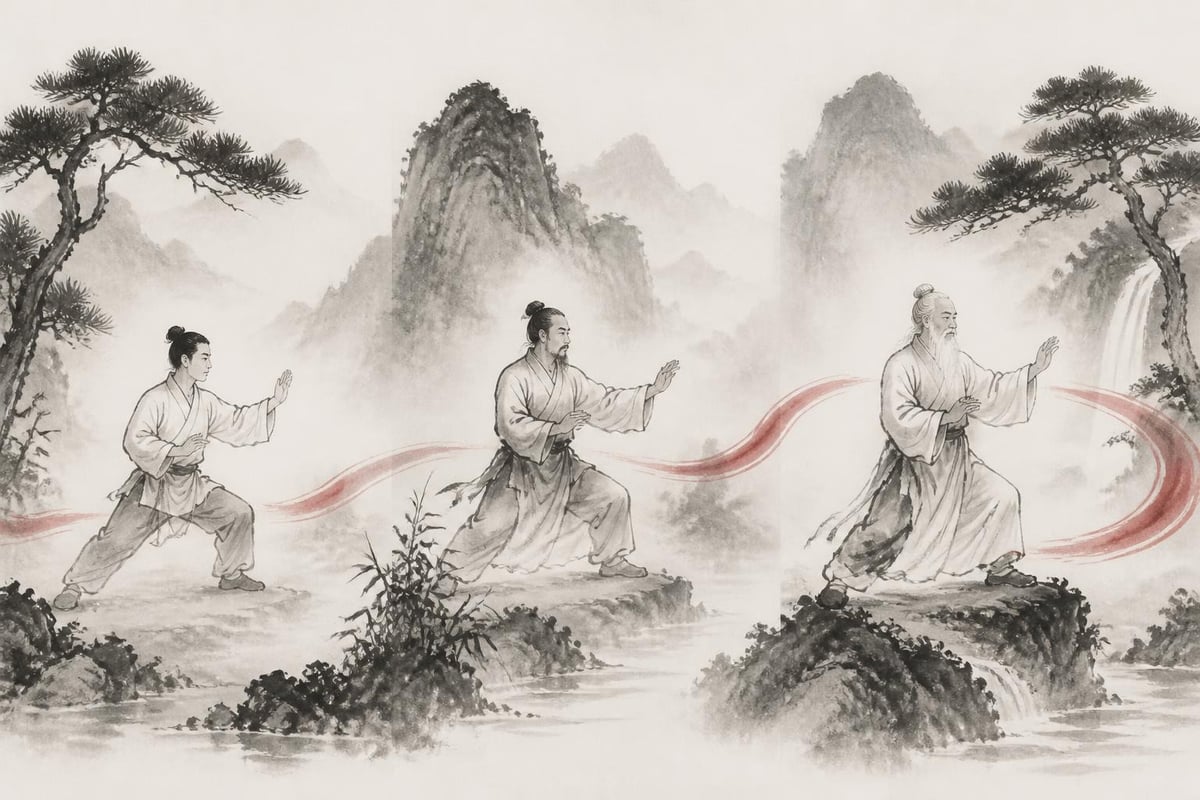
Tai chi principles bridge the gap between what others can see and what only you can feel. External observers watch your movements, but the internal experience matters equally. This balance between nei (internal) and wai (external) defines authentic practice.
Your external form should reflect your internal state. If your mind races, your movements will likely feel jerky or disconnected. If your breath stops, your flow stops. Conversely, when your mind stays calm and your breath flows smoothly, your movements naturally become more graceful and connected.
Developing Internal Awareness
Pay attention to sensations inside your body as you move. Notice temperature changes, tingles, heaviness, lightness. These subtle feelings provide feedback about whether you're applying principles correctly. Warmth in your hands often indicates good energy circulation. A sense of groundedness suggests proper rooting.
The Taoist Wellness Online Academy membership offers comprehensive training that helps students develop this internal awareness under Master Gu's authentic guidance, combining video instruction with community support and regular live sessions.
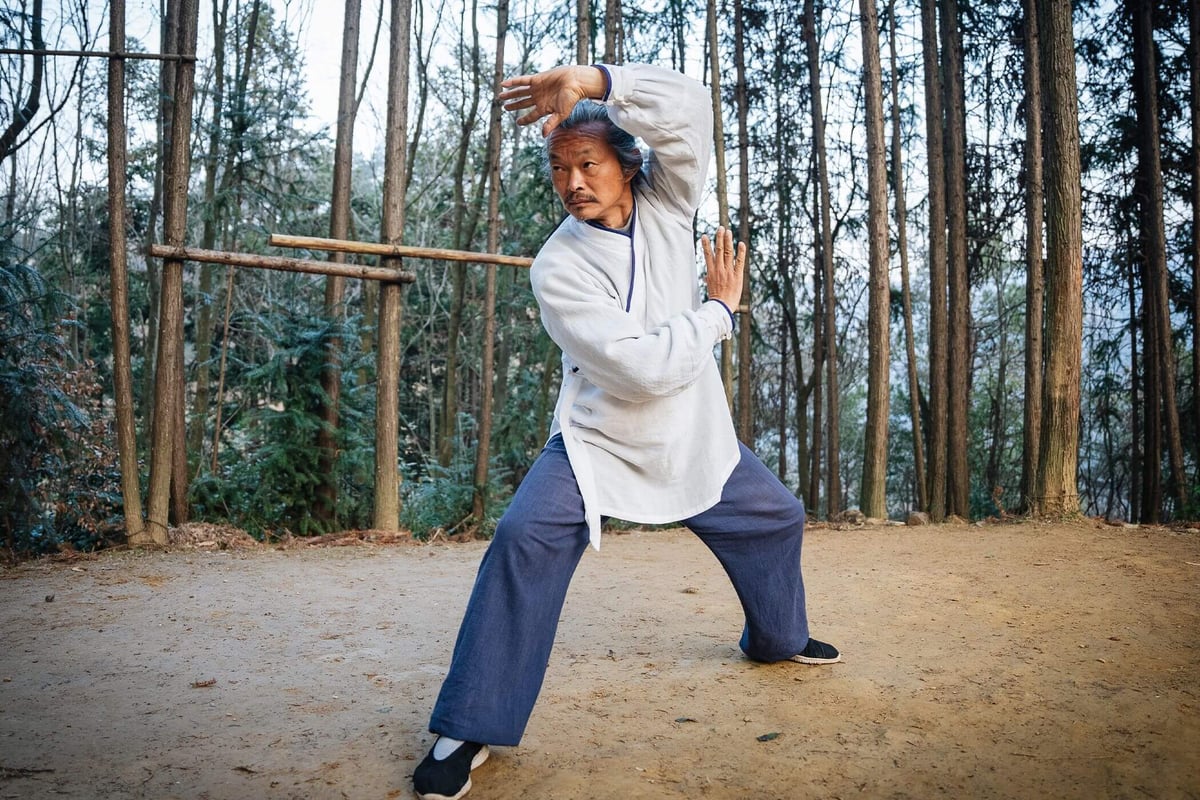
Applying Principles to Daily Life
Perhaps the most profound aspect of tai chi principles is how they extend beyond formal practice into everyday activities. The same principles that guide your movements in form can transform how you walk, sit, stand, and move through your day.
Central equilibrium helps you stay balanced emotionally when faced with challenging situations. The distinction between substantial and insubstantial teaches you when to commit fully and when to remain light and adaptable. Continuous movement reminds you that life flows without hard stops between chapters.
Walking becomes a moving meditation when you apply these concepts. Sitting at your desk, you can suspend your head and relax your shoulders. Lifting groceries, you can move from your centre rather than just your arms. Every moment offers an opportunity to practise.
Building Consistent Practice Habits
Start small and stay consistent. Five minutes of mindful practice applying these principles outweighs an hour of distracted movement. Focus on one or two principles each session rather than trying to perfect everything at once.
- Choose one principle to emphasise this week
- Practise your form with that principle as primary focus
- Notice how it affects other aspects of your movement
- Apply it to one daily activity outside formal practice
- Reflect on what you learned before moving to the next principle
For a deeper look at the postures and stances where these principles come to life most clearly, our post on Tai Chi poses is a useful companion read alongside this guide.
The Living Tradition
Tai chi principles aren't frozen rules from the past but living wisdom that continues to evolve through sincere practice. Master Gu, a 15th-generation San Feng Pai Wudang Taoist Master with over 25 years of teaching experience, teaches these principles not as historical artefacts but as practical tools for modern life. Each generation discovers new applications while honouring the essential truths that have guided practitioners for centuries.
These principles work because they align with natural laws of physics, physiology, and energy. They're not mystical in the sense of being supernatural, but they do point toward subtler dimensions of experience that our busy modern lives often overlook. When you slow down enough to feel your weight shift, to notice your breath, to sense energy moving through your body, you're touching something timeless.
The depth of tai chi principles reveals itself gradually. What seems simple at first, like "relax your shoulders," contains layers of meaning you discover over months and years. This depth keeps practice fresh and engaging rather than repetitive and boring.
Finding Your Own Understanding
While teachers can guide and correct, ultimately you must discover these principles through your own body. Your experience of sung relaxation might feel different from another student's, yet both can be correct. Your sense of rooting develops through your unique structure and nervous system.
Trust the process. Some days principles click into place easily. Other days everything feels difficult and unclear. Both experiences teach you something valuable. The principles themselves remain constant, patient teachers waiting for you to understand more deeply. Our post on the history and origin of Tai Chi adds useful context for understanding where these principles come from and why they've endured for centuries.
Tai chi principles offer a complete system for transforming not just how you move, but how you experience being alive in a body. These foundational concepts connect ancient wisdom with practical application, giving you tools that serve you both on and off the practice mat. Start with our free 4-week Taoist Wellness course and begin discovering these principles for yourself with Master Gu's guidance. When you're ready to go deeper, Taoist Wellness Online provides authentic Wudang instruction, comprehensive resources, and a supportive community to help you embody these principles fully.