Daoist Meditation: Ancient Wisdom for Modern Balance
Nov 07, 2026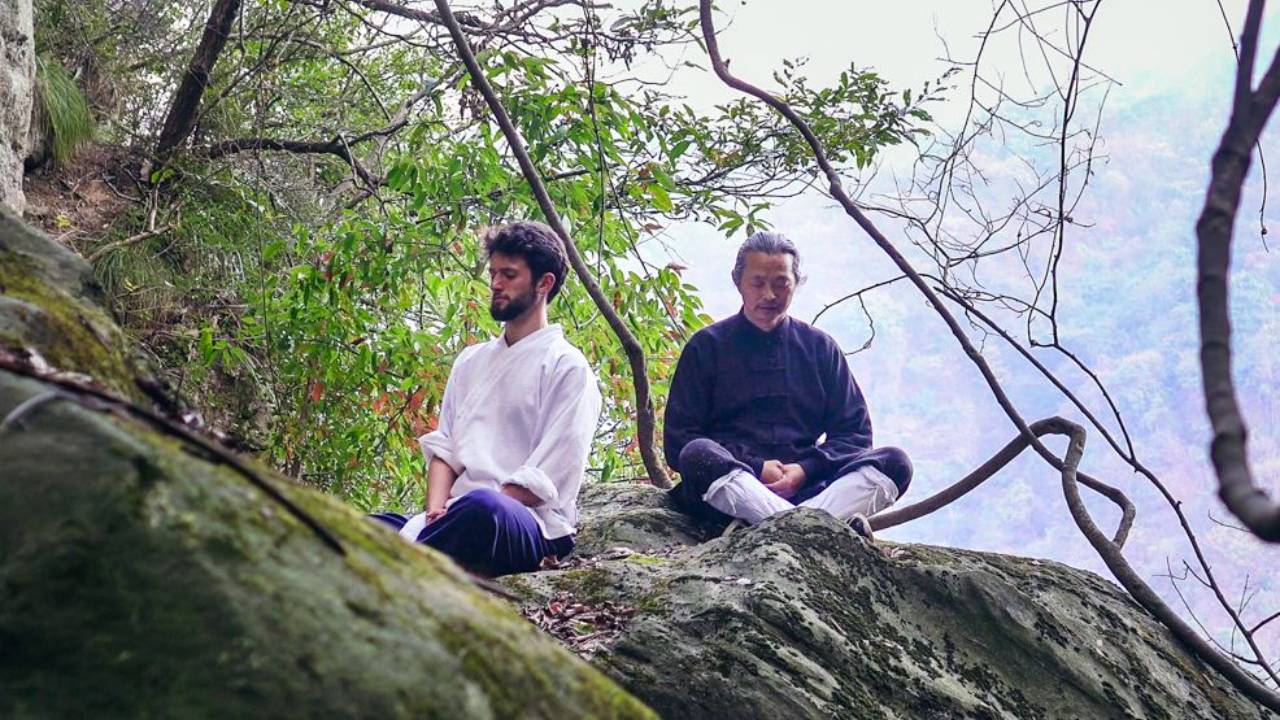
Daoist meditation is more than a practice. It is a doorway into ancient wisdom that remains relevant today. Rooted in balance, naturalness and harmony with the rhythms of life, this contemplative tradition offers a gentle path towards calm, clarity and a closer connection with yourself. Whether you are looking for a way to unwind, a deeper sense of self-awareness, or a steady daily habit, Daoist meditation invites you to return to stillness and to your breath.
Understanding Daoist Meditation and Its Origins
Daoist meditation has developed over thousands of years, shaped by philosophers, hermits and temple traditions across China. Its aim is wider than relaxation alone. It is about living in harmony with the Dao, the natural way of things, and finding a sense of ease in body and mind.
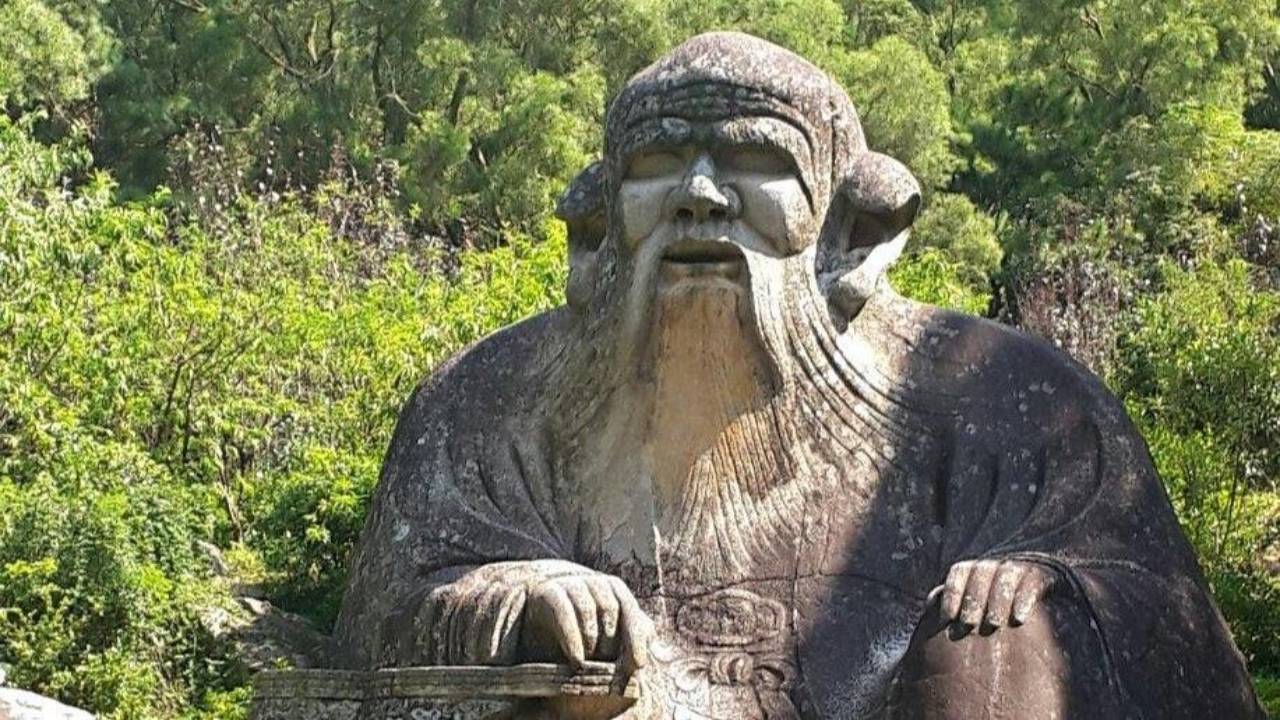
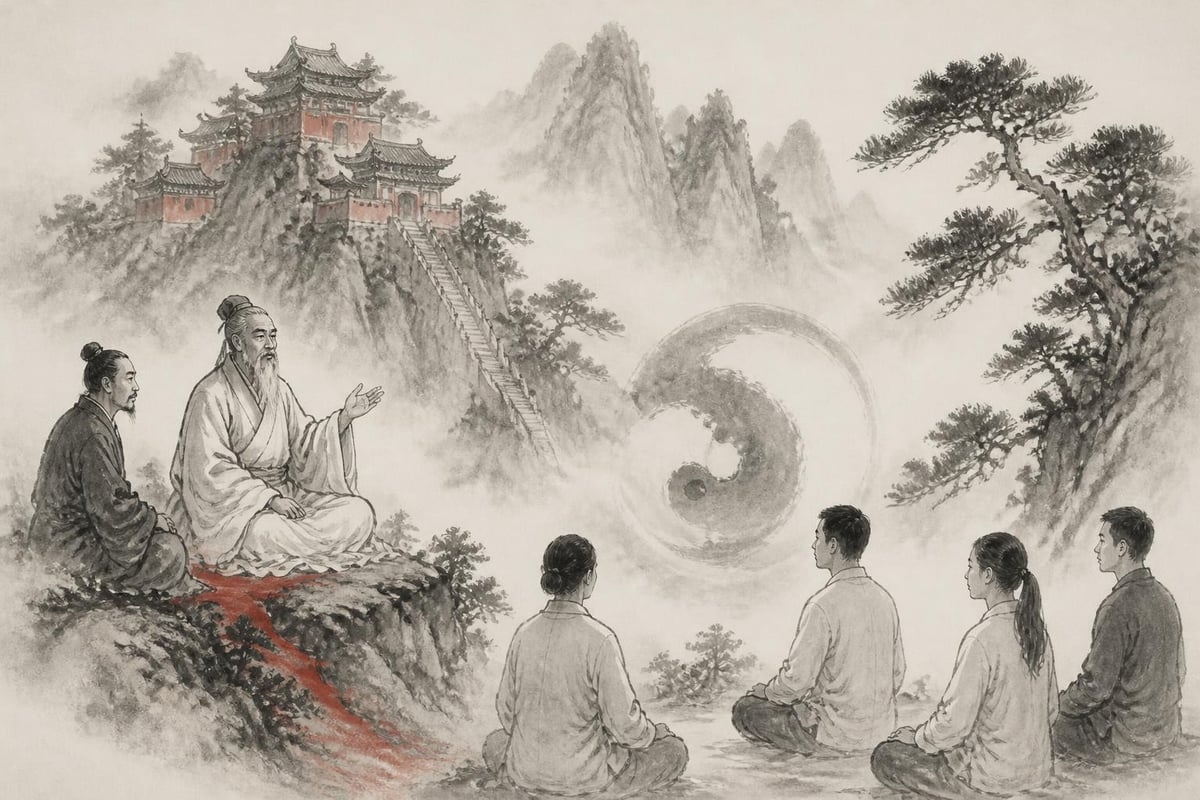
The contemplative roots of Daoism reach back to texts such as the Daodejing and the Zhuangzi, which speak of stillness and non-forcing (wu wei). These writings later influenced meditation practices in temples and sacred mountains such as Wudang.
The Wudang Tradition
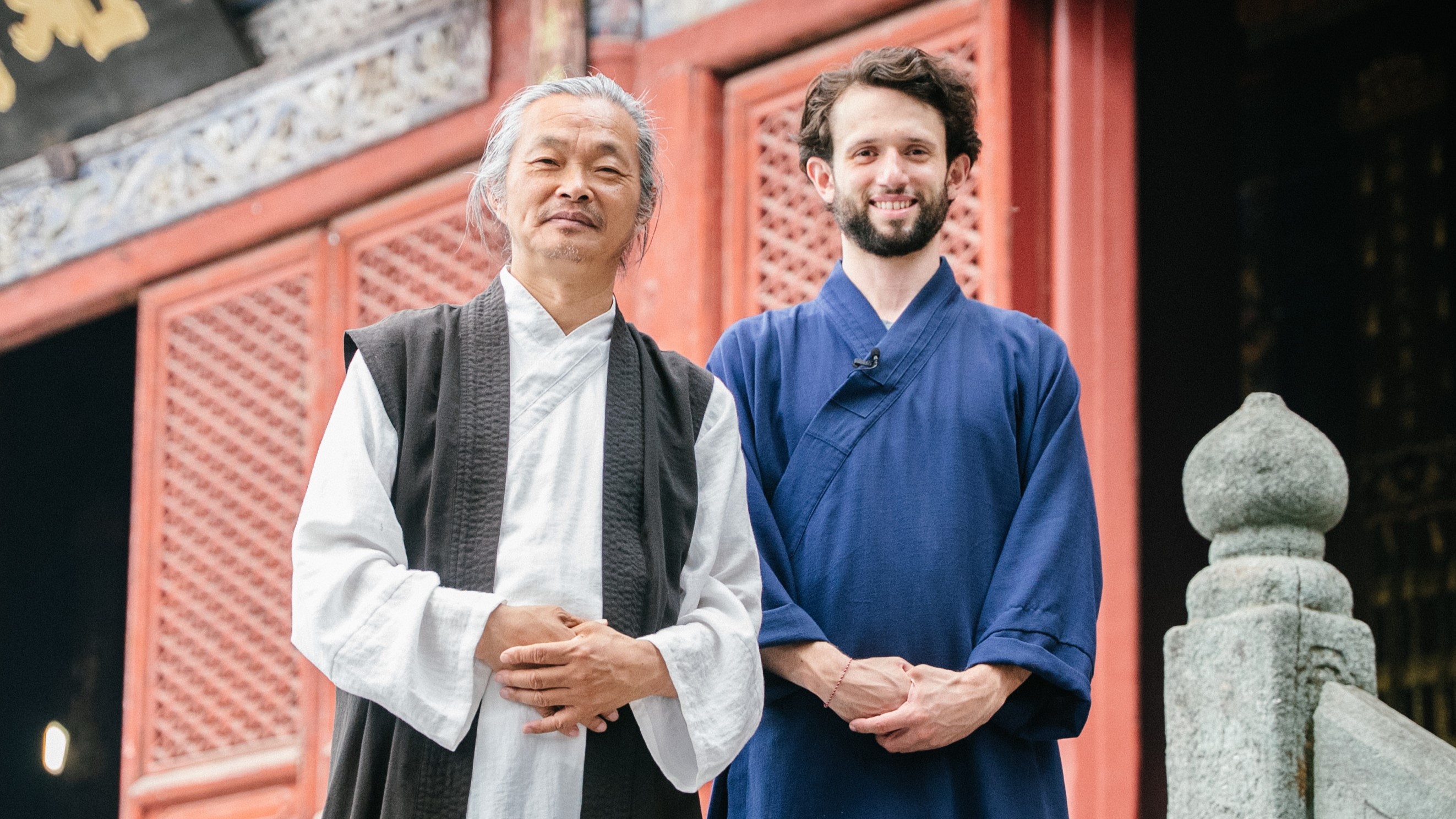
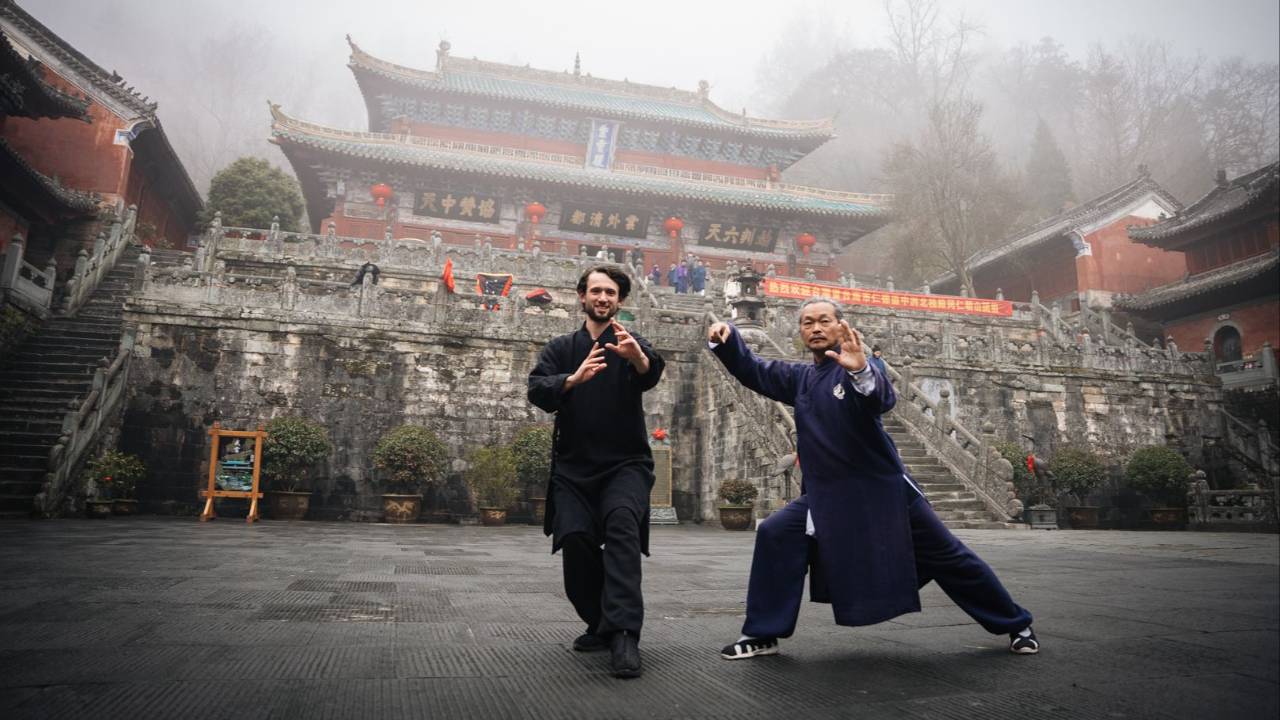
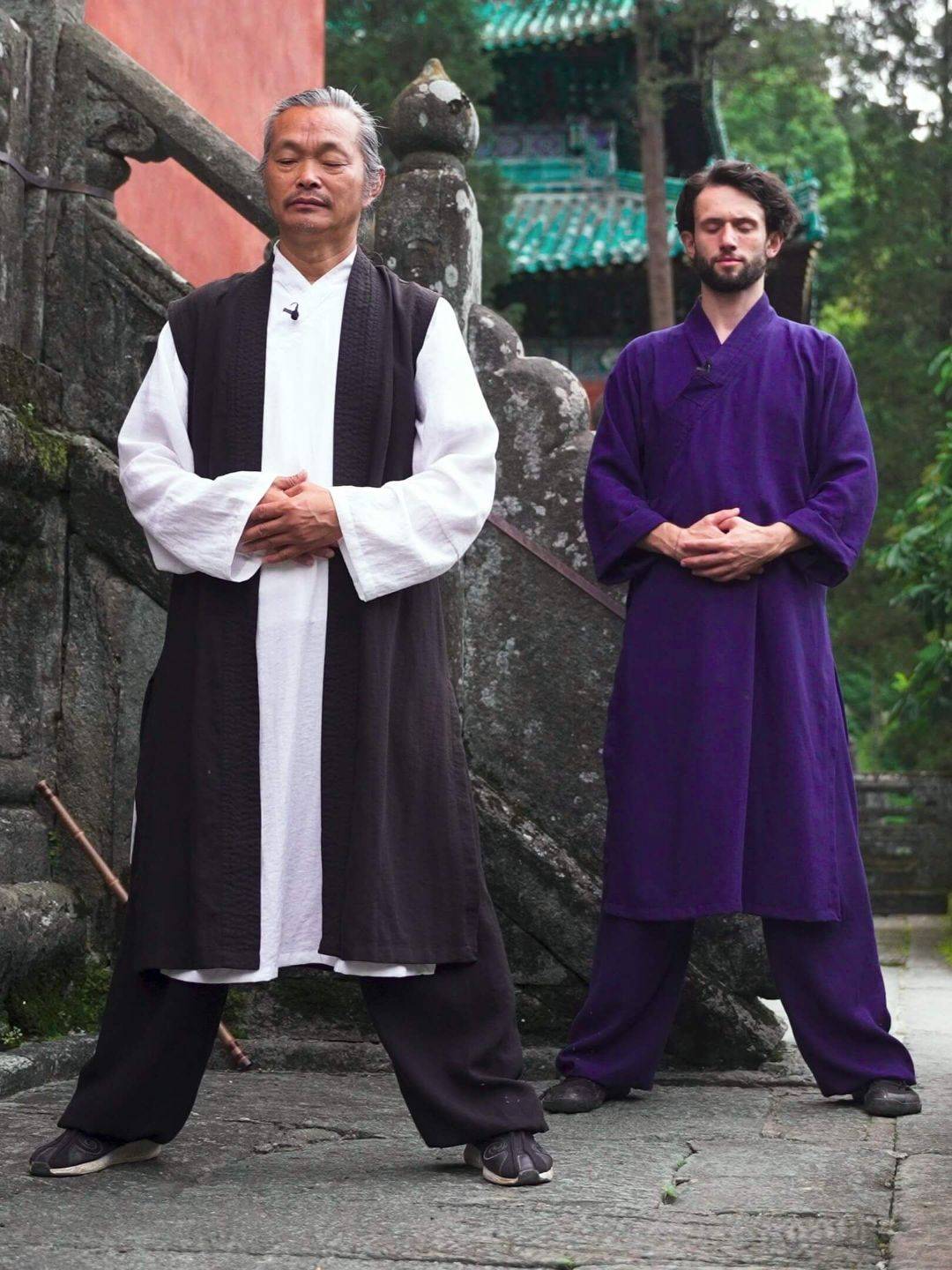
Wudang Mountain is one of the best-known centres of Daoist practice. There, meditation sits alongside Tai Chi, Qi Gong and Taoist philosophy as part of a wider approach to living well. Our teacher Master Gu, a 15th-generation San Feng Pai Wudang Taoist Master with 25+ years of teaching experience, teaches in this tradition.
Core Principles of Daoist Meditation
At its heart, Daoist meditation rests on a few simple ideas. They are not rigid rules, but gentle orientations that help you settle into your natural state.
Naturalness (Ziran): Rather than forcing the mind into silence, you let thoughts and sensations come and go. In our meditation lessons, Master Gu says you do not need to empty your mind. If that feels difficult, you can rest your attention on something simple and pleasant instead.
Stillness and Movement: In our Introduction to Daoist Meditation lesson, Master Gu explains that Daoist practice has two broad types: moving practice and stillness practice. He also says meditation does not have to be sitting. It can happen while standing, walking, or in movement such as Tai Chi.
Breath as a Bridge: The breath links body and mind. In Daoist meditation, you let the breath become slow, easy and gentle, without forcing it.
Balancing Movement and Stillness
Daoist philosophy is built on the idea of yin and yang, complementary qualities that balance each other. In practice, this means looking after your body with movement and your mind with stillness.
| Type of practice | Chinese term | Examples |
|---|---|---|
| Moving practice | Dong gong | Tai Chi, Qi Gong, walking |
| Stillness practice | Jing gong | Sitting or standing meditation |
This balance carries into daily life too. As you become more aware of it, you may notice when to act, when to wait, when to speak and when to listen.
Common Daoist Meditation Techniques
Daoist meditation includes many approaches. Rather than separate techniques, many traditions treat them as different sides of the same path. For a wider overview, see our guide to Taoist meditation techniques.
Sitting and Standing in Stillness
The most familiar form is simply sitting (or standing) quietly. The Zhuangzi describes a practice often translated as "sitting and forgetting", where thoughts and self-concern are allowed to fall away. Our lessons call sitting meditation jingzuo, and it is as simple as it sounds: be still, and let things be.
It is not about suppressing thoughts. It is about letting them pass without following them.
Breath and Gentle Attention
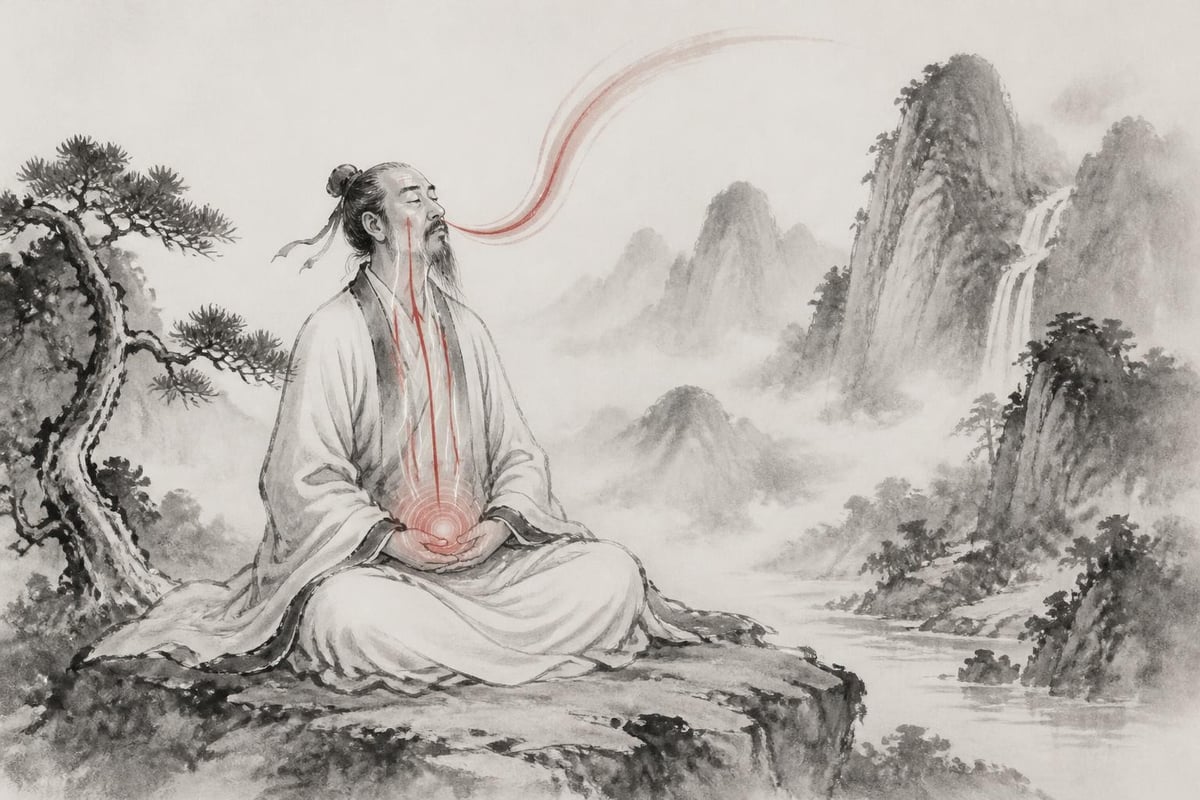
Many practices centre on the breath. You might begin by simply noticing your natural breathing. As you settle, the breath often becomes slower and softer by itself. There is no need to deepen it on purpose.
Some people find that simple breath-focused practice:
- Helps them feel calmer
- Gives the mind something gentle to rest on
- Makes it easier to settle into stillness
Results vary from person to person.
Imagination and Nature
Daoist meditation often uses gentle, simple imagery. In one of our lessons, Master Gu suggests picturing something easy and pleasant, such as lying on grass and watching clouds drift across the sky, or floating in a boat on a river. He also says birdsong or a breeze is not a disturbance. It is simply part of nature, and can become part of the meditation.
This simple approach reflects the Daoist view that we are part of nature, rather than separate from it.
What Does the Research Say?
Research on meditation is growing, and some studies report associations with feeling calmer, sleeping better and coping more easily with daily pressure. Most studies look at meditation in general rather than at Daoist meditation specifically, and they vary in size and quality. More research is needed.
Many people find the traditional Daoist idea of "nourishing life" a helpful way to think about it. Rest and stillness are seen as part of looking after your health, just like exercise. Meditation can sit alongside, but should not replace, professional healthcare.
Practical Applications for Modern Life
You do not need to retreat to a mountain temple. Even a few minutes a day can fit into a busy routine, and many people enjoy the sense of pause it brings. If you would like a gentle, structured introduction, our free Taoist course is a good place to start.
Starting Your Daoist Meditation Practice
You do not need special equipment, perfect conditions or advanced flexibility. What matters most is showing up regularly with gentle curiosity.
Please check with your healthcare professional before starting any new exercise or practice, especially if you have a medical condition, pain or balance concerns. Sitting still for long periods is not suitable for everyone. If you feel unwell, dizzy or uncomfortable, stop and rest.
Creating Your Practice Space
A dedicated space can help signal to your mind that it is time to turn inward. It does not need to be elaborate. A quiet corner with a cushion or a chair is enough.
- A comfortable seat (a cushion, bench or chair)
- As few distractions as you can manage
- Fresh air and natural light when possible
Practising in the same place at a similar time each day makes meditation feel like a natural part of your day.
Posture
Daoist meditation favours natural posture over rigid positions. In our guided sitting lesson, Master Gu says the position of your legs does not matter very much, and that if your legs go numb you can change position, or even massage them and carry on. There is no need to force yourself through discomfort.
- Spine upright but not stiff: imagine a string gently lifting the crown of your head
- Shoulders relaxed: let them drop away from your ears
- Hands resting on your lap or knees
- Breathing natural: let your belly move freely, without effort
Sitting in a chair is perfectly fine. The aim is to be comfortable and relaxed, not to show flexibility.
A Simple Way to Begin
1. Sit comfortably and let your body settle.
2. Let your breathing be natural and unforced.
3. If you like, quietly say xin ping as you breathe in and qi he as you breathe out. It means "heart even, qi harmonious", and Master Gu offers it as a simple phrase to go with your breath in our lessons.
4. Alternatively, rest your attention on something simple and pleasant, such as clouds drifting or a boat on a calm river.
5. If your mind wanders, gently come back. Stay for 5 to 10 minutes, or whatever feels comfortable. There is no need to complete a long session.
Integrating Meditation with Movement
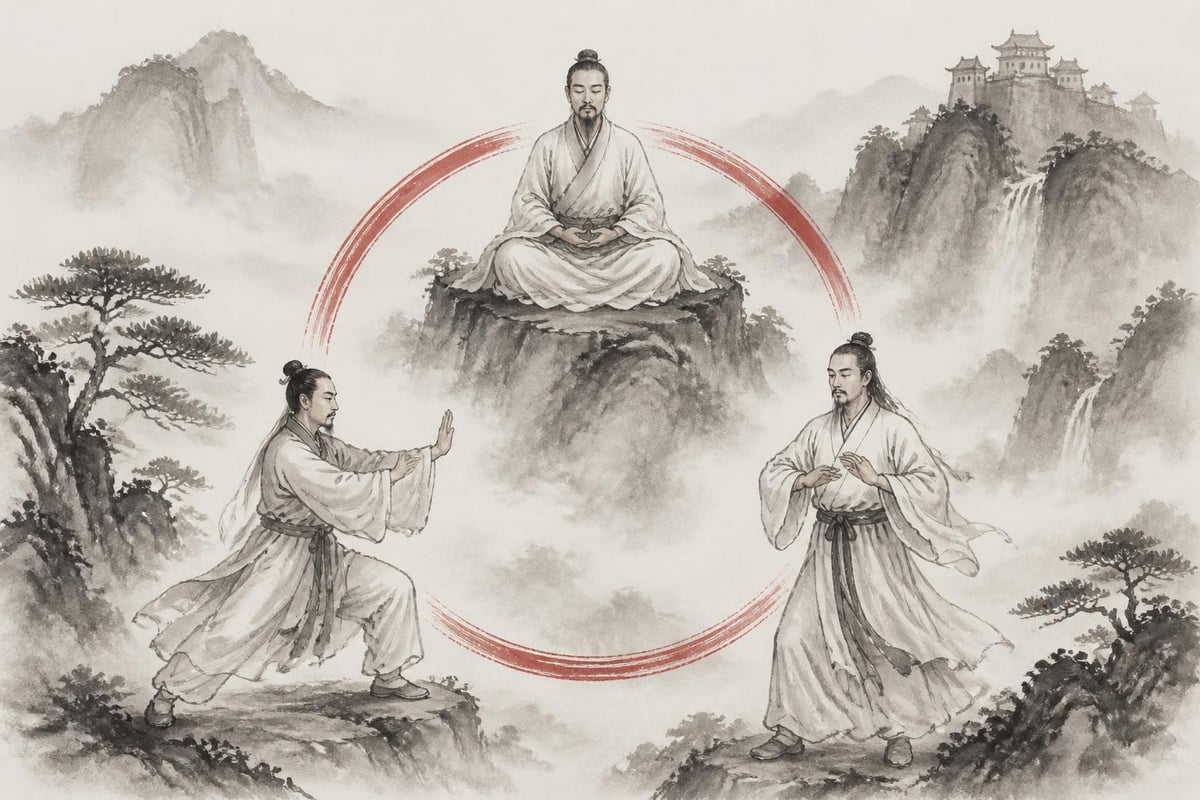
A distinctive feature of Daoist practice is that stillness and movement go together. Qi Gong is often practised as moving meditation, where each gesture is done with full attention and an easy breath. This can help bridge the gap between formal sitting and daily life.
The Role of Tai Chi in Meditation Development
Tai Chi, particularly the Wudang forms, can be thought of as meditation in motion. As you move slowly through the postures, you practise the same qualities as in sitting: present-moment awareness and relaxed attention. Some people find that moving first makes it easier to settle into stillness afterwards.
Common Challenges and How to Work With Them
Every practitioner meets obstacles. Daoist wisdom suggests treating them as part of the practice, not as failures.
Restlessness and Mental Chatter
A busy mind is the most common challenge. You sit down and suddenly remember everything you need to do. This is completely normal. The mind's job is to think.
Rather than fighting your thoughts, notice them, let them pass, and return to your breath or your chosen focus. If you would like a short, friendly introduction, this brief video from Master Gu offers a simple approach to a busy mind.
| Challenge | Daoist approach | Practical tip |
|---|---|---|
| Racing thoughts | Allow them without following | Note "thinking" and return to the breath |
| Physical discomfort | Adjust gently | Change position or use a chair |
| Drowsiness | Balance rest and alertness | Practise earlier in the day |
| Impatience | Trust a natural unfolding | Start with short sessions |
| Self-judgement | Be kind to yourself | There is no "perfect" meditation |
Meditation can sit alongside, but should not replace, professional support. If you are dealing with ongoing stress, anxiety, low mood or burnout, please also speak to your GP or a qualified professional.
Finding Consistency
Life gets busy. The Daoist approach favours steadiness over intensity. Ten minutes daily is worth more than an hour once a week. Start small, and build gradually.
Deepening Your Understanding
As your practice grows, you may become curious about the ideas behind it. If you are new to Taoism, our guide to what Taoism is is a helpful place to start, and our Taoist philosophy course explores these ideas in more depth.
If you would like guided meditation lessons, our Taoist meditation course covers sitting and standing practices, with our teacher Master Gu. Online learning cannot physically correct your posture, so go gently and stay within what feels comfortable.
Community and Shared Practice
Meditation is personal, but it can help to swap ideas with fellow students. Hearing how others cope with a busy mind or a missed week can make it easier to keep going.
Adapting Practice for Different Life Stages
Daoist meditation is not one-size-fits-all. What suits you in your twenties may need adjusting in your sixties, and that is expected.
- Busy periods: shorter, more frequent sessions
- Low energy: gentle practice and plenty of rest
- Physical limitations: use a chair, or choose a moving practice
- Emotional ups and downs: be kind to yourself and keep practice short and simple
The principle of naturalness applies here too. Work with where you are now, rather than a picture of how practice "should" be.
The Long View: Meditation as a Lifelong Journey
Daoist meditation is not a quick fix. It is a long journey that often shows more depth the longer you stay with it. In our introduction, Master Gu describes meditation as something that can become a way of life, not just a time you set aside.
Progress is not always smooth. Some days feel settled, and others do not. This is natural, and part of the practice. Trust the process, keep it simple, and let it unfold at its own pace.
Daoist meditation offers a time-honoured path towards a calmer, steadier way of living. If you would like to explore it further, Taoist Wellness Online offers courses in meditation, tai chi, qi gong and Taoist philosophy with our teacher Master Gu.
Related reading