Tai Qi: Ancient Practice for Modern Wellness
Aug 07, 2026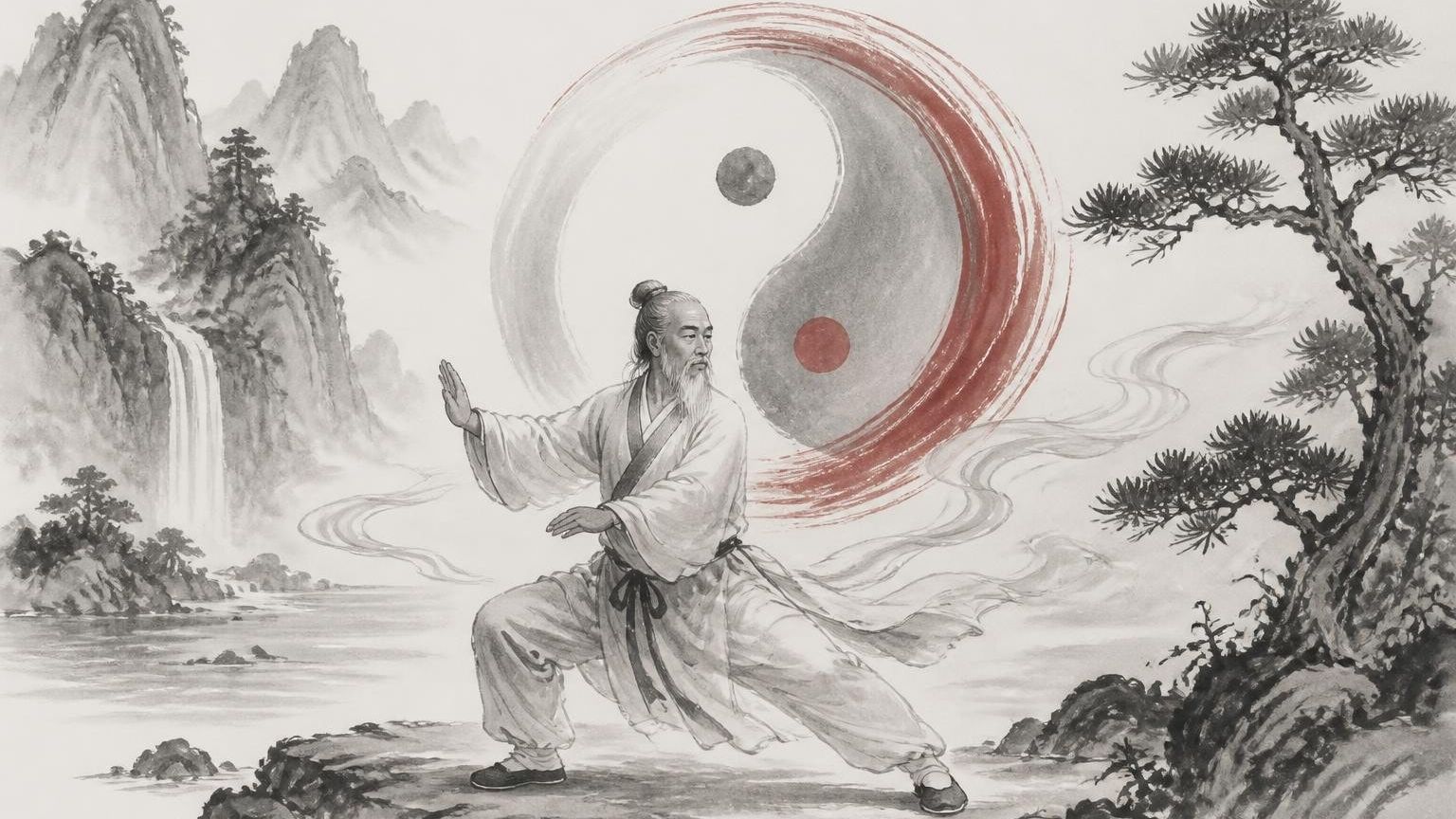
Tai qi represents one of humanity's most enduring wellness practices, weaving together movement, breath, and awareness into a singular experience that transforms both body and mind. This ancient art, rooted in Taoist philosophy, offers modern practitioners a pathway to vitality, balance, and inner peace through deceptively simple forms. Whether you're seeking relief from chronic pain, better balance, or a more centred approach to daily life, tai qi meets you exactly where you are and invites you into a practice that deepens over time.
Understanding the Foundation of Tai Qi
Tai qi emerges from thousands of years of Taoist wisdom, built on the principle that life energy, or qi, flows through all living things. When this energy moves freely, we experience health, clarity, and ease. When it becomes blocked or stagnant, we feel tension, discomfort, and disconnection.
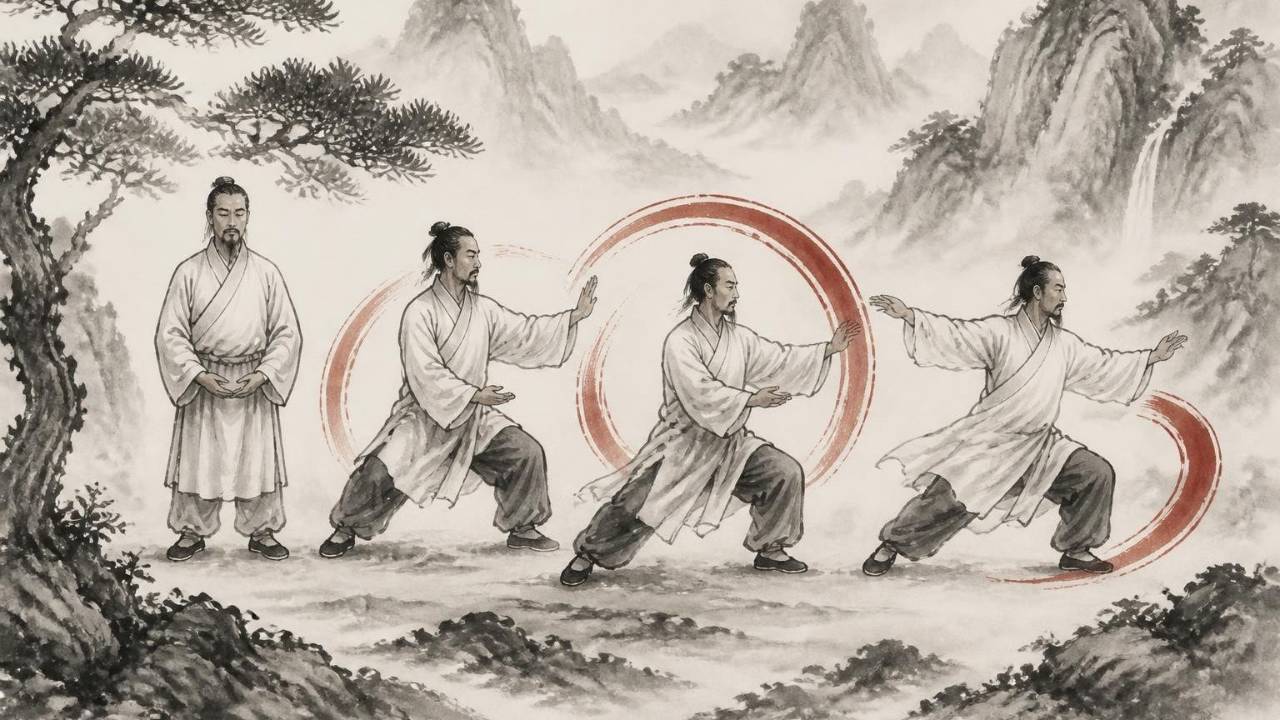
The practice itself combines slow, flowing movements with focused breathing and mental presence. Unlike high-impact exercise, tai qi works with your body's natural intelligence rather than forcing it into submission. Each movement follows circular pathways that mirror nature's patterns, creating a meditation in motion that calms the nervous system while building strength and flexibility.
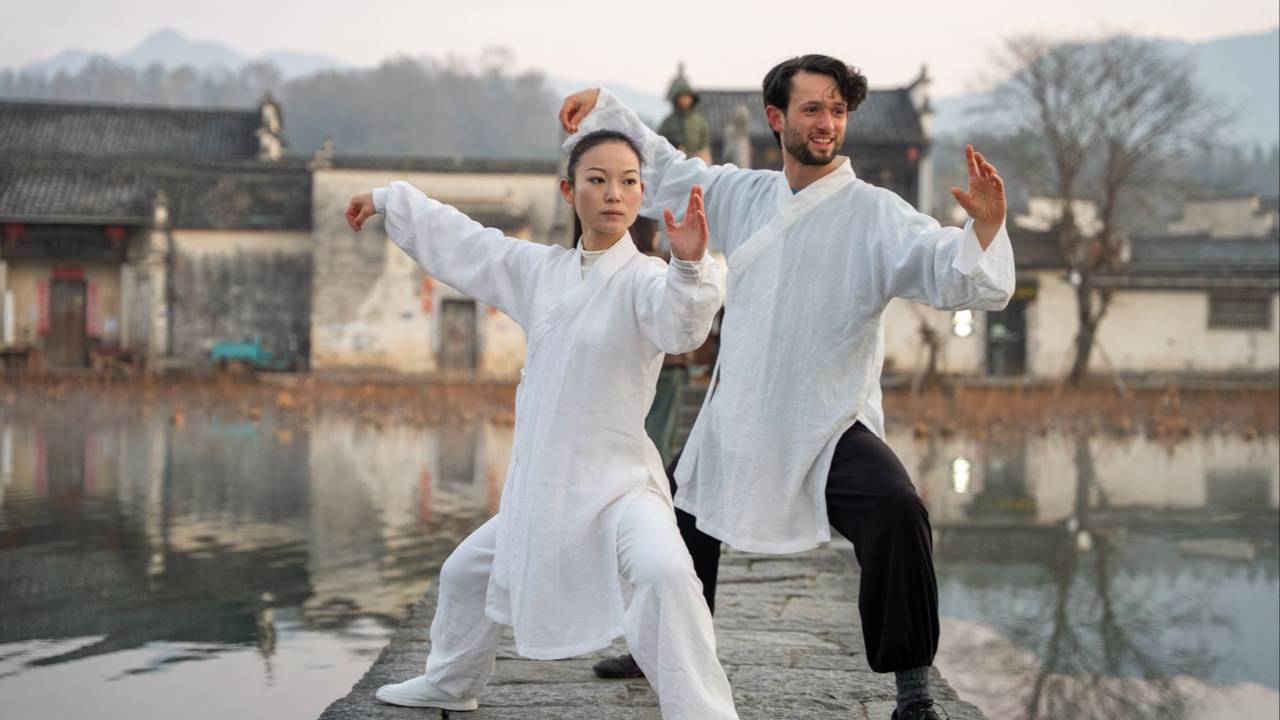
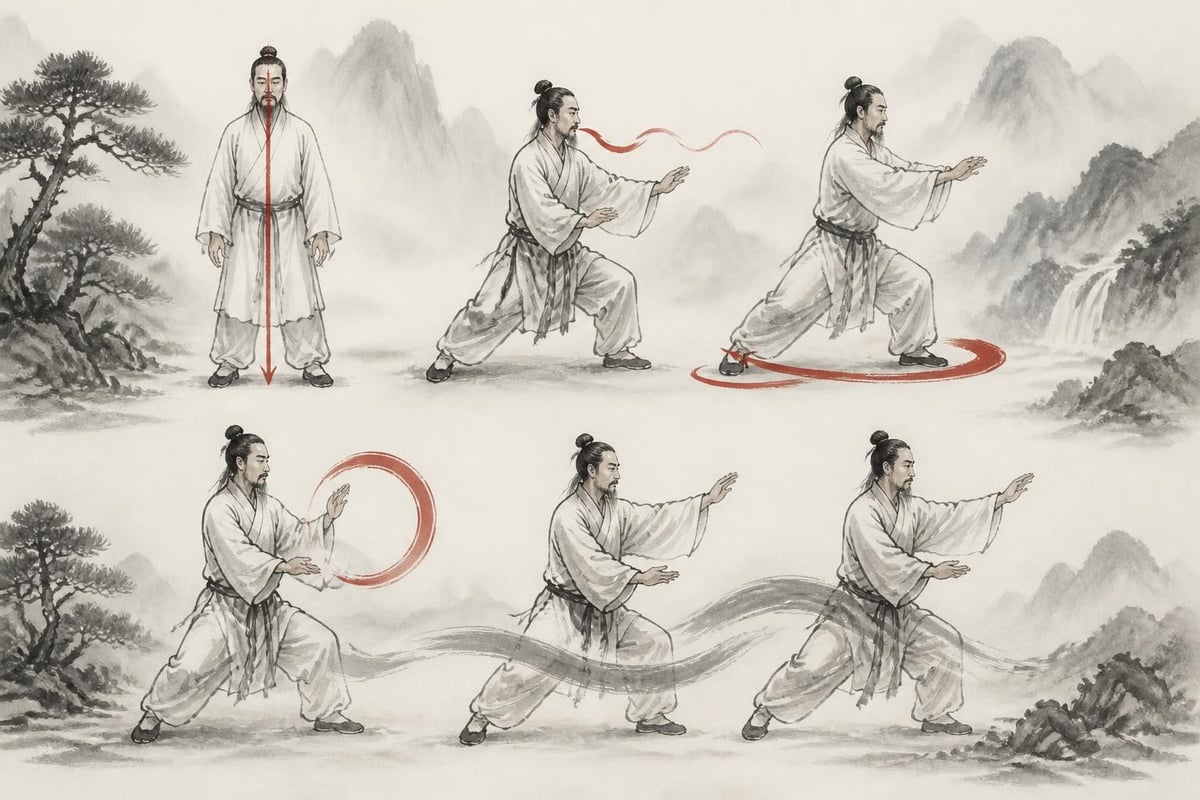
Master Gu demonstrates Brush Knee Twist Step below, one of tai qi's most iconic movements and a great one to practise daily as you begin exploring the form.
The Philosophical Roots
At its core, tai qi embodies the Taoist concept of yin and yang, the complementary forces that create balance in all things. Every movement contains both expansion and contraction, activity and rest, strength and softness. This philosophical foundation teaches practitioners to find equilibrium not through rigid control but through responsive awareness.
Key principles include:
- Wu wei: Effortless action, moving with rather than against natural flow
- Softness overcomes hardness: Yielding creates strength more sustainable than force
- Rootedness and flexibility: Grounding in stability while maintaining adaptability
- Mindful presence: Attention focused fully on the present movement
These aren't abstract concepts but lived experiences that emerge through consistent practice. You discover them in your body first, then recognise them throughout your daily life.
Health Benefits Supported by Research
Modern science continues to validate what Taoist masters have known for centuries. Research confirms that tai qi improves strength, flexibility, and balance across all age groups and fitness levels.
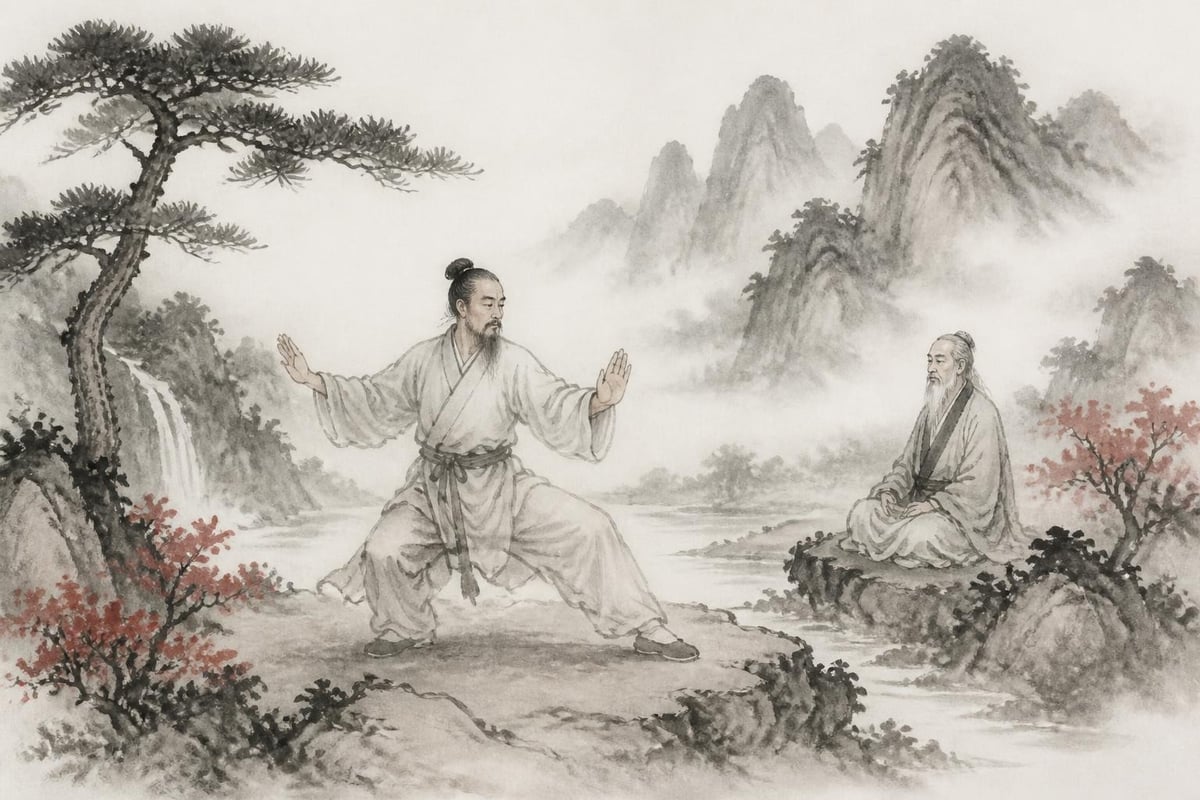
Physical Improvements
The gentle, weight-bearing movements strengthen muscles and bones without straining joints. Studies show particular benefits for:
| Health Area | Documented Benefits |
|---|---|
| Balance & Coordination | Significantly reduces fall risk in older adults |
| Cardiovascular Health | Lowers blood pressure, improves heart function |
| Joint Health | Reduces arthritis pain and stiffness |
| Muscle Strength | Builds functional strength for daily activities |
| Flexibility | Increases range of motion gently and safely |
Tai qi offers particular value for people managing chronic conditions like arthritis and fibromyalgia. The practice's low-impact nature makes it accessible when other forms of exercise feel overwhelming or painful. Our article on Tai Chi for Seniors: A Complete Guide to Balance & Vitality goes further into these benefits for older practitioners specifically.
Mental and Emotional Wellness
Beyond physical benefits, tai qi cultivates mental clarity and emotional resilience. The focused attention required during practice quiets mental chatter and activates the parasympathetic nervous system, your body's natural relaxation response.
Regular practitioners report:
- Reduced anxiety and low mood symptoms
- Improved sleep quality and duration
- Enhanced cognitive function and memory
- Greater emotional stability during stress
- Deeper sense of overall wellbeing
Despite its gentle appearance, research shows tai qi provides health benefits comparable to more intense exercises, including reduced inflammation markers and improved cardiovascular health.
Getting Started with Your Practice
Beginning tai qi doesn't require special equipment, extreme flexibility, or previous martial arts experience. You need only comfortable clothing, a small space, and willingness to explore movement with curiosity rather than judgement.
Essential Preparation
- Choose appropriate clothing: Loose, comfortable garments that allow free movement
- Find your space: A quiet area with enough room to extend your arms fully
- Set realistic expectations: Progress happens gradually through consistent practice
- Start with basics: Master foundational stances before complex forms
- Practise regularly: Even 10-15 minutes daily creates noticeable change
The beauty of tai qi lies in its adaptability. You can practise standing, seated, or even lying down. Modifications exist for every body type and ability level, making the art truly accessible to everyone.
Building Your Foundation
Fundamental stances form the root of all tai qi movements:
- Mountain stance: Feet parallel, knees softly bent, spine naturally aligned
- Bow stance: One leg forward with bent knee, back leg straight and rooted
- Empty stance: Weight shifted entirely to one leg, other toe lightly touching ground
These positions might feel awkward initially. That's completely normal. Your body is learning new patterns that become natural with repetition and patience.
Developing Your Daily Practice
Consistency matters more than duration when establishing your tai qi routine. Studies on sleep quality show that regular tai qi practice significantly improves rest, making morning or evening sessions particularly valuable.
Creating Sustainable Habits
Start where you are, not where you think you should be. If five minutes feels right, begin there. You can always expand your practice as it becomes more integrated into your daily rhythm.
Morning practice benefits:
- Energises body and mind for the day ahead
- Establishes centred presence before external demands arise
- Improves focus and mental clarity
- Lubricates joints and warms muscles gently
Evening practice benefits:
- Releases accumulated tension from the day
- Prepares nervous system for restful sleep
- Processes emotional experiences through movement
- Creates transition between activity and rest
Many practitioners find that learning through structured guidance in our Tai Chi course accelerates their understanding and prevents common beginner mistakes that can limit progress.
Working with Breath and Movement
Breath serves as the bridge connecting mind and body in tai qi. Unlike forced breathing exercises, tai qi cultivates natural respiration that deepens organically as your practice evolves.
Basic breathing coordination:
- Inhale during opening, rising, or gathering movements
- Exhale during closing, sinking, or releasing movements
- Never force or hold the breath
- Allow pauses to occur naturally between breaths
- Breathe through your nose when possible
The rhythm emerges gradually. Initially, focus on smooth, even breathing without trying to match every movement perfectly. Coordination develops naturally over time.
Common Forms and Styles
While numerous tai qi styles exist, they all share fundamental principles of continuous flow, circular movement, and mindful awareness. Understanding basic differences helps you choose a path aligned with your interests and goals.
| Style | Characteristics | Best For |
|---|---|---|
| Yang | Large, expansive movements; most widely practised | Beginners seeking general health benefits |
| Chen | Alternates slow and explosive movements; original style | Those interested in martial applications |
| Wu | Compact, subtle movements; emphasis on internal work | Practitioners seeking deep energetic cultivation |
| Sun | Higher stances; incorporates stepping patterns | People with joint concerns or limited mobility |
Regardless of style, the essence remains consistent: cultivating awareness, balance, and flowing energy through mindful movement, and Brush Knee Twist Step shown above appears in some form across nearly all of them. Our article on Tai Chi Chuan: Ancient Practice for Modern Wellness explores these style distinctions in more depth.
The Importance of Authentic Teaching
Tai qi's subtlety means that video alone rarely captures its depth. While instructional content provides valuable reference, learning from an experienced teacher helps you understand the internal dimensions that make the practice transformative rather than merely physical exercise.
Authentic instruction from lineage masters, such as Master Gu, ensures you receive teachings rooted in centuries of accumulated wisdom rather than modern adaptations that may have lost essential elements.
Integrating Tai Qi into Modern Life
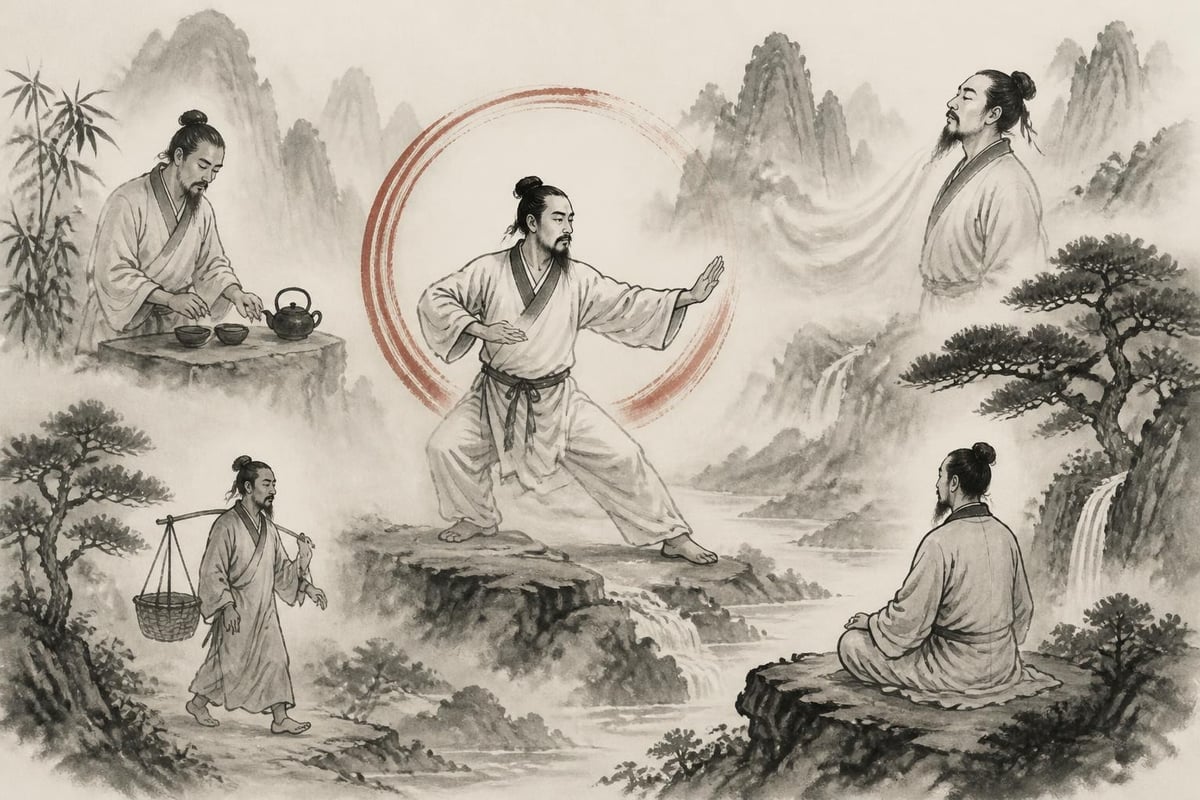
The practice extends beyond formal sessions, influencing how you move, breathe, and respond throughout your day. This integration represents tai qi's most profound gift: not occasional moments of peace but an ongoing relationship with balance and presence.
Practical Applications
At work:
- Use tai qi principles for ergonomic movement at your desk
- Take brief standing breaks to shift weight and release tension
- Apply breath awareness during stressful meetings or deadlines
At home:
- Move through household tasks with tai qi fluidity and presence
- Practise gentle forms before bed to prepare for sleep
- Share simple movements with family members of all ages
In challenging moments:
- Return to mountain stance to find physical and mental centre
- Use tai qi breathing to calm reactive emotions
- Apply yielding principles to interpersonal conflicts
Our supportive global community of fellow practitioners offers encouragement and shared wisdom as you navigate integrating practice into your unique life circumstances.
Overcoming Common Obstacles
Every practitioner encounters challenges. Recognising them as natural parts of the learning process rather than personal failures makes all the difference.
Physical Challenges
- Knee discomfort: Ensure knees track over toes, never extend past them; adjust stance width and depth
- Balance difficulties: Practise near a wall for support; focus on weight shifts between feet before lifting
- Muscle fatigue: Raise your stance higher; take breaks between movements; build strength gradually
- Joint stiffness: Warm up gently before practice; move within comfortable range; never force positions
Mental Obstacles
Impatience with progress: Tai qi reveals its depth over years, not weeks. Each session offers value regardless of visible advancement.
Comparing yourself to others: Your practice serves your body, your energy, your journey. Someone else's experience provides inspiration, not a standard you must meet.
Perfectionism: Tai qi has no finish line. The practice itself is the goal, not some future state of mastery.
Inconsistency: Missing sessions doesn't mean failure. Simply return to practice when you're ready, without judgement or story-making.
Deepening Your Understanding
As your basic practice becomes comfortable, you may feel called to explore tai qi's deeper dimensions. This natural progression reflects the art's infinite depth, always offering new layers of discovery.
Advanced Exploration
- Internal energy cultivation: Developing sensitivity to qi movement within your body
- Partner work: Push hands exercises that teach yielding and responsiveness
- Weapons forms: Staff, sword, or fan practices that extend principles through tools
- Taoist meditation: Complementary practices that cultivate stillness and awareness
- Philosophical study: Understanding the wisdom traditions that birthed tai qi
Each layer enriches the others. Physical practice gains depth through philosophical understanding. Meditation enhances movement sensitivity. Partner work reveals principles invisible in solo forms.
Many practitioners find that exploring our Taoist Philosophy course and why not try our Taoist Meditation course alongside their tai qi creates a comprehensive path of personal cultivation.
The Long-Term Journey
Tai qi rewards patience and consistency with gifts that compound over time. What begins as simple exercise evolves into a way of being, a lens through which you perceive and engage with life differently.
Year one: Learning basic forms, developing body awareness, experiencing initial health benefits
Years two to five: Movements become natural, internal sensations emerge, practice deepens beyond choreography
Beyond five years: Forms disappear into flow, principles permeate daily life, practice becomes inseparable from living
Research confirms that long-term tai qi practice provides cumulative benefits across physical, mental, and emotional health domains, with improvements continuing to accrue over years and decades.
The journey never truly completes. Each stage reveals new subtleties, new understandings, new ways the practice serves your evolving life. This endless depth keeps tai qi fresh and engaging regardless of how long you've practised.
Finding Your Path Forward
Whether you're drawn to tai qi for health reasons, stress management, or deeper spiritual exploration, the practice meets you with exactly what you need. Its gentle nature makes it accessible while its profound depth ensures you'll never exhaust its potential.
Starting doesn't require perfect conditions or extensive preparation. It requires only willingness to take that first step, to explore movement with curiosity, to breathe with awareness, to be present in your body right now.
Testimonials from practitioners worldwide demonstrate tai qi's transformative potential across diverse backgrounds, ages, and life circumstances. Their stories reflect not superhuman achievement but ordinary people discovering extraordinary benefits through consistent, mindful practice.
Tai qi offers a lifetime path of wellness, balance, and self-discovery through gentle, mindful movement rooted in ancient Taoist wisdom. Whether you're seeking physical health, mental clarity, or deeper spiritual connection, this practice adapts to your unique needs and grows with you over time. Taoist Wellness Online provides comprehensive instruction from Master Gu, a 15th-generation San Feng Pai Wudang Taoist Master with over 25 years of teaching experience, helping students worldwide access these transformative practices through structured courses, live guidance, and a supportive global community. Begin your journey today and discover how tai qi can enhance every dimension of your life.
If you'd like to try it for yourself first, our free 4-week Taoist Wellness course is a gentle place to start.