Taoist Wisdom for Anxiety: Ancient Practices for Modern Peace
Aug 10, 2026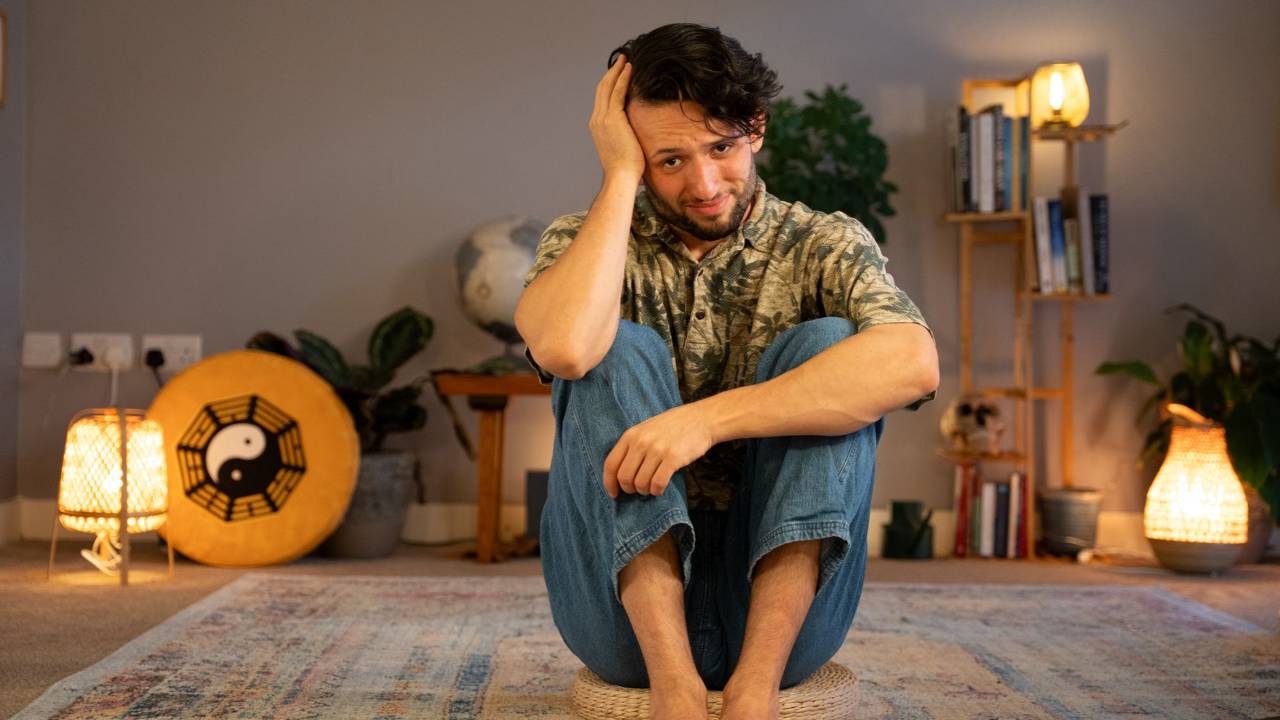
Anxiety has become a constant companion for many people in 2026, showing up as racing thoughts, tightness in the chest, and a feeling that something is always about to go wrong. While modern approaches focus on managing symptoms, taoist wisdom for anxiety offers something different: a path that addresses the root causes of mental turbulence through principles developed over thousands of years. These ancient teachings recognise that anxiety often stems from resistance to life's natural flow, and they provide practical tools to restore harmony between mind, body, and spirit.
Understanding Anxiety Through the Taoist Lens
The Taoist view of anxiety starts with a simple observation: when we fight against the natural way of things, we create suffering. Your anxious mind isn't broken or defective. It's actually working overtime trying to control outcomes, predict every possible threat, and force life to match your expectations.
In Taoist philosophy, this exhausting pattern comes from losing connection with the Tao, the natural way that governs all things. When you align with this flow, anxiety loses its grip. When you resist, anxiety intensifies.
The Root of Mental Spiralling
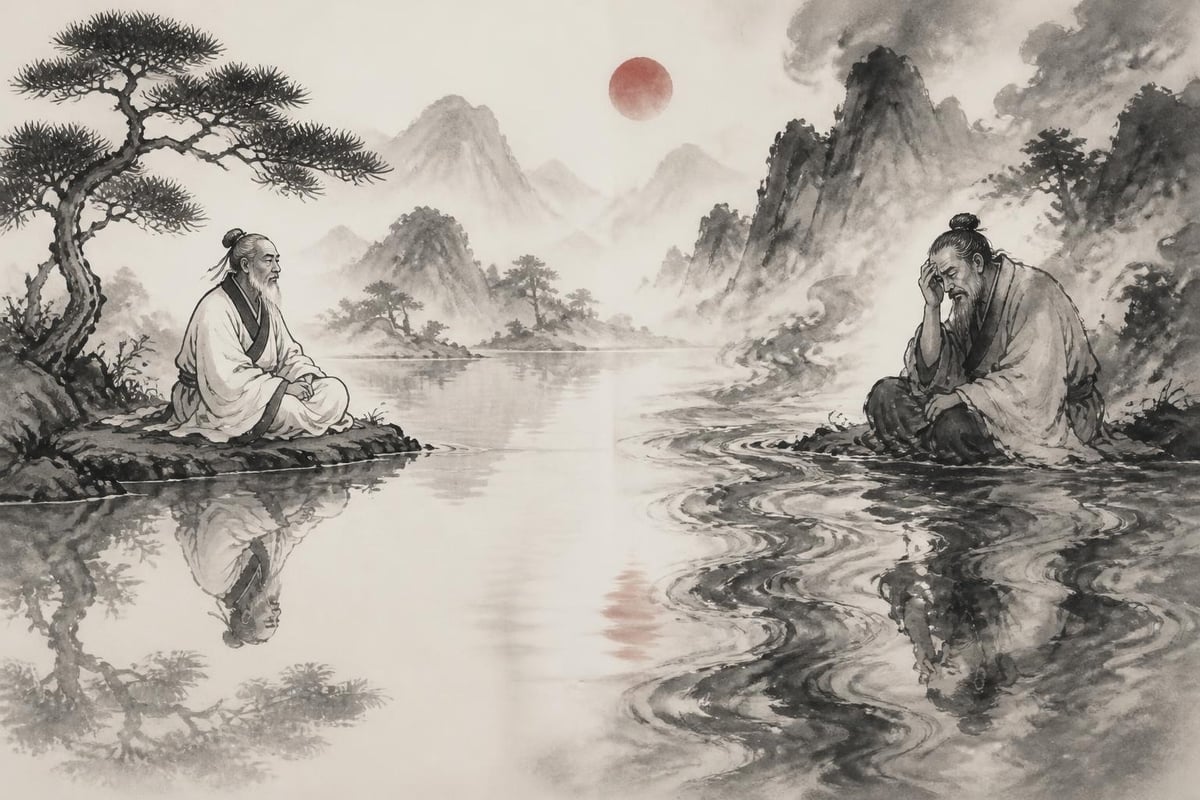
Ancient Taoist texts describe the mind as water. When undisturbed, water becomes clear and reflects reality accurately. When agitated, it becomes cloudy and distorts everything. Your anxious thoughts work the same way, creating stories about dangers that often don't exist.
This understanding shifts everything. Instead of viewing anxiety as an enemy to defeat, taoist wisdom for anxiety teaches you to recognise it as a signal that you've moved away from natural balance. The goal isn't to fight harder but to return to stillness.
Wu Wei: The Practice of Effortless Action
Wu wei represents one of the most powerful concepts in taoist wisdom for anxiety. Often translated as "effortless action" or "non-forcing," it doesn't mean doing nothing. It means acting in harmony with circumstances rather than against them.
When anxiety strikes, your first instinct might be to push it away, distract yourself, or force positive thinking. Wu wei suggests a different approach: allow the anxiety to exist without adding resistance to it. This paradoxical practice often dissolves anxiety faster than fighting it.
George shares four ideas that have helped him understand wu wei more deeply in the video below, a helpful companion to this section.
Applying Wu Wei in Daily Life
Here's how you can begin practising wu wei when anxious thoughts arise:
- Notice the anxiety without immediately trying to fix it
- Observe where it lives in your body (chest, stomach, shoulders)
- Breathe naturally instead of controlling your breath
- Allow thoughts to pass like clouds across the sky
- Take action only when it arises naturally, not from force
Many students discover that the simple act of stopping the fight with anxiety creates immediate relief. You're no longer feeding the cycle with additional tension.
Breathing and Qi: Anchoring in the Present
Traditional Taoist practices recognise that anxiety lives primarily in thoughts about the future. Your breath, however, only exists in this moment. This makes breathing practices essential tools in taoist wisdom for anxiety.
In Wudang teachings, breath work isn't just about relaxation. It's about cultivating and balancing qi, your life energy. When qi flows smoothly through your body, anxiety has nowhere to lodge. When qi becomes stuck or scattered, worry takes hold. Our article on Taoist Meditation: Ancient Practice for Modern Life explores these same breath-based micro-practices in more depth.
Simple Breathing Practice for Anxious Moments
| Step | Action | Purpose |
|---|---|---|
| 1 | Place one hand on your lower abdomen | Connect with your dantian (energy centre) |
| 2 | Breathe in slowly through your nose | Fill from bottom to top naturally |
| 3 | Pause briefly without forcing | Allow energy to settle |
| 4 | Exhale gently through your mouth | Release tension and stagnant qi |
| 5 | Repeat for 3-5 minutes | Reset your nervous system |
This practice works because it shifts attention from anxious thoughts to physical sensation. You're not trying to stop anxiety - you're giving your system something else to organise around.
Movement as Medicine: Tai Chi and Qi Gong
While meditation helps calm the mind, many people find that anxious energy needs physical expression. This is where movement practices become invaluable tools in taoist wisdom for anxiety.
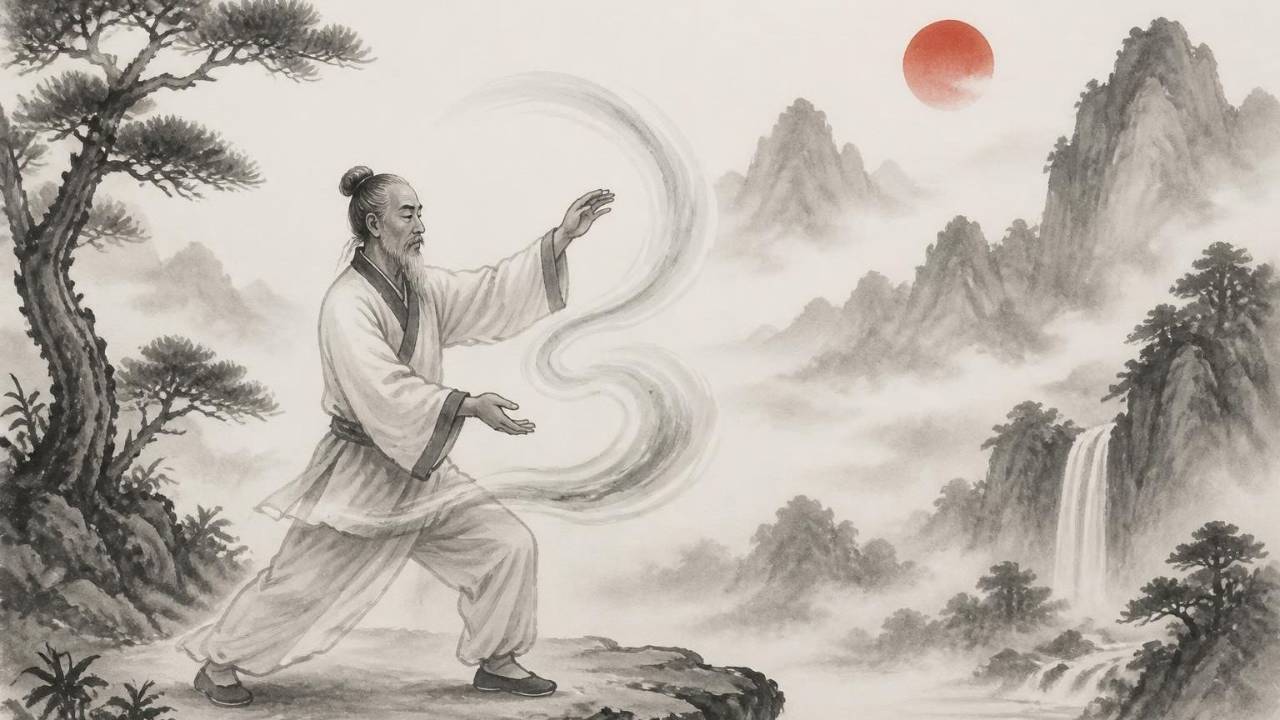
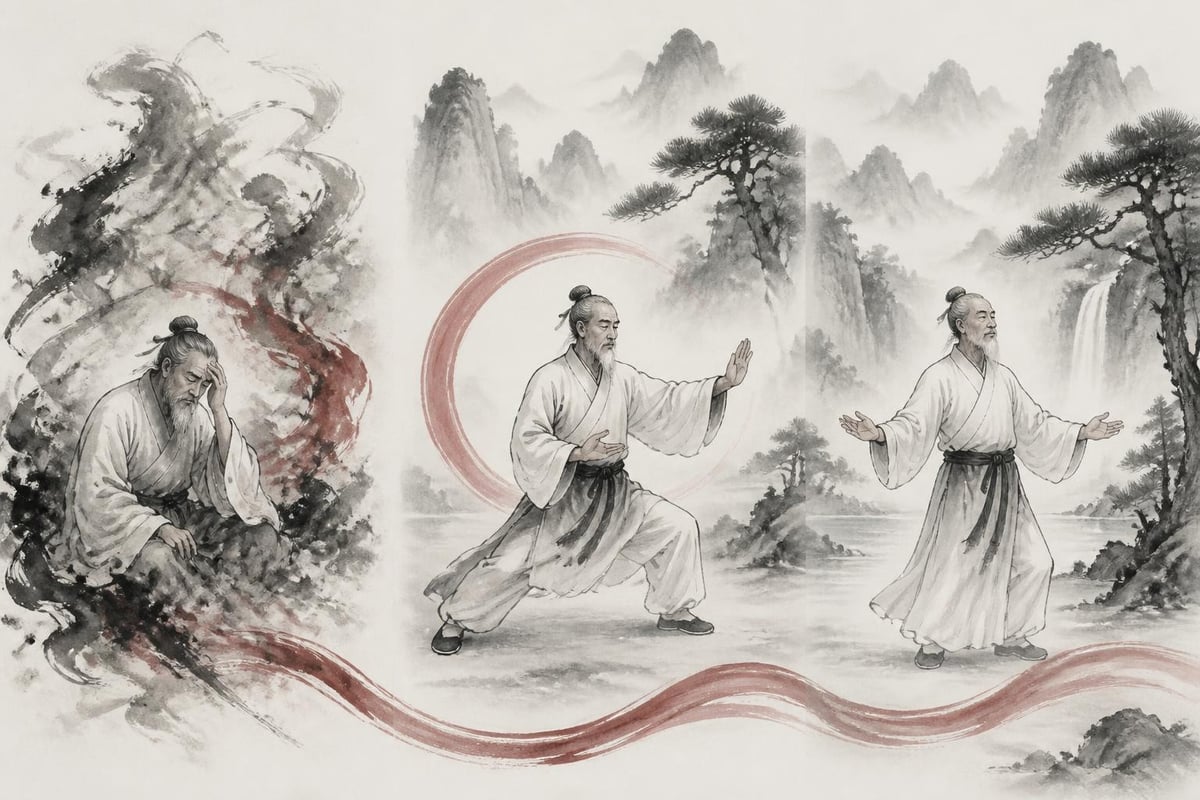
Tai Chi and Qi Gong offer gentle, flowing movements that regulate your nervous system while building mental focus. Unlike intense exercise that can sometimes amplify anxiety, these practices work with your body's natural rhythms.
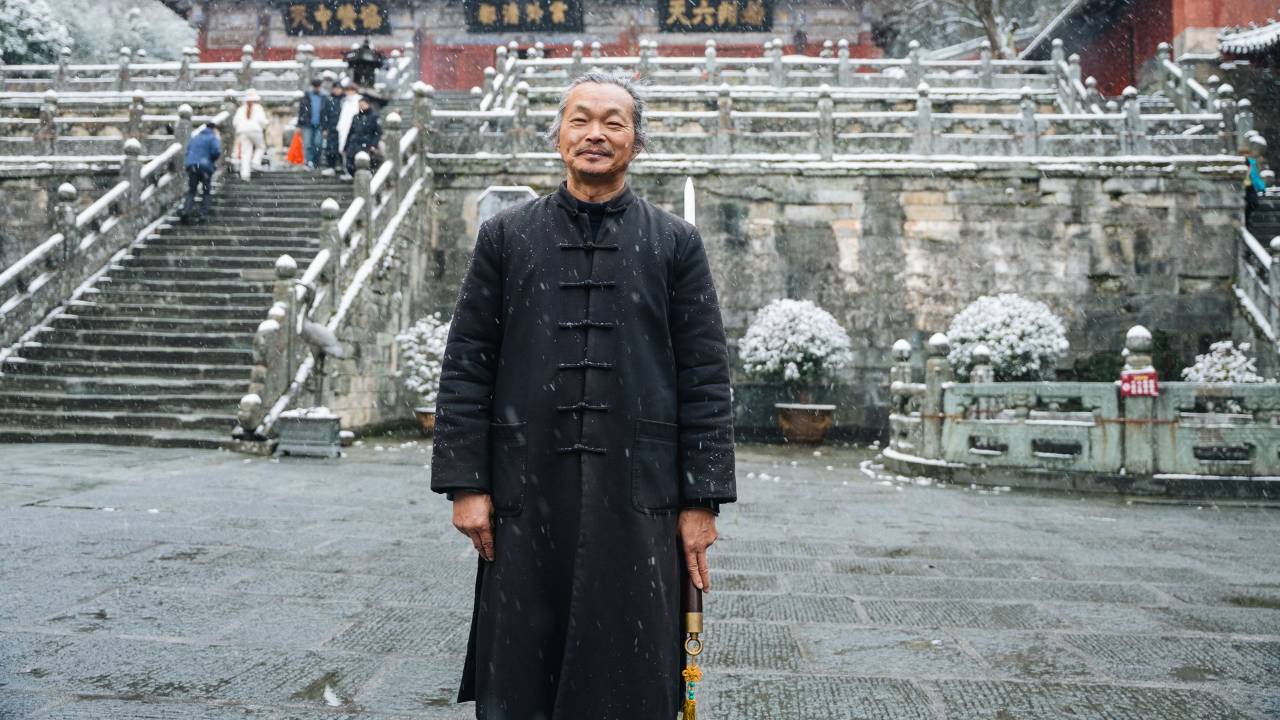
The Wudang tradition taught by our Master Gu emphasises slow, mindful movements that unite breath, intention, and physical action. This integration gives your anxious mind something constructive to focus on while releasing stuck energy from your body. Our piece on Tai Chi Stress Relief: Ancient Practice for Modern Calm looks at this movement-based approach in more detail.
Why Movement Works for Anxiety
- Grounds scattered energy back into your body
- Interrupts thought loops through focused attention
- Releases physical tension that feeds mental worry
- Builds confidence in your body's capabilities
- Creates immediate shifts in how you feel
You don't need to master complex forms to benefit. Even five minutes of simple Qi Gong movements can transform an anxious morning into a centred one.
Embracing Simplicity: The Power of Less
Modern life bombards you with choices, information, and demands. Taoist wisdom for anxiety points toward simplification as a remedy. The Tao Te Ching teaches that the sage "does not collect precious things" and "claims nothing," finding peace in having enough rather than always wanting more.
This principle directly addresses a major source of contemporary anxiety: the endless pursuit of achievement, possession, and perfection. When you simplify your life, you reduce the mental load that fuels worry.
Practical Ways to Simplify
Start with these small steps toward greater simplicity:
- Choose one priority for each day instead of ten
- Reduce information consumption (news, social media, emails)
- Create empty space in your schedule for nothing
- Keep only what serves you in your physical environment
- Practise saying no to obligations that drain you
The space you create through simplification becomes room for presence. And presence is where anxiety cannot survive.
Working With Natural Cycles
Taoist philosophy recognises that everything moves in cycles: day and night, seasons, expansion and contraction. Fighting these natural rhythms creates the conditions for anxiety to flourish. Aligning with them restores balance.
When you feel anxious, ask yourself: "Am I pushing for summer energy during a winter phase?" You might be demanding constant productivity when your body and mind need rest. You might be forcing social connection when you need solitude.
Recognising Your Personal Rhythms
| Energy Pattern | Signs | Taoist Response |
|---|---|---|
| High energy phases | Clarity, motivation, creativity | Take action, move forward |
| Low energy phases | Fatigue, uncertainty, withdrawal | Rest, reflect, restore |
| Transitional phases | Restlessness, mixed emotions | Allow change without forcing |
Honouring your natural cycles reduces the constant pressure to perform at peak levels. This acceptance itself becomes a powerful application of taoist wisdom for anxiety.
The Art of Letting Go
Perhaps no teaching matters more for anxiety than the Taoist practice of letting go. This doesn't mean giving up or becoming passive. It means releasing your grip on outcomes you cannot control.
Your anxiety often centres on questions that have no immediate answers: Will this work out? What if I fail? What will they think? The Taoist approach suggests that holding these questions in a clenched fist only increases suffering.
Many practitioners find support in learning these practices within our supportive community where others are walking the same path. Sharing the journey makes letting go feel less like loss and more like freedom.
Three Levels of Letting Go
The practice deepens in stages:
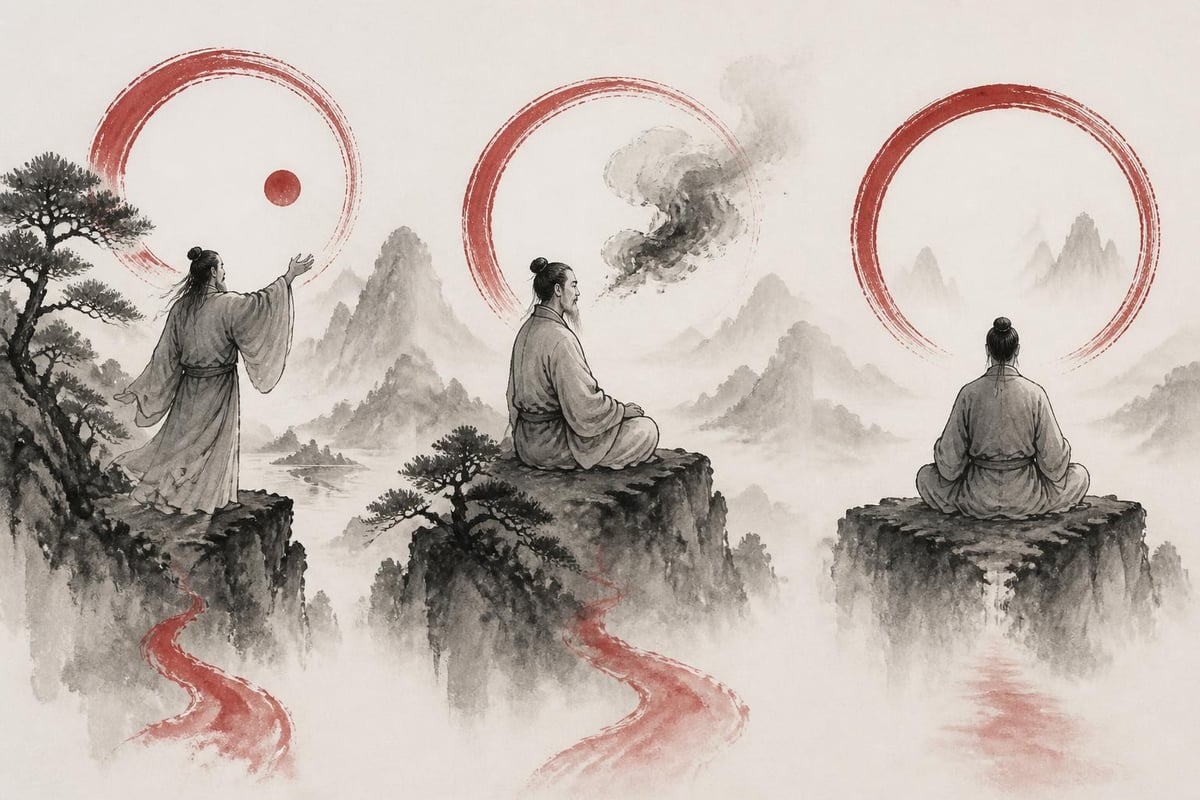
- Letting go of control over external circumstances
- Letting go of thoughts about how things should be
- Letting go of the one who is trying to let go
That final level points to a profound truth: even the "you" who struggles with anxiety is part of the natural flow. When you stop identifying so completely with your anxious thoughts, they lose their power to disturb you.
Building a Sustainable Practice
Understanding taoist wisdom for anxiety intellectually provides little relief. The transformation happens through consistent practice. Even five minutes daily creates more change than occasional long sessions.
For those new to these ancient practices, starting with a structured approach can make all the difference. Our free 4-week Taoist Wellness course offers a practical introduction to Tai Chi, Qi Gong, and Taoist wellness practices designed specifically to help you reclaim focus, release tension, and build a calmer daily routine.
Creating Your Daily Anchor
Your practice doesn't need to be complicated. Choose one or two elements that resonate with you:
- Morning breathing practice (5-10 minutes)
- Gentle Qi Gong movements before stressful activities
- Walking meditation during lunch breaks
- Evening reflection on moments of flow
- Weekly review of what you're ready to release
The key is consistency over intensity. Small daily actions create the foundation for lasting change.
Reconnecting With Your Body's Wisdom
Anxiety often manifests as living entirely in your head, disconnected from physical sensations. Taoist wisdom for anxiety emphasises returning to embodied awareness as an antidote.
Your body holds tremendous wisdom that your anxious mind overlooks. When you pay attention, you notice that certain situations create tension in your shoulders, others settle in your stomach, and some generate a pleasant sense of expansion in your chest.
Body Scanning Practice
This simple practice helps you reconnect:
- Sit or stand comfortably
- Bring attention to the top of your head
- Slowly scan downward through each body region
- Notice sensations without judgement
- Breathe into areas holding tension
- Thank your body for its messages
Regular body scanning trains you to catch anxiety early, before it spirals into overwhelming worry. You begin to notice the first whispers of tension and can respond skilfully.
The Role of Acceptance
Fighting reality creates anxiety. Accepting what is creates peace. This principle runs throughout taoist wisdom for anxiety, even though acceptance feels counterintuitive when you're suffering.
Acceptance doesn't mean liking difficult circumstances or becoming passive. It means acknowledging what's true in this moment without adding layers of resistance. When you stop arguing with reality, you free up enormous energy that was previously consumed by inner conflict.
What Acceptance Looks Like
True acceptance involves:
- Acknowledging anxious feelings when they arise
- Recognising situations you cannot change
- Releasing stories about how things should be different
- Meeting this moment exactly as it is
- Choosing wise action from a place of clarity
Many people worry that acceptance means giving up on improvement. The Taoist perspective reveals the opposite: only from acceptance can genuine transformation begin.
Cultivating Patience and Trust
Modern culture trains you to expect instant results. You want anxiety gone immediately, completely, permanently. Taoist wisdom for anxiety teaches patience with the unfolding process.
Just as a tree grows slowly, putting down roots before reaching toward the sky, your healing happens gradually. Some days bring clarity and ease. Other days bring confusion and struggle. Both are part of the natural cycle.
Trusting the Process
| Timeline | What to Expect | How to Support Yourself |
|---|---|---|
| First week | Moments of relief, continued anxiety | Celebrate small wins |
| First month | More awareness, less reactivity | Maintain daily practice |
| Three months | Noticeable shifts in patterns | Deepen your practice |
| Six months | New baseline of calm | Trust what's emerging |
| Ongoing | Continuous refinement | Keep learning and practising |
The journey with our Taoist Philosophy course reveals that transformation happens not through force but through patient, persistent alignment with natural principles.
Living Questions Instead of Demanding Answers
Your anxious mind loves certainty and hates ambiguity. It generates endless "what if" scenarios trying to achieve absolute security. Taoist wisdom for anxiety suggests a different relationship with uncertainty.
Instead of desperately seeking final answers, you can learn to live comfortably with open questions. This doesn't mean abandoning problem-solving or ignoring real concerns. It means releasing the grip on questions that have no answers right now.
Some questions resolve themselves with time. Others dissolve when you stop feeding them with attention. A few transform into something entirely different when you hold them lightly.
Questions to Ask Yourself
When anxiety spirals, try these grounding questions:
- What can I actually control in this moment?
- What needs my attention right now?
- Where am I resisting what is?
- What would acceptance look like here?
- How can I be kind to myself today?
These questions redirect your focus from future catastrophes to present possibilities.
Integration: Bringing It All Together
Taoist wisdom for anxiety works best as an integrated approach rather than isolated techniques. Your breathing practice supports your movement practice. Your movement practice deepens your meditation. Your meditation enhances your ability to let go.
Think of these teachings as different facets of the same gem. Each one reflects the central truth: you find peace not by controlling life but by flowing with it.
The practices taught in our Tai Chi course and why not try our Qi Gong course create physical and energetic foundations that make philosophical teachings more than abstract concepts. They become lived experiences in your body.
Your Personal Combination
Everyone's path looks slightly different. Some people find breathing practices most helpful. Others connect deeply with movement. Still others discover that philosophical study transforms their relationship with anxiety.
Experiment to find your combination:
- Try different practices for at least two weeks each
- Notice what creates genuine shifts versus temporary relief
- Build gradually rather than trying everything at once
- Adjust as your needs change over time
- Stay curious about what works for your unique system
Maintaining Balance Amid Change
Life continues to bring challenges, transitions, and uncertainties. The goal isn't to eliminate all anxiety but to maintain your centre regardless of external circumstances.
Taoist wisdom for anxiety prepares you not for a life without difficulty but for meeting difficulty without losing yourself. You develop the capacity to remain rooted like a tree in a storm, bending without breaking.
This resilience grows through practice. Each time you return to your breath, each time you choose acceptance over resistance, each time you let go of control, you strengthen your foundation.
These ancient practices offer more than temporary relief - they provide a complete framework for transforming your relationship with worry, fear, and uncertainty. By embracing principles like wu wei, simplification, and acceptance, you create the conditions for lasting peace. Taoist Wellness Online provides authentic training in these transformative practices through courses in Tai Chi, Qi Gong, meditation, and Taoist philosophy, guided by Master Gu, a 15th-generation San Feng Pai Wudang Taoist Master with over 25 years of expertise. Whether you're just beginning or deepening your practice, you'll find the tools, community, and wisdom to navigate anxiety with greater ease and return to your natural balance.