What Is Taoism: Ancient Wisdom for Modern Balance
Aug 13, 2026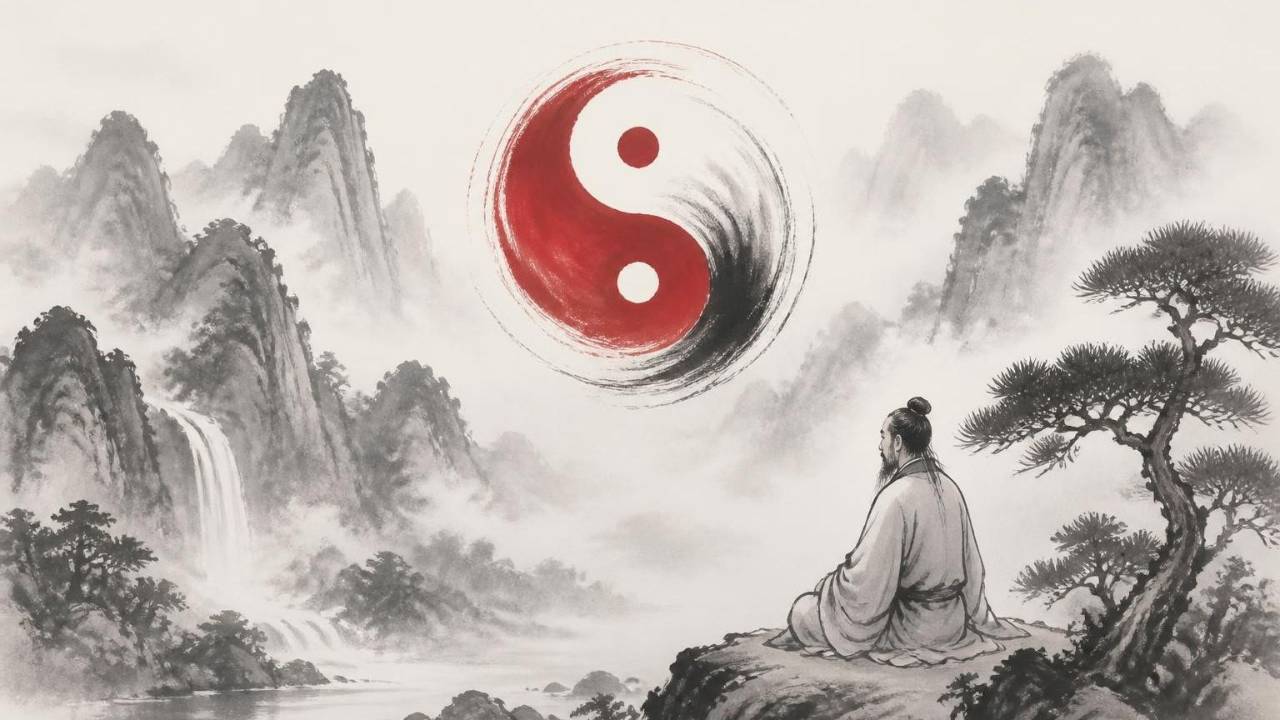
When you pause to notice the effortless way water flows around stones, or how trees bend with the wind rather than resist it, you're witnessing the essence of what Taoism teaches. This ancient Chinese philosophy and spiritual tradition, which emerged over 2,500 years ago, offers a profound yet practical approach to living in harmony with the natural rhythms of existence. Understanding what is Taoism opens a doorway to practices that help modern seekers find balance amid the chaos of contemporary life, grounding us in timeless wisdom that remains remarkably relevant in 2026.
The Origins and Historical Roots of Taoism
Taoism arose during China's Spring and Autumn period (770-476 BCE), a time of political upheaval and philosophical flowering. The tradition centres on the concept of the Tao, often translated as "the Way," which represents the fundamental nature of the universe and the path of living in alignment with it.
The foundational text, the Tao Te Ching, attributed to the sage Laozi (also spelled Lao Tzu), comprises 81 short verses that explore the nature of the Tao and how to embody its principles. This enigmatic figure, whose very existence is debated by scholars, is said to have been a contemporary of Confucius in the 6th century BCE. Whether historical figure or legendary composite, Laozi's teachings shaped the philosophical foundation of what is Taoism at its core.
Another pivotal figure, Zhuangzi (Chuang Tzu), expanded Taoist thought in the 4th century BCE through stories and parables that illuminate the freedom found in following the natural way. Together, these texts form the philosophical backbone of early Taoism, known as Daojia (道家), or "School of the Way."
Master Gu offers a clear, accessible explanation of the tradition in the video below, a helpful companion as you explore these origins.
The Development of Religious Taoism
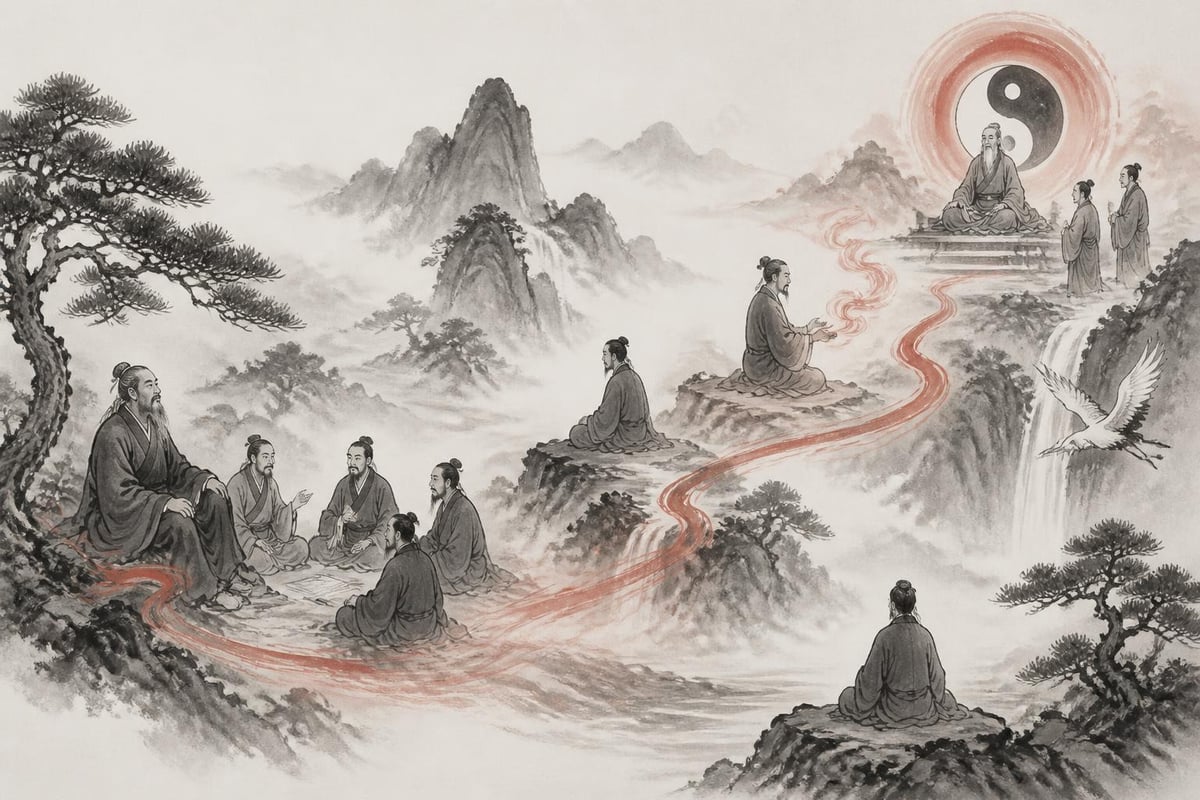
While philosophical Taoism focused on naturalness and simplicity, religious Taoism (Daojiao, 道教) emerged during the Han Dynasty (206 BCE - 220 CE), incorporating rituals, deities, and practices aimed at health, longevity, and spiritual transcendence. This development didn't contradict the earlier philosophy but rather expressed it through different forms.
The Celestial Masters school, founded by Zhang Daoling in 142 CE, established the first organised Taoist religious community. This tradition systematised practices including:
- Meditation techniques for inner stillness
- Breathing exercises to cultivate vital energy (qi)
- Movement practices that harmonise body and spirit
- Ritual observances honouring natural cycles
- Dietary guidelines promoting health and longevity
Throughout Chinese history, Taoism has woven itself into the cultural fabric, influencing medicine, martial arts, poetry, painting, and daily life. The Wudang mountains became a sacred centre for Taoist cultivation, where practitioners developed sophisticated systems of internal martial arts and energy work.
Core Principles That Define Taoism
To truly understand what is Taoism, we need to explore its central concepts that guide both thought and practice. These principles aren't abstract theories but living approaches to experiencing life more fully.
Wu Wei: Effortless Action
Wu wei (無為) translates literally as "non-doing" or "non-action," but its meaning is far more nuanced. It describes acting in harmony with the natural flow rather than forcing outcomes through excessive effort or control. Think of a skilled swimmer who moves with the current rather than exhausting themselves fighting against it.
This principle doesn't advocate passivity or laziness. Instead, wu wei points toward:
Responding rather than reacting to situations with appropriate, timely action
Conserving energy by working with natural tendencies instead of against them
Allowing processes to unfold according to their own timing
Reducing struggle through alignment with what already wants to happen
Yin and Yang: Dynamic Balance
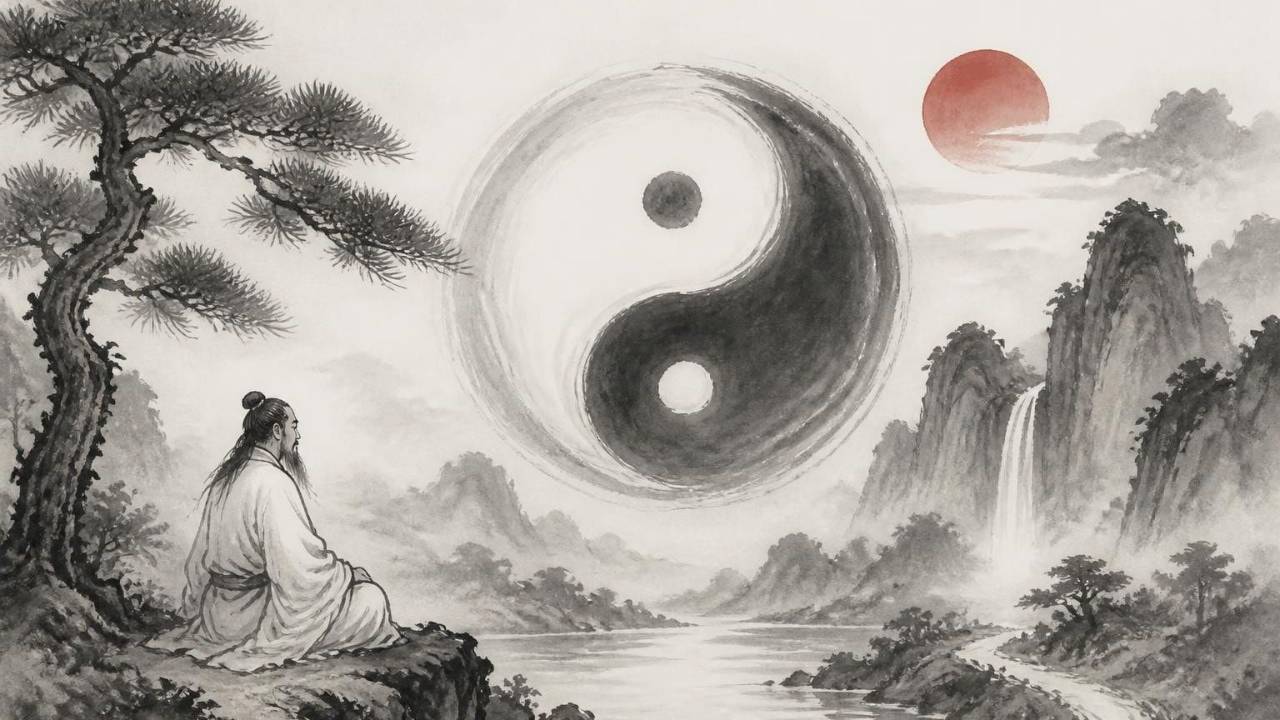
The yin-yang symbol has become iconic, yet its wisdom runs deeper than many realise. These complementary forces represent the dynamic interplay of opposites that creates all phenomena.
| Yin Qualities | Yang Qualities |
|---|---|
| Receptive | Active |
| Dark | Light |
| Soft | Firm |
| Stillness | Movement |
| Inward | Outward |
| Earth | Heaven |
Neither force is superior or inferior. Health, harmony, and vitality arise from their balanced interaction. When we understand what is Taoism at this level, we recognise that pursuing only yang qualities (constant activity, forcing, striving) leads to burnout, while excessive yin (withdrawal, passivity, stagnation) prevents growth.
The Three Treasures: Jing, Qi, and Shen
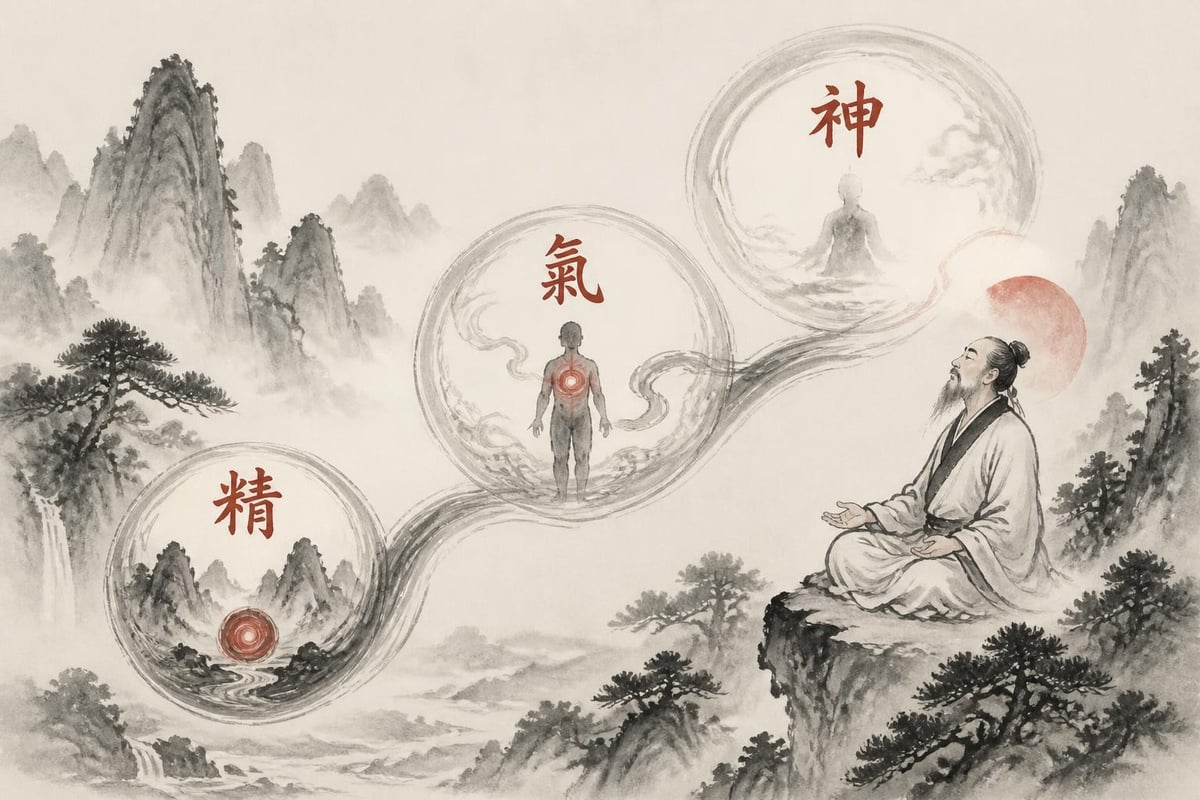
Taoist cultivation focuses on three fundamental energies within the human being:
Jing (essence) represents our foundational vitality, our constitutional reserves and reproductive energy. It's the deep wellspring from which life draws.
Qi (vital energy) is the animating force that flows through meridians and powers all bodily functions. Qi Gong practices specifically work to cultivate, refine, and circulate this energy.
Shen (spirit) encompasses consciousness, awareness, and the luminous quality of presence. When jing and qi are abundant and harmonised, shen naturally shines forth.
These three treasures form a cascade, with refined jing supporting strong qi, which in turn nourishes clear shen. Our article on Taoist Training: Ancient Practices for Modern Balance explores how these three levels are cultivated systematically in daily practice.
Taoist Practices for Cultivation and Health
Understanding what is Taoism philosophically provides the foundation, but Taoism truly comes alive through practice. These time-tested methods offer practical ways to embody Taoist principles in daily life.
Tai Chi: Moving Meditation
Tai Chi (Taijiquan) developed within Taoist contexts as both a martial art and health practice. Its slow, flowing movements embody wu wei, teaching practitioners to move with minimal effort while maintaining whole-body integration. The practice cultivates:
- Balance and stability through rooted stances
- Qi circulation via coordinated breath and movement
- Mental clarity through focused awareness
- Flexibility and strength without strain
- Stress reduction through meditative quality
Our Tai Chi course, taught by authentic lineage holders, emphasises internal development over external form, making it particularly aligned with Taoist principles of inner cultivation.
Qi Gong: Energy Cultivation
Qi Gong encompasses thousands of practices designed to work directly with vital energy. These range from gentle movements to standing meditation to visualisation techniques. Regular practice helps practitioners:
- Clear energetic blockages that impede flow
- Strengthen the body's natural healing capacity
- Calm the nervous system and settle the mind
- Build reserves of vitality and resilience
- Develop sensitivity to subtle energetic states
Many people find our Qi Gong course more accessible than complex martial forms while still receiving profound benefits for health and well-being.
Meditation: Returning to Stillness
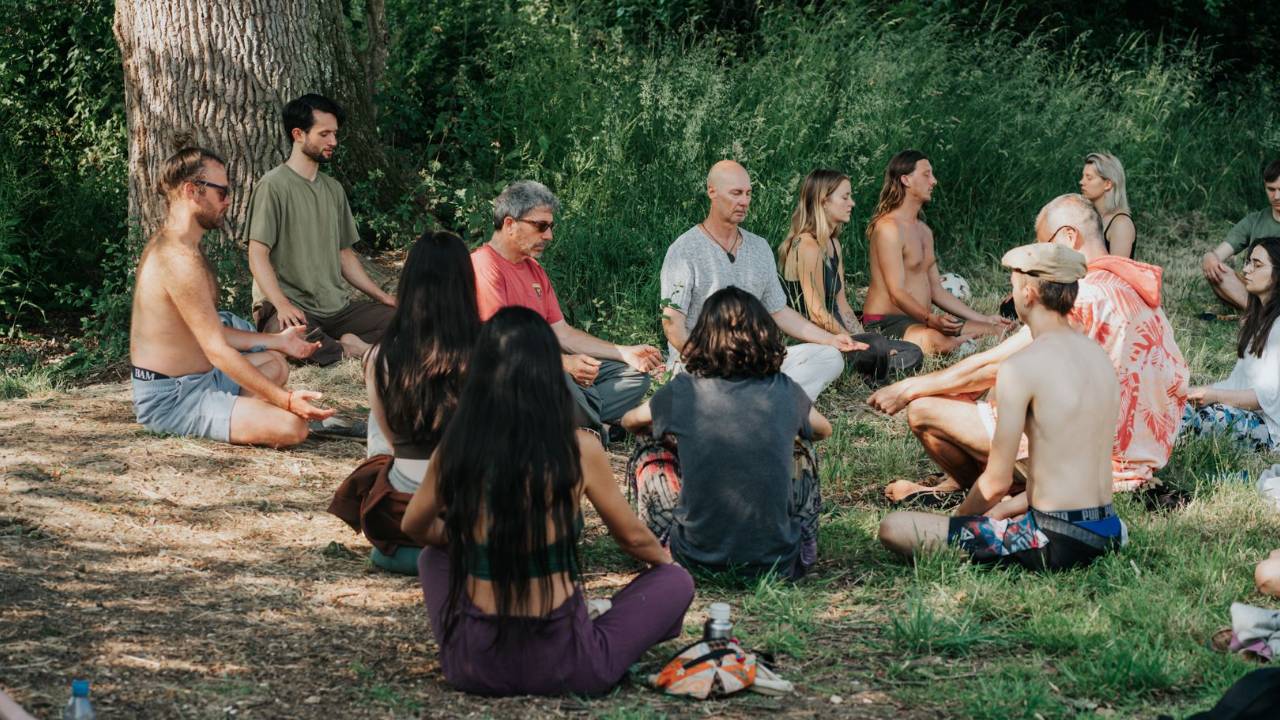
Taoist meditation practices differ from some other traditions by emphasising naturalness over control. Rather than forcing the mind into submission, these approaches work with awareness to allow thoughts to settle like sediment in still water.
Common approaches include:
- Observing the breath without manipulating it
- Inner smile meditation directing warm awareness to organs and body parts
- Emptiness meditation resting in the space between thoughts
- Microcosmic orbit guiding energy through key meridians
- Zuowang (sitting and forgetting) releasing even the intention to meditate
These practices don't require belief or religious affiliation. They're practical methods anyone can explore through our Taoist Meditation course.
Living Harmoniously: Daily Taoist Wisdom
Beyond formal practices, Taoism offers guidance for everyday living. These principles help us navigate modern challenges with ancient wisdom:
Simplicity - Reducing excess in possessions, commitments, and mental complexity creates space for what matters
Naturalness - Trusting our authentic nature rather than forcing ourselves into artificial moulds
Contentment - Finding sufficiency in what we have rather than constant striving for more
Observing cycles - Recognising that energy, creativity, and productivity naturally wax and wane
Non-contention - Avoiding unnecessary conflict and competition through yielding strength
The Relevance of Taoism in Modern Life
You might wonder whether teachings from ancient China hold value in our contemporary world of technology, rapid change, and global connection. The answer lies in recognising that while our tools and circumstances have evolved, fundamental human needs remain constant.
Addressing Modern Stress and Imbalance
The pace of modern life often pushes us into chronic yang states: constant doing, digital stimulation, mental busyness, and disconnection from natural rhythms. Understanding what is Taoism reveals its particular relevance now. Our article on Harmony and Nature: Ancient Wisdom for Modern Balance explores this connection between natural rhythms and daily wellbeing in more depth.
Consider these common modern challenges and how Taoist wisdom addresses them:
| Modern Challenge | Taoist Response |
|---|---|
| Information overload | Cultivating stillness and selective engagement |
| Chronic stress | Wu wei: reducing unnecessary effort and resistance |
| Physical stagnation | Movement practices that restore natural flow |
| Disconnection from body | Internal arts that develop embodied awareness |
| Burnout from overwork | Honouring rest cycles and yin restoration |
| Anxiety about future | Present-moment awareness and trust in process |
Scientific Validation of Ancient Practices
Modern research increasingly validates what Taoist practitioners have known for centuries. Studies on Tai Chi demonstrate improvements in balance, cardiovascular health, and mental well-being. Qi Gong research shows measurable effects on immune function, pain management, and stress reduction.
Neuroscience research on meditation confirms changes in brain structure and function associated with regular practice. These findings don't make Taoism "more true," but they help bridge ancient wisdom with contemporary understanding, making these practices more accessible to sceptical modern minds.
Integrating Taoist Principles Without Leaving Your Life
One of the most practical aspects of what is Taoism is that it doesn't require withdrawing from ordinary life. You don't need to become a recluse or adopt foreign cultural practices. Instead, Taoist principles can infuse your existing activities:
- Approach work projects with wu wei, finding the path of least resistance to your goals
- Notice opportunities for yin restoration amid yang activity throughout your day
- Practise presence while washing dishes, walking, or waiting in line
- Apply the wisdom of yielding in difficult conversations
- Honour your natural energy rhythms rather than forcing constant productivity
For those seeking structured guidance, exploring authentic teachings provides tremendous support. If you're ready to experience these principles directly through gentle movement and energy practices, consider starting with our free Taoist course, which introduces Tai Chi, Qi Gong, Meditation, and Taoist Wisdom in an accessible, practical format.
The Sacred Texts and Literary Heritage
To deepen understanding of what is Taoism, engaging with its primary texts offers invaluable insight. These writings aren't meant to be studied intellectually alone but contemplated and embodied over time.
The Tao Te Ching: Foundational Wisdom
Laozi's Tao Te Ching remains one of the most translated books in human history, with hundreds of English versions alone. Its paradoxical language challenges linear thinking:
"The Tao that can be told is not the eternal Tao" - Opening line acknowledging that ultimate truth transcends conceptual understanding
"Know the yang, but keep to the yin" - Advice to maintain balance even while engaging actively
"The softest things in the world overcome the hardest" - Observation of water's persistent power
Each verse rewards repeated reading, revealing new layers as your understanding develops.
The Zhuangzi: Stories and Parables
Where the Tao Te Ching speaks in concise verses, the Zhuangzi employs imaginative stories that illustrate Taoist principles through memorable characters and situations. The famous tale of the dreaming butterfly questions the nature of reality itself, while stories of skilled craftsmen demonstrate wu wei in action.
These texts provide endless material for reflection, meeting readers wherever they are in their journey. Our reading list offers further recommendations for exploring these classics.
Taoism as Living Tradition
Understanding what is Taoism requires recognising it as a living tradition, not merely historical philosophy. Across China and increasingly worldwide, practitioners continue to embody these teachings through dedicated cultivation.
Lineages and Transmission
Authentic Taoist practices have been preserved through careful teacher-to-student transmission across generations. This ensures that techniques retain their essential qualities rather than becoming diluted or distorted. The Wudang tradition, for instance, traces unbroken lineages of internal martial arts and meditation practices spanning centuries.
Working with experienced teachers who hold authentic lineage provides immeasurable value. They've walked the path themselves and can guide you through challenges, correct misunderstandings, and help you progress in ways that books alone cannot.
Community and Support
While Taoism values solitude and individual cultivation, practising within our community offers powerful support. Fellow practitioners understand the journey's challenges and joys, providing encouragement and shared wisdom. In 2026, global digital connection allows people worldwide to practise together regardless of geographic distance.
Distinguishing Authentic Teachings
As Taoism has grown in popularity, various interpretations and adaptations have emerged. Some maintain authentic principles while others dilute or misrepresent core teachings. When exploring what is Taoism through practical study, consider:
- Does the teaching emphasise direct experience over belief?
- Are practices grounded in traditional transmission?
- Does the approach honour simplicity and naturalness?
- Is there respect for the depth and subtlety of the tradition?
- Are claims about benefits realistic rather than magical?
Authentic Taoist instruction meets you where you are while maintaining the integrity of time-tested methods.
Taoism's Relationship with Other Traditions
Taoism doesn't exist in isolation but has interacted with other philosophical and spiritual traditions throughout its history, particularly Buddhism and Confucianism. These three teachings shaped Chinese culture so deeply that people often drew from all three simultaneously.
While Confucianism emphasised social harmony and proper relationships, and Buddhism focused on liberation from suffering, Taoism contributed emphasis on naturalness, spontaneity, and alignment with cosmic patterns. Rather than competing, these perspectives often complemented each other.
For modern practitioners, this historical cross-pollination suggests that exploring Taoist practices doesn't require abandoning other meaningful traditions. Many find Taoist principles and practices enrich rather than conflict with their existing frameworks.
What is Taoism ultimately reveals itself not through concepts alone but through direct experience of living with greater ease, balance, and natural flow. The ancient wisdom of the Tao offers practical guidance for navigating modern challenges while cultivating health, clarity, and authentic presence. Whether you're drawn to the philosophical insights, the practical health benefits, or the deeper spiritual dimensions, Taoist Wellness Online provides authentic instruction in Tai Chi, Qi Gong, and Taoist meditation under the guidance of Master Gu, a 15th-generation San Feng Pai Wudang Taoist Master with over 25 years of expertise. Begin your journey into this transformative tradition and discover how these timeless practices can bring greater harmony to your daily life.