Taoist Training: Ancient Practices for Modern Balance
Jul 15, 2026
Taoist training offers a pathway to balance that has sustained practitioners for thousands of years. These ancient practices aren't about perfection or performance. They're about returning to your natural state, cultivating vital energy, and finding harmony between effort and ease. Whether you're seeking physical vitality, mental clarity, or spiritual depth, Taoist training provides practical tools that meet you where you are and grow with you over time.
Understanding the Foundations of Taoist Training
At its heart, Taoist training is about alignment. Not just physical posture, but the alignment of your whole being with the natural rhythms of life. The practices draw from principles found in classical texts and temple traditions, focusing on cultivating Qi (vital energy), calming the mind, and nurturing the spirit.
The Taoist tradition emphasises harmony between internal and external worlds. This isn't abstract philosophy. It shows up in how you breathe, move, and respond to daily challenges. When you practise Tai Chi, you're not just learning forms. You're training your nervous system to find centre amid movement, to stay rooted while remaining fluid.
The Three Treasures: Jing, Qi, and Shen
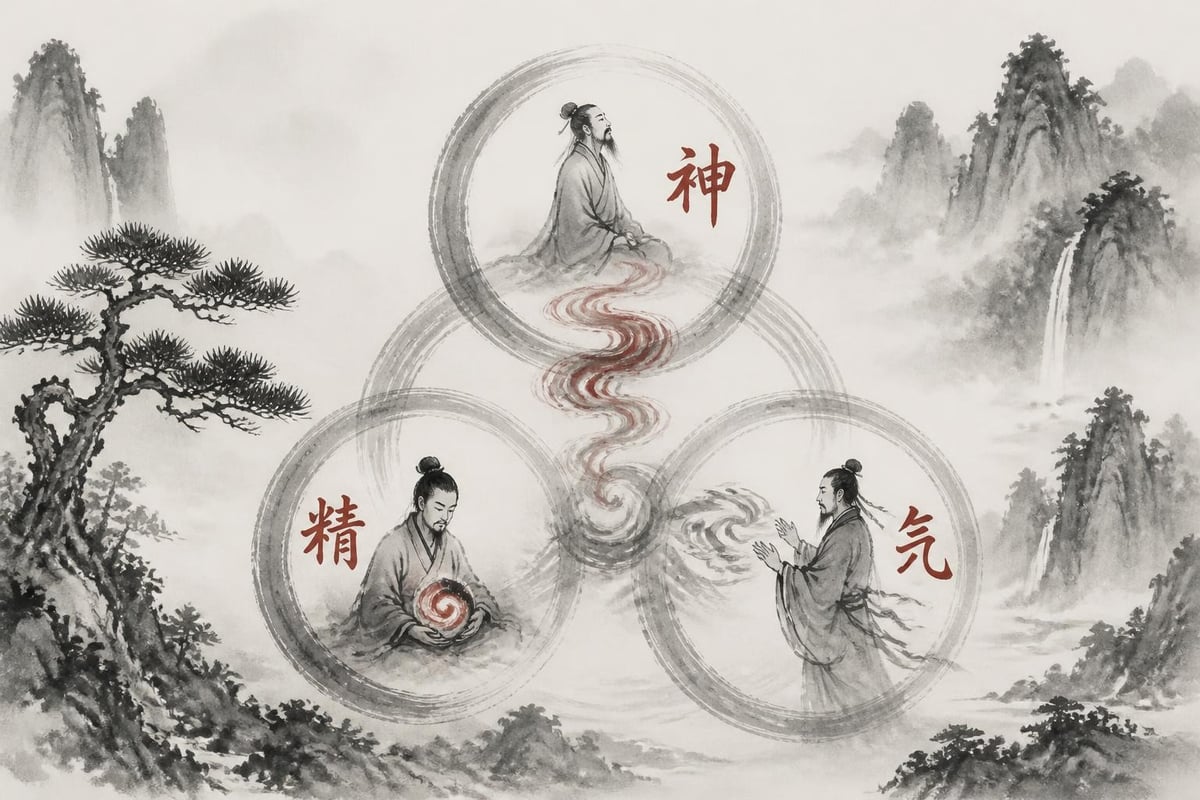
Traditional Taoist training works with what practitioners call the Three Treasures:
- Jing represents essence and physical vitality, the foundation of health stored in your body
- Qi is your life force energy, the dynamic power that moves through meridians and sustains all functions
- Shen encompasses spirit, consciousness, and mental clarity
These aren't separate elements. They transform into each other. Jing refines into Qi. Qi cultivates Shen. Taoist training practices work with all three levels, creating a complete system for wellness.
Core Practices Within Taoist Training
Taoist training encompasses several interconnected disciplines. Each offers unique benefits, yet all share common principles of natural movement, mindful breathing, and present awareness.
Tai Chi: Moving Meditation
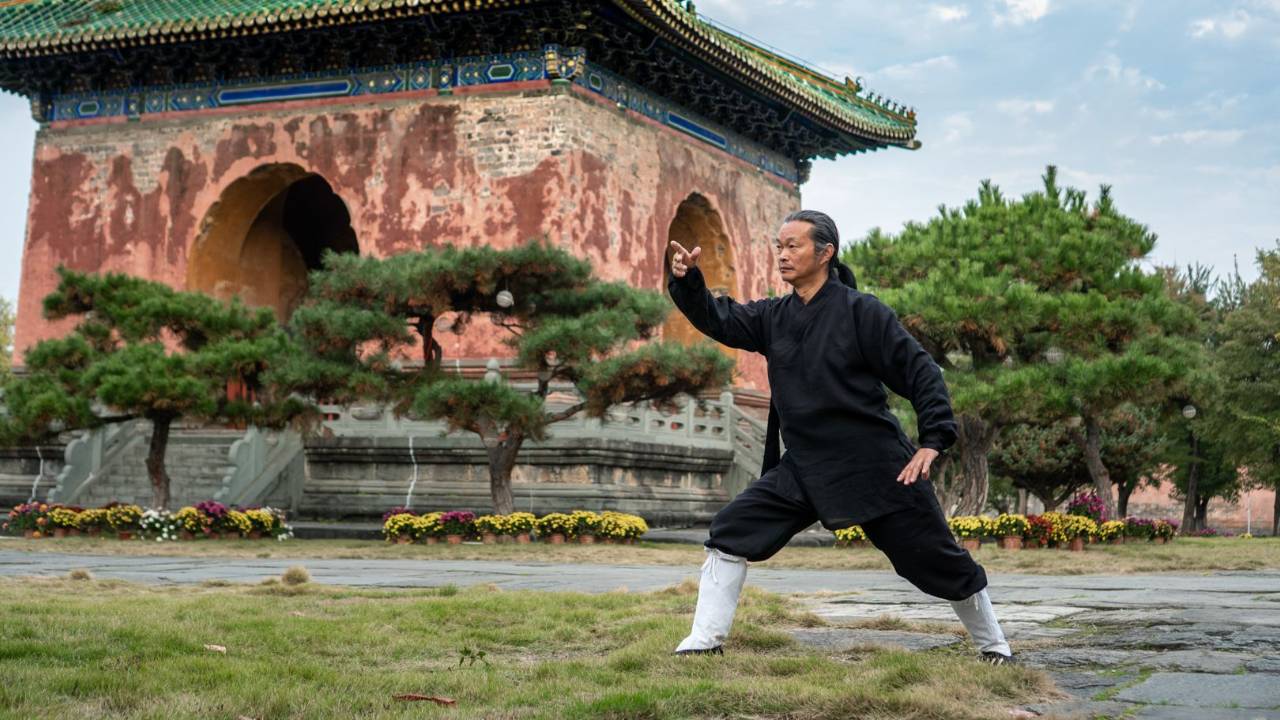
Tai Chi forms the physical foundation of many Taoist training programmes. These flowing sequences teach your body to move from your centre, coordinating breath with gesture. Each posture has martial applications, but the deeper training happens internally.
When practised regularly, Tai Chi builds strength without tension. It improves balance, not through rigid control, but by teaching you to sense and adjust. The slow, continuous movement calms your nervous system and helps you develop what practitioners call "listening energy" - the ability to sense subtle changes in yourself and your environment.
Qi Gong: Cultivating Life Force
Qi Gong focuses specifically on energy cultivation. Through standing postures, gentle movements, and breath work, you learn to sense, guide, and store Qi in your body. Our Qi Gong course at Taoist Wellness Online covers practices that focus on health and vitality, as well as those that develop specific qualities like flexibility or mental focus.
The beauty of Qi Gong lies in its accessibility. You don't need special equipment or extensive flexibility. Simple practices, done with awareness, create profound shifts in how you feel and function.
| Practice Type | Primary Focus | Time Commitment | Best For |
|---|---|---|---|
| Tai Chi | Integrated movement | 20-30 minutes daily | Balance, coordination, whole-body health |
| Qi Gong | Energy cultivation | 10-20 minutes daily | Stress relief, vitality, specific health goals |
| Meditation | Mental clarity | 10-30 minutes daily | Emotional balance, spiritual development |
| Nei Gong | Internal alchemy | 30-60 minutes daily | Advanced practitioners, deep transformation |
Meditation and Stillness Practices
Taoist meditation differs from some other approaches. Rather than emptying the mind or focusing on a single point, many Taoist training methods work with natural awareness and inner observation. You learn to watch thoughts without following them, to sense energy without forcing it.
Taoist Meditation courses like ours covers a range of approaches - from visualisations and breath counting to sitting in simple stillness. The goal isn't to achieve a special state. It's to become familiar with your natural mind, unconditioned by constant doing.
The Role of Breath in Taoist Training
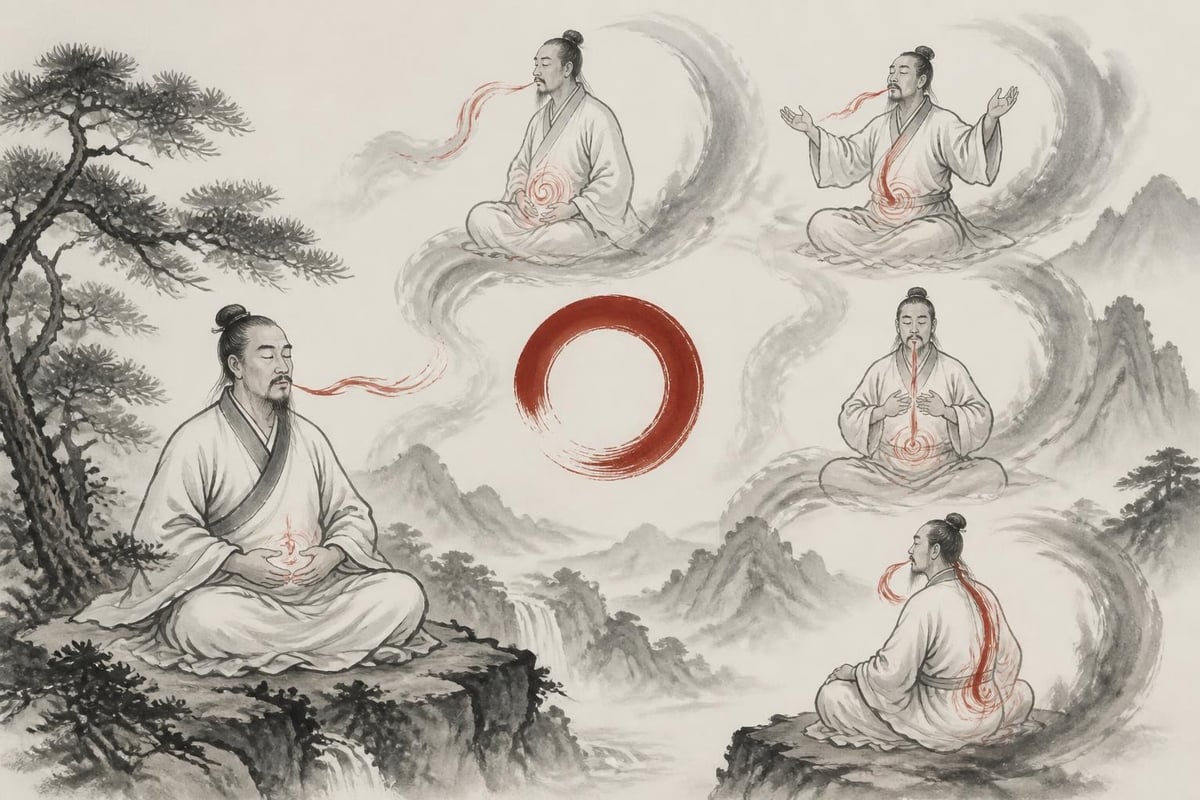
Breath connects everything in Taoist training. Your breathing patterns reflect your mental state, influence your energy flow, and affect your physical health. Ancient texts emphasise breath cultivation as foundational to spiritual development.
Natural breathing happens in the lower abdomen. Watch a baby breathe and you'll see the belly rise and fall, while the chest remains relatively still. Most adults reverse this pattern through stress and conditioning. Taoist training helps you return to this natural rhythm.
Breath Techniques for Energy and Calm
Different breathing methods serve different purposes:
- Abdominal breathing establishes the foundation, helping you breathe deeply and fully
- Reverse breathing builds internal power and focuses energy for advanced practices
- Embryonic breathing represents refined practice, where breath becomes subtle and nearly imperceptible
- Natural breathing allows breath to flow without control, supporting meditation and presence
You don't rush into advanced techniques. Each level builds on the previous one, developing sensitivity and capacity gradually.
Building a Personal Taoist Training Practice
Starting Taoist training doesn't require dramatic lifestyle changes. Small, consistent practices create lasting transformation. Many students begin with just ten minutes daily, gradually deepening their commitment as they experience benefits.
Creating Your Foundation
Begin with basics. Learn a simple Qi Gong routine or the opening movements of a Tai Chi form. Focus on feeling rather than perfecting. Notice how your body responds, where you hold tension, how your energy shifts.
If you're new to these practices, our free 4-week Taoist Wellness course provides structured guidance from Master Gu. Having clear instruction helps you build correct foundations from the start, avoiding common habits that limit progress.
Finding Authentic Guidance
Taoist training carries deep wisdom, but it also has its share of modern misinterpretations. Authentic teaching traces back through lineages, passed from master to student over generations. When possible, learn from instructors with direct transmission from traditional schools.
Look for teachers who emphasise fundamentals, who encourage questions, and who embody the qualities they teach. The right guide meets you where you are while holding space for your growth. Our post on Tai Chi philosophy explores the principles that underpin authentic Taoist teaching and how to recognise them in practice.
Integrating Taoist Principles Into Daily Life
Taoist training extends beyond formal practice sessions. The principles you cultivate on the mat or in standing meditation apply to everything you do. This integration transforms training from something you do into something you are.
Wu Wei: Effortless Action
One core principle is Wu Wei, often translated as "non-doing" or "effortless action." This doesn't mean passivity. It means acting in harmony with circumstances, responding rather than forcing, finding the path of least resistance that accomplishes the most.
In practice, Wu Wei shows up when you stop pushing against yourself. When you work with your body's natural capacity instead of forcing it into positions. When you allow thoughts to settle rather than trying to control them.
Yin and Yang Balance
Everything contains both Yin and Yang aspects. Activity and rest. Strength and softness. Inward and outward focus. Taoist training teaches you to recognise these qualities and find balance between them.
If your life leans heavily toward Yang (action, achievement, external focus), your practice might emphasise Yin qualities (stillness, receptivity, inner cultivation). If you tend toward Yin (withdrawal, passivity, overthinking), you might need more Yang practices (dynamic Qi Gong, martial applications, external engagement).
| Life Area | Yang Qualities | Yin Qualities | Balancing Practice |
|---|---|---|---|
| Work | Productivity, meetings, decisions | Reflection, strategy, processing | Midday Qi Gong break |
| Relationships | Social time, conversation, activity | Listening, presence, space | Meditation before gatherings |
| Exercise | Intense cardio, strength training | Stretching, recovery, rest | Tai Chi as active recovery |
| Mental state | Focus, analysis, problem-solving | Creativity, intuition, openness | Walking meditation |
Seasonal Living
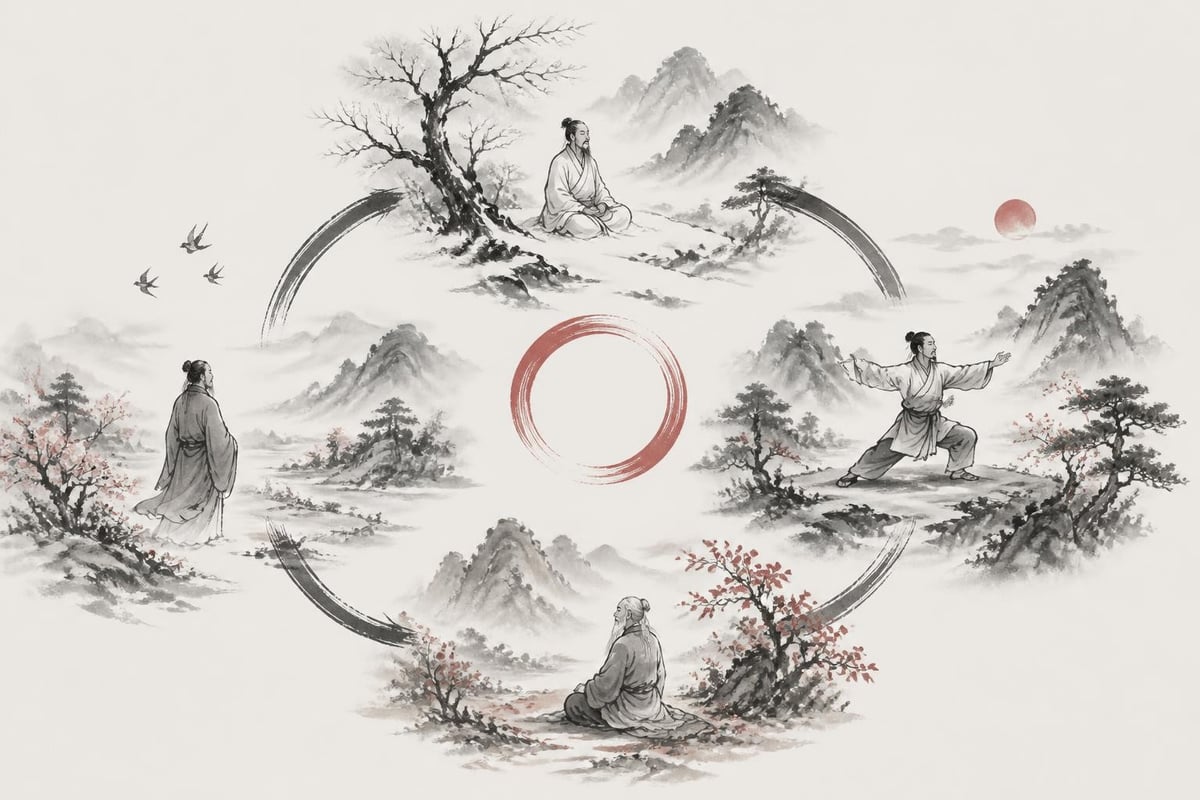
Traditional Taoist training recognises seasonal cycles. Winter invites deeper rest and inward focus. Spring calls for gentle expansion and new beginnings. Summer supports peak activity and outward expression. Autumn encourages harvest and preparation for quieter times.
Aligning your practice with seasons doesn't require radical changes. It might mean longer meditation sessions in winter, more vigorous Qi Gong in summer, or adjusting practice times to match natural light cycles.
Health Benefits and Modern Research
While Taoist training originated in spiritual contexts, modern research confirms numerous health benefits. Studies show Tai Chi improves balance in older adults, reduces fall risk, and helps manage chronic conditions like arthritis and heart disease. Qi Gong practices demonstrate positive effects on blood pressure, immune function, and stress markers.
Physical Transformation
Regular Taoist training strengthens your body in subtle but significant ways:
- Improved proprioception and spatial awareness
- Enhanced flexibility without strain or force
- Better posture through core activation rather than rigid holding
- Increased stamina from efficient energy use
These changes happen gradually. You might notice small shifts first - better sleep, fewer headaches, easier breathing. Over months and years, the cumulative effect becomes profound. Our blog post on Tai Chi for arthritis explores one of the most well-documented applications of this in more depth.
Mental and Emotional Wellbeing
The mental benefits often show up quickly. Many practitioners report feeling calmer after just a few sessions. The combination of gentle movement, focused breathing, and present awareness calms your nervous system, shifting you out of fight-or-flight mode.
Long-term practice develops emotional resilience. You learn to observe feelings without being overwhelmed by them. The same principles that help you stay centred in a Tai Chi form help you stay grounded during difficult conversations or stressful situations.
Deepening Your Taoist Training Journey
As you progress, Taoist training reveals new layers. What seemed simple at first gains complexity and depth. A basic Qi Gong stance you've practised hundreds of times suddenly opens up new sensations and understanding.
Internal Alchemy and Advanced Practice
Advanced Taoist training includes practices called Nei Dan or internal alchemy. These methods work with subtle energy centres, refining Qi into higher states of consciousness. While beginners focus on building energy and establishing foundations, advanced practitioners work with transformation and spiritual realisation.
Don't rush toward advanced practices. The foundation stages take time, sometimes years. This isn't a limitation - it's protection. Your body and energy system need preparation to handle more refined work safely and effectively.
Community and Shared Practice
Training alone has value, but practising with others accelerates growth. Communities such as ours at Taoist Wellness Online offer collective energy, shared insights, and mutual encouragement. Questions that puzzle you might be exactly what someone else needed to hear answered.
Group practice also provides accountability. It's easier to maintain consistency when others expect to see you, when your presence matters to the group dynamic.
Overcoming Common Challenges
Every practitioner faces obstacles. Understanding common challenges helps you navigate them with patience rather than frustration.
The Patience Problem
Modern life conditions us for quick results. Taoist training works differently. Changes accumulate slowly, often imperceptibly. You might practise for weeks before noticing improvements, then suddenly realise your back doesn't hurt anymore or your mind feels clearer.
Trust the process. The practices work whether you feel them working or not. Consistency matters more than intensity.
Physical Limitations and Adaptations
You don't need perfect health or fitness to begin Taoist training. Practices adapt to different abilities and conditions. Can't stand for long periods? Practise sitting Qi Gong. Limited mobility? Focus on breath work and visualisation. Every body can cultivate energy and find its own path toward balance.
Finding Time
"I don't have time" really means "I haven't made it a priority." Even five minutes of conscious breathing or simple stretches counts. Traditional Taoist arts emphasise regular practice over long sessions. Brief daily practice outweighs occasional marathon sessions.
Morning practice sets tone for your day. Evening practice helps you transition into rest. Find what fits your rhythm and commit to that.
Learning Resources and Continued Study
Taoist training benefits from multiple learning sources. Direct instruction provides correction and guidance. Written materials offer depth and context. Personal practice develops direct experience.
Classical Texts and Modern Translations
While practice takes priority, studying Taoist philosophy enriches your understanding. Texts like the Tao Te Ching offer wisdom that illuminates practice. Reading classical texts requires patience. The language is poetic, layered with meaning. One passage might reveal new insights each time you return to it, especially as your practice deepens.
Online Learning and Traditional Teaching
Modern technology makes authentic Taoist training accessible worldwide. Quality online programmes combine video instruction, live interaction, and community support. This democratisation of teaching allows anyone, regardless of location, to learn from experienced masters.
Look for programmes offering comprehensive curricula, not just disconnected techniques. If you are looking for progressive learning that builds skill systematically, why not try our Tai Chi course? We provide foundational stances through to complete Wudang forms - all available as part of the Academy membership.
Taoist training offers a complete path for nurturing body, mind, and spirit through time-tested practices that adapt to modern life. Whether you're drawn to the flowing movements of Tai Chi, the focused cultivation of Qi Gong, or the stillness of meditation, these practices meet you where you are and grow with you. The free 4-week Taoist Wellness course is the ideal first step - explore the practices with Master Gu at no cost. And when you're ready to go deeper, Taoist Wellness Online provides authentic instruction from Master Gu, a 15th-generation Wudang master, along with comprehensive courses, live guidance, and a supportive community to guide your journey.