Chi Walking: Ancient Wisdom for Modern Movement
Nov 03, 2026
Walking is one of the simplest human movements, yet most of us never think about how we walk. We rush from place to place, shoulders hunched, minds scattered, disconnected from our bodies and the ground beneath our feet. Mindful walking offers a different approach, one that turns every step into a practice of awareness, balance and ease. Drawing on the same ideas that inform Tai Chi and Qi Gong, it invites you to walk with intention, relax your body and move through the day with a little more calm.
"Chi walking" is a popular search term, and you may also see it used as the name of a specific commercial walking method. This article looks at the Taoist idea of walking mindfully, in the way Tai Chi walking approaches it.
Understanding the Principles
Taoist movement arts treat walking as more than transport. Each step becomes a chance to notice your body, your breath and your surroundings.
The foundation rests on a few simple principles. Posture lets your body carry its weight comfortably. Relaxation invites you to soften tight shoulders and clenched hands. Mindfulness brings your attention into the present moment, connecting breath, body and environment.
The Role of Posture and Structure
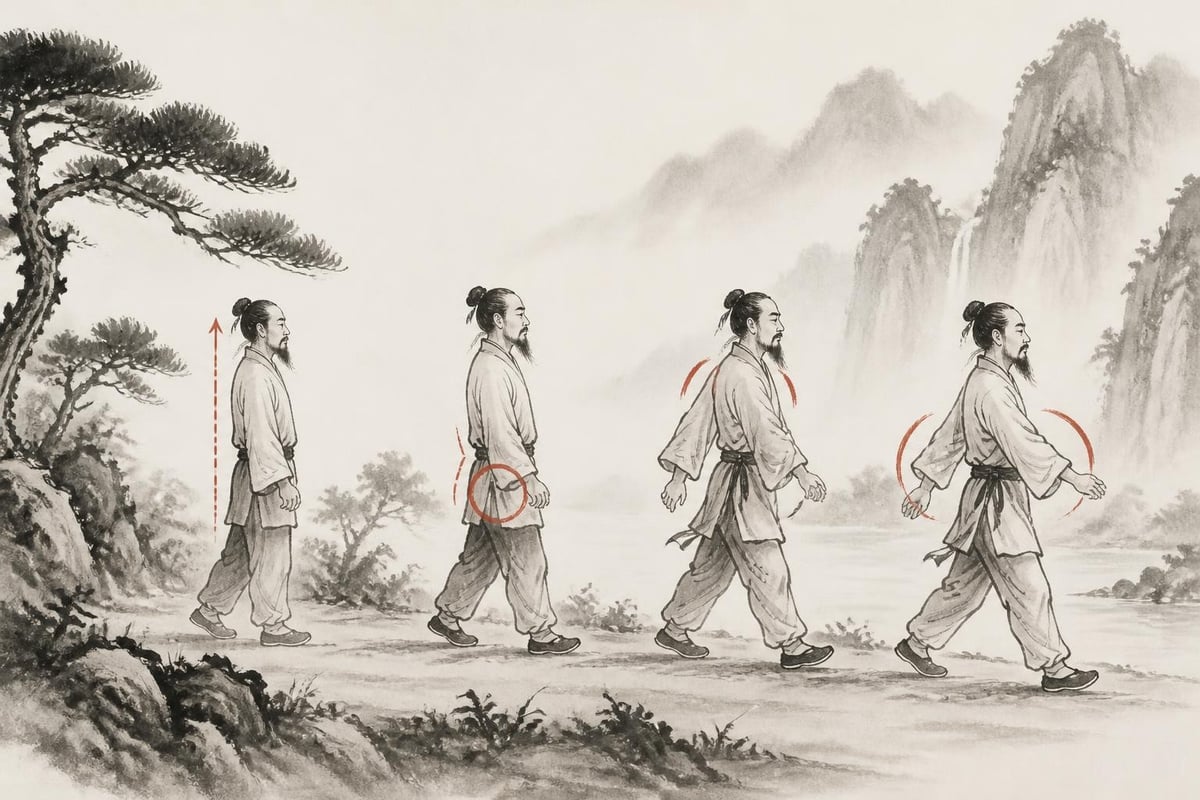
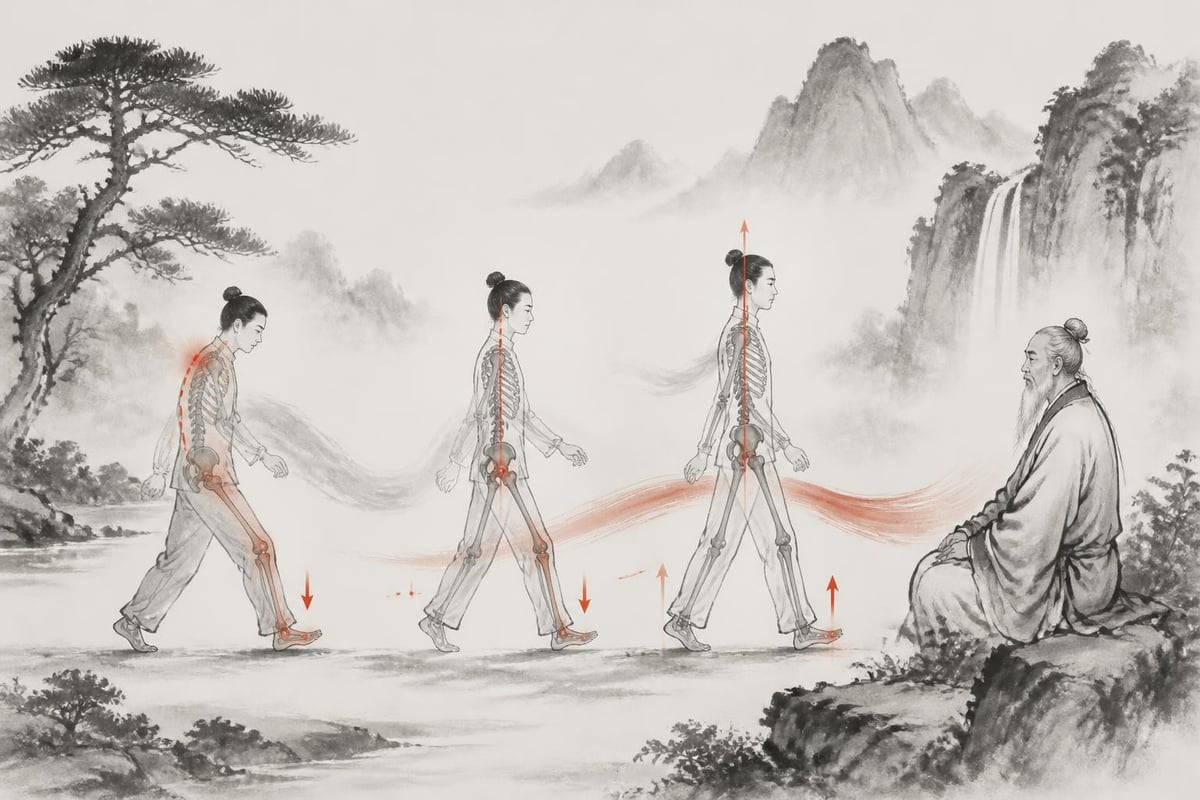
Good posture makes walking feel lighter. In this approach, we picture a gentle lengthening of the spine, as if a string softly lifts the crown of your head. Many people find this natural, upright posture:
- Feels more comfortable through the lower back
- Leaves more room for easy breathing
- Lets the legs swing freely from the hips
- Helps the shoulders stay relaxed and low
Let your arms swing naturally at your sides. This simple, relaxed posture echoes the foundations of Tai Chi practice, where a relaxed, upright body is the starting point.
Breath and Movement
Breathing can turn ordinary walking into a quiet, meditative practice. In Taoist traditions, the breath is a bridge between body and mind.
Let your breath stay natural as you walk. Some people like to let their breath settle into the rhythm of their steps, perhaps breathing in for a few steps and out for a few steps. Never force it. If counting feels awkward, simply notice your breathing and let it find its own pace. Many people find that this simple awareness:
- Helps them feel calmer and more settled
- Gives the mind something to rest on when it wanders
- Keeps the pace steady and unhurried
Research on mindful and walking-based meditation practices is growing, and some studies report associations with mood, stress and wellbeing. Studies vary in size and quality, and results vary from person to person.
Present-Moment Awareness
Mindful walking asks you to notice what usually goes unnoticed. Feel the ground through your shoes. Notice your weight shifting from one foot to the other. Notice the swing of your legs and the movement of your arms. This attention anchors you in the present moment, and the Taoists describe it as "returning to simplicity".
Your mind will wander. That is natural and expected. When you notice that you have drifted into planning or replaying a conversation, gently bring your attention back to your breath and your feet on the ground. Each return builds the same kind of awareness you can develop through Taoist meditation practice.
Mindful walking can sit alongside, but should not replace, professional support. If you are dealing with ongoing stress, anxiety, low mood or burnout, please also speak to your GP or a qualified professional.
Walking as a Moving Meditation
Walking becomes a moving meditation when you give it your full attention. There is nothing to force or search for. The aim is simply to notice and to relax.
A Different Way to Walk
| Everyday walking | Mindful walking |
|---|---|
| Attention elsewhere | Attention on the present step |
| Often hurried | Unhurried and steady |
| Tense shoulders and hands | Relaxed shoulders and hands |
| Automatic movement | Steps that are noticed |
The Rhythm of a Step
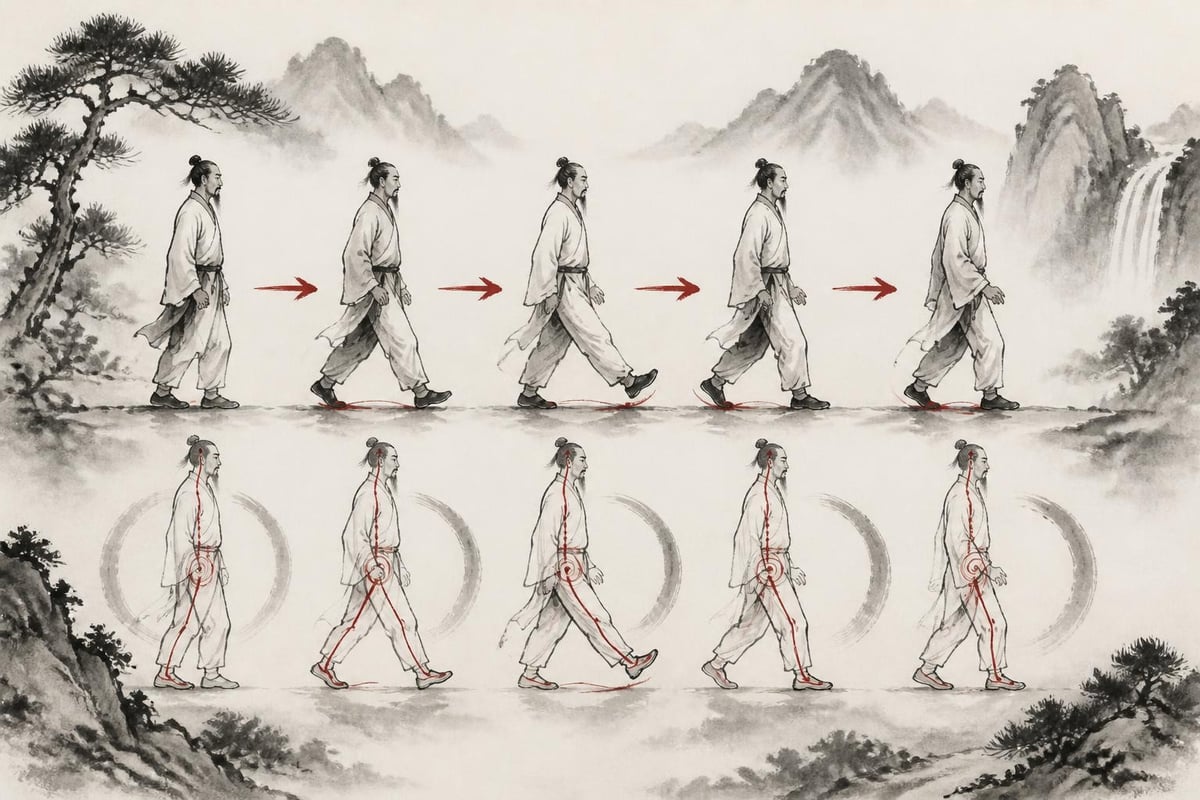
Each step follows a natural cycle: weight shifts, the leg swings, the foot lands and the weight transfers. When you walk mindfully, you can feel this cycle more clearly. Tension anywhere in the chain, such as stiff ankles or tight hips, tends to make it feel less smooth.
Try noticing your ankles. Many people walk with stiff ankles. Let them move freely, and allow a gentle rolling motion through the foot from heel to toe, without forcing it. Imagine your weight settling low in the body, and let your legs respond naturally with each step.
Practical Integration for Daily Life
Mindful walking needs no special equipment, perfect weather or particular location. You can practise on the way to your car, in the supermarket or on an evening stroll.
Starting Your Practice
Please check with your healthcare professional before starting any new exercise, especially if you have balance concerns, pain, a heart or breathing condition, or use a walking aid. Stop and rest if you feel unwell, dizzy or in pain.
Begin with short sessions of 10 to 15 minutes, focusing on one or two things at a time. You might spend a week simply noticing your posture and shoulders. The next week, you could add your breath. Gradual steps build habits more reliably than trying everything at once.
Choose a familiar route where you feel safe and comfortable, with even ground. That lets you focus on the practice rather than on navigation or safety. Many people find that a route walked regularly becomes its own moving meditation.
If you would like a gentle, structured start, our free 7-day Tai Chi Walking course is a good place to begin.
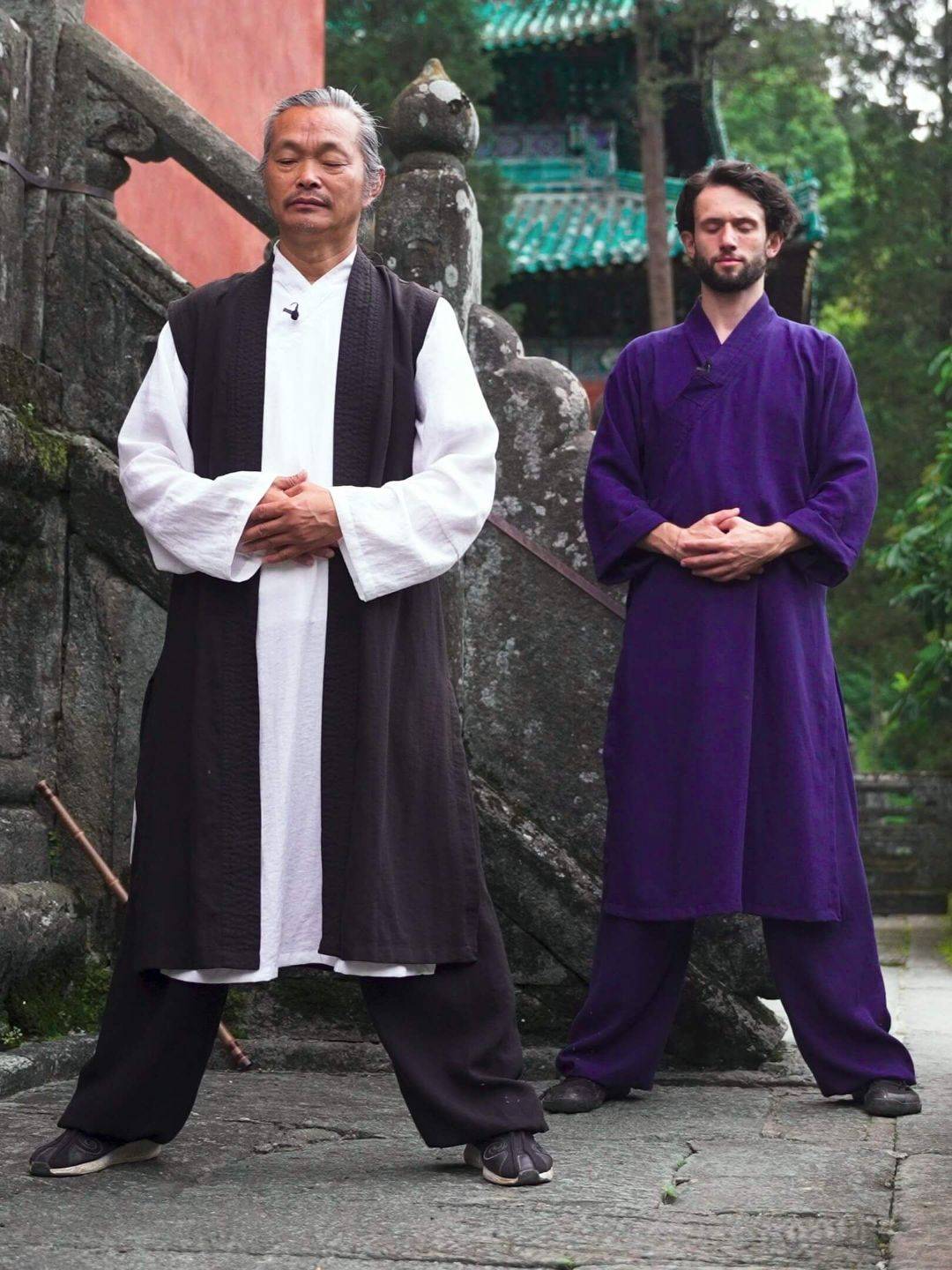
You can also watch this free lesson from our teacher Master Gu. Day 1 of his free 15-day Tai Chi series from the Wudang Mountains starts with a single, slow step.
Common Challenges and Adjustments
Rushing: Modern life teaches us to hurry. When you notice yourself speeding up, pause for three breaths, relax your shoulders and carry on at an easier pace.
Mental chatter: Your mind may resist this simple focus. Rather than fighting your thoughts, notice them, then return your attention to your feet and your breath.
Physical discomfort: If you feel pain while walking, slow down or stop, and speak to your healthcare professional. A mindful walk should feel comfortable, never a strain. Keep your shoulders soft and avoid leaning forward from the waist.
Building on Traditional Wisdom
Walking meditation appears in many traditions, including Taoist and Buddhist ones. In Tai Chi, how you stand and move is where the principles of balance, relaxation and awareness show up in everyday life.
Connecting to Broader Taoist Practice
Mindful walking sits naturally alongside your other practices. The posture awareness you build can help you sit more comfortably in meditation, and the habit of coordinating breath and movement carries over to Qi Gong.
If you are exploring Taoist philosophy, walking is a practical way to experience its ideas. Wu wei (effortless action) can be felt when you stop forcing each step. Ziran (naturalness) appears as you let your body move in its own way.
The practice can also support balance in daily life, adding short moments of calm presence throughout your day. Rather than keeping wellbeing to a set session, mindful walking weaves it into ordinary activities.
If you would like guided learning, our teacher Master Gu, a 15th-generation San Feng Pai Wudang Taoist Master with 25+ years of teaching experience, leads our Tai Chi, Qi Gong and Taoist courses. Online lessons cannot physically correct your posture, so go gently and stay within what feels comfortable.
What Research Says About Mindful Walking
Researchers are increasingly interested in mindful and meditative walking. Some studies report associations with mood, stress and general wellbeing, and walking itself is widely encouraged as gentle physical activity. These findings are early and varied, and results vary from person to person.
If you have a heart condition, joint problems or any other health concern, please speak to your healthcare professional about the type and amount of walking that suits you.
Deepening Your Practice Over Time
Like any skill, mindful walking reveals more as it becomes familiar. Attention to posture and breath eventually feels natural, which frees you to notice subtler things.
Seasonal and Environmental Awareness
As you become more sensitive, you may notice how different places change the way you walk. A forest path feels different from pavement. The Taoist idea of living in harmony with nature includes noticing these differences and responding to them.
In winter, you might walk more slowly. In summer, you might walk with a lighter, more open feeling. These are not rules, just invitations to notice natural rhythms.
Keeping It Simple
The principles you build in mindful walking carry over to formal Tai Chi practice and back again. Whether you are walking to your car or moving through a form, the same ideas apply: relax unnecessary tension, breathe naturally and stay present.
Making It Your Own
Mindful walking is a personal practice, shaped by your body, circumstances and goals. Some people prefer a brisk pace with mindful attention. Others prefer a slower, more meditative pace. Both are fine.
Creating Supportive Habits
Consistency matters more than duration. A daily 10-minute practice is worth more than an occasional hour. You might:
- Walk the same route at the same time each day
- Use natural transitions, such as the walk from your car to the office, as practice time
- Set a gentle reminder to check in with your shoulders and breath
- Share your experiences with others who enjoy mindful movement
It can help to swap ideas with fellow students, especially when motivation dips or questions come up.
Avoiding Common Pitfalls
Perfectionism gets in the way more than any technical error. You will lose focus, and your posture and breath will vary. These moments are not failures. They are chances to return to awareness without judging yourself.
Impatience for results creates tension. Trust that regular, relaxed practice brings change over time, even when progress feels invisible.
Complexity tempts many beginners to try too much at once. Keep it simple, and focus on one thing at a time.
Mindful walking turns the ordinary into practice, giving every step a chance to bring presence and ease. If you would like to explore Taoist practices further, Taoist Wellness Online offers courses in tai chi, qi gong and meditation with our teacher Master Gu.
Related reading