Energy Vortex: Ancient Wisdom Meets Modern Practice
Nov 04, 2026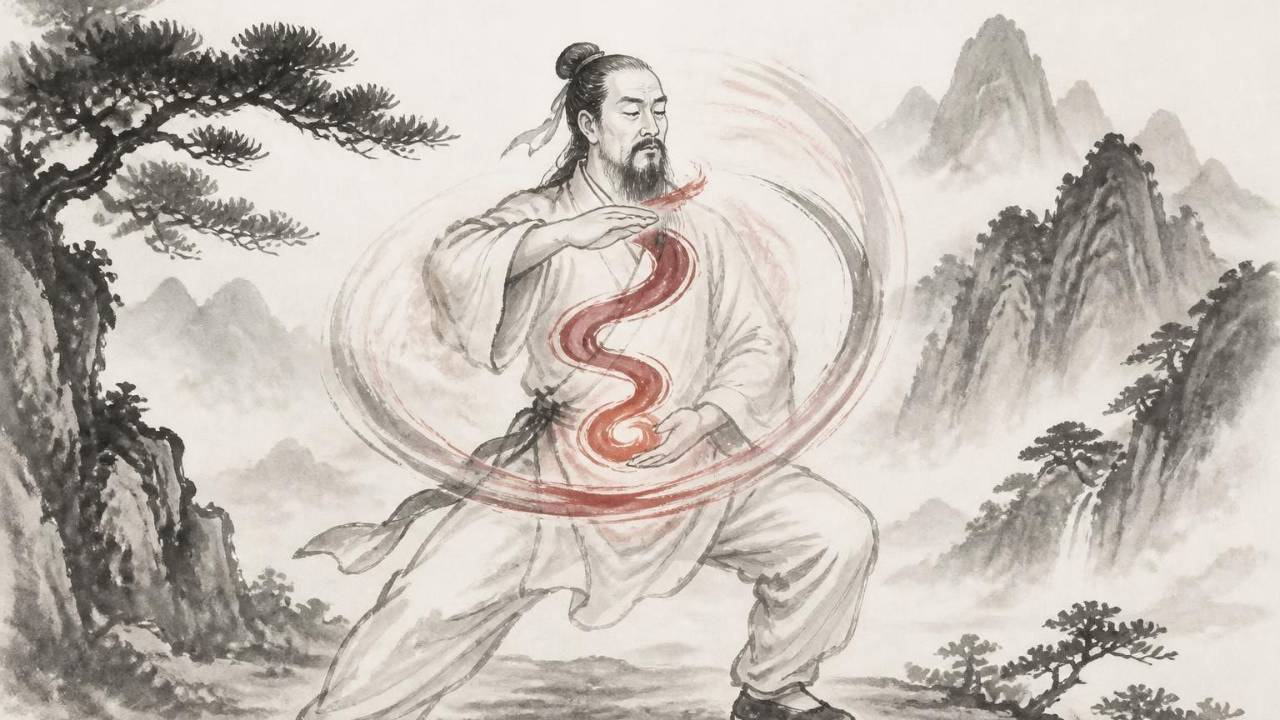
The idea of an "energy vortex" has captured imaginations across cultures, from ancient spiritual traditions to modern wellness culture. Many people link the term with places such as Sedona. In Taoist practice, though, the closest idea sits within the body itself, in the traditional teaching of the dantian. This article explores that idea gently and honestly, and shows how Tai Chi and Qi Gong have traditionally used it as a focus for calm and balance.
Understanding the Energy Vortex Concept
"Energy vortex" is a modern phrase, not a Taoist term. It usually describes a place where energy is said to gather and swirl. This is a belief from popular culture. There is no scientific evidence for energy vortices in landscapes or in the body.
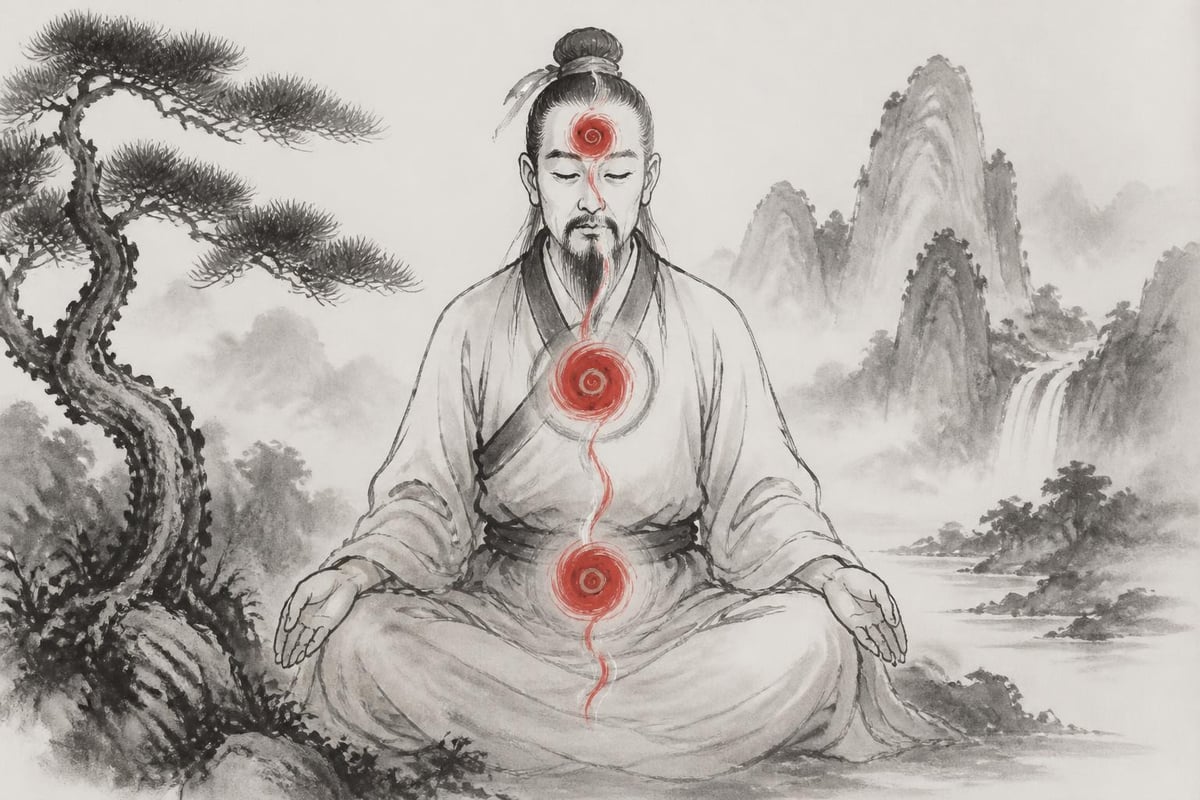
The Taoist tradition describes something different, and rather simpler. It speaks of dantian (丹田), often translated as "elixir fields". These are traditional focal points for attention in the body. The teaching is part of Chinese cultural tradition, and you can explore it as a way of settling the mind, with no need to accept any claims about energy.
The Three Dantian in Traditional Teaching
| Dantian | Traditional location | Traditionally associated with |
|---|---|---|
| Upper | Between the eyebrows | Clarity and awareness |
| Middle | Centre of the chest | Emotional balance |
| Lower | Below the navel | Steadiness and a sense of being grounded |
In Tai Chi and Qi Gong, the lower dantian is the one most often mentioned. It sits roughly three finger-widths below the navel, near the body's physical centre of gravity. Keeping your attention low and settled is a simple way of staying relaxed and steady, which is why it appears so often in Tai Chi practice.
How Tai Chi Works with the Centre
Tai Chi is built on soft, rounded, flowing movement. The waist turns, the arms trace gentle arcs, and your weight shifts smoothly from one leg to the other. Nothing is rushed and nothing is forced.
Many people find that these movements help them feel centred and unhurried. Their circular character is part of what makes Tai Chi different from more forceful exercise.
The Rounded Nature of Tai Chi Movement
- The waist turns and leads the arms, rather than the arms moving on their own
- Weight shifts are smooth and gradual
- The arms curve softly, as if resting around a large ball
- The spine stays upright and relaxed
- Breathing stays natural and unforced
Each of these ideas is explored in more depth in our guide to the 13 principles of Tai Chi. Sensations are not the goal. Some people notice warmth or a feeling of fullness in the belly, others notice nothing in particular, and both are completely normal.
Qi Gong and Standing Practice
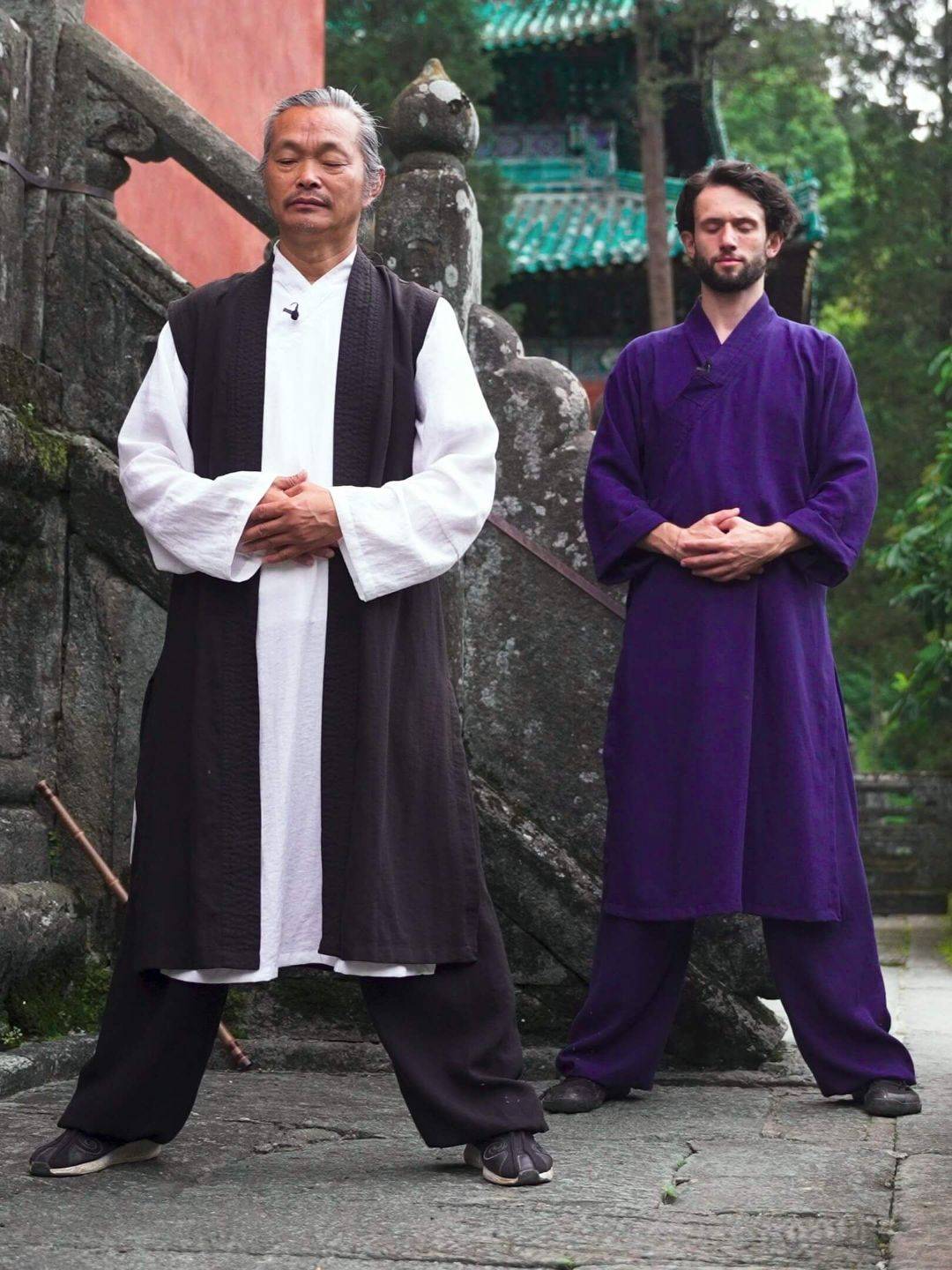
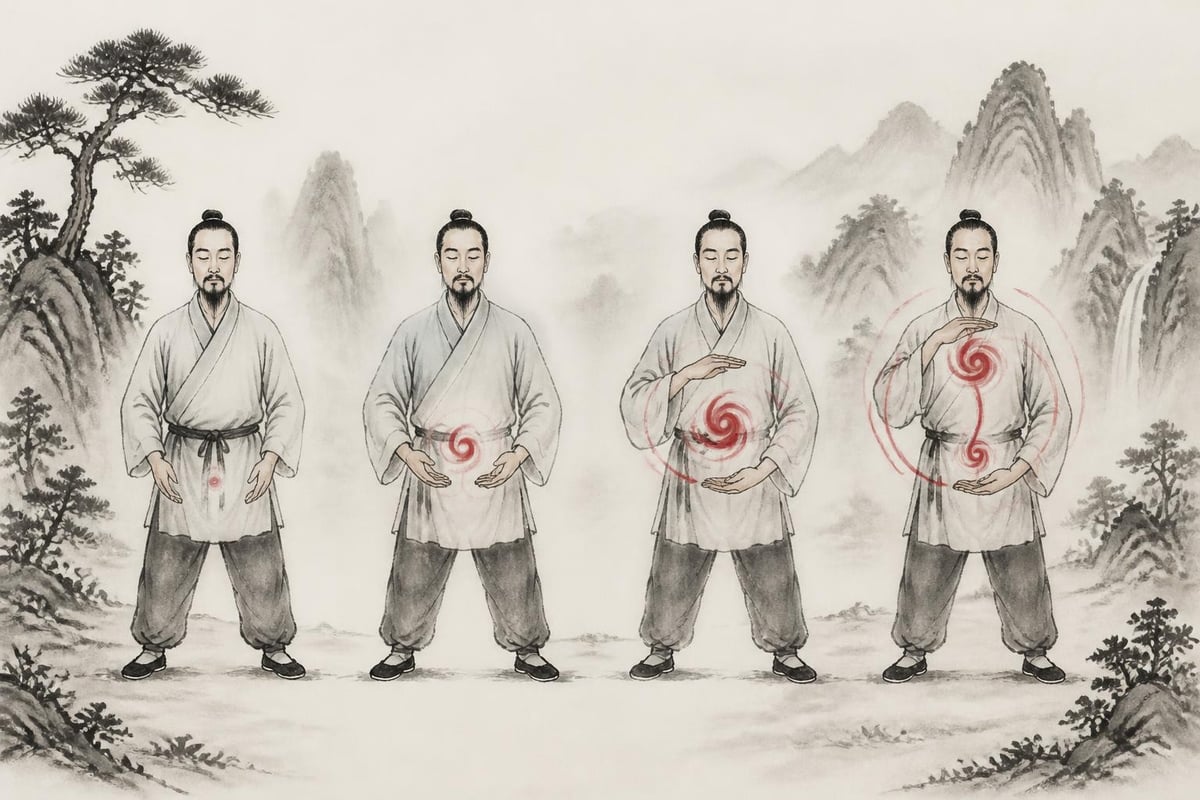
Tai Chi is flowing movement. Qi Gong also includes simple stillness practices, where you stand quietly and rest your attention. One of the most traditional is standing meditation, where the arms rest in front of the lower belly as if holding a large, soft ball.
The practice is quiet and unforced. Its purpose is to help you relax, feel your weight settle and become more aware of your breath. There is nothing to search for or to make happen.
What Does the Research Say?
It is worth being clear: there is no scientific evidence that "energy vortices" exist, and researchers do not measure the dantian as an energy centre.
What has been studied is practices like Tai Chi, Qi Gong and meditation. Some studies report associations with relaxation, mood, sleep and general wellbeing. These studies vary in size and quality, and more research is needed.
| Part of the Practice | What some studies report |
|---|---|
| Slow, gentle movement | May be associated with feeling more relaxed |
| Natural, unhurried breathing | May be associated with a calmer state |
| Quiet, focused attention | May be associated with a steadier mood |
Results vary from person to person. These practices are a gentle complement to, not a replacement for, professional healthcare.
Creating Your Own Simple Practice
You do not need to visit a special place to try this. The practice can start wherever you are.
Please check with your healthcare professional before starting any new exercise, especially if you have balance concerns, dizziness, or a heart or breathing condition. You can also do this practice seated. Stop and rest if you feel dizzy, unwell or in pain.
A Simple Standing Practice
1. Stance: Stand with your feet about shoulder-width apart, knees soft, spine naturally upright and arms hanging loosely. Close your eyes or let your gaze rest softly on the floor.
2. Breath: Let your breathing be natural. You may like to rest one hand on your lower belly and notice it move gently. Do not force the breath or take deep breaths on purpose.
3. Hands: Raise your arms slowly to about chest height, palms facing each other, as if holding a soft ball. Then let your hands lower in front of your lower belly, keeping the arms rounded and the shoulders relaxed.
4. Rest your attention: Let your attention rest lightly on your lower belly and your breath. Nothing needs to happen. If your mind wanders, gently bring it back.
5. Finish: After a few minutes, lower your arms slowly. Stand quietly for a minute and notice how you feel.
Practise for a few minutes at a time, ideally at a similar time each day. If you would like structured guidance, our free Taoist course is a good place to start.
Common Misconceptions About Energy Vortices
As the idea has entered popular wellness culture, a few misconceptions have spread. Clearing them up helps set realistic expectations.
Myth vs. Reality
| Misconception | Reality |
|---|---|
| You must visit a special place | The practice works anywhere you can stand or sit quietly |
| You will feel dramatic effects quickly | Changes are usually gradual and subtle, if you notice them at all |
| You need crystals or special tools | The practice itself is enough |
| Everyone should feel the same thing | Experiences vary. Some people feel warmth, others feel simply calm or nothing in particular |
| More intense practice brings faster progress | Gentle, patient consistency is the traditional approach |
The traditional approach emphasises cultivation over acquisition. You are not trying to gain something from outside yourself. You are simply learning to relax and pay attention.
Many people say the effects show up less during practice and more in daily life, in a feeling of being steadier or a little less reactive. Results vary, and there is no right way to feel.
Bringing Awareness into Daily Life
The purpose of practice is not to have special experiences. It is to bring a little more ease and presence into everyday life.
- Before an important conversation: take a few natural breaths and let your shoulders drop
- During physical activity: notice your posture and move without strain
- When feeling scattered: rest your attention on your feet and your breathing
- When life feels stressful: pause, stand or sit quietly, and take a few easy breaths
These small habits can sit alongside, but should not replace, professional support. If you are dealing with ongoing stress, anxiety, low mood or burnout, please also speak to your GP or a qualified professional.
This reflects the Taoist idea of naturalness. Your practice does not need to be separate from regular life. It can also help to meet like-minded students who are exploring the same ideas and sharing what they notice.
Deepening Your Practice
As your practice settles, you may want to go deeper. The approach we recommend is to keep things simple and build slowly. A steady foundation of relaxed posture, natural breathing and regular practice is worth more than any advanced technique.
What You May Begin to Notice
- A more relaxed posture without trying
- Better awareness of your body
- A steadier, calmer feeling in daily life
- A growing wish to practise for its own sake
Results vary, and these are not promises.
Taoist meditation practices complement movement, adding stillness and quiet attention. Together, they make a gentle and complete daily routine.
The journey asks for patience. Modern life teaches us to expect instant results, but this kind of practice builds slowly, a little like learning an instrument.
Learning from the Wudang Tradition
Tai Chi and Qi Gong have been refined over many generations in the Wudang tradition. Our teacher Master Gu, a 15th-generation San Feng Pai Wudang Taoist Master with 25+ years of teaching experience, leads our courses.
Online learning has real strengths, such as following lessons at your own pace and revisiting them. It cannot physically correct your posture, so go gently and stay within what feels comfortable. We also hold a monthly live session and Q&A with Master Gu and George Thompson.
Practice Across the Seasons
Taoist philosophy pays close attention to the rhythms of nature. Many people enjoy letting their practice follow the seasons, as a gentle invitation to notice the world around them. If you are new to these ideas, our beginner's guide to the principles of Taoism is a good place to start.
- Spring: a lighter, more open feeling, perhaps practising earlier in the day
- Summer: more movement, and practising outdoors when you can
- Autumn: turning attention inwards and slowing down
- Winter: more stillness, with gentler, restful practice
These are not rules, just ideas to try. Winter might invite a slightly longer stillness practice, and summer a little more movement.
Seeing your practice in this way can help Taoist philosophy feel less like an abstract theory and more like something you can live.
You do not need to travel to a distant place, or be a spiritual adept, to try a simple Taoist practice. A few quiet minutes of standing, relaxed breathing and gentle attention are enough to begin. If you would like to explore further, Taoist Wellness Online offers courses in tai chi, qi gong and meditation with our teacher Master Gu.
Related reading