Tai Chi Chuan: Ancient Practice for Modern Wellness
Jul 19, 2026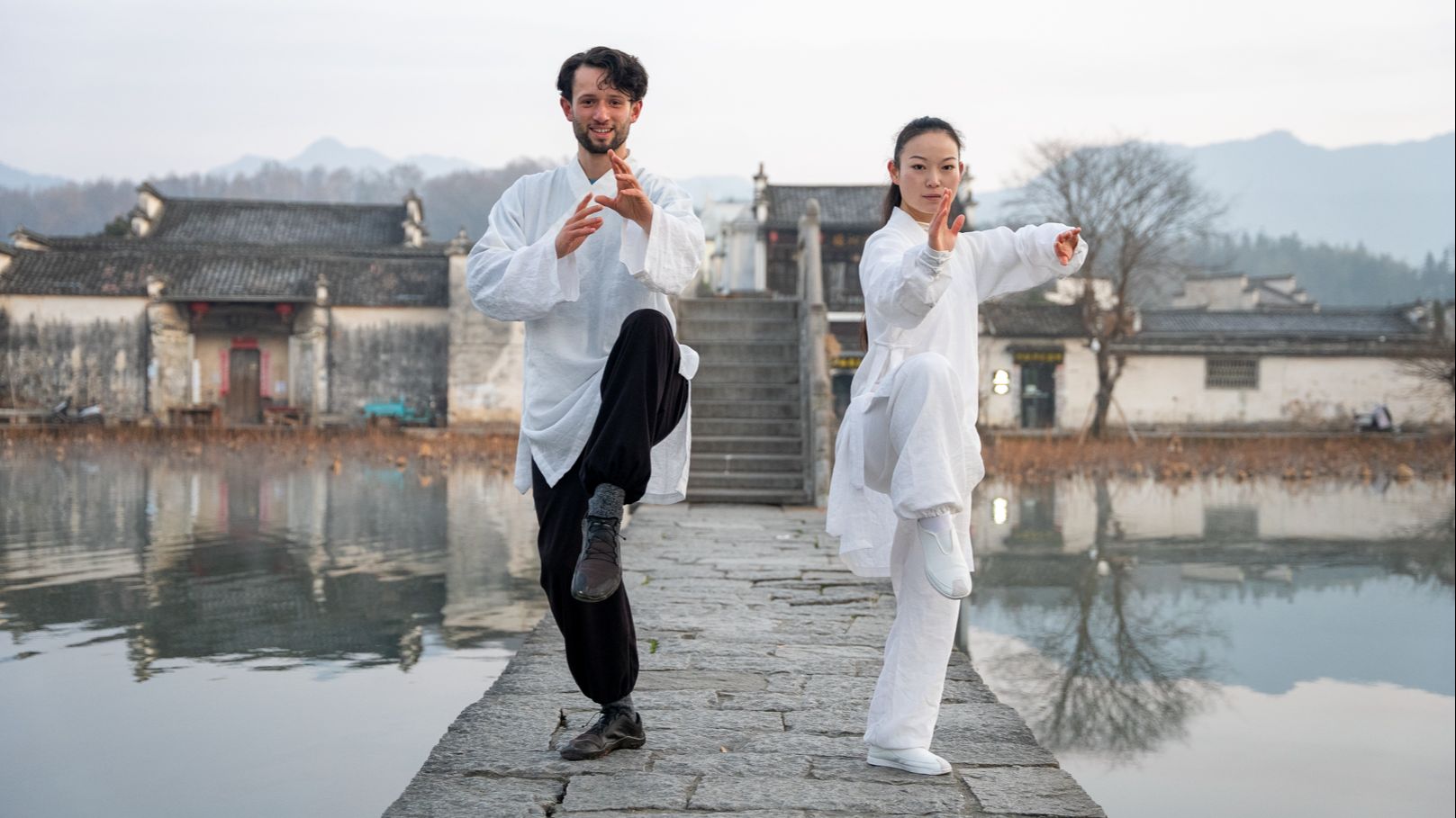
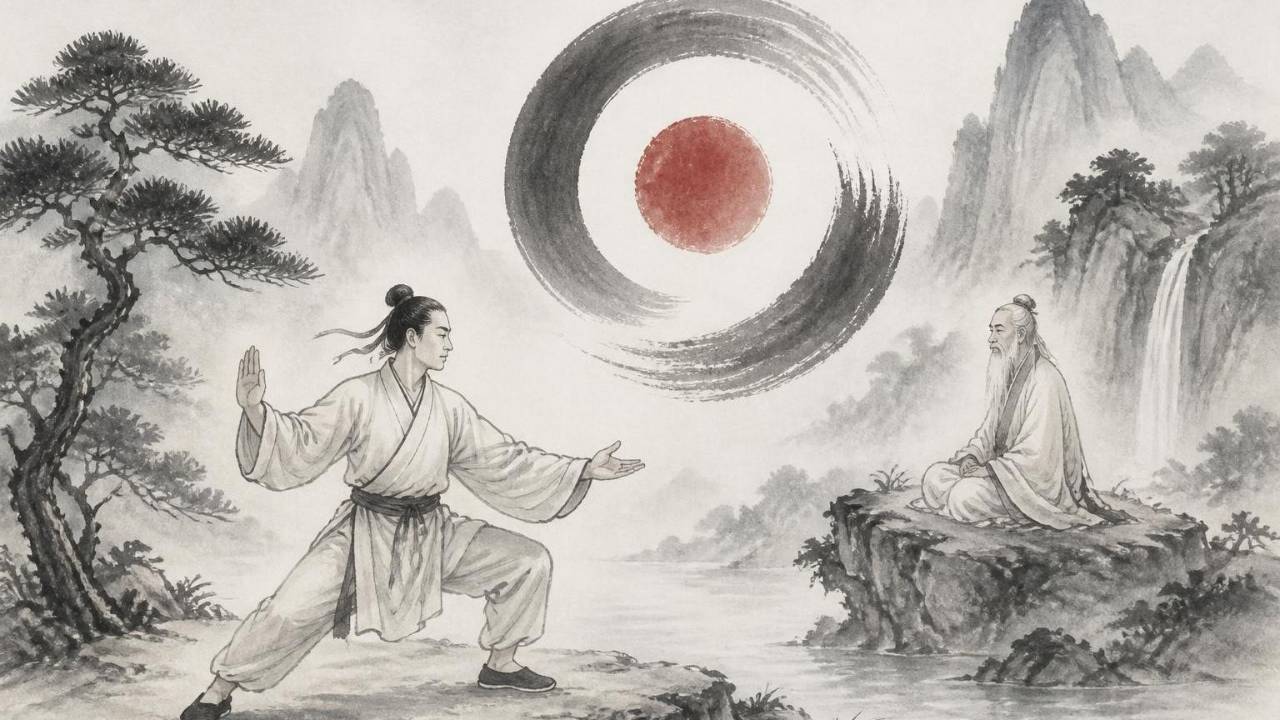
Tai chi chuan represents one of humanity's most profound movement practices, a living bridge between ancient Taoist wisdom and modern wellness needs. This gentle martial art emerged from the mountain temples of China centuries ago, where monks and warriors discovered that slow, mindful movements could cultivate extraordinary health, strength, and spiritual clarity. Today, millions of people worldwide turn to this practice not for combat, but for the peaceful power it brings to body, mind, and spirit. Whether you're seeking relief from stress, improved balance, or a deeper connection to your inner vitality, tai chi chuan offers a path that honours both tradition and contemporary life.
Understanding the Roots of Tai Chi Chuan
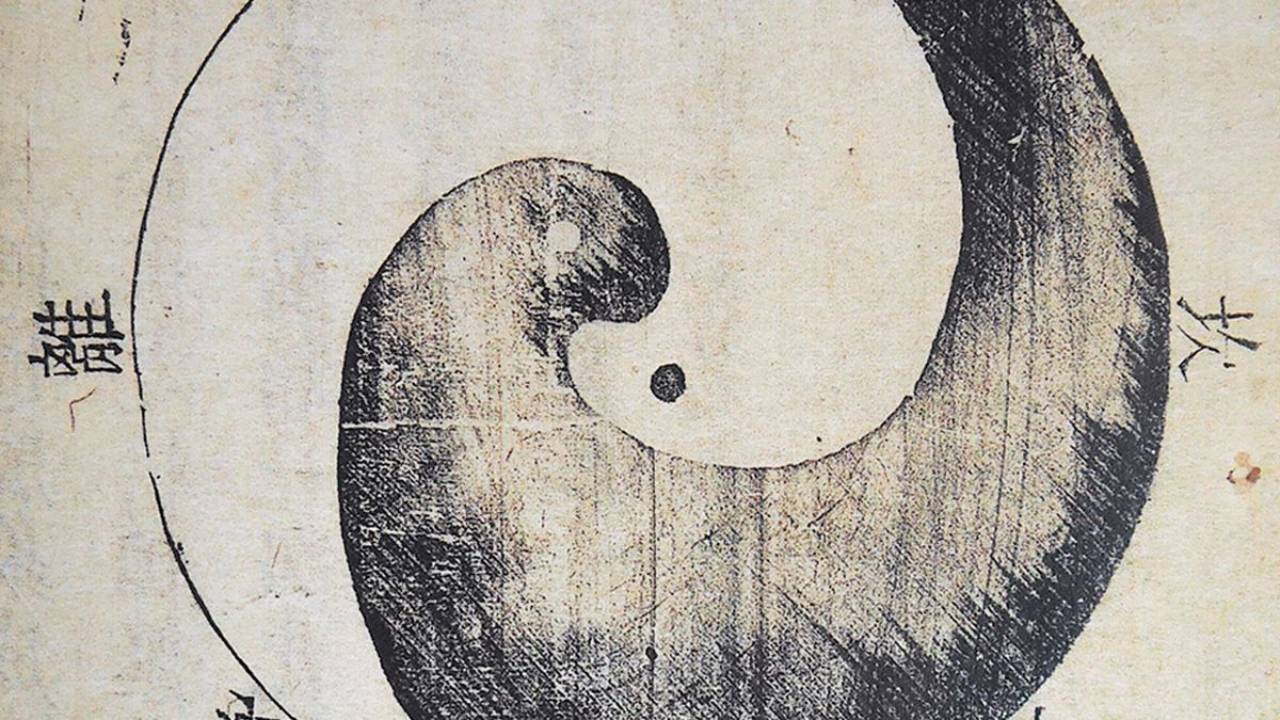
The practice we know today carries a rich lineage stretching back through generations of dedicated masters. Its history reveals an evolution from martial application to health cultivation, though both aspects remain intertwined. The name itself translates roughly to "supreme ultimate fist," pointing to its philosophical foundations in the Taoist concept of balance between yin and yang.
Key historical elements include:
- Origins in Chen Village during the 17th century
- Development of multiple family styles (Chen, Yang, Wu, Sun, Hao)
- Integration of Taoist meditation and Qi Gong principles
- Transmission through direct teacher-student relationships
- Adaptation for health benefits in the 20th century
Unlike many exercise systems invented in modern times, tai chi chuan emerged organically from deep observation of nature, human biomechanics, and energy flow. Masters watched how water moves around obstacles, how trees bend without breaking, how animals conserve and release energy efficiently. These observations became principles encoded in forms that we still practise today.
The Philosophy Behind the Movement
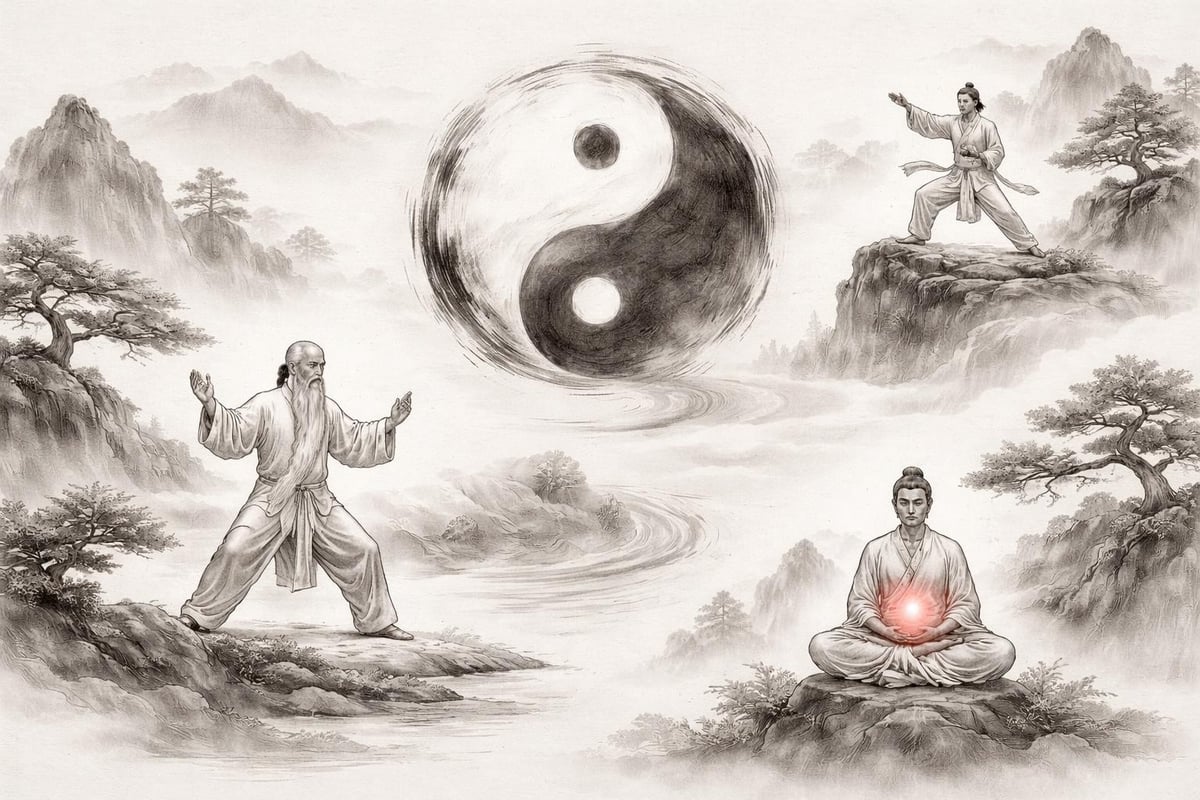
Every gesture in tai chi chuan reflects Taoist philosophy. The practice teaches us to yield rather than resist, to find strength in softness, and to move with nature rather than against it. When you practise, you're not just exercising muscles but training your entire being to respond to life with greater wisdom and ease.
This philosophical dimension sets tai chi chuan apart from conventional fitness routines. You're cultivating qualities like patience, presence, and harmony that extend far beyond your practice sessions into daily life.
Health Benefits Supported by Modern Research
The scientific community has taken increasing interest in tai chi chuan, conducting rigorous studies that validate what practitioners have known for centuries. Research demonstrates its accessibility for people of all ages and fitness levels, with minimal risk when practised correctly.
Physical Wellness Improvements
| Health Area | Benefits | Research Support |
|---|---|---|
| Balance & Fall Prevention | Improved stability, reduced fall risk | Multiple systematic reviews |
| Bone Health | May support osteoporosis prevention | Clinical studies ongoing |
| Cardiovascular | Lower blood pressure, improved circulation | Moderate evidence |
| Sleep Quality | Enhanced subjective sleep quality | Meta-analysis confirmed |
| Joint Health | Reduced arthritis pain, increased flexibility | Consistent findings |
Studies examining tai chi chuan and bone health show promising results for maintaining skeletal strength, particularly important as we age. The weight-bearing nature of the practice, combined with its gentle impact, creates ideal conditions for bone density maintenance without the joint stress of high-impact activities.
Mental and Emotional Balance
The meditative quality of tai chi chuan practice produces measurable changes in brain function and stress hormone levels. Regular practitioners report:
- Decreased anxiety and depression symptoms
- Improved focus and mental clarity
- Greater emotional resilience
- Enhanced body awareness
- Reduced rumination and worry
Evidence continues to build, showing that tai chi chuan offers genuine therapeutic value for both prevention and management of various conditions. The mind-body integration inherent in the practice addresses health holistically rather than treating symptoms in isolation.
Essential Principles for Practice
Learning tai chi chuan involves understanding principles that guide all movements, regardless of which style or form you're studying. These principles distinguish authentic practice from mere physical exercise.
Foundation Elements
Rooting and grounding form the base of all tai chi chuan work. Your connection to the earth provides stability while allowing energy to flow freely. Think of yourself as a tree with deep roots and flexible branches.
Relaxation through awareness doesn't mean collapse or limpness. Instead, you're releasing unnecessary tension while maintaining structural integrity. This subtle balance takes time to discover but transforms how you move through the world.
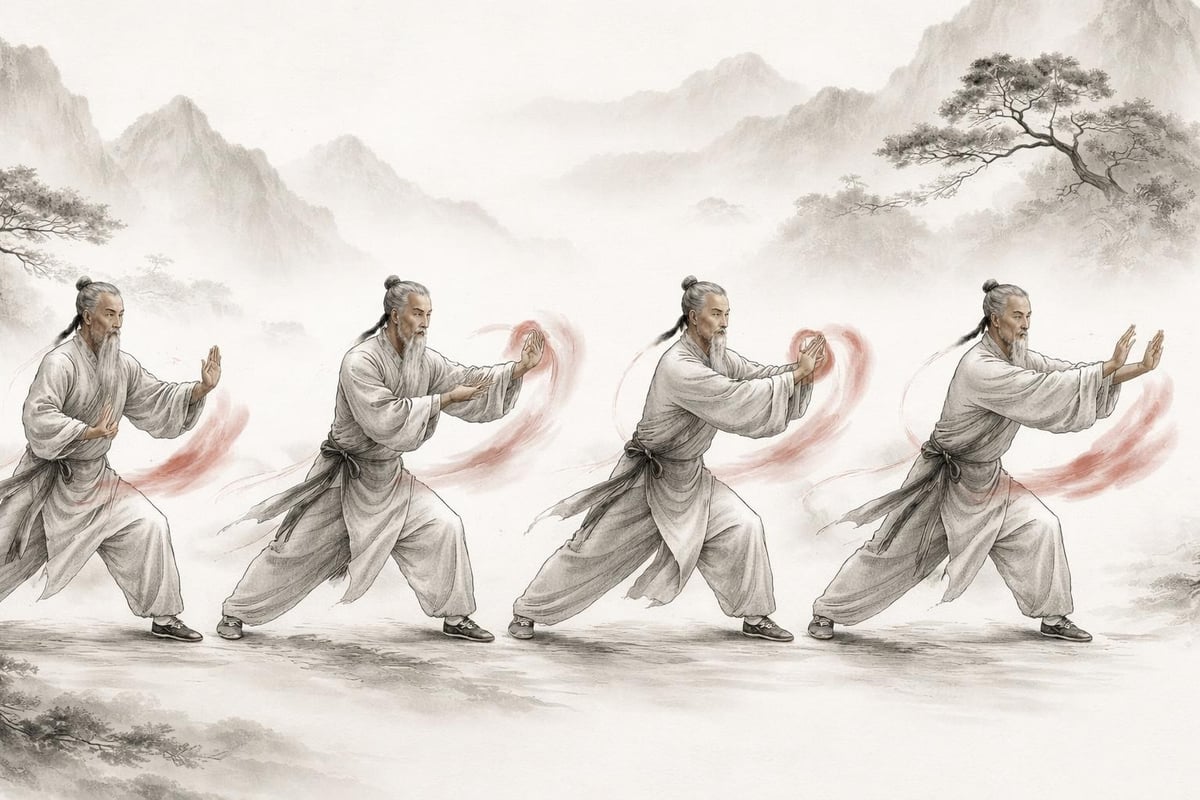
Continuous, flowing motion links each posture to the next without breaks or jerky transitions. Your movements should resemble water flowing in a stream, smooth and unhurried yet full of quiet power.
Breath and Energy Work
Coordinating breath with movement distinguishes tai chi chuan from simple calisthenics. You're not just moving your limbs but directing Qi (life energy) through specific pathways in your body. This internal dimension requires patience and consistent practice to perceive and refine.
The breath remains natural and abdominal rather than forced or controlled. As you sink into a posture, you might exhale. As you rise or expand, you inhale. This organic rhythm supports the parasympathetic nervous system, promoting calm and recovery.
Different Styles and Forms
While all tai chi chuan shares common principles, distinct styles have evolved, each with unique characteristics and emphasis. Understanding these differences helps you choose a path that resonates with your goals and temperament.
Major Family Styles
Yang Style represents the most widely practised form globally. Its large, expansive movements and moderate pace make it accessible for beginners while offering depth for advanced practitioners. A simplified 24-form version emerged from Yang style, designed specifically for health benefits and ease of learning.
Chen Style maintains stronger martial applications with explosive movements (fa jin) mixed into flowing sequences. The practice includes lower stances and more obvious spiralling energy, challenging for beginners but deeply rewarding.
Wu and Sun Styles feature higher stances and smaller movements, emphasising internal energy cultivation over external expression. These styles particularly suit practitioners with mobility limitations or those drawn to subtler work.
Traditional Long Forms vs. Short Forms
| Aspect | Long Forms | Short Forms |
|---|---|---|
| Duration | 20-40 minutes | 5-10 minutes |
| Movements | 80-108+ postures | 24-48 postures |
| Learning Curve | Several years | Months to a year |
| Depth | Extensive repetition builds skill | Efficient introduction |
| Best For | Dedicated practice | Busy schedules, beginners |
Choosing between forms depends on your available time and commitment level. Both paths offer genuine benefits when practised sincerely. Many students begin with shorter forms before progressing to longer, more traditional sequences when ready. For an overview of the main forms and what makes each distinctive, our post on the history, philosophy and benefits of Tai Chi goes into this in useful depth.
Starting Your Tai Chi Chuan Journey
Beginning any new practice can feel overwhelming, but tai chi chuan rewards even small, consistent efforts. The key lies in approaching with curiosity rather than performance pressure.
What You Need to Begin
The beauty of tai chi chuan is its simplicity regarding equipment and space. You need:
- Comfortable clothing that allows free movement without restriction
- Flat, flexible shoes or bare feet depending on surface
- A space roughly 6x6 feet for most forms
- Guidance from a qualified teacher (online or in-person)
- Patience with yourself as you develop new movement patterns
Starting with a structured course provides essential foundation and prevents developing poor habits that must be corrected later. If you're looking for exactly that, our Tai Chi course takes you step by step from foundational principles through to complete Wudang forms, with Master Gu guiding you throughout.
Finding Authentic Instruction
The proliferation of tai chi chuan worldwide has created both opportunities and challenges. Not all instruction maintains connection to the practice's deeper dimensions. Look for teachers who emphasise principles over just choreographing movements, who can explain the why behind each gesture.
Qualities of effective instruction include:
- Clear explanation of principles and body mechanics
- Attention to individual student needs and limitations
- Connection to lineage and traditional knowledge
- Integration of Qi Gong and meditation elements
- Supportive learning environment and community
Online learning has expanded access remarkably, allowing students worldwide to study with authentic masters they might never meet in person. Communities such as ours at Taoist Wellness Online help maintain motivation and provide peer support as you develop your practice.
Developing Your Practice Over Time
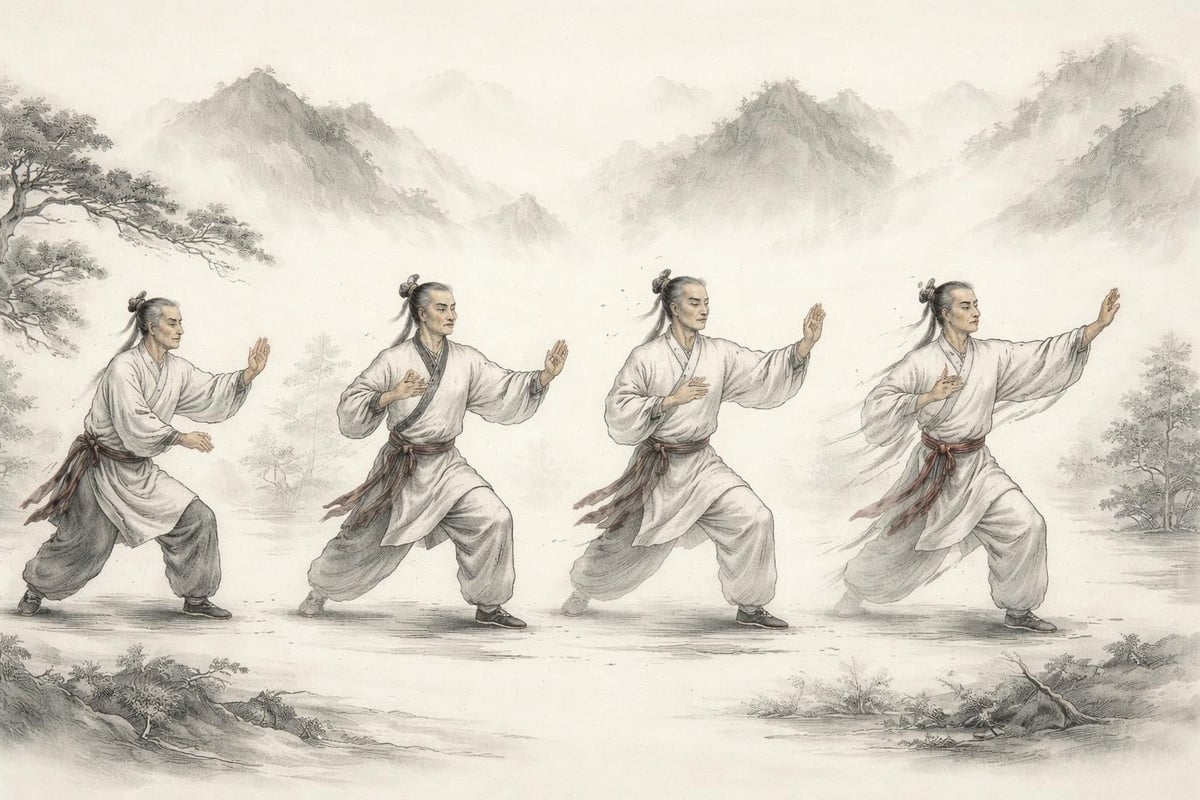
Tai chi chuan reveals itself gradually, like peeling an onion. Your first months focus on learning basic postures and sequences. Then you begin refining movement quality and coordination. Eventually, you perceive energy flow and the practice's deeper dimensions emerge naturally.
Practice Recommendations by Experience Level
First Three Months: Focus on learning the form sequence without worrying about perfection. Practise 15-20 minutes daily, even if that means repeating just a few movements. Consistency matters more than duration.
Months 3-12: Refine posture details, deepen your understanding of principles, and begin feeling energy sensations. Increase practice to 20-30 minutes as the form becomes familiar. Consider supplementing with Qi Gong exercises that support tai chi development - students often find our Qi Gong course a natural companion at this stage.
Beyond One Year: Explore variations, study martial applications if interested, and deepen meditation aspects. Your practice becomes increasingly internal and subtle. Many students at this stage find Taoist meditation training a valuable complement to their movement work.
Common Challenges and Solutions
Every practitioner encounters obstacles. Recognising these as normal parts of the journey helps you move through them rather than becoming discouraged.
| Challenge | Solution Approach |
|---|---|
| Difficulty remembering sequences | Practise smaller sections, use video reviews |
| Physical discomfort or pain | Modify stance height, check alignment, consult teacher |
| Mental restlessness | Shorten practice sessions, emphasise breath awareness |
| Plateaus in progress | Explore different styles, attend workshops, deepen theory study |
| Maintaining motivation | Join practice groups, set process goals not outcome goals |
The practice teaches patience with yourself, meeting your current abilities with compassion while gently expanding your capacity. Some days feel effortless and flowing; others feel awkward and forced. Both are valuable.
Integrating Tai Chi Chuan Into Modern Life
While tai chi chuan emerged from a very different cultural and temporal context, its principles apply beautifully to contemporary challenges. The practice offers an antidote to our rushed, disconnected, stress-filled modern existence.
Daily Applications Beyond Formal Practice
The way you move through your tai chi chuan form can influence how you move through your day. Practitioners often notice they naturally:
- Walk with better posture and awareness
- Breathe more deeply during stressful moments
- Respond to conflict with greater calm
- Move more efficiently with less wasted energy
- Feel more grounded and centred overall
These spillover effects represent the practice's true value. You're not just doing tai chi chuan for those 20 minutes but training yourself to embody its principles continuously.
Building a Sustainable Routine
Rather than viewing practice as another obligation on your to-do list, consider it a refuge - a time you give yourself for restoration and connection. Morning practice sets a calm, centred tone for your day. Evening practice helps release accumulated tension and transition into rest.
Even brief sessions matter. Five minutes of mindful movement exceeds zero minutes of perfect practice you never do. Start where you are, use what you have, do what you can.
The Broader Taoist Context
Tai chi chuan doesn't exist in isolation but as part of a comprehensive system of Taoist wellness practices. Understanding this context enriches your practice and opens pathways for deeper exploration.
Connections to Qi Gong and Meditation
Qi Gong and tai chi chuan share common roots and complementary purposes. While tai chi chuan often involves fixed sequences of movements, Qi Gong may use simpler, repeated exercises focused specifically on energy cultivation. Many practitioners benefit from studying both, as each illuminates the other.
Sitting meditation develops the inner stillness and awareness that enhances movement practice. Moving meditation (tai chi chuan) helps those who struggle with seated practices while providing similar benefits through different means. Together, they create a complete cultivation system.
Philosophical Foundations
Taoist philosophy emphasises living in harmony with natural rhythms, conserving energy, and allowing actions to arise from stillness rather than force. These principles manifest directly in how you practise tai chi chuan and, ideally, in how you live.
The concept of Wu Wei (effortless action) becomes embodied experience rather than abstract idea. You discover through practice that less forcing creates better results, that softness can overcome hardness, that patience achieves what aggression cannot.
Deepening Your Understanding
As your practice matures, you might explore the theoretical foundations that support the movements. Traditional tai chi classics offer wisdom from master practitioners across generations, though their poetic, sometimes cryptic language requires interpretation and experience to fully grasp.
Resources for Continued Learning
Building knowledge alongside physical practice accelerates development and prevents plateaus. Consider exploring:
- Historical accounts of master practitioners and lineage transmission
- Biomechanical analyses explaining how movements benefit specific body systems
- Philosophical texts connecting practice to broader Taoist teachings
- Community discussions with fellow practitioners sharing insights
Our post on the origin of Tai Chi is a good starting point for those who want to understand the historical lineage behind the practice they're learning. Engaging with educational content keeps your mind involved while your body develops skill.
The Role of Direct Transmission
Despite excellent written and video resources, tai chi chuan remains a practice best learned through direct teacher-student relationships. A skilled instructor sees details you cannot, offers corrections specific to your body and habits, and transmits subtle understanding that defies documentation.
This doesn't necessarily require in-person instruction anymore. Live online sessions provide real-time feedback and connection while offering flexibility that serves modern schedules and global accessibility. The combination of video lessons you can review repeatedly and live interaction creates optimal learning conditions.
Tai chi chuan offers a complete system for nurturing health, cultivating energy, and developing the calm, centred presence that modern life so urgently needs. The practice meets you exactly where you are and grows with you across a lifetime, revealing new depths as your understanding matures. Not sure where to begin? Our free 4-week Taoist Wellness course is the simplest first step - experience authentic teaching from Master Gu with no commitment required. When you're ready to go deeper, Taoist Wellness Online provides comprehensive training from Master Gu, a 15th-generation Wudang master with over 25 years of teaching experience, alongside a supportive global community of fellow practitioners.