Tai Chi for Seniors: A Complete Guide to Balance & Vitality
Jun 21, 2026
Finding movement practices that honor the body's wisdom while building strength becomes increasingly important as we age. Tai chi for seniors offers a gentle yet powerful approach to maintaining vitality, improving balance, and cultivating inner peace. This ancient practice, rooted in Taoist ideas about health and balance, has gained recognition worldwide for its remarkable ability to support healthy aging without strain or stress. Whether you're new to movement or looking to deepen your wellness journey, tai chi provides a sustainable path forward.
Understanding Why Tai Chi Works So Well for Older Adults
The beauty of tai chi lies in its adaptability. Unlike high-impact exercises that can stress aging joints, tai chi for seniors emphasizes slow, controlled movements that work with your body's natural rhythms rather than against them.
Modern research increasingly supports what practitioners have experienced for centuries: gentle mind-body practices like tai chi and qigong can support balance, coordination, confidence, and overall wellbeing in older adults. The practice doesn't require special equipment, expensive memberships, or previous athletic experience.
The Science Behind the Practice
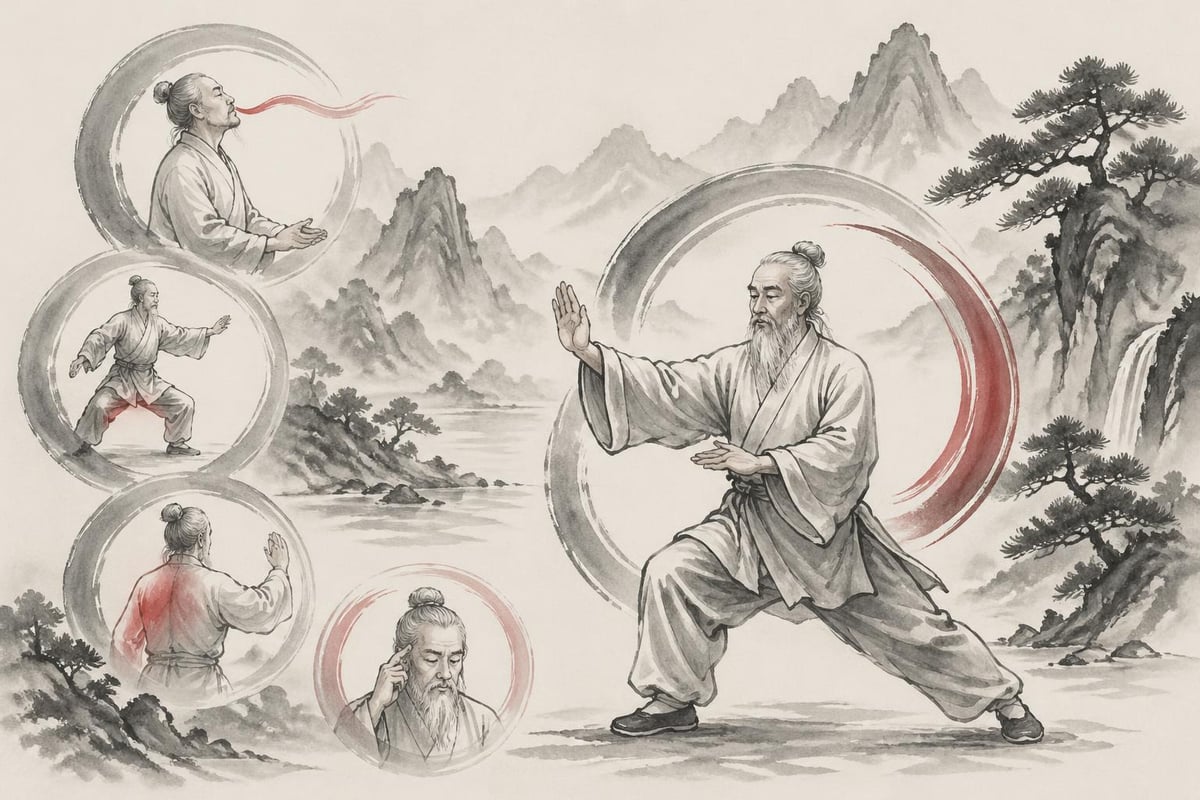
The effectiveness of tai chi stems from its holistic approach. Each movement coordinates breath, attention, and physical motion, creating a complete mind-body experience. This integration stimulates multiple systems simultaneously:
- Neurological benefits through focused attention and coordination
- Cardiovascular conditioning from sustained, gentle movement
- Muscular engagement without excessive strain
- Balance training through weight shifting and controlled postures
When you practice tai chi, you're essentially retraining your nervous system to respond more efficiently to balance challenges. This is one reason practices such as Tai Chi for arthritis and fall prevention are often explored by older adults who want to stay mobile, steady, and confident.
Key Health Benefits That Matter Most
Tai chi for seniors delivers benefits that directly address the challenges of aging. These aren't abstract improvements but tangible changes you'll notice in daily life.
Physical Improvements You Can Feel
The physical advantages extend far beyond simple exercise. Within weeks of regular practice, many people report meaningful changes:
| Benefit Area | Specific Improvement | Timeline |
|---|---|---|
| Balance | Reduced fall risk, better stability | 8-12 weeks |
| Flexibility | Increased range of motion | 4-6 weeks |
| Strength | Enhanced leg and core power | 6-10 weeks |
| Pain Management | Reduced joint discomfort | 4-8 weeks |
| Sleep Quality | Deeper, more restful sleep | 2-4 weeks |
Tai chi works progressively, building capacity without overwhelming your system. Over time, the slow, repeated movements can help improve balance, coordination, posture, and confidence in everyday activities.
Mental and Emotional Well-Being
The mental clarity that emerges from tai chi practice often surprises newcomers. The focused attention required naturally quiets mental chatter, creating space for calm awareness. This meditative quality helps manage stress, anxiety, and the emotional adjustments that come with aging.
Many seniors find that tai chi becomes more than exercise. It becomes a daily anchor, a practice that grounds them and provides structure. The community aspect, whether in-person or online, can also offer connection, encouragement, and shared purpose.
Essential Movements to Begin Your Practice
Starting tai chi doesn't mean learning complex sequences immediately. The foundation rests on a few fundamental movements that build your skills gradually.
The Basic Stance and Weight Shifting
Everything in tai chi flows from proper stance. Begin with feet shoulder-width apart, knees slightly bent, spine naturally upright. This posture, called "standing like a tree," teaches you to root into the ground while remaining relaxed.
Weight shifting practice:
- Start in the basic stance with weight evenly distributed
- Slowly transfer 70% of your weight to your right foot
- Feel your left foot become lighter without lifting it
- Hold for three breaths
- Gradually shift weight to the left foot
- Repeat 5-10 times on each side
This simple exercise trains the balance and control needed for more complex movements. If you're just beginning, these Tai Chi poses for beginners offer simple starting points for building stability, coordination, and confidence.
Foundational Forms for Beginners
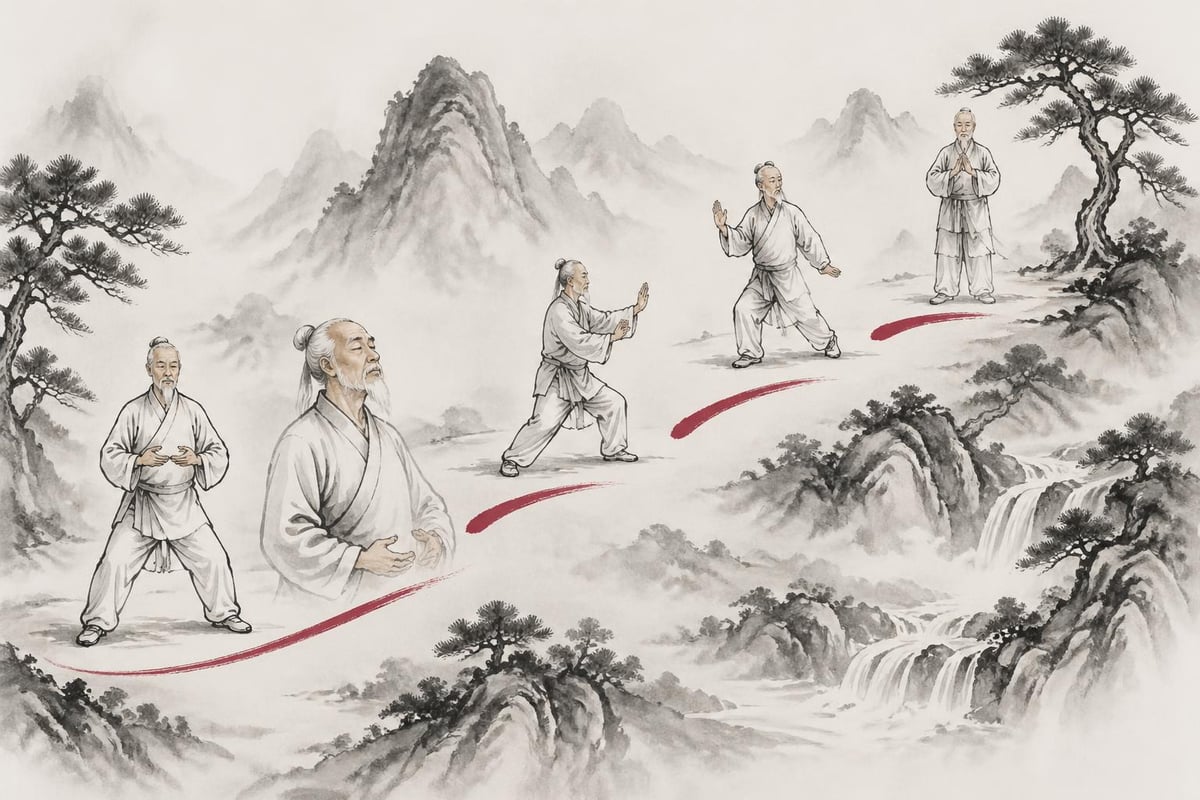
Once you're comfortable with weight shifting, you can explore basic forms. These sequences link individual movements into flowing patterns.
The "Cloud Hands" movement is particularly beneficial for seniors. It involves gentle side-to-side weight shifts combined with arm movements that cross the body's centerline. This crossing motion engages both brain hemispheres, supporting cognitive function while improving coordination.
Simplified Cloud Hands:
- Stand with feet wider than shoulder-width
- Shift weight to the right while both hands move right at chest height
- Transfer weight to the left, hands following the movement
- Continue flowing side to side, coordinating breath with motion
- Practice for 2-3 minutes
Creating a Sustainable Practice Routine
Consistency matters more than duration when starting tai chi for seniors. A short daily practice builds skill faster than occasional long sessions.
Setting Up Your Practice Space
You don't need a special studio. A clear area about six feet square gives you room to move comfortably. Choose a spot with:
- Level, non-slip flooring
- Good natural light if possible
- Minimal distractions
- Comfortable temperature
- Optional: calming background music
Some practitioners enjoy outdoor practice when weather permits. The connection with nature enhances the meditative quality. Just ensure the ground is level and safe.
Building Your Weekly Schedule
Start with realistic expectations. Even 10-15 minutes daily creates meaningful progress. As your stamina and interest grow, you can gradually extend your sessions.
| Experience Level | Session Length | Frequency | Focus Areas |
|---|---|---|---|
| Beginner | 10-15 minutes | 5-6 days/week | Stance, breathing, basic moves |
| Intermediate | 20-30 minutes | 5-7 days/week | Forms, balance work, flow |
| Advanced | 30-45 minutes | Daily | Complete sequences, refinement |
A simple warm-up can also help you begin safely and gently. These Tai Chi warm-up exercises for beginners are a helpful way to prepare the body before moving into a fuller practice.
Adapting Tai Chi to Your Individual Needs
Everyone comes to tai chi with different capabilities and challenges. The practice adapts beautifully to individual circumstances.
Modifications for Common Concerns
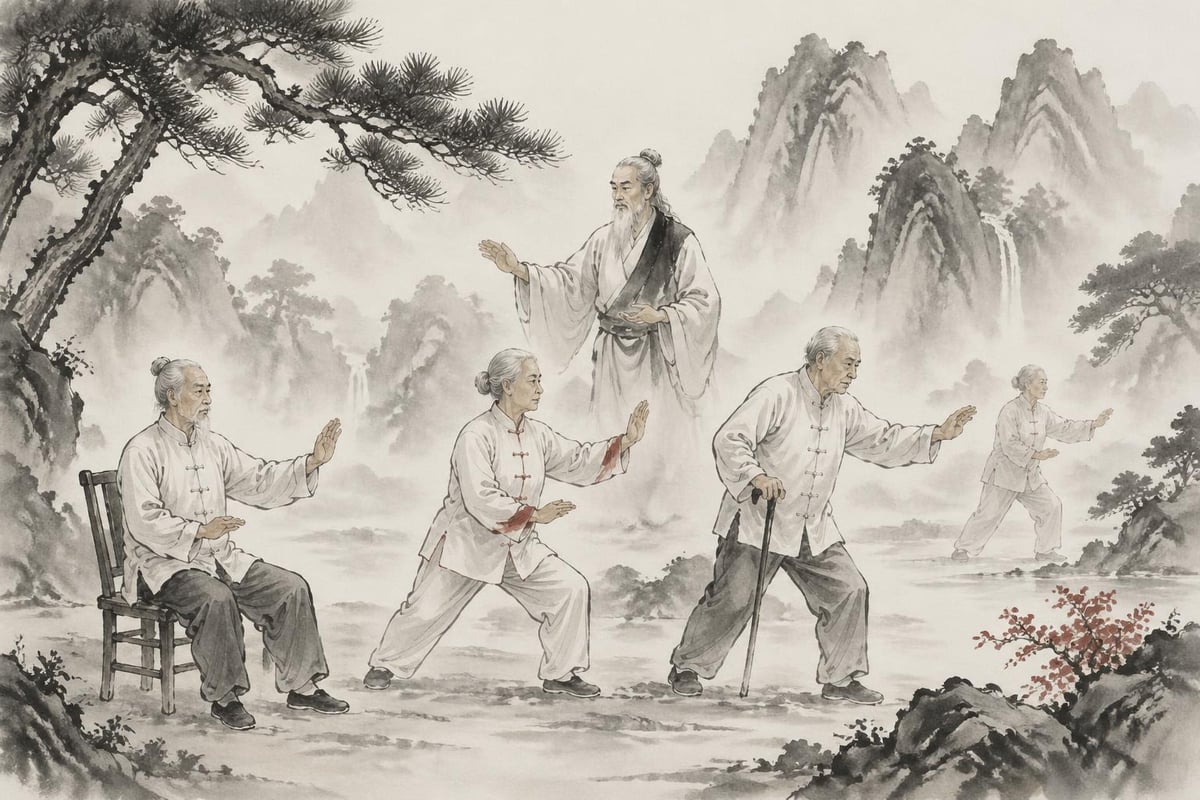
For those with limited mobility: Chair-based tai chi maintains the essential elements while providing support. You can practice arm movements, breathing coordination, and mental focus while seated. The benefits still accumulate.
For balance concerns: Practice near a wall or sturdy chair initially. Having support available builds confidence. As your stability improves, you'll naturally rely on it less.
For arthritis or joint pain: Focus on smaller, gentler movements within your comfortable range. Never force anything. The principle is "song" (sung), meaning relaxed, not collapsed. This relaxation actually reduces inflammation over time.
Creating sustainable habits takes more than just physical practice. It helps to begin gently, choose movements that feel safe, and build consistency in a way that supports your real life rather than adding pressure to it.
Listening to Your Body's Wisdom
Tai chi teaches you to distinguish between productive challenge and harmful strain. Mild muscle fatigue is normal as you build strength. Sharp pain or joint discomfort signals the need to back off.
Combining Tai Chi with Complementary Practices
While tai chi for seniors stands alone as a complete practice, it pairs beautifully with related disciplines from the Taoist tradition.
The Qi Gong Connection
Qi gong and tai chi share common roots. Qi gong typically features simpler, more repetitive movements focused on cultivating internal energy (qi). Many seniors find starting with qi gong builds a foundation that enhances their tai chi practice.
The two practices complement each other:
- Qi gong develops energy awareness and breathing
- Tai chi applies that awareness to flowing sequences
- Both calm the mind and strengthen the body
Meditation and Philosophical Understanding
Understanding the Taoist principles underlying tai chi deepens your practice immeasurably. Concepts like yin and yang, wu wei (effortless action), and naturalness inform how you move and relate to yourself.
Our Taoist meditation course explores these concepts practically. You learn to carry the calm awareness from sitting meditation into movement. This integration makes both practices more effective.
Some practitioners also study Taoist philosophy to understand the worldview that birthed these practices. This context isn't required, but it can enrich your journey significantly.
Finding Quality Instruction and Community
Learning tai chi for seniors benefits enormously from proper guidance. While self-study has value, working with an experienced teacher prevents developing unhelpful habits.
What to Look for in a Teacher
Authentic tai chi instruction goes beyond memorizing movements. A qualified instructor:
- Demonstrates clear understanding of principles, not just forms
- Adapts teaching to individual student needs
- Explains the "why" behind movements
- Creates a supportive, non-competitive environment
- Has verifiable training in a legitimate lineage
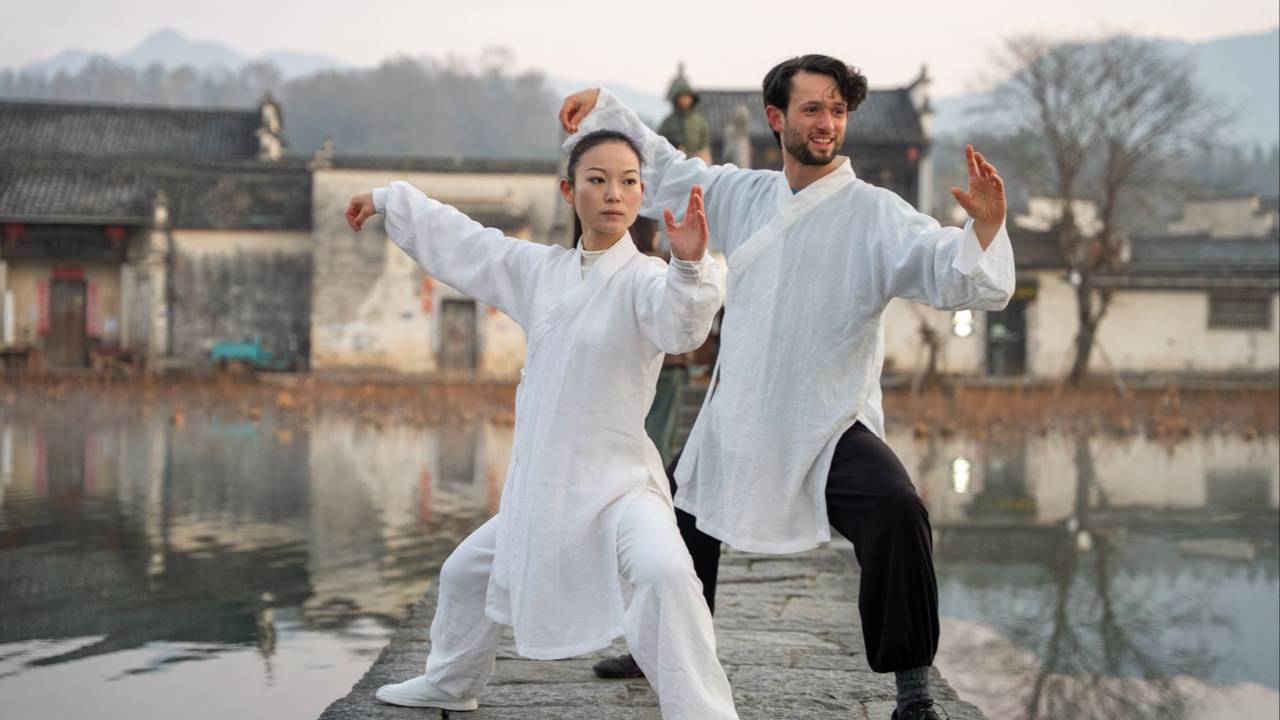
Master Gu brings over 25 years of expertise from the Wudang tradition, one of tai chi's most authentic lineages. This depth of knowledge helps students connect with genuine practices rooted in lived experience, not watered-down versions.
Watch him in action here:
The Value of Peer Connection
Practicing with others creates accountability and shared energy. Connecting with fellow students can help you share experiences, ask questions, and celebrate progress together.
The social dimension can add real value to the physical practice. Encouragement, consistency, and shared experience often make it easier to keep showing up over time.
Online Learning Advantages
Online platforms offer unique benefits for seniors:
- Practice at your own pace without keeping up with a class
- Review lessons as often as needed
- Access instruction regardless of location or mobility
- Learn from master teachers who might not be available locally
- Fit practice into your schedule flexibly
Our free introductory course at Taoist Wellness Online gives you a taste of this learning approach without commitment.
Overcoming Common Challenges and Obstacles
Every new practice presents challenges. Anticipating these helps you navigate them skillfully.
Physical Limitations and Frustrations
It's natural to feel awkward initially. Your body is learning new movement patterns. Coordination that seems impossible in week one becomes natural by week six.
Patience with progress: Tai chi teaches through repetition, not force. Each practice session, even imperfect ones, builds neural pathways and muscle memory. Trust the process.
Working with chronic conditions: Start with what feels safe and manageable. Your baseline doesn't determine your potential; gentle, consistent practice can still help you build strength, steadiness, and confidence over time.
Maintaining Motivation and Consistency
Life inevitably disrupts routines. How you handle these disruptions determines long-term success.
- Start small: Better to practice 5 minutes daily than skip because you "only" have 10 minutes
- Link to existing habits: Practice right after morning coffee or before dinner
- Track progress: Note how you feel, not just what you do
- Celebrate small wins: Noticing improved balance getting out of a chair counts
Some find that learning about different aspects of the practice keeps their interest fresh. Exploring breathing, meditation, balance, and Taoist philosophy can help the practice feel alive rather than repetitive.
Safety Considerations and Medical Collaboration
Tai chi for seniors is remarkably safe, but smart precautions ensure positive experiences.
Consulting Healthcare Providers
Discuss starting tai chi with your doctor, especially if you have:
- Osteoporosis or bone density concerns
- Recent surgery or injuries
- Significant balance issues with recent falls
- Cardiovascular conditions requiring monitoring
Many healthcare providers are supportive of gentle movement practices like tai chi, especially when the practice is adapted to your needs and approached safely.
Creating a Safe Practice Environment
Simple precautions prevent unnecessary incidents:
- Clear your practice space of tripping hazards
- Wear flat, flexible shoes or practice barefoot on non-slip surfaces
- Keep water nearby to stay hydrated
- Practice when you're alert, not immediately after waking or when tired
- Have a phone accessible in case you need assistance
If you experience dizziness, sharp pain, or unusual symptoms during practice, stop and rest. These signals deserve attention, not pushing through.
Deepening Your Journey Over Time
As your practice matures, new dimensions open up. What begins as gentle exercise evolves into something more profound.
Advanced Explorations
Experienced practitioners often explore:
- Weapons forms using staff or sword (practiced gently, emphasizing flow)
- Partner work exploring energy exchange and sensitivity
- Internal energy cultivation focusing on qi development
- Philosophical study connecting practice to life wisdom
These advanced areas aren't necessary for receiving tai chi's benefits. They simply offer direction for those who want to continue growing.
Immersive Experiences
Some seniors discover that retreats in China such as Master Gu's physical academy which is located in the Wudang Mountains, a traditional Taoist site, deepen their practice dramatically. Training where these arts originated, surrounded by mountains and monasteries, creates powerful shifts. While not essential, such experiences leave lasting impressions.
Teaching Others
After years of practice, some feel called to share tai chi with peers. This teaching role, whether formal or informal, deepens your own understanding immeasurably. Explaining principles to others clarifies them for yourself.
Building Long-Term Wellness Through Daily Practice
Tai chi for seniors becomes most powerful when integrated into daily life, not compartmentalized as separate "exercise time."
The practice teaches principles applicable everywhere:
- Moving with awareness whether practicing forms or walking to the mailbox
- Breathing deeply during stressful moments, not just in practice
- Finding center when emotionally unsettled, using skills developed through training
- Accepting what is rather than resisting reality
This integration transforms tai chi from something you do into a way of being. The physical benefits continue, but they become just one aspect of a larger shift toward balance and presence.
Tai chi can be a beautiful way to support balance, confidence, and vitality as you age, without forcing the body or overwhelming the mind. If you'd like to explore gentle Tai Chi, Qi Gong, meditation, and Taoist wisdom with authentic guidance, join us inside the Taoist Wellness Online Academy, where Master Gu and our teaching team will help you build a steady, sustainable practice for everyday wellbeing.