Beginner Tai Chi Moves: Your Path to Balance and Calm
Oct 29, 2026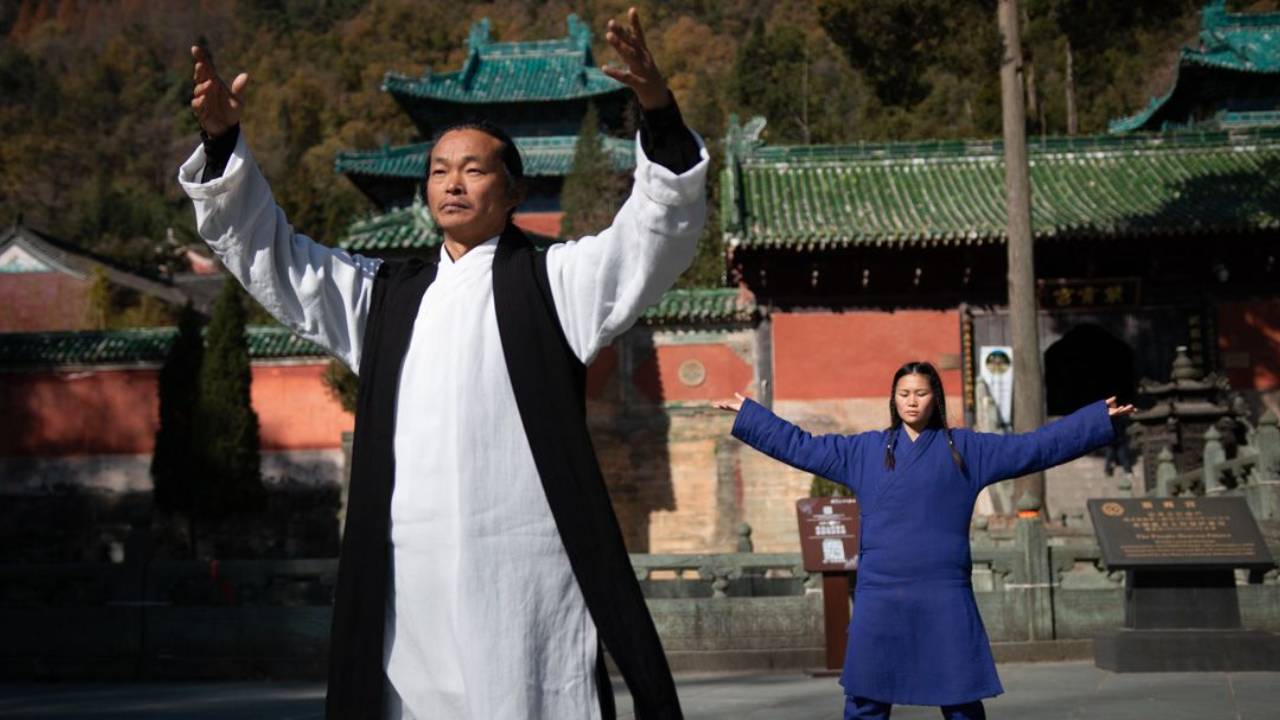
Starting a tai chi practice can feel like stepping into a gentle river - the current guides you, but you set the pace. For those new to this ancient art, learning beginner tai chi moves opens a pathway to a steadier body and a calmer mind. These foundational movements are not about perfection or athletic ability. They are about cultivating awareness, breathing naturally and moving with the rhythms that already exist within you. Whether you are looking for a way to ease daily tension or simply curious about this meditative practice, the right starting point makes all the difference.
Understanding the Foundation of Tai Chi Movement
Tai chi grows from centuries of Taoist wisdom, where movement and stillness sit together in harmony. Before looking at specific beginner tai chi moves, it helps to understand what makes this practice unique.
Unlike high-impact exercise, tai chi favours slow, flowing transitions. Each movement connects with your breath, creating a moving meditation that many people find supports strength, flexibility and balance without strain.
The Three Pillars of Practice
Every tai chi movement rests on three foundations:
- Rooting: feeling connected to the ground beneath you, steady yet relaxed
- Posture: keeping a natural, comfortable posture that lets you move with ease
- Breath: letting your breathing stay natural as you move from one posture to the next
These pillars support every movement you will learn. When you keep them in mind, even the simplest gesture becomes more settled and mindful.
Beginner Tai Chi Moves to Start Your Practice
The beauty of beginner tai chi moves lies in their accessibility. You do not need special equipment, perfect flexibility or prior experience. You just need willingness and a few minutes of focused attention.
Please note: please check with your healthcare professional before starting any new exercise. Move slowly, keep a wall or sturdy chair nearby if your balance feels uncertain, and stop if you feel dizzy or in pain.
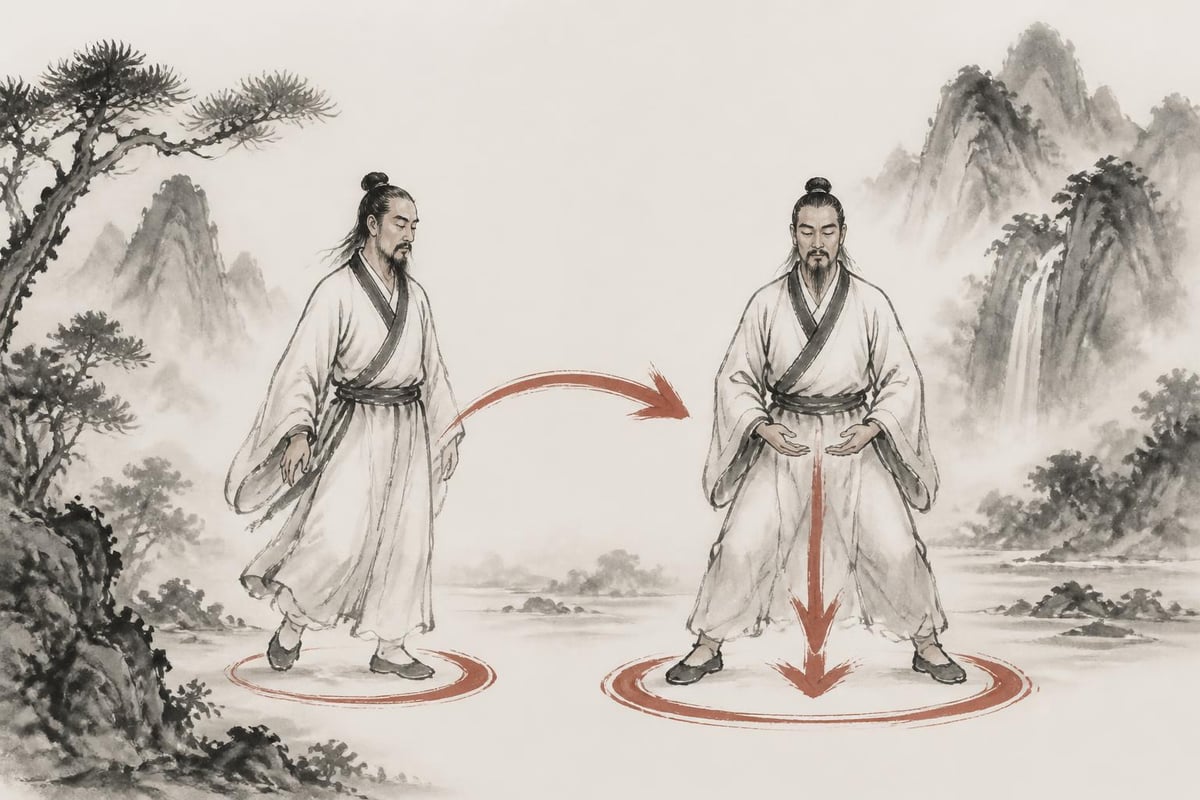
Opening and Closing Movements
Think of these as the bookends of your practice. The opening movement prepares your body and mind, while the closing movement helps you settle before you carry on with your day.
Opening sequence:
- Stand with feet shoulder-width apart, knees slightly bent
- Let your arms hang naturally at your sides
- Breathe in gently as you slowly raise your arms forward to shoulder height
- Breathe out gently as you lower them back down
- Repeat three to five times, letting your breath and movement find their own rhythm
This simple sequence brings your attention to the present and may help you shift into a calmer pace.
Closing sequence:
- Stand in the same comfortable stance
- Bring your hands together at your lower abdomen
- Take three easy breaths
- Slowly lower your hands to your sides
Weight Shifting and Rooting
One of the most fundamental beginner tai chi moves is learning to shift your weight mindfully between your feet. This builds the steadiness that more complex forms rely on.
| Movement Phase | Action | Breathing Pattern |
|---|---|---|
| Starting position | Most of your weight on the right foot | Natural breath |
| Transition | Slowly shift to the left foot | Breathe out gently as you shift |
| Pause | Most of your weight on the left foot | Breathe in easily |
| Return | Shift back to the right foot | Breathe out gently as you shift |
Practise this for a few minutes each day. Many people begin to notice a steadier sense of balance and a growing awareness of where their body sits in space, though results vary.
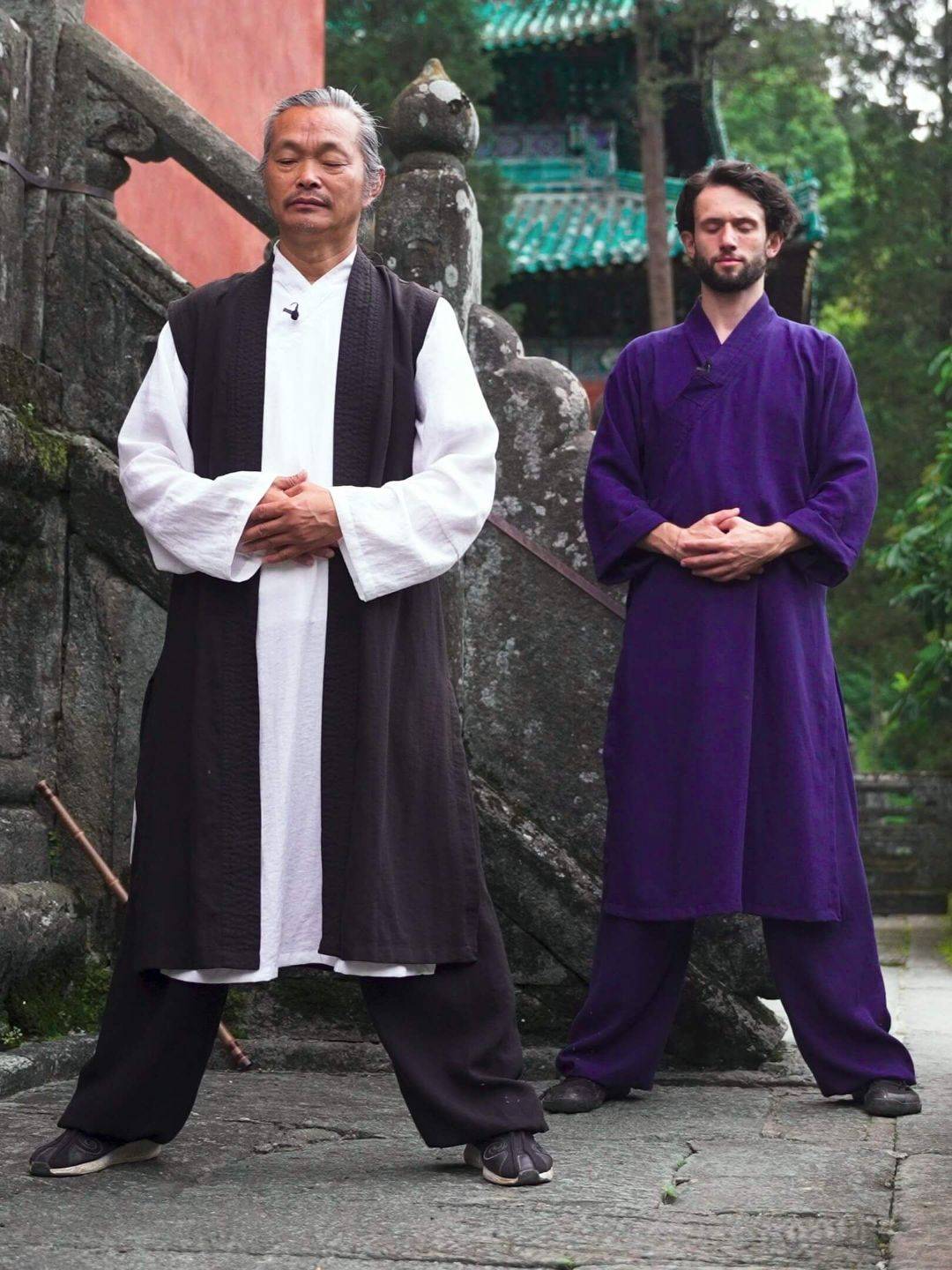
Master Gu shares the basic principles of standing meditation in the short video below - a gentle companion to the rooting and weight shifting above.
A Gentle Stepping and Arm Movement
Movements like this appear in many tai chi forms and teach coordination between the upper and lower body. Take it slowly and keep a wall or chair within reach at first.
Step-by-step:
- Begin with feet together, hands held as if resting lightly around a small ball at one side
- Step forward gently with one foot as your weight shifts
- Let one hand move forward while the other draws back towards hip level
- Your arms move as if parting tall grass
- Return to the starting position and repeat on the other side
The key is not how far you step or how high you raise your hands. It is keeping the motion smooth and continuous while you breathe naturally.
Building Your Daily Practice Routine
Consistency matters more than duration when you are learning beginner tai chi moves. A focused ten-minute session each morning usually serves you better than an irregular hour-long practice. For ideas on putting a routine together, see our guide to a beginner tai chi routine.
Creating Your Practice Space
You do not need much room. A space where you can extend your arms fully in all directions works perfectly. Many students practise in living rooms, bedrooms or quiet outdoor spots.
A few things to consider:
- Choose a location with minimal distractions
- Make sure the floor is level and non-slippery
- Wear loose, comfortable clothing that allows free movement
- Think about the temperature - you want to feel relaxed, not cold or overheated
Regular comfortable clothes work perfectly well when you are starting out.
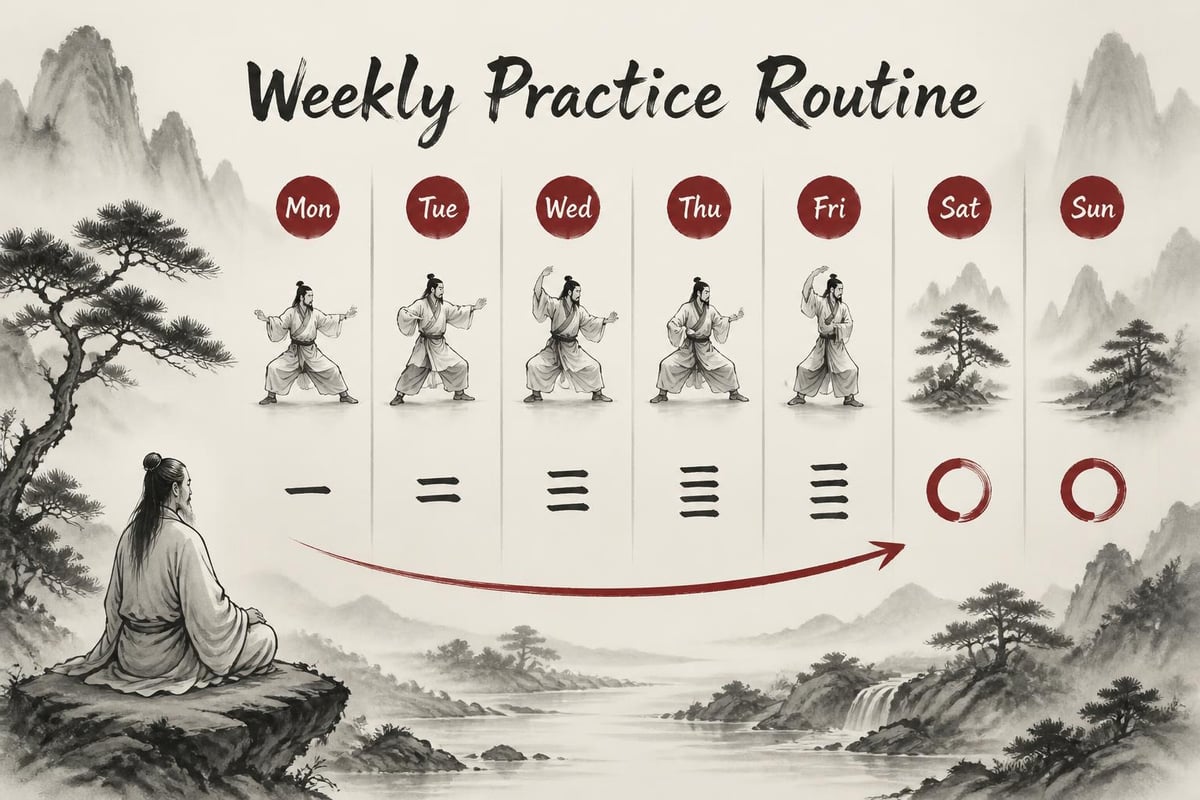
Sample Weekly Schedule for Beginners
| Day | Focus Area | Duration | Key Movements |
|---|---|---|---|
| Monday | Opening and closing | 10 min | Natural breathing, arm raises |
| Tuesday | Weight shifting | 12 min | Forward-back, side-to-side |
| Wednesday | Rest or review | 5-10 min | Practise your favourite moves |
| Thursday | Stepping and arm movement | 15 min | Both sides, slow repetition |
| Friday | Combined practice | 15 min | Flow through all learned moves |
| Saturday | Exploration | 10-15 min | Try variations, adjust pace |
| Sunday | Integration | 10 min | Gentle practice, reflection |
This schedule offers structure while staying flexible. The times are only a guide - listen to your body and shorten or adjust any session as needed.
Common Challenges and How to Navigate Them
Every beginner faces moments of uncertainty. These are not obstacles - they are natural parts of learning.
Feeling Uncoordinated or Stiff
If the movements feel awkward at first, you are experiencing exactly what you should. Your body is learning a new language of motion, and gentle, repeated practice tends to improve coordination over time.
Helpful approaches:
- Slow down even more than you think necessary
- Practise each movement separately before combining them
- Remember that stiffness often eases gradually, not all at once
- Focus on what feels comfortable rather than what looks "right"
Difficulty Maintaining Balance
Balance challenges, especially when shifting weight, affect many beginners. This is useful feedback - it shows you where to bring gentle attention. If balance is a particular focus for you, our article on tai chi for balance goes into it in more depth.
Try these adjustments:
- Keep your knees slightly bent at all times
- Notice your feet resting evenly on the ground
- Use a wall or chair for light support at first
- Practise weight shifting while seated before standing
Studies suggest tai chi may support balance, particularly for older adults, but any improvement comes gradually and results vary.
Mind Wandering During Practice
Your thoughts will drift. This is completely normal and gives you useful practice in gently redirecting your attention.
When you notice your mind has wandered:
- Acknowledge the thought without judgement
- Return your attention to your breath
- Feel your feet on the ground
- Continue the movement with fresh presence
Deepening Your Understanding of Movement Principles
As you become comfortable with basic beginner tai chi moves, certain principles will help you progress naturally.
Softness Over Force
Tai chi teaches that true strength grows from relaxation, not tension. When practising any movement, scan your body for unnecessary gripping - in your shoulders, jaw, hands or abdomen.
Practice check-in:
- Are you holding your breath? Let it flow naturally
- Are your shoulders creeping towards your ears? Let them drop
- Are you clenching your jaw? Allow it to soften
- Are your hands in tight fists? Keep your fingers gently curved
Following Natural Curves
Nothing in nature moves in straight lines. Your arms trace arcs, your weight shifts in gentle spirals and your spine curves softly. Good posture in tai chi respects these natural shapes rather than fighting them.
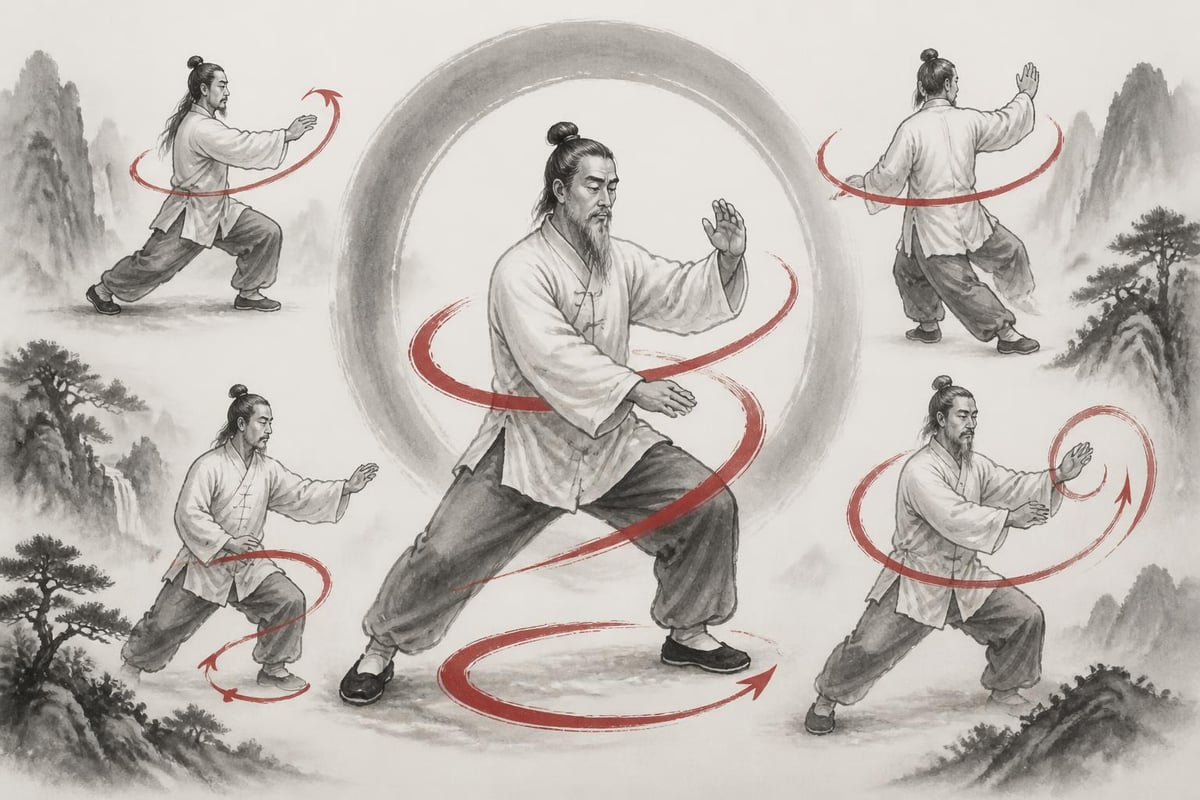
Uneven Weight Distribution
Most beginner tai chi moves place more weight on one foot than the other. This creates the stability you need to move smoothly while keeping the freedom to step and turn.
Integrating Breath with Movement
Breath acts as a bridge between body and mind. When you pay gentle attention to it, tai chi becomes more than exercise - it becomes meditation in motion.
Basic Breathing Patterns
Different movements suit different breathing approaches, but a general guideline serves most beginner tai chi moves well:
- Breathe in as you open or rise
- Breathe out as you close or sink
- Keep breathing naturally between movements - never hold your breath
Never force your breath. If a movement takes longer than one breath, simply breathe naturally until you complete it.
Coordinating Breath and Movement
Start with this simple exercise:
- Stand comfortably, arms at your sides
- Breathe in gently as you raise your arms forward to shoulder height
- Breathe out gently as you lower your arms
- Repeat five times, letting your breath stay easy and unforced
This simple exercise builds the coordination you will use in more complex movements.
Learning from Authentic Sources
Exploring beginner tai chi moves on your own builds confidence, and structured lessons can help you understand the reasons behind each movement. A gentle way to begin is our free Taoist course, taught by our teacher Master Gu, a 15th-generation San Feng Pai Wudang Taoist Master with 25+ years of teaching experience.
Traditional Wudang-style tai chi, as taught in our Tai Chi course, emphasises the link between movement and Taoist principles of balance and harmony. This approach goes deeper than exercise alone. Online learning cannot physically correct your posture, so we encourage a slow, patient approach and listening closely to your own body.
Benefits of Structured Learning
Self-guided practice offers:
- Flexibility in timing and pace
- Freedom to explore without pressure
- Low initial commitment
Structured lessons provide:
- A clear order to follow, step by step
- Understanding of why movements work as they do
- Community support and shared learning
- Connection to centuries of refined wisdom
Many practitioners find that combining both approaches works well. Exploring tai chi movements through articles and videos, then going deeper with structured lessons, creates a well-rounded foundation.
Expanding Your Practice Horizons
Once you have grown comfortable with basic beginner tai chi moves, natural curiosity often leads to related practices that complement your tai chi.
Qi Gong and Tai Chi
Many students find that qi gong and tai chi work well together. While tai chi centres on continuous flowing forms, qi gong often uses simpler, more repetitive movements. Our Qi Gong course pairs naturally with tai chi study.
Taoist Philosophy and Movement
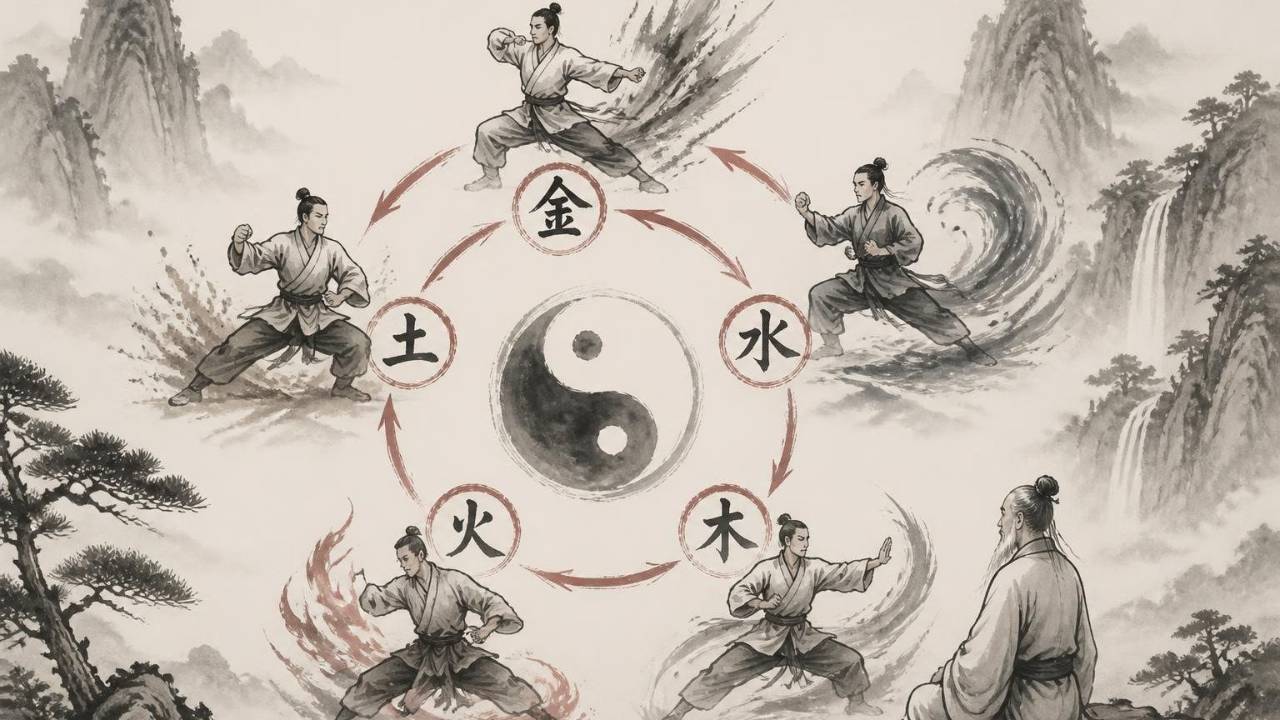
Understanding the philosophy behind the movements enriches your practice. Ideas like yin and yang, wu wei (effortless action) and the interplay of stillness and motion are not abstract - they are principles you meet each time you practise beginner tai chi moves.
Community Connection
Practising alone builds discipline, but sharing the path with others brings inspiration, encouragement and shared learning. You can swap ideas with fellow students and discover insights you might not find on your own.
Adapting Practice for Different Needs and Abilities
Tai chi's gentle nature makes it accessible to many people, whatever their age or fitness level. The same beginner tai chi moves can be adapted to suit different bodies and abilities.
Practising with Limited Mobility
If standing for long periods is uncomfortable:
- Practise the movements while seated in a stable chair
- Focus on upper body movements and relaxed breathing
- Work with smaller ranges of motion
- Rest whenever you need to
Accommodating Joint Concerns
If you have arthritis or joint sensitivity, you can adapt your practice by:
- Moving within comfortable ranges - never pushing into pain
- Warming up gently before you begin
- Keeping movements especially slow and controlled
- Speaking to your healthcare provider about suitable adaptations
Some studies suggest tai chi may ease joint discomfort when practised appropriately, but individual needs vary.
Energy Level Variations
Some days you will feel energised; other days, tired. Your practice can adapt:
| Energy Level | Practice Approach | Duration |
|---|---|---|
| High | Explore new movements, longer session | 20-30 min |
| Moderate | Balanced review and learning | 15-20 min |
| Low | Return to favourites, gentle pace | 5-10 min |
| Very low | Seated practice, relaxed breathing | 3-5 min |
Any practice, however brief, keeps you connected to the discipline.
Measuring Progress Without Judgement
In a culture obsessed with measurable results, tai chi invites a different relationship with progress. You will not track reps, weight lifted or miles covered. Instead, you may notice subtler shifts.
What You May Begin to Notice
Progress in beginner tai chi moves might look like this (results vary from person to person):
- Steadier balance: you feel more settled standing on one foot or walking on uneven surfaces
- Restful evenings: some people find they unwind more easily at night
- Body awareness: you catch yourself adjusting your posture during the day
- Calmer responses: small frustrations may not hit as hard
- Greater ease in movement: what felt mechanical begins to flow
- Steadier attention: your mind may wander less during practice
- Physical comfort: tension in your shoulders, neck or back may ease
These changes often appear so gradually that you may not notice them until you pause to reflect. Tai chi can sit alongside, but should not replace, professional support - if stress, low mood or poor sleep is affecting you, please also speak to your GP or a qualified professional.
Keeping a Practice Journal
Many students find value in brief notes after practice:
- Which movements you practised
- How long you practised
- One thing that felt good
- One area of curiosity or challenge
- Your overall energy or mood
Over weeks and months, patterns emerge that can inform and inspire your continued practice.
Moving Forward with Patience and Curiosity
The beginner tai chi moves you are learning now form the foundation for everything that follows. Each time you practise - whether for five minutes or thirty - you are building skills that can serve you for a lifetime.
There is no finish line in tai chi, no point where you have "mastered" it completely. This is not a limitation - it is an invitation to keep discovering. The same movement you practise today will reveal new layers next month and next year as your sensitivity and understanding deepen.
Remember that every master was once a beginner, moving through these same foundational practices with the same questions, uncertainties and small victories you are experiencing now. What matters is showing up consistently, treating yourself with compassion and trusting the process.
Learning beginner tai chi moves opens a doorway to balance and calm that can reach beyond your practice sessions. When approached with patience and presence, these gentle movements may bring small, steady changes to your daily life. If you would like structured guidance rooted in authentic Taoist tradition, Taoist Wellness Online offers courses in Tai Chi, Qi Gong and Taoist meditation with our teacher Master Gu, along with a monthly live session and Q&A and a supportive community of students from around the world.
Related reading