Tai Chi Movements: A Complete Guide to Ancient Practice
Sep 10, 2026
The gentle, flowing quality of tai chi movements has drawn people toward this ancient practice for centuries. What appears slow and simple on the surface holds profound depth, combining physical alignment, breath work, and meditative awareness into a seamless whole. Each movement follows principles passed down through generations, designed to cultivate internal energy, strengthen the body, and quiet the mind. Whether you're seeking relief from stress, better balance, or a deeper connection to your body's wisdom, understanding how these movements work opens a door to lasting transformation.
The Foundation of Tai Chi Movements
Tai chi movements emerge from Taoist philosophy, where the interplay of yin and yang creates natural harmony. Every gesture in the practice reflects this balance: soft yet strong, yielding yet grounded, internal yet expressed outwardly.
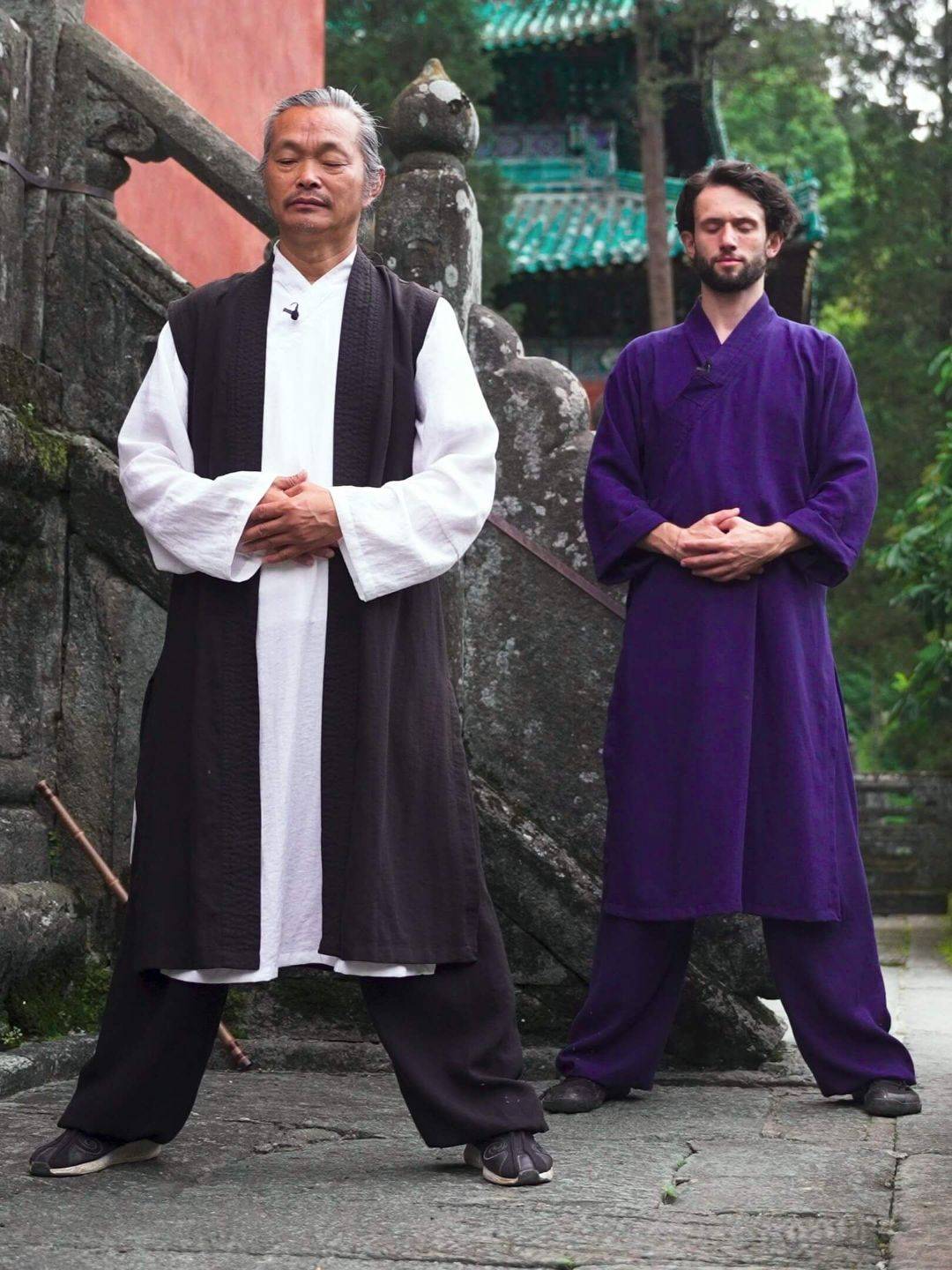
The Wudang tradition emphasises authenticity in form and intention. Master Gu, with over 25 years of experience teaching these practices, maintains that proper tai chi movements require more than copying external shapes. They ask you to feel the internal shifts, the way your weight transfers, how your spine lengthens, where your breath naturally flows.
Core Principles That Guide Every Movement
Several essential principles underpin all tai chi movements:
- Continuous flow: Each movement melts into the next without pause or tension
- Rooted stability: Your lower body stays grounded while your upper body remains relaxed
- Vertical alignment: Your posture maintains a gentle upward lift through the crown
- Breath integration: Natural breathing synchronises with the rhythm of each form
- Mindful presence: Your attention stays with the movement, not wandering ahead or behind
These principles transform simple physical gestures into a meditation in motion. You're not just moving your arms through space. You're cultivating qi, releasing held tension, and training your nervous system to find ease even while active. Our article on The Flow of Tai Chi: An Introduction to its Movements and Meanings explores several well-known forms and the meaning behind each.

Understanding the Structure of Tai Chi Forms
Tai chi movements organise themselves into sequences called forms. These forms vary in length and complexity, but all follow the same underlying logic. In Wudang tai chi, forms preserve ancient patterns that have proven their value across centuries.
A complete form might contain anywhere from a dozen to over a hundred individual movements. Each movement has a specific name, often drawn from nature or martial applications: Wave Hands Like Clouds, White Crane Spreads Wings, Grasp the Bird's Tail.
The Building Blocks of Practice
| Element | Purpose | Key Focus |
|---|---|---|
| Opening stance | Establish grounding and intention | Stillness, breath, alignment |
| Transitional steps | Connect postures smoothly | Weight shift, balance, flow |
| Hand gestures | Express energy patterns | Relaxed shoulders, soft wrists |
| Closing form | Return to centre | Integration, gratitude |
Learning tai chi movements requires patience. Your first attempts might feel awkward or disconnected. That's natural. The body needs time to reorganise old patterns, to discover new pathways of movement that feel foreign at first.
Master Gu shares a lovely story below about a senior master who practised a single movement, "Low West Elbow," every day for years, prioritising internal principles over collecting many routines. It's a helpful perspective before diving into the sections below.
Our Tai Chi course breaks complex forms into digestible sections. You learn one movement thoroughly before adding the next, building a foundation that supports deeper practice over time.
How Tai Chi Movements Affect Your Body
The physical benefits of regular practice extend far beyond what most people expect. These aren't high-impact movements that leave you exhausted. Instead, they work subtly, strengthening connective tissue, improving proprioception, and enhancing your body's natural coordination.
Research has shown that tai chi movements can significantly improve balance and reduce fall risk, particularly in older adults. The slow, controlled weight shifts train your nervous system to respond quickly when balance is challenged in daily life.
Physical Changes You May Notice
After consistent practice, many students report:
- Better posture throughout the day, not just during practice
- Increased flexibility in hips, spine, and shoulders
- Stronger legs without the strain of conventional exercise
- Improved coordination and spatial awareness
- Reduced joint pain as movements lubricate and gently mobilise
The beauty of tai chi movements lies in their accessibility. You don't need to be athletic or flexible to begin. The practice meets you where you are, offering modifications that honour your current capabilities while gradually expanding them.
The Internal Dimension of Movement
While the external form matters, the internal experience defines authentic practice. Tai chi movements serve as a vehicle for cultivating and circulating qi, the vital energy that animates your body.
This internal work distinguishes tai chi from simple stretching or slow dance. You're learning to feel energy pathways, to direct attention through your body, to sense subtle shifts in your centre of gravity.
Developing Internal Awareness
The process unfolds gradually:
- First months: You focus on learning the external choreography, remembering sequences
- First year: External form becomes familiar; attention shifts to breath and relaxation
- Ongoing: You begin sensing qi movement, internal connections, energetic flow
Many practitioners find this internal dimension the most rewarding aspect of their practice. It provides a tangible experience of the body's subtle energies, something our modern culture rarely acknowledges or cultivates.

Common Tai Chi Movements and Their Benefits
While each style of tai chi has unique characteristics, certain movements appear across traditions. In Wudang tai chi, these foundational movements carry specific energetic and physical purposes.
Repulse Monkey teaches you to move backward smoothly while maintaining stability. This movement strengthens your legs, improves coordination between upper and lower body, and trains spatial awareness.
Brush Knee and Push combines a protective sweeping gesture with a gentle forward press. It opens the hips, strengthens the legs, and cultivates a sense of advancing with confidence yet remaining soft.
Parting the Wild Horse's Mane expresses expansion and gathering in one flowing sequence. This movement stretches the torso, opens the chest, and creates a pleasant sense of spaciousness in the upper body. Our piece on Boost Your Well-being with 5 Tai Chi Forms covers several more of these foundational sequences in detail.
A Quick Comparison of Key Movements
| Movement Name | Primary Benefits | Energy Quality |
|---|---|---|
| Wave Hands Like Clouds | Spinal rotation, waist flexibility | Flowing, continuous |
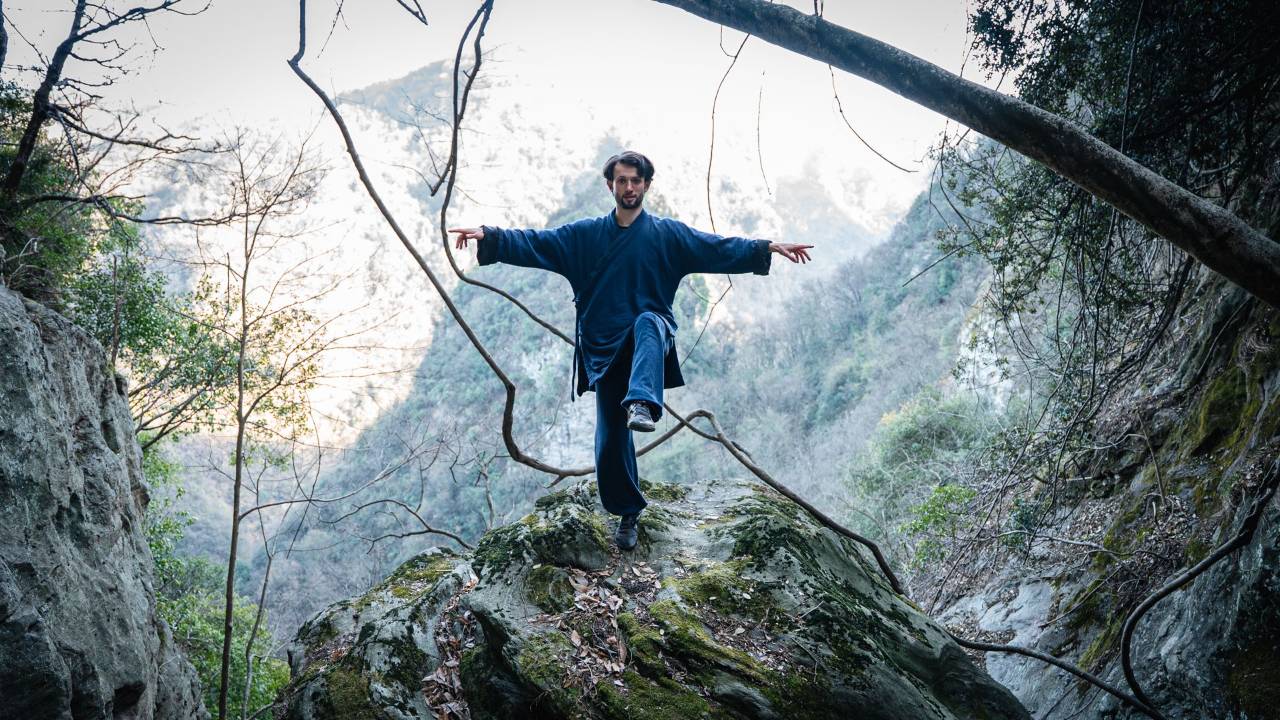
| Golden Rooster Stands on One Leg | Balance, leg strength | Stable, focused |
| White Crane Spreads Wings | Chest opening, shoulder release | Expansive, light |
| Step Back and Repulse Monkey | Backward coordination, leg power | Protective, grounded |
For those just beginning their journey with these ancient practices, our free Taoist course offers an accessible introduction, covering Tai Chi, Qi Gong, Meditation, and Taoist Wisdom. You'll learn fundamental tai chi movements, simple qi gong exercises, and meditation practices that help you reclaim focus and build a calmer daily routine.
Breath and Movement Integration
One of the most transformative aspects of tai chi movements involves conscious breathing. Unlike exercise that leaves you breathless, tai chi cultivates deeper, slower breathing that calms your nervous system while you move.
The relationship between breath and movement isn't rigidly prescribed. Natural breathing follows its own rhythm, which gradually synchronises with your movements as you practise. Forcing the breath creates tension. Allowing it to flow naturally creates ease.
Finding Your Natural Rhythm
As you practise:
- Notice where your breath wants to go during each movement
- Allow your exhale to accompany releasing or sinking motions
- Let your inhale support rising or expanding gestures
- Don't hold your breath, even during challenging balance poses
- Trust that coordination will develop naturally over time
This organic integration of breath and movement has profound effects on your stress response. Your body learns that movement doesn't have to trigger activation. It can actually deepen relaxation, even while you're physically engaged.
The Mental and Emotional Dimensions
Tai chi movements offer more than physical exercise. They provide a moving meditation that quiets mental chatter and cultivates emotional equilibrium. The focused attention required to perform movements correctly naturally draws your mind away from worries and into present-moment awareness.
Many students discover that their practice becomes a sanctuary, a daily ritual that grounds them regardless of external circumstances. The repetitive nature of forms creates a meditative state, where thinking subsides and pure awareness emerges.
Cultivating Mind-Body Connection
The practice strengthens neural pathways between intention and action:
- Intention arises: You decide to lift your arm
- Qi moves first: Energy precedes physical movement
- Body follows: The physical gesture expresses internal impulse
- Awareness witnesses: You observe the entire process
This sequence, repeated thousands of times through regular practice, rewires how you relate to your body. Movement becomes less mechanical, more intuitive. You develop trust in your body's wisdom.
Practicing at Different Life Stages
One of tai chi's greatest gifts is its adaptability. The same movements that benefit a twenty-year-old also serve someone in their eighties, though the depth and focus may differ.
Younger practitioners often emphasise the martial aspects, exploring how each movement could function in self-defence. They appreciate the athletic challenge of low stances and precise coordination.
Older practitioners typically value the balance improvements and joint health. They find that tai chi movements maintain mobility and independence in ways conventional exercise cannot match.

Modifications for Individual Needs
| Consideration | Adaptation | Principle Maintained |
|---|---|---|
| Limited mobility | Higher stance, smaller movements | Continuous flow, alignment |
| Balance challenges | Hand on chair for support | Weight shifting, presence |
| Joint issues | Reduced range of motion | Gentle opening, no force |
| High energy | Lower stance, martial focus | Rooted power, precision |
Our community at Taoist Wellness Online recognises these individual differences. Students learn authentic Wudang forms while receiving guidance that honours their unique starting point and goals. If you have an existing health condition or injury, it's always worth checking with a healthcare professional before starting a new movement practice.
Creating a Sustainable Practice
Understanding tai chi movements intellectually differs entirely from embodying them through regular practice. The transformation happens not through knowledge but through consistent, patient repetition.
Most teachers recommend daily practice, even if only for ten or fifteen minutes. This regularity matters more than long, infrequent sessions. Your nervous system learns through repetition, building new patterns that eventually become effortless.
Building Your Daily Routine
Consider these approaches:
- Morning practice: Start your day centred and grounded
- Midday break: Release tension accumulated during work
- Evening wind-down: Transition from doing to being
- Weekend depth: Longer sessions to explore forms more fully
The beauty of tai chi movements is that they don't require special equipment, clothing, or location. A small patch of floor, comfortable clothes, and ten minutes creates all you need for meaningful practice.
The Role of Authentic Transmission
While videos and books offer valuable resources, authentic tai chi comes alive through direct transmission from teacher to student. The Wudang lineage, preserved through centuries, carries subtle refinements that written instructions cannot fully convey.
Working with an experienced teacher helps you avoid common mistakes that limit progress. They observe your unique patterns, offer corrections tailored to your body, and guide you toward deeper understanding.
The guidance available through Master Gu provides this authentic connection to Wudang tradition. His teaching combines technical precision with the internal principles that transform exercise into genuine cultivation practice.
Moving Beyond Form
Eventually, if you practise long enough, something shifts. The movements you once struggled to remember become second nature. Your attention moves from "What comes next?" to "What's happening right now?"
This transition marks the beginning of true practice. The forms become a container for meditation, a structure that supports deeper exploration of energy, breath, and consciousness.
Advanced tai chi movements reveal layers of meaning that beginners cannot access. A simple gesture like raising your hand becomes an opportunity to sense qi rising from your lower dantian, flowing through your arm, extending beyond your fingertips into space.
Signs of Deepening Practice
You might notice:
- Movements feel effortless, arising spontaneously
- Time seems to disappear during practice
- Subtle energy sensations become distinct and clear
- The same form reveals new insights each time
- Daily life carries the calm quality of practice
These shifts cannot be forced. They emerge naturally when conditions ripen: regular practice, patient attention, and willingness to simply be with what is.
Tai chi movements offer a complete system for cultivating physical health, mental clarity, and spiritual depth through ancient wisdom adapted for modern life. Whether you seek better balance, stress relief, or a contemplative practice that honours both body and spirit, these flowing forms provide a path forward. Taoist Wellness Online makes authentic Wudang teachings accessible wherever you are, with comprehensive courses, live guidance from Master Gu, and a supportive global community ready to walk this journey alongside you.
Related reading