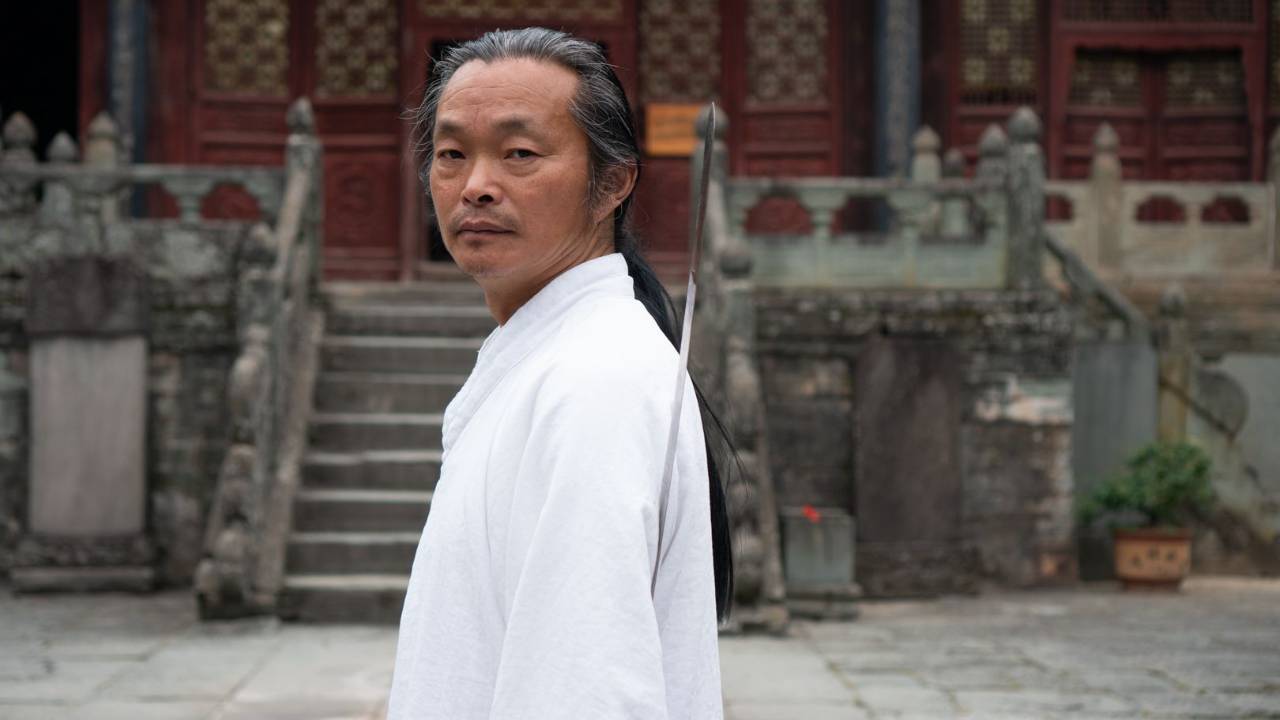
Tai Chi for Beginners Free: Your Complete Start Guide
Jul 31, 2026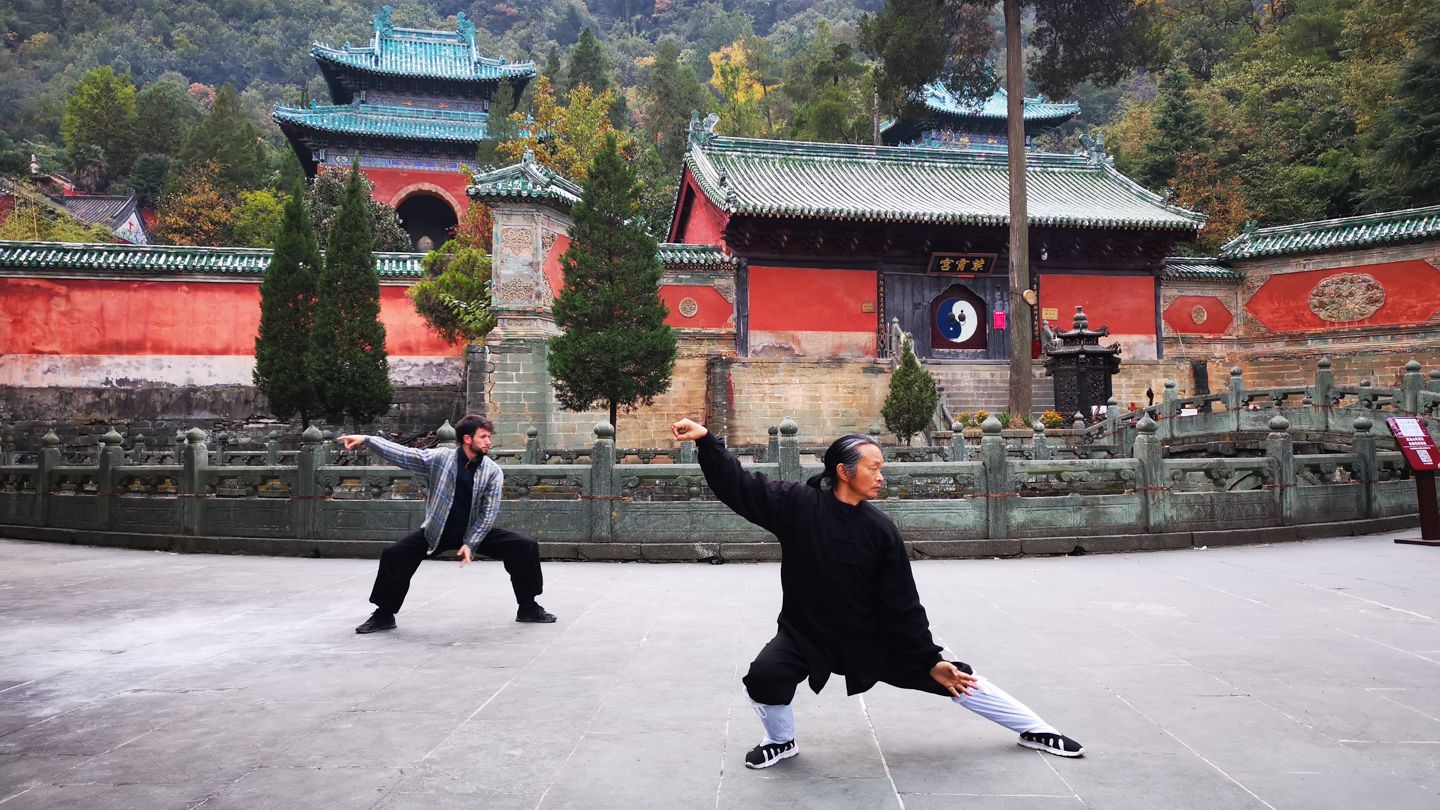
Starting your tai chi journey doesn't require expensive memberships or fancy equipment. In fact, tai chi for beginners free resources and practices are more accessible now than ever before. This ancient Taoist practice offers profound benefits for both physical health and mental clarity, and you can begin exploring these transformative movements from the comfort of your own home. Whether you're seeking better balance, reduced stress, or a deeper connection to your body's natural energy, the path forward is clearer than you might think.
Understanding Tai Chi as a Complete Practice
Tai chi isn't simply a series of slow movements. It's a sophisticated system that integrates breath, intention, and physical motion to cultivate inner energy, or qi.
The practice emerged from Taoist philosophy and martial arts traditions, particularly from sacred mountains like Wudang. When you practise tai chi, you're connecting with centuries of wisdom about how the body moves, how energy flows, and how stillness and motion work together.
What Makes Tai Chi Different from Other Movement Practices
Unlike high-impact exercises that push your body to its limits, tai chi works through gentleness and awareness. Each movement follows natural patterns that mirror the flow of water or the swaying of trees in wind.
Key principles that define authentic tai chi:
- Continuous, flowing movements without force
- Deep, coordinated breathing that guides each motion
- Mindful awareness of weight shifting and balance
- Relaxed joints and muscles, even while moving
- Internal focus on energy circulation
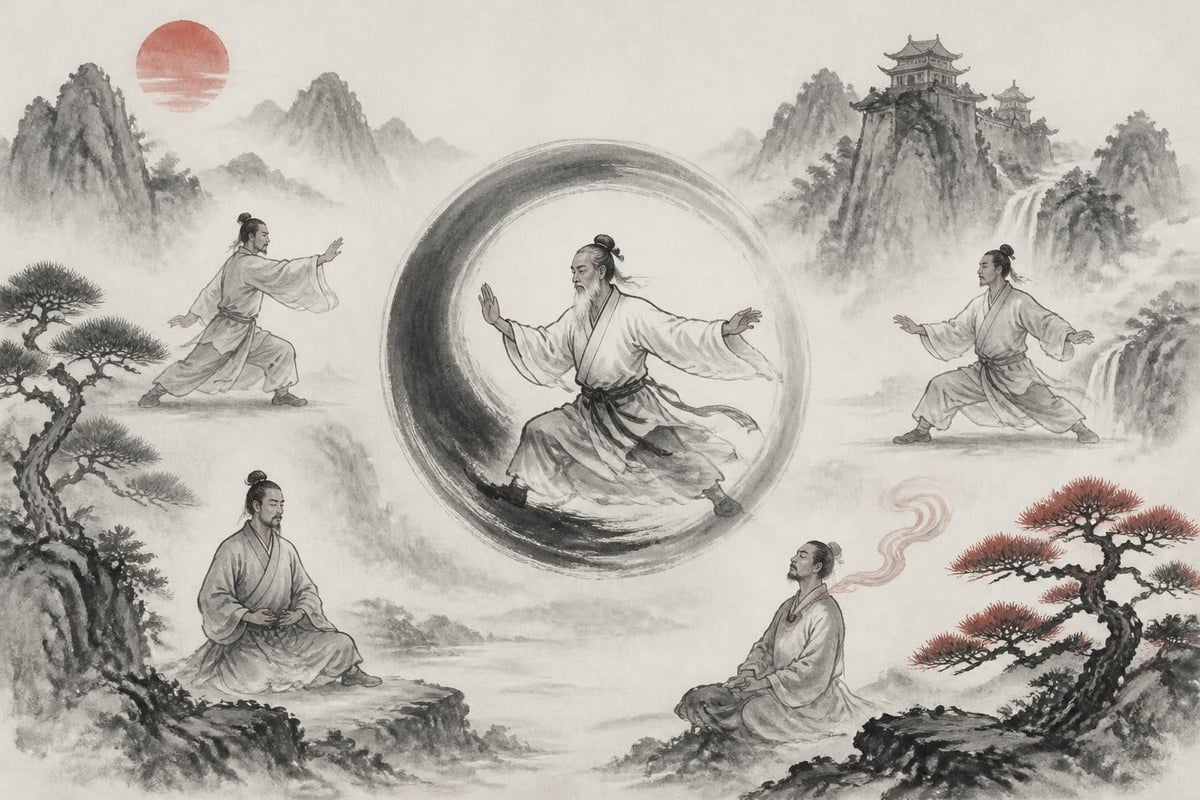
This approach makes tai chi accessible to people of all fitness levels. You don't need to be flexible, strong, or young to begin. You simply need willingness to move with awareness.
Finding Quality Tai Chi for Beginners Free Resources
The internet offers countless options for learning tai chi for beginners free, but quality varies significantly. Not all instruction provides authentic teaching rooted in traditional lineages.
| Resource Type | Advantages | Considerations |
|---|---|---|
| Video tutorials | Visual learning, pause and replay | May lack personalised feedback |
| Written guides | Detailed explanations, reference material | Harder to understand movement flow |
| Live online classes | Real-time guidance, community connection | Fixed schedule requirements |
| Mobile apps | Practise anywhere, progress tracking | Variable teaching quality |
When evaluating free resources, look for teachers with authentic training backgrounds and a clear connection to traditional lineages — this makes the difference between learning movements and learning the art itself.
Essential Movements Every Beginner Should Learn
Starting with too many forms can overwhelm new practitioners. Focus on mastering a few foundational movements first.
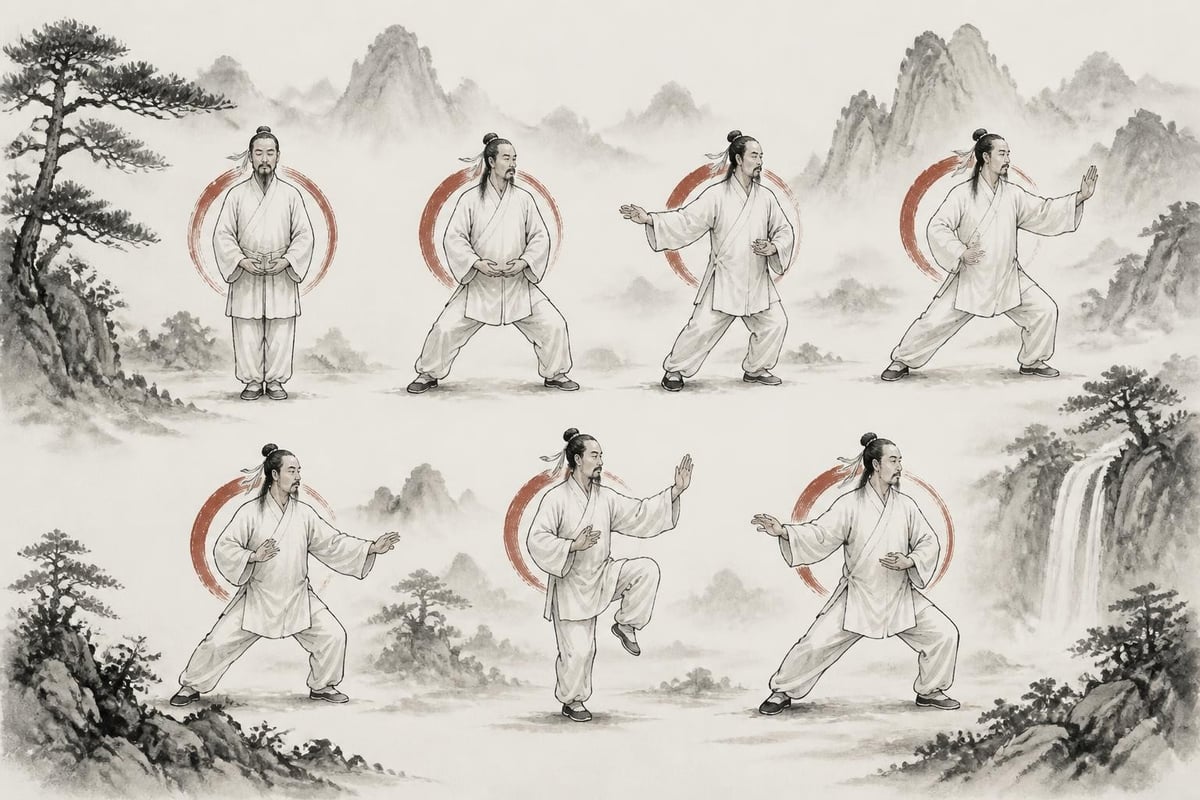
The core beginner movements:
- Standing meditation (Zhan Zhuang) - Builds internal strength and stability
- Cloud hands - Develops coordination and waist rotation
- Brush knee twist step - Teaches weight shifting and arm coordination
- Parting wild horse's mane - Combines forward stepping with flowing arms
- Wave hands like clouds - Cultivates smooth, circular motion
These movements form the foundation of more advanced practice. Each one teaches essential principles you'll use throughout your tai chi journey.
Creating Your Daily Practice Without Spending Money
You don't need special clothing, equipment, or space to practise tai chi for beginners free at home. A quiet area where you can extend your arms in all directions is sufficient.
The best practice happens when you establish consistency rather than duration. Five minutes daily creates more benefit than an hour once a week.
Setting Up Your Practice Space
Choose a location where you feel comfortable and won't be disturbed. Indoor or outdoor spaces both work well, though many practitioners enjoy the connection to nature that outdoor practice provides.
What you need:
- Flat, stable surface (carpet, wood floor, grass, or pavement)
- Comfortable clothing that doesn't restrict movement
- Bare feet or flat, flexible shoes
- Enough space to step forward, backward, and side to side
What you don't need:
- Mirrors (internal awareness matters more than external appearance)
- Music (natural sounds or silence support mindful practice)
- Props or equipment of any kind
The simplicity of tai chi makes it beautifully accessible. Your body is the only tool required.
Building a Sustainable Practice Routine
Many beginners start enthusiastically but struggle to maintain momentum. Understanding how to structure your practice helps create lasting habits.
The First Week: Foundation and Familiarity
Begin with standing meditation for three to five minutes. This simple practice teaches you to feel your body's alignment, notice your breath, and develop the patient awareness that underlies all tai chi movement.
Add one or two basic movements, repeating each five to ten times. Focus on breathing naturally and moving smoothly rather than achieving perfect form.
Sample first week schedule:
| Day | Practice Focus | Duration |
|---|---|---|
| 1-2 | Standing meditation only | 5 minutes |
| 3-4 | Standing + cloud hands | 10 minutes |
| 5-6 | Standing + cloud hands + brush knee | 12 minutes |
| 7 | Review all movements slowly | 15 minutes |
This gradual approach prevents overwhelm and builds confidence. Each small success motivates continued practice.
Weeks Two Through Four: Deepening Understanding
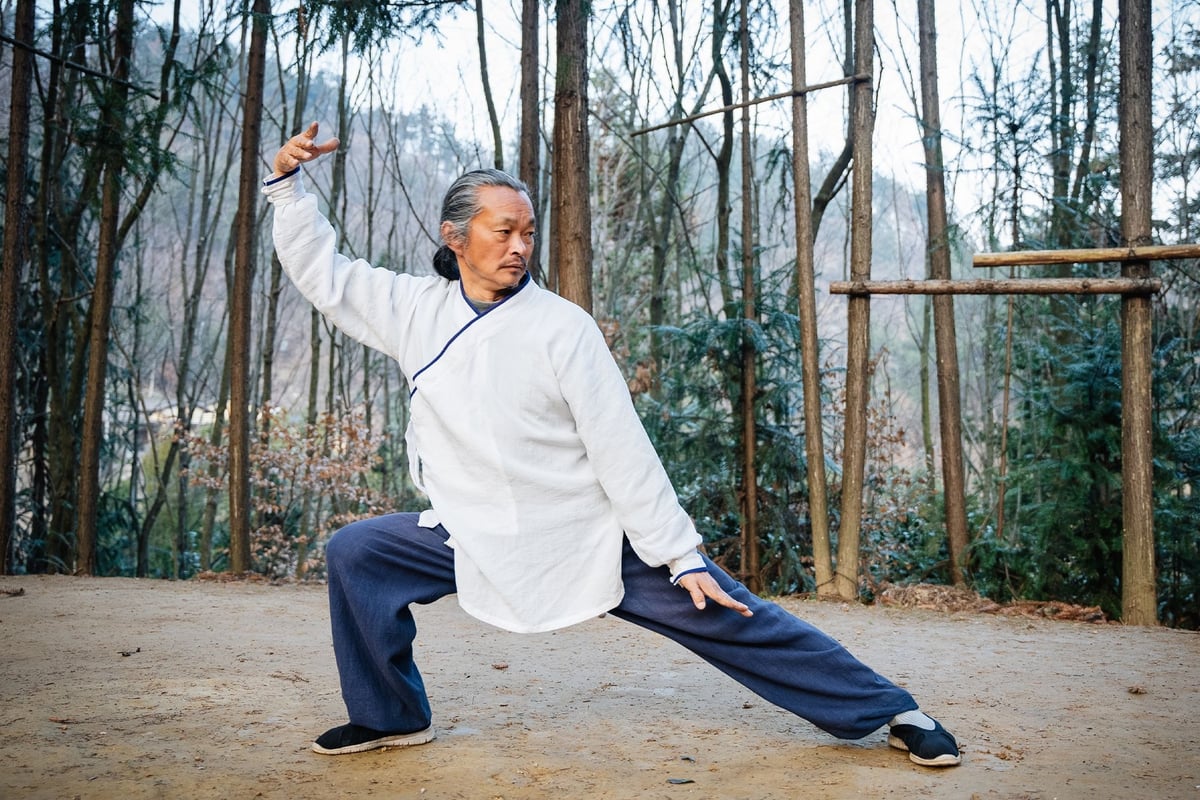
Once you're comfortable with basic movements, explore how breath coordinates with motion. In authentic Wudang tai chi, breathing follows natural patterns rather than forced techniques.
Notice how inhaling often accompanies rising or opening movements, while exhaling supports lowering or closing motions. This coordination happens organically when you move slowly and stay present.
If you're looking for structured guidance, our free 4-week Taoist Wellness course provides four weeks of progressive instruction in tai chi, qi gong, and meditation. This comprehensive introduction helps you build a solid foundation while learning authentic principles from traditional Wudang teachings.
Common Beginner Challenges and How to Navigate Them
Every new practitioner faces similar obstacles. Understanding these challenges helps you move through them with patience.
Balance and Coordination Difficulties
Feeling unsteady during weight shifts is completely normal. Your body is learning new movement patterns that may feel unfamiliar at first.
Helpful approaches:
- Practise weight shifting while holding a wall or chair for support
- Move even more slowly than you think necessary
- Keep your knees slightly bent, never locked
- Focus on one element at a time (footwork first, then add arm movements)
Balance improves with consistent practice. Trust the process and celebrate small improvements.
Remembering Movement Sequences
Learning new forms can feel like learning a dance. You might forget what comes next or mix up the order of movements.
Rather than rushing to memorise long sequences, practise individual movements until they feel natural. Our Tai Chi course breaks down complex forms into digestible sections, making learning more manageable.
Memory strategies that work:
- Practise the same movement multiple times before adding a new one
- Visualise the sequence in your mind when not practising
- Move with music or count beats to establish rhythm
- Write down movement names and order as reference
Breathing Techniques That Support Your Movement
Proper breathing transforms tai chi from simple exercise into genuine internal practice. When you coordinate breath with movement, energy begins to flow more freely through your body.
Natural Breathing Versus Forced Breathing
Don't try to control your breath with rigid patterns. Instead, allow breathing to deepen naturally as you relax into movement.
| Breathing Approach | Effect on Practice |
|---|---|
| Forced deep breathing | Creates tension, disrupts flow |
| Shallow chest breathing | Limits energy circulation |
| Natural abdominal breathing | Supports relaxation and qi flow |
| Breath held during movement | Blocks energy, causes strain |
Notice where breath naturally wants to flow during different movements. Your body's wisdom guides you when you listen carefully.
Developing Breath Awareness
Start by observing your natural breathing pattern while standing still. Notice the gentle rise and fall of your abdomen without trying to change anything.
As you move through tai chi forms, maintain this same relaxed breathing. If you find yourself holding your breath, slow down your movements until breathing flows freely again.
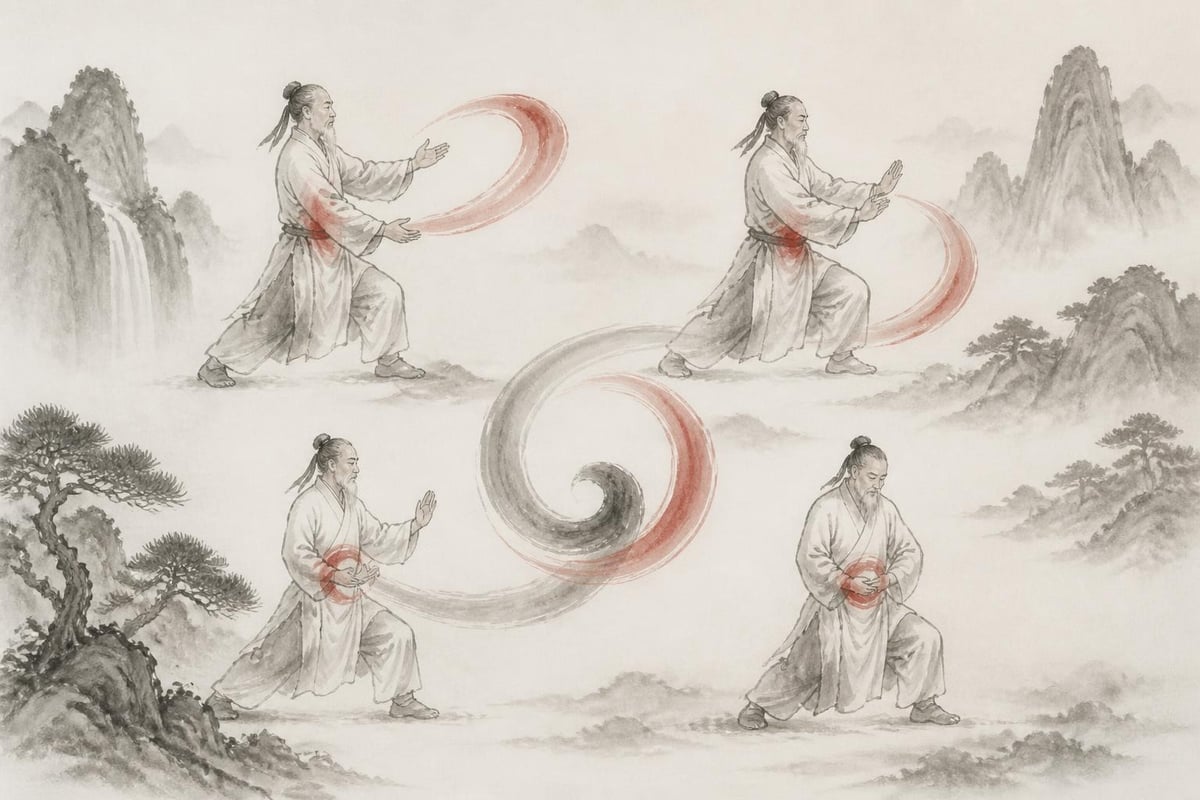
The integration of breath and movement deepens gradually. Be patient with yourself as these patterns become second nature.
Understanding the Health Benefits You Can Expect
Research consistently validates what Taoist practitioners have known for centuries. Tai chi offers measurable improvements in physical and mental health.
Physical benefits include:
- Improved balance and fall prevention
- Increased flexibility and range of motion
- Better cardiovascular health
- Reduced joint pain and inflammation
- Enhanced muscular strength despite gentle movements
Mental and emotional benefits include:
- Decreased stress and anxiety
- Better sleep quality
- Improved focus and concentration
- Greater emotional regulation
- Enhanced overall well-being
These benefits accumulate over time with regular practice. Many beginners notice improvements in sleep and stress levels within the first few weeks. For a deeper look at how tai chi supports health specifically, our post on what is Tai Chi for health covers the evidence in accessible detail.
Connecting Movement with Taoist Philosophy
Tai chi embodies Taoist principles of balance, harmony, and natural flow. Understanding these philosophical foundations enriches your practice.
The concept of yin and yang appears throughout tai chi. Every movement contains both qualities: softness and strength, stillness and motion, emptying and filling.
Applying Wu Wei (Effortless Action)
Wu wei doesn't mean doing nothing. It means acting in alignment with natural patterns, without forcing or straining.
In tai chi for beginners free practice, wu wei appears when you:
- Move with just enough effort, not too much or too little
- Allow transitions to happen smoothly rather than jerking between positions
- Respond to your body's needs rather than pushing through discomfort
- Practise because it feels nourishing, not from obligation
This principle extends beyond your practice sessions into daily life. Tai chi becomes a laboratory for learning how to move through the world with greater ease.
Avoiding Common Mistakes That Limit Progress
Certain habits can slow your development or even lead to discomfort. Recognising these patterns early helps you establish healthy practice from the beginning.
Rushing Through Movements
Speed creates tension and prevents proper alignment. Remember that tai chi cultivates internal awareness, which requires time and attention.
How to slow down effectively:
- Count to four during each major movement phase
- Pause briefly at transition points
- Focus on feeling each moment rather than reaching the end
- Practise individual movements in isolation before linking them
Holding Tension in Shoulders and Neck
Many beginners unconsciously raise their shoulders or crane their necks forward. This blocks energy flow and creates unnecessary strain.
Regularly check in with these areas during practice. Let your shoulders drop naturally, keep your chin slightly tucked, and maintain a soft gaze rather than staring intensely.
Expanding Your Practice Over Time
Once you've established comfort with basic movements and daily practice, you might wonder where to go next.
Why not explore our Qi Gong course alongside your Tai Chi practice? The two share common roots and principles, and practising both creates a more complete internal arts foundation.
Learning from Authentic Lineages
While tai chi for beginners free resources provide excellent starting points, studying with teachers who carry authentic lineage transmission offers deeper understanding.
Wudang tai chi represents one of the most respected traditional lineages. These forms emphasise internal development and maintain the original intentions of Taoist practice.
Qualities of authentic teaching:
- Clear lineage connection to traditional masters
- Emphasis on internal principles, not just external form
- Integration with Taoist philosophy and meditation
- Progressive curriculum that builds skill systematically
- Supportive community of serious practitioners
Integrating Meditation with Your Movement Practice
Tai chi is sometimes called "moving meditation," but sitting meditation practices complement and deepen your tai chi work.
Even five minutes of quiet sitting before or after your tai chi session enhances present-moment awareness. This stillness creates a reference point for the mindful movement of your forms.
If that dimension of practice interests you, our Taoist Meditation course explores traditional practices that support your internal development - the same qualities of awareness and energy flow that animate tai chi.
Simple Meditation to Begin With
Sit comfortably with your spine naturally upright. Close your eyes or lower your gaze softly.
Bring attention to your breathing without controlling it. Notice each inhale and exhale as it happens naturally.
When thoughts arise (and they will), acknowledge them gently and return attention to breath. This simple practice builds the mindful awareness that makes tai chi truly transformative.
Measuring Your Progress in Meaningful Ways
Beginners often wonder if they're doing tai chi correctly or improving appropriately. Progress in internal arts looks different than conventional exercise goals.
Signs of Genuine Development
Rather than counting repetitions or measuring speed, notice these subtle indicators:
- Movements feel smoother and more connected
- You can maintain awareness throughout entire practice sessions
- Balance improves in daily activities, not just during practice
- You feel energised rather than depleted after practice
- Breathing naturally coordinates with movement
- Your mind feels calmer and more focused
These changes reflect authentic internal development. Trust these indicators more than external measures of performance.
Resources for Continued Learning
As you progress beyond beginner stages, quality resources become even more important. The Taoist Wellness Online blog offers ongoing guidance on practice refinement, internal cultivation, and integrating Taoist principles into daily life.
Reading traditional texts deepens philosophical understanding. The reading list curates essential books that illuminate the wisdom underlying these practices. And for a broader overview of the forms available to you as you advance, our post on Tai Chi forms gives a clear sense of where your journey can take you.
Building Community Connection
Practising alone provides valuable personal development, but connecting with other practitioners offers support and inspiration. You'll find that kind of connection waiting for you at Taoist Wellness Online, where students from around the world share their journeys, ask questions, and encourage one another.
Many practitioners find that a combination of self-practice and periodic guidance from experienced teachers creates the most sustainable growth. This balanced approach honours your independence while ensuring you're developing sound technique and understanding.
Beginning tai chi for beginners free opens a door to practices that can transform your relationship with your body, mind, and daily experience. The journey requires patience, consistency, and trust in the gradual unfolding of understanding. Take your first steps with our free 4-week Taoist Wellness course - authentic Wudang teachings from Master Gu, at no cost. When you're ready to go deeper, Taoist Wellness Online offers comprehensive courses in tai chi, qi gong, meditation, and Taoist philosophy designed to support your continued growth and well-being.