Tai Chi Body: Transform Your Movement and Energy
Aug 01, 2026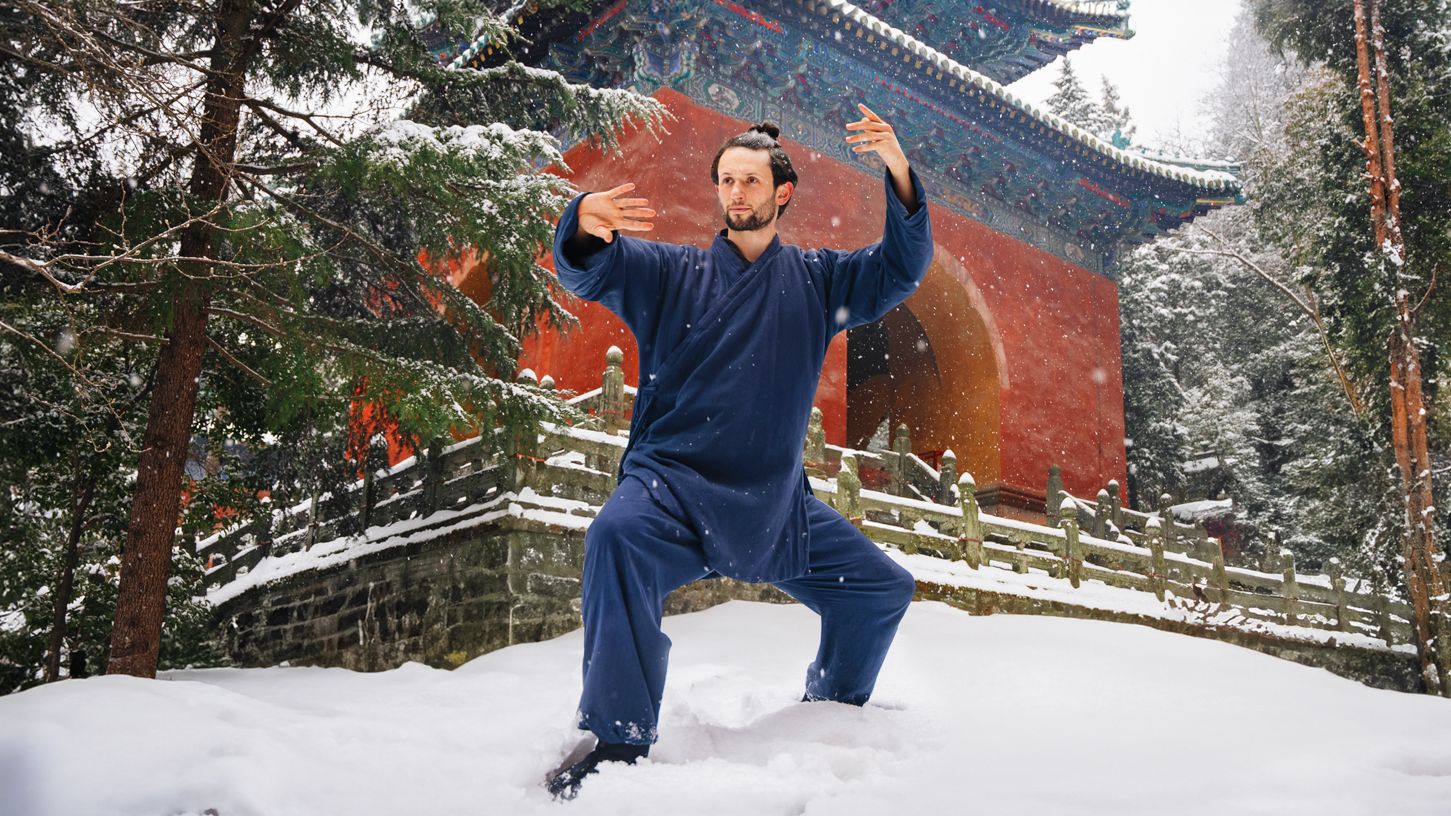
When you watch someone practise Tai Chi, you witness something remarkable: a quality of movement that seems both effortless and powerful, relaxed yet fully alive. This isn't just technique or choreography. It's the expression of what practitioners call the tai chi body, a physical and energetic transformation that happens when you commit to this ancient practice. Your body begins to reorganise itself around principles of balance, flow, and natural power. Your nervous system settles. Your joints open. Your breath deepens. This transformation isn't mystical - it's the result of consistent practice guided by authentic principles.
What Makes a Tai Chi Body Different
The tai chi body represents a fundamental shift in how you inhabit your physical form. Unlike conventional fitness that often emphasises isolated muscle development or cardiovascular endurance, developing a tai chi body focuses on whole-body integration.
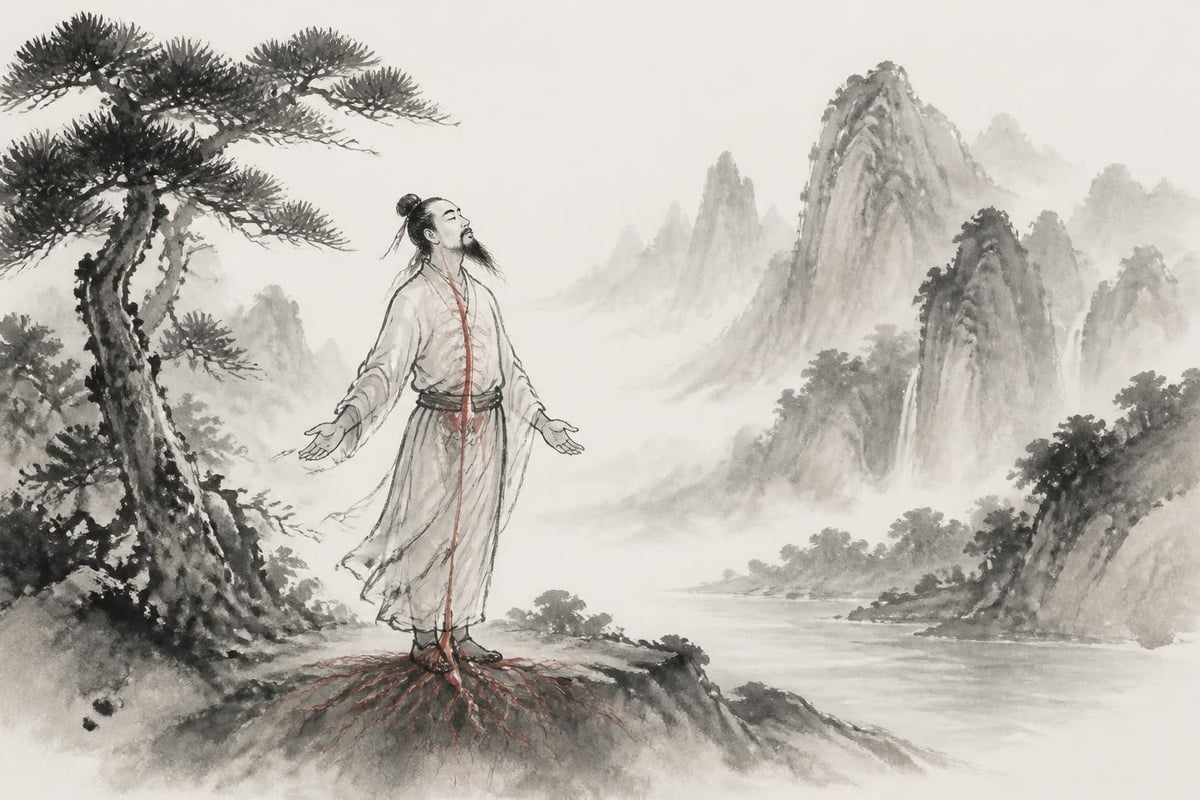
Your structure becomes organised around your centre rather than relying on muscular tension to hold you upright. Weight settles naturally into your legs and feet while your upper body releases unnecessary holding patterns. This creates a foundation that's both stable and mobile, like a tree that can sway in the wind without toppling.
The Role of Sung in Physical Transformation
Central to developing a tai chi body is the concept of sung, often translated as "relaxed" but more accurately meaning "released" or "open." This isn't collapse or limpness. It's a specific quality where muscles release excess tension while maintaining structural integrity.
When you practise sung consistently:
- Joints decompress and create space for synovial fluid to nourish cartilage
- Fascia releases chronic holding patterns that restrict movement
- Blood circulation improves as vessels aren't constantly compressed
- Energy pathways open allowing Qi to flow more freely through your system
Research consistently shows how tai chi practice reduces stress hormones and activates the parasympathetic nervous system, creating measurable changes in how your body responds to daily challenges.
Integrated Strength vs. Isolated Power
A tai chi body develops strength differently than typical exercise programmes. Instead of building isolated muscle groups, you cultivate integrated whole-body power that moves through connected chains.
| Traditional Fitness | Tai Chi Body Development |
|---|---|
| Isolated muscle groups | Connected fascial chains |
| External resistance | Internal resistance through alignment |
| Push through fatigue | Work within natural capacity |
| Linear movement patterns | Spiralling, three-dimensional flow |
| Goal-oriented exertion | Process-oriented cultivation |
This approach creates functional strength that serves everyday movement. You're not just strong in specific positions - you're capable across your full range of motion.
Building Your Foundation Through Practice
Developing a tai chi body begins with consistent practice that respects your current capacity while gradually expanding it. The Wudang tradition, which forms the foundation of authentic Tai Chi teaching, emphasises natural progression and patient cultivation.
Your initial practice focuses on basic standing postures and simple movements that teach your body new organisational patterns. These aren't warm-ups or preparation for "real" practice. They're the essential training ground where transformation happens.
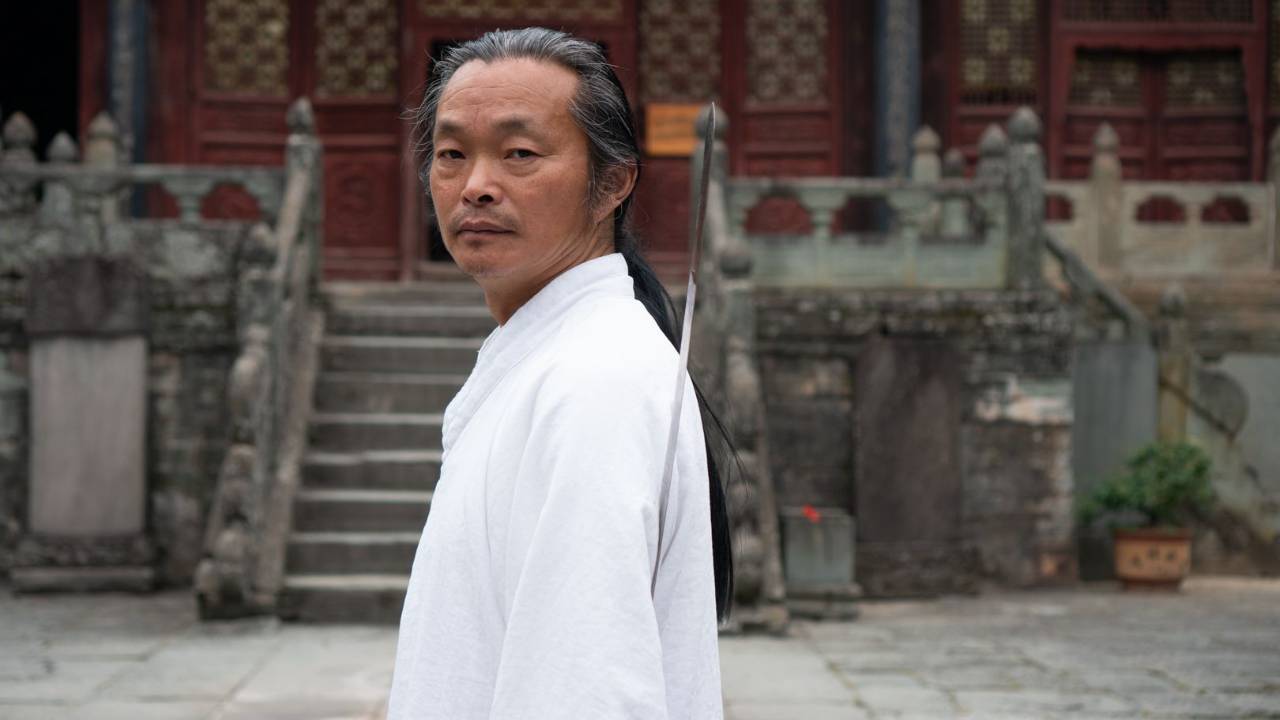
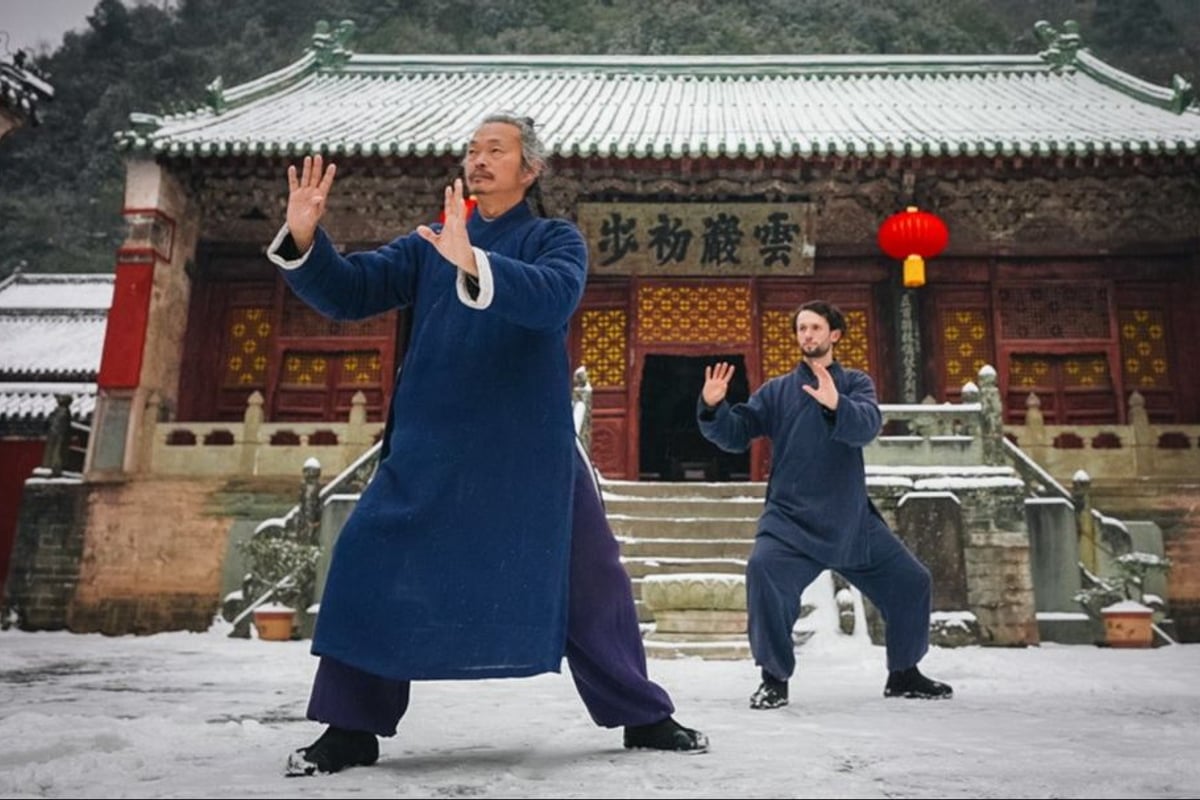
To see what that transformation looks like when embodied over decades of practice, here's Master Gu demonstrating Tai Chi in the Wudang Mountains - this is the quality of movement you're cultivating:
The Power of Standing Practice
Standing meditation, or Zhan Zhuang, is where many practitioners first experience what a tai chi body feels like. You stand in specific postures that challenge your usual compensatory patterns and invite your structure to reorganise.
During standing practice:
- Your mind learns to release constant doing and allow your body to find its natural alignment
- Micro-adjustments happen throughout your structure as weight redistributes and joints align
- Energy begins to accumulate in your lower dantian, the energetic centre below your navel
- Breath naturally deepens without forced breathing techniques
- Time perception shifts as you develop internal focus
These sessions might last anywhere from five to thirty minutes. The key isn't duration but quality of attention and willingness to feel what's actually happening rather than forcing what you think should happen.
Movement as Meditation
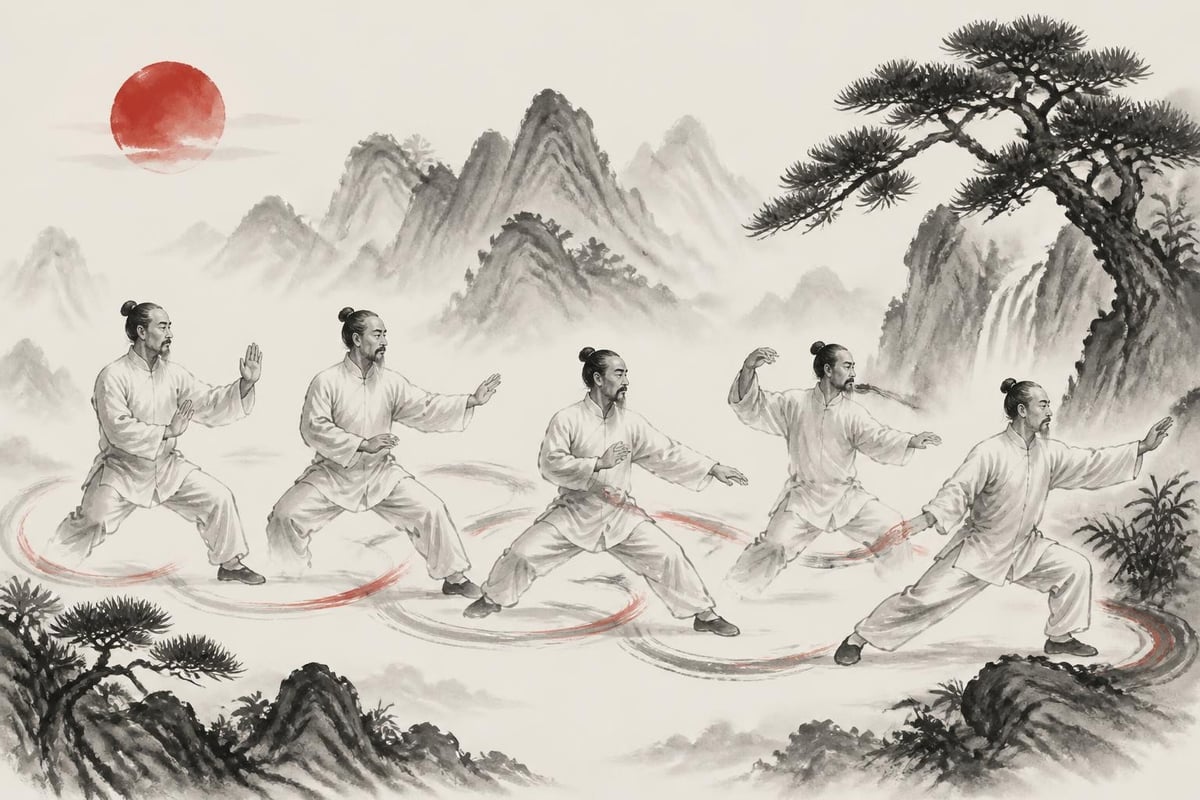
When you begin learning Tai Chi forms, you're training your tai chi body to move with the same principles you cultivate in standing practice. Each movement becomes an exploration of how to transfer weight, rotate your centre, and extend energy while maintaining integration.
The Wudang forms taught through our Tai Chi course guide you through specific sequences that train different aspects of your tai chi body. Some movements emphasise rooting and stability. Others develop spiralling power or the ability to change direction smoothly.
Physical Benefits You'll Notice
As your tai chi body develops, you'll experience tangible changes in how you move and feel throughout your day. These aren't abstract benefits - they show up in practical ways.
Your balance improves significantly. Regular Tai Chi practice reduces fall risk and enhances proprioception, your body's sense of where it is in space. These aren't small changes - they transform how confidently you move through everyday life.
Specific Physical Transformations
Joint Health and Mobility
Your joints begin to move more freely as the tai chi body develops. The gentle, flowing movements lubricate joints while strengthening the supporting structures. Unlike high-impact exercise that can wear down cartilage over time, Tai Chi's low-impact nature preserves joint integrity while building strength.
People who develop a tai chi body often report that chronic joint stiffness diminishes. Knees that ached with stairs become more comfortable. Shoulders that were frozen begin to open. This happens because the practice addresses both the physical restrictions and the nervous system patterns that create and maintain tension.
Postural Realignment
Modern life creates predictable postural distortions. We hunch forward over screens, collapse through our cores, and lose the natural curves of our spines. The tai chi body gradually reverses these patterns.
Your head begins to float above your spine rather than jutting forward. Your chest opens without military rigidity. Your pelvis finds neutral alignment rather than tilting excessively forward or back. These changes happen organically as your practice teaches your body more efficient organisation.
Breath Capacity and Quality
Breathing becomes fuller and more natural in a developed tai chi body. Not because you're forcing deep breaths, but because your ribcage has more mobility and your diaphragm can move freely.
Many practitioners notice they can take fuller breaths without effort. The constant tension that restricted their breathing has released. This improved breathing supports better oxygenation, calmer nervous system function, and enhanced energy throughout the day.
The Energetic Dimension
While the physical changes are obvious, developing a tai chi body also transforms your energetic system. In Taoist understanding, Qi (vital energy) flows through specific pathways in your body called meridians. When these pathways are open and balanced, you experience vitality, clarity, and resilience.
The tai chi body cultivates this energetic dimension through movement, breath, and mental focus working together. You're not just building muscular strength - you're developing your capacity to generate, circulate, and store vital energy.
Feeling Your Qi
Initially, you might not feel anything energetic during practice. That's completely normal. The tai chi body develops gradually, and energetic sensitivity often comes after physical patterns begin to change.
Eventually, many practitioners notice:
- Warmth in their hands and feet during practice
- A sense of fullness or expansion in their lower abdomen
- Tingling sensations along their arms or legs
- A quality of aliveness that persists after practice ends
These aren't prerequisites for practice or goals to chase. They're natural byproducts of consistent cultivation. The Wudang tradition emphasises that developing a tai chi body happens through patient practice, not forced results.
Integration with Qi Gong Practice
While Tai Chi focuses on developing the tai chi body through flowing movement sequences, our Qi Gong course emphasises specific energetic cultivation exercises. Together, they create a comprehensive approach to physical and energetic development.
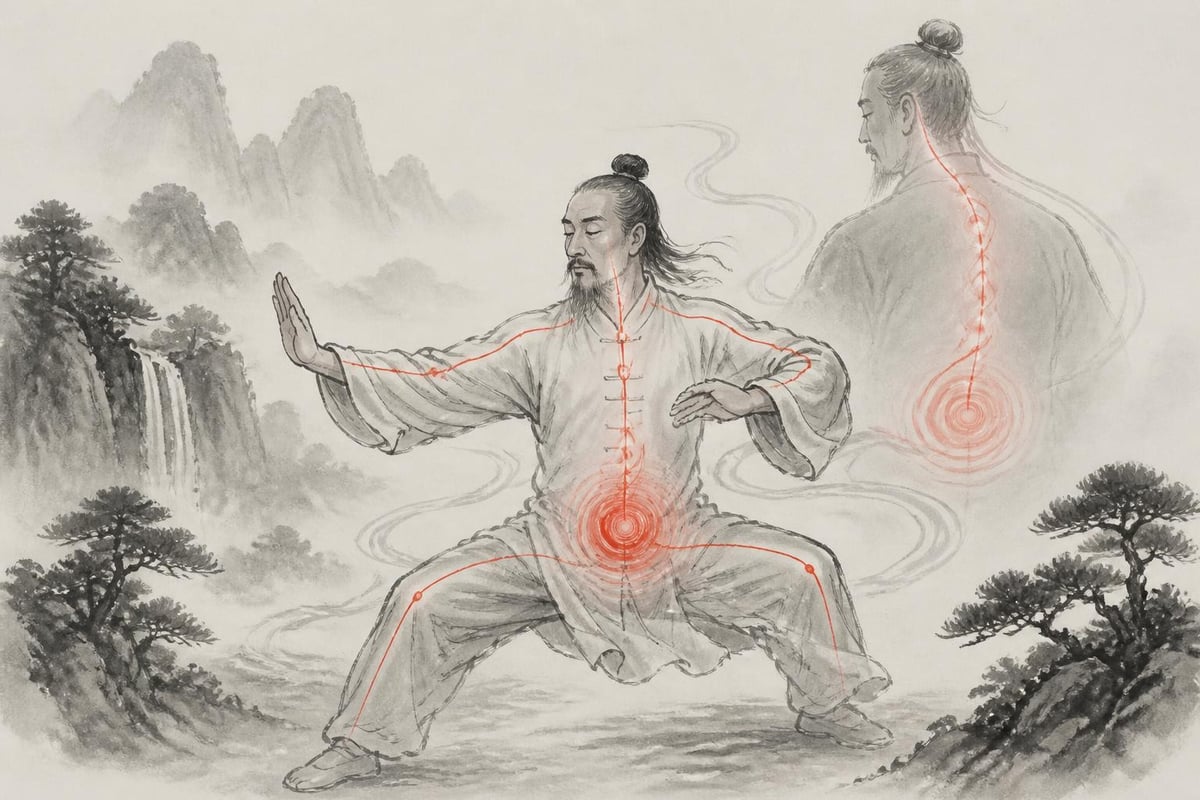
Qi Gong exercises might focus on opening specific meridians, building energy in your lower dantian, or circulating Qi through the microcosmic orbit. These complement the whole-body integration of Tai Chi forms, giving you multiple approaches to developing your complete tai chi body.
If you're beginning your journey with these practices, our free 4-week Taoist Wellness course offers an accessible introduction to both Tai Chi and Qi Gong, helping you start building the foundations of a tai chi body with authentic guidance from Master Gu.
Common Challenges and How to Navigate Them
Developing a tai chi body isn't always smooth or linear. You'll encounter challenges that test your patience and commitment. Understanding these obstacles helps you move through them rather than getting stuck.
The Beginner's Frustration
When you first start practising, your body doesn't respond the way you want it to. You see your teacher or advanced students moving with grace and power, and your own movements feel clumsy and disconnected.
This gap is normal and necessary. Your tai chi body hasn't developed yet. You're learning a completely new movement language, and your nervous system needs time to create new pathways.
Practical approaches:
- Focus on one principle at a time rather than trying to do everything perfectly
- Record yourself occasionally to notice actual progress that feels invisible day to day
- Remember that even awkward practice is creating beneficial changes in your system
- Connect with fellow students through our Academy community — others share the same experiences and the encouragement is genuine
Plateau Periods
After initial rapid progress, you'll likely hit periods where nothing seems to change. Your tai chi body feels stuck at a certain level, and practice becomes repetitive rather than revealing.
These plateaus are actually integration periods. Your system is consolidating the changes you've made before the next developmental leap. Continuing to practise consistently during these times is what allows deeper transformation.
Physical Discomfort and Adaptation
As your tai chi body develops, you might experience temporary discomfort as old patterns release and new ones form. Your legs might shake during standing practice. Your back might ache as your posture shifts. Your knees might feel unstable as they learn to track properly.
Distinguish between productive discomfort (the sensation of change and challenge) and harmful pain (sharp, shooting, or intensifying sensations). The former is part of development. The latter requires modification or rest.
Daily Life Integration
The most profound aspect of developing a tai chi body isn't what happens during practice - it's how this transformation affects your entire life. The principles you cultivate on your practice mat begin to infuse how you move, think, and engage with the world.
Movement Patterns Throughout Your Day
You start noticing how you habitually move. Do you collapse when you sit? Brace when you stand? Hold your breath when concentrating? These unconscious patterns become visible, and you have the option to apply tai chi body principles.
Simple daily applications:
- Standing in line becomes an opportunity to check your alignment and root your weight
- Walking transforms into a moving meditation where you feel weight transfer through each step
- Reaching for objects becomes a practice in moving from your centre rather than just extending your arm
- Sitting at your desk becomes a chance to release unnecessary tension while maintaining structure
Stress Response and Resilience
One of the most valuable aspects of a developed tai chi body is how it changes your stress response. Research shows that regular Tai Chi practice improves mental focus and emotional regulation. When stress arises, instead of immediately contracting and bracing, your tai chi body has learned another option: staying open and rooted while meeting the challenge. Your breathing continues. Your shoulders don't rise to your ears. You maintain presence rather than fragmenting into reactivity.
This doesn't mean stress disappears. It means you have more capacity to meet it without depleting yourself. Our post on Tai Chi and energy explores this dimension in more depth.
Deepening Your Practice Over Time
Developing a tai chi body is a lifelong journey rather than a destination you reach and check off your list. There's always deeper refinement, subtler awareness, and more complete integration available.
Working with Authentic Guidance
While you can learn basics from videos and books, developing a refined tai chi body benefits enormously from authentic guidance. The Wudang tradition passes down specific principles and corrections that aren't visible in external form alone.
A qualified teacher sees what you can't see in yourself: the subtle bracing in your shoulder, the slight leaning in your stance, the moment you hold your breath without realising it. This feedback accelerates your development and prevents practising ineffective patterns.
Progressive Refinement
As your tai chi body develops, your practice naturally evolves. Movements you initially learned at a gross motor level become opportunities for increasingly subtle exploration.
You might spend months working with rooting. Then your focus shifts to spiral energy. Then to breath coordination. Then to mental stillness during movement. Each layer of refinement builds on what came before.
| Practice Stage | Primary Focus | Physical Quality | Energetic Quality |
|---|---|---|---|
| Beginning | External form and basic principles | Learning positions and sequences | Building awareness |
| Intermediate | Internal alignment and integration | Sung, rooting, whole-body connection | Feeling Qi movement |
| Advanced | Subtle energy and refined expression | Effortless power, adaptive response | Directing and storing Qi |
| Mastery | Unity and natural function | No separation between practice and life | Spontaneous harmony |
These stages aren't rigid categories but general developmental patterns. Your journey will be unique, influenced by your body, your history, and your dedication.
Complementary Practices
Many students find that our Taoist Meditation course deepens their tai chi body development by training the mental stillness and internal awareness that supports physical practice. The practices reinforce each other, creating a complete cultivation system.
Similarly, exploring our Taoist Philosophy course provides context and understanding for why you're practising these specific principles. When you understand the philosophical foundation, your practice has deeper meaning and clearer direction.
The Lifelong Benefits
Research continues to validate what Taoist practitioners have known for centuries: consistent practice creates lasting positive changes in body and mind. Studies demonstrate improvements in balance, strength, flexibility, sleep quality, and cognitive function.
But these measurable benefits, while valuable, don't capture the full transformation of developing a tai chi body. There's a quality of life enhancement that's harder to quantify: moving through your day with more ease, having energy reserves when you need them, feeling grounded during challenging times, experiencing your body as a source of pleasure and capability rather than pain and limitation.
These changes accumulate over months and years of practice. They're subtle at first, then increasingly obvious as the contrast between your current state and your former one becomes clear.
Your tai chi body becomes a reliable resource - a foundation you can return to regardless of external circumstances. This embodied stability and vitality supports everything else you do in life. For a detailed look at the stretching and mobility aspects of this transformation, our post on Tai Chi stretching covers this dimension of physical development well.
Developing a tai chi body transforms how you move, feel, and engage with life through consistent practice of authentic principles. Take your first steps with our free 4-week Taoist Wellness course — no equipment, no experience needed, just Master Gu's guidance and your willingness to begin. When you're ready to go deeper, Taoist Wellness Online offers comprehensive training in the Wudang tradition under the guidance of Master Gu, a 15th-generation San Feng Pai Wudang Taoist Master with over 25 years of experience.