Free Tai Chi Workout: Begin Your Practice Today
Oct 26, 2026
Finding time and money for wellbeing can feel like too much when you are already stretched thin. A free Tai Chi workout offers a gentle way in. It needs no expensive equipment or gym membership, and it meets you where you are, inviting you to slow down, relax and move with awareness.
Please check with your healthcare professional before starting any new exercise, especially if you have a health condition, an injury or are pregnant. Move within a comfortable range and stop if you feel dizzy or in pain.
What Makes a Free Tai Chi Workout Effective
A free Tai Chi workout does not have to mean a lesser experience. The heart of Tai Chi is awareness, relaxation and natural movement, not fancy studios or gear. Practised regularly and patiently, a free workout at home can be a worthwhile way to build a steady practice.
The key elements of an effective Tai Chi practice include:
- Relaxed attention to your posture and how your body feels
- Natural breathing that stays easy and unforced
- Slow, continuous flow that may help build strength and flexibility over time
- Rooted posture that supports balance and stability
- Relaxed focus that many people find calming
The Wudang Approach to Accessible Practice
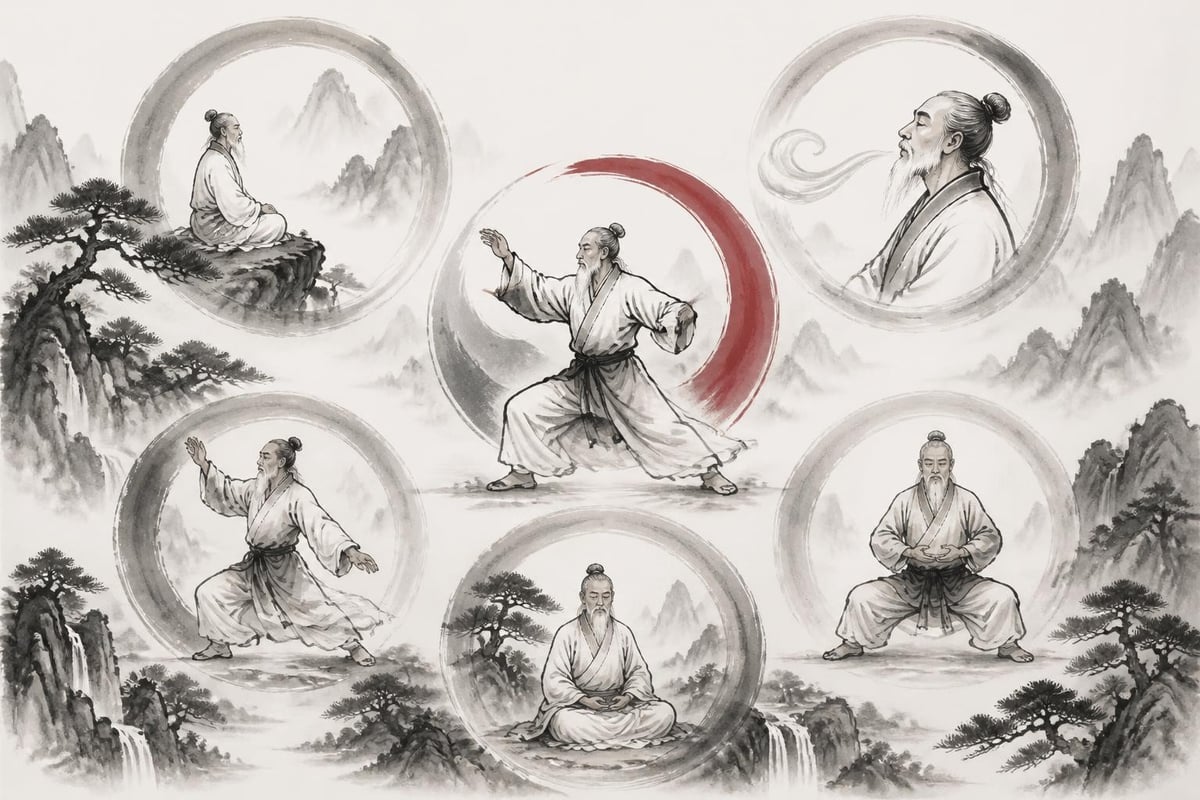
The Wudang tradition emphasises natural, relaxed movement rather than outward performance, which makes it well suited to practising at home. Wudang Tai Chi favours soft, circular movement and natural alignment, so you can build a steady foundation even when you practise alone.
When you practise in this spirit, you begin to notice where you hold tension, how you breathe and when your mind is restless. The movements themselves become gentle teachers, which is why a free Tai Chi workout can also be a quiet practice of self-awareness.
Getting Started with Your First Free Tai Chi Workout
Beginning needs only comfortable clothing, a small space and a willingness to move slowly. Most people can start straight away, whatever their fitness level or experience. If you would like a longer introduction first, our complete free beginner's guide to Tai Chi is a good place to start.
Simple Preparation Steps
- Find a quiet space where you can extend your arms comfortably in all directions
- Wear loose, comfortable clothing that allows you to move freely
- Remove your shoes or wear flat, flexible footwear so you can feel your connection to the ground (a non-slip surface is best)
- Set aside 15 to 20 minutes when you will not be interrupted
- Let go of any pressure to perform and approach practice with curiosity
Tai Chi adapts easily. You can practise in a park, your living room, a hotel room, or even a quiet corner of the office at lunchtime.
Foundational Movements for Beginners
Every free Tai Chi workout can begin with simple movements that build relaxed posture and natural breathing. These foundations appear throughout more advanced practice, so they are worth returning to often.
Standing Meditation
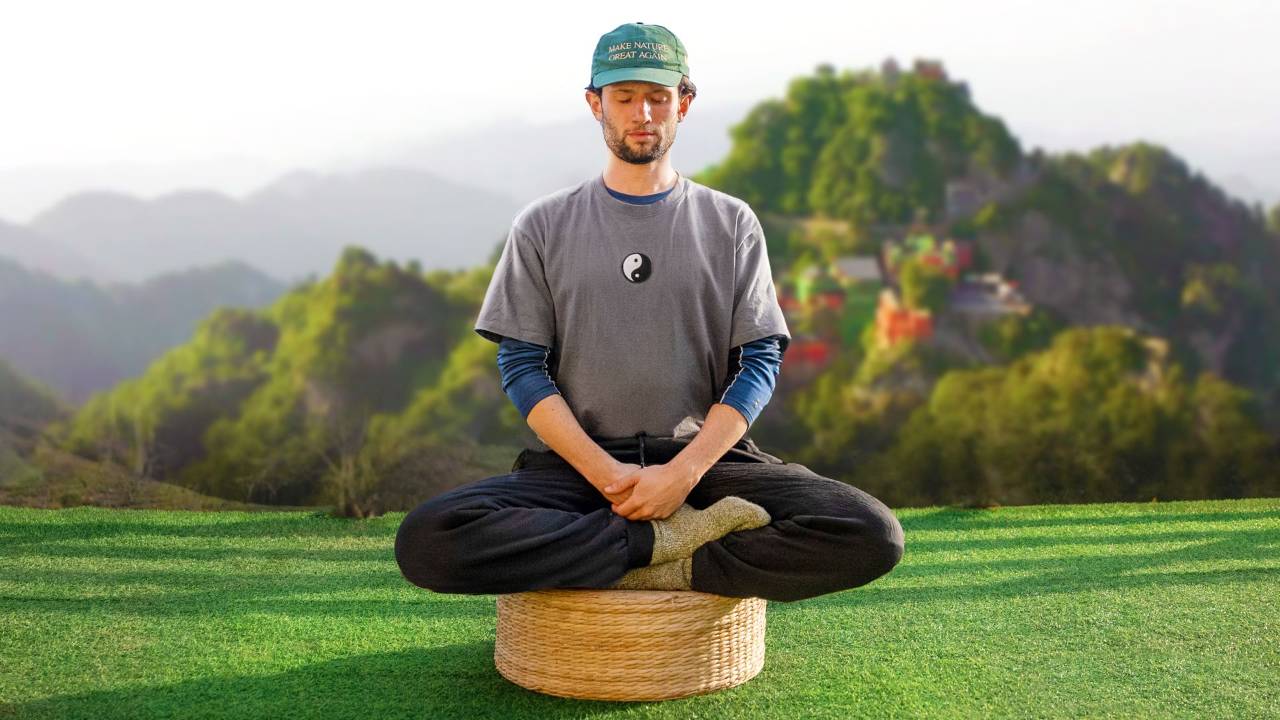
Before moving, stand. This simple practice helps build body awareness and a steady, relaxed posture:
- Stand with your feet about shoulder-width apart and your knees slightly soft
- Let your arms hang naturally, or rest them gently in front of your body, rounded and relaxed
- Relax your shoulders and soften your chest
- Let your breathing stay natural and unforced
- Begin with a few minutes and build up gradually, stopping if you feel dizzy or uncomfortable
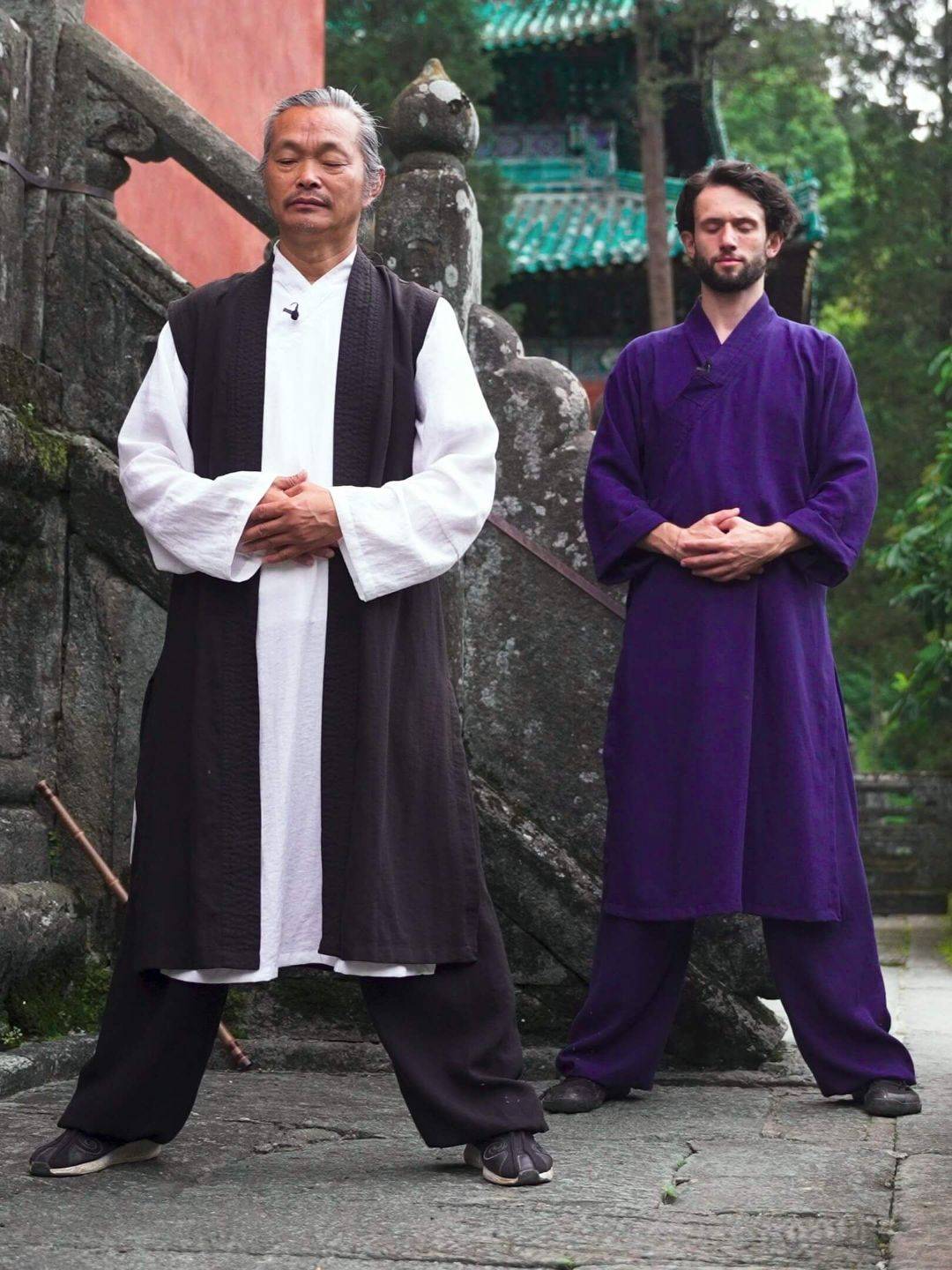
In this free lesson, our teacher Master Gu introduces his 15-day beginner Tai Chi course and teaches a first standing practice.
If standing practice appeals to you, our Taoist meditation course explores stillness and meditation in more depth.
| Movement | What you may begin to notice | Practice Duration (a guide) |
|---|---|---|
| Standing Meditation | A steadier, more relaxed posture and a calmer mind | 3-10 minutes |
| Weight Shifting | A better sense of balance and of your legs | 5 minutes |
| Flowing Arm Movements | A feel for coordinating the upper and lower body | 5-10 minutes |
| Gentle Opening and Closing | A sense of settling and relaxing | 3-5 minutes |
Everyone is different, so results vary. Treat the durations as a starting point and adjust them to suit you.
Weight Shifting Practice
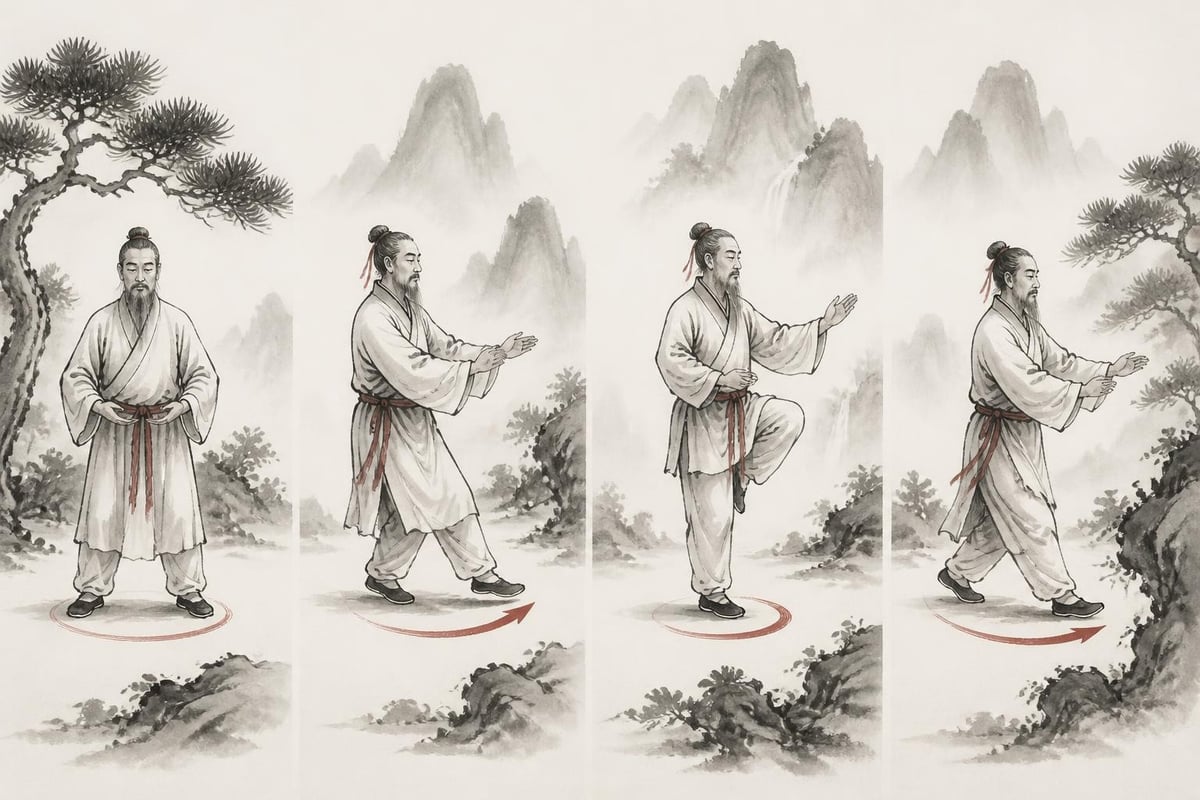
Learning to shift your weight smoothly from one leg to the other is a foundation of Tai Chi movement:
Stand with your feet parallel and shoulder-width apart. Slowly shift your weight onto your right leg, allowing the left to become light. Then return to the centre and shift onto the left leg. Continue slowly, keeping your breathing natural and your movements small and steady. If you feel unsteady, rest a hand on a chair or wall.
This simple exercise may help you build the leg strength and balance used in more complex forms, while you learn to move from your centre.
Building Your Practice Routine
Consistency matters more than duration when you are building a free Tai Chi workout habit. Twenty minutes most days is usually easier to keep up, and often more helpful, than one long session each week. For more ideas, see our guide to building a Tai Chi daily routine that lasts.
Sample Weekly Practice Schedule
| Day | Focus | Duration |
|---|---|---|
| Monday | Standing meditation + basic movements | 20 minutes |
| Tuesday | Weight shifting + gentle opening and closing | 25 minutes |
| Wednesday | Rest or gentle stretching | 10 minutes |
| Thursday | Flowing arm movements + settling | 20 minutes |
| Friday | Review all movements slowly | 30 minutes |
| Weekend | Longer session or outdoor practice | 30-45 minutes |
This structure gives your body time to settle into new patterns, and rest days let you recover. Adjust it freely to suit your week and how you feel.
What Studies Suggest About Tai Chi
Knowing how Tai Chi may affect body and mind can deepen your motivation. Researchers have looked at Tai Chi in areas such as balance, mobility and general wellbeing. Findings vary, and more research is always welcome.
The gentle, controlled movements of a free Tai Chi workout involve many parts of the body at once. Your muscles work to hold alignment and move smoothly, you move at a mild, steady pace, and many practitioners find that slowing down helps them feel calmer.
What Some Studies Report
Regular practice has been associated with:
- Better balance, which studies suggest may help lower the risk of falls in older adults
- Comfort with movement, with some people living with arthritis or back concerns reporting that gentle practice feels helpful
- General fitness, as part of a healthy lifestyle
- Flexibility and range of motion that develop gradually, without forcing the joints
- Leg, core and postural strength through gentle weight-bearing movement
- Feeling calmer, with many practitioners reporting less everyday stress
- Better sleep, reported by some people who practise regularly
Results vary from person to person, and Tai Chi is not a substitute for medical care. If you are struggling with stress, anxiety, low mood or persistent pain, Tai Chi can sit alongside, but should not replace, professional support - please also speak to your GP or a qualified professional.
Many people enjoy the way Tai Chi brings movement and attention together. Moving slowly while staying aware of your posture and surroundings can make practice feel more like a pause than a workout.
Common Mistakes to Avoid
Even experienced practitioners can fall into habits that limit their progress. Knowing the common pitfalls helps you keep your free Tai Chi workout gentle and steady.
Rushing Through Movements
The urge to speed up comes from our habit of valuing efficiency and productivity. Tai Chi invites the opposite: slowing down reveals subtlety. Each movement has layers of refinement that only appear when you give yourself time to notice.
Instead of counting repetitions, focus on the quality of your attention. One relaxed, mindful repetition is worth more than ten rushed movements.
Forcing Flexibility
Tai Chi develops flexibility gradually, through relaxed and repeated movement. Straining to reach a particular position goes against the principle of natural flow and may lead to strain or injury.
Listen to your body's current capacity and work within it. Flexibility tends to arrive as tension softens, not through force.
Holding Your Breath
Holding or restricting your breath creates tension through the body. Notice when you do it, particularly during challenging movements or balance changes, and gently let your breathing return to normal.
Deepening Your Understanding
A free Tai Chi workout brings benefits straight away, and learning the ideas behind the movements can make practice richer and more enjoyable.
The Wudang tradition teaches that Tai Chi is more than exercise. It is also a path of self-development rooted in Taoist philosophy. Ideas such as yin and yang, qi and wu wei (effortless action) can add a new dimension to your physical practice.
If you would like to explore these foundations with a teacher, our free Taoist course introduces Tai Chi, Qi Gong, meditation and Taoist wisdom with our teacher Master Gu, a 15th-generation San Feng Pai Wudang Taoist Master with 25+ years of teaching experience. It is a gentle way to learn the basics and build a steady routine at your own pace.
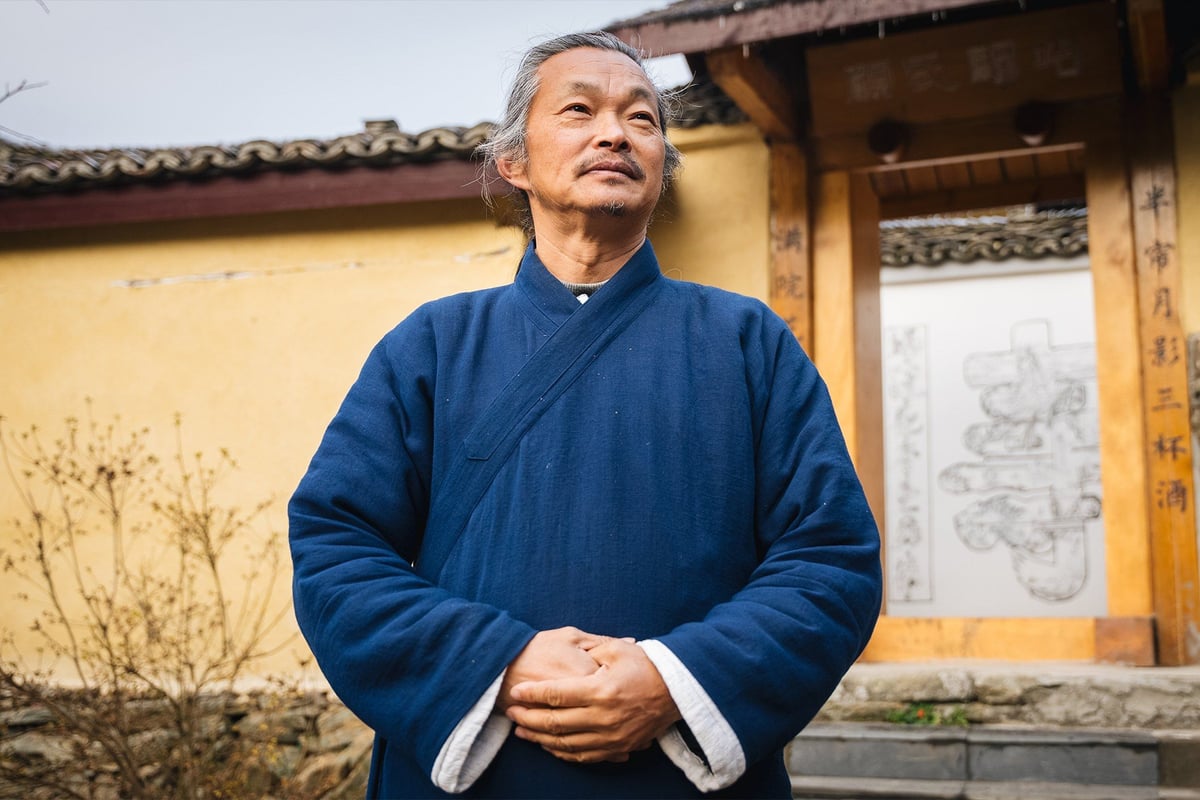
When you feel ready for structured lessons, our Tai Chi course is there to take you further, step by step.
Resources for Continued Learning
Reading about Taoist principles and Tai Chi history can enrich your practice. Knowing where the movements come from and what they were designed to cultivate helps you practise with greater intention.
You might like to explore:
- Classic Taoist texts that explain the philosophy behind movement practices - browse our recommended reading list for ideas
- Beginner guides to the basic movements and how they developed
- The connection between Tai Chi and Taoist thought
Adapting Practice to Your Needs
One of Tai Chi's greatest strengths is how easily it adapts to individual circumstances. A free Tai Chi workout can be modified for physical limitations, limited space or personal goals.
Modifications for Different Abilities
| Situation | Adaptation | What it offers |
|---|---|---|
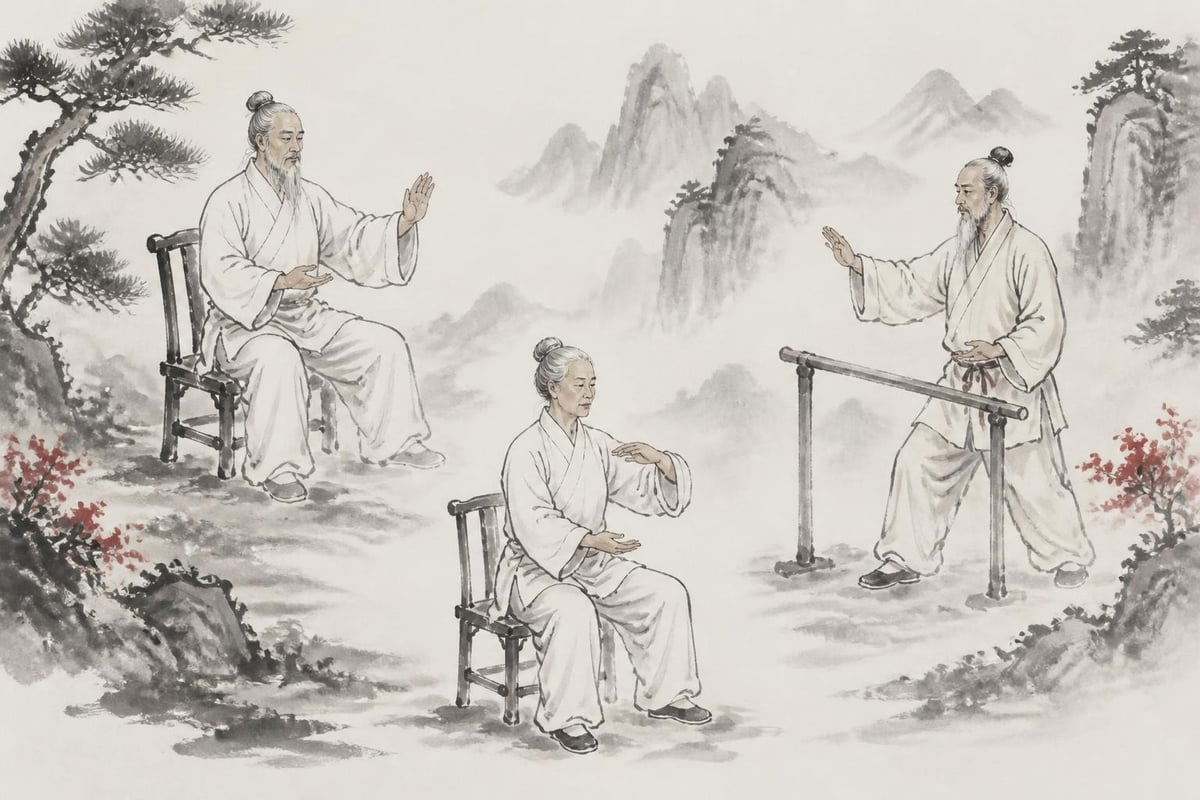
| Limited mobility | Practise upper body movements while seated | Keeps natural breathing and relaxed focus in your practice |
| Balance challenges | Rest a hand on a chair or wall during weight shifts | Helps you feel steadier and more confident |
| Low energy | Shorten practice to 10 minutes | Keeps the habit going without tiring you out |
| Joint pain | Reduce your range of motion and keep movement gentle | Keeps practice comfortable - check with your GP or physiotherapist first |
The principle is simple: do what you can, with what you have, where you are. Tai Chi meets you at your current capacity and grows with you.
Seasonal and Environmental Adjustments
Traditional Taoist thought recognises the influence of the seasons on how we feel, and your free Tai Chi workout can shift with these natural rhythms.
In winter, you might favour slow, grounding movements. In summer, you might practise earlier in the day and enjoy more flowing movements. When you practise outdoors, notice how different settings feel: the ground beneath your feet, the air around you and the quality of the light.
Integrating Tai Chi Into Daily Life
The nicest benefits often appear when Tai Chi principles move beyond formal practice into everyday activities. The awareness you build during a free Tai Chi workout can change how you walk, sit, breathe and respond to a busy day.
Practical Applications
- Walking: bring Tai Chi's relaxed posture and smooth weight shifting into everyday walking
- Standing in line: stand with relaxed shoulders and soft knees while you wait
- Breathing breaks: take a few slow, natural breaths during a busy moment
- Posture awareness: notice and gently adjust your alignment while sitting at a desk
- Mindful transitions: bring Tai Chi's unhurried quality to the moments between activities
This kind of integration lets your practice continue through the day, rather than staying confined to set sessions.
Building Community and Accountability
You can practise a free Tai Chi workout alone, but connecting with others who share your interest brings motivation, encouragement and fresh ideas. Community support helps you keep going, especially in the first weeks when a new habit still feels fragile.
Online communities offer global connection without needing a local class. In our Taoist Wellness Online community, you can swap ideas with fellow students from around the world and share what you notice in your practice.
Finding Practice Partners
Consider:
- Online practice groups that meet via video for shared sessions
- Local parks, where Tai Chi practitioners often gather
- Social media groups focused on Tai Chi and related practices
- Family or friends who might like to start together
Practising alongside others, even virtually, creates accountability and makes the experience more enjoyable.
Moving Forward with Your Practice
Starting a free Tai Chi workout opens the door to lifelong learning. Each session offers something new, whether that is a subtle shift in balance, a deeper sense of calm, or simply staying present amid the demands of life.
The path does not require perfection or dramatic changes. Small, consistent steps add up. Your practice will evolve as you do, sometimes deepening and sometimes simplifying, and it is always there to help you return to your centre.
Remember that Tai Chi is not about reaching a final destination, but about staying present along the way. Each movement is complete in itself, and each breath is a chance to begin again.
A free Tai Chi workout is an accessible way to begin a practice that people have enjoyed for centuries, and it asks only that you slow down and move with awareness. Whether you are looking for a calmer moment, steadier balance or simply a pause in a busy day, these gentle movements are a good place to start. If you would like to go further, you can explore courses in Tai Chi, Qi Gong and Taoist meditation with our teacher Master Gu at Taoist Wellness Online.
Related reading