Basic Tai Chi Movements: A Beginner's Guide for 2026
Sep 21, 2026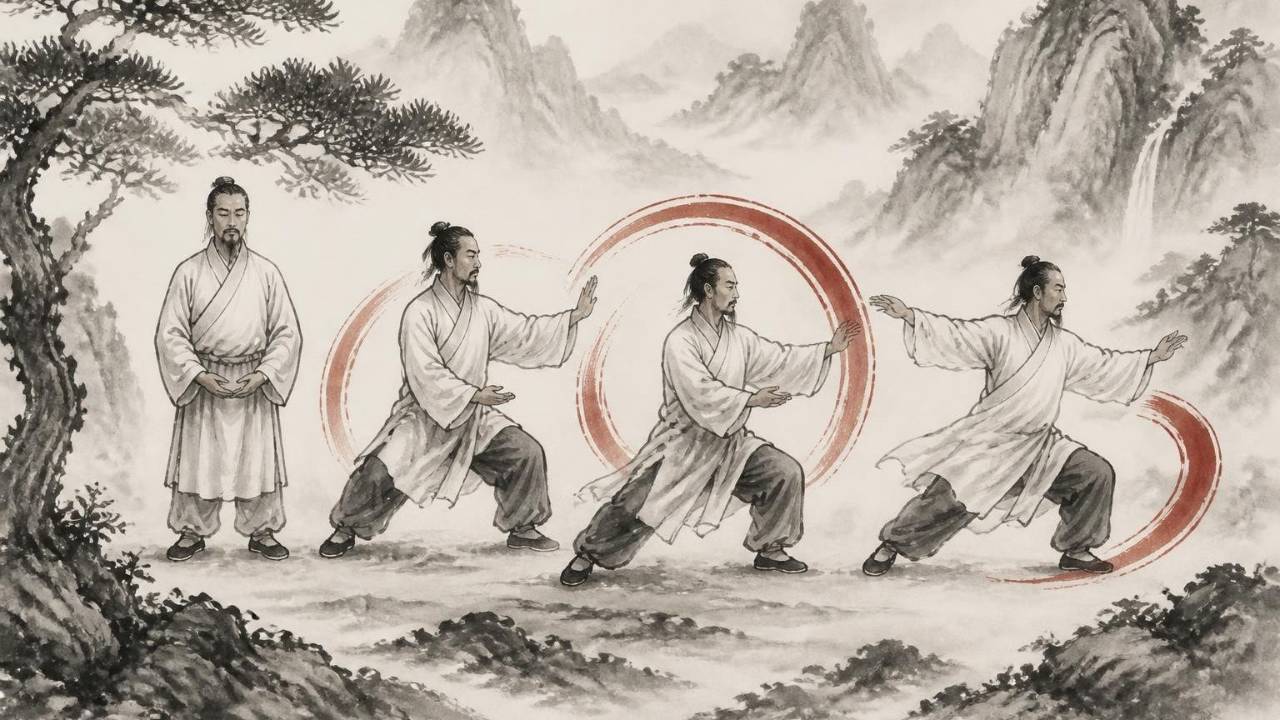
Learning basic tai chi movements opens a doorway to centuries of wisdom and wellness. These foundational patterns teach your body how to move with ease, build strength without strain, and cultivate a calm mind in the midst of daily chaos. Whether you're seeking better balance, reduced stress, or a gentle way to stay active as you age, understanding these core movements gives you practical tools you can use anywhere, anytime. The beauty of tai chi lies in its accessibility - you don't need equipment, special clothing, or even much space to begin your practice.
Understanding the Foundation of Movement
Basic tai chi movements rest on principles that might seem simple at first glance, yet contain depths worth exploring over a lifetime. Every motion begins from your centre, flows outward with intention, and returns home again. This isn't just philosophy - it's a practical approach to moving that protects your joints, strengthens your core, and teaches your nervous system new patterns of ease.
The Importance of Root and Posture
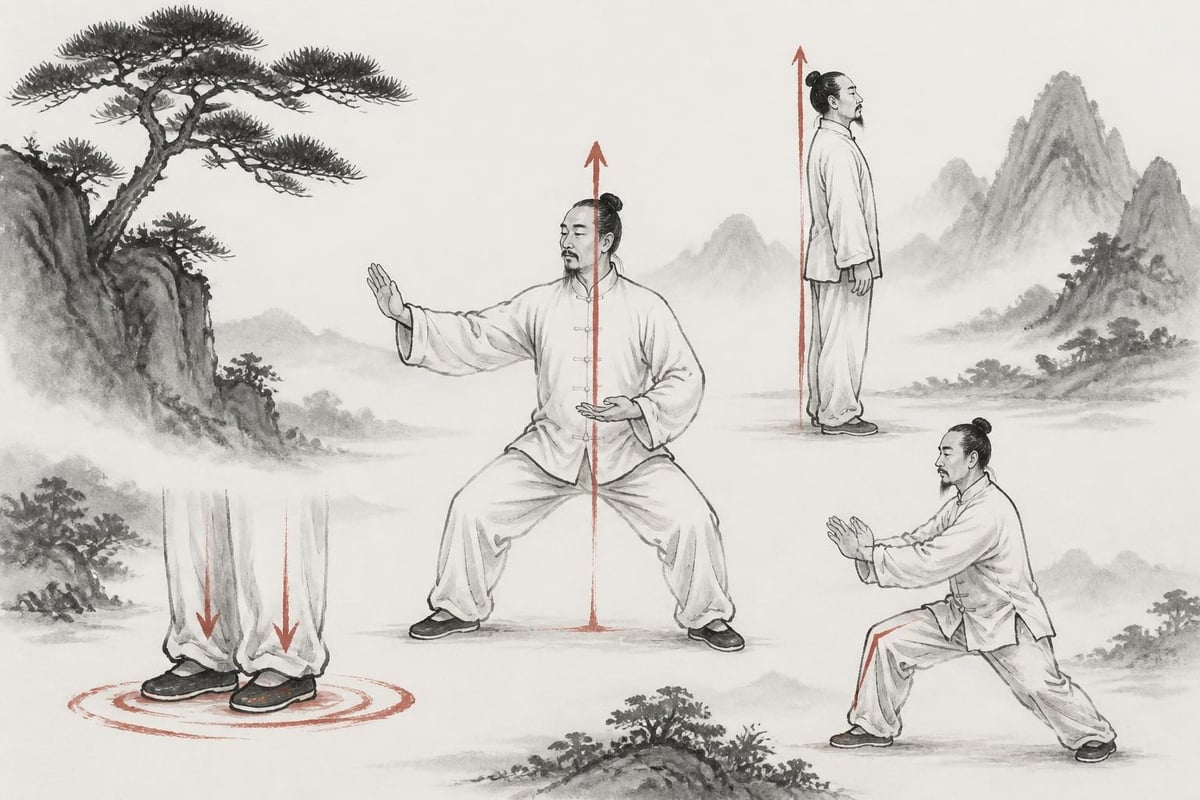
Your stance determines everything that follows. In Wudang tai chi, we emphasise a relaxed upright posture that allows energy to flow freely while keeping you grounded and stable.
Key elements of proper posture include:
- Feet shoulder-width apart with weight evenly distributed
- Knees soft and slightly bent, never locked
- Tailbone gently tucked to lengthen the lower spine
- Shoulders dropped away from ears
- Crown of the head lifting gently toward the sky
- Chin slightly tucked to lengthen the back of the neck
These adjustments might feel unfamiliar at first. Many of us carry tension in our shoulders or lock our knees without realising it. Our Tai Chi course gradually rewires these patterns, teaching your body a new baseline of relaxed alertness.
Essential Movement Patterns to Master
Basic tai chi movements build upon each other in a logical progression. Starting with weight shifts and expanding into circular motions and coordinated forms, each pattern teaches your body new capabilities. George walks through ten of these foundational movements in the follow-along video below.
Weight Shifting and the Empty-Full Principle
The concept of empty and full - substantial and insubstantial - runs through every tai chi movement. One leg becomes "full" (bearing weight) while the other becomes "empty" (light and ready to move). This constant flow between empty and full creates fluid motion and develops exceptional balance.
Start by standing in your basic posture. Slowly shift your weight to your right leg, feeling it become full and rooted while your left leg lightens. Your left toes stay on the ground, but you could easily lift that foot if needed. Pause. Then shift slowly back to centre and over to the left side.
This simple drill forms the foundation for every step, turn, and transition you'll ever make in tai chi.
The Cloud Hands Movement
Cloud Hands (or Wave Hands Like Clouds) is one of the most recognisable basic tai chi movements. It teaches lateral weight shifting, circular hand motions, and coordination between upper and lower body.
Step-by-step breakdown:
- Begin in a wide stance, knees soft, weight on your right leg
- Float your right hand up to shoulder height, palm facing you
- As your right hand circles down past your centre, shift your weight left
- Your left hand rises while the right descends
- Step your right foot in as you complete the weight shift
- Repeat on the other side, creating a continuous flow
The hands move like clouds drifting across the sky - circular, soft, and unhurried. Meanwhile, your lower body shifts your weight side to side in rhythm with your hands. This movement appears in nearly every tai chi form and develops whole-body coordination beautifully.
Brush Knee and Push
This movement combines stepping, arm circles, and gentle pushing motions that build leg strength while teaching defensive applications.
Begin with your weight on your left leg, right foot empty and slightly forward. Your right hand lifts to ear height while your left hand drops to your hip. Step forward with your right foot, heel touching first. As you shift your weight forward, your right hand pushes forward at chest height while your left hand sweeps down past your left knee (the "brush knee" motion).
The coordination takes practice. Your mind learns to direct multiple parts of your body simultaneously, each moving in harmony with the others.
| Movement Component | Action | Purpose |
|---|---|---|
| Stepping | Heel first, rolling through foot | Develops balance and mindful walking |
| Upper hand | Circular path to forward push | Coordinates arm and torso rotation |
| Lower hand | Sweeps past knee | Protects lower body and grounds energy |
| Weight shift | Gradual transfer from back to front | Builds leg strength and stability |
Breathing and Internal Awareness
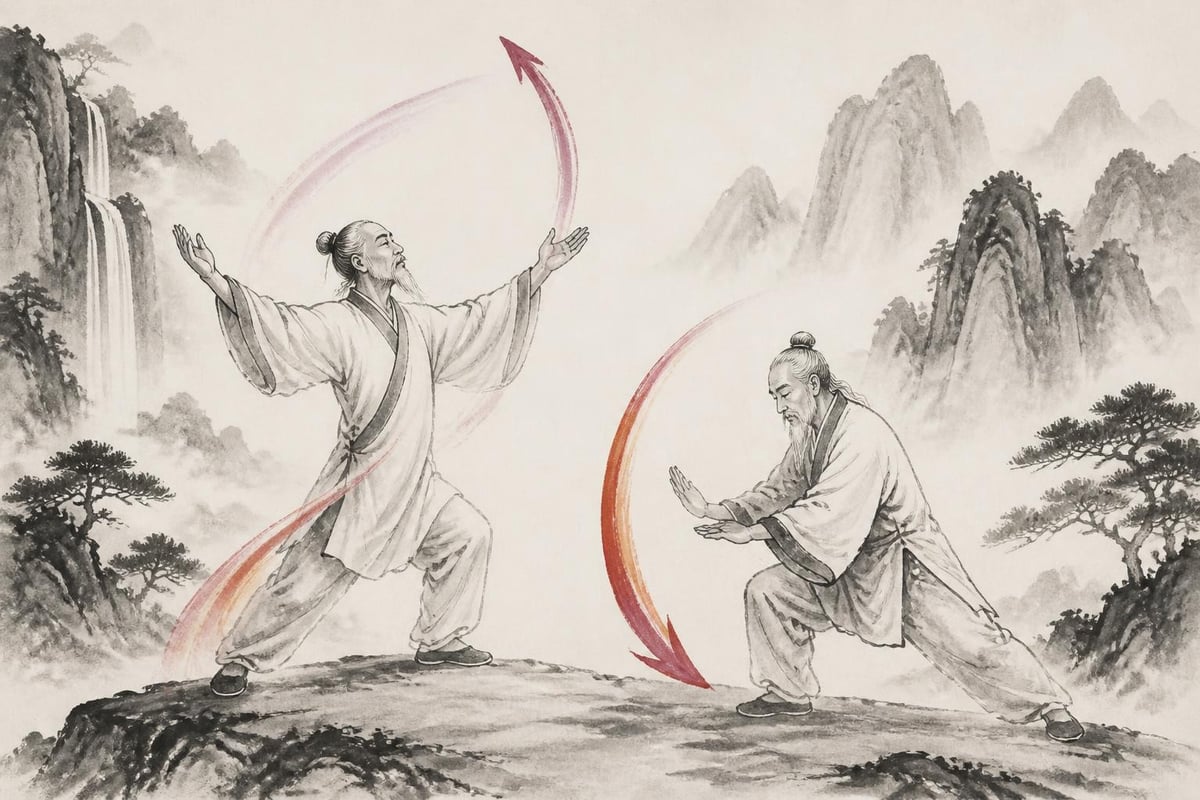
Basic tai chi movements become truly transformative when you connect them with breath and internal attention. The physical shapes matter, but the internal experience - where your mind goes, how you breathe, what you notice - determines the depth of benefit you receive.
Natural Breathing Coordination
Don't force your breath to match your movements when you're first learning. Let it flow naturally. As you become comfortable with the physical patterns, natural coordination emerges. Generally, opening movements (expanding, rising, or turning out) align with inhalation, while closing movements (contracting, lowering, or turning in) align with exhalation.
This happens organically when you relax and allow it. Forcing a breathing pattern creates tension and defeats the purpose of practice.
Following Your Awareness Through Space
As your hand moves through space, let your attention follow it. Feel the air against your palm. Notice the sensation of your shoulder joint rotating. Observe how your weight shifts affect your balance. This kind of mindful movement turns basic tai chi movements into a moving meditation that calms your nervous system and sharpens your focus.
Master Gu often emphasises that tai chi practice is as much about training your mind as your body. The slow, deliberate movements give you space to observe yourself without judgement, building a quality of awareness that extends far beyond your practice time.
Building Your Practice Routine
Consistency matters more than duration when you're learning basic tai chi movements. Fifteen minutes of daily practice creates better results than an hour once a week. Your body needs regular repetition to internalise new patterns, and your mind needs frequent reminders to stay present and attentive.
Structuring Your Session
A well-rounded practice session includes several components that work together to prepare your body, refine your skills, and integrate what you've learned.
Recommended practice structure:
- Warm-up (3-5 minutes): Gentle joint rotations, light stretching, standing meditation
- Foundation drills (5-7 minutes): Weight shifting, basic stances, isolated movements
- Movement practice (10-15 minutes): Working on specific forms or sequences
- Cool-down (2-3 minutes): Standing quietly, observing your breath and energy
This structure keeps your practice balanced and sustainable. Some days you might spend more time on foundation drills if you notice your stance needs attention. Other days you might dive deeper into movement practice when you feel particularly focused.
Common Mistakes to Avoid
Even with good instruction, certain patterns tend to appear in beginners. Knowing these common pitfalls helps you self-correct before habits form.
Watch for these tendencies:
- Rising up and down with each weight shift (keep your head level)
- Holding your breath during challenging movements (breathe naturally)
- Collapsing your chest or rounding your shoulders forward
- Moving your arms without engaging your centre
- Rushing through movements to "get them done"
If you're working with resources like our free course, pay attention to the details demonstrated. Small adjustments in your foundation create significant differences in how movements feel and what benefits they provide.
Progression and Long-Term Development
Basic tai chi movements aren't just beginner material that you master and leave behind. They remain central to your practice for years, revealing new depths as your understanding grows. A movement that felt awkward at first becomes smooth. Later, it becomes powerful. Eventually, it becomes subtle and refined.
Deepening Your Forms
The same movement you learned in week one will teach you something new in month six and year three. This isn't because the movement changed - you changed. Your body became stronger and more flexible. Your mind learned to focus more deeply. Your awareness expanded to notice subtler sensations.
This progression happens naturally when you practise regularly with patience and curiosity. Don't rush to learn more forms before you've really explored the ones you know. Depth matters more than breadth. Our Tai Martial Arts article explores how these basic movements connect to the wider forms tradition, if you'd like to see where this progression eventually leads.
Connecting with Traditional Wisdom
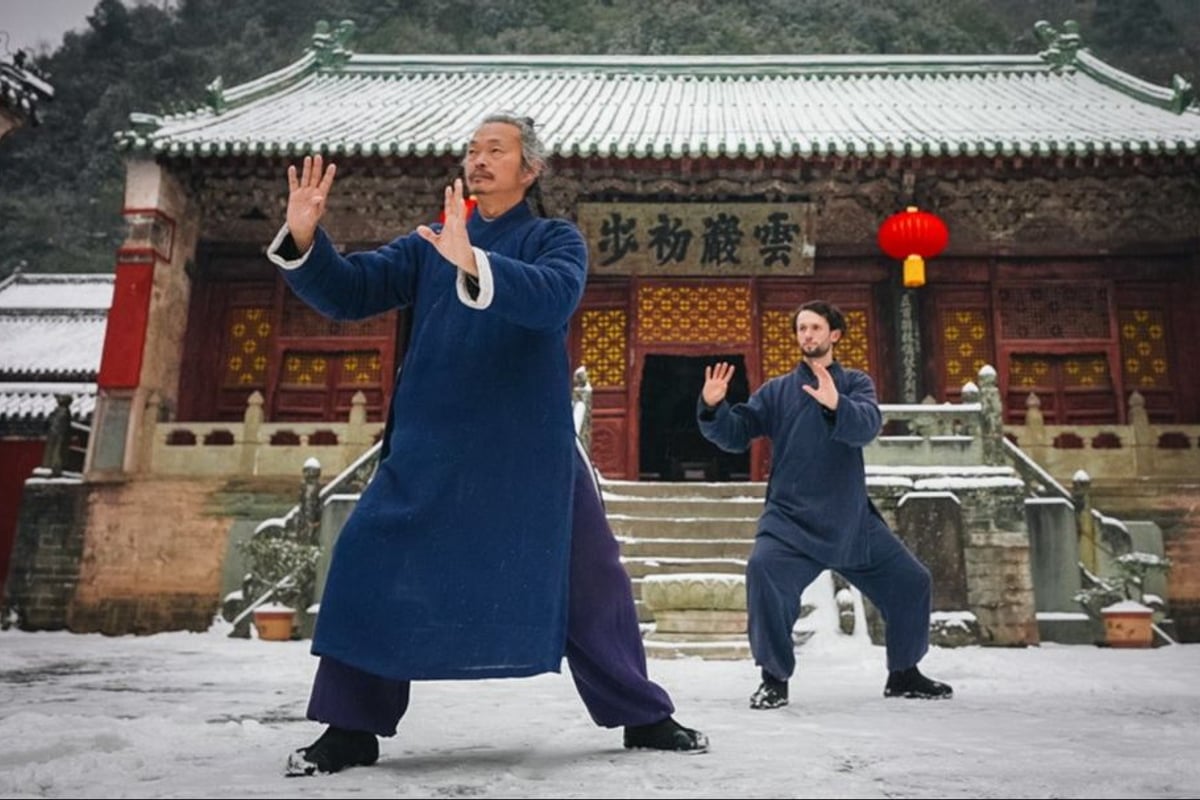
The Wudang tradition of tai chi carries knowledge passed down through generations of masters. When you learn basic tai chi movements within this lineage, you're not just learning exercise patterns - you're receiving teachings that have been tested and refined over centuries.
Our Taoist philosophy course underlying these movements offers frameworks for understanding not just tai chi, but life itself. Concepts like yielding to overcome, finding stillness within motion, and cultivating internal strength through external softness all manifest in the physical practice.
Adapting Movements for Your Needs
One of tai chi's greatest strengths is its adaptability. Basic tai chi movements can be modified for different abilities, fitness levels, and health conditions without losing their essential character or benefits. As with any new movement practice, it's worth checking with your healthcare provider first, particularly if you have existing joint or balance concerns.
Modifications for Balance Concerns
If balance is challenging, practise near a wall or sturdy chair. You can lightly touch the support when needed without compromising the movement's value. As your balance improves, you'll naturally rely on the support less.
Some practitioners begin seated, learning the upper body movements and breathing coordination before adding the complexity of weight shifting and stepping. This approach works beautifully and still provides significant benefits.
Adjusting for Joint Limitations
Knee or hip issues might limit how deeply you can bend or how wide you step. Work within your comfortable range. Tai chi principles apply at any range of motion - you can practise "small frame" versions of every movement that are just as valid as large, sweeping versions.
The key is maintaining the quality of movement within whatever range works for your body. Smooth, coordinated, mindful motion at a smaller scale beats forced, uncomfortable motion at a larger scale every time. Our 7 Essential Forms of Tai Chi covers how different traditional styles approach this kind of adaptability.
| Adaptation Need | Modification Strategy | Principle Preserved |
|---|---|---|
| Limited balance | Use wall support or reduce step width | Weight shifting and coordination |
| Knee sensitivity | Smaller stance, less knee bend | Rooting and alignment |
| Shoulder issues | Reduce arm height, smaller circles | Circular motion and flow |
| Limited standing | Seated practice | Upper body coordination and breath |
Integration with Other Practices
Basic tai chi movements complement and enhance other wellness practices you might already be doing. The body awareness you develop transfers to how you walk, sit, stand, and move through your day.
Tai Chi and Qi Gong
While tai chi and our Qi Gong course are distinct practices, they share common roots and work beautifully together. Qi gong often focuses more on stationary postures and cultivating internal energy, while tai chi emphasises flowing movement patterns. Many practitioners incorporate both into their routine, using qi gong for deeper energy work and tai chi for dynamic movement practice.
Walking Practice
The principles you learn in basic tai chi movements transform ordinary walking into a practice. Tai chi walking applies the same mindful weight shifting, upright posture, and internal awareness to everyday locomotion. Your daily walk becomes an extension of your formal practice.
The Role of Guidance and Community
While you can learn basic tai chi movements from books and videos, guidance from an experienced teacher accelerates your progress and helps you avoid developing habits that limit your advancement. Our community aspect of practice also provides motivation, support, and the joy of shared exploration.
What to Look for in Instruction
Quality instruction emphasises principles over rote memorisation of sequences. A good teacher helps you understand why movements are performed in specific ways, not just how to mimic external shapes. In the Wudang tradition, this transmission of understanding from teacher to student ensures the practice remains alive and relevant rather than becoming empty ritual.
Look for instruction that meets you where you are while also challenging you to grow. The balance between accessibility and depth determines whether you'll stay engaged with your practice over time.
Learning from Authentic Lineages
Authentic lineage matters because it preserves the complete teaching - not just the physical movements, but the internal principles, philosophical foundations, and energetic aspects that make tai chi a complete system of development. Wudang tai chi, taught by masters who received the tradition directly from their teachers in an unbroken line, offers this complete transmission.
When you learn from authentic sources, you gain access to knowledge that might not appear in popular presentations of tai chi but makes all the difference in your experience and results.
Basic tai chi movements offer a practical, accessible path to better balance, reduced stress, and improved physical capability at any age. These foundational patterns become reliable tools for wellness when practised with patience and attention. Whether you're just beginning or ready to deepen your existing practice, Taoist Wellness Online provides authentic Wudang instruction from Master Gu, along with a supportive community and comprehensive resources to guide your journey. Start exploring these transformative practices today and discover what tai chi can bring to your life.