Power Tai Chi: Ancient Practice Meets Modern Vitality
Aug 11, 2026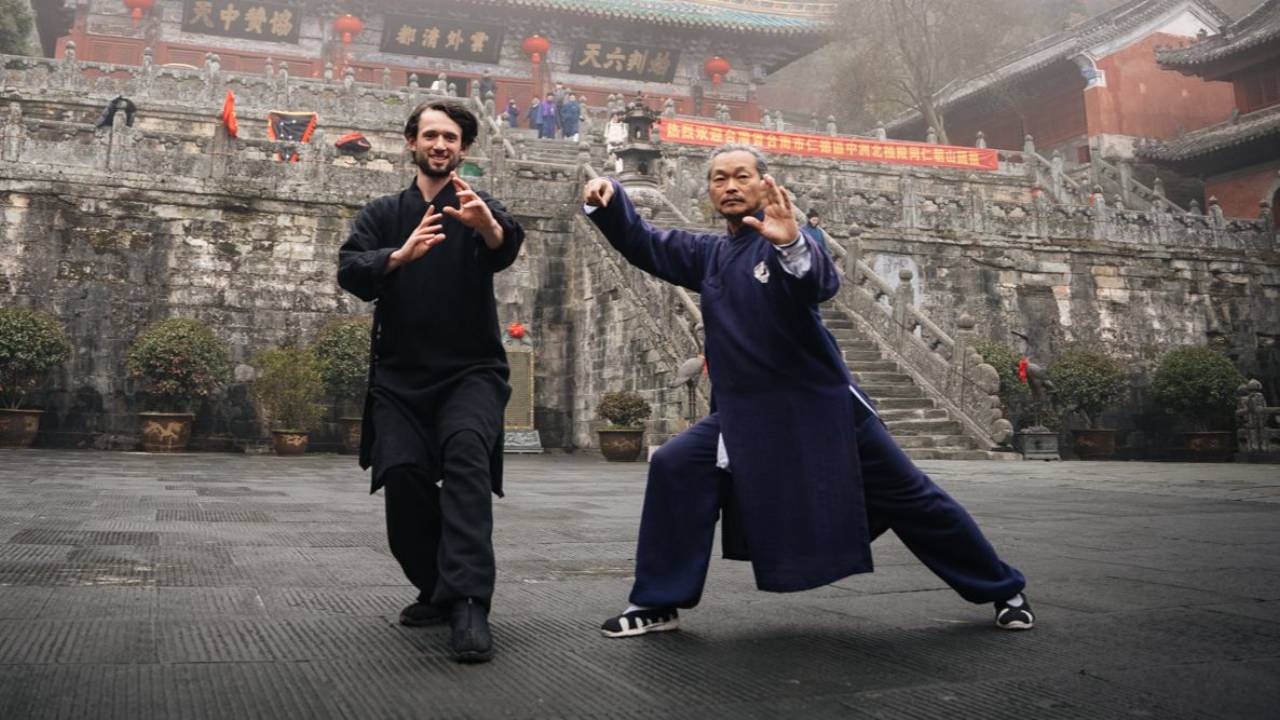
When you hear "tai chi," you might picture gentle movements in the park, but there's a powerful dimension to this ancient practice that goes far beyond what most people experience. Power tai chi represents the full expression of Wudang tradition, where soft meets strong, where relaxation generates force, and where mindful movement builds remarkable physical and mental resilience. This isn't about adding aggression to graceful forms. Instead, it's about awakening the complete potential that's always been there, hidden within the slow, deliberate practice you may already know.
Understanding the Foundation of Power Tai Chi
Power tai chi emerges from the authentic Wudang lineage, where martial applications and health benefits have never been separated. The word "power" doesn't mean tension or force in the conventional sense. Rather, it describes the cultivation of jin, the coordinated whole-body strength that flows from deep relaxation and proper alignment.
Traditional Wudang forms contain explosive movements called fa jin, where energy releases suddenly and completely. These aren't random additions but integral parts of the curriculum that demonstrate how stored potential becomes kinetic expression. When you practise correctly, even the slowest movements develop this capacity.
The Three Pillars of Power Development
Building authentic power through tai chi requires understanding three essential elements:
- Root and structure: Your foundation determines everything, from stability to the ability to generate force
- Internal energy circulation: Qi flow through the meridians creates the energetic foundation for physical power
- Mental focus and intention: Yi (intention) directs and multiplies the effectiveness of every movement
These pillars work together, not separately. A strong stance without energy circulation feels rigid. Flowing energy without proper structure dissipates uselessly. Mental clarity ties everything together, transforming simple movements into powerful practice.
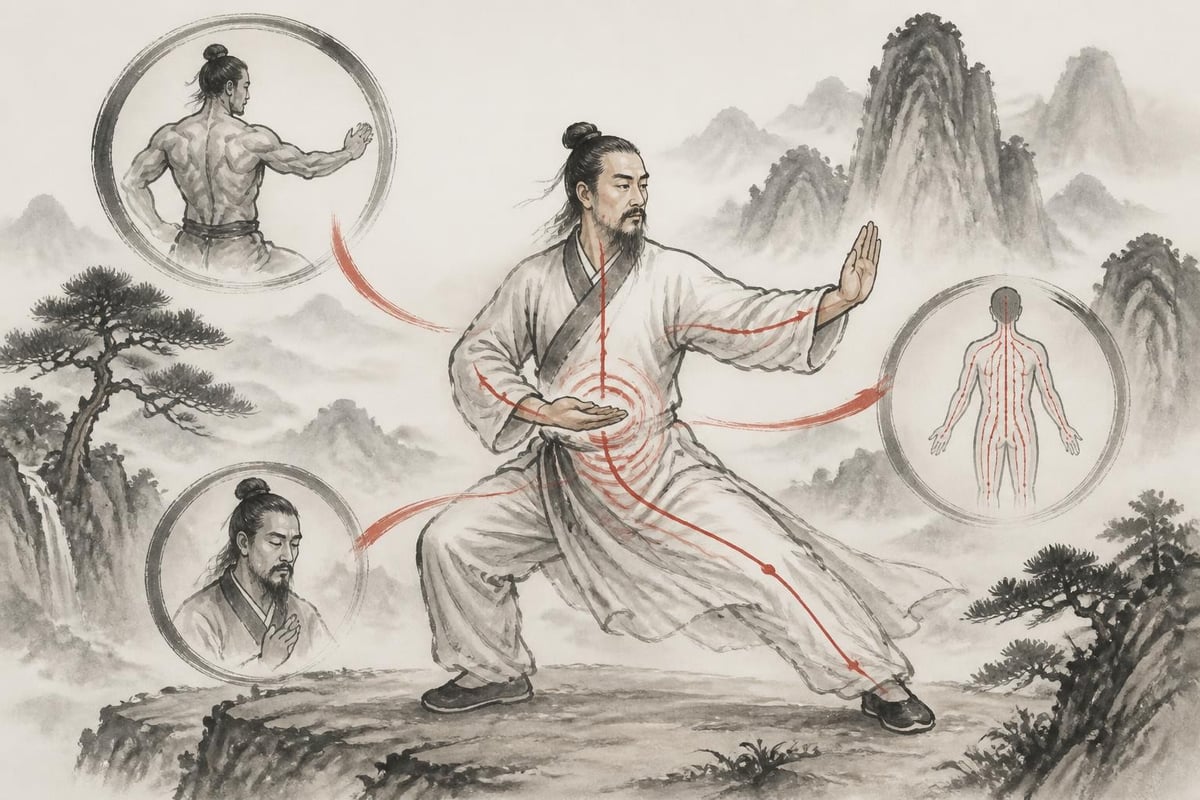
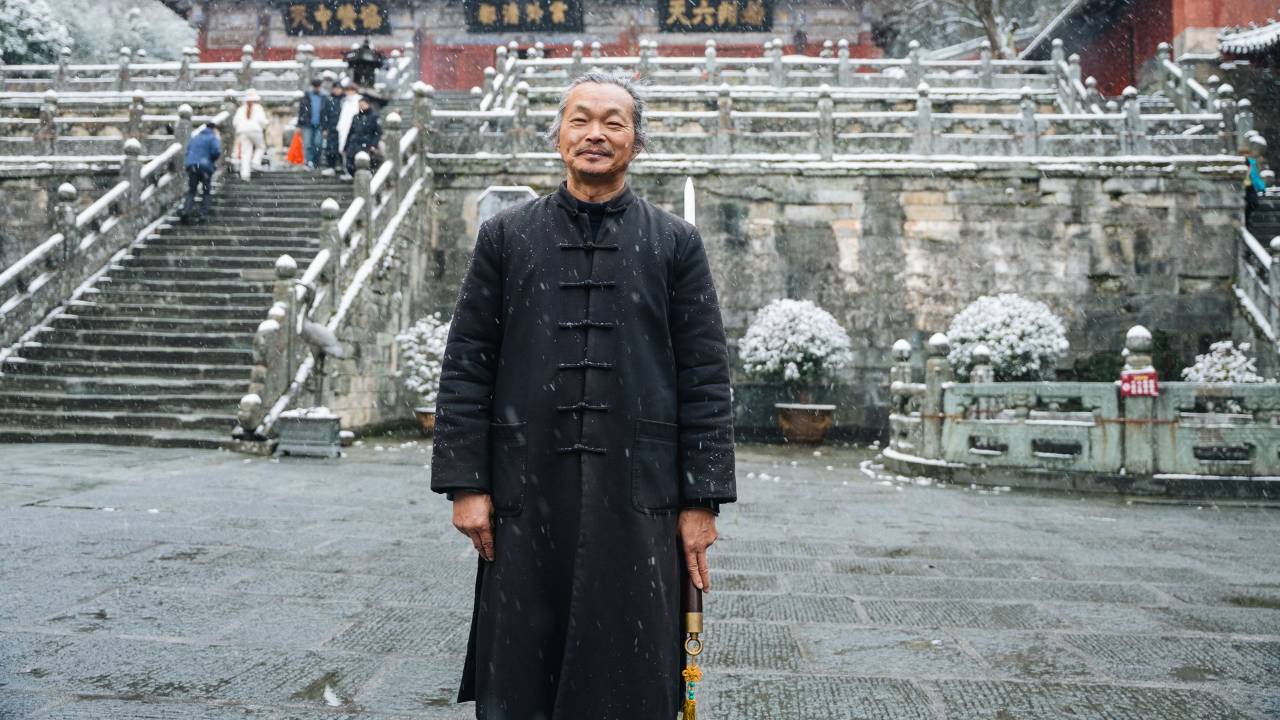
The mechanics differ significantly from external strength training. Where conventional exercise builds isolated muscle groups, power tai chi develops integrated chains of movement that engage your entire body as one coordinated unit. This explains why practitioners can generate surprising force without obvious muscular tension. Master Gu demonstrates this principle beautifully in the short flow below, showing how gentleness itself can be the source of real power.
Physical Benefits That Go Beyond Flexibility
Most discussions about tai chi health benefits focus on balance and stress reduction, which are certainly valuable. But power tai chi offers something more for those seeking tangible physical development alongside mental clarity.
Strength and Stability Metrics
| Benefit Category | Traditional Tai Chi | Power Tai Chi |
|---|---|---|
| Lower body strength | Moderate improvement | Significant development |
| Core stability | Good foundation | Advanced integration |
| Bone density | Maintained | Actively increased |
| Explosive power | Minimal | Deliberately cultivated |
Research continues to validate what practitioners have experienced for centuries. Studies examining the physical impacts of tai chi practice reveal improvements in balance, mobility, and overall functional fitness that extend well into older age. The deliberate cultivation of power adds another dimension to these benefits.
Your legs become remarkably strong through the low stances and weight-shifting inherent in Wudang forms. Unlike static strength training, this development comes with enhanced proprioception and the ability to move quickly and efficiently when needed. You're not just getting stronger; you're becoming more capable in practical, real-world ways.
Building Martial Readiness
Power tai chi maintains its martial roots without requiring you to become a fighter. Our article on Martial Art Tai Chi: Ancient Practice for Modern Life explores these self-defence applications in depth, teaching your body how to:
- Respond instinctively to external forces
- Redirect energy rather than opposing it directly
- Generate power from minimal preparation
- Maintain calm awareness under pressure
- Recover quickly from imbalance
These skills translate directly into daily life. Better reflexes help you catch yourself when you slip. Understanding leverage makes moving heavy objects easier. The ability to stay calm under pressure serves you in countless situations beyond physical confrontation.
Energy Cultivation and Internal Power
The "power" in power tai chi fundamentally comes from qi development. This isn't mystical thinking but a practical system for optimising how your body generates and uses energy. When your qi flows freely and abundantly, you feel it as vitality, warmth, and an almost effortless ability to move with strength.
The Qi Development Process
Building internal power follows a natural progression that can't be rushed:
- Months 1-3: Developing awareness of qi sensations and basic circulation
- Months 4-9: Strengthening the flow through deliberate practice and breathing coordination
- Months 10-18: Integrating qi circulation with physical movements seamlessly
- Beyond 18 months: Refining control and exploring advanced applications
Our Tai Chi course emphasises this progressive development, ensuring each stage builds solidly on what came before. Rushing through fundamentals only creates gaps that must be filled later.
When your practice matures, you notice changes in daily energy levels. You wake more refreshed. Physical tasks feel lighter. Mental clarity improves. These aren't separate from the martial power development; they're the same process expressing in different areas of your life.
Breath and Movement Synchronisation
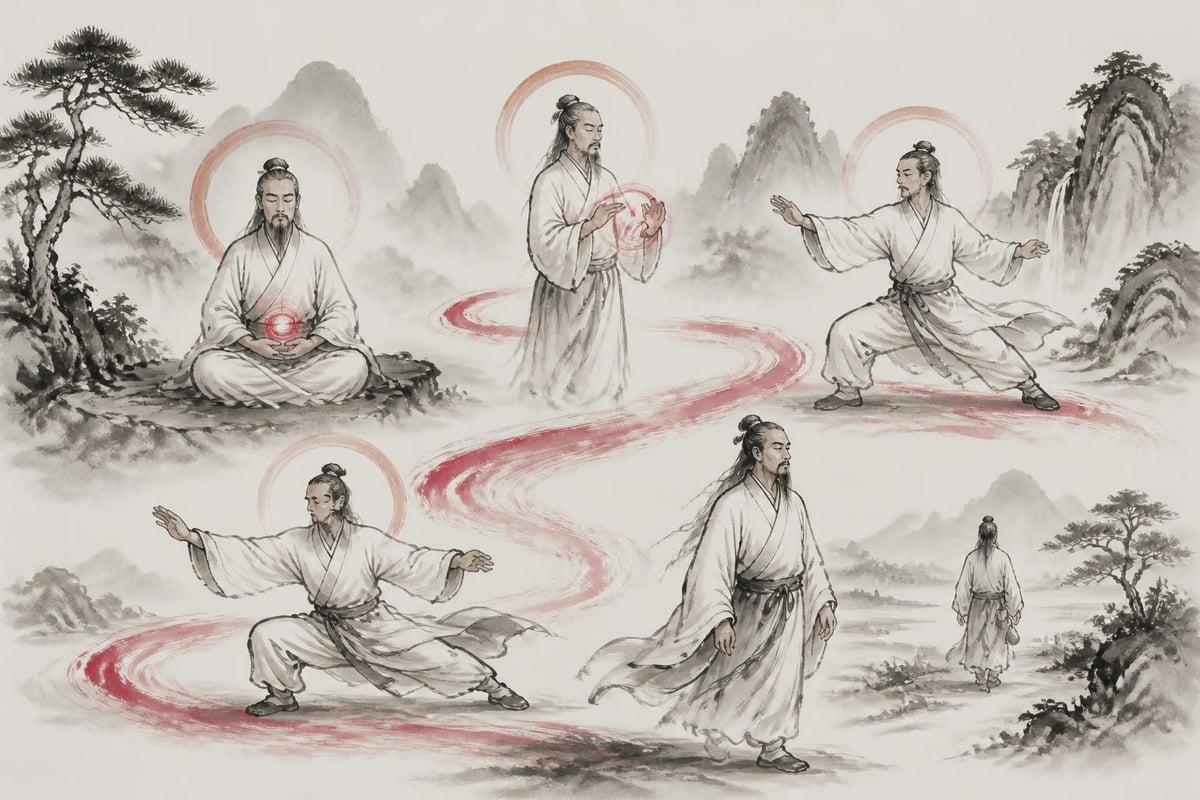
Power generation requires perfect coordination between breath, intention, and physical action. In Wudang practice, breathing patterns aren't arbitrary:
Inhalation typically accompanies gathering movements, drawing energy inward and upward. Your body opens, your mind becomes receptive, and qi collects in the lower dan tian.
Exhalation powers releasing movements, whether that's a gentle push or explosive strike. Energy flows outward from your centre, multiplied by proper structure and timing.
This synchronisation becomes second nature with consistent practice. Eventually, you don't think about breathing patterns; your body naturally coordinates everything as one integrated system.
Mental and Emotional Dimensions of Power
True power isn't just physical capacity. The most formidable aspect of power tai chi lies in the mental cultivation that accompanies physical development. This is where ancient wisdom meets modern needs most directly.
Developing Unshakeable Calm
Power tai chi training systematically builds your ability to remain centred regardless of external circumstances. The practice itself creates challenging situations in a safe context:
- Maintaining perfect form while muscles burn from low stances
- Staying relaxed while generating explosive movements
- Keeping breathing steady through demanding sequences
- Remaining mentally focused through long practice sessions
Each challenge overcome strengthens your mental resilience. This transfers remarkably well to everyday stress. The same calm you develop holding a low horse stance serves you in difficult conversations, work pressure, or personal challenges.
Studies examining tai chi's psychological impacts reveal significant benefits for mental health and cognitive function, confirming what practitioners have known experientially.
Intention and Manifestation
In Taoist practice, yi (intention) shapes reality. This isn't wishful thinking but a recognition that focused mental energy directs physical outcomes. When practising power tai chi, your intention determines:
- Which muscles engage and how
- Where energy flows in your body
- How force generates and releases
- What you develop over time
Learning to direct intention precisely gives you a tool applicable far beyond tai chi practice. You become more effective in everything you do because you've trained your mind to focus completely on the task at hand.
Integrating Power Tai Chi Into Modern Life
The beauty of this practice lies in its adaptability. You don't need special equipment, a large space, or hours of daily practice to experience meaningful benefits. Even 15-20 minutes of focused training yields results when approached correctly.
Daily Practice Framework
| Time Available | Focus Area | Expected Outcomes |
|---|---|---|
| 10-15 minutes | Basic forms and standing meditation | Maintained skills, stress relief |
| 20-30 minutes | Full form practice with qi gong | Steady improvement, energy boost |
| 45-60 minutes | Forms, applications, meditation | Significant development, deep practice |
| 90+ minutes | Comprehensive training session | Advanced refinement, peak states |
Starting small and building gradually works better than ambitious schedules you can't maintain. Our free Taoist course offers an excellent entry point for establishing sustainable practice rhythms that fit your life, covering Tai Chi, Qi Gong, Meditation, and Taoist Wisdom.
Consistency matters more than duration. Fifteen minutes daily builds far more than sporadic hour-long sessions. Your body learns through repetition, your energy develops through regular cultivation, and your mind gains stability through habitual practice.
Complementary Practices
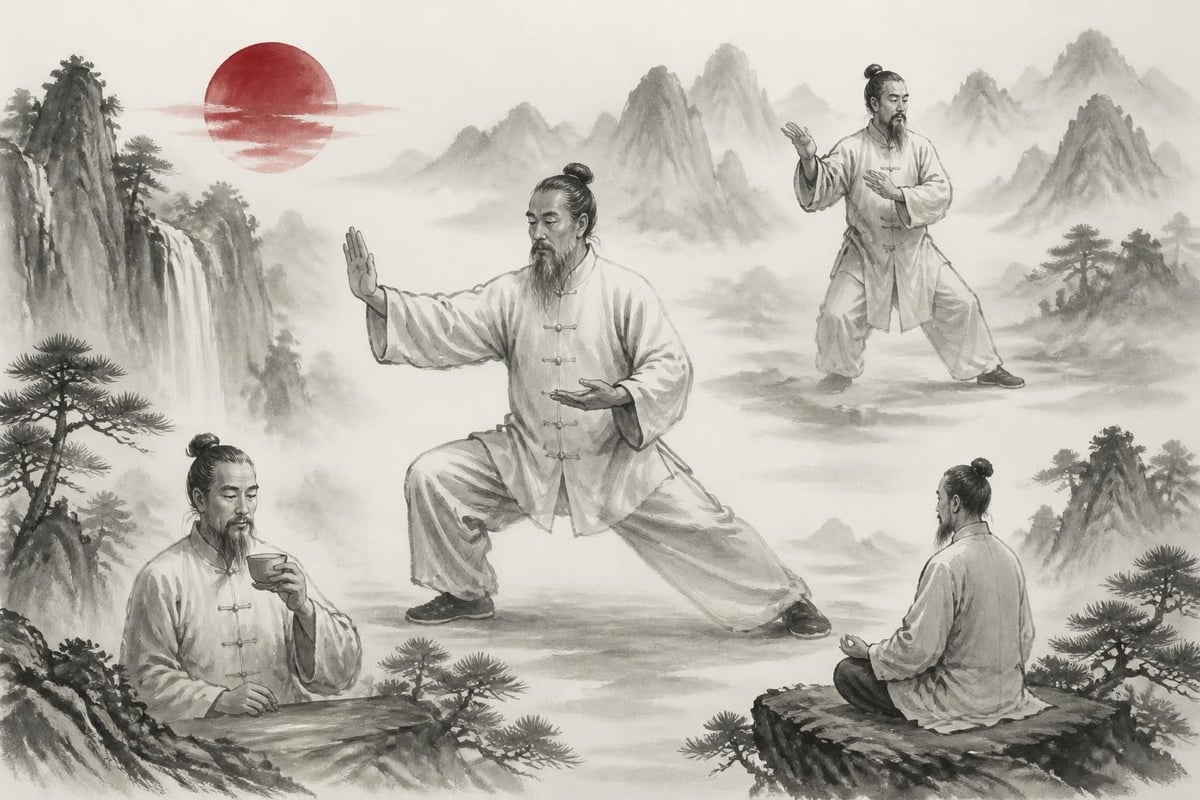
Power tai chi exists within a larger ecosystem of Taoist wellness practices. Combining it with complementary methods accelerates development:
- Qi gong for targeted energy cultivation and healing specific issues
- Standing meditation for building root, structure, and mental stillness
- Taoist philosophy for understanding the principles that make practice effective
- Meditation for developing the mental clarity that powers everything else
Each practice strengthens the others. Your meditation deepens your tai chi. Your tai chi makes qi gong more effective. Your philosophical understanding informs how you practise everything. This integrated approach, preserved in authentic Wudang teaching from our Master Gu, produces results far beyond what isolated methods can achieve.
Common Misconceptions and Practical Realities
Despite growing awareness, several misunderstandings about power tai chi persist. Clearing these up helps you approach practice with realistic expectations and appropriate methods.
Myth: Power Equals Speed
Many beginners assume that powerful tai chi means fast movements. Actually, the slowest practice often builds the most usable power. Moving slowly with perfect form, complete relaxation, and full awareness develops strength that explosive training alone never achieves.
Fast movements have their place, particularly in fa jin training. But the foundation always comes from slow, deliberate practice where you can feel everything happening in your body.
Myth: You Need Youth or Fitness
Power tai chi remains accessible regardless of your starting point. The practice adapts to your current capacity while systematically expanding what you can do. A 70-year-old beginner can develop genuine power appropriate to their body, just as a 30-year-old athlete can.
Age and fitness affect your starting point, not your potential for growth. The principles work the same for everyone because they're based on natural body mechanics and energy cultivation, not athletic performance.
Reality: Progress Requires Guidance
While tai chi appears simple externally, subtle details make enormous differences in results. Proper instruction helps you:
- Avoid developing habits that limit progress
- Understand corrections quickly instead of struggling alone
- Learn the energetic dimensions that books can't convey
- Stay motivated through inevitable plateaus
Taoist Wellness Online connects you with Master Gu's authentic Wudang teaching, ensuring your practice develops correctly from the beginning. Having access to someone who embodies the tradition and can guide your specific journey makes the difference between dabbling and genuine development.
The Science Behind the Practice
Modern research increasingly validates traditional Taoist understanding about how power tai chi affects body and mind. While science uses different language, the findings align remarkably well with what practitioners have known for centuries.
Neurological Benefits
Tai chi practice produces measurable changes in brain structure and function. Regular practitioners show:
- Enhanced connectivity between brain regions governing movement and cognition
- Improved neuroplasticity allowing better learning and adaptation
- Increased grey matter volume in areas associated with memory and attention
- Better balance between sympathetic and parasympathetic nervous systems
These changes explain why power tai chi sharpens mental function while building physical capacity. You're literally rewiring your nervous system for better performance in all areas.
Cardiovascular and Metabolic Effects
Despite appearing gentle, power tai chi provides substantial cardiovascular benefits. The continuous movement, coordinated breathing, and mental focus create a unique stimulus that:
- Improves heart rate variability, indicating better stress resilience
- Enhances circulation without the joint stress of high-impact exercise
- Supports healthy blood pressure regulation
- Improves metabolic function and body composition
Research on tai chi's cardiovascular impacts continues expanding our understanding of how this practice supports whole-system health. The power development aspect adds metabolic demand that amplifies these benefits beyond basic tai chi practice.
Advanced Applications and Continued Growth
Power tai chi offers virtually unlimited depth. No matter how long you practise, new dimensions emerge. This keeps the journey engaging while ensuring you're always developing capacity rather than simply maintaining it.
Exploring Martial Applications
Understanding how movements apply in self-defence situations deepens your practice dramatically. Even if you never use these skills combatively, knowing the applications:
- Sharpens your form by giving context to every detail
- Develops better body awareness and control
- Builds confidence that shows in how you carry yourself
- Makes practice more engaging through practical relevance
The martial dimension isn't separate from health benefits. The same structure that makes a technique effective martially also maximises its qi cultivation and physical development potential. Our article on Tai Chi Chuan: Ancient Practice for Modern Wellness traces this evolution from martial application to health cultivation in more depth.
Teaching and Sharing
As your practice matures, sharing with others becomes both possible and deeply rewarding. Teaching forces you to understand principles more completely and articulate what you've learned through experience. Many practitioners find this next stage of development through our community, where exchanging insights and supporting others enriches everyone's journey.
You don't need to master everything before offering guidance to beginners. Often, someone just a few steps ahead can relate to current struggles in ways that help others breakthrough where they're stuck.
Finding Your Path in Power Tai Chi
Every practitioner's journey looks different because we each bring unique bodies, histories, and goals to the practice. Power tai chi accommodates this diversity while maintaining the essential principles that make it effective.
Starting Points for Different Goals
If you seek physical strength and vitality: Focus on stance work, structural alignment, and the physical mechanics of power generation. Build gradually, measuring progress through objective improvements in stability and capability.
If you seek healing and balance: Emphasise the qi cultivation aspects, gentler forms, and the meditative dimensions. Power develops naturally as your energy strengthens, without forcing physical intensity.
If you seek martial skill: Study applications seriously, practise with partners when possible, and explore the explosive movements that demonstrate complete integration of principles.
If you seek spiritual development: Approach power tai chi as moving meditation where physical practice serves inner transformation. The power you develop becomes a foundation for deeper spiritual work.
All these paths converge because authentic practice develops you as a complete person. Your specific emphasis determines which aspects develop fastest, but everything comes together over time.
Power tai chi offers a complete path for developing strength, vitality, and resilience that serves you throughout life. By honouring both the martial and meditative dimensions of authentic Wudang practice, you cultivate a quality of power that enhances every area of your life without sacrificing the peace and balance that make life worth living. Taoist Wellness Online provides the authentic guidance, comprehensive curriculum, and supportive community you need to explore this transformative practice fully, guided by Master Gu, a 15th-generation San Feng Pai Wudang Taoist Master with over 25 years of teaching experience.