Martial Art Tai Chi: Ancient Practice for Modern Life
Jun 27, 2026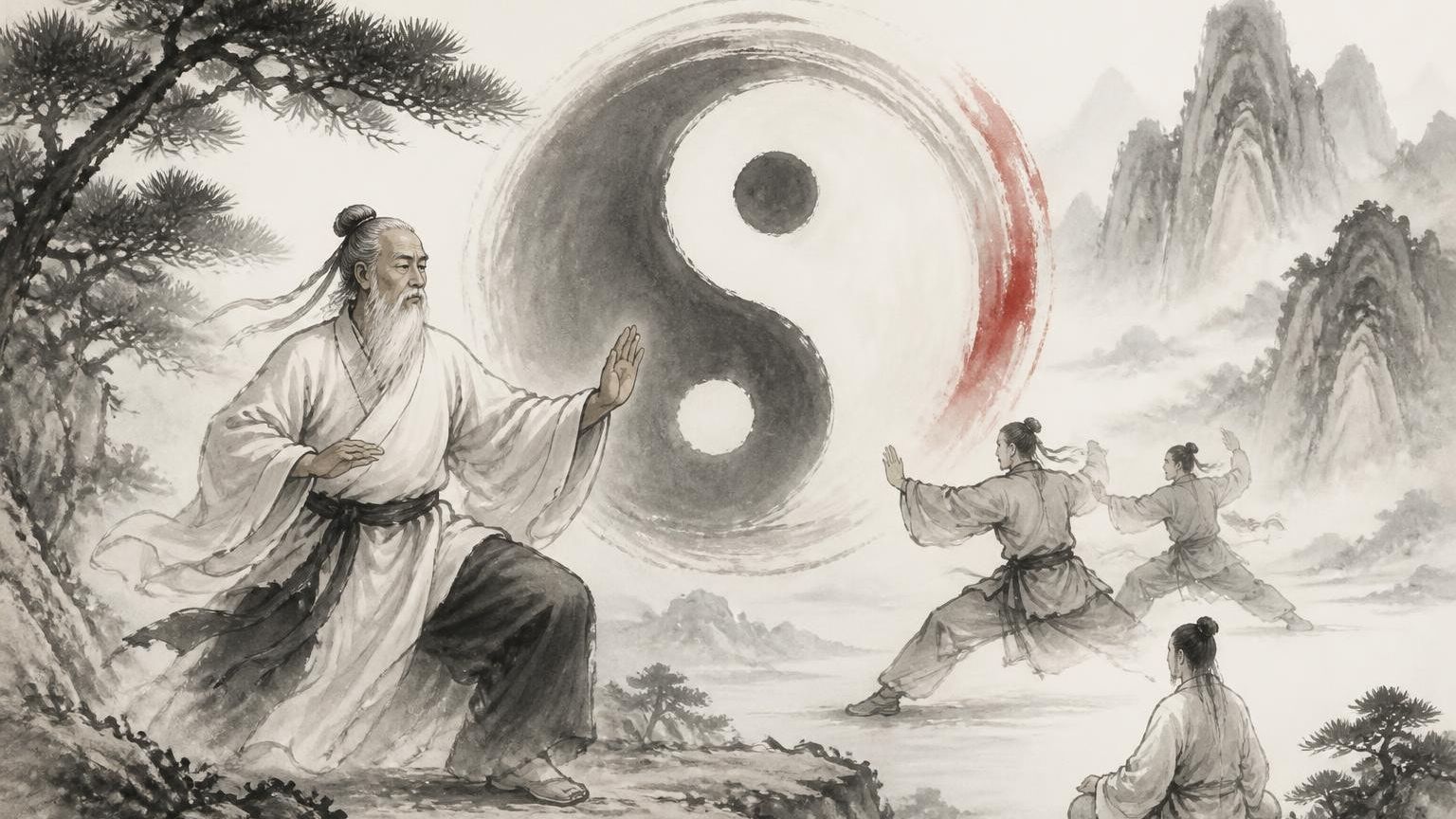
Martial art Tai Chi is one of the most refined approaches to physical, mental, and internal development. Often misunderstood as slow-motion exercise, Tai Chi is rooted in martial principles that train balance, sensitivity, timing, relaxation, and whole-body coordination.
In modern life, most people do not come to Tai Chi because they want to fight. They come because they want to feel steadier, calmer, stronger, and more connected to themselves. Yet the martial roots of Tai Chi are part of what make the practice so powerful. When you understand how softness, rooting, yielding, and awareness work in the body, you begin to understand why Tai Chi has remained relevant for centuries.
The Martial Foundation of Tai Chi
Martial art Tai Chi developed in China as an internal martial art. Unlike external martial arts that often emphasise muscular strength, speed, and direct force, Tai Chi trains a different kind of power: one based on alignment, timing, relaxation, sensitivity, and the ability to respond without unnecessary tension.
The martial applications live within the movements. A gesture that appears gentle or meditative may contain defensive principles, redirection, stepping, striking, locking, or throwing applications. These layers are not always obvious at first glance, which is why Tai Chi is so often mistaken for a purely therapeutic practice.
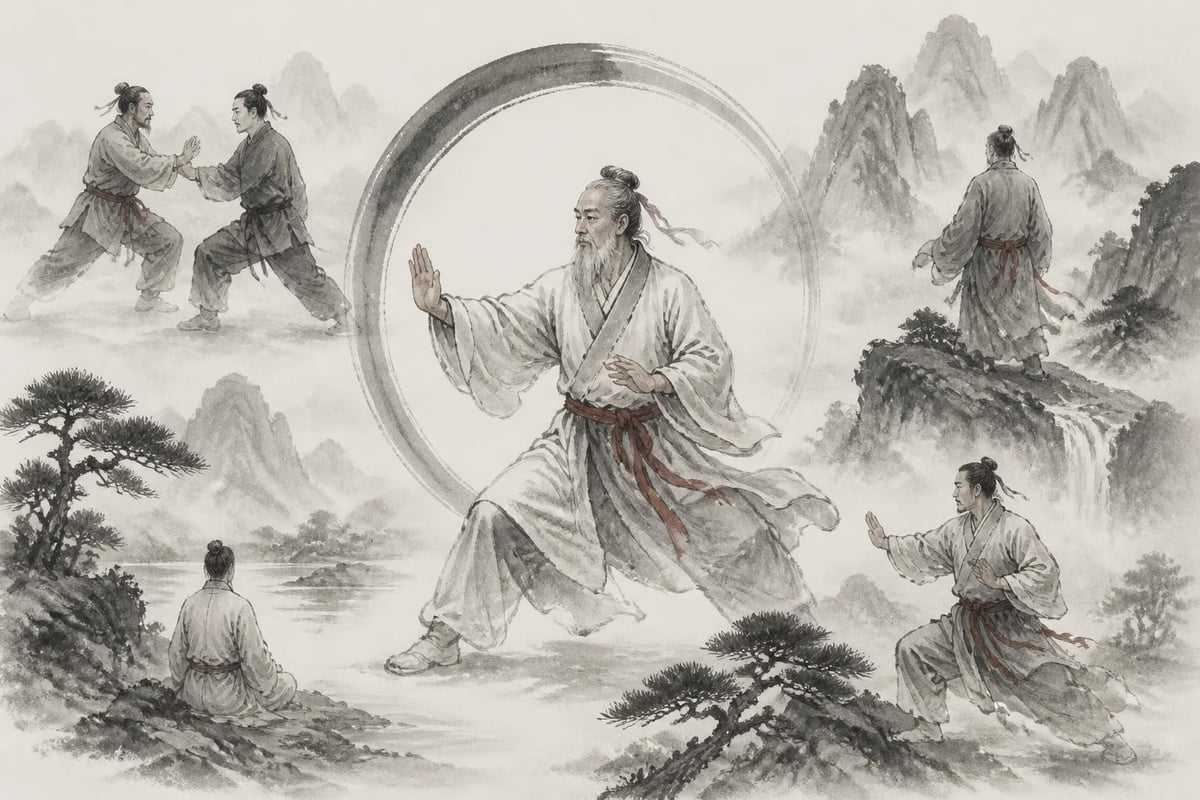
Push hands practice reveals this deeper dimension. Through partner work, practitioners learn how to listen through contact, yield without collapsing, maintain their root, and respond to pressure with skill rather than force.
Combat Principles That Transform Daily Life
The martial wisdom of Tai Chi is not limited to physical self-defence. Its principles translate directly into the way we meet pressure, conflict, and change in everyday life.
- Yielding overcomes resistance — redirecting force rather than meeting it head-on
- Rooting provides stability — staying grounded when life feels demanding
- Listening develops sensitivity — noticing subtle changes before they become overwhelming
- Timing creates opportunity — acting when the moment is right, not from panic or force
These are not abstract ideas. They are practical skills developed through physical practice. Over time, the body learns a calmer, more intelligent way to meet challenge.
Health Benefits for Modern Life
Although Tai Chi has martial roots, many people today begin because of its health benefits. The slow, low-impact nature of the practice makes it accessible, while the internal principles make it much deeper than ordinary gentle exercise.
Physical Improvements
Your body can respond to regular practice in many ways:
| Health Area | Potential Benefits | How Tai Chi Supports It |
|---|---|---|
| Balance | Greater steadiness and confidence | Slow weight shifts and rooted stepping |
| Strength | Improved leg and core support | Gentle, sustained postures |
| Flexibility | More comfortable range of motion | Relaxed circular movement |
| Posture | Better alignment and body awareness | Upright structure and whole-body coordination |
| Tension | Less unnecessary holding | Softness, breath, and mindful movement |
These benefits emerge naturally from the practice itself. You are not forcing your body into uncomfortable positions or exhausting yourself through repetition. You are learning how to move with greater awareness, efficiency, and ease.
Mental and Emotional Wellness
The mental health benefits of Tai Chi often come from the way it combines movement, breath, focus, and relaxation. The practice gives the mind something steady to rest on, which can be especially helpful when daily life feels scattered or overstimulating.
Many students find that regular practice helps them feel calmer, sleep more easily, and respond to stress with more patience. The complex choreography of forms also challenges the brain to maintain spatial awareness, remember sequences, and coordinate multiple body parts at once.
This is one of the reasons Tai Chi can feel both calming and mentally engaging. It quiets the mind not by forcing stillness, but by bringing attention fully into the body.
Understanding the Internal Aspects
What makes martial art Tai Chi “internal” is not mystery or mysticism. It is a specific approach to developing skill through relaxation, alignment, awareness, breath, and internal connection.
Internal power feels different from muscular force. Rather than pushing from isolated strength, Tai Chi teaches the body to move as one connected whole. Power comes through structure, timing, rootedness, and softness.
The Three Treasures
Traditional internal practice often speaks of cultivating three fundamental aspects of life:
- Jing — essence, physical foundation, and vitality
- Qi — energy, breath, and life force
- Shen — spirit, awareness, and clarity
These are not separate from the body. They are ways of understanding the full human system: physical vitality, energetic regulation, and conscious awareness working together.
When you begin training through a structured Tai Chi course, you can learn how these internal principles are expressed through posture, movement, breath, and repeated practice.
Different Styles and Their Characteristics
Martial art Tai Chi has evolved into several major family styles, each with distinctive characteristics while sharing many underlying principles.
Major Family Styles
| Style | Characteristics | Often Suits |
|---|---|---|
| Chen | Older family style, spiralling movement, changes of speed, martial expression | Practitioners interested in stronger martial emphasis |
| Yang | Large, flowing movements and steady pace | Beginners and health-focused students |
| Wu | Compact movement and subtle internal work | Those interested in refinement and sensitivity |
| Sun | Higher stances, agile stepping, strong Qi Gong influence | Older adults or those wanting a gentler entry point |
Each style represents generations of refinement. The style you choose matters less than finding authentic instruction and practising consistently.
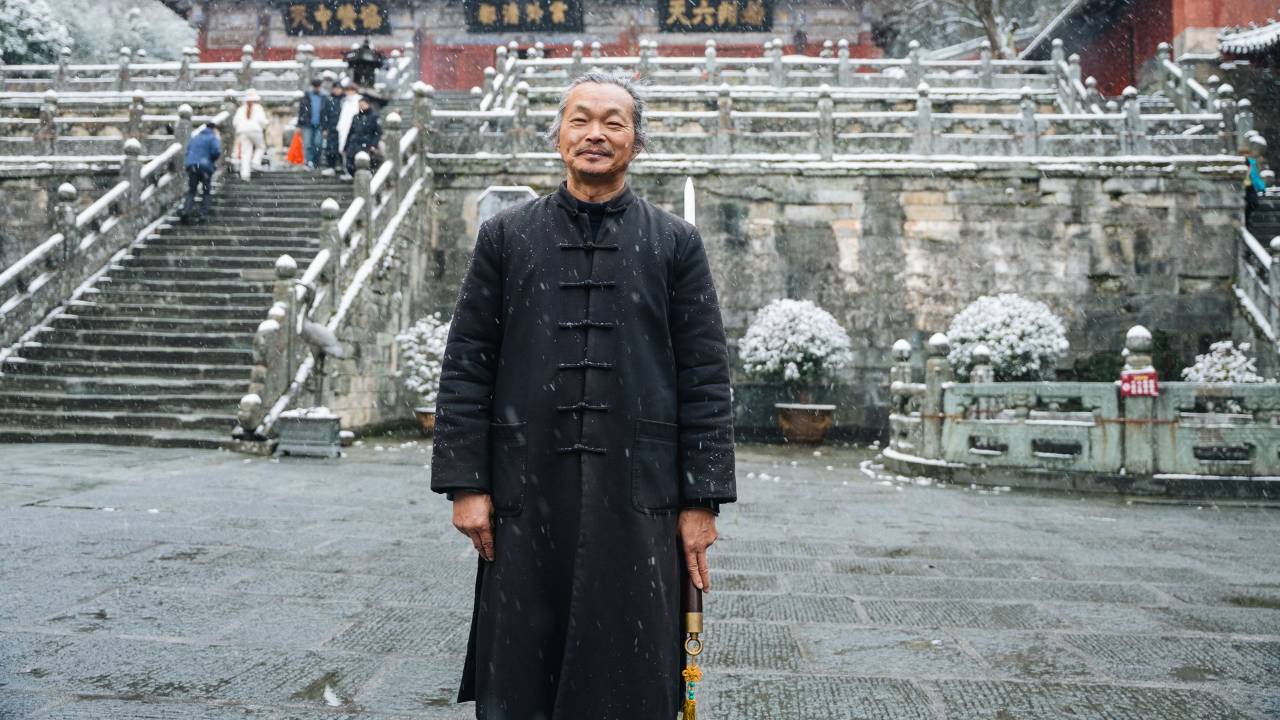
Here, Master Gu explains the difference between Wudang Tai Chi and other Tai Chi styles:
The Role of Forms Practice
Forms are the heart of Tai Chi training. These choreographed sequences contain the martial, health, meditative, and energetic aspects of the art.
The beginner sees a series of movements to remember. The intermediate practitioner begins to discover layers of structure, timing, application, and energy. The advanced student keeps finding depth in the same movements they learned years ago.
Form practice develops:
- Body awareness and coordination
- Breath regulation
- Mental focus and memory
- Martial principles and timing
- Energy circulation and internal connection
You do not need to understand everything at the beginning. The form teaches through repetition. With patient practice, the same movement can reveal new meaning at every stage.
Push Hands: The Laboratory of Sensitivity
Push hands, or tui shou, bridges solo form practice and martial application. Two practitioners maintain contact while exploring yielding, sticking, following, neutralising, and issuing force.
At its best, push hands is not about overpowering someone. It is a cooperative exploration of balance, pressure, relaxation, and timing. The person who can yield most skilfully often demonstrates the deeper level of understanding.
What You Learn Through Push Hands
Through regular practice with different partners, students develop:
- Listening energy — feeling another person's intention through physical contact
- Neutralising skill — redirecting incoming force without meeting it with stiffness
- Rooting ability — maintaining stability while adapting
- Issuing power — expressing force through relaxed structure rather than brute effort
These skills can also deepen your understanding of Qi Gong practice, where breath, posture, awareness, and energy cultivation are explored in a simpler and often more repetitive way. For a gentle practice that complements Tai Chi beautifully, you may also enjoy exploring Ba Duan Jin Qi Gong.
Integration with Taoist Wisdom
Martial art Tai Chi is deeply connected with Taoist wisdom. It expresses principles of balance, softness, naturalness, and harmony through the body rather than through theory alone.
Wu wei, or effortless action, becomes real when you learn to neutralise force through yielding rather than pushing back. Yin and Yang reveal themselves in the way fullness and emptiness alternate through each step, turn, and shift of weight.
The Taoist view of health emphasises prevention, balance, and working with natural patterns rather than against them. This perspective infuses every aspect of traditional training.
When you study Tai Chi within this wider context, the practice becomes richer and more meaningful. Movement teaches wisdom that words alone cannot convey.
Building a Sustainable Practice
Starting martial art Tai Chi does not require special equipment, athletic ability, or extreme flexibility. It requires patience, consistency, and willingness to learn gradually.
Getting Started Successfully
Begin with fundamentals. Do not rush into complex forms. Spend time with basic stances, weight shifts, posture, and breathing patterns. These foundations support everything that follows.
Practise regularly in short sessions. Twenty minutes daily can be more effective than two hours once a week. Your body and mind need consistent repetition to internalise the patterns.
Find authentic instruction. Learning from experienced teachers who understand both the internal and practical dimensions of Tai Chi helps you develop correctly from the beginning.
Common Beginner Mistakes to Avoid
- Forcing movements or holding unnecessary tension
- Practising forms too quickly
- Neglecting basic stances and footwork
- Focusing only on external appearance
- Skipping warm-up and cool-down
- Comparing yourself to others
Progress in Tai Chi is not linear. Some days you may feel clumsy and disconnected. Other days, everything flows more easily. Both experiences are part of the journey.
If you are completely new to Taoist movement practices, our free 4-week Taoist Wellness introductory course offers a gentle way to begin with simple Tai Chi, Qi Gong, and Taoist wellness practices from Master Gu.
Tai Chi for Different Life Stages
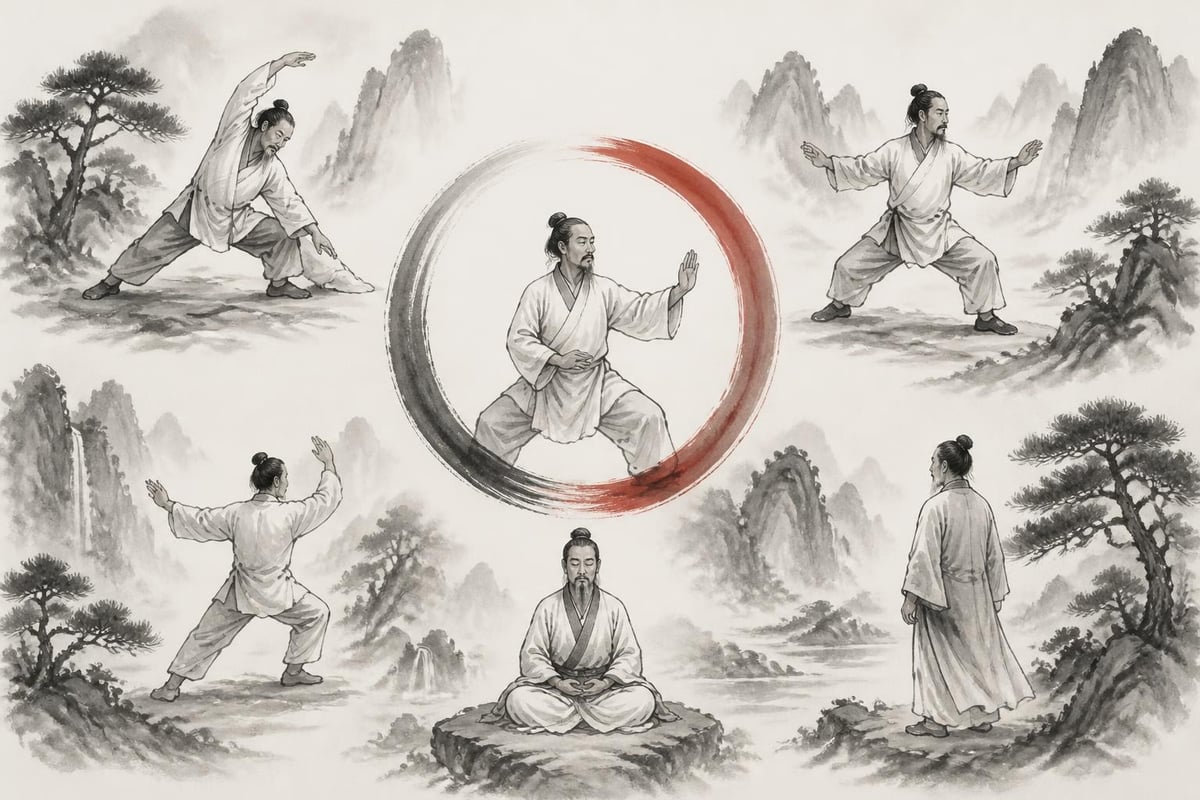
The beauty of martial art Tai Chi lies in its adaptability. The same principles can support different bodies, ages, and life stages.
Young adults may benefit from the discipline, body awareness, martial principles, and stress management tools that Tai Chi develops. The practice can complement other athletic pursuits while offering a slower, more inward form of training.
Middle-aged practitioners often discover how Tai Chi helps maintain mobility, posture, strength, and emotional steadiness. It can become a way to counterbalance the tension and speed of work, family responsibilities, and modern routines.
Older adults may find that Tai Chi supports balance, confidence, coordination, and gentle movement without excessive strain. The practice can be adapted to meet the body where it is, while still offering meaningful depth.
The Mind-Body Connection
Western science increasingly recognises what Tai Chi has always taught: mind and body are not separate. They are different aspects of one integrated system.
When you practise, you are simultaneously:
- Training physical coordination and strength
- Regulating breath and the nervous system
- Cultivating present-moment awareness
- Developing emotional balance
- Refining internal connection and energy awareness
This integration creates benefits that isolated approaches may not offer in the same way. You are not just exercising the body or meditating with the mind. You are engaging your whole being in one unified practice.
Beyond Physical Exercise
Reducing martial art Tai Chi to exercise misses its deeper dimensions. The practice can serve as moving meditation, energy cultivation, martial training, and embodied wisdom all at once.
As meditation, Tai Chi develops present-moment awareness and mental clarity through movement. Many people find this more accessible than seated stillness, especially when beginning contemplative practice.
As energy work, the forms help cultivate and circulate Qi through breath, posture, attention, and relaxation. Over time, this becomes something you can feel directly in the body.
As martial art, every movement contains principles of defence, timing, balance, and response. Even if you never train for combat, these principles shape how you meet pressure in daily life.
The Importance of Lineage and Authentic Transmission
Not all Tai Chi instruction preserves the complete martial, health, and internal dimensions of the art. Authentic transmission matters because it keeps the practice connected to its deeper roots.
Master Gu brings decades of experience from the Wudang tradition, offering students guidance that honours both the visible movement and the internal principles behind it. This kind of teaching helps students understand Tai Chi as more than a routine to copy.
This does not mean you need to travel to a remote mountain temple to begin. Quality online instruction now makes traditional training accessible worldwide. The key is finding teachers who have trained deeply and can guide you with clarity, patience, and respect for the art.
Integrating Practice into Modern Life
You do not need to abandon contemporary life to practise Tai Chi seriously. The art adapts to your circumstances while offering tools that make modern challenges more manageable.
Morning practice can energise your day and establish centred awareness before the world makes demands.
Lunch break sessions can reset your energy and clear mental fatigue. Even a short practice can help you return to your work with more calm and focus.
Evening practice can help you transition from activity into rest, processing the day's stress through movement before it becomes chronic tension.
The principles you embody through form practice naturally inform how you move, breathe, and respond throughout your day. This is where martial art Tai Chi reveals its true value.
Continuing Education and Deepening Practice
After learning basic forms, the journey continues through multiple dimensions. Advanced forms reveal more sophisticated techniques and principles. Partner work refines sensitivity, timing, and responsiveness. Internal practices deepen breath, awareness, and energy cultivation.
Taoist meditation can also support the internal aspects of Tai Chi by developing stillness, presence, and a calmer relationship with the mind.
Study of classical texts, including the Tao Te Ching and other foundational writings, can enrich your appreciation of the art's philosophical depth. Yet Tai Chi remains something you understand most fully by practising it in the body.
The Global Community of Practice
Martial art Tai Chi connects you to a worldwide community of practitioners spanning cultures, ages, and backgrounds. This shared practice creates a sense of connection that can support consistency and inspiration.
Online learning now allows practitioners around the world to ask questions, share insights, attend live sessions, and feel part of a wider path. This can be especially valuable if you do not have access to authentic local teaching.
Learning from others' experiences, sharing your own discoveries, and practising alongside a supportive community can deepen both commitment and understanding.
Martial art Tai Chi offers more than gentle movement; it is a lifelong practice of rooting, yielding, awareness, strength, and inner balance. If you feel drawn to the martial depth of Tai Chi but want a way to begin that fits modern life, step into the Taoist Wellness Online Academy and explore authentic Wudang-inspired training with Master Gu and our teaching team. Your free 7-day trial gives you space to begin steadily, learn at your own pace, and discover how Tai Chi can support the way you move, breathe, and meet the world.