Tai Chi Daily Routine: Building a Practice That Lasts
Aug 15, 2026
Creating a tai chi daily routine is one of the most grounding choices you can make for your physical health, mental clarity, and overall vitality. Unlike exercise programmes that demand intensity and leave you depleted, tai chi offers a sustainable path that nourishes rather than exhausts. When practised consistently, these ancient movements become more than just a workout - they become a conversation between your body, breath, and spirit. Whether you have fifteen minutes or an hour, building a routine that honours your energy and fits your life will create ripple effects you'll feel throughout your entire day.
Understanding the Foundation of Daily Practice
A tai chi daily routine isn't about perfection or complicated choreography. It's about showing up for yourself with intention and allowing the practice to unfold naturally. The Wudang tradition emphasises quality over quantity, suggesting that even a short, focused session carries more value than a rushed or distracted longer practice.

Why Consistency Matters More Than Duration
Your body and energy system respond to patterns. When you practise at roughly the same time each day, your nervous system begins to anticipate and prepare for that focused state. This creates a natural rhythm that makes it easier to settle into practice, even on days when motivation feels low.
Benefits of regular practice include:
- Improved balance and coordination that develops gradually
- Reduced stress through consistent breath regulation
- Enhanced body awareness that carries into daily activities
- Deeper sleep quality and more stable energy levels
- Stronger immune function through regulated qi flow
The Best Time for Your Practice
Morning practice offers the advantage of setting your tone for the day ahead. Your mind is typically clearer, and the world is quieter. Evening practice can help you release accumulated tension and transition into rest. The truth is that the best time is the time you'll actually do it. Some practitioners find that a brief morning session combined with an evening wind-down creates the most sustainable rhythm.
Structuring Your Tai Chi Daily Routine
A well-designed tai chi daily routine flows through several distinct phases, each serving a specific purpose in your energy cultivation and physical development. Think of your practice as a journey rather than a destination.
Warm-Up and Awakening (5-10 minutes)
Begin by arriving fully in your body. Stand quietly and notice your breath. Gentle joint rotations prepare your body for movement without forcing or straining.
Essential warm-up movements:
- Ankle and wrist circles to mobilise joints
- Gentle neck rotations to release upper body tension
- Hip circles and knee bends to warm the lower body
- Shoulder rolls to open the chest and upper back
- Spinal twists to awaken the core
These simple movements increase circulation and signal to your nervous system that it's time to shift into a more mindful state. The warm-up isn't separate from your practice - it's where your practice actually begins.
Core Form Practice (15-30 minutes)
This is where you engage with the specific tai chi forms you're learning. In our Tai Chi course, forms are taught with attention to both external movement and internal energy flow. Start with what you know, even if that's just a few movements. Our guide on Tai Chi How To: A Complete Beginner's Guide for 2026 walks through posture, breathing, and your first movements in more depth if you're just starting out.
| Practice Level | Recommended Duration | Focus Areas |
|---|---|---|
| Beginner (0-3 months) | 15-20 minutes | Basic stances, weight shifting, breath coordination |
| Intermediate (3-12 months) | 20-30 minutes | Form sequences, energy awareness, smooth transitions |
| Advanced (1+ years) | 30-45 minutes | Refinement, internal cultivation, deeper states |
Quality always trumps quantity. Moving through three movements with full awareness serves you better than rushing through an entire form with scattered attention.
Qi Gong Integration (5-15 minutes)
Many practitioners find that incorporating our Qi Gong course into their tai chi daily routine deepens their energy cultivation. These practices work directly with breath and visualisation to guide qi through the body's meridian pathways.
Simple Qi Gong exercises complement tai chi beautifully:
- Standing meditation to cultivate stillness and presence
- Lifting the Sky to open the meridians and release stagnation
- Swimming Dragon to activate the spine and kidney energy
- Cloud Hands to harmonise left and right energy channels
Closing and Integration (3-5 minutes)
Never rush the ending of your practice. Stand quietly and notice how you feel. Place your hands over your lower abdomen and take several deep breaths, allowing the energy you've cultivated to settle and integrate.
Adapting Your Routine to Real Life
Life doesn't always cooperate with our perfect practice plans. A sustainable tai chi daily routine includes flexibility and self-compassion. Missing a day doesn't erase your progress, and practising for ten minutes is infinitely better than not practising at all.
The Fifteen-Minute Emergency Practice
On especially busy days, this condensed routine keeps your practice alive:
- 2 minutes: Standing meditation and breath awareness
- 8 minutes: Your most familiar form or movement sequence
- 3 minutes: Basic Qi Gong exercise
- 2 minutes: Closing and integration
This minimal approach maintains your connection and prevents the all-or-nothing thinking that often derails wellness practices entirely.
Seasonal and Energy Adjustments
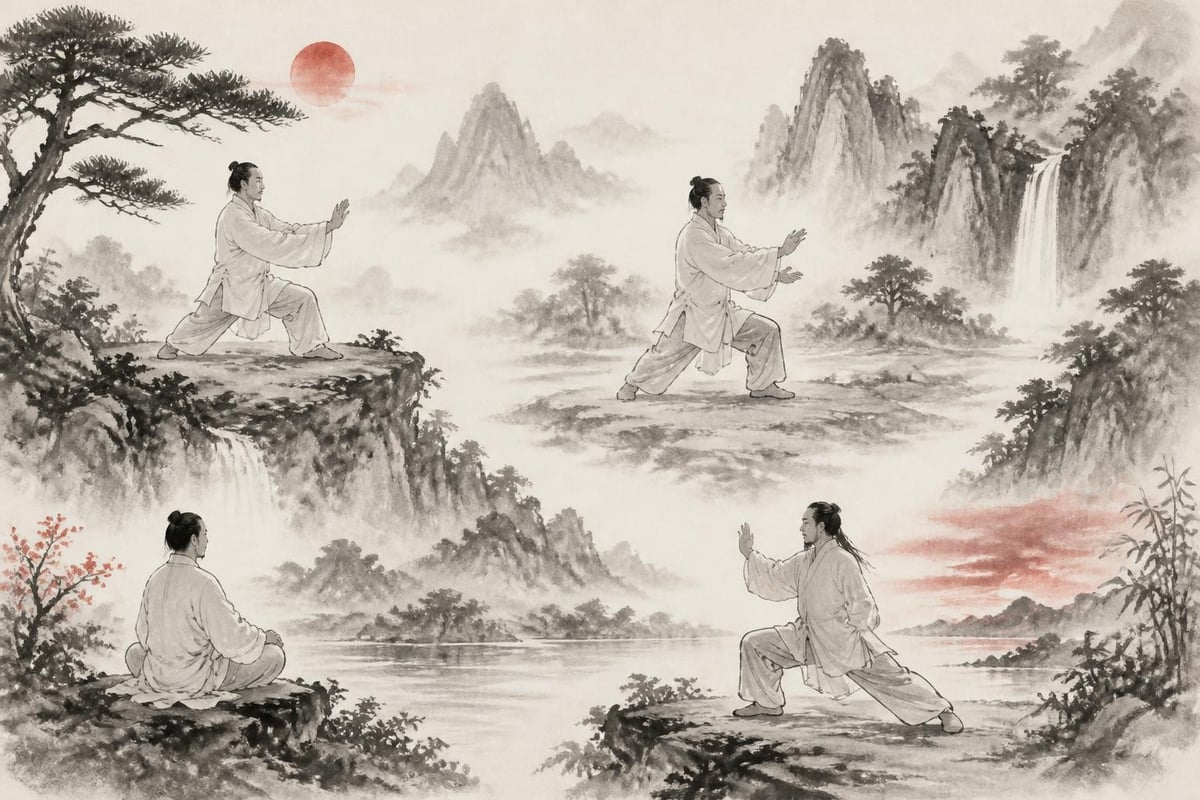
Your tai chi daily routine can shift with the seasons and your personal energy levels. Traditional Chinese medicine recognises that we're not meant to maintain the same intensity year-round. Winter might call for shorter, more internal practices, while spring energy supports longer, more expansive movement.
Seasonal practice considerations:
| Season | Energy Quality | Practice Adjustment |
|---|---|---|
| Spring | Rising, expanding | Emphasise opening movements, longer sessions |
| Summer | Full, outward | Practise earlier in morning, focus on flow |
| Fall | Consolidating, inward | Begin drawing energy deeper, moderate pace |
| Winter | Conserving, still | Shorter sessions, more standing meditation |
Building Sustainable Habits
The difference between a practice that lasts and one that fades often comes down to how you integrate it into your existing life. Rather than trying to completely overhaul your routine, look for natural anchor points where tai chi can fit.
Creating Practice Triggers
Habit research shows that linking new behaviours to existing routines dramatically increases success. Your tai chi daily routine becomes easier when connected to something you already do consistently.
Consider these natural transitions:
- Right after your morning coffee or tea
- Before your shower or breakfast
- During your lunch break as a midday reset
- As soon as you arrive home from work
- Before your evening meal
Tracking Without Obsessing
Some people find that simple tracking helps maintain consistency without creating pressure. A basic calendar checkmark or brief note about how you felt can provide useful feedback over time. The goal isn't perfect attendance - it's noticing patterns and understanding what supports your practice.
Deepening Your Understanding
As your tai chi daily routine becomes established, you'll naturally want to deepen your understanding of the principles underlying the movements. The physical forms are the gateway, but they point toward something larger.
Our Taoist Philosophy course teaches that practice is the path, not just preparation for some future destination. Each time you show up on your mat or in your practice space, you're already engaging in the transformation you seek.
Master Gu shares more on this idea of practice-as-transformation in the video below, exploring how Taoist wisdom can shape a more meaningful daily life.
The Role of Meditation
Many practitioners discover that their tai chi naturally leads them toward our Taoist Meditation course. The focused awareness you cultivate during movement carries directly into seated stillness. These practices support and deepen each other rather than competing for your time and attention.
Learning From Authentic Sources
Building a tai chi daily routine from authentic teachings ensures you're cultivating beneficial patterns rather than reinforcing tension or imbalance. Master Gu's approach to Wudang tai chi emphasises proper alignment, breath integration, and energy flow from the very first movement. Our article on Tai Chi Training Near Me: Your Guide to Starting in 2026 explores what to look for in authentic guidance, whether online or in person.
For those just beginning to explore what a sustainable practice looks like, our free Taoist course offers a structured introduction covering Tai Chi, Qi Gong, Meditation, and Taoist Wisdom. This programme helps you learn simple practices while beginning to build the consistency that makes a daily routine feel natural rather than forced.
Working With Common Challenges
Every practitioner encounters obstacles. Recognising them as normal parts of the journey rather than personal failures changes everything.
When Motivation Disappears
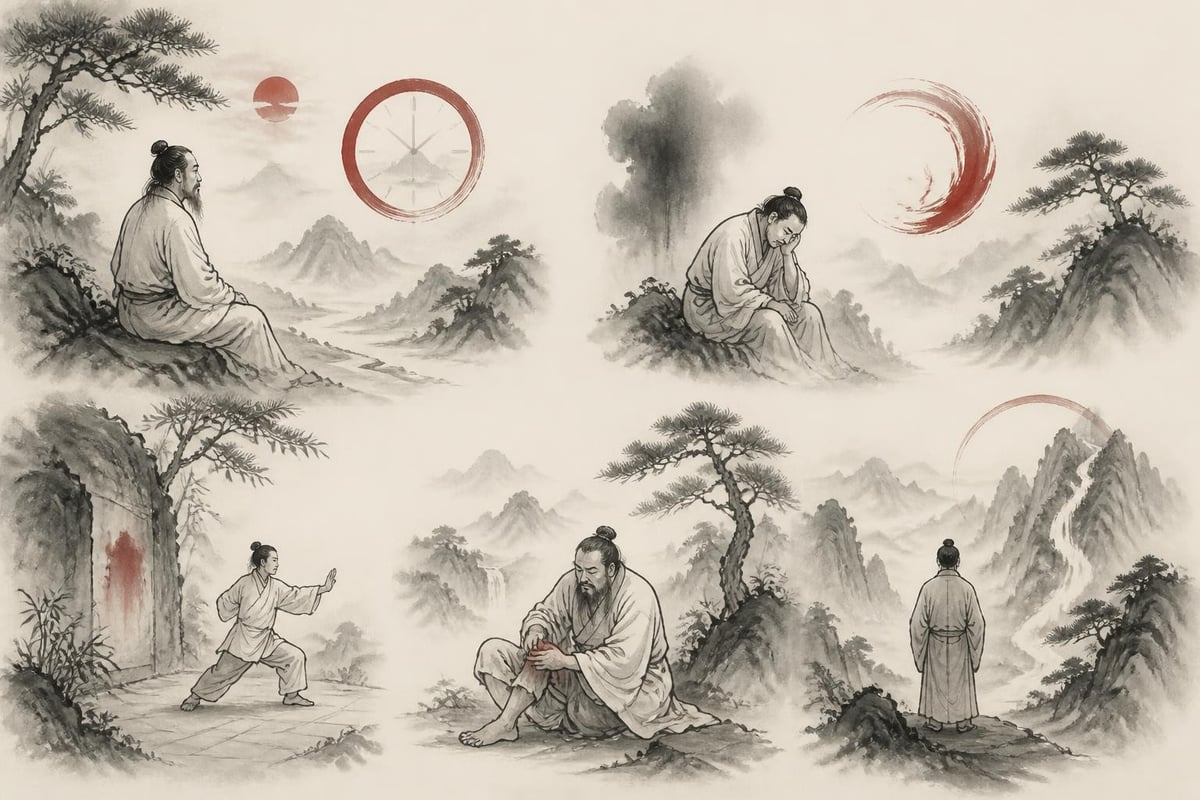
Some days you simply won't feel like practising. This is where your routine carries you. Rather than waiting for motivation to strike, trust the structure you've built. More often than not, you'll find that starting is the hardest part, and your energy shifts once you're actually moving.
Physical Discomfort or Limitations
Tai chi should never cause pain. If certain movements create discomfort, modify them or skip them entirely. The practice adapts to you, not the other way around. Working with experienced guidance helps you distinguish between the mild challenge of new movement patterns and actual pain signals that need attention. If you have an existing injury or health condition, it's always worth checking with a healthcare professional before starting a new movement practice.
Plateau Periods
There will be stretches where your practice feels stagnant or you don't notice improvement. These plateau periods are often where the deepest integration happens. Your body is consolidating what you've learned, even when it doesn't feel like progress. Keep showing up without demanding dramatic results, and trust the process.
Expanding Your Practice Community
While your tai chi daily routine is personal, connecting with others who share this path offers support, inspiration, and accountability. Our community brings together practitioners from around the world who understand both the joys and challenges of daily practice.
Sharing your journey doesn't mean comparing yourself to others. It means recognising that you're part of a tradition that spans centuries and connects across continents. This larger context can sustain your motivation during difficult periods.
The Value of Continued Learning
Your tai chi daily routine will evolve as you do. What serves you as a beginner will naturally shift as your understanding deepens. Many practitioners find that revisiting foundational movements with more experience reveals layers they couldn't perceive earlier. This isn't about mastering the practice - it's about allowing the practice to continually reveal new dimensions.
Measuring Progress Differently
Western culture trains us to measure success through external achievements and visible results. Tai chi invites a different kind of assessment. Progress might look like sleeping better, responding to stress with more calm, or simply feeling more at home in your body.
Non-obvious signs of progress:
- Noticing tension earlier before it becomes chronic
- Recovering more quickly from emotional upset
- Feeling steadier on your feet in daily activities
- Experiencing moments of genuine stillness
- Breathing more fully without conscious effort
These subtle shifts often go unrecognised until you pause to reflect. Keeping a simple practice journal helps you notice patterns and changes over weeks and months rather than days.
Creating Your Sacred Space
Your practice environment influences your experience more than you might expect. While you don't need a dedicated room or elaborate setup, creating even a small area that feels intentional signals to your mind and body that this time matters.
Minimal Space Requirements
A tai chi daily routine requires surprisingly little room. Most people can practise comfortably in a space roughly six feet by six feet. What matters more than square footage is that you feel unencumbered and safe to move.
Consider these simple space enhancements:
- Clear the area of clutter and distractions
- Ensure adequate lighting, preferably natural
- Maintain comfortable temperature and fresh air
- Keep your practice space consistent when possible
- Add one meaningful object that supports your intention
Integrating Breath and Movement
One of the most transformative aspects of a tai chi daily routine is learning to coordinate breath with movement. This isn't forced or complicated - it's about allowing your breath to guide and support each gesture.
In the beginning, simply notice your breath without trying to control it. As you become more familiar with the movements, natural breathing patterns will emerge. The inhale often accompanies rising or opening movements, while the exhale supports lowering or closing.
| Movement Type | Natural Breath Pattern | Energy Quality |
|---|---|---|
| Rising, lifting | Inhale | Gathering, expanding |
| Lowering, settling | Exhale | Releasing, grounding |
| Opening, expanding | Inhale | Receiving, welcoming |
| Closing, gathering | Exhale | Consolidating, centring |
This coordination happens gradually and shouldn't become another source of stress. Trust that your body knows how to breathe, and let that wisdom guide you.
The Long View
A tai chi daily routine isn't a short-term project with a finish line. It's a practice you can carry throughout your entire life, adapting and evolving as you do. The movements you learn today will serve you differently in five years, and differently still in twenty.
This long-term perspective removes pressure from any single practice session. You're not trying to achieve anything today except showing up with presence and sincerity. That's already enough.
Honouring Your Journey
There's no single correct way to build a tai chi daily routine. What works beautifully for one person might feel forced for another. The key is finding your own rhythm, respecting your unique needs and circumstances, and maintaining the gentle consistency that allows transformation to unfold naturally.
Each time you return to the movements, you bring a slightly different version of yourself. That's not a problem - it's the whole point.
Building a tai chi daily routine offers a sustainable path to enhanced balance, reduced stress, and deeper vitality that grows stronger over time. When you're ready to deepen your practice with authentic Wudang teachings, Master Gu and the comprehensive curriculum at Taoist Wellness Online provide the guidance, community, and resources to support your journey from wherever you are today.