Full Lotus Posture: Ancient Wisdom for Modern Practice
Oct 25, 2026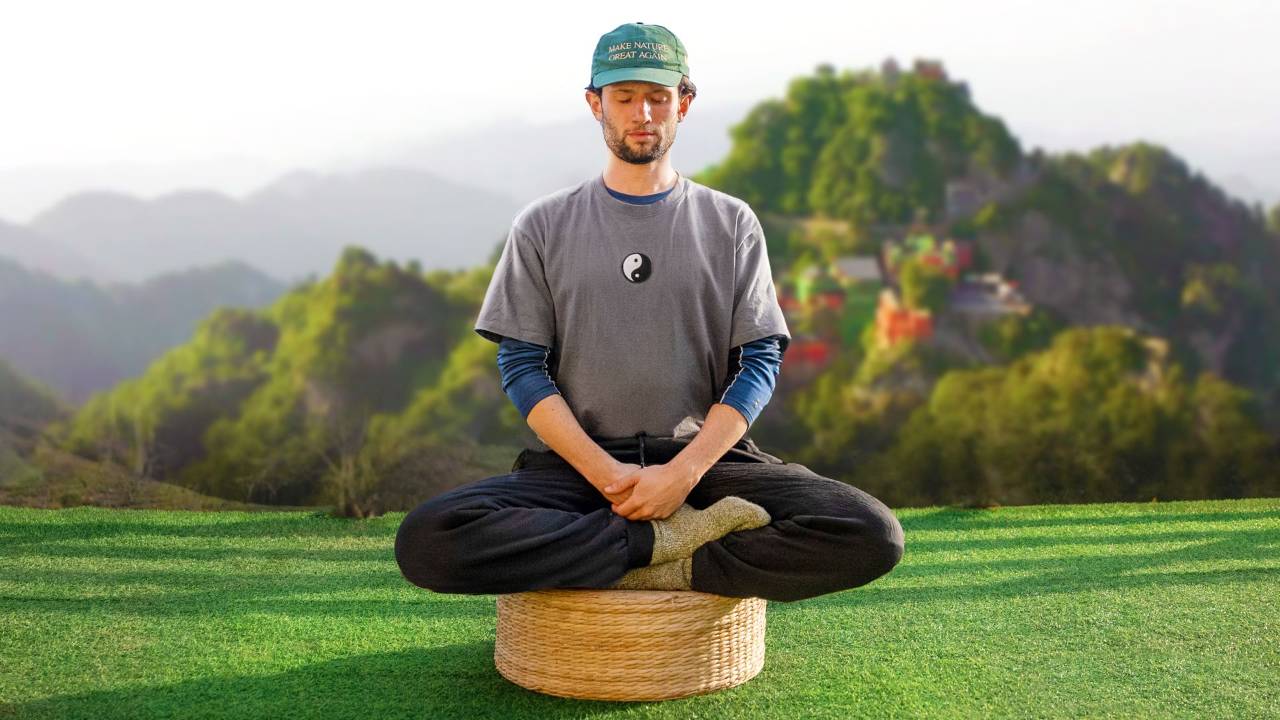
The full lotus posture has fascinated spiritual seekers and meditation practitioners for thousands of years. Known in Sanskrit as Padmāsana, this iconic seated position represents more than physical flexibility. It stands for a commitment to stillness, inner cultivation, and the patient unfolding of body and mind together. For many people beginning a meditation practice, the full lotus looks both inspiring and intimidating. Understanding its true nature, the preparation it requires, and the traditions that honour it can change how you approach not just this posture, but your whole relationship with seated practice.
A quick note before we begin: the full lotus puts real demands on the hips, knees and ankles. Please check with your healthcare professional before starting any new mobility work, especially if you have any knee, hip or back concerns, and never force your body into a position.
Understanding the Full Lotus Foundation
The full lotus demands significant hip mobility, ankle flexibility, and healthy knees. Unlike simple cross-legged sitting, this posture places both feet on the opposite thighs, with the soles facing upward. It has been central to meditation traditions across Asia for centuries, valued for its stability and the upright alignment it encourages.
Key physical requirements include:
- Hip external rotation: the ability to rotate the thigh bone outward in the hip socket
- Ankle flexibility: allowing the top of the foot to move towards the shin
- Knee bending without twisting: bending the knee comfortably without twisting forces
- A neutral lower back: keeping the natural curves of the spine without strain
Many people underestimate how much the hips drive this posture. The knees simply follow what the hips allow. Forcing the legs into position when the hips lack range can place stress on the knee's ligaments and cartilage.
The Hip Mobility Equation
Hip external rotation is the foundation of safe full lotus practice. When your hip joint can rotate the thigh outward comfortably, the knee folds without twisting. When hip rotation is limited, it's common to compensate by forcing the knee into positions it can't safely handle.
Think of the hip as a ball and socket joint designed for movement in many directions. Years of sitting in chairs, walking in straight lines, and repeating the same movement patterns can reduce this natural mobility. The tissues around the joint tighten, the muscles shorten, and the available range narrows.
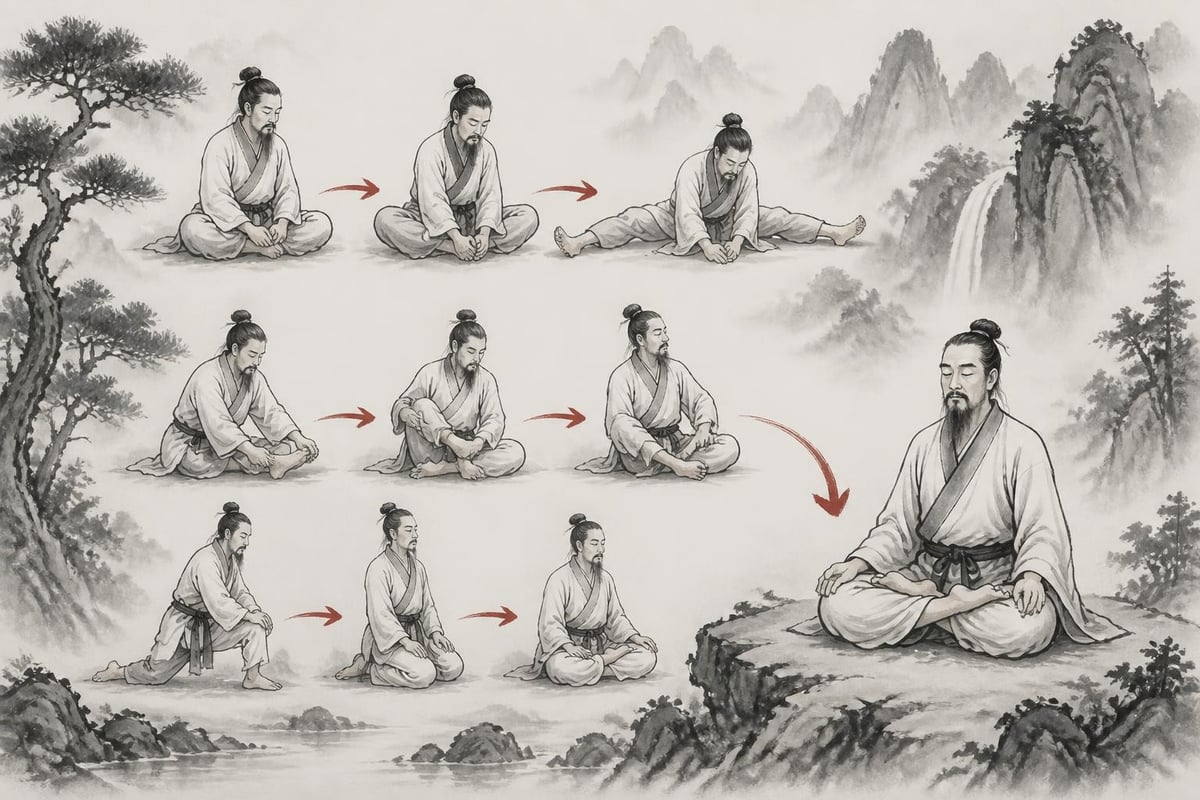
Research on mobility training suggests that consistent, gradual practice may improve joint range over time. This supports the value of patient, progressive preparation rather than forcing positions too early.
Taoist Approaches to Seated Practice
While the full lotus appears prominently in Buddhist meditation imagery, Taoist cultivation practices emphasise natural alignment and ease over any single physical form. Wudang Tai Chi traditions teach that the body works best when it finds its natural structure without force, and our Tai Chi course reflects this relaxed approach.
Many Taoist seated meditation traditions use simpler positions that allow longer practice without discomfort. The principle of wu wei, or effortless action, suggests that forcing the body into shapes it resists works against the aim of meditation: returning to natural ease.
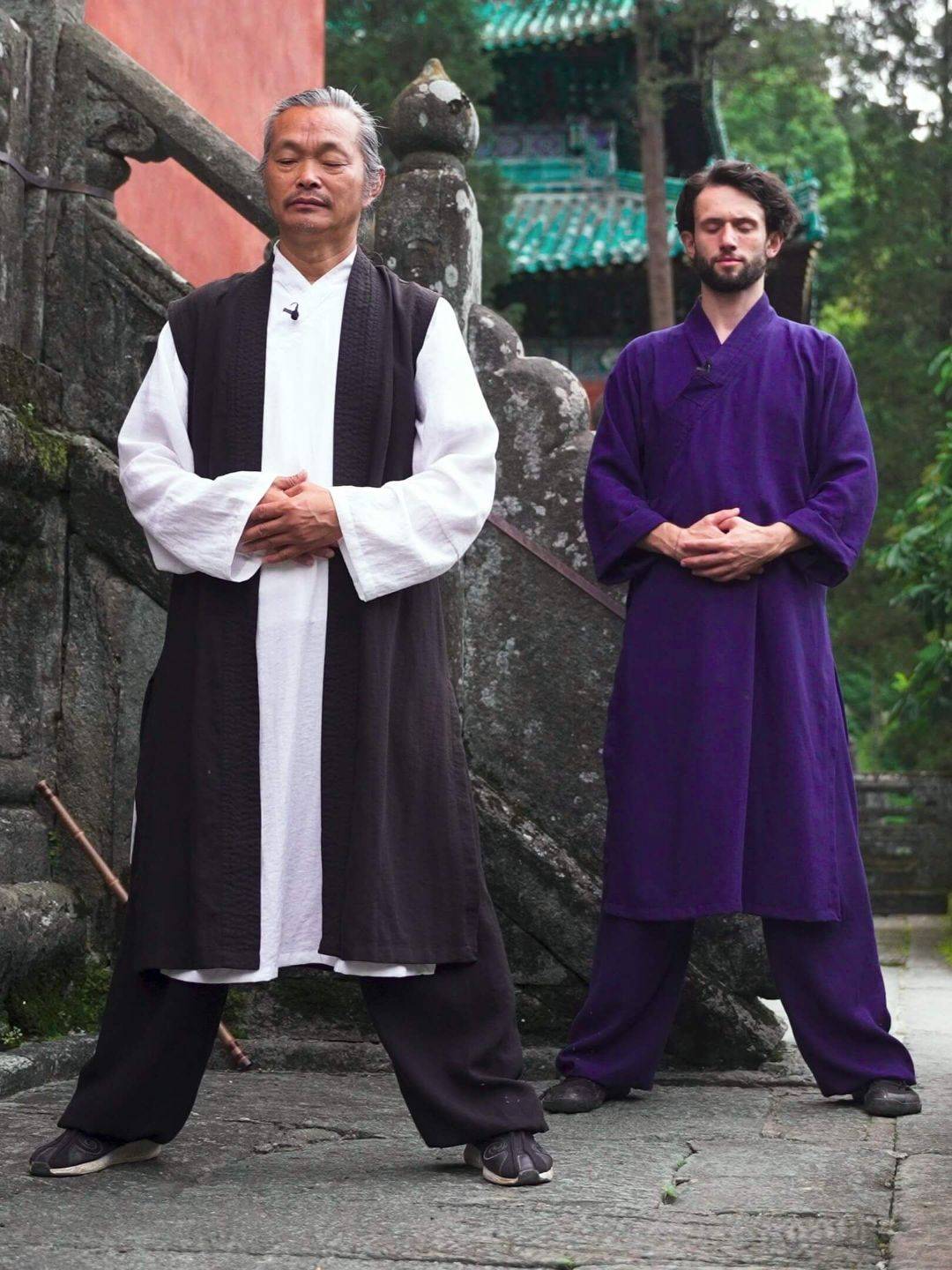
Master Gu and George Thompson talk about meditation as a simple, accessible practice in the short video below. It isn't about the lotus posture specifically, but it captures the relaxed spirit of Taoist meditation.
| Taoist Principle | Application to Seated Practice |
|---|---|
| Wu Wei (non-forcing) | Choose postures your body can sustain without strain |
| Ziran (naturalness) | Let flexibility emerge through gradual practice |
| Yin-Yang balance | Mix active stretching with restful positions |
| Natural ease | Prioritise a comfortable, upright alignment |
The Taoist perspective measures progress in years, not weeks. Just as Tai Chi movements develop through patient repetition, hip mobility and full lotus capacity, where they come at all, unfold over time.
Preparing the Body Through Movement
Static stretching alone rarely creates the mobility needed for full lotus. Gentle, varied movement that explores hip rotation and builds supporting strength can be a kinder preparation. Our Tai Chi warm-up exercises for beginners are a good place to start.
Gentle preparatory practices people often use include:
- Hip circles: rotating the leg in large, smooth circles while lying on your back
- Squat variations: comfortable squatting positions that open the hips and ankles
- Seated rotations: gentle twisting movements that mobilise the hips
- Figure-four stretches: gentle external rotation stretches
- Ankle mobility work: pointing, flexing, and rotating the ankles to improve range
These are general suggestions rather than part of our courses, so go gently and stop if anything feels uncomfortable. Qi Gong also includes flowing, circular movements that many people find gently support their hips and joints.
Safety Considerations and Common Mistakes
The most common injury pattern in full lotus attempts comes from forcing the knees before the hips are ready. Lotus and half-lotus are widely recognised as positions that can put strain on the knees when they're forced.
The knee is essentially a hinge joint. It bends and straightens with very little rotation. When you push a leg into full lotus without enough hip rotation, you ask the knee to twist. This can strain the ligaments and cartilage around the joint and may lead to lasting irritation.
Warning Signs to Respect
- Sharp pain anywhere: back out of the position immediately
- Knee discomfort: often a sign that the hips need more mobility
- Numbness or tingling: may suggest nerve compression
- Pain that lingers after practice: a sign of irritation
- Asymmetry: one side much tighter than the other
Your body communicates clearly when you listen. A mild stretching sensation in muscle is very different from joint pain or nerve symptoms, and learning the difference helps protect your practice. If you experience persistent pain, numbness or tingling, please speak to your healthcare professional.
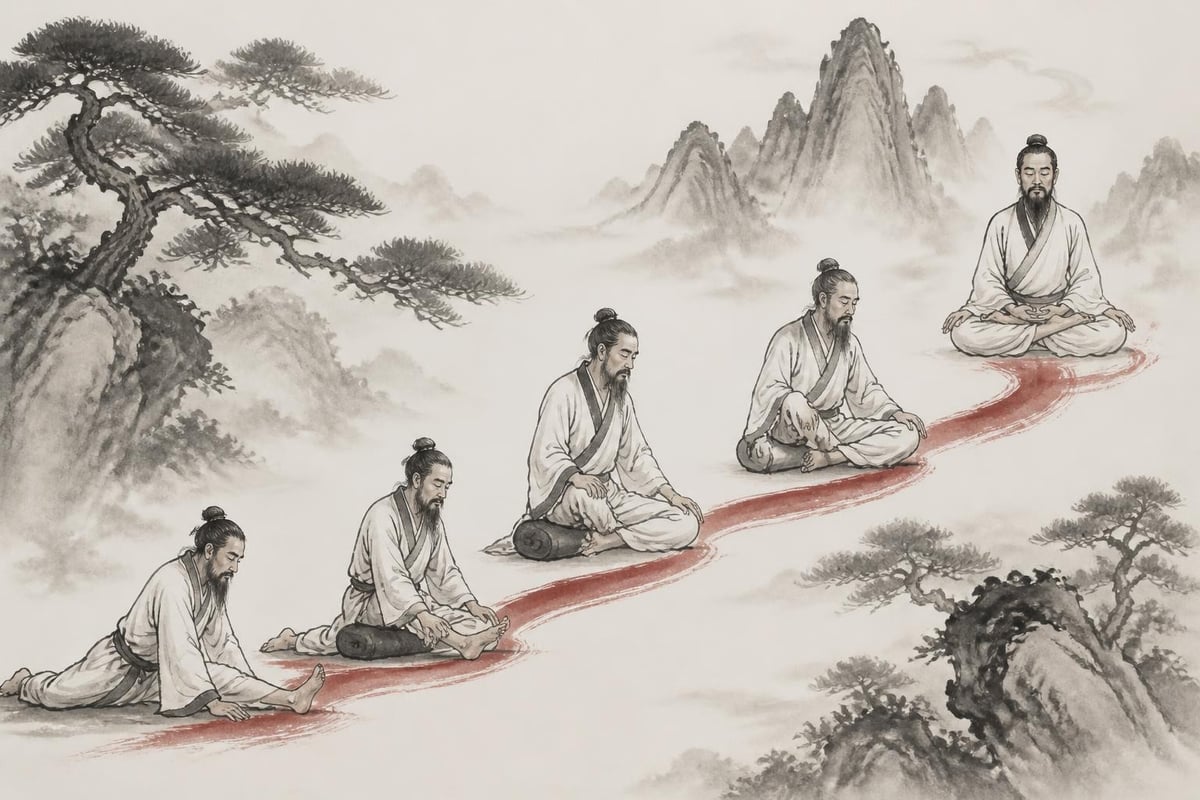
Progressive Pathway to Full Expression
Building towards full lotus follows a logical sequence that respects your body's current capacity while allowing gradual expansion. It's fine to stop at any stage.
Stage One: Foundation Sitting
Begin with simple cross-legged sitting, alternating which leg crosses in front. Notice which hip feels tighter. Use cushions or blocks under the knees if they don't easily reach the floor. Practise 10-15 minutes a day, focusing on a comfortable, upright posture.
Stage Two: Hip Opening Sequences
Set aside time for hip mobility work separate from your meditation. This might include:
- Gentle pigeon pose variations
- Low lunges with hip rotation
- Butterfly stretch (soles together, knees wide)
- Reclined figure-four stretches
- Seated wide-leg forward folds
Studies of mobility work suggest that regular practice over weeks to months may improve range of movement in the hips, although results vary from person to person.
Stage Three: Half Lotus Introduction
Once simple cross-legged sitting feels easy, experiment with bringing one foot up onto the opposite thigh. Keep the bottom leg in a simple cross, and switch sides equally. Never force the foot into position. If it doesn't rest comfortably, continue your preparatory work.
Stage Four: Supported Full Lotus
When both sides can comfortably hold half lotus, you might try bringing the second foot up with generous support under the knees, using blocks, blankets, or cushions. Stay only a few breaths at first. This stage may take months or years, and for some people it may never feel right.
Alternatives and Variations
The full lotus is one option among many effective seated positions. Different meditation styles use different postures, each with its own benefits, and our article on Tai Chi meditation techniques shows how varied they can be.
Equally valid alternatives include:
- Burmese position: both feet on the floor, knees wide
- Quarter lotus: one foot on the calf rather than the thigh
- Seiza (kneeling): knees together, sitting on the heels or a bench
- Chair sitting: feet flat, spine upright
- Lying down: for some relaxation-focused practices
The good news is that you don't need the full lotus to enjoy meditation. Our Taoist meditation course includes both sitting and standing meditation practices, so you can choose whatever feels comfortable. The best posture is one you can hold with relaxed awareness.
If you're new to these practices, our free Taoist course is an easy way to start, with an introduction to Tai Chi, Qi Gong and meditation with Master Gu at your own pace.
The goal of seated practice is inner stillness, not physical achievement. A simple position you can hold comfortably for 30 minutes serves meditation far better than an advanced posture that causes pain after five minutes.
Energetic and Spiritual Dimensions
Beyond physical form, the full lotus carries symbolic meaning in contemplative traditions. Traditional texts describe the closed circle of the legs as helping to settle the body and gather attention during meditation, and the stable base as allowing the spine to rise without effort.
These traditions also describe how the posture naturally turns awareness inward. With the foundation secure and comfortable, attention withdraws from external concerns towards inner observation. The body becomes like a mountain: solid, still and unchanging while inner weather passes through.
Yet these qualities depend entirely on comfort. A body fighting pain can't relax, and a mind distracted by discomfort can't settle. That brings us back to the central principle: respect your current capacity.
The Patience of Cultivation
Taoist philosophy teaches that genuine change unfolds through consistent, gentle practice over time. The bamboo bends in the wind rather than breaking because it combines strength with flexibility, and your practice can develop the same qualities.
Even among experienced practitioners, many prefer simpler seated positions for longer meditation sessions. The full lotus becomes one tool among many, used when appropriate rather than forced as a requirement.
Integrating Practice with Daily Life
Hip mobility work fits naturally into daily routines. Sitting on the floor while reading, stretching while watching television, or taking movement breaks during work can all contribute to gradual opening.
Simple daily habits that support lotus preparation:
- Sit cross-legged during meals or leisure time
- Practise gentle hip circles while lying in bed
- Squat comfortably when picking things up from the floor
- Take walking breaks that include gentle hip rotations
- Stretch your ankles while sitting at a desk
Walking mindfully also helps. Every step involves hip rotation, weight shifting, and coordination, which many people find supports their general mobility.
Cultural Context and Modern Adaptation
The full lotus emerged in cultures where floor-sitting was an ordinary part of daily life. People squatted to rest, sat cross-legged for meals, and kept their hip mobility through constantly varied positions. Modern furniture-based lifestyles create a different starting point.
This doesn't make the full lotus obsolete, but it does suggest patience with the process. You're not just learning a meditation posture but gently recovering movement your body may have lost.
Many people today need more preparation than they expect. That isn't failure; it's simply a different starting point. The principles remain timeless while the practical approach adjusts to current conditions.
Measuring Progress Without Attachment
Track your progress through simple benchmarks rather than focusing only on achieving full lotus:
| Benchmark | Sign of Progress |
|---|---|
| Cross-legged comfort | Able to sit 20+ minutes without pain |
| Knee descent | Knees gradually lowering towards the floor |
| Hip rotation | Increasing ease in figure-four stretches |
| Ankle flexibility | Feet can point and flex more fully |
| Practice consistency | Regular mobility work feels natural |
A balanced life, in the Taoist sense, includes releasing attachment to outcomes while keeping up a committed practice. Notice changes without clinging to specific achievements.
Some bodies may eventually find full lotus with dedicated practice. Others may find that their own anatomy limits the position, whatever the effort. Both paths hold equal value when the true aim is presence and inner calm.
Building a Sustainable Practice
Long-term success with any physical practice means balancing effort with rest, and challenge with recovery. Approach hip mobility work as you would learning Tai Chi: consistent, gradual and sustainable.
Keys to sustainable progression:
- Practise regularly but not obsessively: five minutes daily beats an occasional hour-long session
- Listen to your body's feedback: respect pain signals and rest when you need to
- Balance stretching with strengthening: build stability alongside flexibility
- Vary your seated positions: don't force only one shape
- Celebrate small improvements: notice each little step forward
It also helps to have company. You can share your progress with other students in our supportive Taoist Wellness community, where people swap tips on comfortable ways to sit.
The Wudang tradition, which our teacher Master Gu shares (you can read more on our About page), values cultivation that adds ease to your life rather than creating new sources of struggle.
The full lotus can be a beautiful expression of flexibility, patience and dedication when approached with wisdom and care. Whether it becomes part of your regular practice or remains an occasional exploration, the journey towards it can build mobility, body awareness and respect for natural unfolding. Taoist Wellness Online offers courses in Tai Chi, Qi Gong and Taoist meditation with Master Gu, a 15th-generation San Feng Pai Wudang Taoist Master with 25+ years of teaching experience, to help you practise at your own pace.
Related reading