Chinese Folk Religion: Traditions, Beliefs & Practice
Oct 23, 2026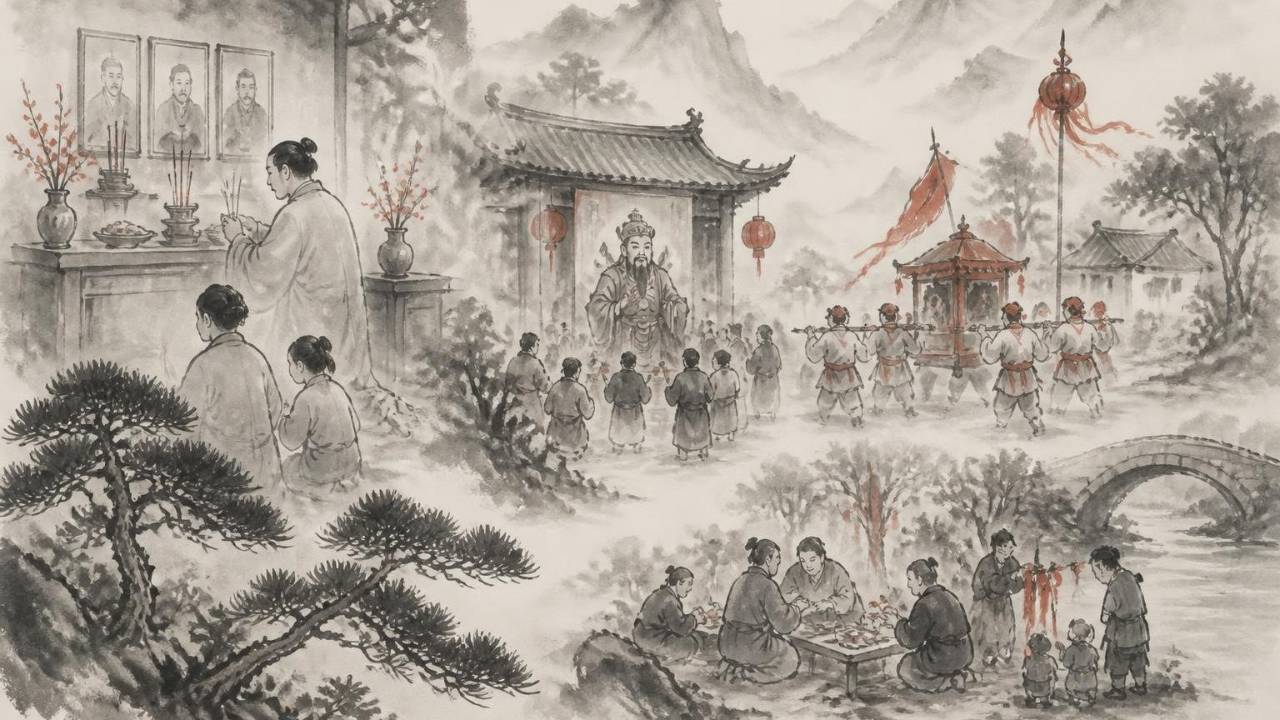
Chinese folk religion represents one of the world's oldest and most vibrant spiritual traditions, yet it often remains misunderstood or overlooked in Western conversations about faith. Unlike organised religions with formal doctrines and hierarchies, Chinese folk religion is a living tapestry of practices, beliefs, and rituals that ordinary people have woven into their daily lives for many centuries. This tradition honours ancestors, venerates local deities, celebrates seasonal festivals, and seeks harmony with the natural world. It's less about theology and more about relationship: with family, community, land, and the unseen forces that shape our lives. Today, these practices continue to give many people a sense of connection, balance and meaning.
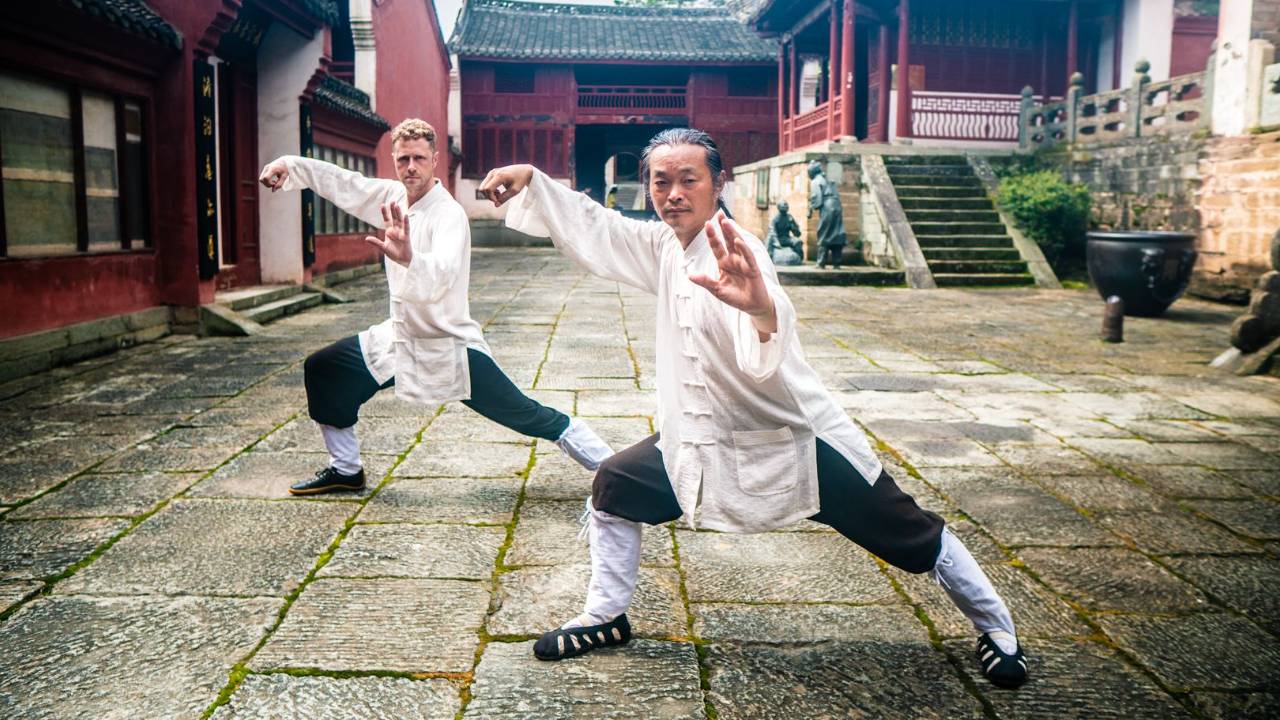
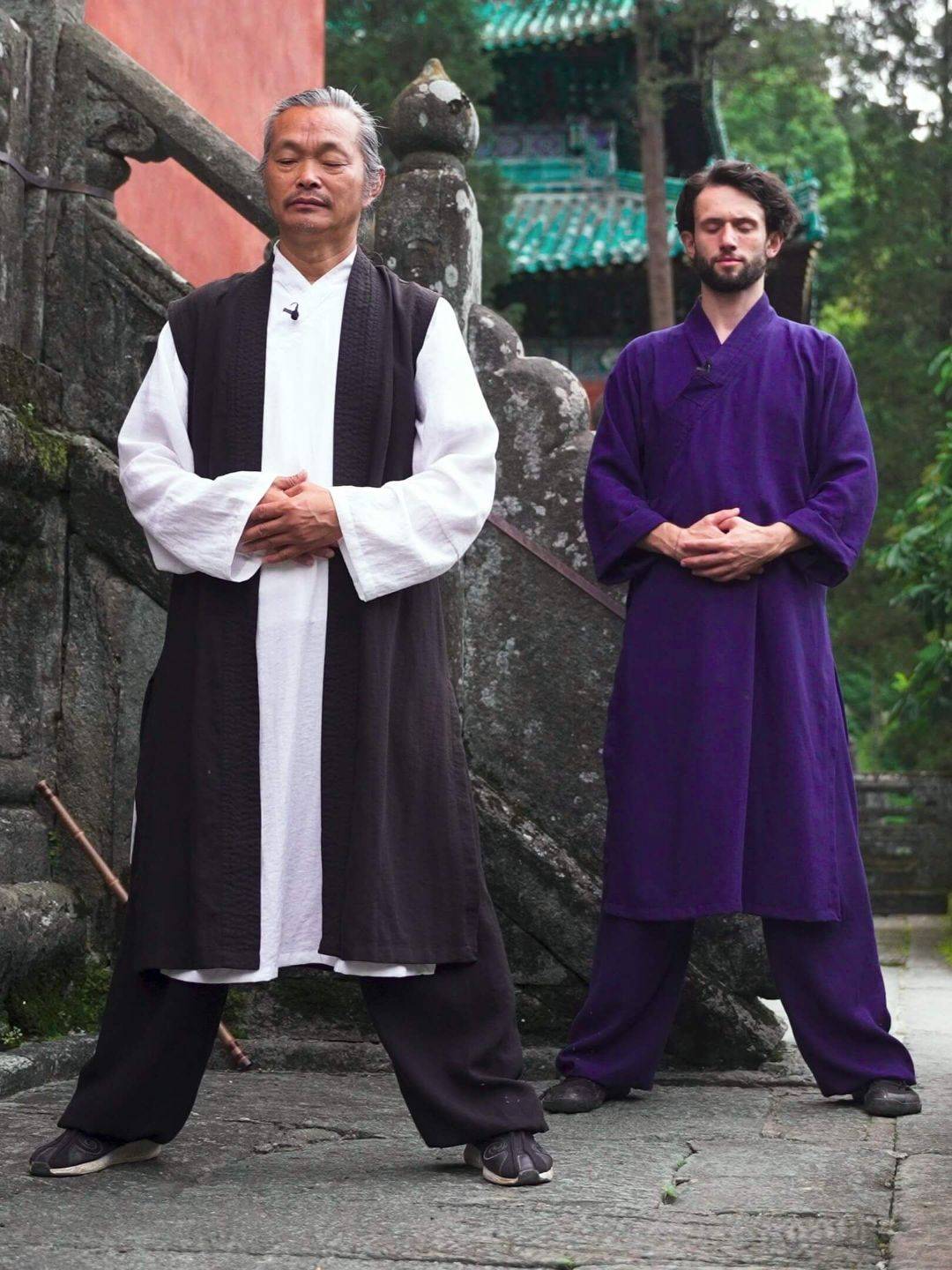
A quick note: at Taoist Wellness Online we teach Tai Chi, Qi Gong, Taoist meditation and Taoist philosophy. We don't teach folk religious ritual, and this article describes folk traditions for cultural interest and context.
Understanding the Nature of Chinese Folk Religion
Chinese folk religion doesn't fit neatly into Western categories. It has no single founder, no single sacred text, and no central authority. Instead, it grew organically from Chinese villages and cities over a very long time.
Think of it as the spiritual language spoken by everyday people. Farmers, merchants, fishermen, and families developed practices to meet their immediate needs: good harvests, safe journeys, healthy children, peaceful ancestors. These practices drew from several sources at once.
The Three Teachings and Folk Practice
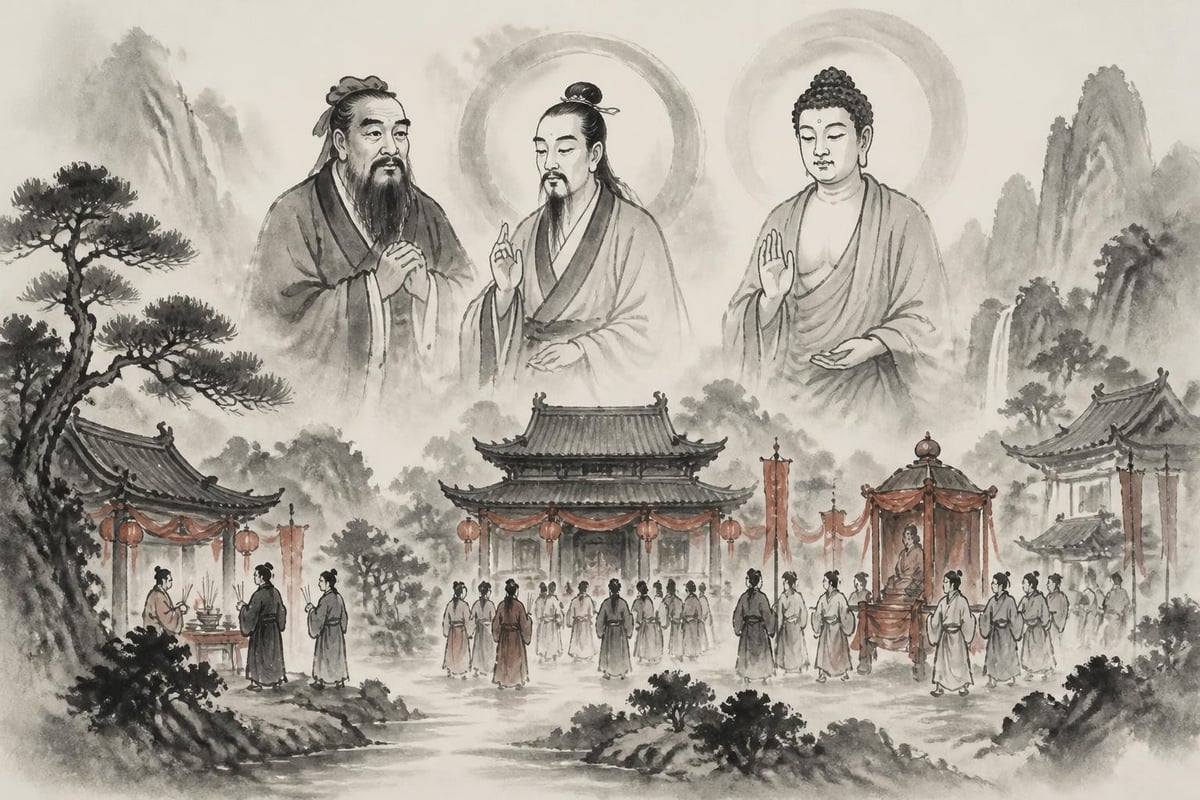
Chinese folk religion weaves together elements from what scholars call the "Three Teachings":
- Confucianism contributes ethical frameworks, ancestor veneration, and family values
- Taoism provides cosmology, ritual specialists, deities, and practices for longevity
- Buddhism adds ideas of karma, rebirth, and compassion
Yet Chinese folk religion remains distinct from all three. It predates them in some respects and absorbs them in others. A village temple might house Taoist immortals, Buddhist bodhisattvas, Confucian sages, and purely local spirits under one roof, with no sense of contradiction. To explore how two of these traditions differ, see our article on Taoism vs Confucianism.
Core Beliefs and Practices
The foundation of Chinese folk religion rests on several key ideas:
Reciprocity with the spirit world. Humans and spirits exist in a mutual relationship. Offerings, rituals, and respectful behaviour maintain harmony and invite blessings.
Ancestor veneration. Deceased family members remain part of family life, receiving care, respect, and regular attention through offerings and ceremonies.
Local deity worship. Each community, profession, or place may have its own protective gods and spirits. These aren't universal beings but specific guardians with intimate knowledge of local needs.
The emphasis is on action over belief. What matters isn't abstract theology but whether you perform the rituals properly, honour your ancestors, and keep right relationships with both seen and unseen forces.
Deities, Spirits, and the Pantheon
The spiritual landscape of Chinese folk religion is rich and diverse, populated by countless beings with specific roles and territories.
Popular Deities and Their Roles
| Deity | Domain | Typical Worshippers |
|---|---|---|
| Mazu (妈祖) | Sea protection, sailors | Coastal communities, fishermen |
| Guan Yu (关羽) | Loyalty, business, protection | Merchants, police, martial artists |
| City God (城隍) | Local governance, afterlife judgement | Urban residents, officials |
| Kitchen God (灶神) | Household affairs, moral oversight | Families, domestic workers |
| Tudi Gong (土地公) | Land, agriculture, local prosperity | Farmers, neighbourhood associations |
These deities often began as historical figures whose virtuous lives earned them divine status. Guan Yu was a general from the Three Kingdoms period. Mazu was a young woman said to have saved sailors through her spiritual gifts. Their stories remain vivid and personal.
The Fluidity of the Pantheon
Unlike rigid theological systems, the folk religious pantheon keeps evolving. New deities emerge, old ones fade, and status shifts based on how effective a deity is believed to be. If prayers to a particular god seem to bring results, that deity's influence grows. If not, worshippers may turn elsewhere.
This practical approach extends to how people relate to deities. Worshippers often describe the relationship in exchange terms: "I make offerings, the deity provides protection." Yet genuine affection and gratitude also colour these exchanges.
Temples, Festivals, and Community Life
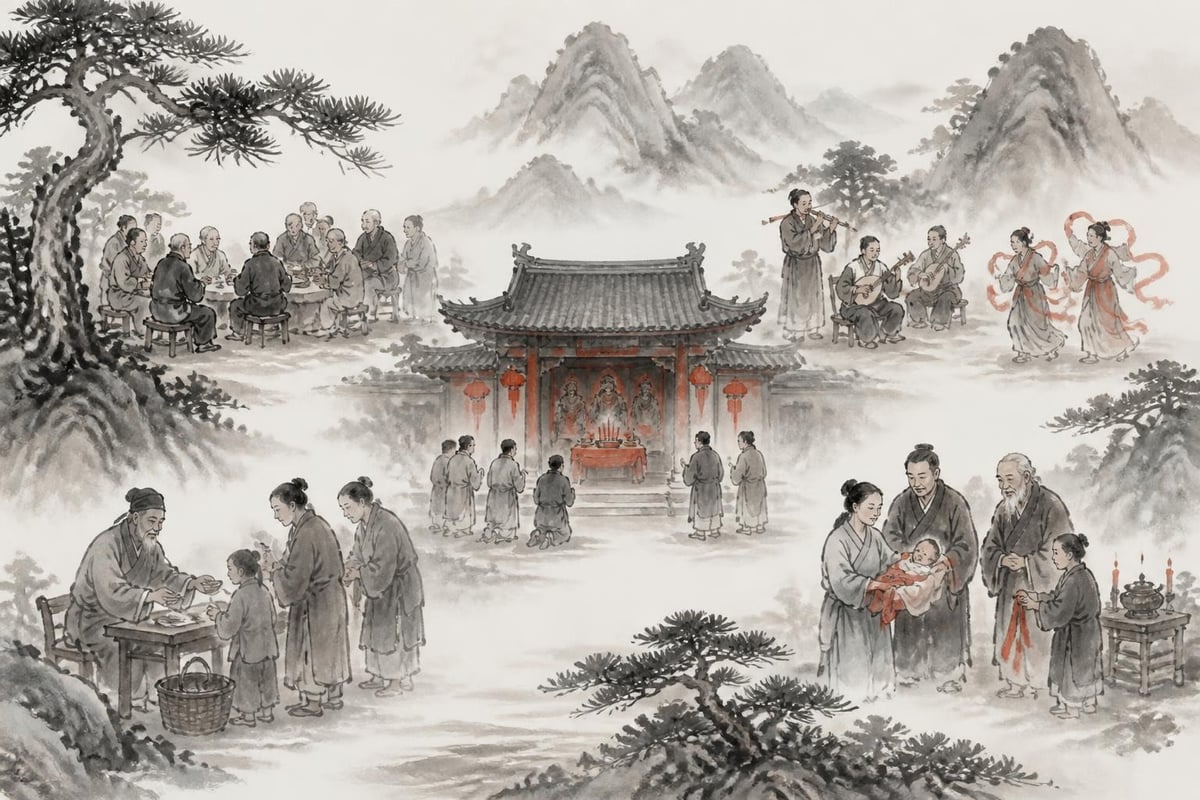
Chinese folk religion comes alive most visibly in temples and festivals, where individual practice becomes collective celebration. For a closer look at the ritual traditions of the wider Taoist world, see our guide to Taoist rituals and ceremonies.
Temple Architecture and Function
Folk temples serve several purposes beyond worship:
- Community gathering spaces for meetings and celebrations
- Centres for preserving local history and identity
- Social hubs offering charity and help with disputes
- Places for life-cycle ceremonies (births, weddings, funerals)
Temple committees, usually made up of local elders and volunteers, manage these spaces. They organise festivals, maintain buildings, and help rituals continue across generations.
Seasonal Festivals and Rituals
The folk religious calendar follows lunar months and agricultural cycles:
- Spring Festival (Lunar New Year) - family reunions, ancestor offerings, deity processions
- Tomb Sweeping Festival - grave tending, ancestor veneration, outdoor gatherings
- Dragon Boat Festival - protective rituals, community races
- Mid-Autumn Festival - harvest thanksgiving, moon celebration, family unity
- Winter Solstice - ancestor offerings, family meals, year-end ceremonies
Each festival involves specific foods, rituals, and community activities that strengthen social bonds while honouring spiritual obligations.
Practice in Daily Life
Chinese folk religion isn't confined to special occasions. It runs through daily routines in small, consistent actions.
Home Altars and Ancestor Tablets
Many practising families keep home altars with:
- Ancestor tablets or photographs
- Deity images or statuettes
- Incense burners and candle holders
- Offering plates for food and drink
Morning and evening incense, regular food offerings, and prayers on anniversaries keep ancestors present in family life. This is often understood less as worshipping the dead and more as an extension of filial piety beyond death.
Divination and Fortune-Telling
Seeking guidance from the spirit world through various methods remains common:
- Bamboo fortune sticks drawn at temples and interpreted by attendants
- Moon blocks (jiaobei) thrown to receive yes/no answers from deities
- Spirit writing, where mediums are believed to channel divine messages
- Almanac consultation for auspicious dates and activities
These practices help people make decisions about marriages, business ventures, travel, and major life changes. They offer comfort and a framework in uncertain times, much like contemplative prayer in other traditions.
Chinese Folk Religion in the Modern World
Despite predictions that modernisation would erase traditional beliefs, Chinese folk religion shows remarkable resilience and adaptation.
Contemporary Revival and Transformation
Recent decades have seen renewed interest in folk religious practice, particularly in coastal China and diaspora communities. Temples are renovated, festivals grow, and younger generations show fresh interest.
Several factors contribute to this revival:
- Economic growth allowing investment in temples and festivals
- Growing recognition of cultural heritage value
- Nostalgia for traditional community bonds
- A search for meaning beyond material success
The practices themselves evolve. Temples now maintain websites and social media. Devotees coordinate pilgrimages through messaging apps, and digital fortune-telling sits alongside traditional methods.
Regional Variations and Adaptations
Chinese folk religion looks different across regions, reflecting local history, dialect, and environment. Coastal areas emphasise sea deities like Mazu. Agricultural regions focus on earth gods and harvest spirits. Cities develop new forms suited to apartment living and busy schedules.
Diaspora communities around the world keep these traditions while adapting to new settings. A Chinese temple in San Francisco or Singapore might look familiar to a villager from Fujian, yet include local elements and serve the needs of its own community.
Connection to Taoist Wellness Practices
The relationship between Chinese folk religion and formal Taoist practice runs deep and goes both ways. Many folk temples invite Taoist priests for major rituals. Taoist deities appear on folk altars. Folk festivals include Taoist ceremonies.
The Wudang Mountains in China are home to a spectacular collection of Taoist temples. George Thompson shares a short film of the mountains below, which gives a feel for the setting in which Wudang Tai Chi grew. Please note that it shows Taoist temples rather than folk temples.
Beyond shared symbols, both traditions emphasise:
Harmony with natural cycles. Seasonal awareness, lunar timing, and sensitivity to the environment shape practice in both.
Care for vitality. While folk religion often seeks blessings from external deities, Taoist practices like Tai Chi and Qi Gong look inwards, using gentle movement, breath and relaxation.
Practical application over abstract theory. Both focus on what works and what brings tangible benefit in daily life.
For those drawn to the philosophical side, our Taoist philosophy course explores the ideas that run beneath many folk intuitions, and our teacher Master Gu shares the Wudang tradition in a clear, accessible way.
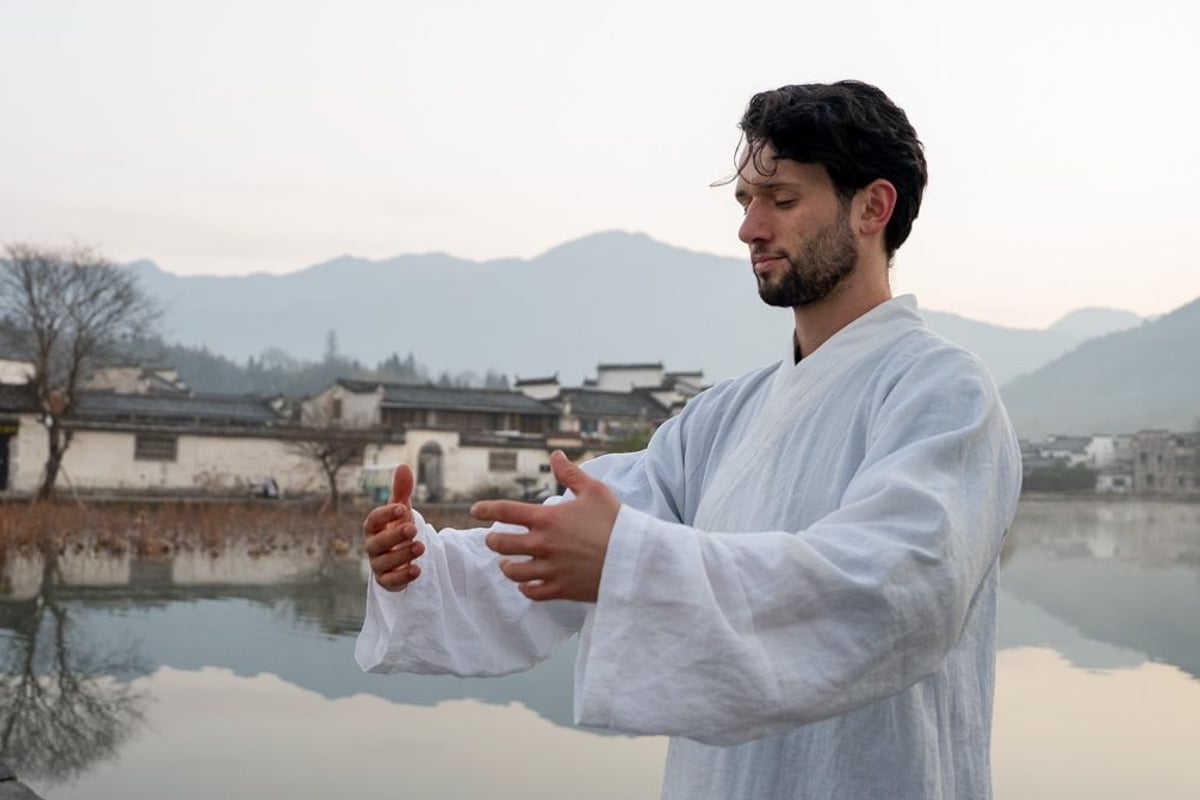
If you'd like an easy way in, our free Taoist course offers an accessible introduction to Tai Chi, Qi Gong, meditation and Taoist wisdom with simple techniques for balance and calm. As with any new exercise, please check with your healthcare professional first if you have existing health concerns.
Challenges and Controversies
Understanding Chinese folk religion today means acknowledging the complex setting in which it exists.
Definitional Debates
Scholars and practitioners debate what even counts as "Chinese folk religion." Some see it as a distinct religious category. Others see it as the popular expression of Taoism, or as a cultural tradition rather than a religion. These aren't merely academic questions; they affect how practice is described and classified.
The challenge comes partly from the fluid, decentralised nature of folk religion. It lacks the clear boundaries that make Western religious categories comfortable.
Recognition and Classification
How folk practice is recognised and classified has varied by time and place. Folk practices often sit outside the lists of officially recognised religions, and local approaches differ widely. Some folk temples are valued as cultural heritage sites, while the situation for others is less certain.
The Living Tradition Today
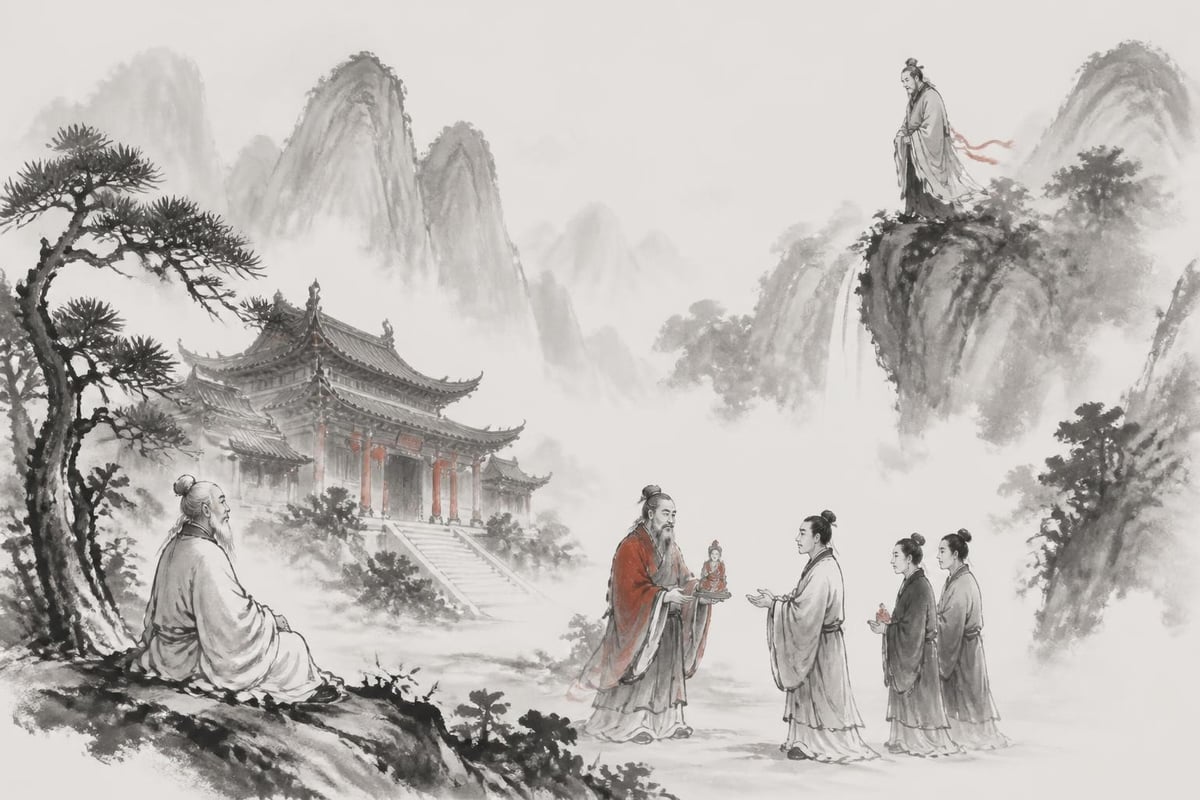
What makes Chinese folk religion remarkable isn't just its age but its vitality. It continues to evolve, adapt, and meet real needs in people's lives.
Intergenerational Transmission
Passing folk religious knowledge on faces both obstacles and opportunities today:
Challenges:
- Urban migration disrupting village-based practice
- Secular education reducing religious literacy
- Digital entertainment competing for attention
- Uncertainty about public practice in some places
Opportunities:
- Heritage tourism creating incentives for preservation
- Digital platforms enabling knowledge sharing
- Diaspora connections strengthening cross-border networks
- Young people's interest in cultural roots and identity
Successful transmission increasingly happens through several channels: family teaching, temple programmes, cultural festivals, online resources, and experiential learning.
Integration with Other Practices
Many people today don't see Chinese folk religion as exclusive. They might visit Buddhist temples, practise Taoist meditation, attend Christian services, and keep a folk altar without feeling any conflict.
This pluralistic approach reflects traditional Chinese attitudes to religion. The question isn't "which religion is true?" but "which practices serve me in this situation?" Different traditions offer different tools for different purposes.
The Heart of Folk Practice
At its core, Chinese folk religion addresses universal human needs: connection, meaning, protection, and hope.
When a mother lights incense before an image of a deity, praying for her child's health, she takes part in a tradition stretching back many centuries. When a community processes through the streets carrying its patron god's statue, it affirms bonds that go beyond individual isolation. When a family gathers to honour its ancestors, it declares that love and obligation extend beyond death.
These practices don't require sophisticated theology. They ask for sincerity, proper form, and consistent effort, offering accessible ways for ordinary people to engage with something larger than themselves.
The Body-Spirit Connection
One aspect of Chinese folk religion that resonates with wellbeing practices is the sense that body and spirit aren't separate. Offerings include food because spirits are thought to need nourishment. Rituals involve movement and gesture because physical action carries meaning. Health comes from harmonising inner life with outer relationships.
This holistic view echoes the spirit of Wudang practice, where slow, mindful movement is used to cultivate both physical ease and calm awareness.
Global Influence and Adaptation
Chinese folk religion extends far beyond China's borders, carried by migration and kept alive through diaspora communities worldwide.
Diaspora Communities
Wherever Chinese communities have settled, folk temples have followed:
- Southeast Asian temples blending Chinese, local, and colonial influences
- North American associations maintaining hometown deity worship
- European communities adapting practices to city life
- Latin American fusion with local spiritual traditions
These transplanted traditions often become stronger in diaspora, serving as markers of cultural identity and community in unfamiliar surroundings.
Cultural Export and Understanding
As global interest in Chinese culture grows, aspects of folk religion reach wider audiences:
| Aspect | Global Expression | Example |
|---|---|---|
| Festivals | Lunar New Year celebrations worldwide | Dragon dances, red envelopes, family reunions |
| Deities | Cross-cultural deity adoption | Guan Yin veneration in diverse Buddhist communities |
| Practices | Feng shui consultations | Home and office arrangement for harmony |
| Food | Festival cuisine as cultural connection | Mooncakes, zongzi, reunion meals |
This exposure creates opportunities for deeper understanding, and also risks of superficial borrowing. Respectful engagement means recognising the lived context and community bonds that give these practices their meaning.
Folk Religion and Personal Cultivation
While Chinese folk religion emphasises relationships with deities and ancestors, it also holds seeds of personal growth.
Self-Cultivation Within Community
Taking part in folk religious life can nurture virtues:
- Filial piety through ancestor care
- Generosity through offerings and temple donations
- Patience through ritual observance
- Humility before forces greater than oneself
- Community responsibility through festival participation
These aren't abstract ideals but practised habits, reinforced through regular action. Over time, ritual can shape character.
Different Paths to Inner Cultivation
For some people, folk religious practice becomes a doorway to quieter, more inward practices. Someone who begins by praying to a deity for health might later become curious about gentle movement practices like Qi Gong. A family keeping an ancestor altar might discover meditation as a way to quiet the mind and deepen awareness.
The step can feel natural because both approaches recognise that we live within networks of relationship, visible and invisible, and that our wellbeing is tied to living in harmony with the world around us and within us.
Chinese folk religion continues to offer many people meaningful ways to meet life's challenges, honour their roots, and feel connected to something beyond the everyday. Its flexibility, practicality, and deep humanity help explain its ongoing relevance in changing times. If you're drawn to explore the calm, inward side of Chinese tradition, Taoist Wellness Online offers courses in Tai Chi, Qi Gong, Taoist meditation and Taoist philosophy with Master Gu, a 15th-generation San Feng Pai Wudang Taoist Master with 25+ years of teaching experience, along with a supportive global community and a monthly live session and Q&A, to help you bring ancient wisdom into daily life.
Related reading