Tai Chi What Is: Ancient Practice for Modern Wellness
Sep 02, 2026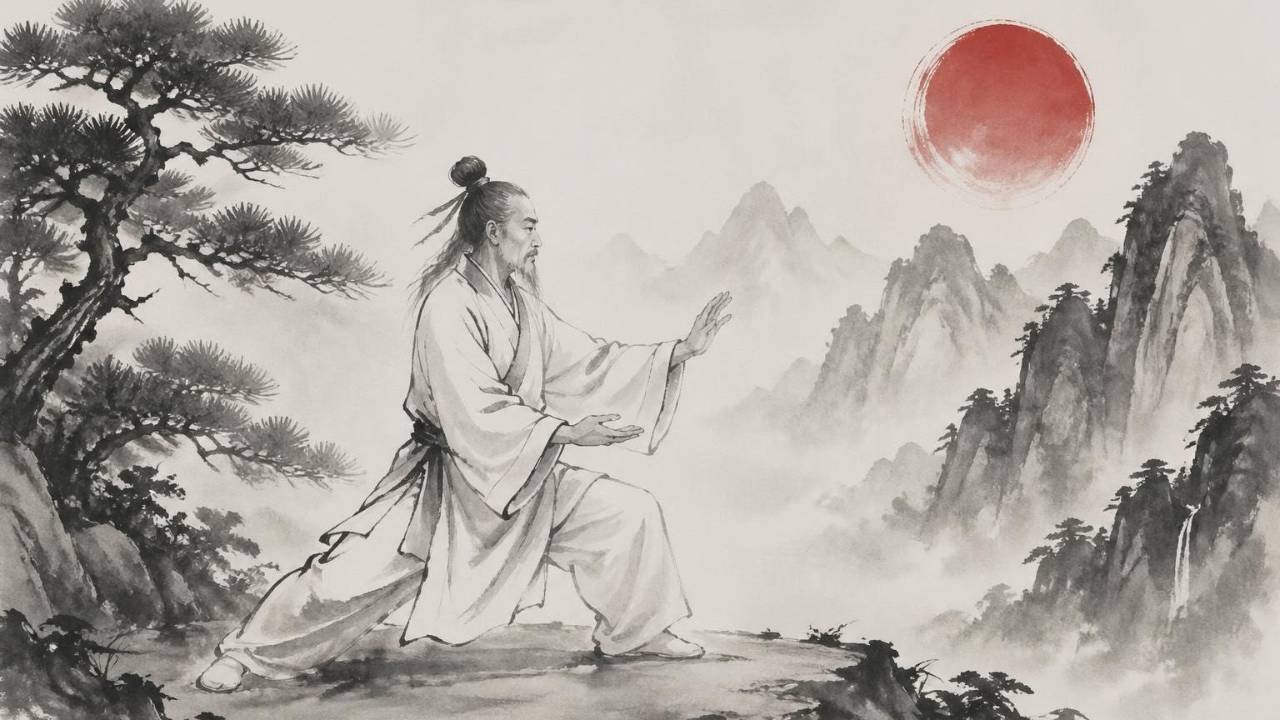
When people first ask "tai chi what is," they're often surprised to learn it's far more than gentle exercise. This ancient Chinese practice weaves together movement, meditation, and martial arts into a seamless flow that has transformed countless lives over centuries. Understanding tai chi what is means recognising it as both a profound wellness system and an accessible practice that meets you exactly where you are, whether you're seeking stress relief, physical strength, or a deeper connection to inner calm.
The Fundamental Nature of Tai Chi
Tai chi, also known as Tai Chi Chuan, originated in China as both a martial art and a method for cultivating life energy, or qi. When exploring tai chi what is at its core, you're looking at a practice built on slow, deliberate movements synchronised with deep breathing and focused awareness.
The practice emerged from Taoist philosophy, which emphasises harmony with natural rhythms and the balance of opposing forces. Each movement in tai chi expresses this principle, flowing between expansion and contraction, rising and sinking, emptiness and fullness.
The Philosophy Behind the Movement
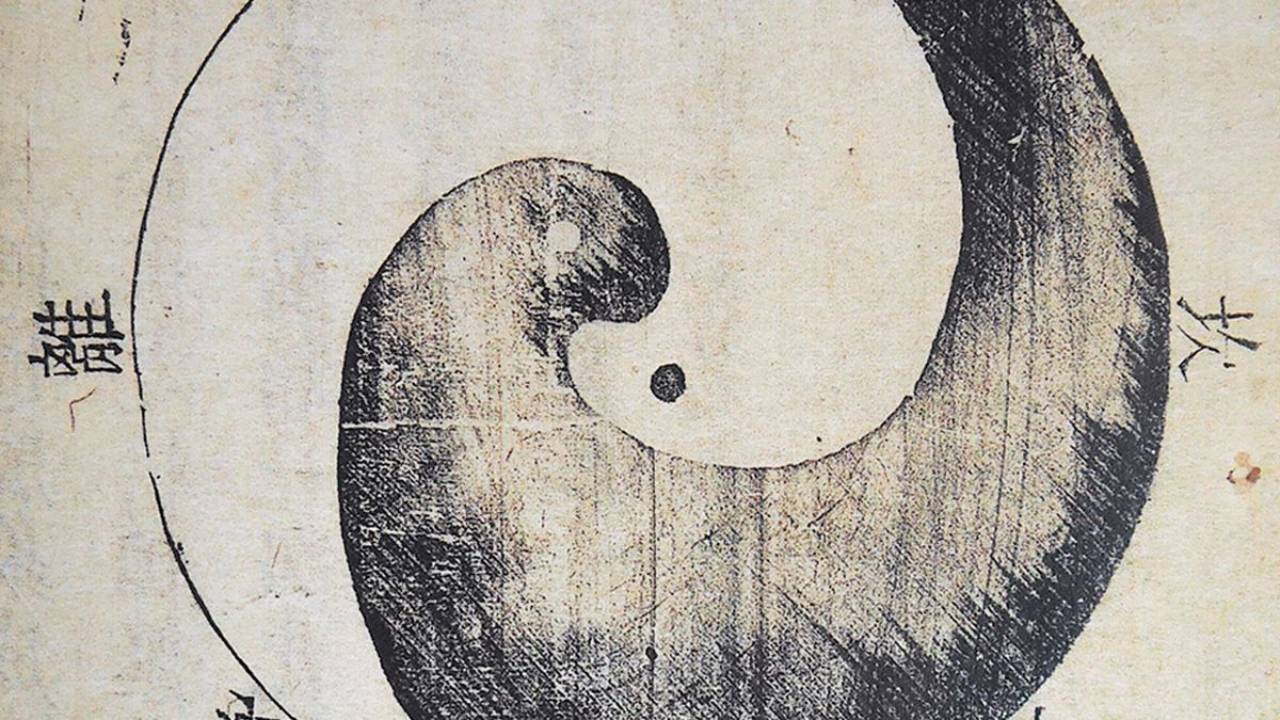
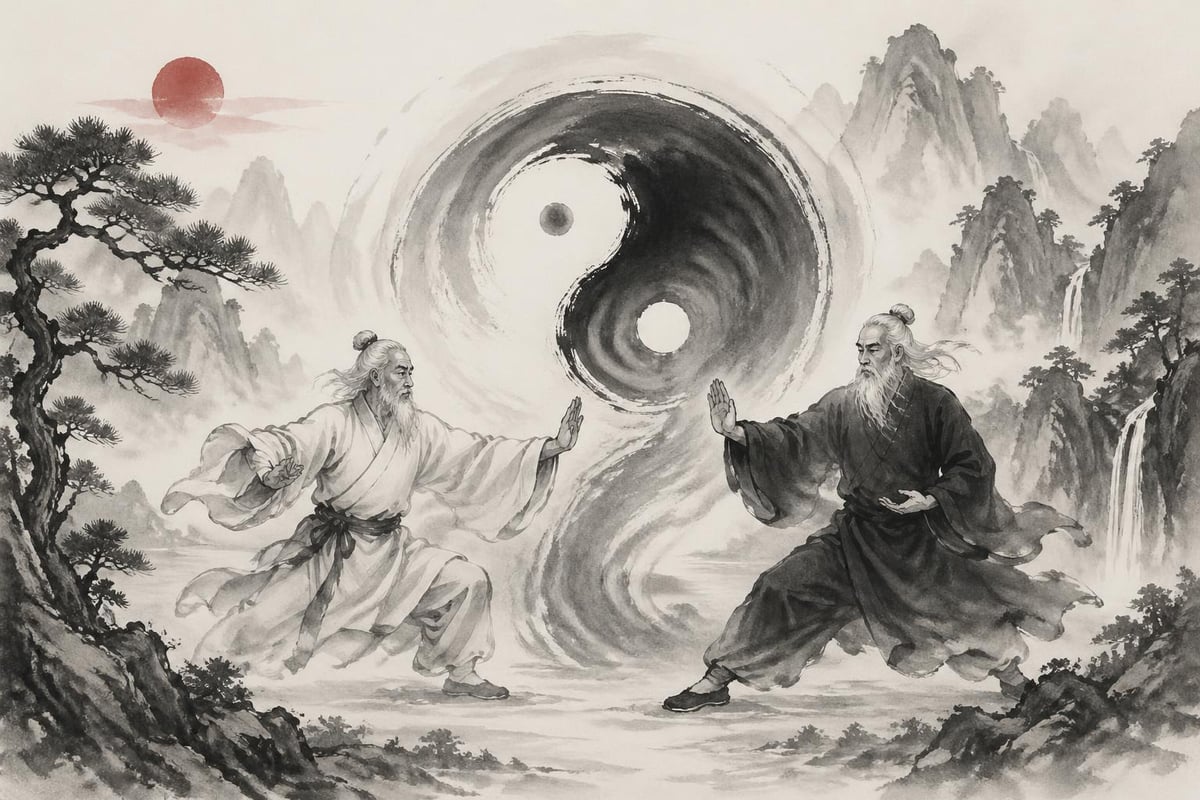
At the heart of understanding tai chi what is lies the concept of yin and yang. These complementary forces appear in every aspect of the practice:
- Soft overcomes hard through yielding rather than resisting
- Stillness within movement creates mental clarity during physical activity
- Internal strength develops through relaxation rather than tension
- Balance comes from constant adjustment rather than rigid control
Traditional forms consist of sequences called "sets" that can take anywhere from five minutes to an hour to complete. Each posture transitions smoothly into the next, creating what practitioners often describe as "meditation in motion." Our piece on What Does The Tai Chi Symbol Mean? unpacks this yin-yang symbolism in more depth.
Master Gu demonstrates authentic Taoist Tai Chi with his international students below, filmed in the yard of the Laozi Temple in the Wudang Mountains.
Physical and Mental Health Benefits
When people discover tai chi what is capable of delivering for their wellbeing, they often wish they'd started sooner. This gentle practice offers remarkable benefits for strength, flexibility, and balance while potentially preventing or treating various health conditions.
Body Transformation Through Gentle Practice
The physical changes from regular tai chi practice might surprise you, especially given its unhurried pace:
| Benefit Category | Specific Improvements |
|---|---|
| Strength | Leg muscles, core stability, upper body endurance |
| Flexibility | Joint mobility, range of motion, tendon resilience |
| Balance | Proprioception, fall prevention, spatial awareness |
| Cardiovascular | Heart health, circulation, blood pressure regulation |
Research shows that despite looking effortless, tai chi engages muscles throughout your entire body. The constant weight shifting strengthens legs while the circular arm movements build upper body endurance without strain.
Mental Clarity and Emotional Balance
Understanding tai chi what is means recognising its powerful effects on mental health. Stress reduction, improved mood, better sleep quality, and enhanced cognition rank among its top benefits.
The practice naturally quiets mental chatter because it requires present-moment attention. You simply can't think about tomorrow's meeting while tracking your weight distribution, breath rhythm, and hand position simultaneously. This focused awareness creates space between you and your thoughts, offering relief from anxiety and rumination.
Many practitioners report:
- Decreased symptoms of low mood and anxiety
- Improved sleep quality and duration
- Better stress management in daily life
- Enhanced mental focus and memory
- Greater emotional resilience
Different Styles and Approaches
When researching tai chi what is available to learn, you'll encounter several major styles, each with distinct characteristics while sharing fundamental principles. Our Tai Chi Beginners Course: Types of Tai Chi covers each of these in greater depth if you'd like to explore further.
The Five Traditional Family Styles
Chen Style represents the oldest form, featuring explosive movements mixed with slow sequences. It's more physically demanding and clearly shows tai chi's martial arts roots.
Yang Style has become the most popular worldwide due to its accessibility. Master Yang Lu-chan modified movements to be larger, slower, and more flowing, making it ideal for health and wellness focus.
Wu Style emphasises small, compact movements with a slight forward lean. It's excellent for people with limited space or mobility concerns.
Sun Style combines tai chi with elements of two other internal martial arts. It features higher stances and distinctive stepping patterns, making it particularly suitable for older adults.
Hao Style remains the least common but maintains precise technique and internal focus. It's typically practised by dedicated students seeking deeper understanding.
Modern Simplified Forms
Beyond traditional family styles, simplified forms have emerged to make the practice more accessible:
- 24-Form (Beijing Form): Created in 1956, this shortened Yang-style sequence takes about five minutes
- 8-Form: An even briefer introduction perfect for beginners
- 42-Form: Competition standard that blends elements from multiple styles
- Tai Chi for Health programmes: Therapeutic versions designed by medical professionals
When you're exploring tai chi what is right for your needs, consider starting with a simplified form through our Tai Chi course that builds proper foundation.
The Practice Structure and Components
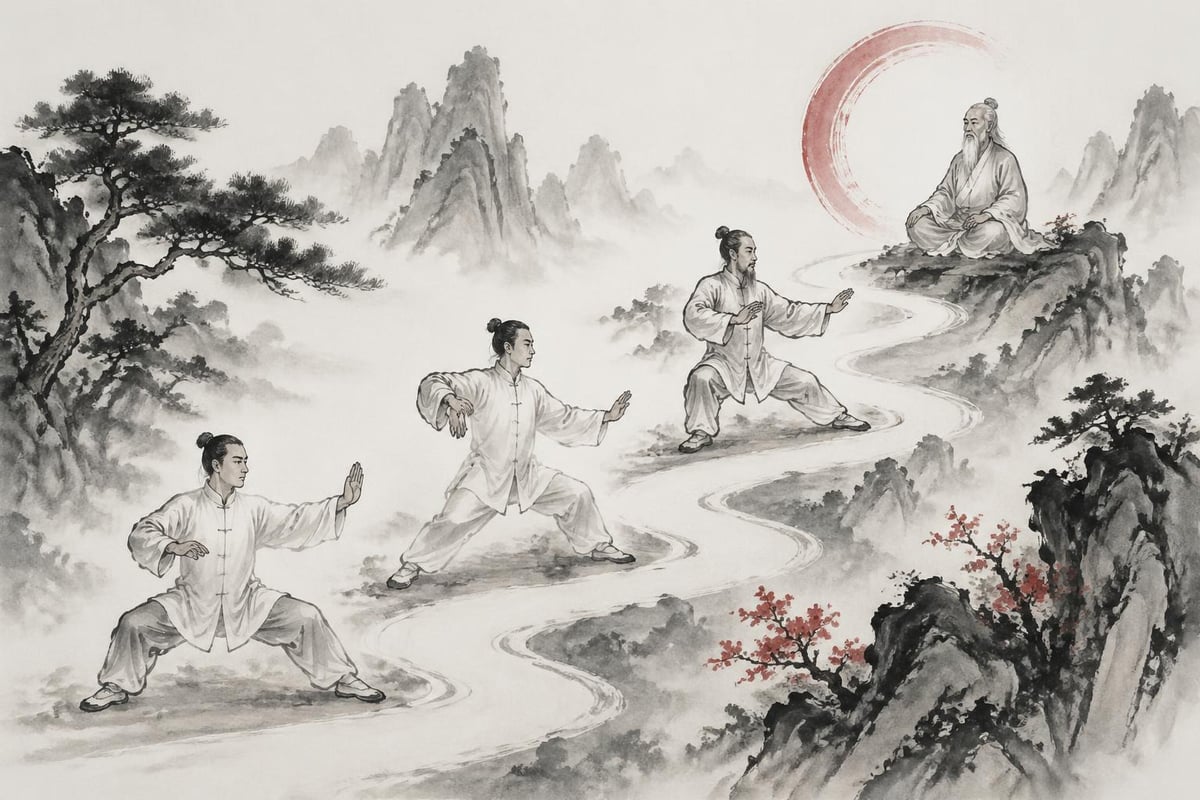
To fully grasp tai chi what is in practical terms, you need to understand its three essential components that work together synergistically.
Movement and Form
The visible aspect of tai chi consists of choreographed sequences. Each posture has specific requirements:
- Weight distribution: Usually 60-70% on one leg, constantly shifting
- Body alignment: Spine upright, shoulders relaxed, tailbone tucked
- Hand positions: Precise yet soft, as if holding a delicate object
- Eye focus: Following the leading hand or directed toward an imaginary opponent
Beginners often focus primarily on memorising the sequence, while advanced practitioners refine subtle details that transform mechanical movement into authentic expression.
Breath Coordination
Breathing in tai chi follows natural patterns that support movement. Unlike some practices with complex breathing techniques, tai chi encourages deep, abdominal breathing that synchronises organically with your motions.
Generally, you inhale during expansive, upward, or gathering movements and exhale during contracting, downward, or releasing actions. This isn't forced but develops naturally as your practice deepens.
Internal Energy Cultivation
The invisible dimension of tai chi what is really about involves cultivating and directing qi (life energy). This aspect connects tai chi with broader Taoist practices like our Qi Gong course, which focuses specifically on energy work.
As you practise, you develop awareness of subtle sensations: warmth, tingling, fullness, or gentle pressure in your hands, lower abdomen, or along your spine. These sensations indicate qi moving through your body's energy pathways.
Learning Tai Chi in Modern Times
Discovering tai chi what is available for learning has changed dramatically in recent years, with options expanding beyond traditional in-person classes.
Traditional In-Person Learning
Finding a qualified instructor remains valuable, especially for beginners who benefit from hands-on corrections. Look for teachers with:
- Lineage connection to authentic masters
- Years of personal practice (ideally 10+)
- Teaching experience with students at your level
- Understanding of health and safety considerations
Working with knowledgeable instructors ensures you're practising safely and effectively.
Online Learning Advantages
Modern technology has made authentic tai chi instruction accessible regardless of location. Quality online programmes offer distinct benefits:
| Traditional Classes | Online Programmes |
|---|---|
| Fixed schedule | Learn at your own pace |
| Limited review time | Unlimited replay access |
| One teaching style | Multiple camera angles |
| Geographic constraints | Learn from masters anywhere |
| Group pace | Personalised progression |
When choosing online instruction, seek programmes led by authentic masters with verifiable credentials. Taoist Wellness Online provides access to Master Gu, a 15th-generation San Feng Pai Wudang Taoist Master with over 25 years of teaching experience.
Building a Sustainable Practice
Understanding tai chi what is required to establish a lasting practice helps set realistic expectations:
- Start with 10-15 minutes daily rather than occasional long sessions
- Focus on consistency over perfection in your movements
- Create a dedicated space that signals your mind it's practice time
- Join a community of fellow practitioners for support and motivation
- Be patient with your progress, as benefits accumulate gradually
Despite its gentle appearance, tai chi delivers health benefits comparable to more vigorous exercises, making it worth the sustained commitment.
Tai Chi for Specific Life Situations
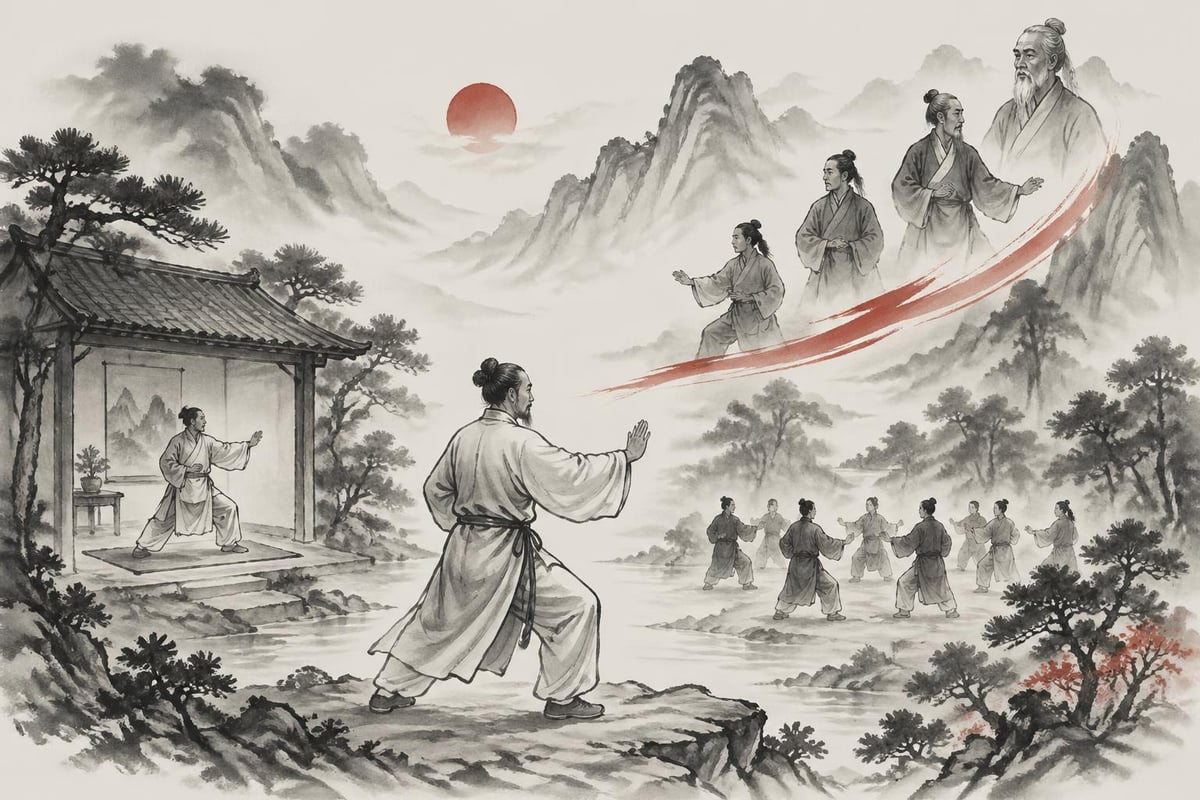
Exploring tai chi what is helpful for reveals its remarkable adaptability to different ages, conditions, and life circumstances.
Healthy Ageing and Fall Prevention
Tai chi holds particular value for older adults, with improvements in balance, mental focus, and significant reduction in fall risk. The practice strengthens the exact muscle groups and neural pathways needed for stability.
Seniors benefit from:
- Improved proprioception that helps prevent falls
- Maintained bone density through gentle weight-bearing
- Enhanced cognitive function that combats age-related decline
- Social connection through classes or our online community
Managing Chronic Conditions
Many people discover tai chi what is capable of when conventional approaches fall short. The practice shows promise for:
- Arthritis: Reduces pain and stiffness while improving joint function
- Heart disease: Supports cardiovascular health with appropriate intensity
- Fibromyalgia: Decreases pain and fatigue through gentle movement
- Parkinson's disease: Improves balance and motor control
- COPD: Strengthens respiratory function through breathing practice
Always consult healthcare providers before starting if you have medical conditions, though tai chi's adaptability makes it suitable for most people with proper modifications.
Sleep and Hormonal Balance
Recent research reveals tai chi what is particularly effective for addressing sleep issues, with studies showing it helps combat insomnia during menopause by promoting relaxation and reducing anxiety.
The practice regulates your nervous system, shifting you from stress response to rest-and-digest mode, which naturally improves sleep quality.
Integrating Tai Chi with Broader Taoist Practices
When you understand tai chi what is within the larger context of Taoist wellness, you unlock deeper dimensions of practice.
The Relationship to Qi Gong
While tai chi and qi gong overlap significantly, qi gong typically involves simpler, more repetitive movements specifically designed to cultivate energy. Many practitioners combine both, using qi gong for focused energy work and tai chi for flowing forms that integrate that energy.
Connection to Taoist Philosophy
Tai chi embodies core Taoist principles that extend far beyond physical movement:
- Wu Wei (effortless action): Moving with natural flow rather than forcing
- Ziran (spontaneity): Responding authentically to each moment
- Balance: Harmonising opposing forces within yourself
- Simplicity: Finding profound depth in basic principles
Studying our Taoist Philosophy course alongside your physical practice enriches both, revealing how ancient wisdom applies to modern life challenges.
Meditation and Internal Cultivation
Tai chi serves as moving meditation, but it also complements seated practice beautifully. The body awareness you develop in tai chi enhances sitting meditation, while the mental clarity from meditation deepens your tai chi. Many students explore our Taoist Meditation course to round out their practice.
Getting Started on Your Journey
Now that you've explored tai chi what is and what it offers, you might wonder about practical first steps.
What You Need
The beauty of tai chi lies in its minimal requirements:
- Comfortable clothing that allows free movement without restriction
- Flat shoes or barefoot practice on non-slip surfaces
- Modest space (about 6x6 feet for most forms)
- 15-20 minutes for meaningful practice sessions
You don't need special equipment, expensive gear, or extensive space. Simple, loose-fitting clothes work perfectly when starting.
Your First Week of Practice
Begin gently and build gradually:
Days 1-2: Learn basic stance and weight shifting
Days 3-4: Add simple arm movements while maintaining stance
Days 5-6: Coordinate breathing with movement
Day 7: Review everything you've learned and notice how you feel
Finding Your Path Forward
Everyone's tai chi journey unfolds uniquely. Some people dive deep into traditional forms and philosophy, while others appreciate it primarily as stress relief and gentle exercise. Both approaches are valid.
Consider exploring our free Taoist course to experience authentic instruction before committing to a full programme, covering Tai Chi, Qi Gong, Meditation, and Taoist Wisdom. This allows you to discover whether the teaching style resonates with your learning preferences.
The Transformative Potential of Regular Practice
Understanding tai chi what is capable of transforming in your life comes through consistent practice over months and years rather than days or weeks.
Short-Term Changes (Weeks to Months)
Early practitioners typically notice:
- Better sleep quality within 2-3 weeks
- Reduced stress response to daily challenges
- Improved flexibility and range of motion
- Enhanced body awareness and posture
- Mental clarity during and after practice
These initial benefits motivate continued practice and signal that deeper changes are developing.
Long-Term Transformation (Months to Years)
With sustained practice, tai chi what is really about becomes clear:
Physical resilience: Your body becomes stronger, more balanced, and more adaptable without the wear and tear of high-impact exercise.
Emotional regulation: You develop capacity to remain centred during life's inevitable storms, responding thoughtfully rather than reacting impulsively.
Energetic vitality: Many long-term practitioners report feeling more alive, present, and connected to something larger than themselves.
Wisdom integration: The principles you practise physically begin informing how you approach relationships, work, and personal challenges.
Community and Shared Growth
While tai chi can be practised alone, connecting with others enhances the journey. Fellow practitioners offer encouragement during plateaus, celebrate breakthroughs, and share insights from their own experience. Whether through local classes or our online community, belonging to a practice community enriches your development.
Tai chi offers a pathway to enhanced wellbeing that honours both ancient wisdom and modern needs, accessible to anyone regardless of age, fitness level, or previous experience. If you're ready to explore this transformative practice with authentic guidance, Taoist Wellness Online provides comprehensive instruction from Master Gu, a 15th-generation San Feng Pai Wudang Taoist Master, along with supportive community resources and structured courses designed to meet you wherever you are on your wellness journey.