Meditation for Stress: Ancient Wisdom for Modern Calm
Aug 12, 2026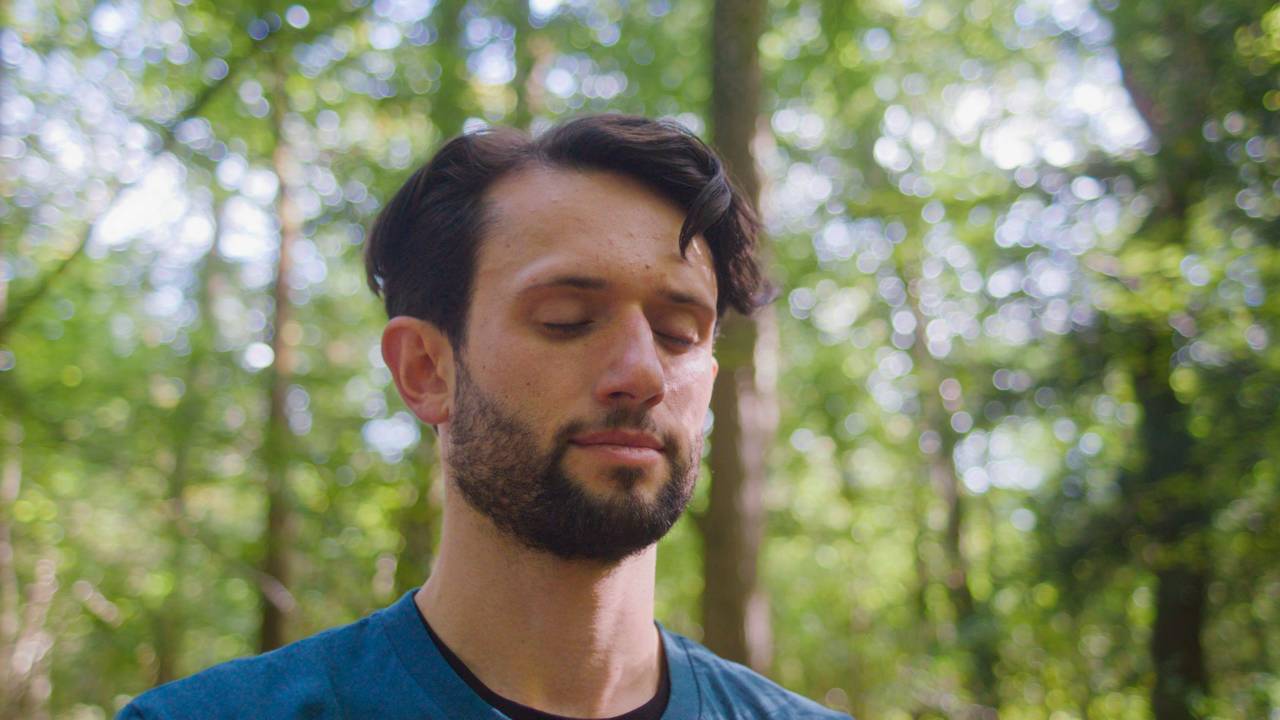
Stress has become an unwelcome companion in our modern lives, showing up in tight shoulders, racing thoughts, and restless nights. We carry tension like a second skin, often unaware of how deeply it affects our energy, health, and relationships. The good news is that meditation for stress offers a time-tested path back to balance, drawing from ancient wisdom that understands the intimate connection between mind, body, and spirit. When you learn to work with stress rather than against it, you discover a wellspring of calm that's been waiting inside you all along.
Understanding How Stress Affects Your Whole System
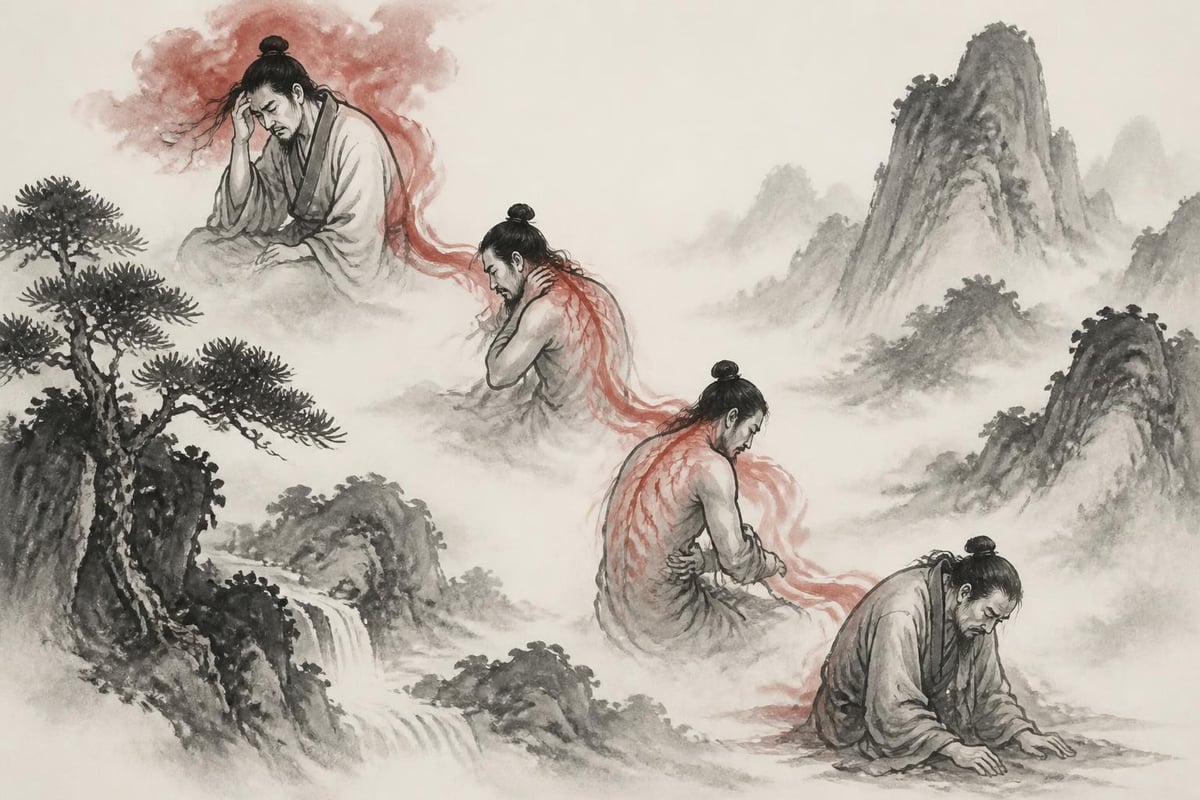
Stress doesn't just live in your mind. It settles into your muscles, disrupts your breathing, clouds your judgement, and drains your vital energy, what Taoists call Qi. When you're stressed, your body activates its fight-or-flight response, flooding your system with cortisol and adrenaline.
This physiological reaction made sense when our ancestors faced immediate physical threats. Today, we trigger the same response during traffic jams, email overload, and financial worries. The result? Chronic activation that exhausts your nervous system and depletes your reserves.
The Hidden Cost of Ongoing Tension
Many people accept stress as normal, even necessary for productivity. This misconception leads to:
- Disrupted sleep patterns and fatigue
- Weakened immune function and frequent illness
- Digestive problems and inflammation
- Difficulty concentrating or making decisions
- Emotional reactivity and relationship strain
- Loss of creativity and joy in daily activities
The ancient Taoists recognised that sustained tension blocks the natural flow of energy through your body. When Qi stagnates, physical and emotional symptoms emerge. Meditation for stress works by restoring this flow, creating space for your system to reset and heal.
What Makes Meditation Effective for Stress Relief
Meditation isn't about stopping your thoughts or achieving perfect peace. It's a practice of coming home to yourself, moment by moment, even when things feel chaotic. Research shows that regular meditation actually changes your brain structure, strengthening areas associated with emotional regulation while reducing activity in stress centres.
George offers a comprehensive walkthrough of meditation from first principles in the video below, a helpful resource whether you're just starting out or looking to deepen an existing practice.
The Science Behind the Practice
When you meditate, several beneficial processes occur simultaneously:
| Physical Changes | Mental Shifts | Energetic Benefits |
|---|---|---|
| Lower heart rate and blood pressure | Reduced rumination and worry | Improved Qi circulation |
| Deeper, slower breathing | Enhanced focus and clarity | Balanced energy centres |
| Relaxed muscle tension | Greater emotional awareness | Restored vital reserves |
| Improved sleep quality | Increased present-moment awareness | Harmonised internal systems |
Our Taoist Meditation course teaches specific techniques that work with your body's natural energy systems. These methods don't just manage symptoms but address the root causes of stress by cultivating inner harmony.
Your nervous system has two main modes: sympathetic (active, alert) and parasympathetic (rest, digest). Most stressed individuals stay locked in sympathetic overdrive. Meditation for stress activates your parasympathetic response, giving your body permission to release, repair, and restore.
Core Meditation Techniques That Transform Stress
Different meditation approaches serve different needs. The beauty of Taoist practice lies in its adaptability, you work with what serves you each day.
Breath Awareness Meditation
Your breath is the bridge between conscious and unconscious, between tension and ease. When stressed, breathing becomes shallow and rapid. By simply observing your breath, you activate your body's natural calming mechanisms.
How to practise:
- Sit comfortably with your spine naturally upright
- Close your eyes or soften your gaze downward
- Notice the sensation of breath entering and leaving your nostrils
- When your mind wanders (it will), gently return attention to the breath
- Continue for 5-15 minutes daily
This foundational practice strengthens your ability to stay present rather than getting swept away by stressful thoughts. Over time, you develop what Taoists call "returning to centre", the capacity to find your ground no matter what's happening around you.
Body Scan and Progressive Relaxation
Stress often hides in places we don't notice, clenched jaw, tight shoulders, contracted belly. A body scan brings awareness to these holding patterns.
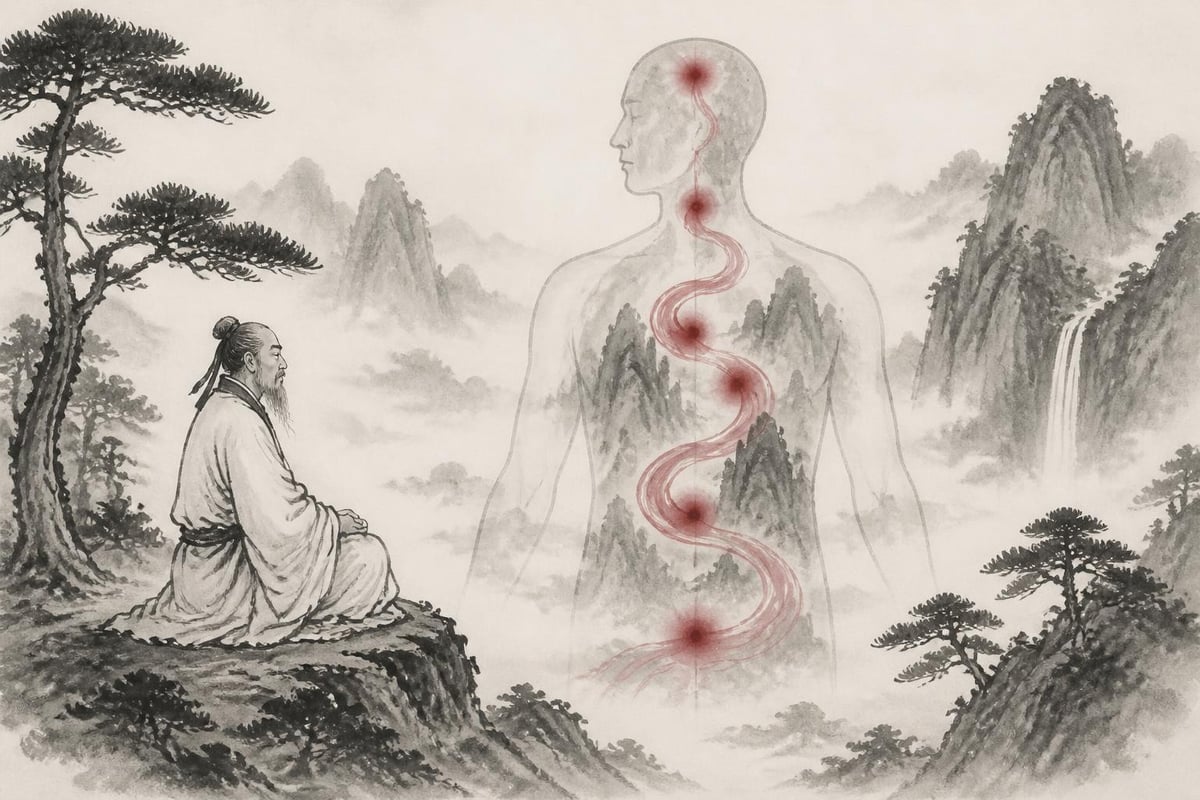
Start at the crown of your head and slowly move attention downward through each body region:
- Face and jaw
- Neck and shoulders
- Arms and hands
- Chest and upper back
- Abdomen and lower back
- Hips and pelvis
- Legs and feet
As you scan, notice where you're holding tension without trying to change anything immediately. Awareness itself begins the release process. Our article on Qi Gong for Beginners: Your Path to Calm Energy explores how this kind of awareness parallels the practice of circulating energy through specific pathways in your body.
Mindful Movement Meditation
Taoist wisdom recognises that stillness isn't the only path to peace. Gentle, intentional movement can dissolve stress that pure sitting meditation might miss. Our article on Taichi Walking: Ancient Practice for Modern Balance explores this same idea, combining meditation with flowing movement to create a dynamic practice that calms your mind while energising your body.
When you move mindfully, you:
- Release physical tension stored in muscles and joints
- Improve circulation and lymphatic flow
- Ground scattered mental energy
- Cultivate body-mind integration
- Access meditative states more easily if sitting feels difficult
Think of movement meditation as "active stillness". Your body moves, but your mind remains centred and present, observing sensations without judgement.
Building a Sustainable Daily Practice
The most powerful meditation for stress is the one you actually do consistently. Starting small and building gradually creates lasting change far better than ambitious plans that fizzle after a week.
Creating Your Practice Foundation
Begin with just five minutes daily. This feels manageable even on your busiest days, and success builds motivation. Choose a specific time and place to anchor your practice. Many people find morning meditation sets a calm tone for the entire day, while others prefer evening practice to release accumulated tension.
Essential elements for consistency:
- Same time daily - Your nervous system loves rhythm and predictability
- Comfortable space - Designate a quiet corner as your meditation spot
- Simple setup - A cushion or chair is enough; no fancy equipment needed
- Realistic expectations - Some days will feel calm, others restless; both are valuable
- Gentle accountability - Track your practice or join others for support
Taoist Wellness Online provides structured guidance that helps you develop a practice suited to your unique needs and schedule. Learning from experienced teachers accelerates your progress while helping you avoid common pitfalls.
Deepening Your Understanding Over Time
As your practice matures, you'll notice subtle shifts. Situations that once triggered immediate stress responses now give you a moment of pause. That pause is everything. It's the space where you remember you have choices.
| Beginner Stage | Intermediate Practice | Advanced Integration |
|---|---|---|
| Learning basic techniques | Exploring different approaches | Practice becomes effortless |
| Building consistency | Noticing patterns in mind and body | Meditation infuses daily life |
| Managing expectations | Deepening concentration | Spontaneous calm arises naturally |
| Seeking external guidance | Trusting inner wisdom | Teaching and supporting others |
The journey isn't linear. You'll cycle through these stages repeatedly, each time at a deeper level of understanding.
Integrating Meditation Into Your Stress Response
The real test of meditation for stress isn't how calm you feel on your cushion. It's whether you can access that calm when your boss emails at 10 PM or your child has a meltdown in the grocery store.
Micro-Meditations for Real-Life Moments
You don't always have time for a full session. These brief practices bring meditation into your actual stress points:
Three conscious breaths: When you notice tension rising, pause and take three slow, deep breaths. This simple act interrupts your stress cascade and activates your calming response.
Present-moment check-in: Ask yourself "What am I experiencing right now?" Notice physical sensations, emotions, and thoughts without trying to fix anything. This creates space between stimulus and response.
Grounding through sensation: Feel your feet on the floor, your sit bones on the chair, or your hands resting on your lap. Physical sensation anchors you in the present moment when thoughts spiral.
These techniques draw from the same principles taught in our Taoist Philosophy course, the understanding that true power comes from alignment with what is, not resistance to reality.
Working With Difficult Emotions
Meditation doesn't eliminate difficult feelings. Instead, it changes your relationship with them. Rather than pushing away anxiety, anger, or sadness, you learn to hold them with compassion.
When strong emotions arise during meditation:
- Acknowledge what you're feeling without judgement
- Notice where the emotion lives in your body
- Breathe into that area with gentle attention
- Remember that feelings are temporary, like weather passing through
- Return to your anchor (breath, body sensation, or sound) when ready
This approach cultivates emotional resilience, the capacity to experience the full spectrum of human feeling without being overwhelmed or shutting down.
Common Challenges and Practical Solutions
Every meditator faces obstacles. Recognising them as normal parts of the journey helps you move through them rather than using them as excuses to quit.
"My Mind Won't Stop Thinking"
This might be the most common meditation misconception. Your mind's job is to think. Meditation for stress isn't about achieving a blank mind but about changing your relationship with thoughts.
When you notice thinking during meditation, you're actually succeeding. That moment of awareness is the practice. You noticed you were lost in thought and gently returned to your anchor. That's one repetition of your meditation exercise, building your awareness muscle.
"I Don't Have Time"
Time scarcity is often a symptom of the very stress you're trying to address. Consider this: You likely spend more time scrolling social media than you'd need for basic meditation practice.
Time-finding strategies:
- Wake up 10 minutes earlier
- Use your lunch break for a walking meditation
- Practise while commuting (if not driving)
- Replace evening screen time with meditation
- Meditate while your coffee brews
The question isn't whether you have time but whether you're prioritising your wellbeing. As your practice deepens, you'll find meditation actually creates time by improving your focus and efficiency throughout the day.
"Nothing Happens When I Meditate"
If you're expecting fireworks or instant peace, you'll likely feel disappointed. Meditation works subtly, rewiring neural pathways and shifting energy patterns below conscious awareness. The changes often appear first in how others experience you ("You seem calmer lately") before you notice them yourself.
Trust the process. Consistency matters more than dramatic experiences. The cumulative effect of daily practice creates profound transformation, even when individual sessions feel ordinary.
The Taoist Approach to Stress and Balance
Taoist wisdom offers a unique perspective on meditation for stress. Rather than fighting against difficulty, Taoist practice teaches you to flow with life's natural rhythms, conserving energy and finding ease within challenge.
Wu Wei: Effortless Action
Wu Wei doesn't mean doing nothing. It means acting in harmony with the situation, without forcing or straining. When you're aligned with natural flow, actions feel effortless even when dealing with complex challenges.
In meditation, Wu Wei appears as gentle persistence. You don't force your mind to be calm or battle with wandering thoughts. You simply return to your practice again and again, trusting the process.
This same principle extends into daily life. Instead of muscling through stress with caffeine and willpower, you learn to work skilfully with your energy, resting when needed, acting when appropriate.
Balancing Yin and Yang
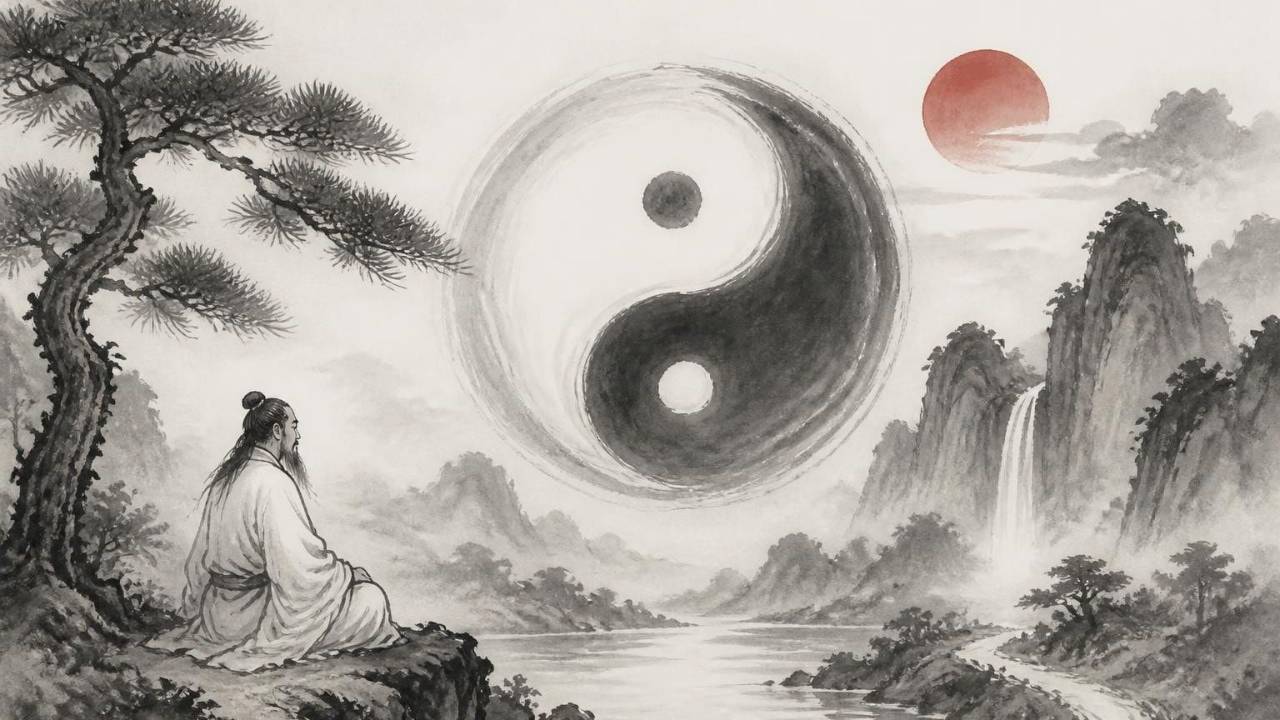
Traditional Chinese philosophy recognises two complementary forces: Yin (receptive, restful, inward) and Yang (active, dynamic, outward). Modern life tends heavily Yang, constant doing, achieving, and producing.
Meditation for stress restores Yin qualities:
- Stillness balances constant motion
- Silence counters noise and information overload
- Inner focus complements external demands
- Being replenishes endless doing
- Softness counterbalances hardness and tension
When Yin and Yang exist in dynamic balance, stress doesn't disappear but stops depleting your reserves. You move through challenges with greater resilience and recover more quickly.
Measuring Your Progress Beyond Stress Reduction
While decreased stress is valuable, meditation offers benefits that extend far beyond symptom relief. These deeper changes often feel more meaningful than initial stress reduction.
Signs Your Practice Is Working
Progress appears in unexpected ways:
- You notice stress earlier, before it builds to crisis levels
- Small annoyances that once derailed your day barely register
- You sleep more deeply and wake more refreshed
- Relationships improve as you respond rather than react
- Creative solutions emerge when you stop forcing answers
- You feel more connected to your body's needs and rhythms
- Joy and appreciation arise naturally, even in ordinary moments
These shifts indicate genuine transformation, not just temporary stress management. You're cultivating what our Master Gu calls "rooted peace," a stability that weathers life's inevitable storms.
Tracking Without Obsessing
Some people find gentle tracking helpful. A simple journal noting practice duration and any observations keeps you accountable without adding stress. Others prefer to simply commit to showing up daily without measurement.
Choose an approach that supports rather than burdens you. The goal is integration, not perfection.
Combining Meditation With Complementary Practices
Meditation for stress works even better when combined with other Taoist wellness practices. These methods support each other, creating synergistic benefits.
Movement and Stillness Together
Our Tai Chi course and meditation form a powerful partnership. Tai Chi's flowing movements prepare your body for sitting meditation by releasing physical tension and circulating Qi. Meditation deepens the mental focus and breath awareness you bring to Tai Chi practice.
Many students find that starting with gentle movement makes sitting meditation more accessible and comfortable. Others use sitting practice to refine the internal awareness they cultivate during movement.
The Role of Community and Guidance
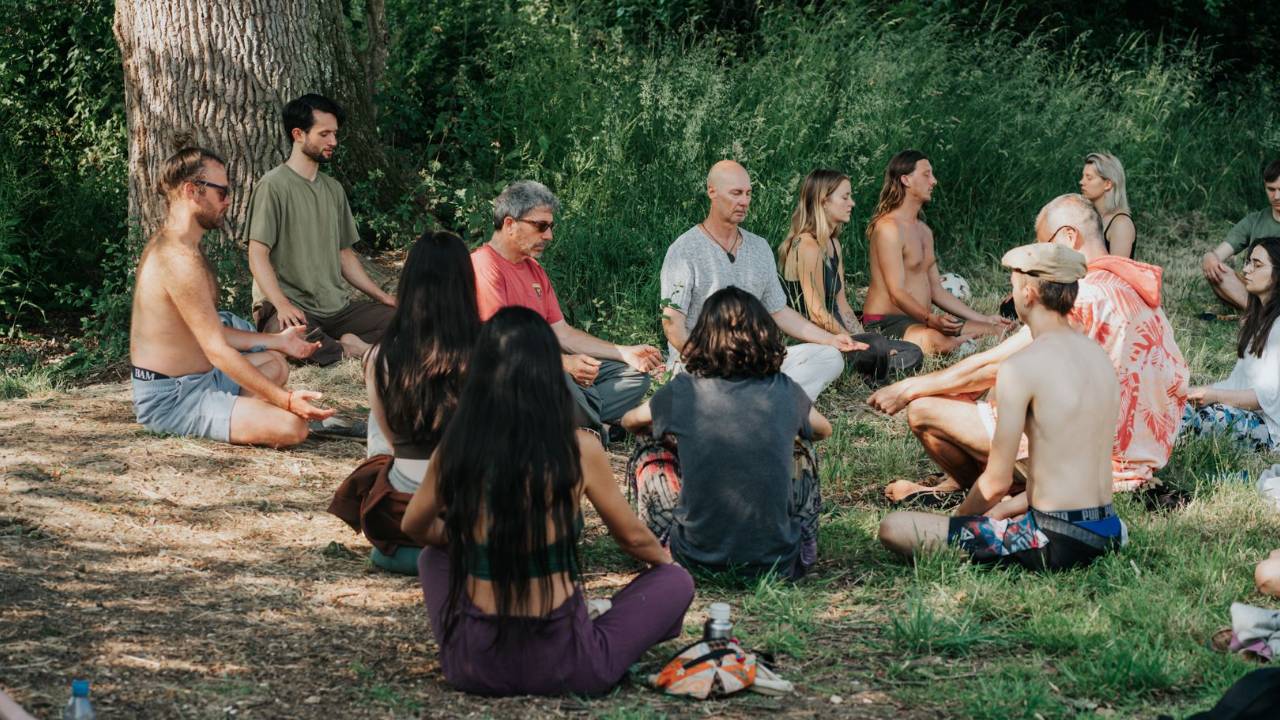
Learning meditation alone works for some, but many people benefit from connection and support. Sharing the journey with others who understand the challenges and celebrate the victories makes practice feel less isolating.
A skilled teacher helps you refine your technique, work through obstacles, and deepen your understanding. Our community provides ongoing encouragement and practical wisdom from fellow practitioners around the world.
Creating Rhythm in Your Day
Meditation doesn't exist in isolation. What you eat, how you move, when you sleep, and how you manage screen time all affect your stress levels and meditation quality. Small adjustments create significant impact:
- Reduce caffeine, especially in afternoons
- Establish consistent sleep and wake times
- Take brief movement breaks during work
- Spend time in nature regularly
- Limit news and social media consumption
- Connect with people who uplift you
These lifestyle choices create a foundation that supports your meditation practice while your practice helps you make wiser choices. It's a beautiful upward spiral.
Meditation for stress offers far more than temporary relief. It's a pathway to genuine transformation, reconnecting you with your innate capacity for calm, clarity, and resilience. When you commit to regular practice, even just a few minutes daily, you begin shifting patterns that may have limited you for years. Taoist Wellness Online provides authentic guidance in meditation, Tai Chi, Qi Gong, and Taoist philosophy under the expert instruction of Master Gu, a 15th-generation San Feng Pai Wudang Taoist Master with over 25 years of teaching experience. Join a worldwide community of practitioners and discover how ancient wisdom can restore balance and vitality to your modern life.
If you'd like a gentle first step, our free Taoist course covers Tai Chi, Qi Gong, Meditation, and Taoist Wisdom, all at your own pace.