Five Animals Qi Gong Explained: Ancient Practice
Nov 10, 2026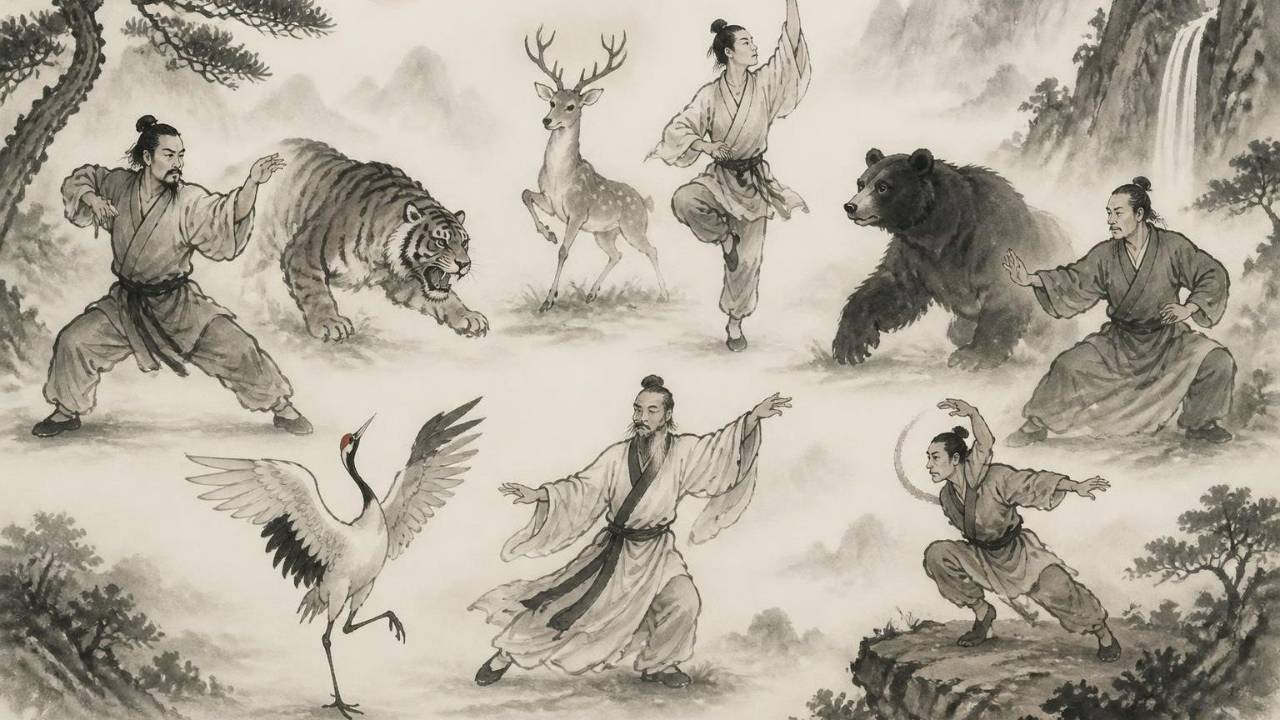
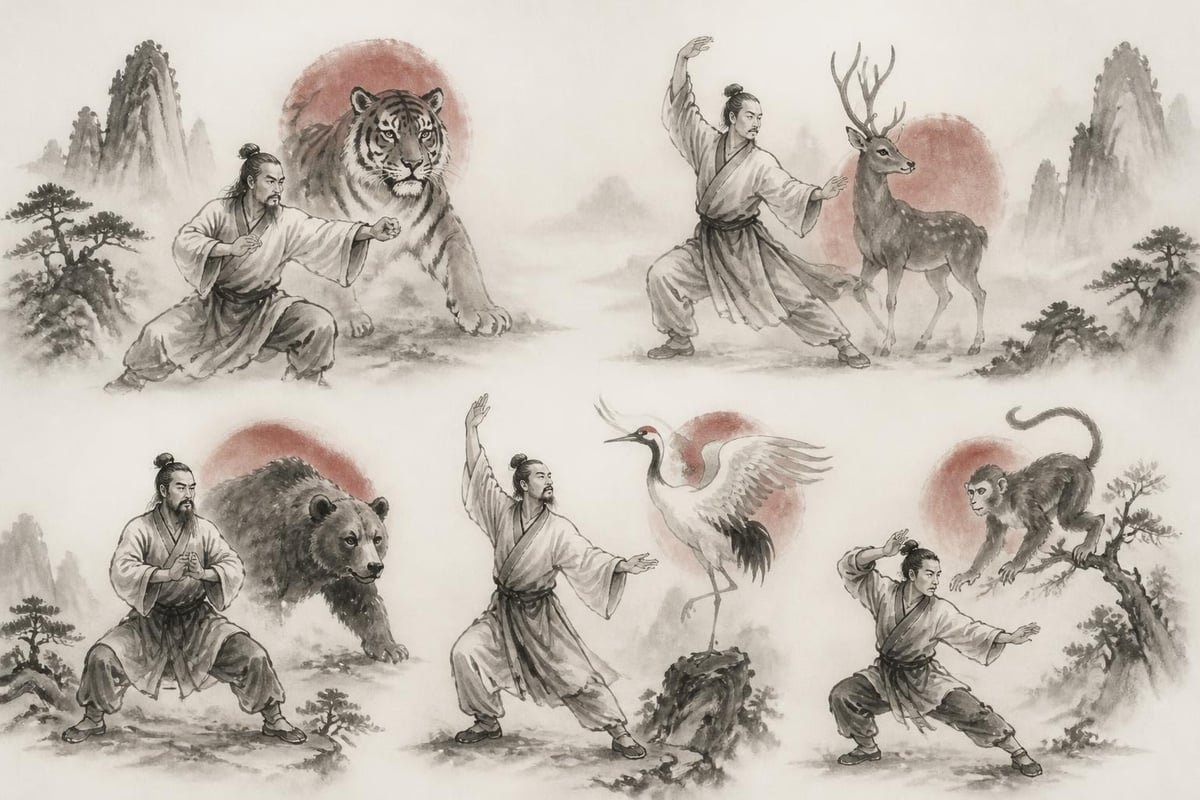
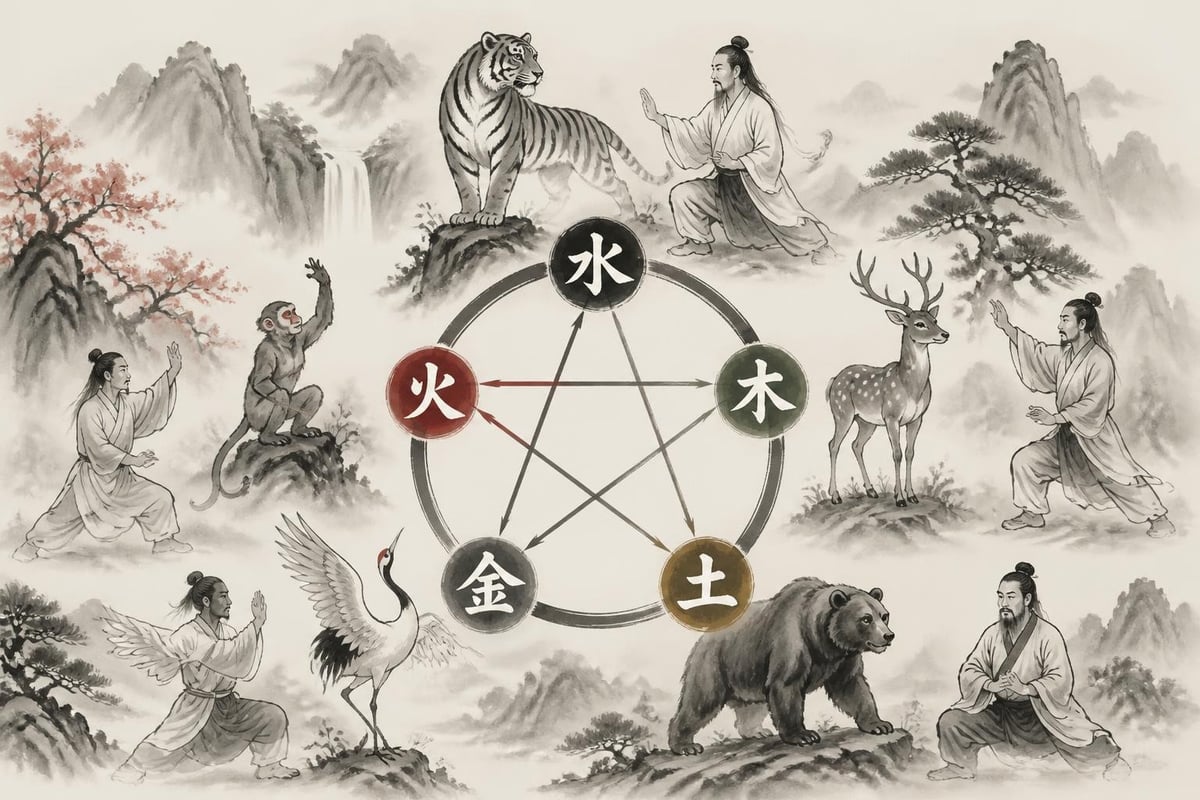
For centuries, Taoist practitioners have looked to nature for ideas about how to move and breathe with ease. One of the best-loved results is Five Animal Qi Gong, a gentle moving practice inspired by five creatures: the tiger, deer, bear, monkey and crane. Each animal has its own character, from the tiger's strong, steady power to the crane's calm balance. This guide explains where the practice comes from, what each animal involves, and how to approach it gently.
What Is Five Animal Qi Gong?
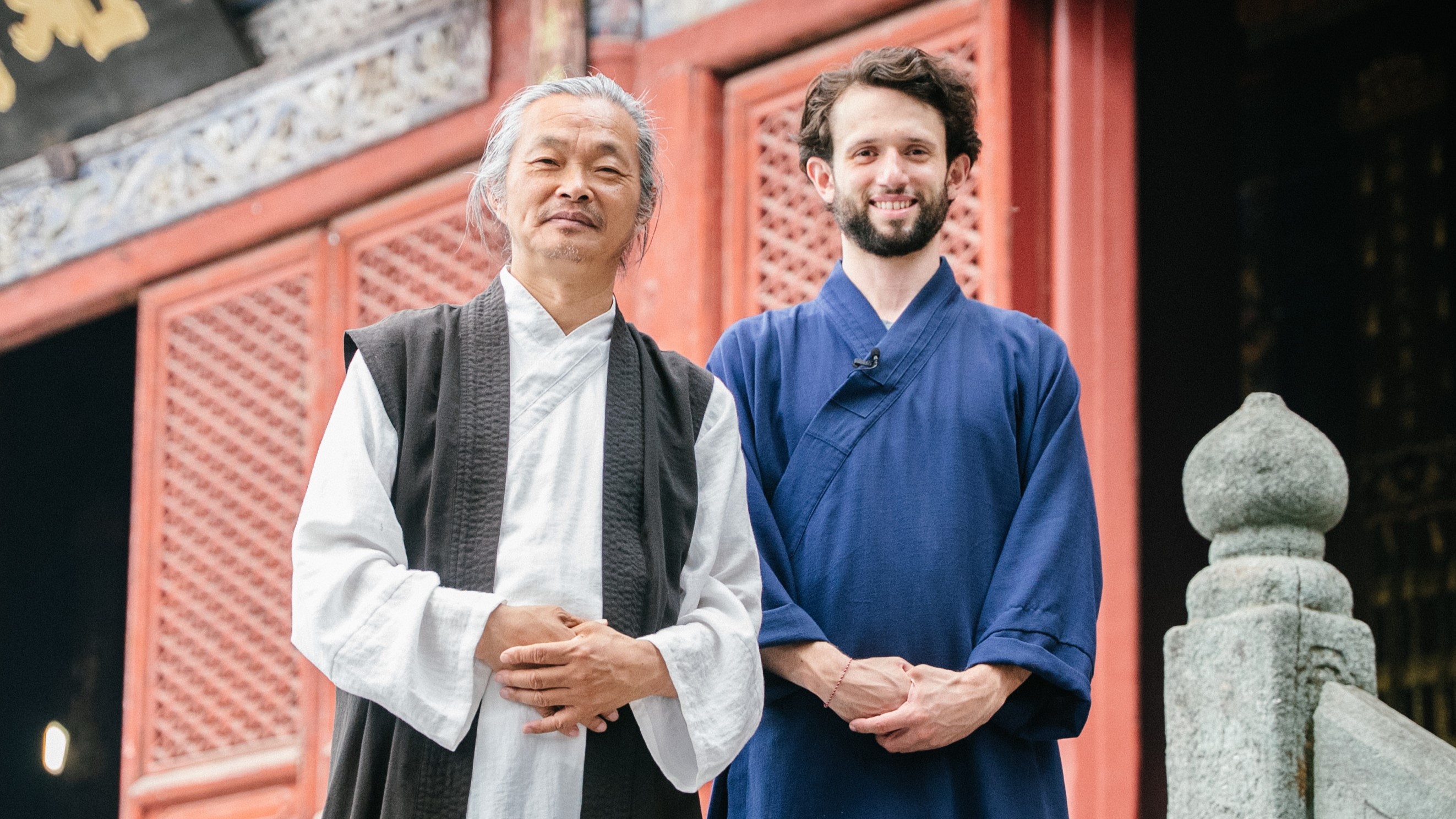
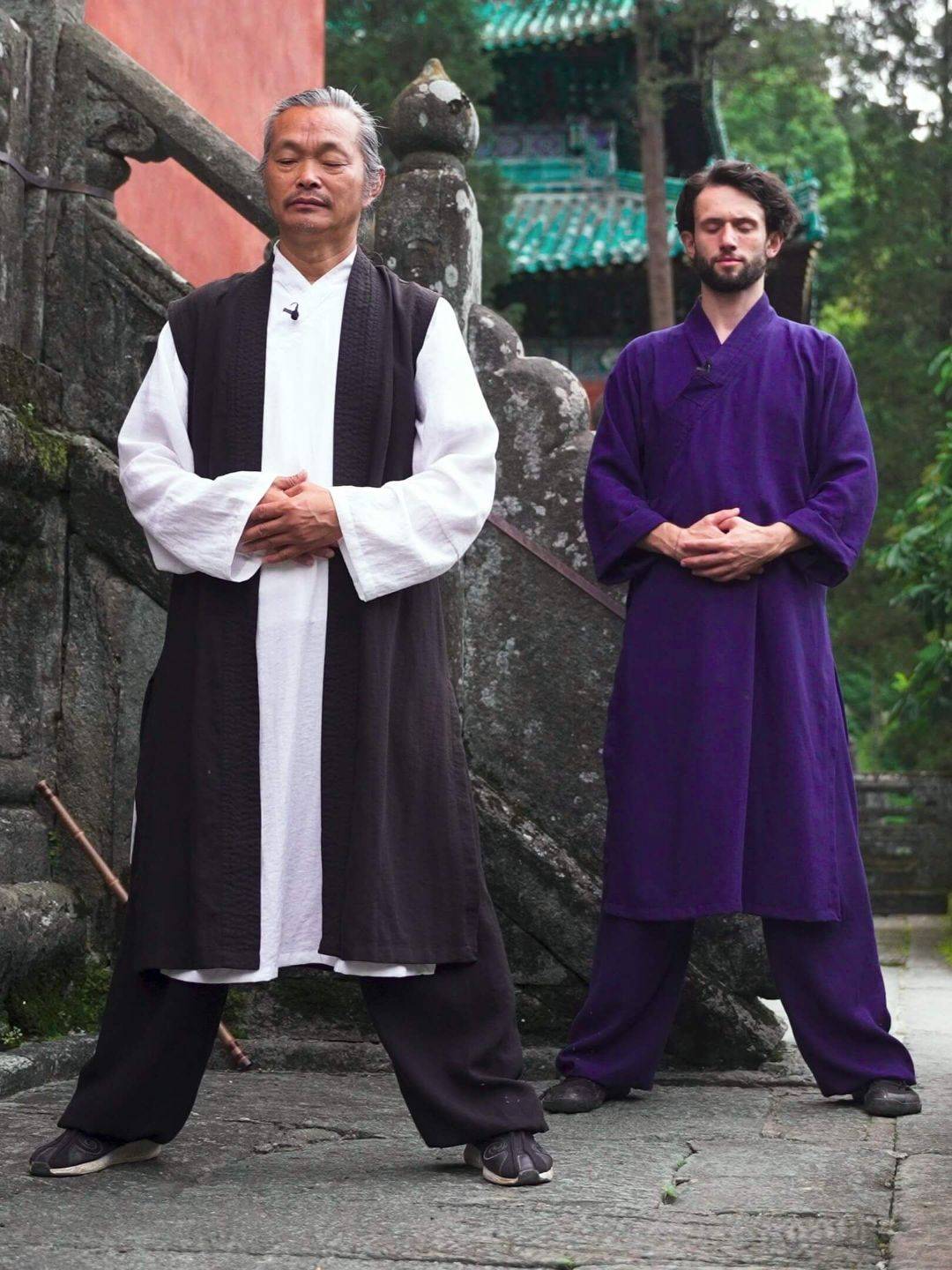
Five Animal Qi Gong is traditionally credited to Hua Tuo, a famous doctor from the Eastern Han dynasty. It is one of four very well-known qi gong forms in China, alongside Yi Jin Jing, Six Word Healing Qi Gong and Eight Brocade Qi Gong. Our teacher Master Gu, a 15th-generation San Feng Pai Wudang Taoist Master with 25+ years of teaching experience, teaches the Hua Tuo version in our Qi Gong course.
Master Gu explains that Taoist medicine sees us as "doctors of ourselves". Hua Tuo is often called a Taoist doctor because he encouraged people to learn simple ways to look after themselves. In the form we teach, each of the five animals has two moves, so there are ten moves in total.
There is more than one version of Five Animal Qi Gong. Our academy also has a separate Wudang version, which has five animals and five moves.
The Five Animals at a Glance
In the traditional teaching, each animal is linked with an inner organ. These are traditional associations rather than medical claims, and individual experiences differ.
| Animal | Traditional association | The feel of the movement |
|---|---|---|
| Tiger | Liver | Lifting, pulling down and pressing, with strong, steady energy |
| Deer | Kidneys | Weight shifting and looking back, with antler-shaped hands |
| Bear | Spleen | Drawing circles, then a joyful walking step |
| Monkey | Heart | Lifting the body while the head drops, then "picking fruit" |
| Crane | Lungs | Spreading wings, with a focus on balance |
Meeting Each Animal
Please check with your healthcare professional before starting any new exercise, especially if you have balance concerns, a long-term condition or an injury. Move gently, stay within what feels comfortable, and stop if you feel dizzy, unsteady or in pain.
Master Gu suggests imagining that you are the animal as you move. He also reminds us that this is a practice for people. As he puts it, we cannot really resemble a bear, so the aim is some resemblance of the animal, but not too much of it.
Tiger: Steady, Powerful Movement
The first tiger movement feels a little like lifting something, then pulling it down and pressing it. Your hands change gradually from palm to paw to fist. Master Gu connects the breath with the movement, inhaling as the arms rise and exhaling as they lower. The second tiger movement is like a tiger catching its food. The legs stay straight and the arms reach forward, which gives a stretch through the body.
Deer: Stability and Looking Back
The deer uses an "antler" handshape. You shift your weight from one foot to the other, step one foot across in front, turn your waist and look back. Master Gu says the key point is to stay stable and to do the move in tranquillity. He also reminds us of a Tai Chi principle: when one part of the body moves, all parts move together. The second deer movement is like two deer playing with their antlers, with a step forward and back.
Bear: Circles and Rhythm
For the bear, the arms draw circles. Master Gu points out that it is not only the hands that move, because the whole torso takes part too. The second bear movement is like a bear walking joyfully through the woodland. Many students find the coordination of arms and legs tricky at first, so he gives a helpful rhythm: "front, back, front, back", then change direction.
Monkey: Playful and Curious
The first monkey movement lifts the body while the head drops down, a little like a pump. In the second, you pretend to see a fruit, push the branch aside, pick the fruit and then enjoy it. Master Gu notes that the coordination takes a while to learn, and his advice is to be patient and keep working on it.
Crane: Balance and Spreading Wings
The crane is the last of the five animals. Its movements stretch and bend, and spread the arms like wings, and Master Gu describes it as a practice for balance. Take extra care here. Practise near a wall or sturdy chair, and keep the lifted foot low until you feel steady.
Starting Gently
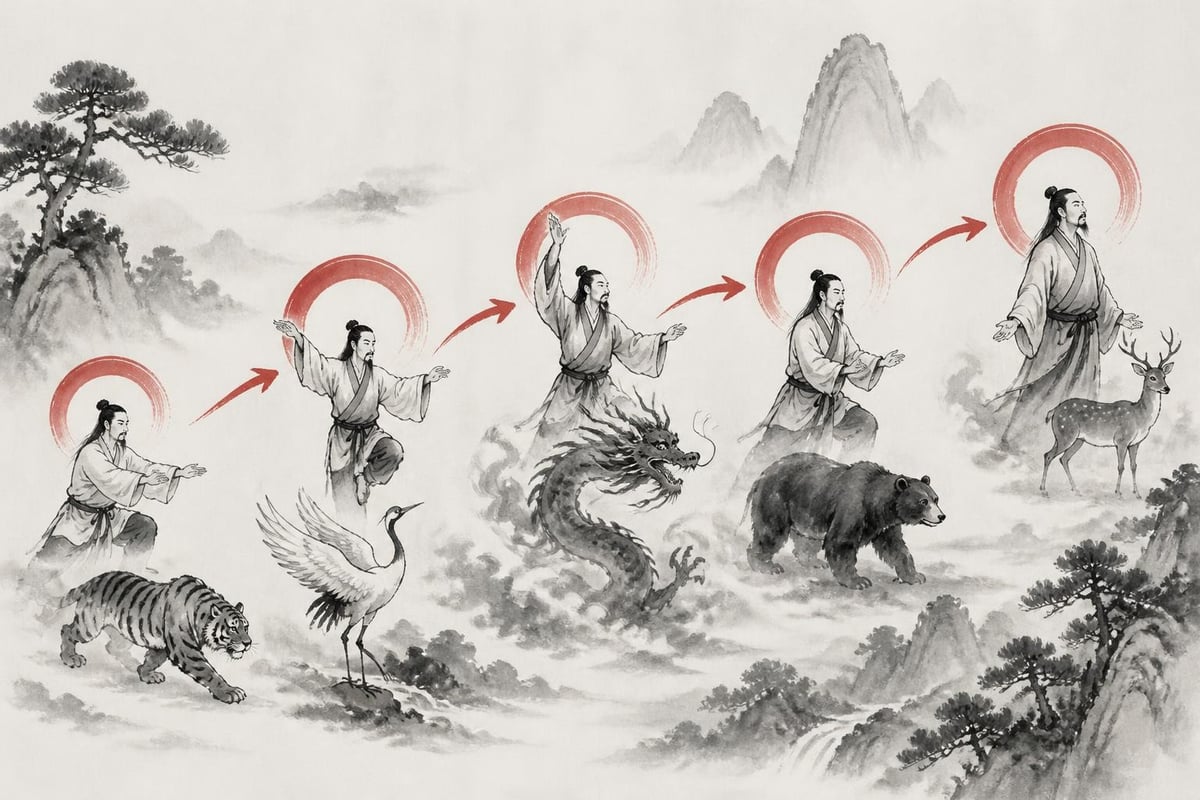
Our Qi Gong course teaches Five Animal Qi Gong step by step with Master Gu, from the hand shapes and footwork through each animal. Online learning cannot physically correct your posture, so go gently and stay within what feels comfortable. A 15-minute follow-along version of the practice also sits within our Ignite Your Practice course.
If you would like a short taste of the practice first, here is Master Gu performing the Hua Tuo version.
Some simple points for beginners:
- Learn one animal at a time, rather than trying to remember all five at once
- Practise in a clear space, in comfortable clothing, with a wall or chair nearby
- Let your breath follow the movement naturally, and avoid holding it
- Go slowly, and keep your body relaxed rather than rigid
- Keep sessions short and build up gradually
Master Gu explains that Five Animal Qi Gong does not need a lot of time. It can be done at any time of day, and many people like to practise it in the morning. If you can focus on what you are doing, even a short session can feel worthwhile.
If you would like company on your practice, you can swap ideas with fellow students in our free community.
The Hua Tuo Version and Other Forms
The Hua Tuo version is one of four famous qi gong forms. Another is the Eight Brocades, and you can read more in our guide to Baduanjin. Another is Six Word Healing Qi Gong, which you can explore in our guide to the Six Healing Sounds.
The forms share a gentle, unhurried feel, and each has its own character. Our academy also has a separate Wudang version of Five Animal Qi Gong, with five animals and five moves.
What Some People Report
| What you may begin to notice | Why it might happen |
|---|---|
| A lighter, more playful mood | Imagining the animals gives the practice a playful quality |
| More ease in the body | Stretching, turning and gentle weight shifting can loosen stiffness |
| Steadier balance | Moves such as the deer and crane practise shifting weight carefully |
| A calmer, more focused mind | Following the breath and movement gives attention a simple focus |
Results vary from person to person, and none of this is guaranteed. If stress, anxiety or low mood are affecting you, please speak to your GP or a qualified professional. Qi gong can sit alongside, but should not replace, professional support. If you enjoy the calming side of the practice, our Taoist meditation course explores stillness and attention in more depth.
Bringing the Animals Into Your Day
You do not need a long session to enjoy the practice. A few minutes can be enough. Some people like to:
- Stretch like the deer, looking gently over each shoulder, in the morning
- Draw slow circles like the bear during a break from work
- Finish with a calm crane breath, standing near support, in the evening
Keep it comfortable and stop if anything feels unsafe.
Common Questions
How long before I notice a difference?
Everyone is different, and there is no fixed timeline. Some people notice a calmer feeling quite soon, while others take longer. Patience helps.
Do I have to learn all five animals?
No. Many people begin with one animal and add the others over time.
Do I need to move exactly like the animals?
No. As Master Gu says, we are people, so the movement only needs some resemblance of the animal.
Is there more than one version?
Yes. We teach the Hua Tuo version, and our academy also has a separate Wudang version with five moves.
Is it suitable for everyone?
That depends on you. Please speak to your healthcare professional before starting any new exercise.
Five Animal Qi Gong is a playful, gentle way to move and breathe with attention. If you would like to learn it with Master Gu, Taoist Wellness offers courses in qi gong, tai chi and meditation. You can also try our free Taoist course first.
Related reading