Qi Gong for Beginners: Your Path to Calm Energy
Jul 17, 2026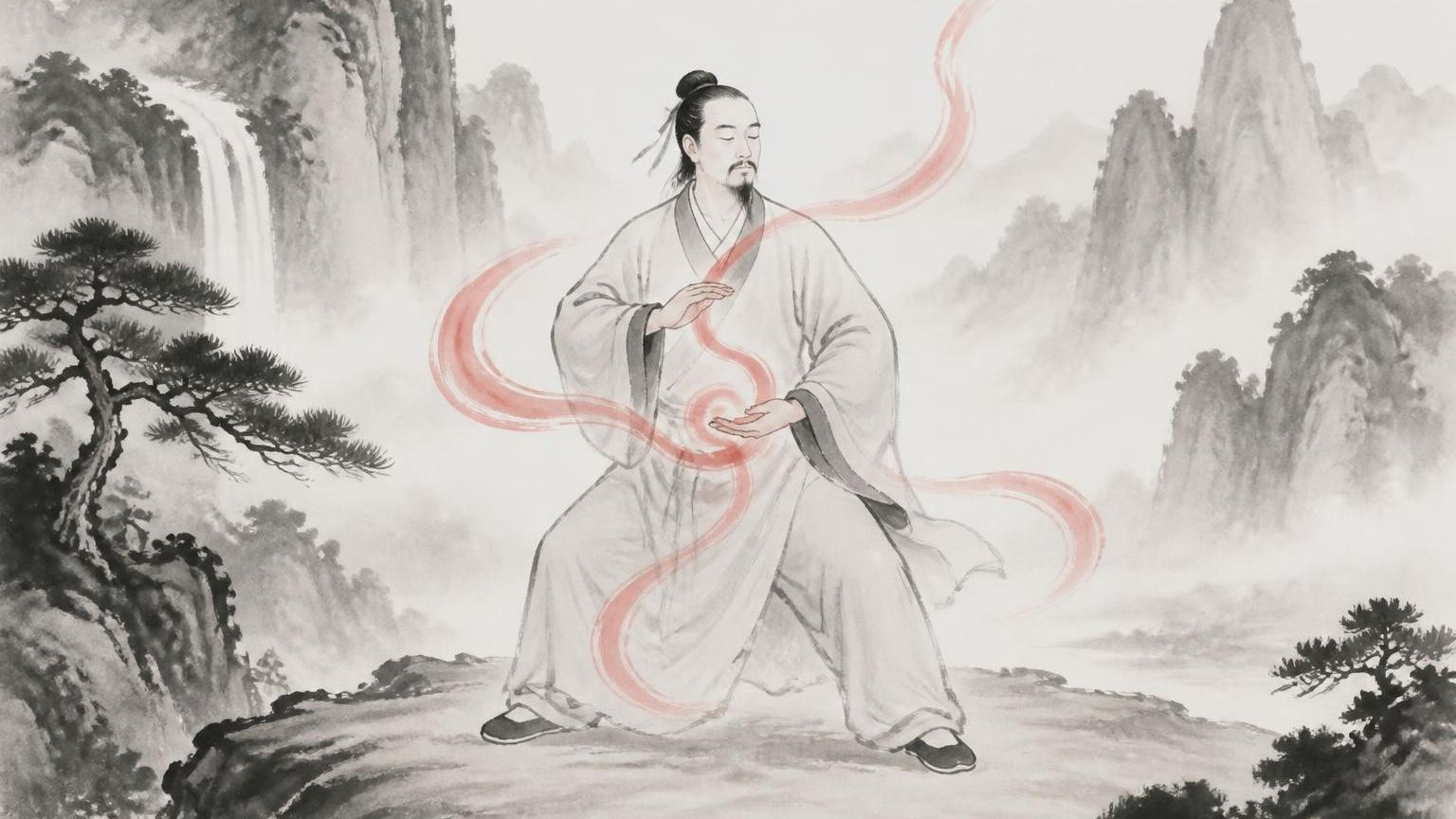
Starting a practice that connects breath, movement, and awareness can feel both exciting and overwhelming. Qi gong for beginners offers a gentle entry point into ancient Taoist wellness practices that have supported health and vitality for thousands of years. Whether you're seeking stress relief, better energy, or a deeper connection to your body, this practice meets you where you are with compassion and simplicity.
What Makes Qi Gong Accessible for Beginners
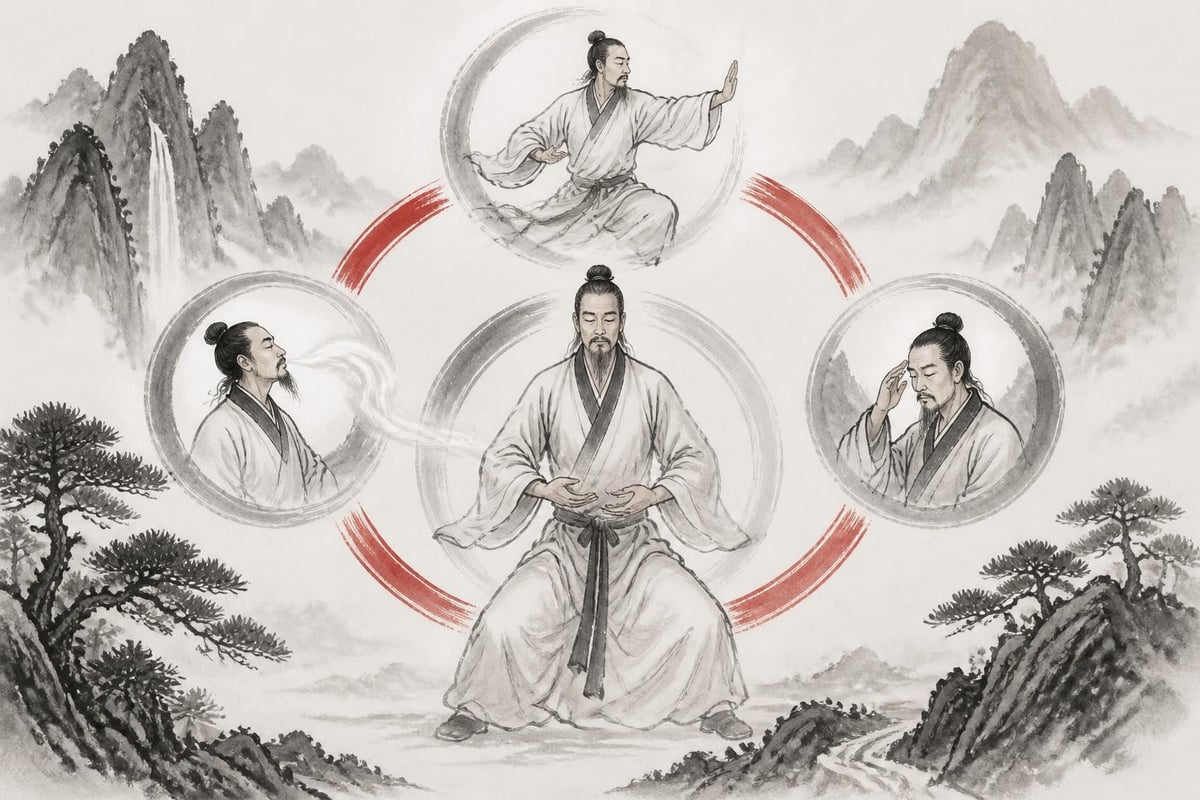
Qi gong stands out among movement practices because it requires no special equipment, no extreme flexibility, and no previous experience. The foundation rests on three interconnected elements: gentle movement, conscious breathing, and focused intention.
Movement in qi gong flows slowly and deliberately. Unlike high-intensity exercise, these motions work with your body's natural rhythms rather than pushing against them. You'll practise standing, seated, or even lying down, depending on the form and your current energy levels.
The Three Pillars of Practice
When you begin exploring qi gong, you'll discover these core components working together:
- Body positioning and gentle movement that promotes circulation and releases tension
- Breathing techniques that calm the nervous system and deepen awareness
- Mental focus that quiets distraction and cultivates presence
The beauty lies in how these elements support each other. As you soften your stance, your breath naturally deepens. As your breath slows, your mind settles. This interconnection creates a practice that feels complete even when you're just starting out.
Understanding Qi and Why It Matters
The concept of qi (pronounced "chee") translates roughly to life energy or vital force. In Taoist philosophy, qi flows through pathways in your body called meridians, nourishing organs, tissues, and systems. When qi flows freely, you experience health, clarity, and vitality. When it stagnates or becomes blocked, discomfort and imbalance arise.
Qi gong for beginners teaches you to sense and guide this energy. You don't need to believe in anything mystical. Simply notice how your body feels during practice. Many students report warmth in their palms, tingling in their fingertips, or a sense of fullness in their lower abdomen. These sensations reflect your growing awareness of your body's energetic landscape.
How Modern Research Validates Ancient Wisdom
Research continues to explore the measurable benefits of qi gong practice. Studies have documented improvements in balance, immune function, cardiovascular health, and mental well-being among regular practitioners.
| Health Area | Observed Benefits |
|---|---|
| Mental Health | Reduced anxiety, improved mood, better stress management |
| Physical Function | Enhanced balance, increased flexibility, better coordination |
| Immune System | Stronger immune response, reduced inflammation markers |
| Cardiovascular | Lower blood pressure, improved circulation, heart rate variability |
These outcomes emerge not from forcing your body into submission but from creating conditions where natural healing can occur.
Your First Movements: Simple Practices to Start Today
Beginning your qi gong journey doesn't require a perfect setup or hours of free time. Start with five to ten minutes in a quiet space where you won't be interrupted.
Standing Meditation: The Foundation
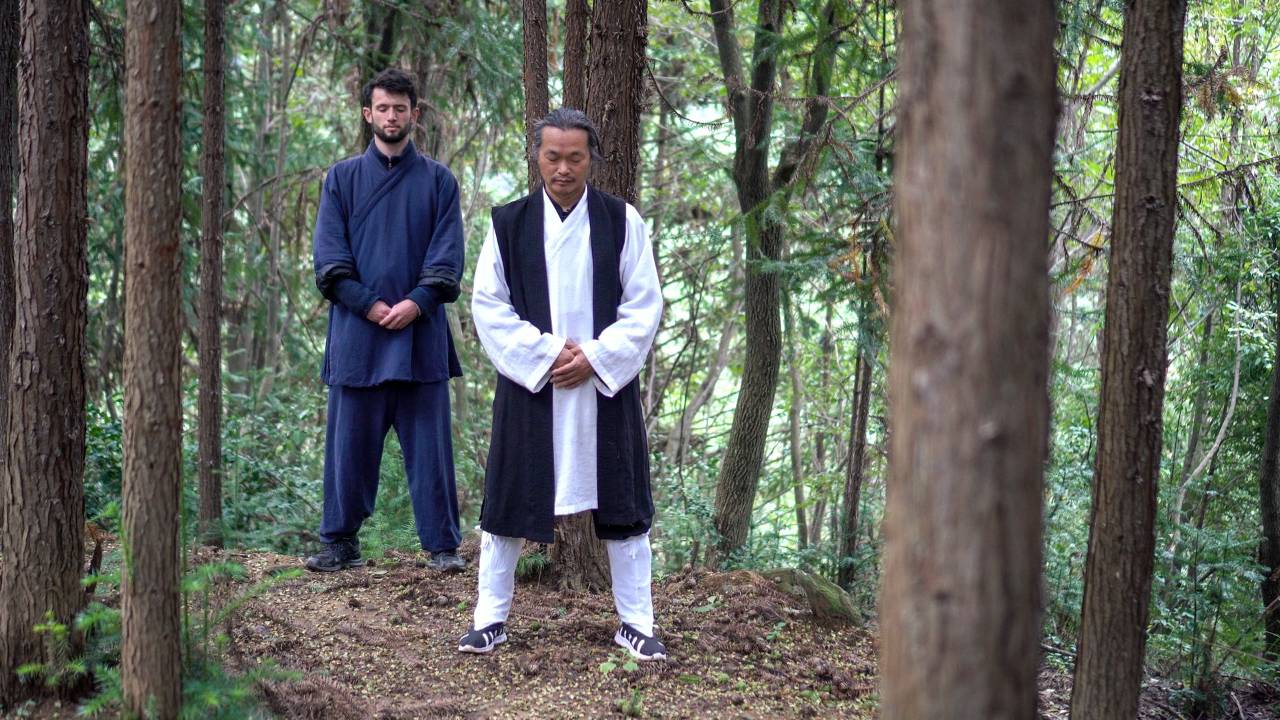
Stand with your feet shoulder-width apart. Let your knees soften slightly, never locked. Imagine a golden thread gently lifting the crown of your head toward the sky while your tailbone roots downward. Your arms hang naturally at your sides.
Close your eyes or lower your gaze. Breathe naturally through your nose, noticing the rise and fall of your belly. This simple posture, called Wuji stance, forms the foundation for nearly all qi gong movement.
Stay here for three to five minutes. Your mind will wander. That's completely normal. When you notice thoughts drifting, gently return your attention to your breath and the sensation of your feet on the ground.
Lifting the Sky: Your First Dynamic Movement
From your standing position, begin this foundational exercise:
- Inhale slowly as you raise both arms forward and up, as if lifting a large ball overhead
- Turn your palms upward at the top, stretching gently toward the sky
- Exhale completely as you lower your arms back down to your sides
- Repeat 8-12 times, moving smoothly and coordinating breath with movement
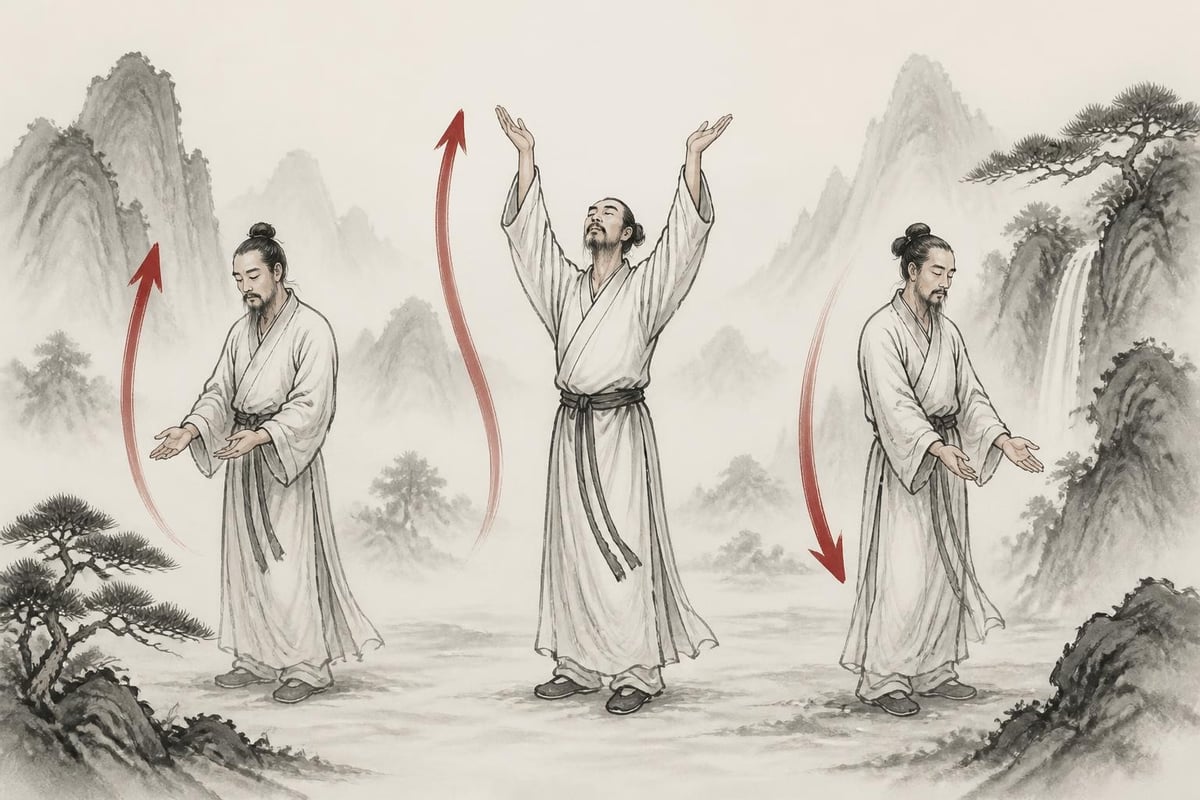
This movement opens your chest, stretches your spine, and helps qi rise through your body's central channel. Notice how you feel afterward - warmer, more awake, perhaps tingling in your hands.
Common Questions for Those New to Practice
How Often Should Beginners Practise?
Consistency matters more than duration. Five minutes daily creates more benefit than an hour once a week. Your nervous system learns through repetition. Regular practice teaches your body to recognise and return to states of calm, balanced energy.
Many students find mornings ideal because practice sets a grounded tone for the day. Others prefer evenings to release accumulated tension. Trust your schedule and energy, and choose a time you can genuinely stick to.
What If I Can't Stand for Long Periods?
Qi gong adapts to your needs. Seated variations provide the same benefits as standing forms. You can practise lying down if that serves you better. The principles remain constant: coordinated breath, gentle movement, focused awareness.
Listen to your body's wisdom. If something causes pain (different from the mild discomfort of stretching), modify or skip that movement. Qi gong for beginners should feel nourishing, not depleting.
Building Your Practice Over Time
As you develop familiarity with basic movements, you'll naturally want to expand your repertoire. If you're looking for structured progression from foundational practices to more advanced forms, our Qi Gong course at Taoist Wellness Online offers exactly that - step-by-step guidance from Master Gu, a 15th-generation Wudang master, with clarity and support at every stage.
Progressive Learning Path
| Stage | Focus | Duration |
|---|---|---|
| Weeks 1-4 | Standing meditation, basic breathing, 2-3 simple movements | 5-10 minutes daily |
| Weeks 5-8 | Adding movements, refining coordination, extending practice time | 10-15 minutes daily |
| Weeks 9-12 | Introduction to flowing sequences, deeper breathing techniques | 15-20 minutes daily |
This gradual approach prevents overwhelm while building genuine skill. Your body needs time to integrate new patterns. Rushing creates tension - the opposite of what you're cultivating.
Breathing Techniques That Transform Practice
Natural abdominal breathing forms your starting point. Place one hand on your belly. As you inhale through your nose, feel your abdomen expand. As you exhale, feel it gently contract. This reverses the shallow chest breathing many of us default to during stress.
After mastering natural breathing, you might explore reverse breathing, where the abdomen draws in on the inhale and releases on the exhale. This technique, central to traditional Taoist practices, generates different energetic effects and supports more advanced forms.
Never force your breath. If you feel lightheaded or anxious, return to normal breathing. The practice should feel easeful and sustainable.
Creating a Supportive Practice Environment
Your surroundings influence your practice quality. You don't need a dedicated studio, but a few simple adjustments help:
- Choose a quiet space where interruptions are minimal
- Practise at a consistent time to build habit and rhythm
- Wear loose, comfortable clothing that doesn't restrict movement or breathing
- Consider practising outdoors when weather permits to connect with natural qi
Temperature matters too. Dress in layers so you can adjust as your body warms during practice. Cold muscles resist movement, while overheating creates distraction.
Joining a Community of Practitioners
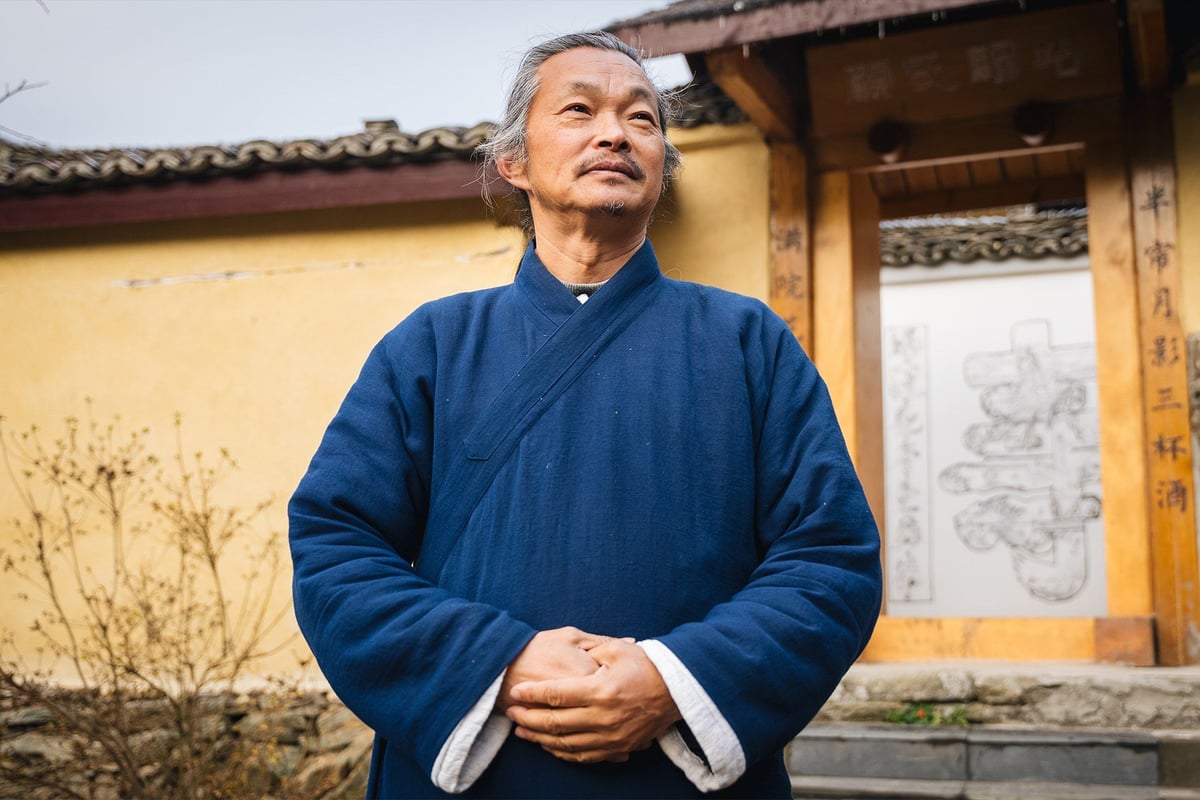
Learning qi gong for beginners becomes richer when you connect with others on the path. Communities such as ours at Taoist Wellness Online offer encouragement, answer questions, and share experiences that deepen understanding. You'll discover you're not alone in your challenges or your breakthroughs.
Group energy supports individual practice. Even practising alongside others virtually creates a field of shared intention that many students find inspiring and motivating.
Recognising Progress in Subtle Ways
Unlike strength training where you can measure pounds lifted, qi gong progress appears more subtly. You might notice:
- Better sleep quality as your nervous system learns to downregulate
- Improved mood stability as you develop tools for managing stress
- Enhanced body awareness allowing you to catch tension before it becomes pain
- Increased energy throughout the day without relying on caffeine or sugar
These shifts accumulate gradually. Trust the process even when dramatic changes aren't immediately apparent. Benefits build over weeks and months, not days. Our blog post on the Six Healing Sounds Qi Gong practice is a good example of how specific Qi Gong techniques target particular areas of health and energy - worth exploring once you have your foundation in place.
Integrating Taoist Principles Into Daily Life
Qi gong for beginners extends beyond formal practice sessions. The principles you learn on your mat ripple into everyday activities.
Notice your breathing while washing dishes. Can you keep it smooth and deep rather than shallow and hurried? Feel your stance while waiting in line. Are you grounding through both feet or collapsing into one hip?
The Principle of Wu Wei
Wu wei, often translated as "effortless action," guides both practice and life. This doesn't mean doing nothing. It means acting in harmony with natural rhythms rather than forcing outcomes.
In your movements, wu wei appears as smooth flow rather than muscular tension. In your day, it shows up as responding to circumstances with flexibility rather than rigid attachment to plans.
Deepening Your Understanding Through Study
While movement practice forms the core of qi gong, understanding its philosophical foundation enriches your experience. You'll encounter concepts like:
- Yin and yang balance in movement and stillness
- The Three Treasures (jing, qi, shen) and how practice cultivates them
- Five Element theory and its relationship to emotional and physical health
This knowledge isn't required to benefit from practice. Your body responds to the movements whether your mind understands the theory. But many students find that intellectual understanding and embodied practice support each other beautifully. If you'd like to explore the ideas behind the practice more deeply, the what is Qi Gong post on our blog is a good starting point.
Avoiding Common Beginner Mistakes
Even simple practices invite predictable pitfalls. Awareness helps you navigate around them.
Holding Your Breath
Breathing should continue smoothly throughout all movements. Beginners often unconsciously hold their breath during transitions or challenging positions. If you notice this, pause, breathe naturally for a moment, then continue with conscious breath coordination.
Trying Too Hard
Qi gong works through relaxation, not effort. If you're straining, grimacing, or feeling exhausted afterward, you're pushing too hard. Soften your approach. Imagine your movements occurring through you rather than being forced by you.
Skipping the Warm-Up
Gentle joint rotations prepare your body for practice. Circle your wrists, ankles, shoulders, and hips before beginning formal movements. This simple preparation prevents strain and enhances qi flow.
Comparing Yourself to Others
Your practice is yours alone. Someone else might appear more flexible, balanced, or graceful. This has no bearing on the value of your practice or the benefits you'll receive. Authentic Taoist teaching meets each student exactly where they are - this is one of the principles Master Gu emphasises throughout his instruction.
The Role of Patience in Transformation
Qi gong for beginners rewards patience above all else. Western culture conditions us to expect rapid results, dramatic transformations, immediate gratification. This practice teaches a different rhythm.
Trees don't grow faster when you watch them. Seeds germinate in darkness before breaking through soil. Your practice works similarly - invisible integration happening beneath the surface of awareness.
Some days you'll feel energised and fluid. Other days you'll feel stiff and distracted. Both kinds of days contribute to your development. The practice itself is the point, not some future state of perfection.
Seasonal Practice Adjustments
Traditional Chinese medicine recognises that human energy follows seasonal patterns. Your qi gong practice can honour these cycles.
| Season | Energy Quality | Practice Focus |
|---|---|---|
| Spring | Rising, expanding | Liver meridian movements, dynamic forms |
| Summer | Full, outward | Heart-opening practices, longer sessions |
| Autumn | Descending, gathering | Lung meridian work, shorter practices |
| Winter | Deep, conserving | Kidney strengthening, more meditation |
These aren't rigid rules. They're invitations to notice how your energy shifts with the year and respond accordingly.
Moving Forward With Confidence
Starting qi gong for beginners opens a path that can support you for decades. The practices you learn now become companions through all life's seasons, celebrations, and challenges.
You already have everything you need to begin. Your breath, your body, your willingness to show up - these are sufficient. The movements will become familiar. The principles will clarify. Your capacity for presence will deepen.
Remember that every master was once a beginner. Every flowing form was once awkward and uncertain. The difference between those who transform through practice and those who abandon it comes down to gentle persistence - showing up again and again with kindness toward yourself.
The ancient Taoist sages understood something profound: the way to cultivate extraordinary vitality isn't through extraordinary effort. It's through returning daily to simple practices that align you with your deepest nature. That's the gift waiting in qi gong for beginners - not someday, but right now, in your next breath.
Beginning a qi gong practice offers a gentle yet powerful way to restore balance, enhance energy, and cultivate lasting calm in your daily life. These ancient Taoist movements meet you exactly where you are and grow with you over time. Not sure where to start? Our free 4-week Taoist Wellness course is the easiest first step - explore Qi Gong alongside Tai Chi and meditation with Master Gu, at no cost. And when you're ready to go deeper, Taoist Wellness Online provides comprehensive courses, a supportive global community, and authentic instruction from a 15th-generation Wudang master.