6 Healing Sounds Qi Gong: Ancient Practice for Balance
Jul 30, 2026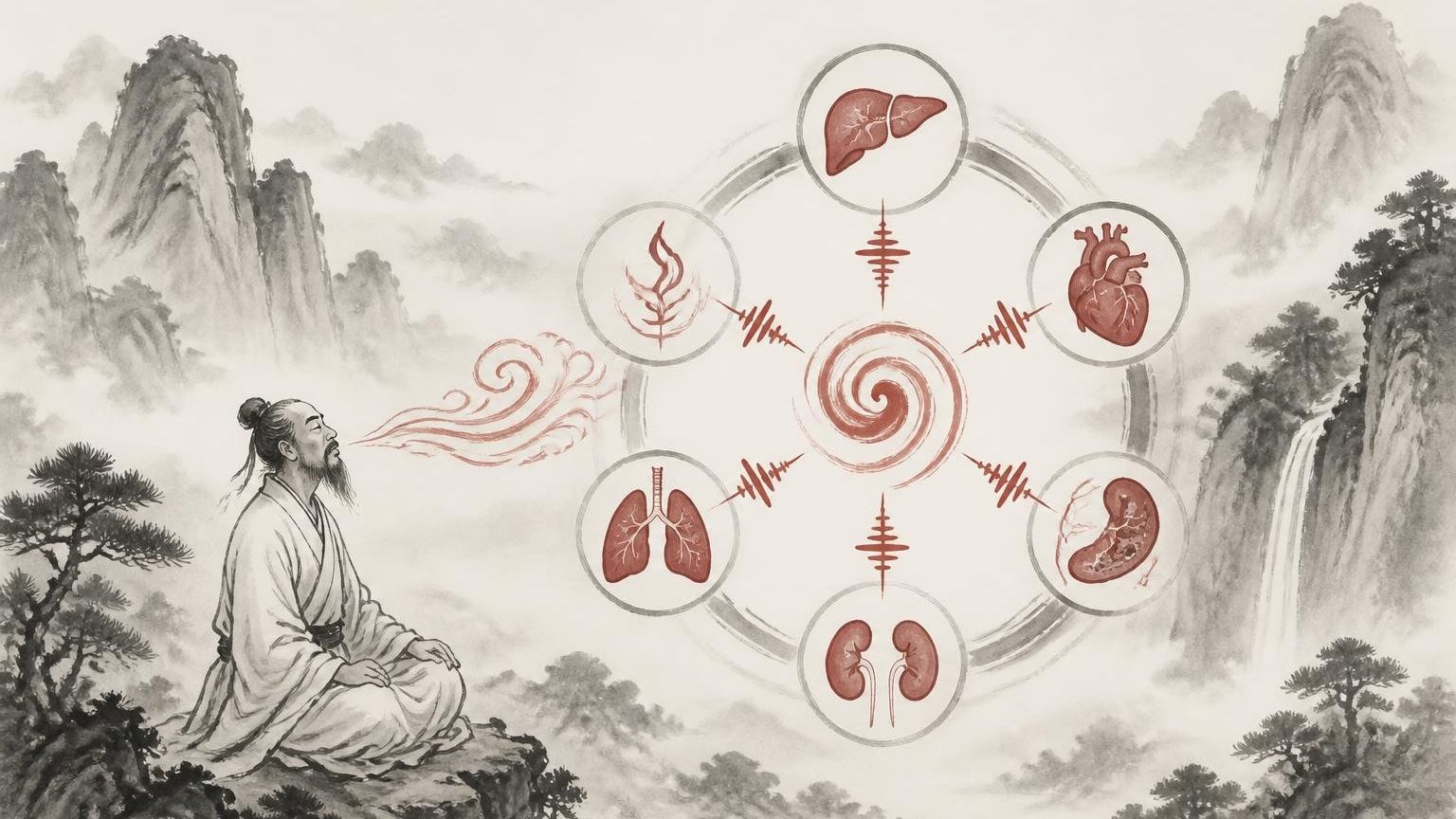
The ancient practice of 6 healing sounds qi gong offers a gentle yet powerful way to restore balance in your body and mind. Rooted in Taoist wisdom and Chinese medicine, this healing art uses specific sounds paired with breathwork and gentle movements to cleanse your organs, release trapped emotions, and cultivate vital energy. Whether you're feeling stuck, stressed, or simply seeking a deeper connection to your body's natural rhythms, these six sounds create a bridge between your physical health and emotional wellbeing.
Understanding the Foundation of Healing Sounds
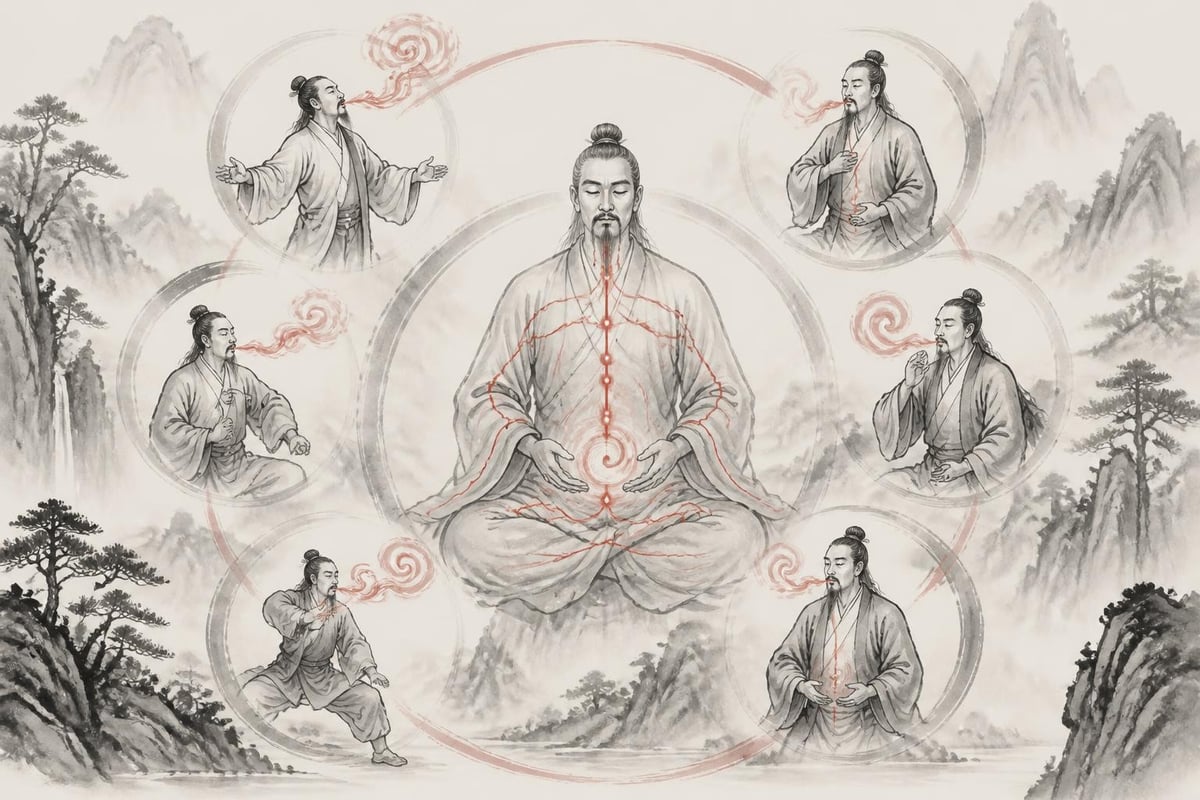
The 6 healing sounds qi gong practice emerged from centuries of observation by Taoist masters who recognised how sound vibrations affect our internal organs. Each sound corresponds to a specific organ system, an associated emotion, and a natural element. When you vocalise these sounds with intention and proper breath control, you create internal vibrations that massage your organs from the inside out.
This practice isn't about volume or musical pitch. Instead, it focuses on the quality of vibration and the feeling of resonance within your body. As you explore our Qi Gong course, you learn to sense subtle shifts in energy and become more attuned to your body's signals.
The Science Behind Sound Healing
Modern research supports what ancient practitioners intuited. Studies show that vocalised sounds create mechanical vibrations that can influence tissue health and circulation. The intentional combination of sound, breath, and gentle movement activates your parasympathetic nervous system, helping you shift from stress mode into a state of rest and repair.
When you practise the 6 healing sounds qi gong regularly, you're not just making noise. You're engaging in a sophisticated form of self-care that works with your body's natural healing mechanisms.
The Six Sounds and Their Healing Properties
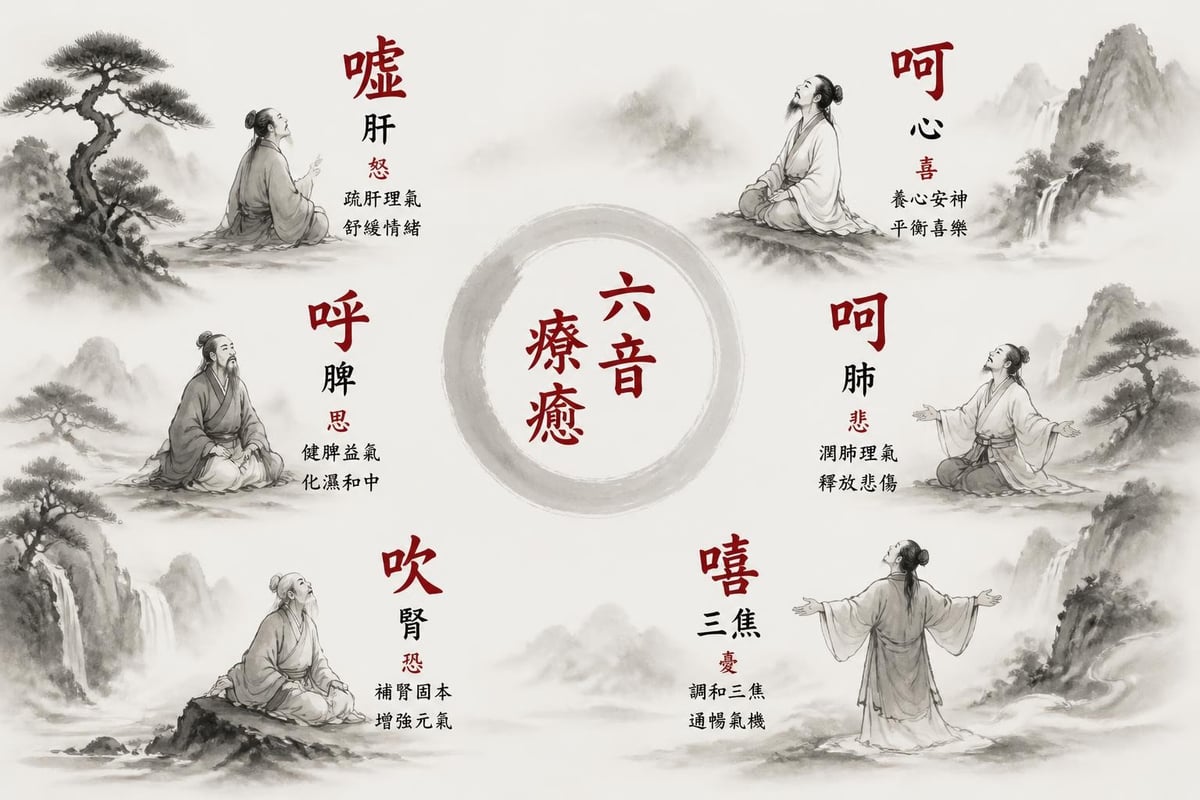
Each sound in this practice targets a different organ system and helps release specific emotional patterns. Understanding these connections helps you practise with greater intention and awareness.
Liver Sound: Shhhh
The liver sound releases anger, frustration, and irritability. Your liver governs the smooth flow of qi throughout your body, and when this energy stagnates, you feel stuck or reactive. The "Shhhh" sound, similar to asking someone to be quiet, helps clear heat and tension from your liver meridian.
Practice tips:
- Make the sound on a slow exhale
- Feel the vibration between your ribs on the right side
- Visualise releasing green or murky energy
- Practise this sound when feeling irritable or tense
Heart Sound: Hawwww
Your heart houses your spirit, or shen, in Taoist philosophy. The "Hawwww" sound releases impatience, anxiety, and excessive mental chatter. This gentle, open-mouthed sound feels cooling and spacious, like a long sigh of relief.
When you work with this sound regularly, you may notice your mind becoming quieter and your emotions more balanced. The heart sound particularly benefits those who struggle with racing thoughts or difficulty sleeping.
Spleen Sound: Whooooo
The spleen and stomach transform food into qi and blood. The "Whooooo" sound addresses worry, overthinking, and digestive imbalances. This sound comes from deep in your belly, creating a low, resonant vibration that massages your digestive organs.
Many people carry worry as a constant background noise in their lives. This sound offers a way to physically release that tension and restore your body's natural ability to process both food and experiences.
| Sound | Organ | Emotion Released | Element | Season |
|---|---|---|---|---|
| Shhhh | Liver | Anger, frustration | Wood | Spring |
| Hawww | Heart | Anxiety, impatience | Fire | Summer |
| Whooo | Spleen | Worry, overthinking | Earth | Late Summer |
| Sssss | Lungs | Grief, sadness | Metal | Autumn |
| Chooooo | Kidneys | Fear, stress | Water | Winter |
| Heeee | Triple Burner | Overall balance | - | All seasons |
Lung Sound: Sssss
The lungs govern your body's defensive qi and your capacity to let go. The "Sssss" sound, like air escaping a tyre, releases grief, sadness, and stale energy. This sound helps you breathe more fully and strengthens your immune response.
In Taoist teaching, the lungs connect to your ability to release what no longer serves you. Practising this sound supports both physical detoxification and emotional processing of loss.
Kidney Sound: Chooooo
Your kidneys store your essential life force, or jing. The "Chooooo" sound releases fear, exhaustion, and depletion. This deep, rounded sound vibrates in your lower back and helps tonify your vital reserves.
When you feel burned out or chronically tired, the kidney sound offers restoration. It's particularly valuable in our modern world where chronic stress depletes kidney energy.
Triple Burner Sound: Heeee
The triple burner isn't a physical organ but rather describes three energy centres in your torso. The "Heeee" sound balances overall energy distribution and promotes integration. Practise this sound last to harmonise the effects of the previous five sounds.
This balancing sound ensures that energy flows smoothly between your upper, middle, and lower body regions. It's the final touch that brings everything into coherent wholeness.
How to Practise the 6 Healing Sounds Qi Gong
Starting a 6 healing sounds qi gong practice doesn't require special equipment or extensive training. You can begin with just a few minutes each day and gradually build your practice as you become more familiar with the sounds and sensations.
Basic Practice Guidelines
Setting up your practice:
- Find a quiet space where you won't be disturbed
- Sit comfortably with your spine naturally upright
- Wear loose, comfortable clothing
- Practise on an empty or light stomach
- Start with 3-6 repetitions of each sound
Begin with deep, relaxed breathing to settle your mind and body. Place your awareness in your lower abdomen and feel your breath moving naturally. This preparatory breathing helps you enter a receptive state.
Coordinating Breath, Sound, and Movement
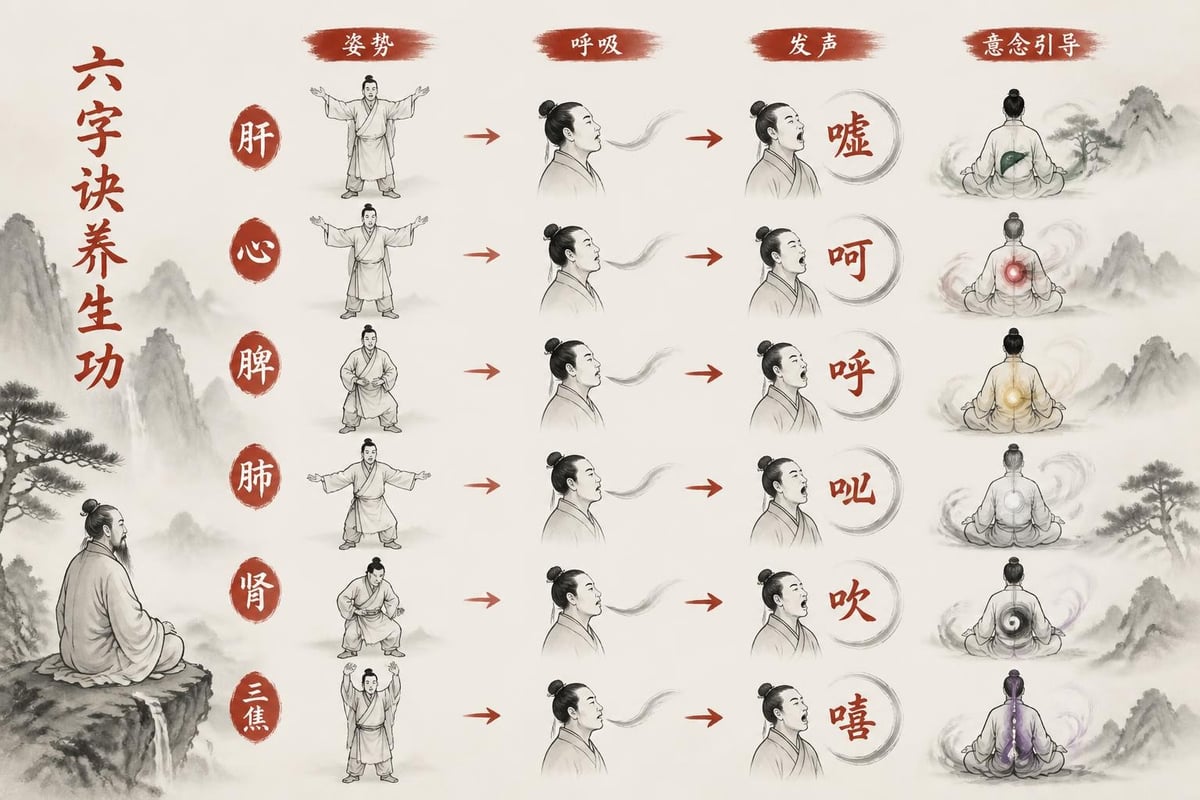
Each sound is vocalised on the exhale while making specific gentle movements with your arms and hands. The movements help direct energy to the target organ and enhance the sound's effectiveness. As you inhale between sounds, visualise drawing in fresh, healing energy.
The coordination might feel awkward at first, but with regular practice, the movements become fluid and natural. Trust your body's wisdom and let the practice unfold organically.
Common practice sequence:
- Inhale deeply and slowly through your nose
- Exhale while making the healing sound
- Perform the associated gentle movement
- Pause briefly before the next repetition
- Complete all repetitions for one organ before moving to the next
If you're new to energy practices, our free 4-week Taoist Wellness course offers an accessible entry point to these foundational techniques. You'll learn proper breathing methods and gentle movements that complement the healing sounds practice.
Finding Your Natural Rhythm
There's no one-size-fits-all approach to how long or how often you should practise. Some people benefit from a short daily practice of 10-15 minutes, while others prefer longer sessions a few times per week. Listen to your body and notice how you feel during and after practice.
In the beginning, you might experience emotional releases, temporary tiredness, or increased awareness of areas holding tension. These responses indicate that the practice is working, gently bringing what's hidden into the light.
Integrating Healing Sounds into Your Daily Life
The beauty of 6 healing sounds qi gong lies in its flexibility and accessibility. You don't need to set aside an hour for a full formal practice every day. Instead, you can weave individual sounds into your daily routine as needed.
Seasonal Adjustments
Traditional Chinese medicine recognises that different seasons affect different organ systems. Spring influences your liver, summer affects your heart, late summer impacts your spleen, autumn touches your lungs, and winter influences your kidneys. You might emphasise the corresponding sound during each season while still practising all six for complete balance.
This seasonal awareness helps you stay aligned with natural rhythms and prevents imbalances before they develop into symptoms.
Addressing Specific Imbalances
Once you become familiar with each sound, you can use them therapeutically for specific concerns:
- Feeling angry or frustrated? Extra liver sound repetitions
- Anxious or restless? Focus on the heart sound
- Digestive upset or worry? Emphasise the spleen sound
- Grief or respiratory issues? More lung sound practice
- Exhausted or fearful? Strengthen with kidney sound
- Overall scattered energy? Triple burner sound for integration
This targeted approach makes the 6 healing sounds qi gong a practical tool you can access whenever you need support. You might practise the lung sound during cold season, the kidney sound when feeling depleted, or the liver sound when stress builds up. For a structured morning routine that incorporates energy cultivation alongside your daily practice, our post on morning Qi Gong is a helpful companion read.
Deepening Your Practice Over Time
As you continue working with the healing sounds, your practice naturally evolves. What begins as a mechanical exercise transforms into an intimate conversation with your body's wisdom. You develop sensitivity to subtle energy movements and gain insight into your patterns.
Expanding Your Awareness
Advanced practitioners of 6 healing sounds qi gong report experiencing the sounds not just as vocalisations but as whole-body events. They feel energy shifting, emotions releasing, and organs responding. This deepened awareness comes through consistent, patient practice.
You might begin to notice connections between certain emotions and physical sensations, or recognise patterns in when specific organs need attention. This growing self-knowledge empowers you to take proactive care of your wellbeing.
Combining with Other Taoist Practices
The healing sounds work beautifully alongside other Taoist wellness practices. Many students integrate them with our Tai Chi course, sitting meditation, or energy cultivation exercises. Each practice supports and enhances the others, creating a comprehensive approach to wellbeing.
The Wudang tradition emphasises this integrated approach to cultivation. Rather than practising techniques in isolation, you learn to weave them together into a coherent lifestyle that nurtures your whole being.
Common Questions and Adjustments
Working with Physical Limitations
You don't need perfect health or flexibility to practise the 6 healing sounds qi gong. The sounds themselves create the primary healing effect, while movements serve as enhancement. If mobility is limited, you can practise the sounds while seated, lying down, or making smaller movements.
What matters most is your intention, breath quality, and the vibration you create. Your body responds to genuine effort and presence, not to perfect form.
Managing Emotional Releases
Sometimes practising healing sounds brings emotions to the surface. This release is actually a sign the practice is working, helping you process and let go of stored feelings. If emotions arise, allow them without judgement. Breathe through the experience and trust that your body knows how to heal.
After an emotionally intense practice session, gentle walking, drinking warm water, or resting quietly helps integrate the experience.
Building Consistency
Like any worthwhile practice, consistency matters more than intensity. Five minutes daily creates more lasting change than an hour once a week. Start small and build gradually. Many practitioners find that linking their healing sounds practice to an existing habit (like morning tea or a bedtime routine) helps establish consistency.
You'll also find encouragement and shared wisdom within the Taoist Wellness Online community - a global group of practitioners who understand the journey you're on.
The Broader Context of Taoist Healing
Understanding 6 healing sounds qi gong within the larger framework of Taoist philosophy enriches your practice. Taoism teaches that health emerges from balance, flow, and harmony with natural principles. The healing sounds embody these principles by working with your body's innate intelligence rather than forcing change.
Organ Systems as Energy Networks
In Chinese medicine, organs aren't just physical structures but complete systems encompassing physical tissues, energy pathways, emotional patterns, and spiritual qualities. When you practise healing sounds, you address all these dimensions simultaneously.
This holistic perspective explains why physical symptoms often improve alongside emotional shifts. You're not treating isolated problems but restoring balance to integrated systems.
Preventive Wisdom
Traditional practice emphasises prevention over cure. Regular practice of the 6 healing sounds qi gong maintains clear energy flow and prevents stagnation before it manifests as disease. This preventive approach aligns with the ancient saying that the superior physician treats what hasn't yet fallen ill.
| Practice Benefit | Physical Level | Emotional Level | Energetic Level |
|---|---|---|---|
| Regular practice | Improved organ function | Emotional balance | Smooth qi flow |
| Seasonal focus | Seasonal wellness | Appropriate emotional expression | Aligned with nature |
| Targeted use | Symptom relief | Release stuck emotions | Clear blockages |
| Long-term cultivation | Vitality and resilience | Emotional maturity | Refined energy |
For a broader look at Qi Gong exercises that complement this healing sounds practice, our post on Qi Gong exercises covers a range of practices worth exploring alongside this one.
The 6 healing sounds qi gong offers a practical, accessible path to greater balance and vitality in your daily life. Through consistent practice, you develop a deeper relationship with your body's wisdom and learn to support your own healing process. Start with our free 4-week Taoist Wellness course and take your first steps with Master Gu. When you're ready to go deeper, Taoist Wellness Online provides comprehensive instruction in the Wudang tradition under Master Gu's expert teaching - join a global community of practitioners and discover how these time-tested practices can transform your wellbeing.