Zhuangzi: Ancient Wisdom for Modern Balance
Aug 17, 2026
Zhuangzi stands as one of the most profound voices in ancient Chinese philosophy, offering insights that feel remarkably fresh even in 2026. This Taoist sage, who lived during the Warring States period around the fourth century BCE, gifted us with teachings that dissolve rigid thinking and invite us into a more fluid, balanced way of being. His wisdom speaks directly to anyone seeking relief from the pressures of modern life, offering an alternative to constant striving and stress. Through stories, paradoxes, and humour, Zhuangzi shows us how to move through life with grace, adaptability, and genuine peace.
The Heart of Zhuangzi's Philosophy
Zhuangzi's teachings centre on a simple yet revolutionary idea: align yourself with the natural flow of life rather than fighting against it. This principle, known as wu wei or effortless action, doesn't mean passivity or laziness. Instead, it points to a way of moving through the world with minimum friction and maximum effectiveness.
The ancient master used vivid stories to convey his ideas. One famous tale describes a butcher whose knife remains sharp after nineteen years because he cuts along the natural grain of the meat, never forcing his blade against the bone. This story captures something essential about how we might approach our own lives.
George explores several of Zhuangzi's most famous parables in the video below, a lovely companion piece to what follows.
Living Without Rigid Categories
One of Zhuangzi's most radical insights challenges our habit of dividing the world into fixed categories. We label things as good or bad, success or failure, right or wrong. But Zhuangzi saw these distinctions as artificial constructs that limit our freedom and create unnecessary suffering.
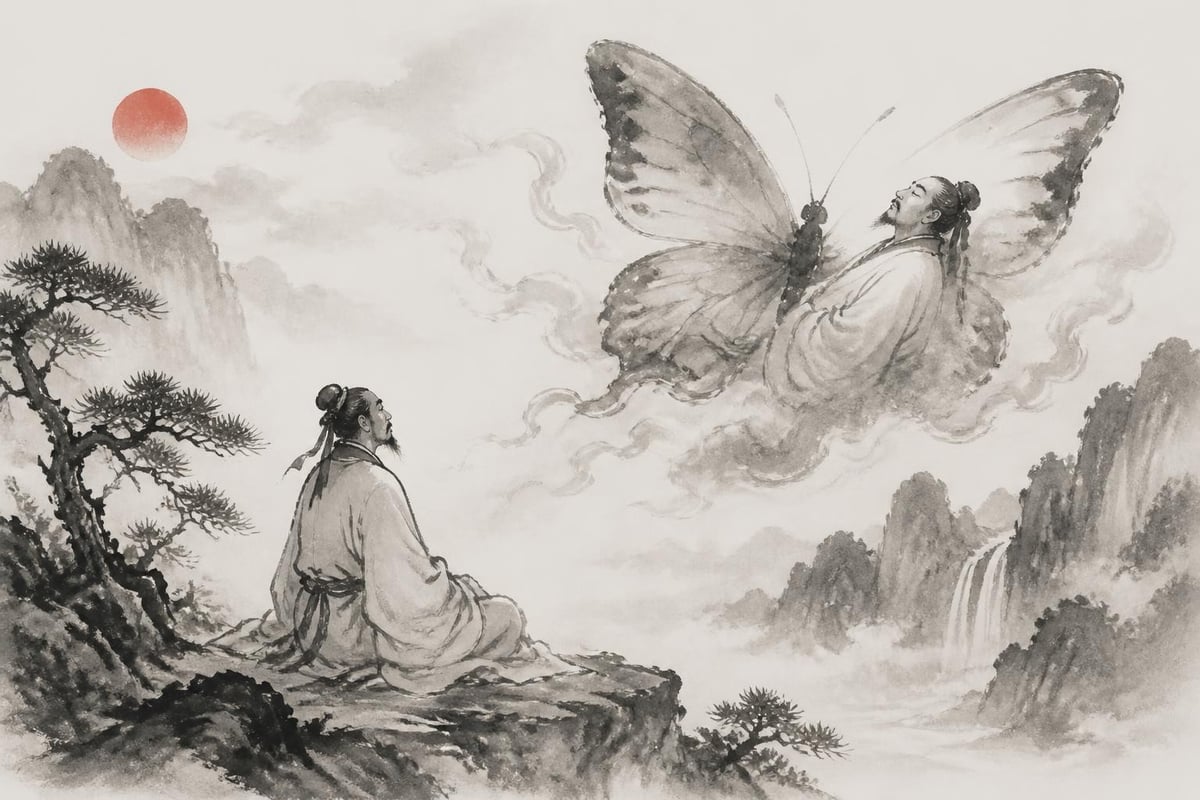
Consider his famous butterfly dream. Zhuangzi dreamed he was a butterfly, flitting about joyfully. Upon waking, he wondered: was he Zhuangzi who dreamed of being a butterfly, or a butterfly now dreaming of being Zhuangzi? This playful question invites us to loosen our grip on fixed identity and certainty.
Key principles that emerge from this teaching include:
- Flexibility in perspective allows for greater adaptation
- Fixed identities create unnecessary limitations
- Reality is more fluid than our concepts suggest
- Freedom comes from releasing rigid mental structures
Practical Applications for Modern Living
Zhuangzi's philosophy isn't just abstract theory. It offers concrete guidance for navigating the complexities of contemporary life. When we feel overwhelmed by choices, deadlines, or expectations, his teachings provide a path back to centre.
The concept of spontaneous response rather than calculated control runs throughout Zhuangzi's work. He observed skilled craftspeople, swimmers, and performers who achieved excellence not through force but through deep attunement to their activity. This natural skill emerges when we stop overthinking and trust our cultivated instincts.
The Useless Tree Paradox
Zhuangzi told a story about a massive oak tree that grew crooked and gnarled, useless for lumber. Because it had no conventional value, it was never cut down and lived to an extraordinarily old age. The tree's "uselessness" became its protection and allowed it to fulfil its natural lifespan.
This paradox challenges our productivity-obsessed culture. Not everything needs to serve an obvious purpose. Some aspects of life have value precisely because they exist outside utilitarian categories. Rest isn't wasted time. Contemplation isn't laziness. Play isn't frivolous.
| Modern Pressure | Zhuangzi's Alternative |
|---|---|
| Constant productivity | Valuing natural rhythms |
| Fixed career paths | Following genuine calling |
| Efficiency above all | Effectiveness through ease |
| Control and certainty | Adaptability and flow |
Zhuangzi and Taoist Practice
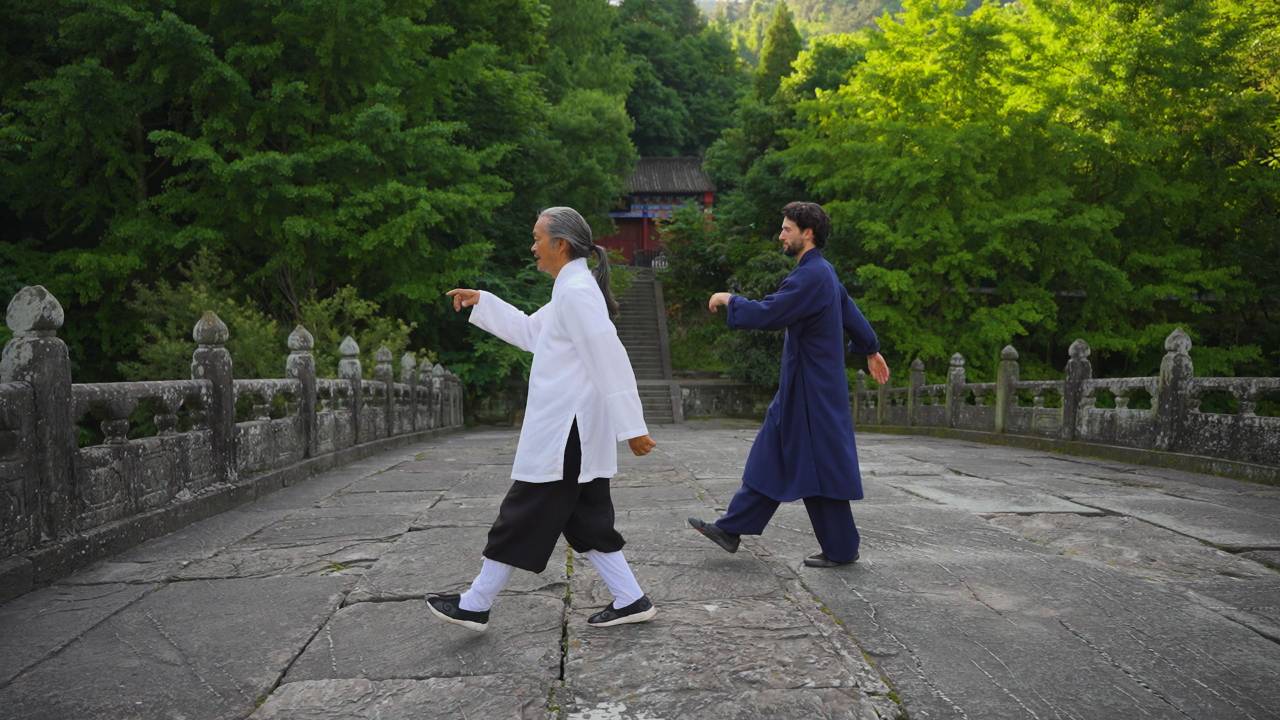
The connection between Zhuangzi's philosophy and practices like our Tai Chi course and Qi Gong runs deep. These movement arts embody the principles he articulated in words. When you practise Wudang Tai Chi, you're learning to move with minimal effort and maximum effect, exactly as Zhuangzi described. Our guide to Tai Chi Qigong Versus Other Practices: Key Differences 2026 explains more about how these movement arts relate to one another.
The practice itself teaches:
- Releasing unnecessary tension in body and mind
- Following natural energy rather than forcing outcomes
- Responding spontaneously to changing conditions
- Cultivating inner stillness while remaining actively engaged
- Harmonising opposites like softness and strength
Zhuangzi would likely appreciate how these practices don't require you to believe anything or adopt a particular worldview. You simply move, breathe, and notice what happens. The wisdom reveals itself through direct experience rather than intellectual understanding.
Transformation Through Emptiness
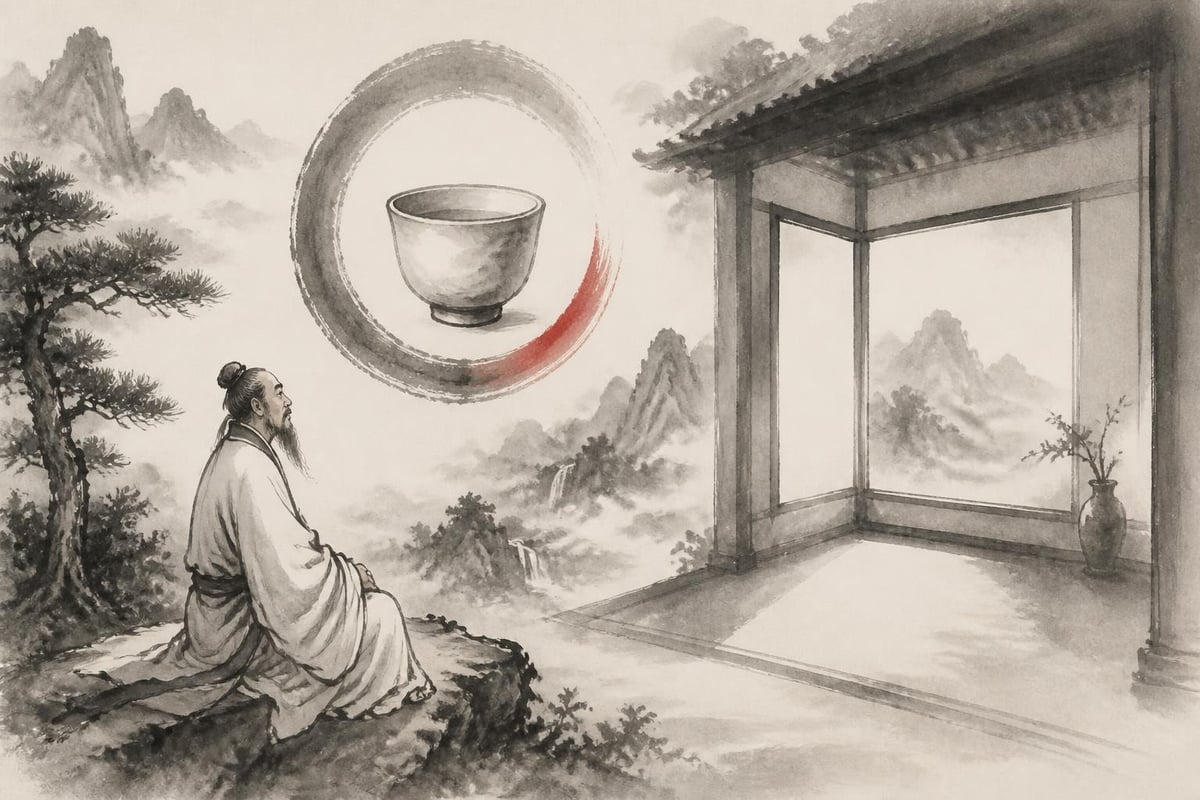
One of Zhuangzi's most misunderstood concepts is his emphasis on emptiness. He didn't advocate for nihilism or absence, but rather for creating space. A cup is useful because it's hollow. A room serves its purpose through its empty space, not its walls.
In our lives, this points to the value of mental spaciousness. When our minds are crammed with worries, plans, opinions, and judgements, there's no room for fresh insight or spontaneous joy. Why not try our Taoist Meditation course, which cultivates this spaciousness, allowing natural wisdom to arise.
Freedom From Self-Imposed Limits
Zhuangzi recognised that most of our limitations are self-created. We construct elaborate mental cages and then wonder why we feel trapped. His writings repeatedly point to how our concepts, preferences, and judgements bind us more effectively than any external constraint.
The sage told of a frog living in a well who believed the small circle of sky above represented the entire universe. This frog couldn't imagine the vast ocean because its experience was so limited. We're often like that frog, convinced our current perspective captures the whole truth.
Breaking free requires recognising these self-imposed boundaries:
- Cultural conditioning that defines success narrowly
- Fear-based thinking that prevents exploration
- Attachment to outcomes that creates anxiety
- Comparison with others that breeds dissatisfaction
- Fixed self-image that resists growth
The Practice of Wandering
Zhuangzi celebrated what he called "free and easy wandering," a state of moving through life unencumbered by rigid goals or predetermined paths. This doesn't mean aimlessness, but rather openness to where genuine interest and natural energy lead you.
Consider how different this approach feels from typical goal-setting advice. Instead of forcing yourself toward a fixed destination, you cultivate sensitivity to what calls to you. You develop skills and awareness, then trust yourself to respond appropriately to what life presents.
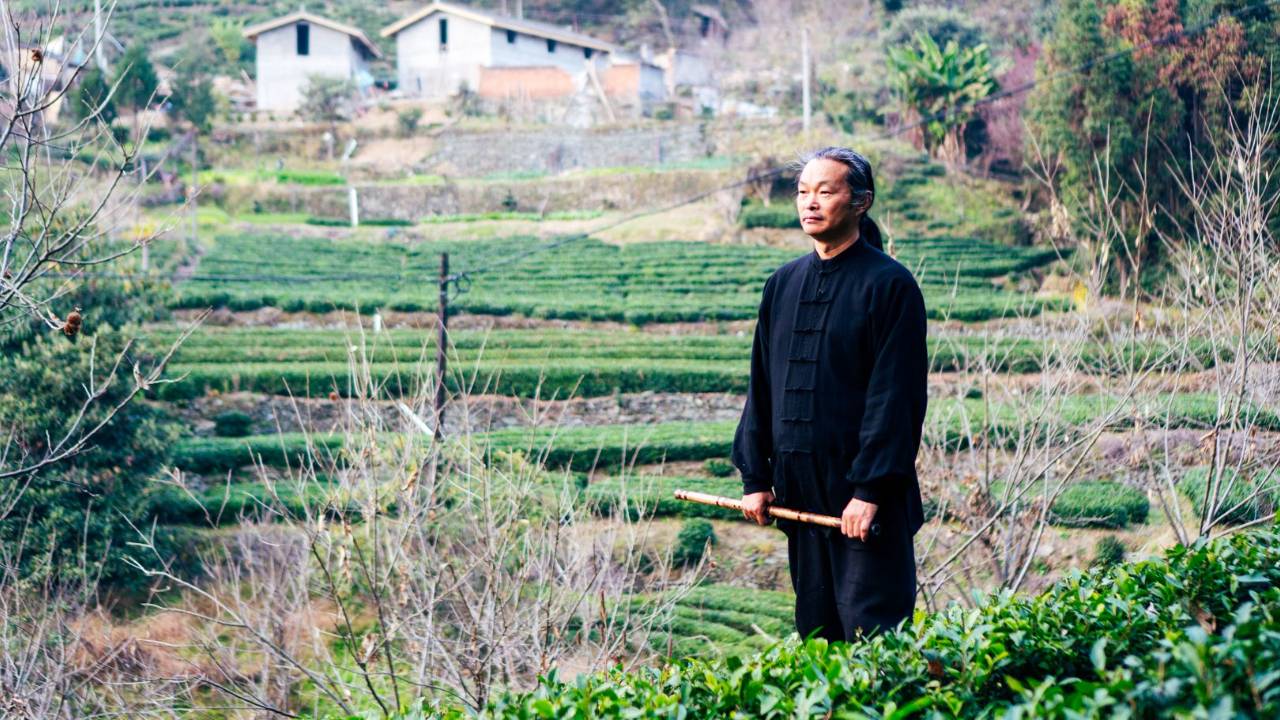
Those exploring authentic Wudang teachings from our Master Gu often discover this principle in action. The forms themselves can't be forced. You learn them gradually, letting the movements settle into your body naturally. Rushing creates tension; patience allows genuine integration.
Embracing Change and Transformation
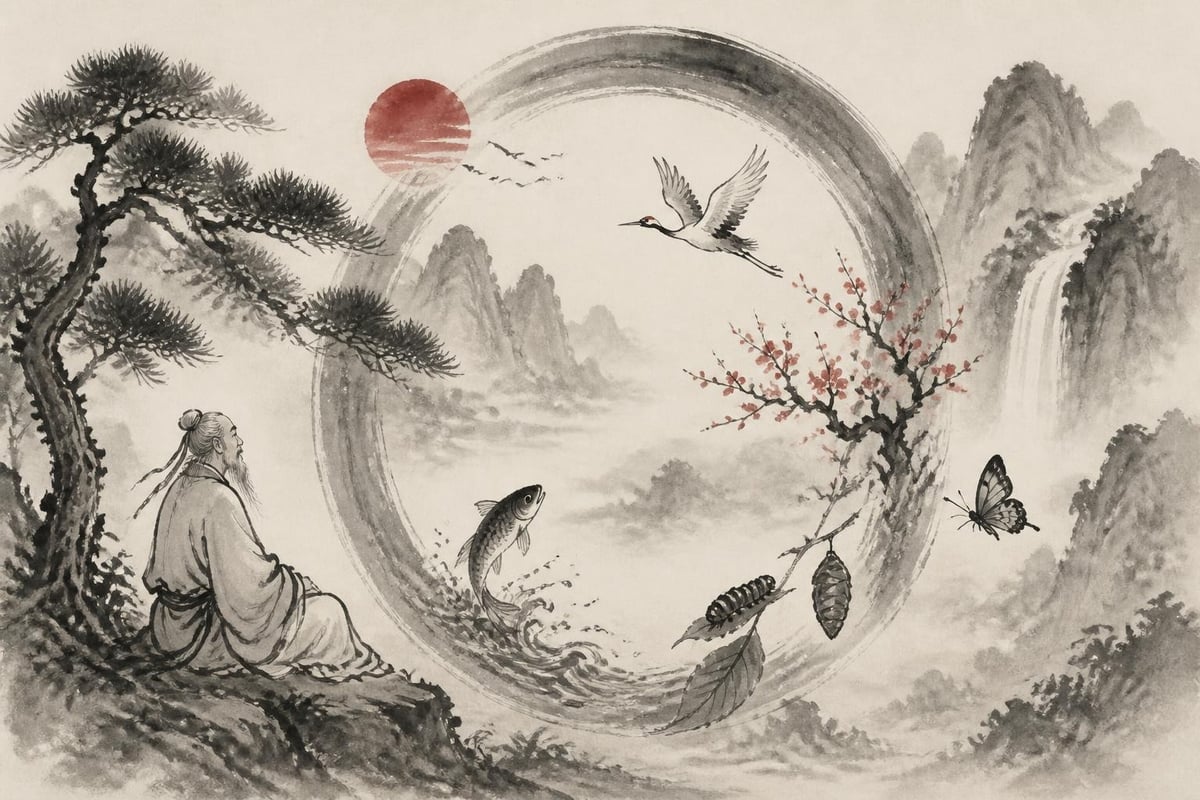
Change is the only constant, as Zhuangzi repeatedly emphasised. He saw transformation not as something to fear but as the fundamental nature of reality. Everything shifts, flows, and becomes something else. Resistance to this truth creates suffering; acceptance brings peace.
The text named after Zhuangzi contains numerous examples of transformation: humans becoming animals, animals becoming humans, life becoming death, death enabling new life. These aren't meant as literal accounts but as poetic expressions of reality's fluid nature.
| Resistance to Change | Alignment with Change |
|---|---|
| Clinging to past states | Appreciating present moments |
| Fearing future unknowns | Trusting natural unfolding |
| Demanding permanence | Accepting impermanence |
| Controlling outcomes | Responding with flexibility |
When we stop demanding that things remain static, a tremendous burden lifts. We can invest fully in the present without desperate attachment. We can care deeply without crushing what we love through possessiveness.
Death as Natural Transformation
Zhuangzi approached even death with remarkable equanimity. When his wife died, he initially grieved but then reflected on the great transformation all things undergo. She had returned to the natural cycle, he reasoned, like the changing seasons. His response shocked some contemporaries but reflected his genuine philosophical integration.
This perspective doesn't mean suppressing grief or pretending loss doesn't hurt. Rather, it places personal experience within a larger context that can bring comfort and meaning. Everything that lives must die. Everything that dies contributes to new life. We're part of this vast, mysterious process.
Cultivating Genuine Simplicity
Modern life drowns us in complexity: endless choices, constant information, competing demands. Zhuangzi points toward a different way. He valued simplicity not as deprivation but as clarity. When you remove what's unnecessary, what remains shines more brightly.
Our free Taoist course reflects this principle, making ancient practices accessible without overwhelming complexity. Covering Tai Chi, Qi Gong, Meditation, and Taoist Wisdom, you start with fundamentals, building naturally rather than trying to absorb everything at once.
Practical steps toward simplicity:
- Notice what drains your energy without serving genuine needs
- Release obligations based on others' expectations rather than your values
- Create space in your schedule for unstructured time
- Reduce information consumption to what truly enriches you
- Practise doing one thing fully rather than many things partially
The Wisdom of Not-Knowing
Perhaps most challengingly, Zhuangzi celebrated not-knowing. In a culture that prizes expertise and certainty, admitting ignorance feels uncomfortable. But genuine wisdom often begins with recognising how little we actually know.
This humble stance opens doors that certainty keeps locked. When you don't already know everything, you can learn. When you're not defending a position, you can consider new perspectives. When you release the need to be right, relationships become easier and more genuine.
Our article on What Is Taoism: Ancient Wisdom for Modern Balance reveals this theme repeatedly. Ancient masters pointed to mystery, paradox, and the limits of language, using stories and contradictions to break through our habitual thinking patterns and reveal something beyond concepts.
Living With Natural Virtue
Zhuangzi distinguished between forced morality and natural virtue. Forced morality involves following rules because you should, driven by guilt or fear. Natural virtue arises spontaneously when you're aligned with your true nature. It's not about being good; it's about being genuine.
Think of how a tree doesn't try to grow properly. It simply grows according to its nature, responding to sunlight, water, and soil. Humans have lost touch with this natural responsiveness through layers of social conditioning and mental complexity.
Recovering natural virtue involves:
- Listening to genuine feeling rather than imposed shoulds
- Acting from inner alignment rather than external pressure
- Trusting your cultivated wisdom in the moment
- Releasing performative goodness for authentic response
- Honouring your actual capacity rather than idealised standards
The practices taught through our Qi Gong course help restore this natural alignment. Through gentle, repeated practice, you reconnect with your body's wisdom and energy's natural flow. Over time, this physical alignment supports mental and emotional balance.
Zhuangzi's Relevance Today
Why does a philosopher from over two millennia ago still speak so powerfully to modern concerns? Perhaps because human struggles haven't fundamentally changed. We still wrestle with fear, desire, mortality, meaning, and relationship. The external circumstances shift, but the internal territory remains remarkably similar.
Zhuangzi offers medicine for specifically contemporary ailments. Our culture's obsession with productivity meets his teaching on useful uselessness. Our anxiety about the future encounters his emphasis on present-moment alignment. Our rigid identities bump against his fluid boundaries. The friction generates insight.
Modern challenges Zhuangzi addresses:
| Challenge | Zhuangzi's Response |
|---|---|
| Information overload | Cultivate not-knowing |
| Performance pressure | Value natural virtue |
| Identity anxiety | Release fixed self-concepts |
| Control obsession | Practise wu wei |
| Meaning crisis | Align with natural flow |
Those engaging with our teachings often find Zhuangzi's philosophy deepens their understanding. The movements and meditations aren't just physical exercises but embodied expressions of these timeless principles. When you practise letting go in Qi Gong, you're living Zhuangzi's wisdom, not just reading about it.
Integration Through Practice
Reading about Zhuangzi provides intellectual understanding. Practising what he pointed toward creates transformation. This distinction matters enormously. You can collect ideas about water without ever getting wet, or you can dive in and experience it directly.
The beauty of combining philosophical study with practical cultivation is how they reinforce each other. The practice makes the philosophy tangible. The philosophy gives the practice depth and context. Together, they create a path of genuine development rather than mere concept accumulation.
Many students discover that what seemed paradoxical in Zhuangzi's writings becomes clear through practice. How can effort be effortless? How can you act without acting? How can emptiness be fullness? The body understands what the mind struggles to grasp. Movement teaches what words can only point toward.
Zhuangzi's ancient wisdom offers a refreshing alternative to modern life's relentless pressure and complexity, showing us how to move through the world with greater ease, freedom, and natural harmony. If you're drawn to explore these principles through authentic practice, Taoist Wellness Online provides comprehensive training in Wudang Tai Chi, Qi Gong, and Taoist meditation under the guidance of Master Gu, a 15th-generation San Feng Pai Wudang Taoist Master with over 25 years of teaching experience. Join a global community of practitioners discovering how these time-tested practices can bring balance, vitality, and peace into daily life.