Kuan Im: Compassion and Balance in Taoist Practice
Sep 29, 2026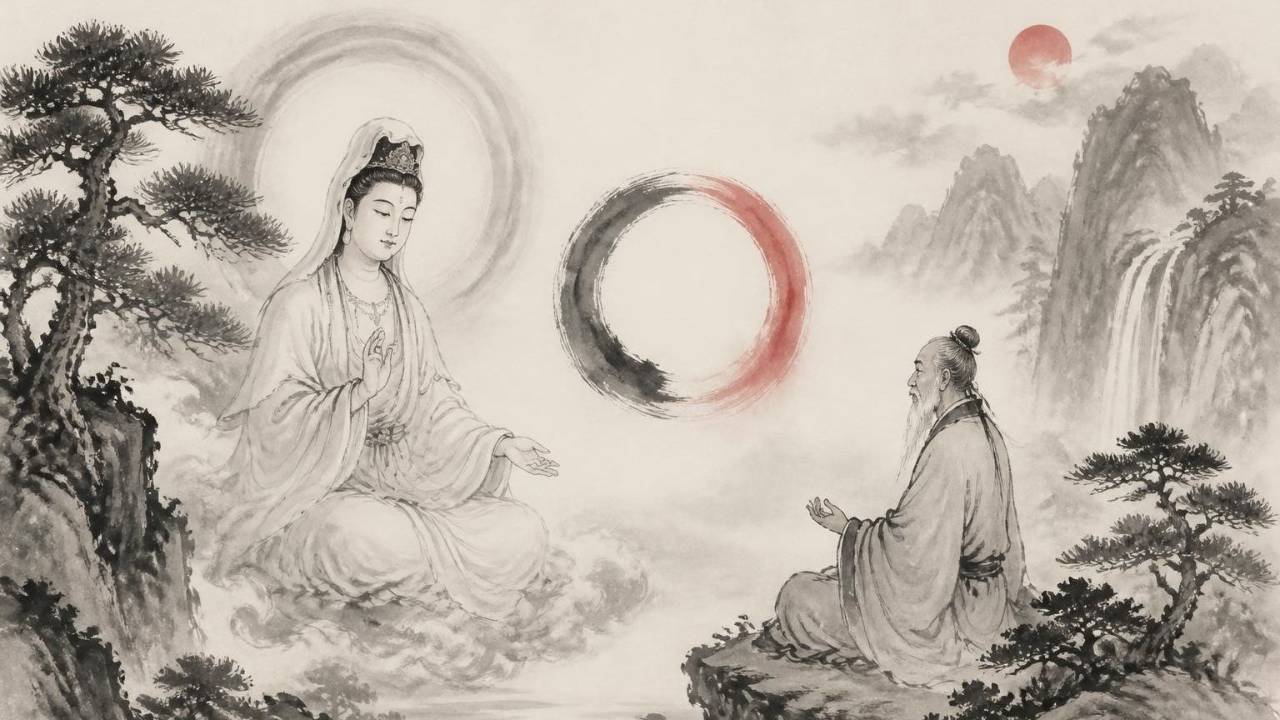
Kuan Im, also known as Guanyin or Avalokiteśvara, represents one of the most beloved figures in East Asian spiritual traditions. Rooted in Buddhist practice, Kuan Im's influence extends deeply into Chinese culture, where her teachings on compassion, mercy, and mindful presence resonate closely with Taoist principles of harmony and balance. For those exploring ancient Chinese wellness practices, understanding Kuan Im offers insight into how different wisdom traditions complement each other in the pursuit of inner peace and wellbeing. Her presence in temples, homes, and hearts across Asia reflects a universal human longing for compassion and the strength to meet life's challenges with grace.
The Origins and Transformation of Kuan Im
Kuan Im began as the male bodhisattva Avalokiteśvara in Indian Buddhism, but underwent a remarkable transformation upon reaching Chinese shores. The deity's evolution into a predominantly feminine figure reflects Chinese cultural values and spiritual needs that emerged over centuries of practice and devotion.
The name "Kuan Im" translates roughly to "observing the sounds of the world," a beautiful description of compassionate presence. This attention to the suffering and needs of all beings sits comfortably alongside the Taoist emphasis on wu wei, or effortless action, where one remains open and responsive without force or aggression.
Cultural Adaptation and Gender Transformation
The transformation of Kuan Im from male to female represents one of the most fascinating examples of religious adaptation in history. Chinese practitioners gradually reimagined this bodhisattva as a maternal figure, embodying qualities of nurturing, patience, and unconditional love.
This shift wasn't arbitrary. It responded to genuine spiritual needs within Chinese society, where feminine compassion held particular cultural resonance. The change demonstrates how spiritual practices evolve organically when they meet real human needs rather than remaining fixed in rigid forms.
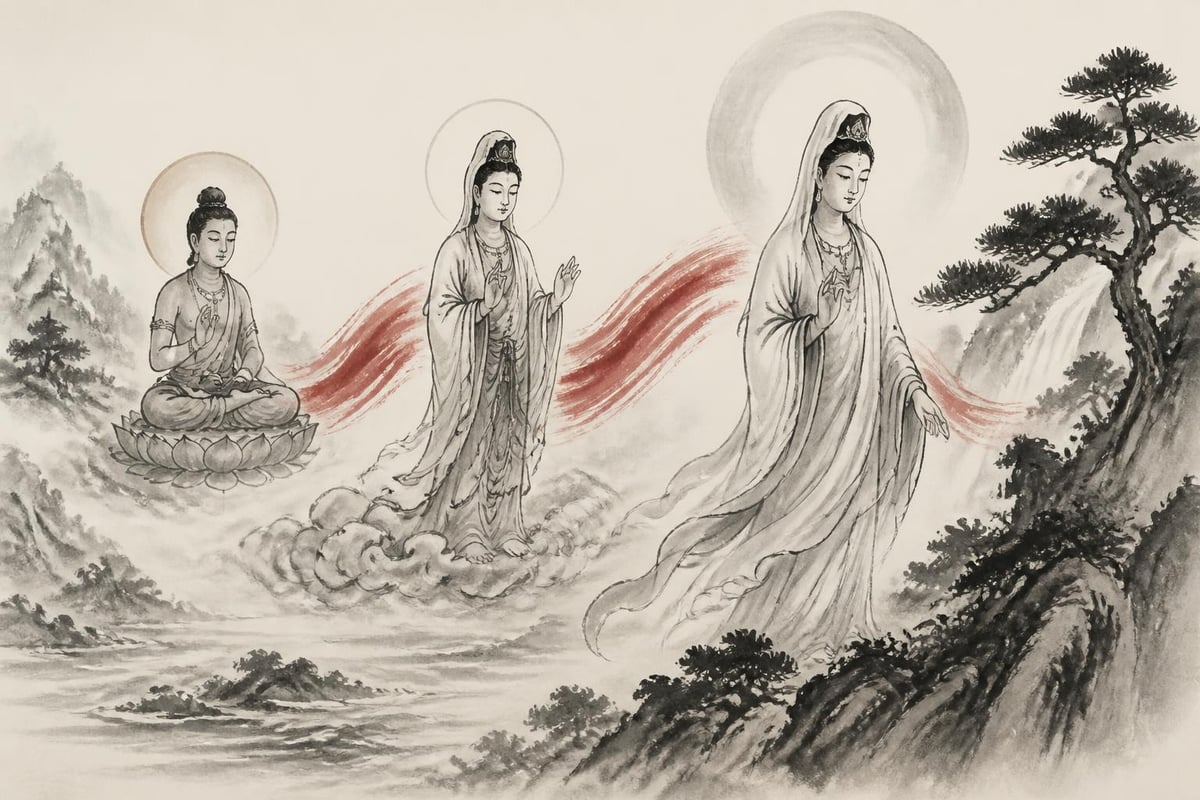
Several factors influenced this transformation:
- Maternal archetypes already present in Chinese folk religion
- The association of compassion with feminine qualities in traditional culture
- Practical devotional needs for accessible, relatable divine figures
- Syncretic blending of Buddhist, Taoist, and Confucian values
Kuan Im's Role in Chinese Spiritual Practice
Within Chinese spirituality, Kuan Im occupies a unique position that transcends sectarian boundaries. She appears in Buddhist temples, Taoist shrines, and folk religious settings, demonstrating her universal appeal and the fluid nature of Chinese spiritual practice, where Buddhist and Taoist ideas have long lived side by side.
Compassion as Active Practice
Kuan Im doesn't represent passive sympathy. Her compassion involves active engagement with suffering, a willingness to be present with difficulty without being overwhelmed by it. This quality sits well alongside Taoist principles taught in practices like our Tai Chi and Qi Gong courses, where we learn to meet resistance with softness rather than force.
The bodhisattva's thousand arms, often depicted in iconography, symbolise infinite capacity to help. Each hand holds a different implement, suggesting that compassion takes many forms depending on what each situation requires. This adaptability echoes the Taoist teaching of responding appropriately to each moment's unique conditions.
| Kuan Im Quality | Taoist Parallel | Practical Application |
|---|---|---|
| Compassionate listening | Receptive awareness | Meditation and mindful presence |
| Non-judgemental presence | Wu wei (effortless action) | Accepting what is without resistance |
| Adaptive response | Following natural flow | Adjusting practice to body's needs |
| Patient endurance | Long cultivation | Consistent daily practice |
Devotional Practices and Modern Relevance
Traditional Kuan Im devotion includes chanting, offering incense, and meditation on her compassionate qualities. These Buddhist practices share common ground with Taoist cultivation methods, particularly in their emphasis on stilling the mind and opening the heart.
Many practitioners recite the Great Compassion Mantra or simply repeat Kuan Im's name as a form of meditation. This repetitive practice calms mental chatter and creates space for deeper awareness, much like the focusing techniques used in our Taoist meditation course.
Integrating Compassion into Daily Life
The real test of Kuan Im's influence isn't in formal worship but in how her example shapes daily behaviour. Can we meet frustration with patience? Can we respond to others' pain without turning away? These questions make spirituality practical rather than abstract.
For modern practitioners, Kuan Im offers a model of engaged spirituality. She doesn't withdraw from the world's suffering but moves through it with grace and effectiveness. This engaged approach complements Taoist practices that cultivate energy and presence for active living, not escape from life's demands.
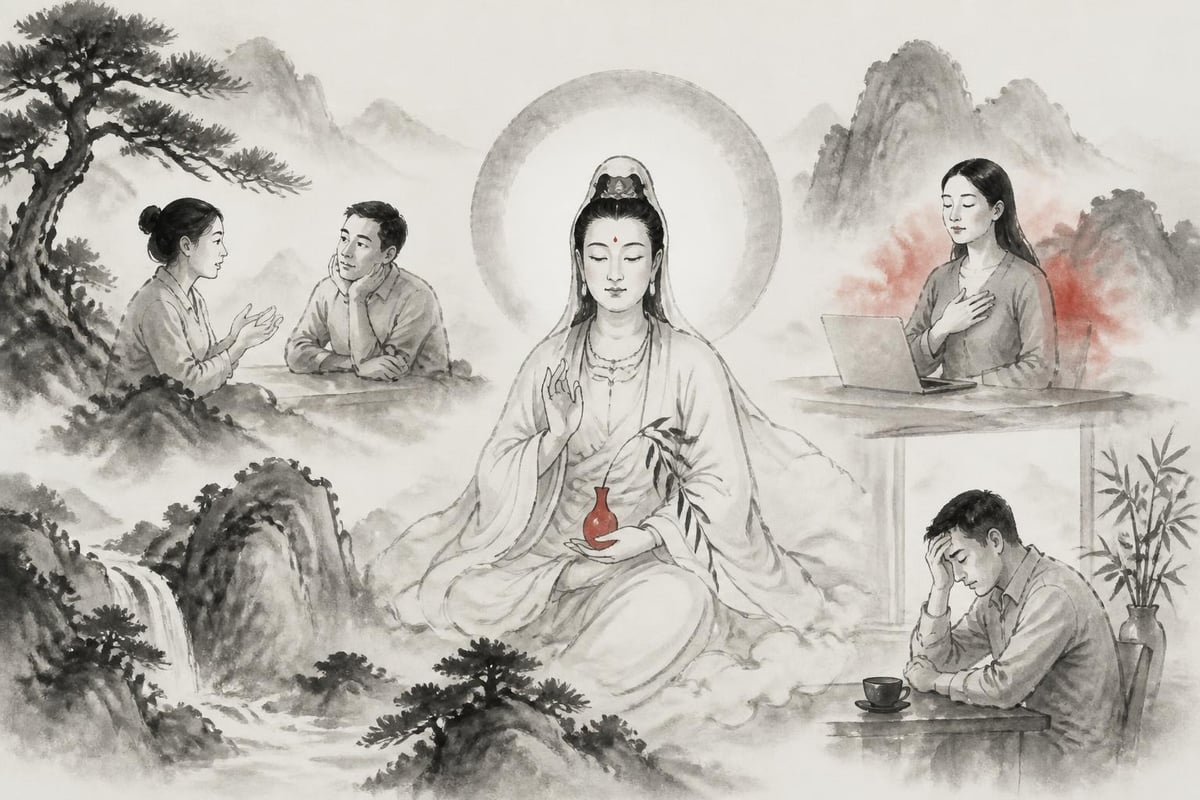
Consider these practical applications:
- Morning intention setting - Begin each day reflecting on Kuan Im's compassionate presence
- Mindful listening - Practise truly hearing others without immediately planning your response
- Softening reactions - When irritation arises, pause and choose a gentler response
- Self-compassion - Extend the same mercy to yourself that Kuan Im offers all beings
- Evening reflection - Review your day, noting moments of compassion and opportunities missed
The Iconography and Symbolism of Kuan Im
Kuan Im appears in many forms, each carrying specific symbolic meaning. The most common depictions include the white-robed Kuan Im of purity, the thousand-armed Kuan Im of boundless help, and Kuan Im with a willow branch representing healing and flexibility.
The willow branch holds particular significance. Willows bend in strong winds without breaking, embodying the Taoist principle of yielding to overcome. This same quality develops through regular Tai Chi practice, where we learn to redirect force rather than meet it head-on.
Common Symbolic Elements
Understanding Kuan Im's iconography deepens appreciation for the teachings embedded in these images:
- White robes - Purity of intention and freedom from attachment
- Vase of pure water - Cleansing negative emotions and offering spiritual refreshment
- Lotus flower - Rising above muddy waters of suffering while remaining rooted
- Child attendant - Connection to fertility, family protection, and nurturing energy
- Dragon or fish - Mastery over emotional turbulence and transformation
These symbols aren't merely decorative. They serve as meditation aids, each element inviting contemplation on different aspects of compassionate living and spiritual development.
Kuan Im in Contemporary Wellness Practices
The principles embodied by Kuan Im remain remarkably relevant for modern wellness seekers. Her emphasis on compassionate presence aligns with current understanding of mindfulness, emotional intelligence, and stress reduction.
Research into compassion practices suggests they can support empathy and emotional regulation over time. While ancient practitioners didn't have MRI machines, they understood experientially what modern research continues to explore: cultivating compassion changes us at fundamental levels.
Building a Compassion Practice
Developing genuine compassion requires more than good intentions. It needs consistent practice, much like building physical strength or flexibility through regular movement.
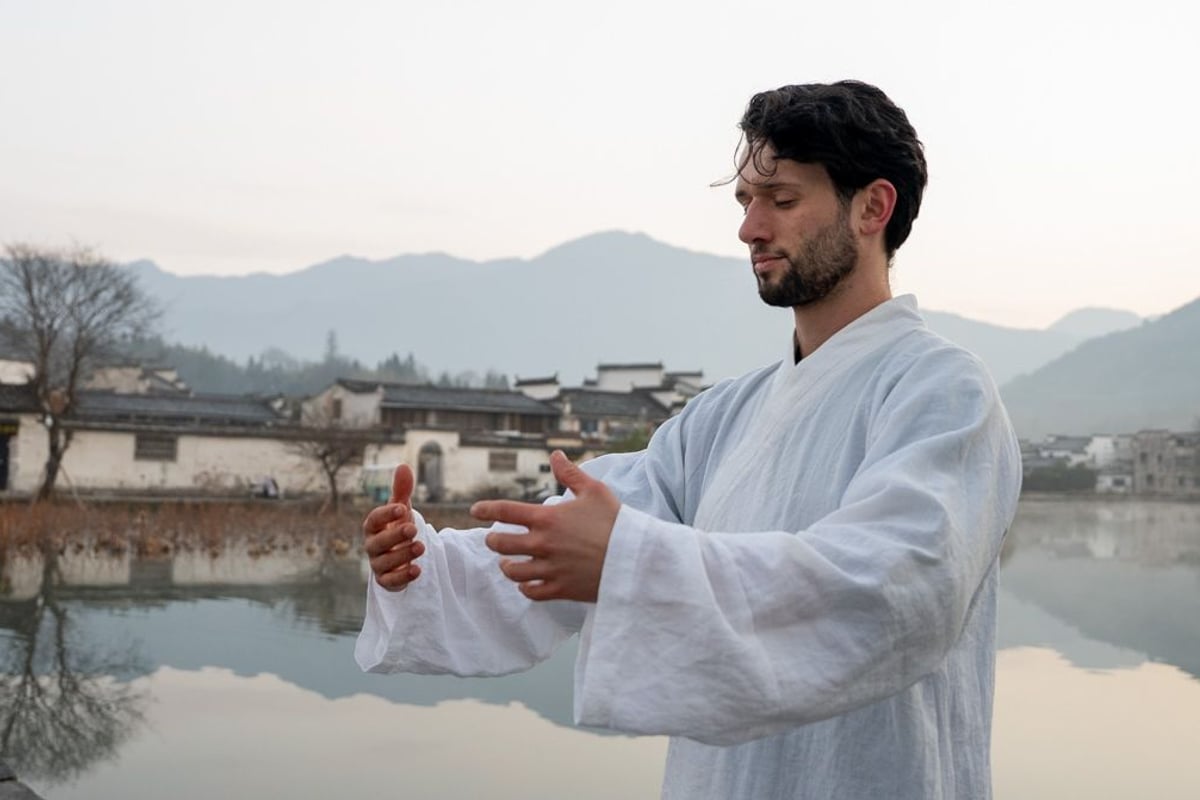
If you're exploring ways to integrate these principles into your daily routine, our free Taoist course offers a practical foundation in mindfulness, gentle movement, and meditation practices that naturally cultivate compassionate awareness alongside physical wellbeing.
| Practice Type | Duration | Focus | Kuan Im Connection |
|---|---|---|---|
| Loving-kindness meditation | 10-15 minutes | Empathy, calm | Direct compassion cultivation |
| Qi Gong movement | 20-30 minutes | Energy balance, body awareness | Embodied presence and care |
| Mindful breathing | 5-10 minutes | Calm nervous system, mental clarity | Receptive listening to body/mind |
| Gratitude reflection | 5 minutes | Positive outlook, contentment | Recognition of support received |
The Intersection of Buddhist and Taoist Wisdom
While Kuan Im originates in Buddhist tradition, her integration into Chinese spiritual life demonstrates how wisdom traditions enrich each other. Taoism and Buddhism developed side by side in China for over two millennia, each influencing the other in profound ways. Our Taoism vs Buddhism article explores this relationship in more depth.
This cross-pollination created uniquely Chinese approaches to meditation, energy work, and philosophical inquiry. The practices taught through authentic Wudang lineages often draw on insights shaped by this shared history, recognising that different paths can lead to similar destinations.
Complementary Approaches to Cultivation
Buddhist practices emphasise compassion and wisdom, while Taoist methods focus on naturalness and vital energy. Together, they offer a complete approach to human development:
Buddhist contributions:
- Systematic meditation techniques
- Ethical frameworks for daily life
- Understanding of mind's nature
- Compassion as spiritual foundation
Taoist contributions:
- Energy cultivation methods
- Alignment with natural rhythms
- Physical practices for longevity
- Spontaneity and effortless action
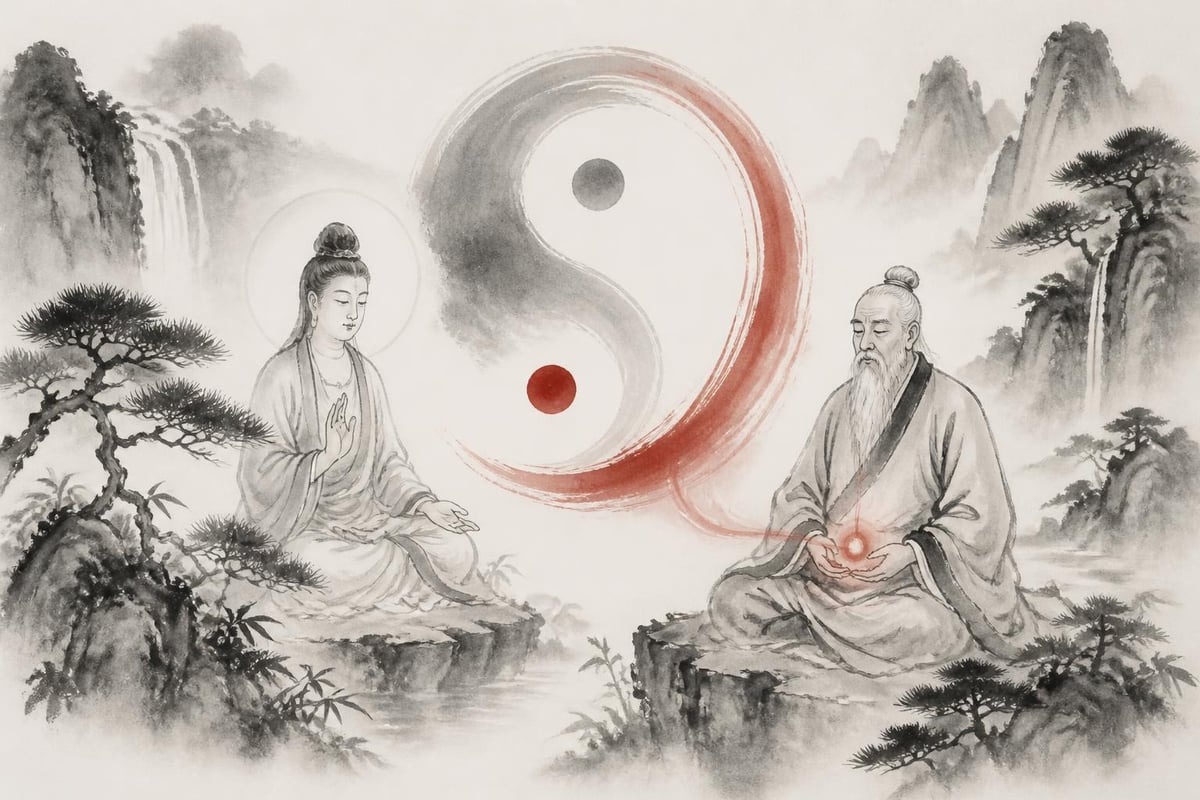
Neither tradition claims a monopoly on truth. Both recognise that different temperaments and circumstances call for different approaches. What matters isn't the label but the transformation that occurs through sincere practice.
Practical Lessons from Kuan Im for Modern Life
Kuan Im's enduring relevance stems from addressing timeless human challenges: How do we stay open-hearted in a difficult world? How do we help without becoming depleted? How do we balance self-care with care for others?
These questions feel especially urgent for many people navigating anxiety, isolation, and overwhelm today. Kuan Im's example offers practical guidance rooted in centuries of tested wisdom. Our Taoism Beliefs guide gives useful further context on the wider spiritual framework these ideas sit within.
Maintaining Boundaries While Staying Open
One misconception about compassion is that it requires endless self-sacrifice. True compassion, as exemplified by Kuan Im, includes wisdom about limits and appropriate response. She helps those ready to receive help, but doesn't force aid on those who refuse it.
This discernment mirrors the Taoist principle of right timing. Not every moment calls for intervention. Sometimes the most compassionate response is patient presence, allowing natural processes to unfold without interference.
Healthy compassion involves:
- Recognising your own capacity and limitations
- Offering help that empowers rather than creates dependency
- Distinguishing between sympathy (feeling another's pain) and compassion (responding skilfully)
- Maintaining practices that replenish your own energy and clarity
- Accepting that you cannot fix everything or everyone
Kuan Im's Teachings on Suffering and Transformation
Central to Kuan Im's role is her relationship with suffering. She doesn't promise to eliminate all difficulty, but offers presence within it. This realistic approach acknowledges that growth often emerges from challenging experiences.
The bodhisattva vow to delay personal enlightenment until all beings are free represents ultimate compassion, but also teaches an important truth: we're interconnected. Your wellbeing affects mine, and vice versa. Individual liberation and collective welfare cannot truly be separated.
Working with Difficulty Rather Than Avoiding It
Modern culture often promotes avoiding discomfort at all costs. Kuan Im's teachings suggest a different approach: developing capacity to be with difficulty without being destroyed by it. This resilience doesn't come from toughening up or suppressing feelings, but from expanding inner spaciousness.
Our Taoist philosophy course offers complementary insights here. The Tao Te Ching teaches that soft overcomes hard, water wears away stone. Flexibility and responsiveness prove stronger than rigid resistance.
When facing challenges:
- Acknowledge what you're experiencing without judgement
- Breathe and create space around the difficulty
- Ask what this situation might teach or reveal
- Consider small, skilful actions rather than dramatic interventions
- Trust the process of transformation, even when you can't see the outcome
Living with Kuan Im's Presence
Invoking Kuan Im doesn't require formal religious belief. Many people relate to her as an archetypal energy, a symbol of qualities they wish to develop, or simply as inspiration for living with greater kindness.
Her presence in homes and workplaces serves as a reminder to pause, breathe, and choose compassion over reactivity. Even a simple image can function as a visual cue, interrupting habitual patterns and inviting more conscious response.
The real practice isn't worshipping an external deity but cultivating those qualities within yourself. Kuan Im represents your own potential for compassion, patience, and wise action. When you call on her, you're really accessing your own deeper nature.
Creating Supportive Environments
Your physical environment influences your inner state. Creating spaces that support contemplation and compassionate presence makes consistent practice more natural.
This might include:
- A small altar or meditation corner with meaningful objects
- Images or statues that inspire compassion and peace
- Natural elements (plants, water features, natural light)
- Minimal clutter to reduce mental distraction
- Comfortable seating for meditation or reflection
These environmental supports work alongside regular practice. Joining our community of fellow practitioners provides additional encouragement and shared wisdom, helping sustain your commitment when individual motivation flags.
The Continuing Relevance of Ancient Wisdom
Ancient teachings like those embodied by Kuan Im continue to gain relevance as modern life grows more complex. The challenges facing humanity, from environmental strain to social fragmentation to technological disruption, demand exactly the qualities Kuan Im represents: compassion, wisdom, patient endurance, and skilful action.
These aren't nostalgic retreats to simpler times but living traditions that evolve while maintaining essential truths. Each generation must discover how timeless principles apply to contemporary circumstances, finding fresh expressions for ancient wisdom.
Kuan Im's continued presence in modern spiritual life demonstrates that genuine compassion never becomes obsolete. The forms may change, but the need for mercy, patience, and loving presence remains constant across all eras and cultures.
Kuan Im's teachings on compassion and mindful presence complement Taoist practices of balance and natural living, offering a rich path toward greater wellbeing and peace. Whether you approach these traditions through formal study or simple daily practice, the cultivation of compassionate awareness transforms both individual lives and the wider world. If you're ready to explore how ancient Chinese wisdom can bring more balance and vitality to your life, Taoist Wellness Online offers authentic teachings in Tai Chi, Qi Gong, and meditation with Master Gu, a 15th-generation Wudang master, helping you build a sustainable practice rooted in genuine lineage and compassionate guidance.