Taoist Wisdom for Stress: Ancient Keys to Inner Calm
Oct 11, 2026
Stress has become the unwelcome companion of modern life, showing up uninvited in our schedules, our bodies, and our racing thoughts. Yet thousands of years ago, Taoist sages offered a different way, a path that doesn't fight against pressure but moves with it like water flowing around stones. Taoist wisdom for stress isn't about managing harder or pushing through. It's about returning to what's natural, remembering that you're part of nature too, and finding calm in the middle of chaos rather than waiting for everything to settle first.
The Foundation: Understanding Taoist Wisdom for Stress
Taoist philosophy emerged in ancient China through careful observation of nature's patterns, cycles, and effortless transformations. The core texts, especially the Dao De Jing attributed to Lao Tzu, teach that true strength comes from flexibility, that real power flows from alignment rather than force.
When we apply Taoist wisdom for stress, we're not learning to suppress anxiety or ignore what troubles us. We're learning to work with our energy differently.
The key Taoist principles that address stress include:
- Wu wei (effortless action): Acting without strain, moving with circumstances rather than against them
- Ziran (naturalness): Returning to what's authentic and unforced in your response
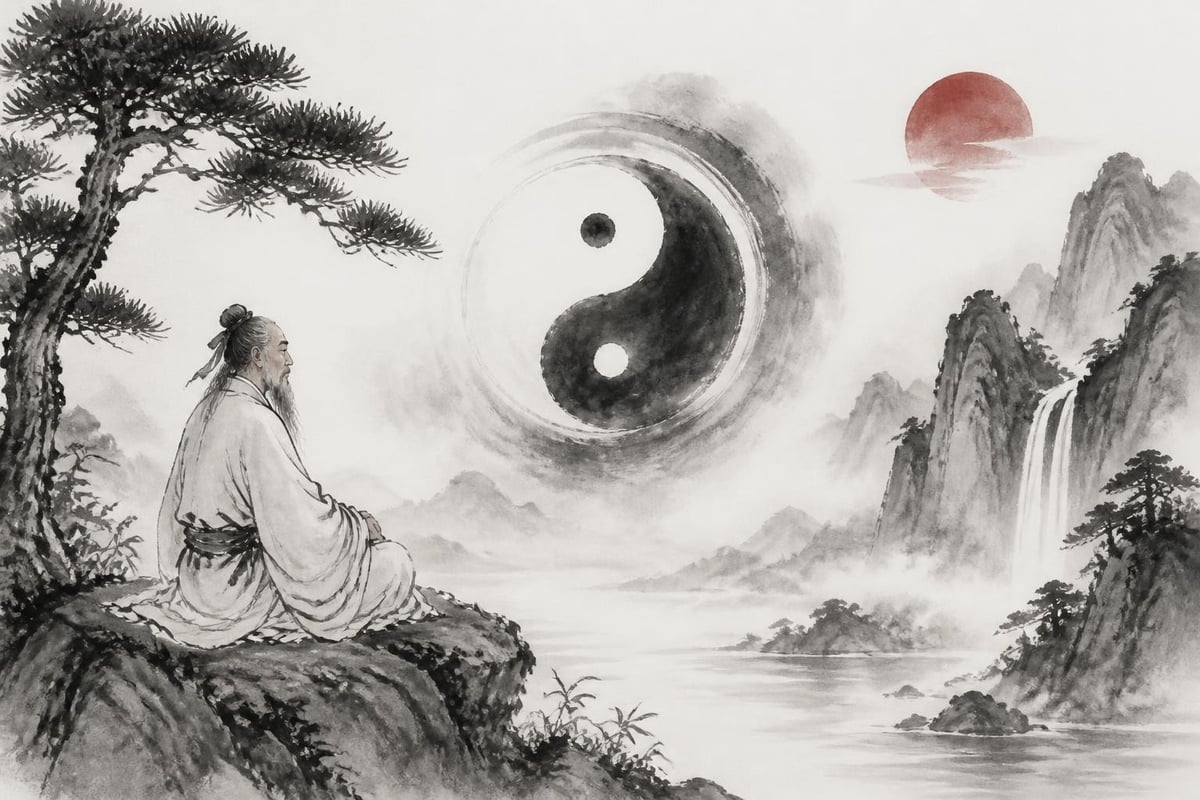
- Yin and yang balance: Recognising that rest and activity, softness and strength, all have their place
- Following the Dao: Aligning with the natural way things flow rather than imposing rigid control
These aren't abstract concepts meant for hermits on mountaintops. They're practical frameworks that change how you meet daily challenges, from overwhelming work demands to relationship tensions to the simple exhaustion of trying to keep everything together.
The Body Knows the Way
Your body carries tension long before your mind names it as stress. Shoulders creep toward ears, breath becomes shallow, digestion falters, sleep grows restless. Taoist wisdom for stress recognises that mind and body aren't separate territories but one continuous landscape.
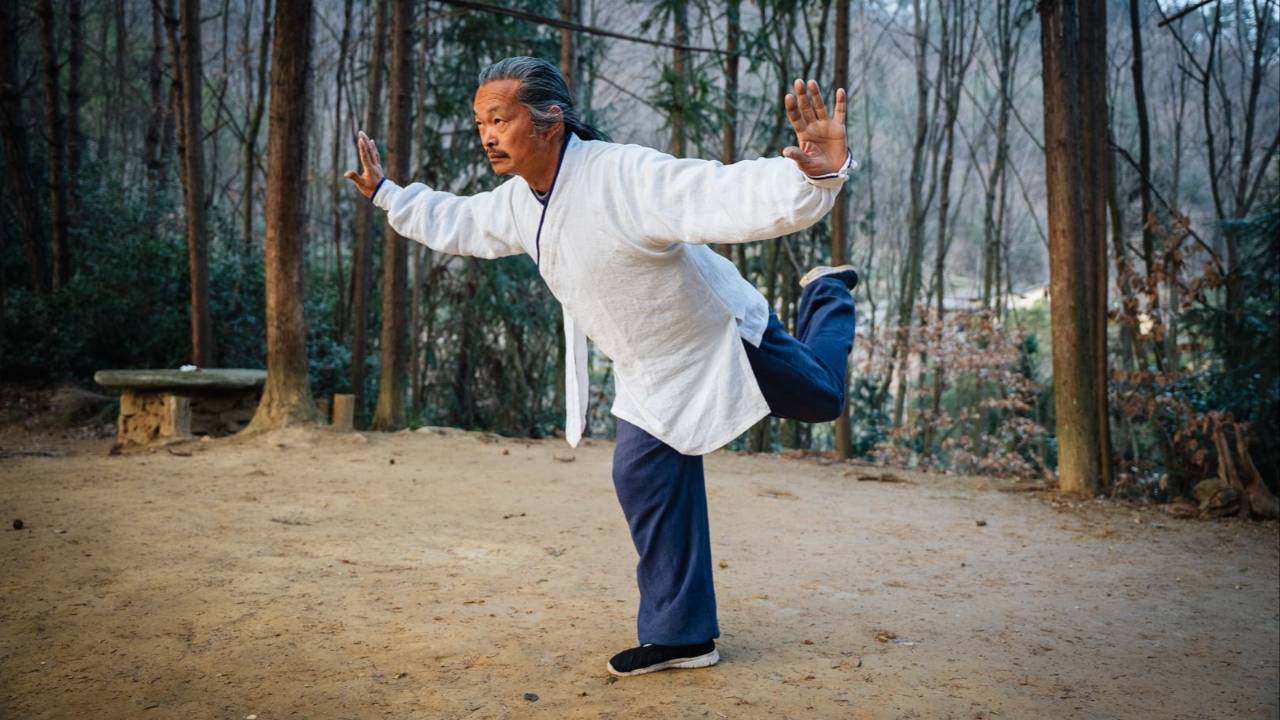
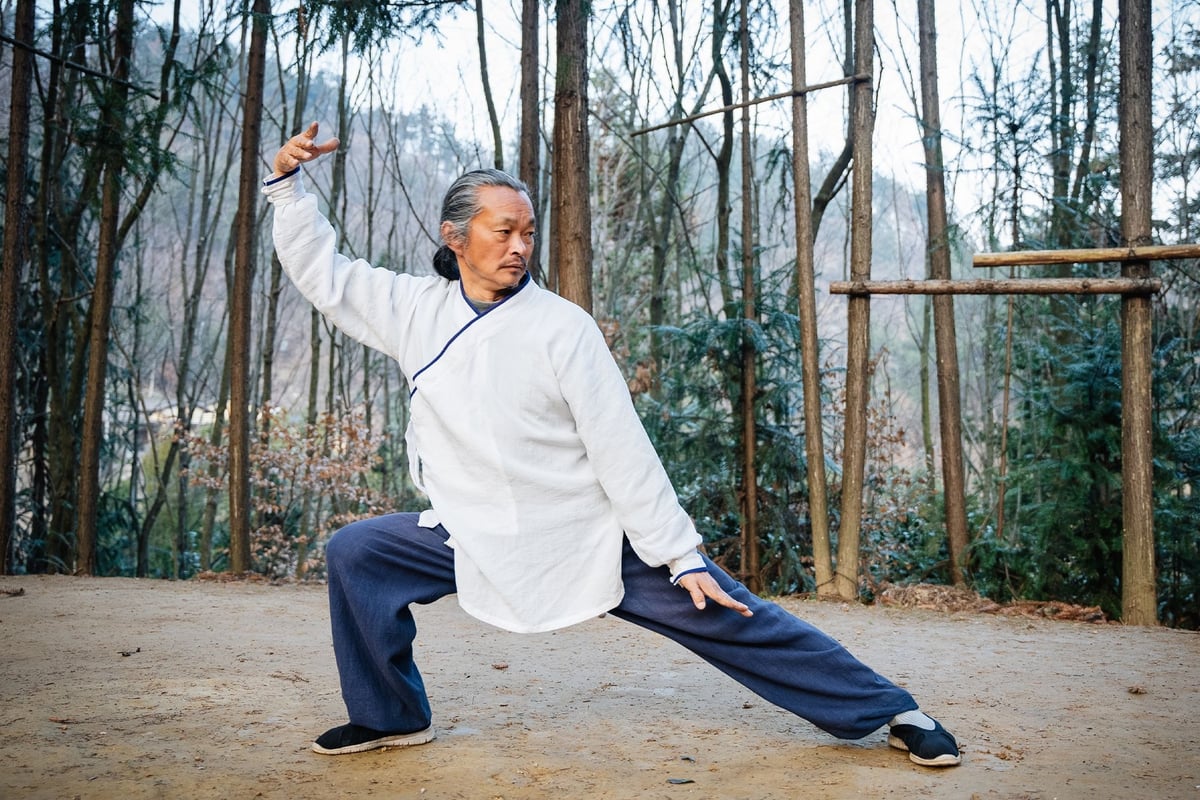
Wudang Tai Chi embodies this integration beautifully. The slow, flowing movements aren't just exercise; they're a moving meditation that helps teach your nervous system what safety feels like. Each weight shift, each rotation, becomes a lesson in letting go of what you can't control while staying centred in what you can. You'll find these movements at the heart of our Tai Chi course.
Qi Gong takes this even deeper, working directly with your vital energy (qi) through coordinated breath, movement, and intention. When stress scatters your energy in a dozen directions, these practices help gather it back home, and our Qi Gong course is a gentle place to begin.
Wu Wei: The Art of Effortless Response
Wu wei translates roughly as "non-doing" or "effortless action", but it's not about passivity or giving up. It's about finding the point of least resistance, the natural opening, the way water finds its path downhill without struggle.
Think of a time you pushed hard against a problem and got nowhere, then stepped back and the solution appeared almost by itself. That's wu wei in action.
Applying Wu Wei to Daily Stress
Most stress comes from friction, the grinding between what is and what we think should be. We push against traffic, against difficult people, against our own limitations, against time itself. Wu wei asks: what if you stopped pushing quite so hard?
This doesn't mean you stop acting. It means you act from a different place, watching for the natural opening rather than forcing doors that aren't ready to open.
Practical wu wei approaches for common stressors:
- Work overwhelm: Instead of forcing yourself through fatigue, take a genuine break and notice how clarity often returns
- Difficult conversations: Rather than rehearsing arguments, stay present and respond to what actually happens
- Decision paralysis: Stop over-analysing and trust the choice that feels most natural, most aligned
- Time pressure: Focus on what's truly essential rather than trying to do everything urgently
Our article on Wu Wei Meaning: The Art of Effortless Action Explained goes deeper into this principle. It teaches that when you stop fighting the current, you often move faster and farther than when you exhaust yourself swimming upstream.
The Breath: Your First Teacher
Before you can change anything external, you need to work with what's internal and immediate. Your breath is always with you, always available, always honest about your current state.
Taoist wisdom for stress begins with noticing how you breathe. Under pressure, breath becomes shallow, held, irregular. This can trigger your nervous system's alarm bells, creating a feedback loop where stress breeds more stress.
Master Gu shares five Taoist breathing techniques for calming the mind in the short video below.
| Stress Breathing | Calm Breathing | What It May Support |
|---|---|---|
| Shallow, chest-only | Deep, diaphragmatic | The body's "rest and digest" response |
| Irregular rhythm | Smooth, even flow | A steadier heart rhythm |
| Held or paused | Continuous cycle | A more balanced breathing pattern |
| Unconscious pattern | Mindful awareness | Moving from reactive to responsive |
Taoist breathing practices don't force deep breaths or complicated counts. They invite you to soften, to let your belly expand naturally, to find the rhythm that already exists beneath the tension.
Simple Taoist Breathing for Immediate Calm
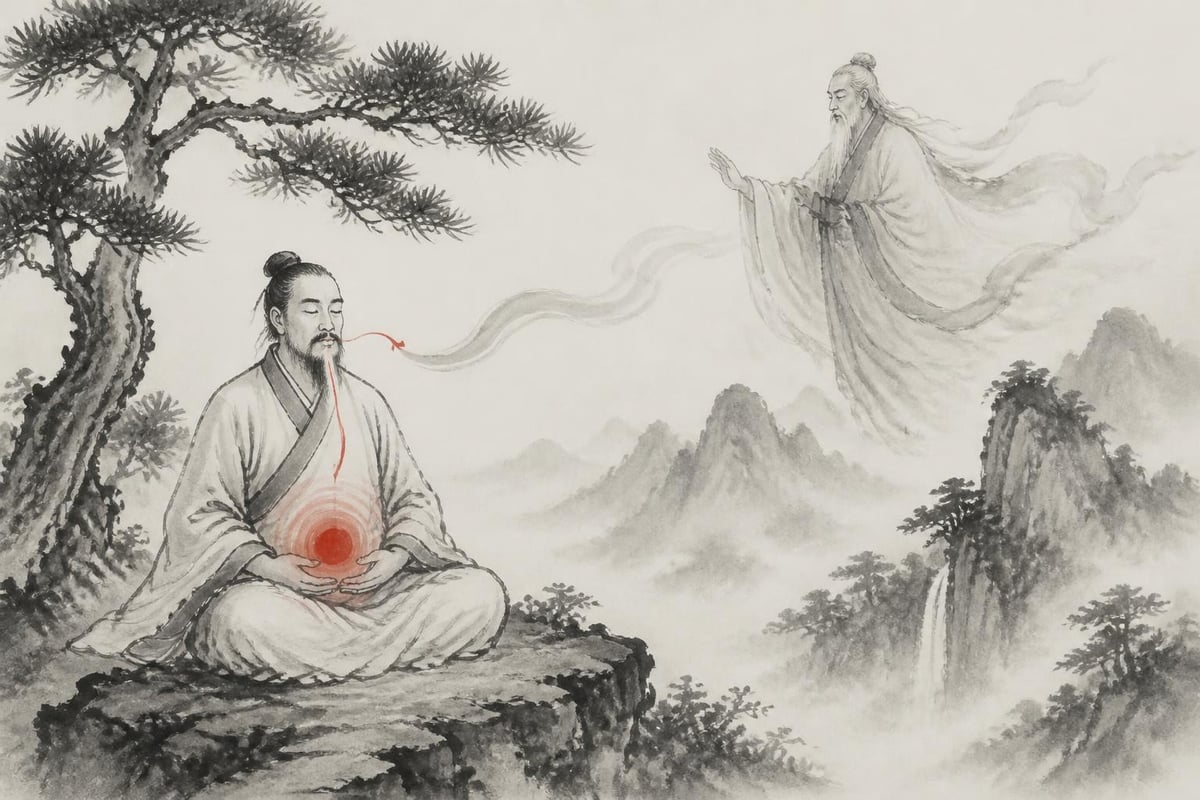
Sit comfortably or stand naturally. Place one hand on your lower belly, a few inches below your navel. This is your dan tian, the energy centre Taoists recognise as your root of vitality.
Breathe naturally through your nose, noticing the gentle rise and fall of your belly. Don't force anything. Just observe.
After a few breaths, begin to soften your exhale, letting it grow slightly longer than your inhale. Still natural, still easy. Notice whether your shoulders drop, your jaw releases, and your mind quietens just a little.
Many people find that even three minutes of this simple practice helps them feel calmer. It reminds your body that right now, in this moment, you're safe. If you have a breathing condition, are pregnant, or feel light-headed at any point, please stop and check with your healthcare professional before continuing.
Movement as Medicine: Tai Chi and Qi Gong
While Western approaches often separate mental and physical stress management, Taoist wisdom for stress treats them as inseparable. Your thoughts affect your posture; your posture affects your thoughts. Tension in your shoulders reflects worry in your mind. Stagnant energy in your body can go hand in hand with stagnant thinking.
Tai Chi addresses this through continuous, flowing movement that never forces, never strains. Each posture melts into the next like seasons changing, teaching your whole system about natural transitions and graceful adaptation. Our article on Tai Chi for Stress: Ancient Movement for Modern Calm looks at this in more detail.
The movements aren't random. They follow principles refined over centuries, designed to open energy pathways, release habitual holding patterns, and restore balance between yin and yang.
What regular Tai Chi practice is associated with:
- Lower levels of stress hormones such as cortisol
- Better heart rate variability (a marker linked to stress resilience)
- Less muscular tension held from everyday stress
- Mindful awareness without added mental effort
- A moving meditation that helps calm racing thoughts
- Growing physical confidence and emotional steadiness
Qi Gong works similarly but often with simpler, more accessible movements focused specifically on cultivating and balancing your vital energy. Both practices share the Taoist understanding that when energy flows freely, stress has less room to settle and build up.
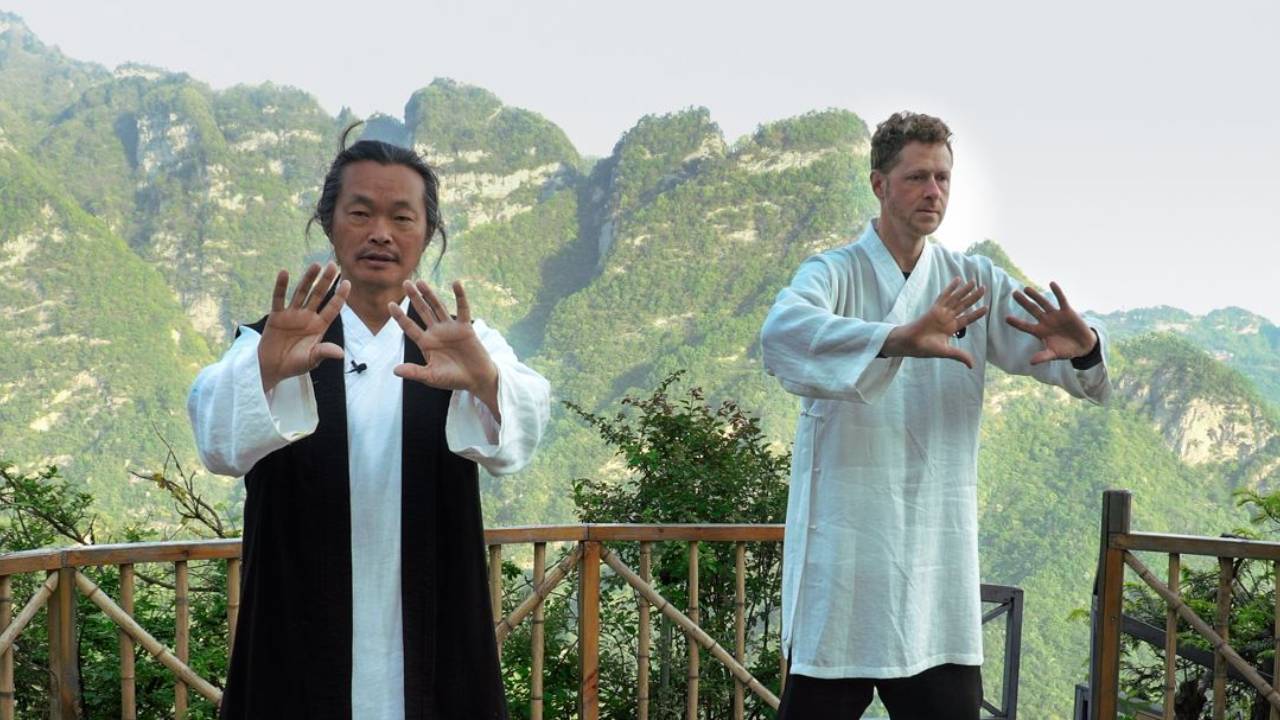
When you're learning these practices with authentic guidance, like the Wudang tradition taught by Master Gu, a 15th-generation San Feng Pai Wudang Taoist Master with 25+ years of teaching experience, you're not just copying movements. You're absorbing a complete system of stress transformation passed down through generations.
Accepting What Is: The Taoist View of Control
Much of our stress comes from a fundamental misunderstanding about what we can actually control. We exhaust ourselves trying to change the weather, other people's choices, traffic patterns, the past, the future, and a thousand other things that exist beyond our influence.
Taoist wisdom for stress offers a radically different approach: distinguish clearly between what you can influence and what you cannot, then pour your energy only into the first category.
This isn't resignation or defeat. It's intelligent allocation of your limited resources. It's recognising that trying to control the uncontrollable is like trying to grab water: it slips through your fingers while leaving you frustrated and empty-handed.
The Practice of Acceptance
True acceptance doesn't mean you like what's happening. It means you stop arguing with reality about whether it should be happening.
Your boss is difficult. That's the current reality. You can waste energy wishing it weren't so, or you can accept it as today's weather and decide how you'll dress for it.
The project deadline is unrealistic. You can rage against whoever set it, or you can accept the situation and make clear, calm choices about what's possible within it.
What you can influence:
- Your breath, your posture, your present-moment awareness
- How you interpret and frame situations
- Where you place your attention
- Your own actions and responses
- How you care for your energy and health
- What practices you choose daily
What you cannot control:
- Other people's thoughts, feelings, or choices
- Past events or future uncertainties
- Much of what happens externally
- How quickly things change
- Whether people understand you
- Outcomes, only efforts
This clarity itself can lighten the load considerably. You stop spending energy on futile battles and start investing it where it can actually make a difference.
Living with the Seasons: Natural Rhythm and Rest
Nature doesn't maintain the same energy year-round, and neither should you. Trees don't apologise for shedding leaves in autumn. Bears don't feel guilty about winter hibernation. Yet humans, especially in modern culture, expect themselves to maintain peak productivity twelve months a year, every week, every day.
Taoist wisdom for stress includes honouring natural cycles of activity and rest, output and restoration. The concept of yin and yang teaches that neither can exist without the other, that rest isn't the absence of productivity but its necessary partner.
When you're constantly in yang energy - pushing, doing, producing - you create imbalance. Your body keeps score even when your mind ignores the deficit. Eventually, forced rest can arrive through illness, burnout, or breakdown.
Creating Space for Restoration
Look at your typical week. Where is the genuine rest, the yin time that isn't just collapsed exhaustion but intentional renewal?
Taoist practice invites you to build rest into your rhythm before your body demands it through crisis. This might mean shorter work hours, regular meditation practice, earlier bedtimes, or simply moments of stillness woven through your day.
Our free Taoist course can help you establish this foundation. Learning simple Tai Chi and Qi Gong movements gives you tools for active rest, where your body moves gently while your mind releases its grip on problems.
| Modern Pattern | Taoist Alternative | Possible Result |
|---|---|---|
| Constant activity until burnout | Alternating effort and rest | More sustainable energy |
| Powering through fatigue | Honouring natural tiredness | Deeper restoration |
| Same pace year-round | Adjusting with the seasons | Less resistance |
| Rest as a last resort | Rest as an essential practice | Prevention, not crisis |
Simplicity: Clearing Mental Clutter
Your mind under stress resembles a room stuffed with too many objects. You can barely move without bumping into worries, obligations, plans, regrets, and fears. Each thought demands attention, creating a cacophony that drowns out clarity.
Taoist wisdom for stress emphasises simplicity not as deprivation but as liberation. When you clear away what's non-essential, what remains becomes workable.
This applies to physical space (clutter can create low-grade stress), schedule (overcommitment fragments your energy), commitments (saying yes to everything means no to yourself), and mental habits (constant analysis creates paralysis).
The Practice of Letting Go
Start small. Choose one area of your life and ask: what here is truly necessary? What am I holding onto from habit, fear, or obligation rather than genuine value?
Maybe it's subscriptions you don't use, projects you'll never start, clothes you'll never wear, or commitments that drain rather than nourish you. Each thing you release creates space for energy to flow more freely.
In Taoist meditation practice, you learn to apply this same principle to thoughts. You don't fight them or suppress them. You simply stop feeding them your attention, letting them pass like clouds across the sky.
Returning to Balance: Integration and Practice
Understanding Taoist wisdom for stress intellectually changes nothing. These principles only transform your experience when they move from concept to embodied practice, from knowing about to actually doing.
The beauty of Taoist practices is their accessibility. You don't need special equipment, expensive gear, or hours of free time. You need only a willingness to begin where you are, with what you have, right now.
Starting points for bringing Taoist wisdom into daily life:
- Morning: Three minutes of natural breathing before checking your phone
- Midday: Brief standing meditation or a simple Qi Gong stretch
- Evening: Gentle Tai Chi movements or walking meditation
- Transition moments: A conscious pause between activities instead of rushing
- Weekly: A longer practice session dedicated to deeper cultivation
The key is consistency over intensity. Five minutes daily builds a real foundation; sporadic hour-long sessions can create more pressure than relief.
When you practise regularly with authentic guidance, the wisdom stops being something you think about and becomes something you live from. Your body learns before your mind fully understands. This is the Taoist way: direct experience over intellectual analysis.
These practices are a lovely support for everyday wellbeing, but they aren't a replacement for professional care. If stress or anxiety is affecting your daily life, sleep or health, please speak to your GP or a qualified mental health professional alongside your practice.
Community and Guidance: Learning the Authentic Path
While Taoist wisdom emphasises individual practice and self-cultivation, having proper guidance and community support can make your journey feel far more supported. The practices contain subtle elements that books alone can't convey.
Learning from a teacher rooted in an authentic lineage helps ensure you're practising in complete form rather than diluted versions stripped of their deeper dimensions. The postures, breathing patterns, and energy work all build on each other in specific ways refined over centuries.
Connecting with others on this path also matters. Stress often includes isolation, the feeling that you're alone in your struggle. Finding people who understand these practices, who share similar intentions around wellbeing and balance, creates a supportive context for your growth.
You're not trying to become someone else or achieve some perfect state. You're simply remembering what your system already knows about balance, flow, and natural rhythm. You're removing the obstacles you've unconsciously placed between yourself and your own inherent calm.
This journey doesn't require you to adopt new beliefs or abandon your current life. It asks only that you explore practices that have helped countless people across millennia find steadiness amid change, calm amid chaos, and resilience amid challenge. The wisdom is there, waiting for you to experience it directly.
Taoist wisdom for stress offers practical, embodied tools that work with your natural rhythms rather than against them. By bringing simple practices like mindful breathing, gentle movement, and the principle of wu wei into your daily routine, you can build genuine resilience from the inside out. If you're ready to explore these practices with authentic guidance, Taoist Wellness Online provides comprehensive courses in Tai Chi, Qi Gong, and Taoist meditation taught by Master Gu, helping you build the foundation for lasting balance and calm in your everyday life.