Tai Chi Stomach Exercises: Strengthen Your Core Naturally
Aug 16, 2026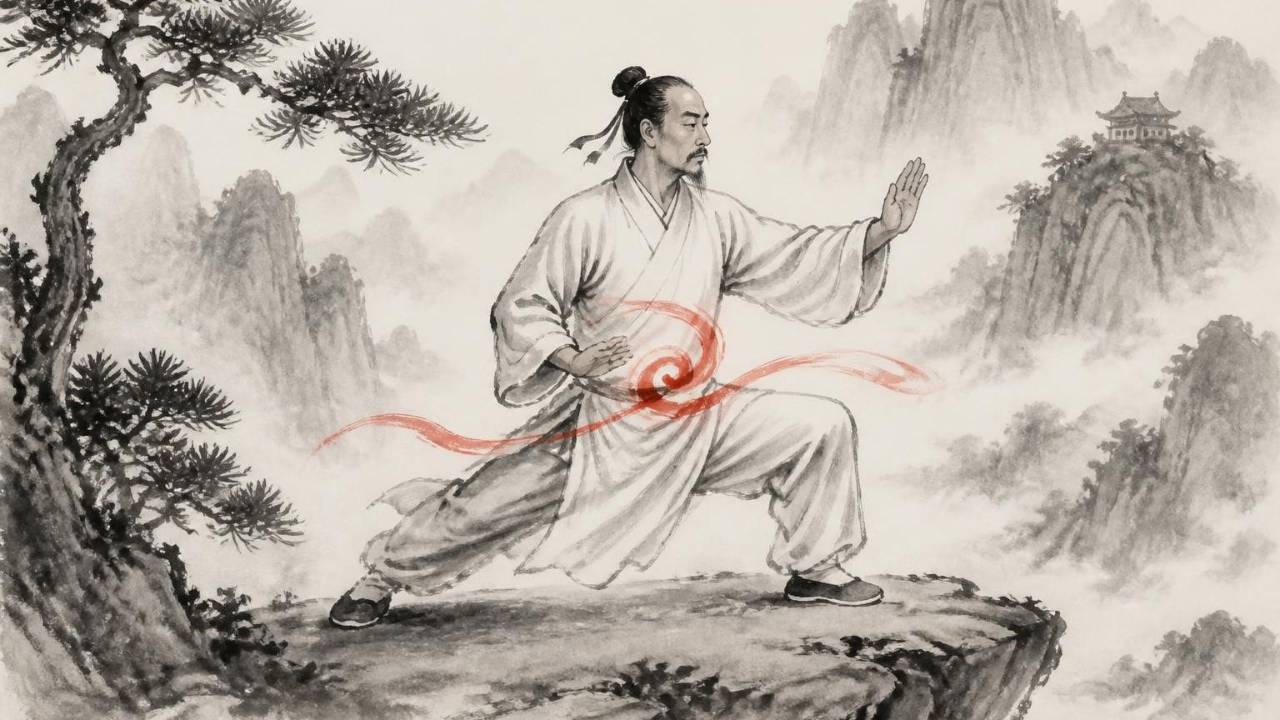
Your core isn't just about visible abs or beach-ready muscles. It's the foundation of every movement you make, the anchor that supports your spine, and the centre from which energy flows throughout your body. In the Taoist tradition, this area is known as the Dan Tian, the vital energy centre located just below your navel. When you practise tai chi stomach exercises, you're not simply doing crunches in slow motion. You're cultivating strength, stability, and energy awareness through movements refined over centuries in the Wudang mountains. These gentle yet powerful practices offer a complete approach to core wellness that honours both body and spirit.
Understanding Core Strength in Tai Chi Practice
Tai chi stomach exercises work differently than conventional abdominal training. Instead of isolating muscles through repetitive contractions, these movements engage your entire core through integrated, flowing patterns. Your deep abdominal muscles, lower back, pelvic floor, and diaphragm all work together as one coordinated system.
The Wudang approach emphasises internal strength over external force. When you practise correctly, you're building:
- Deep stabilising muscles that protect your spine
- Functional strength that transfers to daily activities
- Breath coordination that massages internal organs
- Energy awareness that connects mind and body
- Postural alignment that reduces chronic tension
This holistic method creates sustainable strength. You're not forcing your body into unnatural positions or pushing through pain. Instead, you're learning to move from your centre with awareness and ease. Our article on Tai Chi Body: Transform Your Movement and Energy explores this whole-body approach in more depth.
The Role of Dan Tian in Core Development
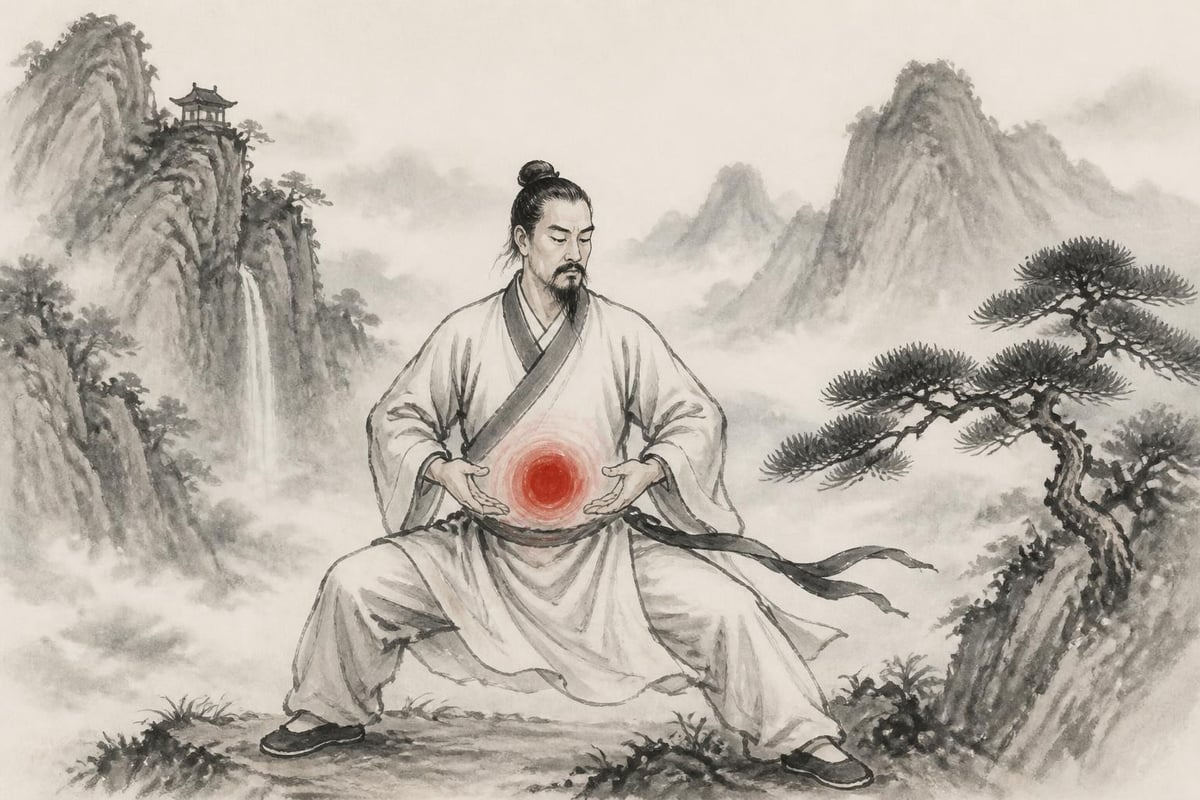
The lower Dan Tian sits approximately two inches below your navel and two inches inward. This isn't just an anatomical location but an energetic focal point. When you learn to move from this centre, your entire body becomes more integrated and efficient.
Traditional tai chi stomach exercises teach you to sink your qi to the Dan Tian. This means allowing your breath and attention to settle into your lower abdomen rather than holding tension in your chest or shoulders. Over time, this practice develops remarkable core stability without the strain of conventional exercise.
Fundamental Breathing Techniques for Abdominal Strength
Before exploring specific movements, you need to understand Taoist breathing. Your breath is the bridge between your mind and body, and it's essential for effective tai chi stomach exercises. The breath naturally massages your internal organs, strengthens your diaphragm, and engages your deep core muscles.
Abdominal Breathing Basics
Natural abdominal breathing expands your belly on the inhale and gently draws it in on the exhale. This is opposite to how many people breathe, especially when stressed or rushed.
Here's how to practise:
- Stand or sit comfortably with your spine naturally aligned
- Place one hand on your chest and one on your lower abdomen
- Inhale slowly through your nose, allowing your belly to expand
- Keep your chest relatively still as your lower abdomen fills with breath
- Exhale slowly, feeling your belly naturally draw back toward your spine
- Continue for 10-20 breaths, maintaining a calm, steady rhythm
This simple practice alone begins strengthening your core. Your diaphragm gets a full workout, your deep abdominal muscles engage, and your nervous system shifts into a calmer state. Many students notice improved digestion and reduced lower back tension within weeks of regular practice.
Reverse Breathing for Advanced Practice
As you become comfortable with natural breathing, you can explore reverse breathing, a more advanced technique used in many Wudang forms. During reverse breathing, you gently draw your abdomen in on the inhale and allow it to expand on the exhale.
This technique creates stronger internal pressure and deeper core engagement. It's particularly effective during certain tai chi movements where you need maximum stability and power generation. However, approach reverse breathing gradually and only after mastering natural abdominal breathing.
Essential Tai Chi Stomach Exercises
These movements form the foundation of core development in Wudang Tai Chi practice. Each exercise builds specific aspects of abdominal strength while maintaining the flowing, meditative quality that makes tai chi unique. Our article on 7 Essential Beginner Tai Chi Exercises to Try in 2026 offers a gentler starting point if you're completely new to these movements.
Standing Meditation (Zhan Zhuang)
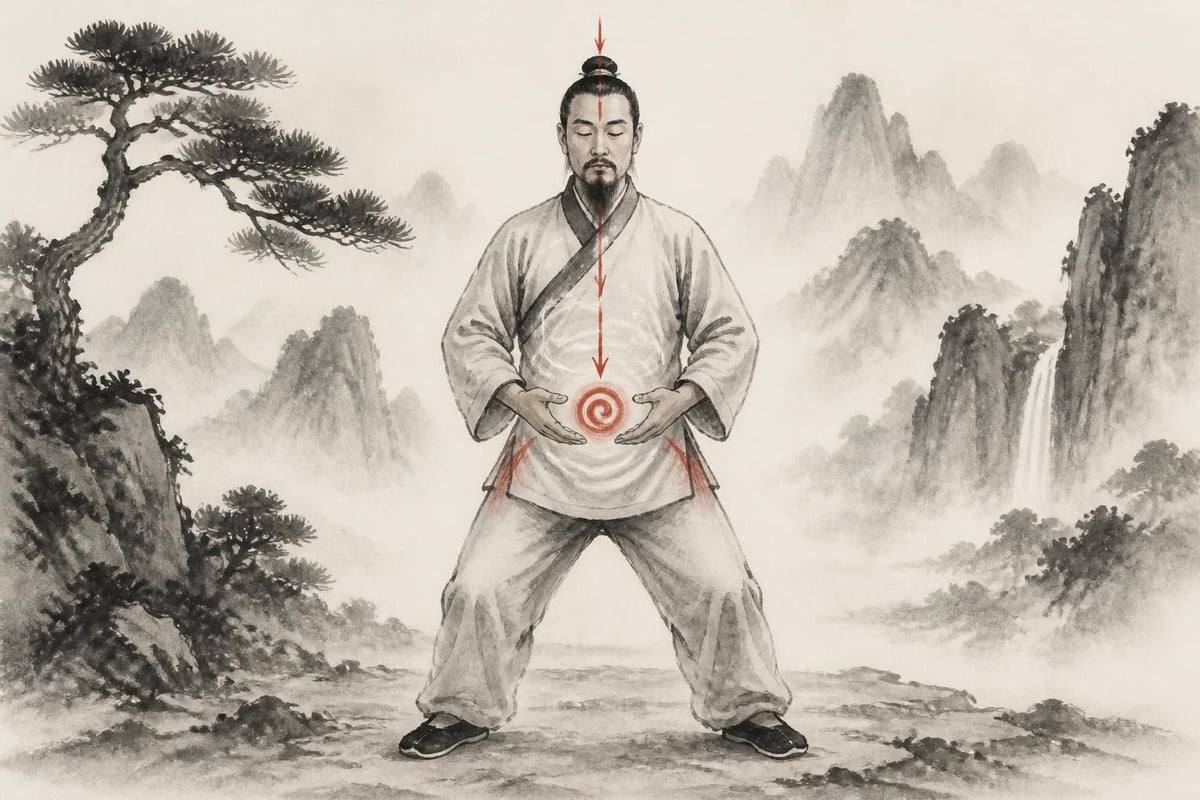
Standing meditation might seem passive, but it's one of the most challenging and effective tai chi stomach exercises. You're building deep core strength by maintaining proper alignment against gravity.
Basic standing posture:
- Stand with feet shoulder-width apart, knees slightly bent
- Allow your tailbone to drop as if sitting on a high stool
- Lift gently from the crown of your head
- Relax your shoulders and chest
- Focus on breathing into your lower Dan Tian
- Hold for 5-20 minutes, gradually increasing duration
| Duration | Benefit Focus | Experience Level |
|---|---|---|
| 5 minutes | Postural awareness | Beginner |
| 10 minutes | Core endurance | Intermediate |
| 20+ minutes | Deep energy cultivation | Advanced |
Your legs will shake, your core will burn, but you're not straining. You're learning to support yourself with minimal muscular effort and maximum structural alignment. This translates directly into stronger, more resilient abdominal muscles.
Cloud Hands (Yun Shou)
Cloud Hands is a flowing movement that engages your obliques and deep core stabilisers while teaching coordination and balance. Your torso rotates gently from side to side while your arms move in circular patterns.
Movement sequence:
- Begin in a comfortable stance with knees slightly bent
- Shift your weight to one leg as you rotate your torso
- Allow one hand to rise while the other descends in a circular motion
- Transfer your weight to the opposite leg as you rotate the other direction
- Continue flowing side to side with coordinated breath and movement
- Practise for 5-10 minutes, maintaining smooth transitions
The continuous weight shifting requires constant core engagement. Your obliques work to control the rotation, while your deep abdominal muscles stabilise your spine throughout the movement. The slow, controlled pace makes every muscle fibre count.
Single Whip (Dan Bian)
Single Whip combines stance work, rotation, and extension, creating a comprehensive core challenge. This movement appears in most Wudang forms and offers excellent benefits for abdominal strength.
As you extend into Single Whip, your core must stabilise your upper body while your legs create a strong foundation. The rotational component engages your obliques, while maintaining proper alignment works your deep stabilisers. The held posture at the end of the movement builds isometric strength throughout your entire core.
Integrating Movement and Breath
The true power of tai chi stomach exercises emerges when movement and breath become one. This integration transforms simple exercises into profound practices that strengthen body, calm mind, and cultivate energy simultaneously.
Breath Coordination Principles
Every movement in Tai Chi has a corresponding breath pattern. Generally, you inhale during gathering or rising movements and exhale during releasing or sinking movements. This natural rhythm enhances core engagement and improves movement efficiency.
When you coordinate breath with movement:
- Your diaphragm and abdominal muscles work in harmony
- Internal pressure supports your spine during transitions
- Energy flows more freely through your body
- Movements become smoother and more powerful
- Mental focus deepens naturally
Building Practice Consistency
The effectiveness of tai chi stomach exercises depends on regular practice. Twenty minutes daily creates better results than two hours once a week. Your body needs consistent reinforcement to develop new movement patterns and build sustainable strength.
Start with simple practices and gradually expand. Perhaps begin with 10 minutes of standing meditation and basic breathing. After a few weeks, add Cloud Hands or other flowing movements. Our Tai Chi course provides structured progression that supports your development from beginner to advanced practitioner.
Many students find that beginning with a foundational programme helps establish good habits and proper technique. Our free Taoist course offers an accessible entry point, introducing Tai Chi, Qi Gong, Meditation, and Taoist Wisdom that you can build on over time.
Common Challenges and Solutions
Even with proper instruction, you'll encounter obstacles in your practice. Recognising these challenges helps you navigate them with patience and wisdom.
Tension Instead of Relaxation
Many beginners try too hard, creating unnecessary tension in their attempt to "do it right." Your jaw clenches, shoulders rise, and breath becomes shallow. This defeats the purpose of tai chi stomach exercises, which should feel calm and natural.
Solution approaches:
- Scan your body regularly during practice
- Release tension in your face, neck, and shoulders
- Think "less effort" rather than "more effort"
- Trust the process rather than forcing results
- Remember that softness contains strength
Difficulty Maintaining Focus
Your mind wanders during standing meditation or gets bored with slow movements. This is completely normal and actually part of the practice. Each time you notice distraction and return to presence, you're strengthening both mind and core.
| Challenge | Taoist Perspective | Practical Response |
|---|---|---|
| Mind wandering | Natural as flowing water | Gently return focus to breath |
| Physical discomfort | Teacher showing areas needing work | Adjust posture, reduce duration |
| Impatience | Missing the journey for destination | Appreciate present moment progress |
| Comparing to others | Each path is unique | Focus on personal growth |
Physical Limitations or Injuries
Not everyone can stand for long periods or perform deep squats. Tai chi stomach exercises adapt to your current capacity. You can practise seated, use wall support, or modify movements while maintaining core principles.
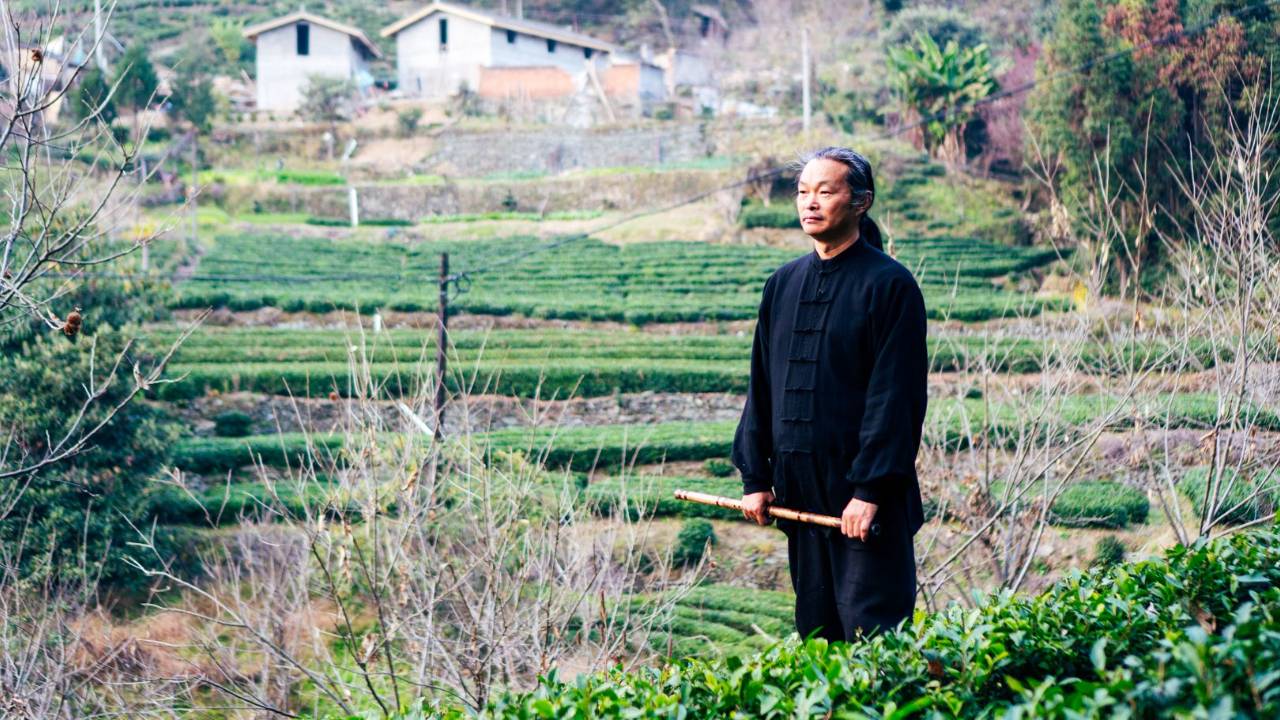
Listen to your body's wisdom. Pain signals something needs attention. Discomfort from engaging dormant muscles is different from sharp or shooting pain. Learn this distinction and honour it. If you have an existing injury or health condition, always check with a healthcare professional before starting any new movement practice. Working with experienced guidance from teachers trained in authentic Wudang methods, like our Master Gu, helps you navigate these nuances safely.
Advanced Core Development Concepts
As your practice deepens, tai chi stomach exercises reveal more subtle layers of development. You move beyond basic strength into refined body awareness and energy cultivation.
Internal Power Generation (Jing)
Advanced practitioners generate remarkable power from their core without visible muscular effort. This internal power, called jing, comes from coordinating breath, intention, and whole-body connection. Your Dan Tian becomes the epicentre from which force spirals outward through your limbs.
Developing jing requires years of dedicated practice, but the journey begins with the fundamentals. Every time you practise simple tai chi stomach exercises with proper alignment and breath, you're laying groundwork for this advanced skill.
Spiral Energy and Core Engagement
Nothing in Tai Chi moves in straight lines. Every motion contains subtle spiralling, which engages your core muscles in complex, three-dimensional patterns. This spiral energy wraps around your centre, creating dynamic stability.
Spiral energy principles:
- Rotations originate from your Dan Tian, not your shoulders
- Spirals move in complementary directions (one arm spirals out while the other spirals in)
- Your waist acts as the axis for upper and lower body coordination
- Core muscles engage through constant micro-adjustments
- Energy flows more efficiently through spiral pathways
Connecting Upper and Lower Body
Your core serves as the bridge between earth energy rising through your legs and heaven energy descending through your crown. Proper tai chi stomach exercises teach your torso to transmit force without blocking or dissipating it.
This connection becomes especially important in partner practices and martial applications. When someone pushes your shoulder, the force transfers through your core, down your legs, into the ground. Without a strong, connected core, you either resist with local muscle tension (ineffective) or collapse (also ineffective). A well-trained core acts like bamboo, both flexible and unbreakable.
Daily Practice Recommendations
Building core strength through Tai Chi doesn't require hours of practice. Consistency matters more than duration. Here's how to structure a sustainable routine focused on tai chi stomach exercises.
Morning Practice (10-15 minutes)
Morning offers a fresh state of mind and sets your tone for the day. Your body may feel stiff after sleep, so begin gently:
- 5 minutes standing meditation to centre yourself and wake your core
- 5 minutes Cloud Hands to warm up and engage rotation
- 3-5 minutes abdominal breathing to deepen the Dan Tian connection
This simple routine activates your core, improves posture, and creates mental clarity. You'll notice improved energy and focus throughout your day.
Evening Practice (10-20 minutes)
Evening practice helps release accumulated tension and prepares you for restorative sleep. Your body is warmer and more flexible, allowing deeper work:
- Begin with gentle stretching and joint rotations
- Practise longer standing meditation (10-15 minutes)
- Work through a complete short form if you've learned one
- End with seated meditation and breathing
Our Qi Gong course includes specific evening sequences designed to calm your nervous system while maintaining core engagement.
Weekly Schedule Structure
Varying your practice throughout the week prevents monotony and addresses different aspects of development:
| Day | Focus | Duration |
|---|---|---|
| Monday | Standing meditation and breath work | 15 min |
| Tuesday | Cloud Hands and flowing movements | 20 min |
| Wednesday | Form practice with core awareness | 25 min |
| Thursday | Standing meditation and breath work | 15 min |
| Friday | Cloud Hands and flowing movements | 20 min |
| Saturday | Longer form practice or exploration | 30-45 min |
| Sunday | Gentle practice or rest | 10-15 min or rest |
Adjust based on your schedule and energy. Some days you'll have more capacity, others less. The Taoist approach values harmony over rigid adherence to plans.
Building Sustainable Progress
Core strength develops gradually. You won't see dramatic changes overnight, but consistent practice brings steady transformation. Trust the process and celebrate small victories.
Measuring Progress Beyond Appearance
Unlike conventional fitness, tai chi stomach exercises don't necessarily create visible six-pack abs. Instead, notice these meaningful changes:
- Improved posture throughout your day
- Reduced lower back pain or tension
- Better balance and coordination
- Deeper, calmer breathing even during stress
- Greater stamina for standing and walking
- Enhanced body awareness and movement quality
These functional improvements matter more than aesthetics. They represent genuine health and capability that serves you in every aspect of life.
The Role of Community and Guidance
Learning tai chi stomach exercises from authentic sources makes a profound difference. Subtle details in alignment, breath timing, and energy focus are difficult to grasp from videos alone. Connection with experienced teachers and fellow practitioners supports your journey.
Our community offers this kind of support, bringing together students from around the world who share your interest in authentic practice. Regular interaction, feedback, and encouragement help you stay motivated and refine your technique.
Patience as Practice
The Tao Te Ching teaches that "nature does not hurry, yet everything is accomplished." This wisdom applies directly to core development through Tai Chi. Your body needs time to reorganise habitual patterns, strengthen dormant muscles, and integrate new ways of moving.
When you feel impatient, return to your breath. Each inhale and exhale is complete in itself, requiring nothing more. Your practice exists in this moment, not in some future achievement. This mindset paradoxically accelerates genuine progress while reducing the stress that blocks it.
Integrating Tai Chi Principles Into Daily Life
The true test of tai chi stomach exercises isn't what happens during practice but how they transform your everyday movement. Your core shouldn't only work during formal training; it should support you constantly with ease and efficiency.
Standing and Sitting with Awareness
Whether you're waiting in line, working at a desk, or washing dishes, you can engage core principles. Stack your spine naturally, breathe into your Dan Tian, and allow your abdominal muscles to support you without gripping. This transforms mundane moments into micro-practices that accumulate remarkable benefits.
Moving with Your Centre
When you reach for something, turn to look behind you, or bend to pick up an object, initiate the movement from your core. Let your Dan Tian lead and your limbs follow. This prevents injury, improves efficiency, and keeps you connected to your centre throughout the day.
Breath as Anchor
Stress triggers shallow chest breathing, which weakens core engagement and amplifies anxiety. Returning to abdominal breathing during challenging moments calms your nervous system and reconnects you with your centre. This simple practice is one of the most valuable gifts of tai chi stomach exercises.
The practices you're learning aren't separate from life. They are life, expressed through mindful movement and presence. Every step becomes walking meditation, every breath becomes energy cultivation, and every moment becomes an opportunity to strengthen your connection with your core, both physical and spiritual. Our Taoist Philosophy course deepens this integration, showing how ancient wisdom applies to modern challenges.
Developing core strength through tai chi stomach exercises offers a gentle yet profound path to physical stability, mental clarity, and energetic vitality. These practices honour your body's natural wisdom while cultivating the deep strength that supports you in every moment. If you're ready to explore authentic Wudang Tai Chi and Qi Gong under the guidance of an experienced master, Taoist Wellness Online provides comprehensive training, community support, and the resources you need to build a sustainable practice that transforms both body and spirit.