Dan Tien: Your Center of Energy and Balance
Sep 07, 2026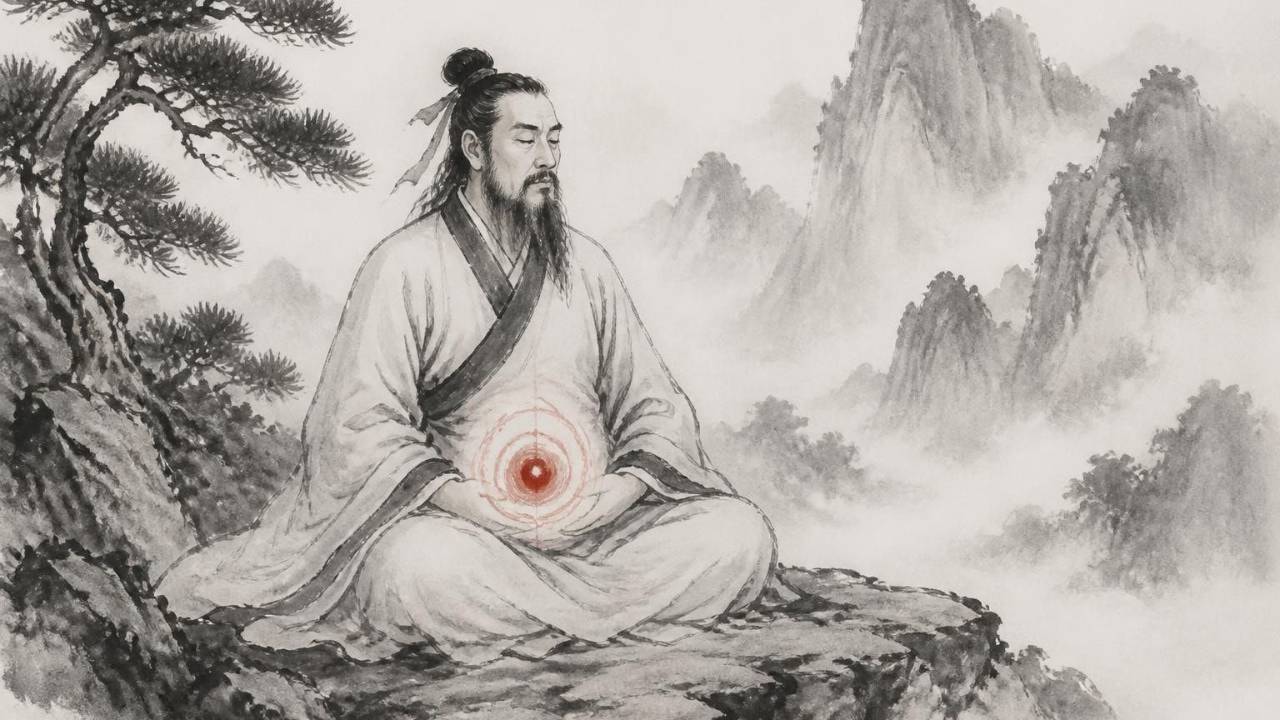
The dan tien stands as one of the most foundational concepts in Taoist wellness practices, yet it often remains misunderstood or oversimplified in modern wellness conversations. This energy centre, located in your lower abdomen, serves as the root of vitality, balance, and power in Tai Chi, Qi Gong, and meditation. When you learn to breathe into, move from, and cultivate energy in your dan tien, you're not just following ancient tradition. You're accessing a practical, embodied wisdom that can transform how you feel, move, and show up in your daily life.
What Is the Dan Tien
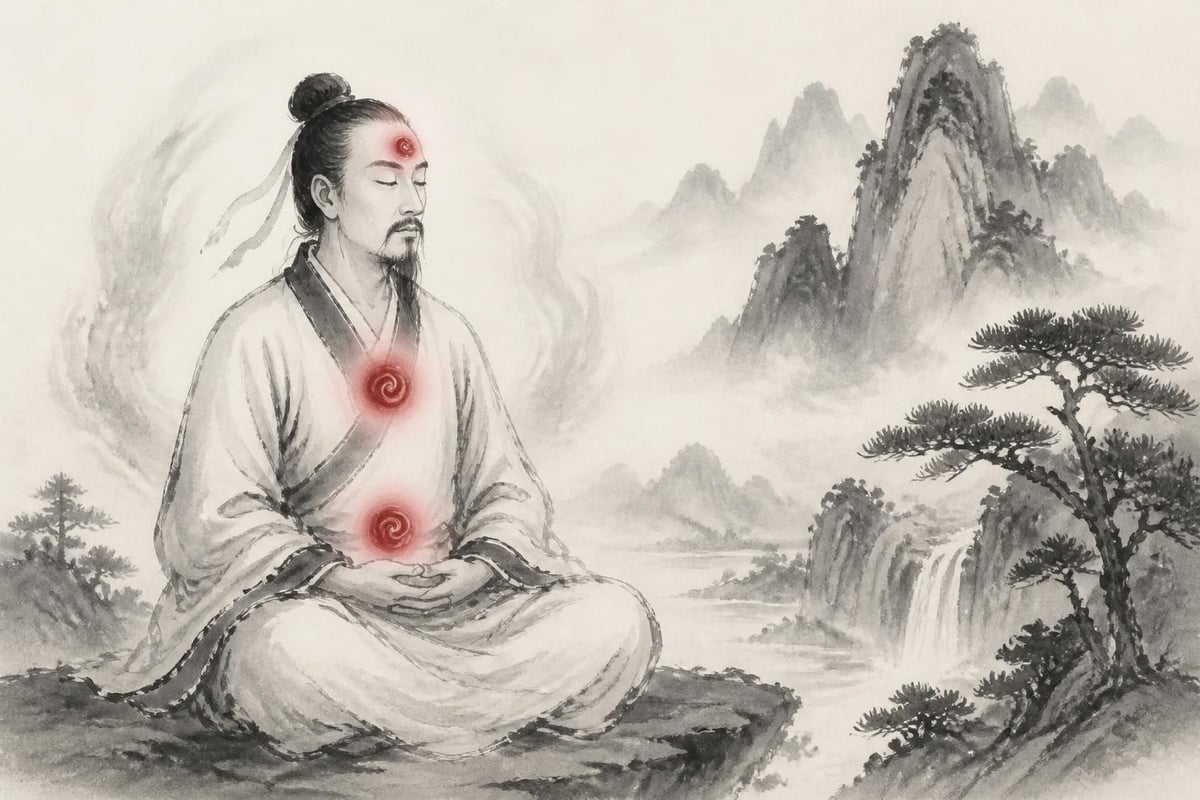
The term "dan tien" (also spelled dantian) translates literally as "elixir field" or "cinnabar field," referring to a space within your body where vital energy, or qi, gathers and transforms. In traditional Taoist understanding, the body contains three primary energy centres, though when people speak of "the dan tien" without qualification, they typically mean the lower dan tien.
Located approximately three finger widths below your navel and about one-third of the way into your body, the lower dan tien serves as your fundamental energy reservoir. Think of it as the battery that powers your physical vitality, emotional stability, and mental clarity.
The Three Dan Tien Centers
While this article focuses primarily on the lower dan tien, understanding all three centres provides helpful context. Our article on Chi Gong Practice: A Complete Guide for Beginners covers each of these three energy centres in more depth.
| Energy Center | Location | Primary Functions |
|---|---|---|
| Lower Dan Tien | Below navel, deep in abdomen | Physical vitality, grounding, qi cultivation |
| Middle Dan Tien | Centre of chest, heart area | Emotional balance, compassion, breath refinement |
| Upper Dan Tien | Between eyebrows, "third eye" | Mental clarity, spiritual awareness, consciousness |
The lower dan tien receives the most attention in foundational practice because it anchors everything else. Without a strong, stable lower centre, the other two centres lack the grounded support they need to function optimally.
Locating Your Dan Tien
Finding your dan tien isn't about anatomical precision as much as developing felt awareness. Your dan tien isn't a physical organ you can see on an MRI, though it corresponds to an area near your body's centre of gravity and involves your lower abdomen, pelvic floor, and lower back.
A Simple Practice to Feel Your Dan Tien
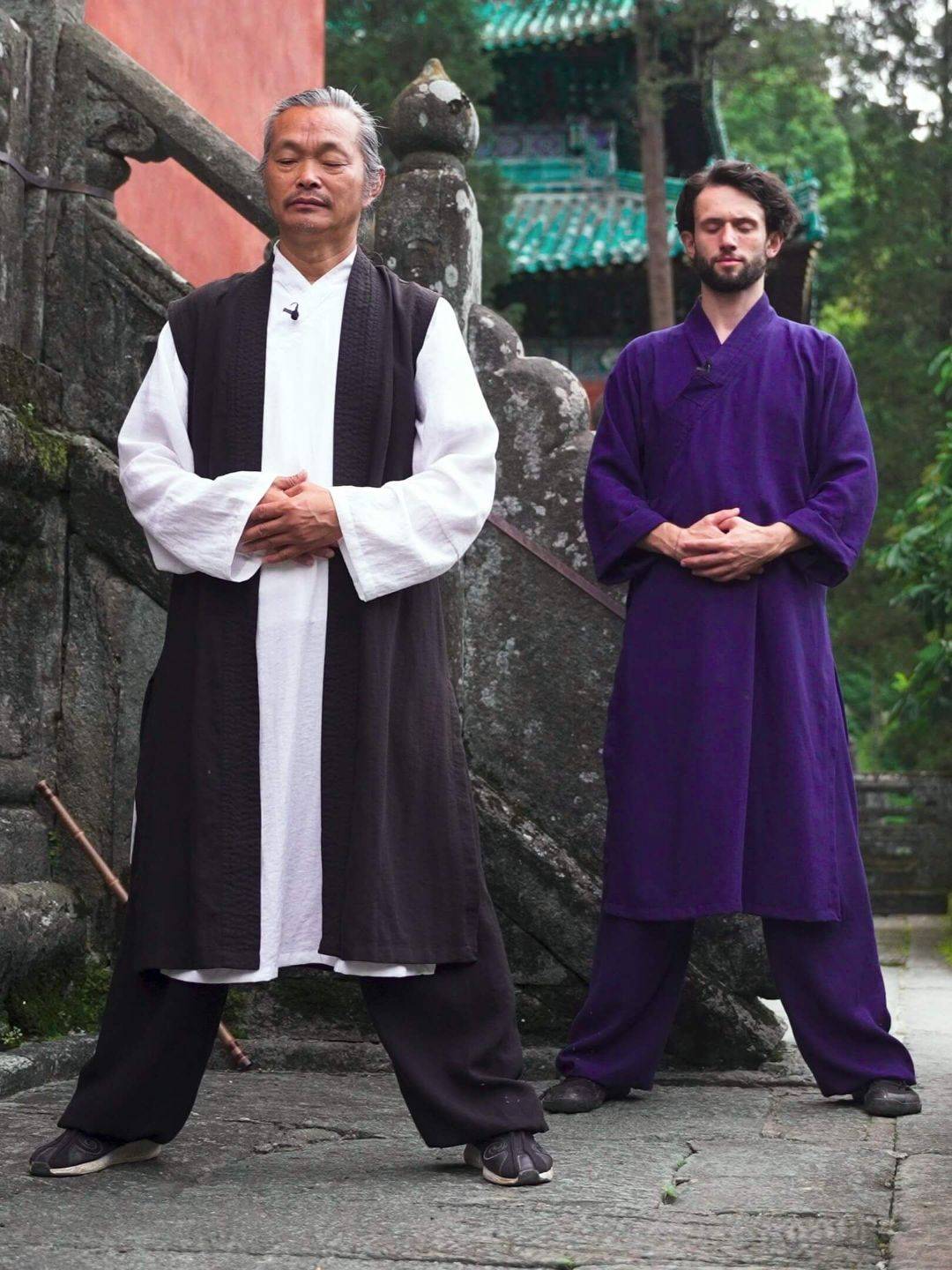
Stand comfortably with your feet shoulder-width apart. Place one hand just below your navel, the other on your lower back opposite the first hand. Breathe naturally and imagine the space between your hands warming and expanding slightly with each inhale.
After a few breaths, you might notice:
- A sense of fullness or gentle pressure in your lower abdomen
- Warmth or tingling in the area between your hands
- A feeling of your breath "sinking" lower than usual
- Greater stability or rootedness in your stance
These sensations indicate you're beginning to connect with your dan tien. Don't worry if you don't feel anything dramatic at first. This awareness develops gradually, like learning to taste subtle flavours in tea.
Dan Tien Breathing
Dan tien breathing forms the cornerstone of Taoist energy cultivation. Unlike shallow chest breathing, which many of us default to during stress, dan tien breathing engages your entire torso and creates a rhythmic massage of your internal organs.
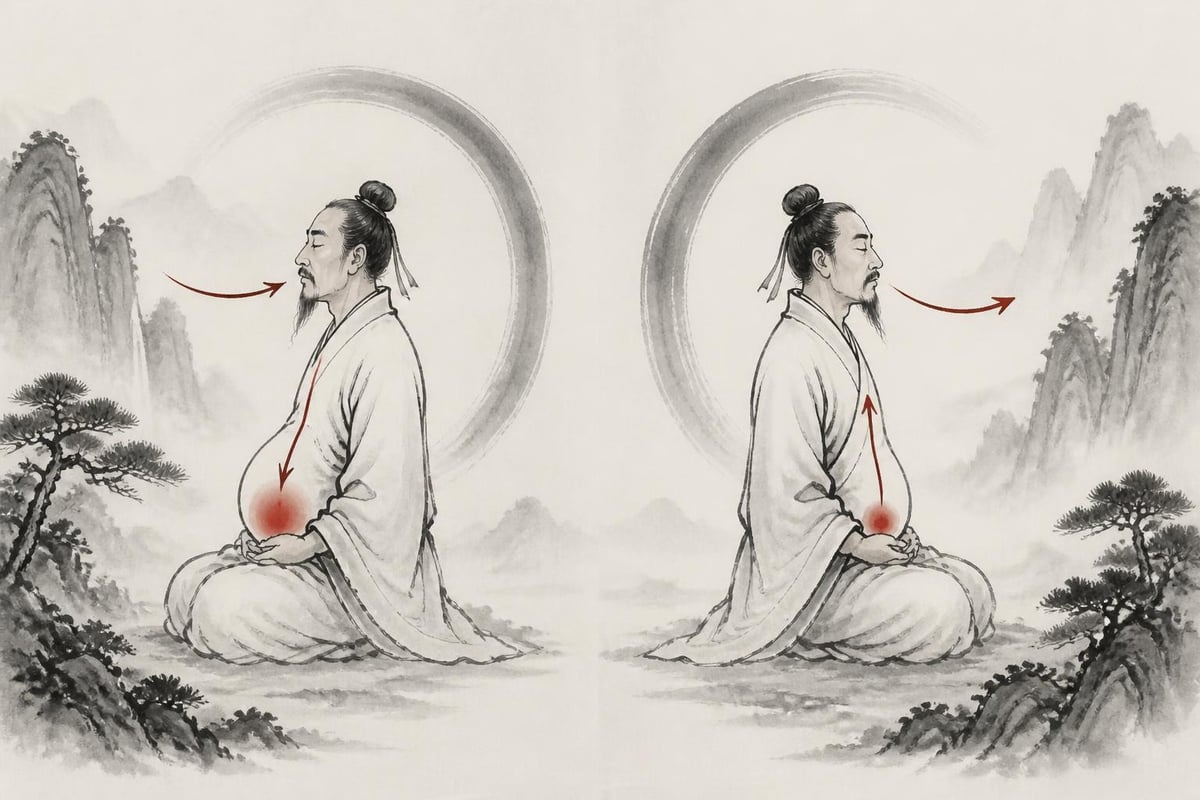
When you breathe into your dan tien, your diaphragm descends, your lower abdomen gently expands, and your breath becomes slower and deeper. This isn't forced or exaggerated. It's a natural, relaxed process that happens when you release tension and allow your body to breathe the way it was designed to.
Master Gu explores a more advanced aspect of this practice in the short video below, on embryonic breathing in the Taoist tradition.
How Dan Tien Breathing Works
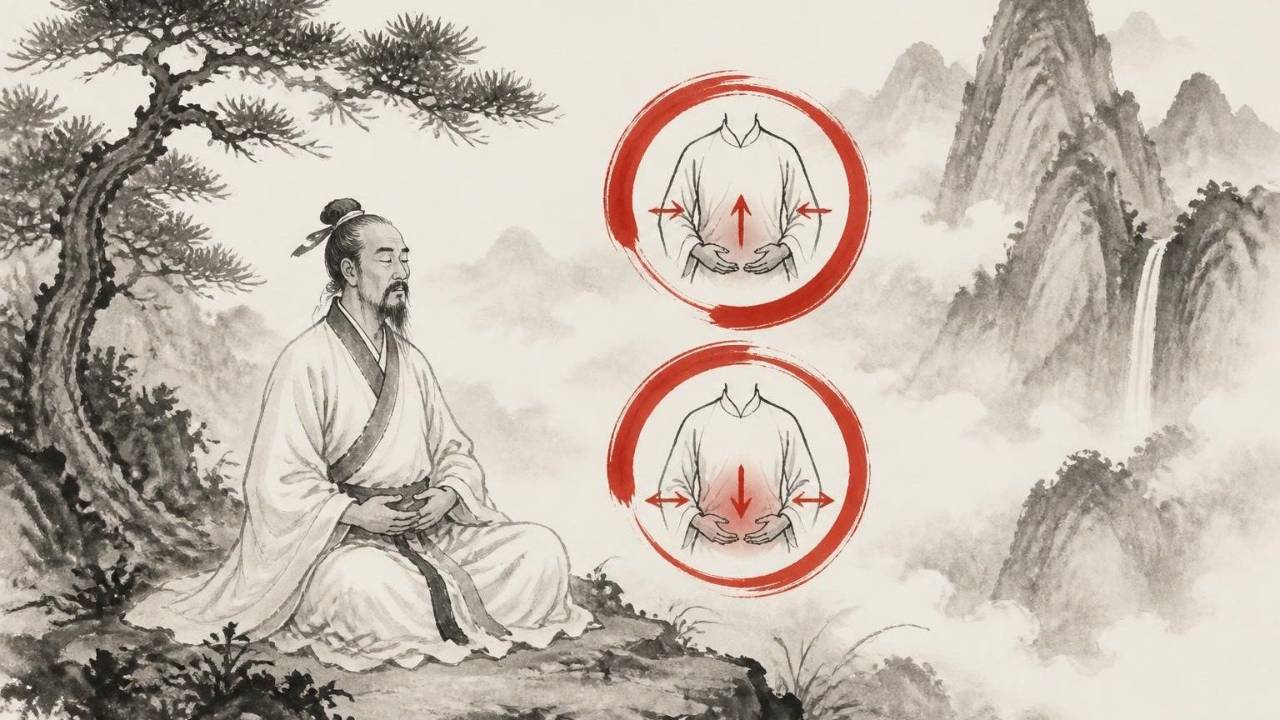
The Inhale:
Your diaphragm moves down, creating space in your lungs. Your lower abdomen softly expands (not your upper chest). Your pelvic floor releases slightly. Air flows in without effort.
The Exhale:
Your diaphragm rises naturally. Your lower abdomen gently draws inward. Your pelvic floor engages subtly. Air flows out completely without forcing.
This breathing pattern activates your parasympathetic nervous system, the rest-and-digest mode that counters stress. Many students notice they feel calmer and more centred within just a few minutes of practising dan tien breathing as taught in our Taoist Meditation course.
The Dan Tien in Tai Chi Practice
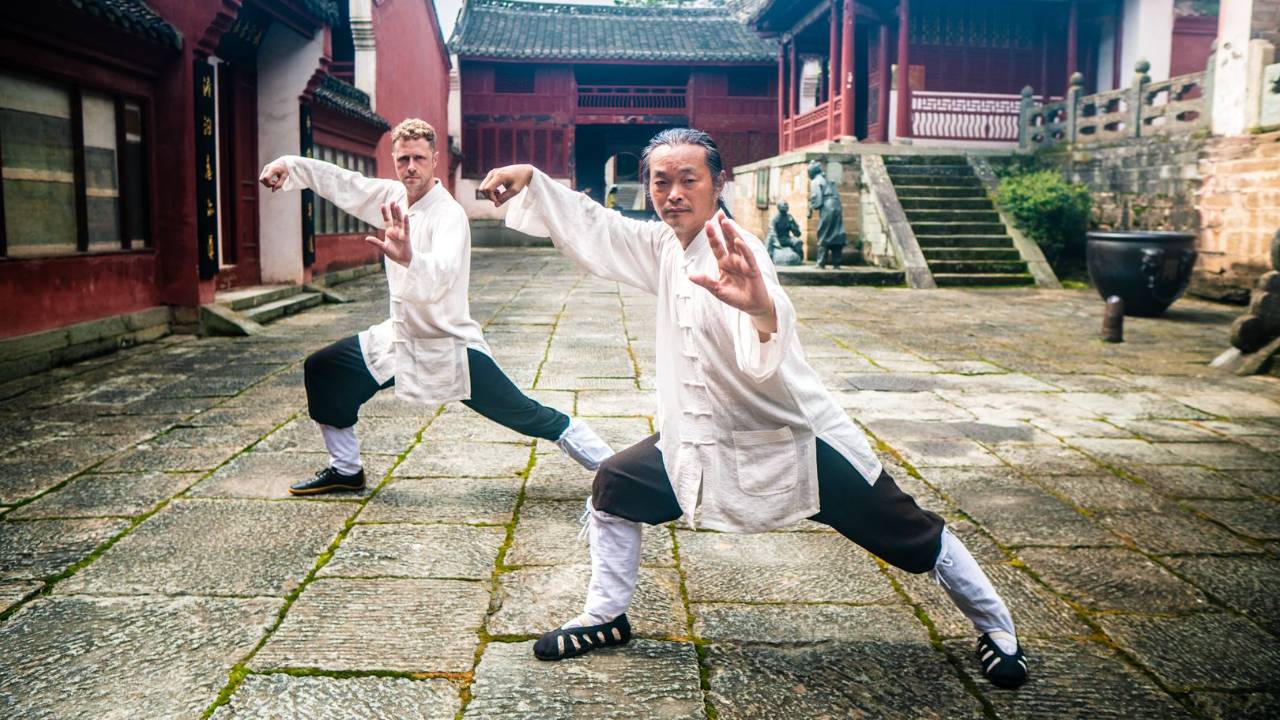
In Wudang Tai Chi, every movement originates from your dan tien. Your arms don't move your arms. Your legs don't move your legs. Your centre moves, and your limbs follow like branches swaying from a tree trunk.
This principle transforms Tai Chi from a series of arm movements into a full-body meditation in motion. When you shift your weight, your dan tien leads. When you turn, your dan tien initiates the rotation. When you extend your hand in a posture, the energy flows from your dan tien through your arm to your fingertips.
Practical Application in Movement
Consider the simple act of raising your arm. Most people lift from the shoulder, creating tension and disconnection. When you move from your dan tien, you:
- Settle your awareness into your lower abdomen
- Allow your dan tien to subtly lift or expand
- Let that internal movement flow upward through your spine
- Permit your arm to float up as a consequence of the whole-body connection
The result? Your movement feels effortless, integrated, and powerful without strain. This same principle applies whether you're practising our Tai Chi forms, walking, or simply reaching for a cup of tea.
Cultivating Qi in the Dan Tien
The dan tien serves as the primary storage and cultivation site for qi, your vital life energy. While qi flows throughout your entire body, gathering and refining it in your dan tien provides a foundation for health, vitality, and spiritual development.
In Qi Gong practice, you deliberately guide qi to your dan tien through:
- Focused breathing that directs awareness to your lower abdomen
- Visualisation of warmth, light, or energy gathering in your centre
- Specific postures that naturally concentrate qi in the dan tien
- Movement sequences designed to activate and circulate energy
Signs of Developing Dan Tien Energy
As your practice deepens, you might notice:
| Physical Signs | Energetic Signs | Functional Signs |
|---|---|---|
| Warmer lower abdomen | Tingling or buzzing sensation | Better balance and stability |
| Deeper, slower breathing | Sense of fullness in your centre | More sustained energy through the day |
| Relaxed shoulders and chest | Feeling of groundedness | Less reactivity to stress |
| Improved digestion | Stronger presence | Greater mental clarity |
These changes don't happen overnight. They unfold gradually as you maintain consistent practice, much like strength building in physical exercise.
Common Misconceptions About the Dan Tien
"The dan tien is a chakra."
While both concepts describe energy centres, they come from different traditions with different maps of the subtle body. The dan tien system is specifically Taoist, with its own theory and practice methods.
"You should force your breath into your dan tien."
Forcing creates tension, which blocks qi flow. Dan tien breathing happens through relaxation and natural deepening, not muscular effort.
"The dan tien is just your belly."
Your dan tien is a three-dimensional space deep in your core, not the surface of your abdomen. It involves internal organs, fascia, and subtle energy fields beyond simple anatomy.
"Only advanced practitioners can feel their dan tien."
Even beginners can sense their dan tien with proper guidance. The depth of connection grows over time, but initial awareness is accessible to anyone who practises with patience.
Dan Tien in Daily Life
The beauty of dan tien awareness extends far beyond formal practice sessions. Once you develop familiarity with this centre, you can return to it throughout your day as an anchor for presence and calm.
Waiting in line? Drop your awareness to your dan tien and take three slow breaths. Stressed in a meeting? Settle into your centre and speak from that grounded place. Feeling scattered or anxious? Return to your dan tien like coming home.
Practical Dan Tien Exercises for Everyday Life
Morning Centring (2-3 minutes):
Before getting out of bed, place your hand on your lower abdomen. Take ten slow breaths, feeling your hand rise and fall. Set an intention to return to this centre throughout the day.
Walking with Dan Tien Awareness:
As you walk, imagine your dan tien leading you forward. Let your steps follow your centre rather than pulling yourself forward with your legs. Notice how this changes your gait and energy.
Standing in Your Centre:
While standing anywhere, shift your weight until you feel balanced over your dan tien. Let your shoulders drop, your breath settle, and your mind quiet. Even thirty seconds resets your nervous system.
Students who commit to exploring these practices often find that dan tien awareness becomes second nature, a resource they can access anytime, anywhere. If you'd like to begin, our free Taoist course offers comprehensive guidance in developing this embodied wisdom through structured lessons with Master Gu, including specific dan tien cultivation techniques drawn from authentic Wudang lineage, covering Tai Chi, Qi Gong, Meditation, and Taoist Wisdom.
Scientific Perspectives on Dan Tien Practice
Modern research has begun exploring what Taoist masters have known for centuries. Studies on dan tien breathing show measurable changes in brain activity, heart rate variability, and stress markers. While science can't directly measure qi, it can observe the physiological shifts that accompany dan tien-focused practices.
One study found that focused breathing directed toward the lower abdomen increased coherence in brain wave patterns, suggesting improved integration between different brain regions. Other research has documented enhanced parasympathetic nervous system activity during dan tien breathing, corresponding with the relaxation and restoration that practitioners report.
These findings don't replace the lived experience of practice, but they do validate that something real and beneficial happens when you work with your dan tien. The tradition and the science point in the same direction: cultivating awareness and energy in your centre supports whole-person wellness.
Deepening Your Dan Tien Practice
As with any aspect of Taoist cultivation, dan tien work deepens through consistent, patient practice over time. There's no finish line, no point where you've "mastered" your dan tien and can move on. Instead, you discover new layers and subtleties the longer you practise.
Start with breath. Five minutes of daily dan tien breathing establishes the foundation for everything else. Sit or stand comfortably, rest your awareness in your lower abdomen, and simply breathe.
Add gentle movement. Our Qi Gong course exercises specifically designed to activate the dan tien help you feel the connection between breath, movement, and energy. Simple practices like the foundational standing postures create tangible results. Our article on Meridian Qi Gong: Ancient Practice for Modern Wellness looks at how these foundational standing practices connect to the wider meridian system.
Bring it into Tai Chi. As you practise Tai Chi forms, constantly return to the question: "Am I moving from my centre?" This inquiry gradually rewires your movement patterns at a deep level.
Study with experienced teachers. While you can begin exploring on your own, learning from authentic lineage holders like Master Gu prevents common pitfalls and accelerates your progress. They've walked the path and can guide you through the terrain.
The Dan Tien as Your Root
Everything in Taoist practice grows from the root. Your dan tien is that root, the foundation that allows the tree of your practice to reach skyward while remaining stable through storms. When your centre is strong, balanced, and alive with qi, everything else becomes possible.
You move with grace and power. You breathe with ease and depth. You meet challenges with resilience. You access calm even in chaos. This isn't mystical promise. It's practical reality that emerges from consistent dan tien cultivation.
The dan tien isn't separate from you. It's not something you need to find "out there" or achieve through extraordinary effort. It's already present, waiting for your attention. Every breath you take can sink into this centre. Every step you walk can originate from this source. Every moment offers an opportunity to return home to your own vitality.
Understanding and cultivating your dan tien opens a doorway to the profound benefits of authentic Taoist practice, from increased vitality and balance to deeper meditation and more powerful movement. Taoist Wellness Online provides the guidance, community, and comprehensive curriculum you need to develop this foundational skill under the instruction of Master Gu, a 15th-generation San Feng Pai Wudang Taoist Master. Whether you're just beginning your journey or deepening an existing practice, the academy offers the resources to help you discover the transformative power of your own energy centre.