The Conception Point in Tai Chi and Inner Energy Work
Oct 14, 2026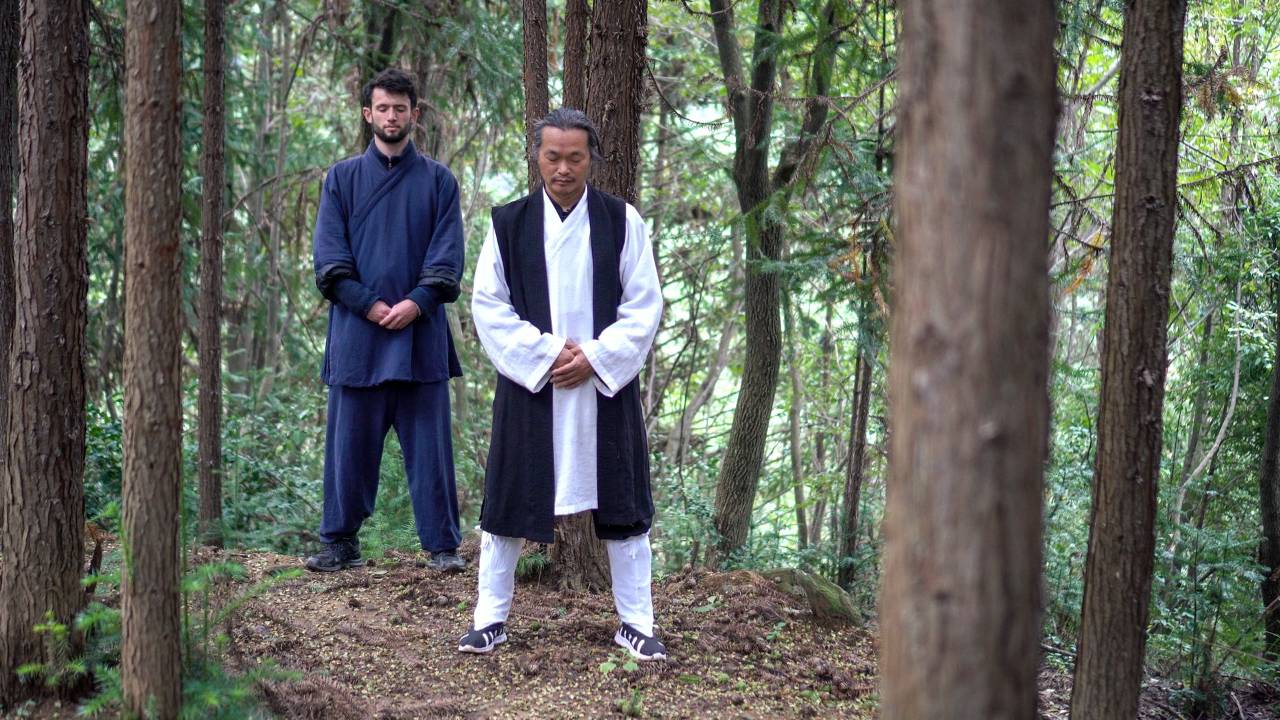
In Taoist energy practices, the body is described as holding countless points where qi gathers, flows, and transforms. Among these, the conception point stands as one of the most fundamental yet often overlooked acupoints. Known in traditional Chinese medicine as Ren-1 or Hui Yin, it marks the starting point of the Conception Vessel, one of the eight extraordinary meridians. Understanding how to locate this point in your awareness can deepen your Tai Chi practice, enrich your Qi Gong, and support a sense of grounding and balance. Whether you're just beginning your journey or have practised for years, this subtle point offers a gentle way to feel more rooted.
Understanding the Conception Point in Taoist Anatomy
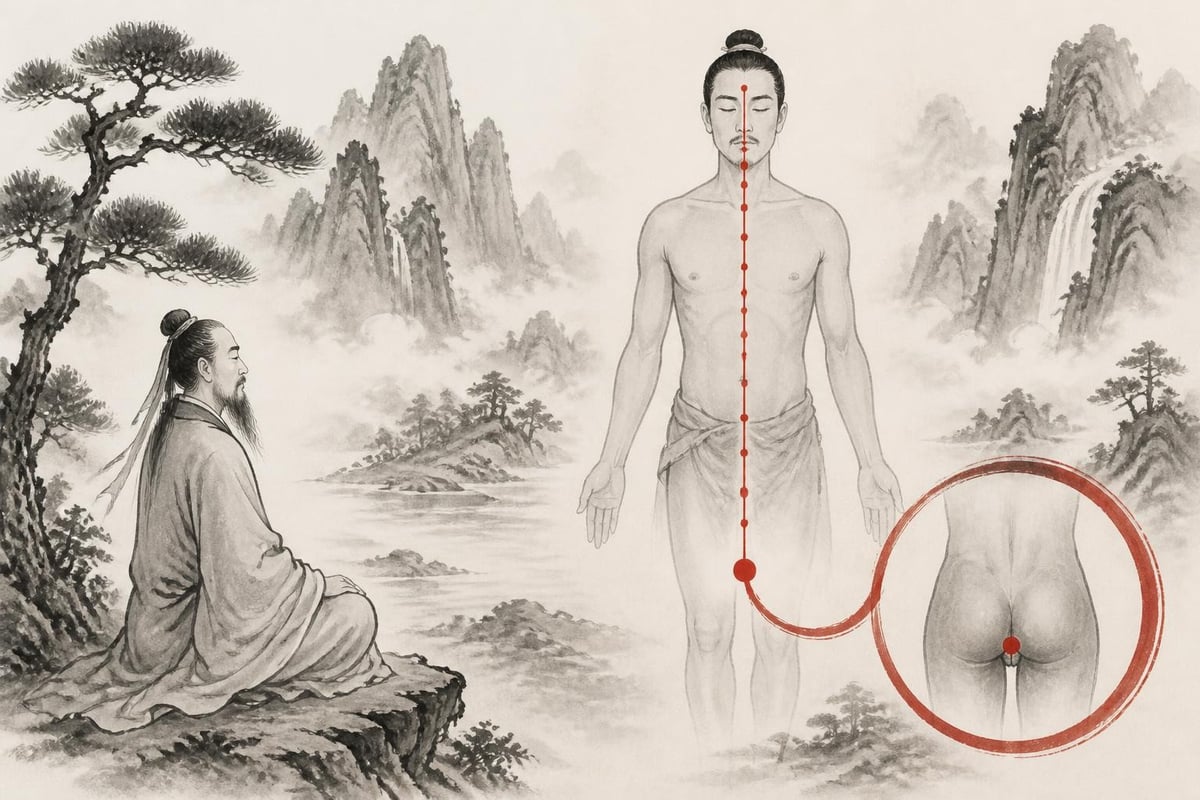
The conception point sits at the perineum, the area between the genitals and the anus. In Chinese, Hui Yin translates as "meeting of yin," reflecting its position at the lowest point of the torso, where yin energy is traditionally said to gather.
This acupoint marks the beginning of the Ren Mai, or Conception Vessel, which runs along the front centreline of the body from the perineum to the lower lip. In traditional teaching, the Conception Vessel is associated with yin energy throughout the body, which is why this point features so often in internal practice.
Location and Identification
Finding your conception point calls for gentle attention rather than forceful probing. When seated comfortably, the point rests at the centre of the pelvic floor, equidistant from front and back.
Key landmarks for locating the conception point:
- Positioned at the centre of the perineum
- Feels like a slight natural depression
- Located where the pelvic floor muscles meet
- Found through gentle internal awareness rather than external pressure
Many practitioners first become aware of this area through seated meditation or Qi Gong exercises that bring attention to the lower body. The sensation is often subtle, perhaps a gentle warmth or a quiet sense of weight settling. Sensations are never the goal, so there's no need to chase or look for them.
The Role of the Conception Point in Energy Circulation
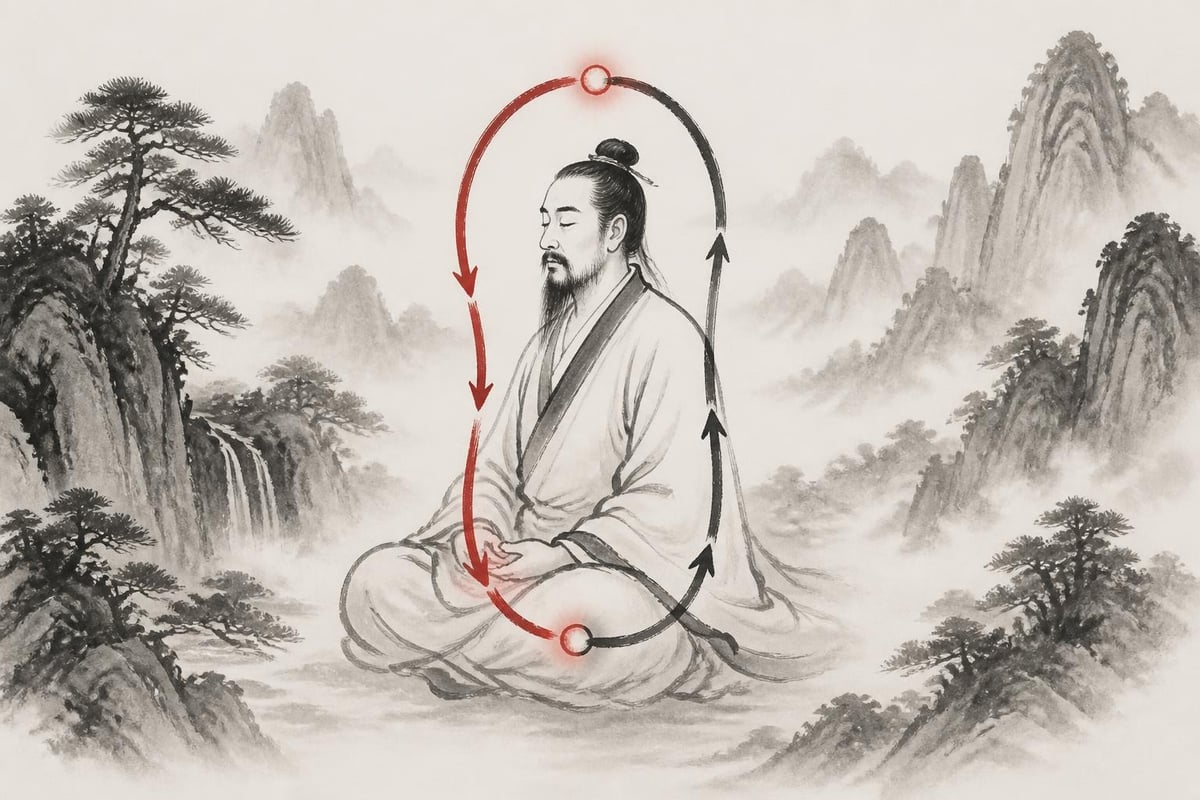
In traditional Taoist teaching, the microcosmic orbit describes a path of energy that travels up the back along the Governing Vessel and down the front along the Conception Vessel, forming a complete circuit. Within this picture, the conception point is often described as a lower gate, an anchor at the base of the torso.
Traditionally, it is where the descending yin of the front line is said to meet and turn towards the rising yang of the spine. If you'd like a wider introduction to this way of thinking, our article on Tai Chi and energy is a good companion read.
| Energy Aspect | Traditional Association at the Conception Point |
|---|---|
| Yin Energy | Gathering and steadying |
| Downward Flow | Settling and anchoring |
| Grounding | A sense of connection to the earth |
| Transformation | The meeting point of yin and yang |
In Taoist thinking, this is where stillness meets movement and receiving meets giving. In Wudang Tai Chi practice, a settled sense of the lower body helps you stay rooted while the upper body stays soft and free.
Connecting Heaven and Earth
In traditional imagery, the conception point forms a vertical line with the crown of your head (Bai Hui) and the ground beneath you. This sense of alignment, central to Tai Chi practice, comes from relaxation and good structure rather than effort.
During standing meditation or movement, you don't need to do anything with the conception point. There's no muscular squeezing or lifting. Simply let your weight settle naturally, keep the pelvic floor soft, and allow a stable foundation to arise from relaxation.
Working with the Conception Point in Practice
Working with this point requires patience and sensitivity. Unlike external physical training, it happens through gentle awareness, never force.
Basic Awareness Exercise
Begin in a comfortable seated position with your spine naturally upright. Close your eyes and let your breath settle into a calm, natural rhythm.
Step-by-step process:
- Breathe naturally for a few minutes to settle your mind
- Gently bring your attention to the base of your torso
- Let your attention rest lightly in that area, without any physical tension
- Soften your belly, hips and pelvic floor as you exhale
- Stay with this quiet awareness for 5-10 minutes
- Release and notice how your body feels, without judging or chasing any sensation
Practised regularly, this simple exercise can build body awareness. Many students describe feeling more grounded and centred over time, although experiences vary from person to person. If anything feels uncomfortable, stop and return to your natural breathing. As with any new practice, please check with your healthcare professional first if you have existing health concerns, particularly around the pelvic area.
The Conception Point in Wudang Tai Chi Forms
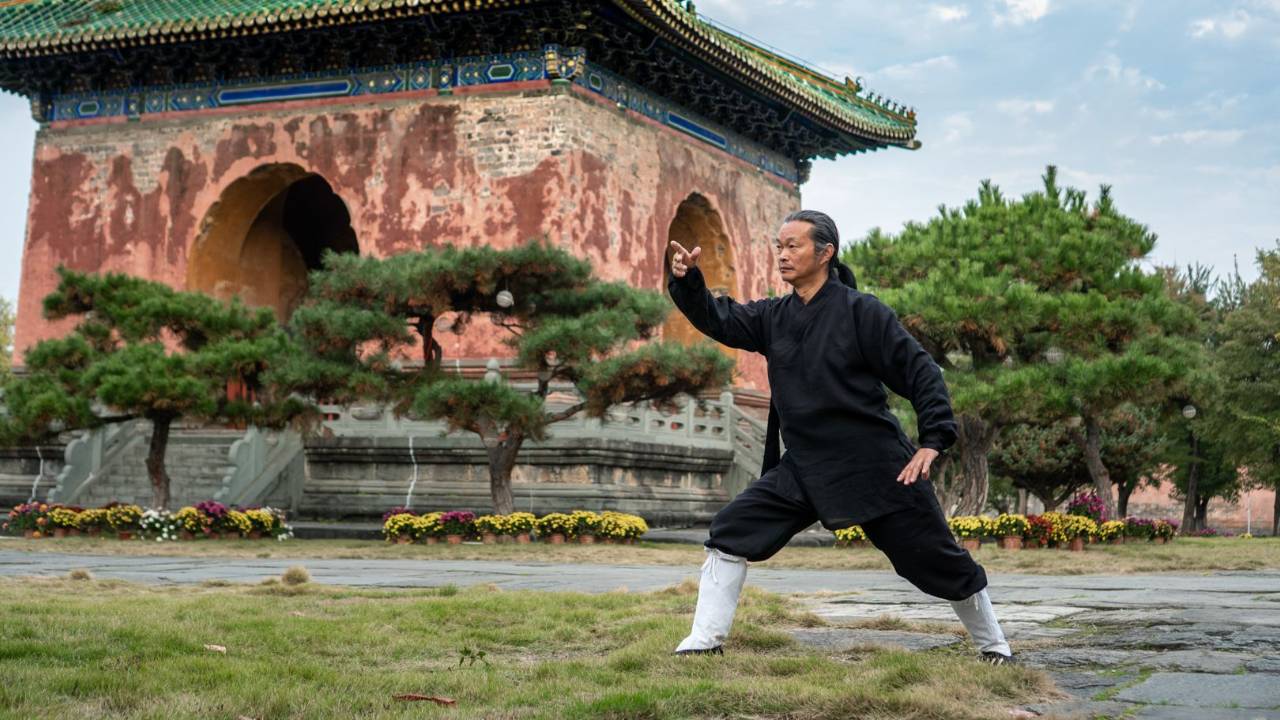
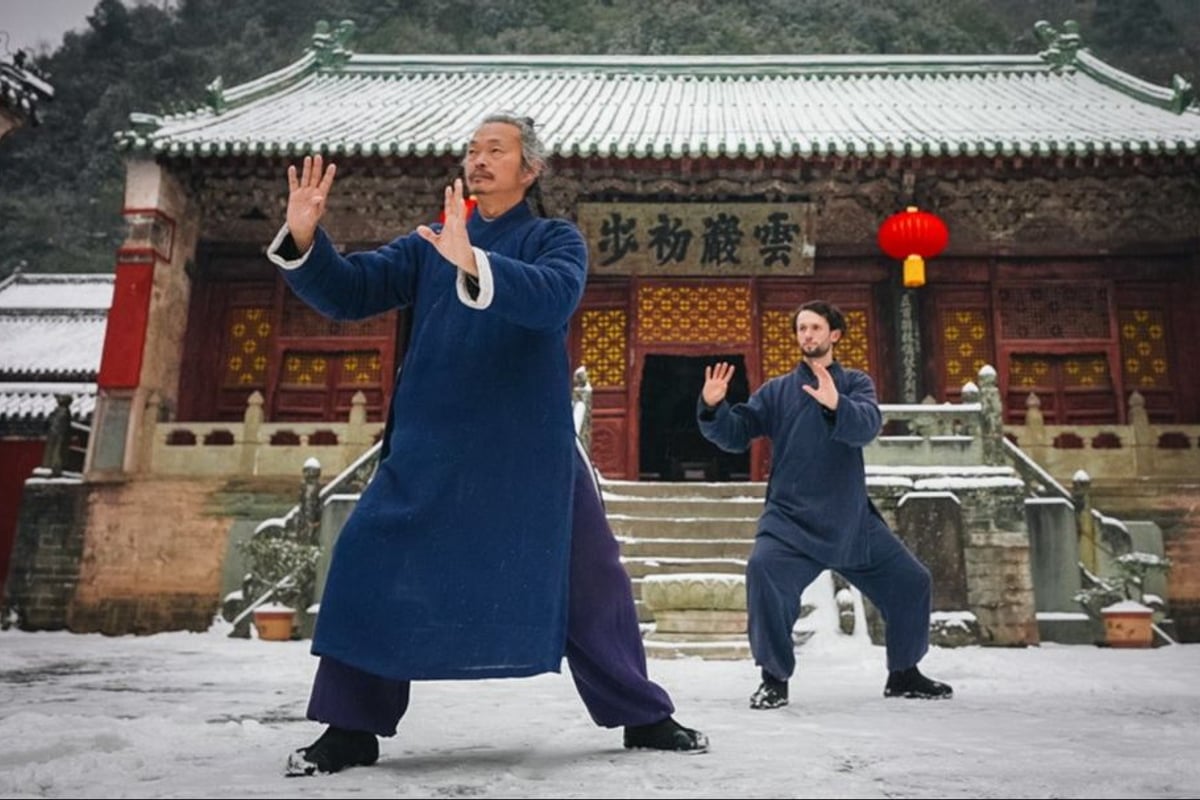
Every movement in Wudang Tai Chi begins from and returns to your centre. The lower dantian, together with the settled feeling of the lower body that the conception point represents, is part of this core.
During practice, a gentle awareness of your lower body helps you stay rooted while you move. It isn't about clenching or holding tension. It's about letting your weight settle so your movements feel connected.
Practical Applications in Movement
In the core Taiji movements, such as Ward Off, Rollback, Press and Push, a soft, stable base allows the arms to move freely. As your weight shifts, a rooted lower body keeps you steady and connected.
- Ward Off: a settled base supports the forward, rising movement
- Rollback: weight draws back while the body stays centred
- Press: a stable root allows confident forward movement
- Push: movement comes from the whole body, rooted and relaxed
When you lose that sense of settled centre during a form, you may notice unsteadiness or disconnected movement. Returning your attention to your lower body, and relaxing, can help you find your balance again.
The Wudang approach to Tai Chi emphasises this internal awareness over outward appearance, with relaxation and structure supporting the whole practice.
Qi Gong Exercises for the Lower Body
Gentle Qi Gong practices can help you become more aware of your lower body, complementing your Tai Chi and deepening your sense of grounding.
George Thompson shares a beginner-friendly Qi Gong practice that includes Dan Tian breathing and standing meditation in the video below.
Standing Meditation with Lower Body Awareness
Stand in Wu Ji posture, feet shoulder-width apart, knees soft, spine naturally aligned. Let your arms hang loosely and breathe naturally.
Once you feel settled, let your attention rest lightly in your lower body, including the lower dantian and the base of the torso. Allow your weight to sink gently through your feet. There's nothing to push, pull or visualise. Simply relax and let the breath find its own rhythm.
Begin with 5-10 minutes and build up gradually if it feels comfortable. Stop if you feel any strain, and check with your healthcare professional first if you have concerns about standing practice.
Seated Lower Dantian Breathing
This practice combines natural breathing with awareness of the lower dantian. Sit comfortably with your back supported but not rigid.
| Breath Phase | What You Notice | Where Your Attention Rests |
|---|---|---|
| Inhale | The lower abdomen expands gently | Lower dantian |
| Exhale | The belly softens and settles | Lower body as a whole |
| Natural pause | A moment of stillness | Simply being present |
As you breathe, keep a soft awareness of your lower dantian, below the navel, and let the rest of your lower body relax around it. The breath should always stay natural, never forced or held.
Students who explore this kind of practice often find their Qi Gong practice becomes calmer and more focused. If you'd like to see how it fits within the wider tradition, our guide to Meridian Qi Gong explains how gentle movement relates to the body's energy pathways.
If you're new to working with energy centres like the dantian, our free Taoist course offers an accessible introduction to Tai Chi, Qi Gong and meditation with Master Gu, at your own pace, to help you build body awareness and learn foundational techniques.
Common Challenges and Solutions
Many practitioners meet obstacles when they first explore this area. These challenges are normal and can be met with patience.
Difficulty Locating the Point
If you can't feel your conception point at first, don't worry. Body awareness develops gradually with regular practice.
Helpful approaches:
- Start with general pelvic floor and lower body awareness
- Practise basic meditation to settle your mind
- Follow structured lessons from an experienced teacher
- Be patient with your body's learning process
Some people find the area easier to sense after a few weeks of standing meditation or basic Qi Gong. The body simply needs time to settle.
Excessive Tension or Gripping
A common mistake is physically clenching the pelvic floor muscles. This creates tension rather than ease. The conception point responds to gentle attention, not muscular force.
If you notice tension, release completely and begin again with a softer intention. Think of it as 10% effort and 90% awareness.
Scattered Attention
Your mind may wander, especially when working with subtle awareness. This is completely normal in our distracted modern world.
Each time you notice your attention has drifted, gently guide it back without judgement. This returning is the practice. Over time, your ability to stay focused naturally strengthens.
Integrating Lower Body Awareness into Daily Life
The benefits of this kind of awareness can extend beyond formal practice. You can bring it into everyday activities for a greater sense of stability and presence.
Walking and Movement
Whether you're walking to the car or climbing stairs, let your awareness rest lightly in your lower body. Many practitioners find this brings a grounded quality to their movement and posture.
Sitting Work and Meditation
If you spend hours at a desk, a brief check-in with your lower body now and then can be a lovely reset. Every hour or so, take a few natural breaths, soften your hips and belly, and notice how you're sitting. Combined with Taoist meditation techniques, it can support a calm and comfortable day.
Stressful Situations
When life feels overwhelming, returning your attention to your lower body and breath can be a simple way to feel more anchored, rather than lost in busy thoughts. It's a small refuge you can return to anywhere. If you're struggling with anxiety or ongoing stress, please also speak to your GP or a qualified professional.
The Conception Point in Traditional Texts
Traditional Taoist writings use many poetic names for this region of the body, and different texts and lineages describe it in different ways. Understanding that variety can enrich your modern practice.
These descriptions generally point to the same idea: the base of the body is a place of stability, rest and yin energy, and a settled foundation supports everything else in the practice.
Traditional Practice Methods
Historical methods for working with this area took many forms across different lineages. While approaches have evolved, a thread of gentle, patient practice runs through them all. At Taoist Wellness Online, we focus on Tai Chi, Qi Gong and Taoist meditation, taught in a way that is accessible to modern students.
Seasonal Considerations
Traditional Chinese thinking holds that the seasons influence us in distinct ways, and you can let your practice reflect these natural cycles.
Seasonal focus areas:
- Spring: gentle, light practice to match rising energy
- Summer: stay rooted while energy expands outward
- Autumn: deepen your awareness as things begin to settle
- Winter: slow, grounded practice that supports rest and restoration
In the colder months, lower body awareness can feel especially natural. As nature withdraws and conserves, your practice can mirror that inward movement.
Building Long-Term Sensitivity
Developing body awareness in this area takes consistent practice over months and years. It isn't a weekend workshop skill but a gradual unfolding.
After several months of regular practice, you might notice this awareness arising naturally during daily activities. When you feel scattered, returning your attention to your lower body and breath may help you feel centred again.
Your relationship with this part of the body will deepen and change over time. What begins as a vague idea can become a quiet, felt experience that supports your practice and your daily life. This humble point at the base of the body is the root from which a steady practice grows.
The conception point offers a gentle entry into the subtle world of Taoist body awareness, with a sense of grounding that supports deeper practice. As your awareness develops, you may find greater stability, calm and connection to your body. Taoist Wellness Online offers authentic Wudang Tai Chi, Qi Gong and Taoist meditation under the guidance of Master Gu, a 15th-generation San Feng Pai Wudang Taoist Master with 25+ years of teaching experience, supporting students worldwide on their journey towards balance, vitality and inner calm.