Baguazhang: The Art of Circle Walking and Inner Power
Oct 08, 2026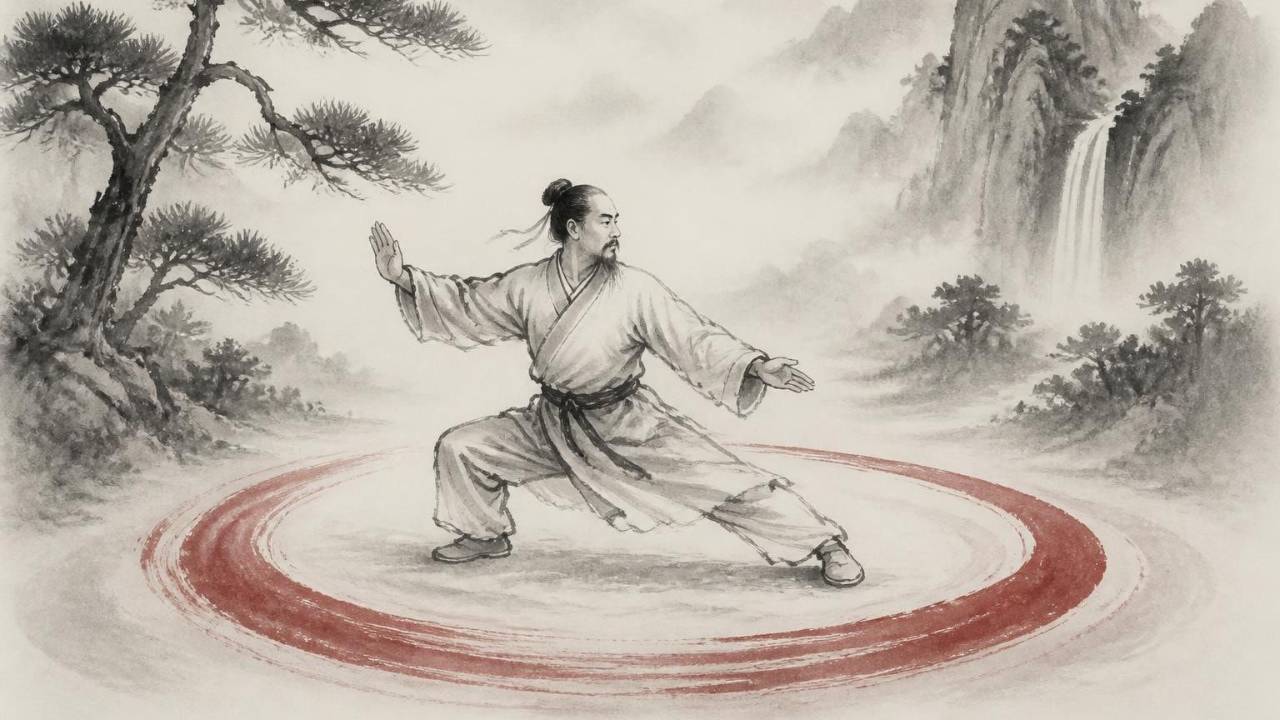
Baguazhang stands among the most sophisticated and mysterious of Chinese internal martial arts, weaving together continuous circular motion, deep meditation, and practical self-defence into a seamless whole. Known as the "Eight Trigram Palm", this centuries-old practice emerges from Daoist philosophy and cosmology, offering modern practitioners a path to cultivate both physical vitality and inner stillness. Unlike linear fighting systems, baguazhang teaches you to move like water around obstacles, to redirect force rather than meet it head-on, and to find power in spiralling, flowing movements that mirror the natural world.
The Origins and History of Baguazhang
The historical roots of baguazhang trace back to 19th-century China, though legends suggest the art's principles developed over much longer periods within Daoist monasteries and hermitages. Most scholars agree that Dong Haichuan (1797-1882) brought baguazhang to public attention in Beijing, synthesising various martial techniques with Daoist circle-walking meditation practices he may have learned during travels through remote mountain regions.
Dong Haichuan's background remains partially veiled in mystery, with some accounts claiming he studied with Daoist masters in the Jiuhua Mountains, while others suggest connections to wandering practitioners who preserved ancient internal arts. What's clear is that by the 1860s, Dong had established himself as a martial arts instructor of extraordinary skill in Beijing's imperial guard circles.
The Evolution Through Generations
After Dong Haichuan's passing in 1882, his students developed distinct lineages that preserved core principles while emphasising different aspects of the art. Each generation added depth and refinement to the practice, creating what scholars now recognise as one of the three major internal martial arts, alongside Tai Chi and Xingyi Quan.
The major lineages include:
- Cheng Style - emphasising combat applications and dragon palm techniques
- Yin Style - focusing on sophisticated coiling and spiralling mechanics
- Gao Style - known for its direct combat effectiveness and powerful strikes
- Ma Style - integrating unique footwork patterns and body methods
- Liang Style - preserving meditation-focused circle walking practices
Each branch maintains the fundamental baguazhang framework while offering practitioners different entry points into the art's vast landscape of movement, energy cultivation, and martial strategy.
Core Principles and Philosophy
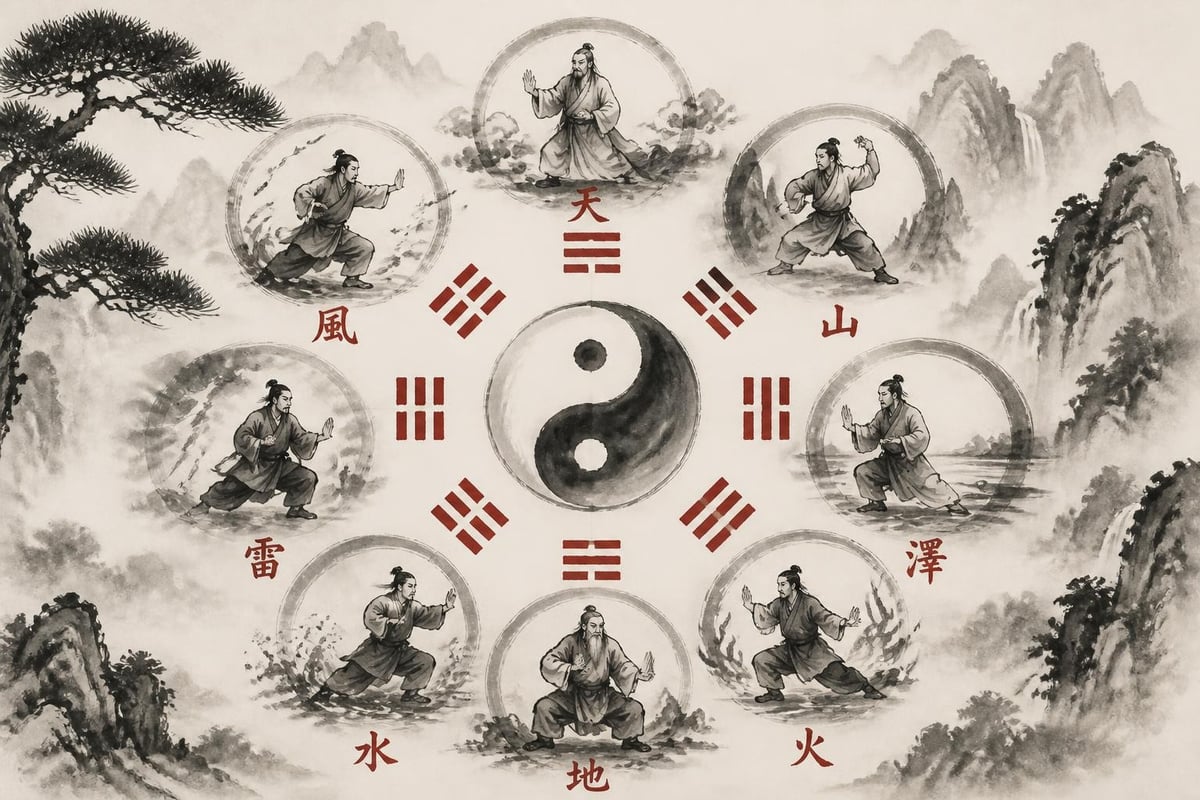
Baguazhang's philosophical foundation rests firmly in the Yijing (Book of Changes) and its eight trigrams, which represent fundamental forces and transformations in nature. Each trigram corresponds to specific qualities, directions, and energetic states that practitioners embody through palm changes and circular footwork.
The art teaches constant transformation and adaptability. Where other martial systems might emphasise static stances or predetermined sequences, baguazhang cultivates the ability to shift seamlessly from one state to another, never settling, never resisting. This mirrors the Daoist understanding that true strength comes not from rigidity but from yielding, flowing, and harmonising with changing circumstances.
The Eight Palms and Their Meanings
| Trigram | Element | Quality | Application |
|---|---|---|---|
| Qian | Heaven | Creative force | Upward, expanding movements |
| Kun | Earth | Receptive power | Grounding, absorbing techniques |
| Zhen | Thunder | Arousing energy | Sudden, explosive actions |
| Xun | Wind | Gentle penetration | Flowing, entering strategies |
| Kan | Water | Danger and depth | Adaptive, sinking methods |
| Li | Fire | Clarity and attachment | Sharp, precise strikes |
| Gen | Mountain | Stillness | Rooted, immovable defence |
| Dui | Lake | Joyful expression | Smooth, complete techniques |
This framework provides practitioners with a complete vocabulary of movement possibilities, each palm change representing not just a physical technique but an energetic state and strategic approach.
The Practice of Circle Walking
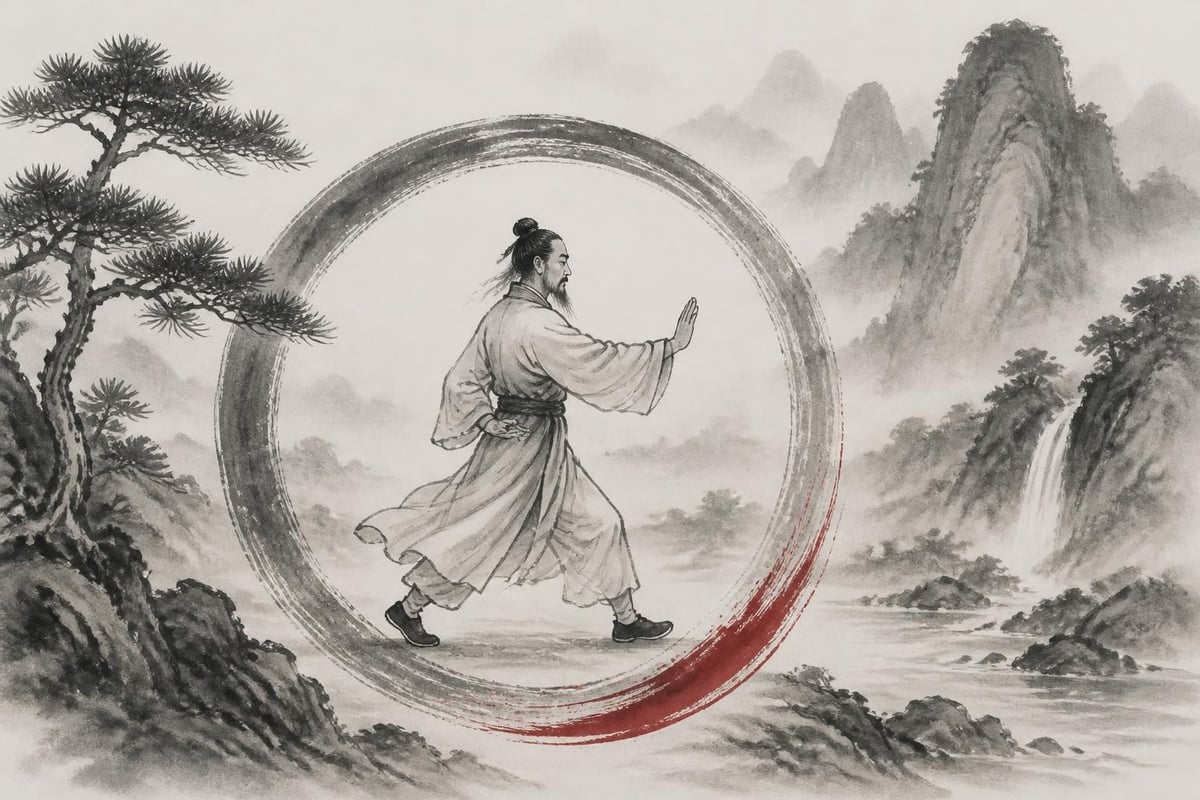
At the heart of baguazhang training lies circle walking (zou quan), a deceptively simple practice that forms the foundation for everything else. You walk in circles, typically around a central point, maintaining specific body alignments while your mind settles into quiet awareness.
For beginners, this might seem monotonous or even pointless. Why walk in circles for hours? The answer reveals itself gradually through practice. Circle walking develops leg strength, cultivates smooth weight transitions, trains your proprioception and balance, and, perhaps most importantly, teaches your nervous system to remain calm while in constant motion.
Technical Elements of Circle Walking
Proper posture remains essential throughout circle walking practice. Your spine stays vertical yet relaxed, shoulders released downward, chest slightly hollowed to protect the heart centre. The pelvis tucks slightly, activating the lower dantian (energy centre below the navel), while your knees bend just enough to engage the legs without creating tension.
Your feet move in what's called "mud-stepping" or "kowtow stepping", each foot placement deliberate and controlled:
- Lift the foot smoothly without bobbing the body
- Place the toes down first, then the heel
- Maintain continuous contact with the ground's energy
- Keep the weight distributed between both legs during transitions
- Never cross the centreline or compromise balance
As you progress, you learn to walk the circle while holding different palm positions, each one training specific energetic qualities and martial applications. The practice becomes a moving meditation, where physical conditioning and spiritual cultivation merge completely.
Training Methods and Progression
Traditional baguazhang instruction follows a careful developmental sequence, each stage building capacity for the next. Modern students, especially those learning through online platforms, benefit from understanding this progression to set realistic expectations and appreciate where each practice fits into the larger picture.
Foundational Training Stages
Beginning students focus almost exclusively on circle walking with basic palm positions. This might continue for months or even years in traditional settings, though contemporary approaches often introduce variety earlier to maintain engagement. The key is not rushing past fundamentals before your body has internalised the essential mechanics.
Intermediate practice introduces the eight mother palms, each representing one trigram. You learn to transition smoothly between palms while maintaining circle walking, a coordination challenge that develops whole-body integration. Each palm change trains you to shift energy, redirect momentum, and enter new strategic positions without interruption.
Advanced practitioners work with:
- Linear walking patterns and direction changes
- Multiple circle sizes and speeds
- Animal forms (dragon, snake, phoenix, lion, monkey, rooster, horse, qilin)
- Partner exercises and application training
- Weapons forms (particularly straight sword and deer hook swords)
- Internal energy cultivation and fa jin (explosive power release)
The animal forms within baguazhang deserve special mention. Unlike external martial arts where animals inspire movement patterns, baguazhang's animals represent energetic qualities and strategic approaches. The dragon coils and spirals, the snake penetrates and constricts, the phoenix rises and transforms. You're not imitating animals but embodying their essential nature.
Health Benefits and Wellbeing
While baguazhang originated as a martial art, its gentler qualities have drawn many practitioners who have no interest in fighting. The constant circular motion, emphasis on natural breathing, and integration of movement with awareness are often described as supportive of overall wellbeing.
Cardiovascular fitness can develop naturally through sustained circle walking. Unlike jarring, high-impact exercise, baguazhang's smooth, flowing movements are gentle on the joints, and many practitioners continue their practice well into their 70s and 80s, often describing it as supporting their sense of vitality.
The art's spiralling mechanics involve gentle rotation through the spine with each palm change, which practitioners often find helps them feel more supple and mobile. The constant weight shifting also works the muscles that support balance, and better balance is associated with a reduced risk of falls.
As with any new movement practice, please check with your healthcare professional before you begin, particularly if you have balance concerns, joint or back problems, or an existing medical condition.
Mental and Emotional Balance
Beyond physical benefits, baguazhang can support mental clarity and emotional steadiness. The practice demands present-moment awareness - you cannot walk the circle properly while lost in thought or distracted by worries. This trains your mind to settle naturally, without forcing or controlling.
The continuous motion creates what some practitioners describe as "walking meditation", where movement becomes the anchor for awareness rather than the breath or a mantra. This suits many Western students who struggle with sitting meditation but find their minds quiet more easily during circle walking. Our article on Tai Chi Walking Benefits: Transform Your Daily Steps looks at how mindful walking can support everyday wellbeing.
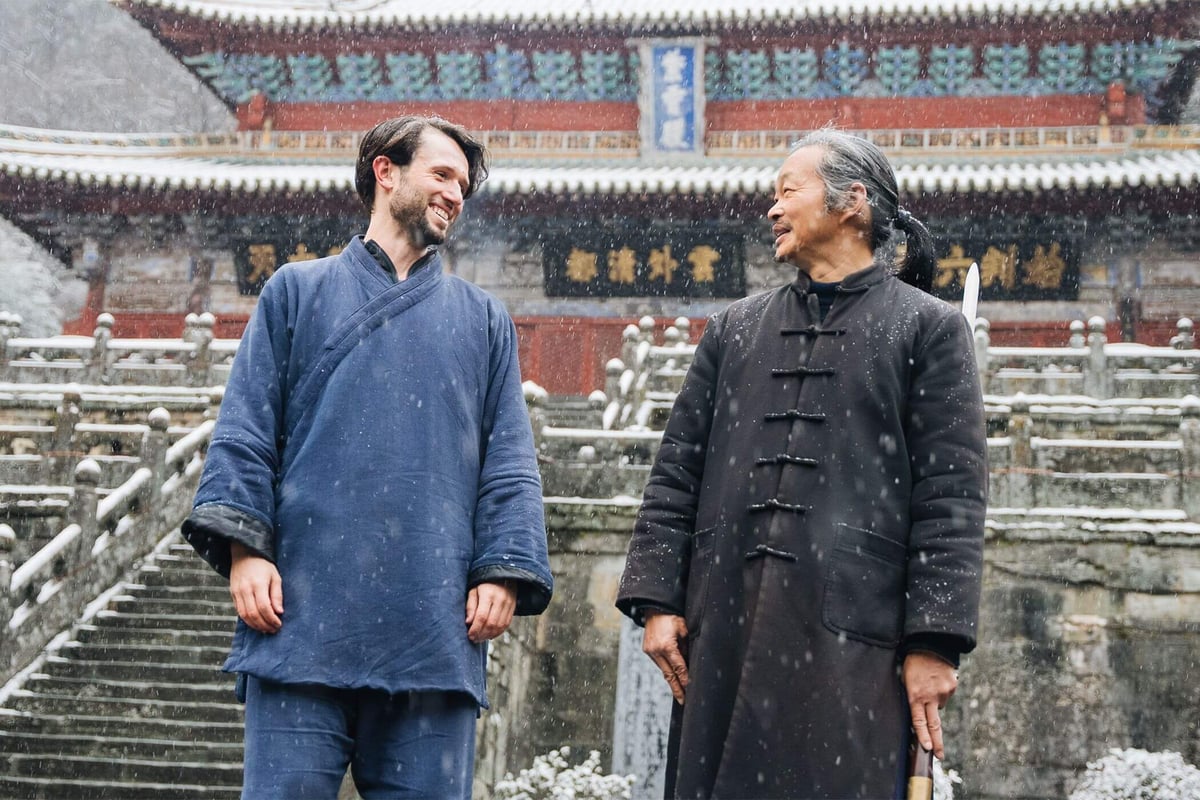
At Taoist Wellness Online, Master Gu teaches Tai Chi, Qi Gong and Taoist meditation. Our courses focus on these arts rather than baguazhang itself, but they build the same foundations of relaxed posture, natural breathing and calm attention that baguazhang study relies on.
Connections to Daoist Cosmology and Energy Work
Baguazhang's deep integration with Daoist philosophy distinguishes it from purely technical martial systems. The eight palms correspond not just to trigrams but to cosmological forces, seasonal energies, and internal organ systems in Chinese medicine. This creates multiple layers of practice depth.
In traditional theory, each trigram connects to specific meridians (energy channels) in the body. As you practise the corresponding palm, you're said to be opening and strengthening those meridians, balancing organ systems, and regulating qi flow. This integration of martial training with energetic cultivation places baguazhang firmly within the neijia (internal school) tradition.
The Role of the Dantian
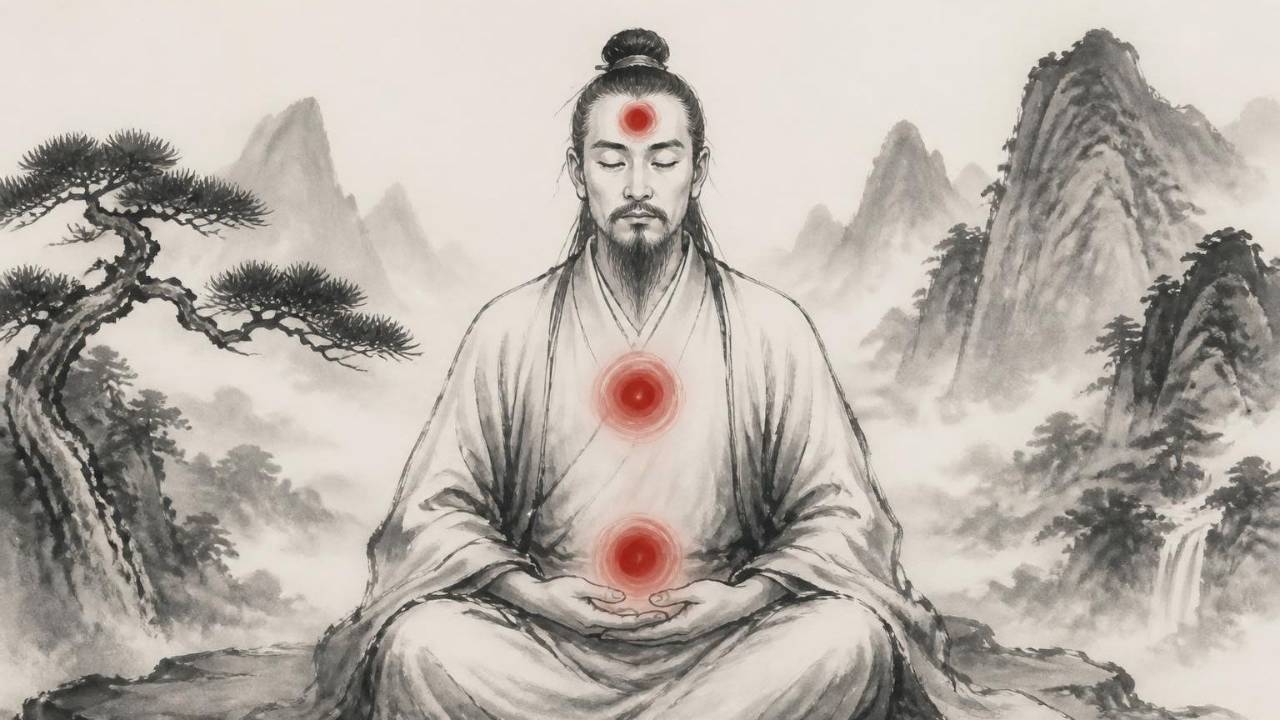
All internal arts emphasise the lower dantian, located about three finger-widths below the navel and one-third of the way into the body's core. In baguazhang, every movement originates from and returns to this centre. The constant rotation while circle walking spirals energy through the dantian, gradually building what classical texts call your "original qi".
Advanced practitioners develop the ability to direct energy through specific pathways during palm changes, creating what feels like a tangible force moving through the body. This isn't mystical imagination but the refined integration of breath, intention, and physical mechanics working in harmony.
Baguazhang in the Modern World
The art faces interesting challenges and opportunities in contemporary contexts. Traditional training methods required immersion, daily in-person instruction, and years of dedicated practice before understanding emerged. Modern students often seek faster results and clearer explanations.
Quality instruction has become more accessible through online platforms, video resources, and international workshops, yet this also creates challenges. Without careful guidance, students might develop poor habits or miss subtle principles that only reveal themselves through consistent practice and correction.
The most successful modern practitioners balance respect for traditional transmission with pragmatic adaptation. They maintain the essential principles of continuous motion, internal focus, and strategic application while adjusting training schedules and learning approaches to fit contemporary life.
Finding Authentic Teaching
Whether you're drawn to baguazhang for martial skill, health cultivation, or spiritual development, finding qualified instruction matters enormously. Look for teachers who can trace their lineage to recognised masters, who emphasise fundamentals over flashy techniques, and who integrate the art's philosophical dimensions rather than treating it as mere exercise.
The same principles guide our own teaching. Master Gu, a 15th-generation San Feng Pai Wudang Taoist Master, offers authentic transmission rooted in the Wudang tradition, making ancient internal practices accessible to modern practitioners worldwide.
Integrating Baguazhang with Other Internal Arts
Many practitioners study baguazhang alongside Tai Chi and Qi Gong, finding that each art illuminates the others. Tai Chi's emphasis on rootedness and slow, meditative movement complements baguazhang's constant mobility and direction changes, and the flowing forms in our Tai Chi course are a good place to build that foundation. Qi Gong practices develop energetic awareness that deepens your understanding of internal power generation.
The martial side of these arts is worth understanding too. Our article on Martial Art Tai Chi: Ancient Practice for Modern Life explores how Tai Chi's fighting heritage sits alongside its health practice.
The three arts share fundamental principles:
- Cultivating internal rather than external strength
- Emphasising relaxation, proper alignment, and natural breathing
- Using the mind to direct energy and movement
- Developing whole-body integration and connection
- Balancing yin and yang qualities
Yet each offers unique contributions. Where Tai Chi teaches you to root like a mountain, baguazhang teaches you to flow like a river. Where Qi Gong focuses on stationary cultivation, baguazhang integrates energy work with dynamic movement.
Starting Your Baguazhang Journey
If baguazhang calls to you, begin simply. Find a clear space where you can walk in circles without obstacles. Start with basic circle walking, focusing on smooth steps, upright posture, and relaxed breathing. Don't worry about palm positions or applications initially - just walk.
Five to ten minutes daily creates more progress than occasional long sessions. Your body needs time to adapt, your nervous system needs repetition to establish new patterns, and your mind needs regular practice to settle into the meditative quality that makes circle walking transformative rather than merely repetitive.
If you'd like a gentle way to build the basics first - relaxed posture, natural breathing and calm attention - our free Taoist course introduces Tai Chi, Qi Gong, Meditation and Taoist Wisdom step by step.
Patience serves you well in this art. Unlike activities that offer immediate gratification, baguazhang reveals its gifts gradually. The first months might feel awkward or confusing. Trust the process, maintain consistent practice, and understanding will emerge naturally.
As you develop, consider exploring our Taoist Philosophy course more deeply, as baguazhang's principles become clearer when you understand the cosmological framework that shaped them. The art isn't just physical technique but embodied wisdom, each palm change expressing insights about change, balance, and the nature of reality itself.
Resources for Continued Learning
Quality resources support your independent practice between live instruction. Classical texts offer depth, though they require patient study and often assume cultural context unfamiliar to Western students. Modern instructional materials provide clearer explanations but sometimes sacrifice traditional wisdom for accessibility.
The Taoist Wellness reading list provides carefully selected resources that balance authenticity with accessibility, helping you deepen your understanding of the internal arts principles that underpin baguazhang practice.
Video instruction allows you to observe movements repeatedly, studying details that might be missed during live classes. However, video cannot replace direct transmission or personalised correction. Use recordings to supplement, not replace, qualified teaching.
Finding a practice community provides motivation, shared learning, and the inspiration that comes from connecting with fellow practitioners walking this ancient path in the modern world. Our online community is a warm place to start.
Baguazhang offers a complete path of cultivation, integrating physical vitality, mental clarity, and spiritual depth through the simple yet profound practice of walking circles and changing palms. Whether you're drawn to its martial applications, wellbeing benefits, or meditative qualities, the art meets you where you are and grows with you through dedicated practice. If you're ready to explore authentic internal arts foundations rooted in ancient Daoist wisdom, Taoist Wellness Online provides comprehensive courses in Tai Chi, Qi Gong, and Taoist meditation under the guidance of Master Gu, a 15th-generation San Feng Pai Wudang Taoist Master with 25+ years of teaching experience, helping students around the world.