Yin and Yang Quotes: Ancient Wisdom for Modern Balance
Jul 07, 2026
Words carry power, especially when they emerge from centuries of observation about how the universe actually works. Yin and yang quotes capture something essential about balance, something we feel in our bones even when modern life pulls us in a thousand directions at once. These aren't just pretty phrases - they're distilled wisdom from people who spent lifetimes understanding energy, flow, and the dance between opposites that makes everything possible.
The Foundation: What Yin and Yang Really Means
Before diving into the quotes themselves, it helps to understand what we're actually talking about. Yin and yang aren't opposing forces locked in battle. They're complementary energies that create wholeness through their interaction.
Think of it like breathing. The inhale isn't fighting the exhale. Both are necessary. Both create the rhythm that keeps you alive. That's yin and yang in action, and this understanding shapes every meaningful quote about the concept.
The Classic Wisdom
Many yin and yang quotes come from ancient Taoist texts, where observers noticed patterns in nature and human experience. The Tao Te Ching, written over 2,500 years ago, remains remarkably relevant: "When people see some things as beautiful, other things become ugly. When people see some things as good, other things become bad."
This isn't pessimism. It's recognition that we create meaning through contrast, and that contrast itself holds wisdom.
Quotes About Balance and Harmony
Balance isn't about standing perfectly still. It's about responding to what's happening with appropriate energy, like water finding its level.
Daily Life Applications
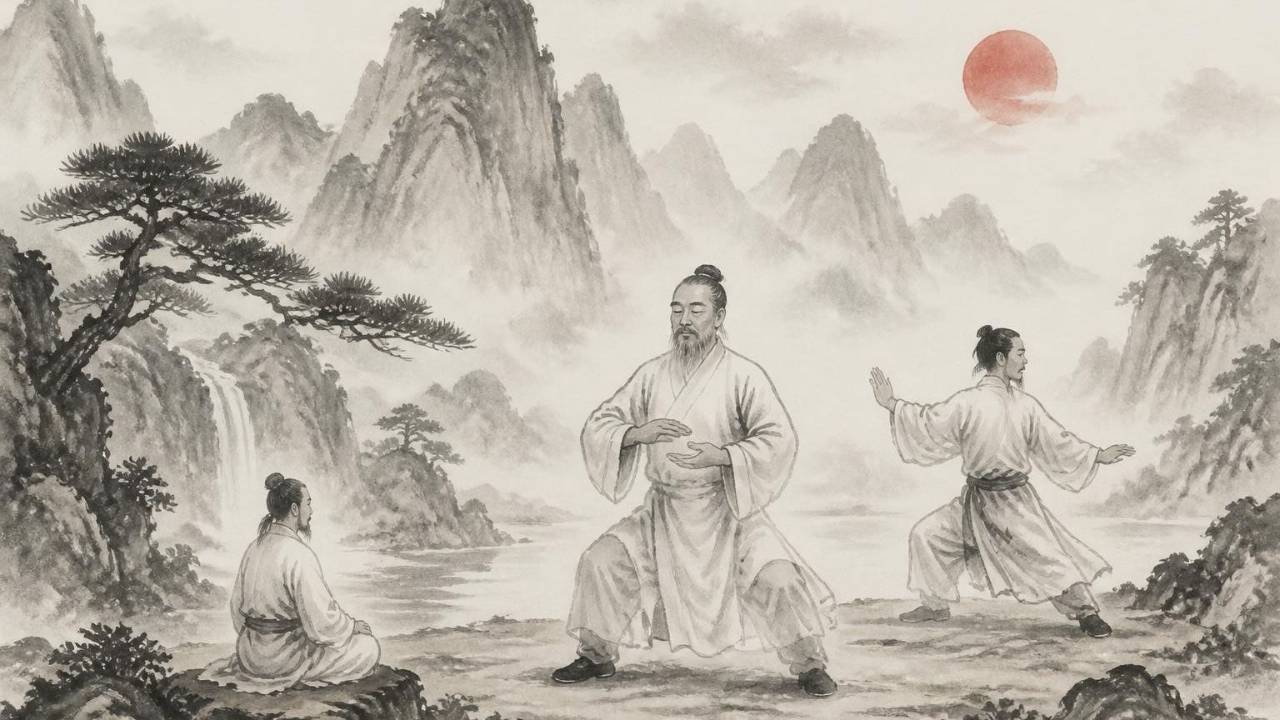
Consider this perspective: "Life is balance of holding on and letting go." This simple statement captures something practitioners of the Tai Chi course within the Academy understand physically. Every movement requires both rooting and releasing, grounding and floating.
Key insights from balance-focused yin and yang quotes:
- Balance shifts constantly - it's not a fixed state
- Holding too tightly creates rigidity
- Letting go completely creates chaos
- The dance between the two creates flow
When you read yin and yang quotes about harmony, notice how few suggest eliminating one side. Instead, they point toward integration. "The sage does not attempt to be yang by suppressing yin, but rather seeks to balance the two."
| Quote Theme | Core Message | Practical Application |
|---|---|---|
| Balance | Opposites create wholeness | Accept both strength and vulnerability |
| Transformation | One becomes the other | Embrace change as natural |
| Interdependence | Neither exists alone | See connections, not divisions |
Energy and Movement in Yin Yang Philosophy
Energy doesn't sit still, and neither should our understanding of it. The most powerful yin and yang quotes often reference movement, flow, and transformation.
The Dynamic Dance
"In the midst of movement and chaos, keep stillness inside of you." This captures something essential about the Qi Gong course within the Academy, where external movement flows from internal calm. The yin quality of stillness doesn't disappear during yang activity. It becomes the foundation that makes skilful movement possible.
You might notice this in your own experience. The days when you feel most effective aren't necessarily when you're pushing hardest. They're often when you've found the right rhythm between effort and ease, action and rest.
Movement principles reflected in yin yang wisdom:
- Stillness isn't absence of movement
- Movement isn't absence of calm
- Both qualities exist simultaneously
- Skill comes from navigating between them
- Force without softness breaks
- Softness without structure collapses
Quotes About Transformation and Change
Nothing stays the same. That's not a problem to solve - it's the nature of reality. Yin and yang quotes about transformation help us work with change rather than against it.
Embracing Natural Cycles
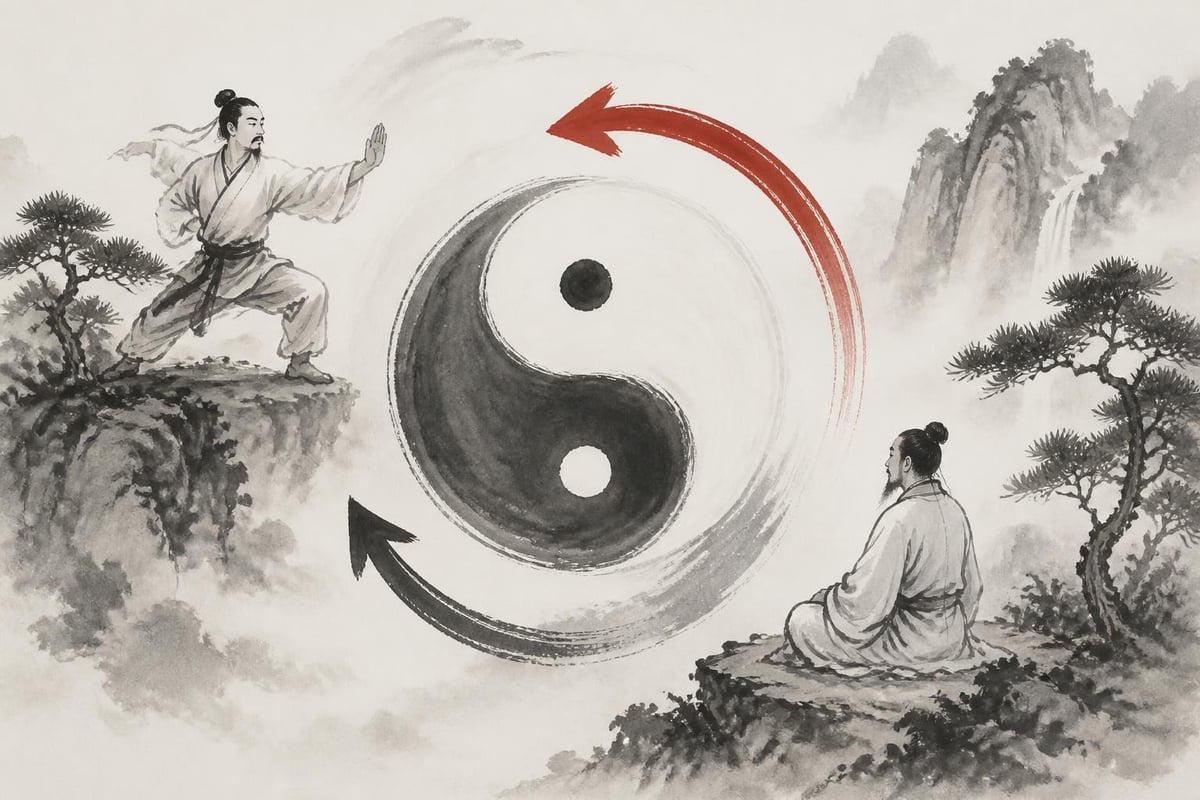
"When yang reaches its peak, it transforms into yin. When yin reaches its peak, it transforms into yang." This isn't abstract philosophy. It describes what happens when you push too hard (yang) and crash into exhaustion (yin), or when you rest too long and naturally feel ready to move again.
The exploration of Taoist philosophy within the Academy reveals that transformation isn't random. It follows patterns you can learn to recognise and work with. Day becomes night becomes day. Seasons cycle. Your own energy has rhythms that, when honoured, create sustainable vitality rather than burnout.
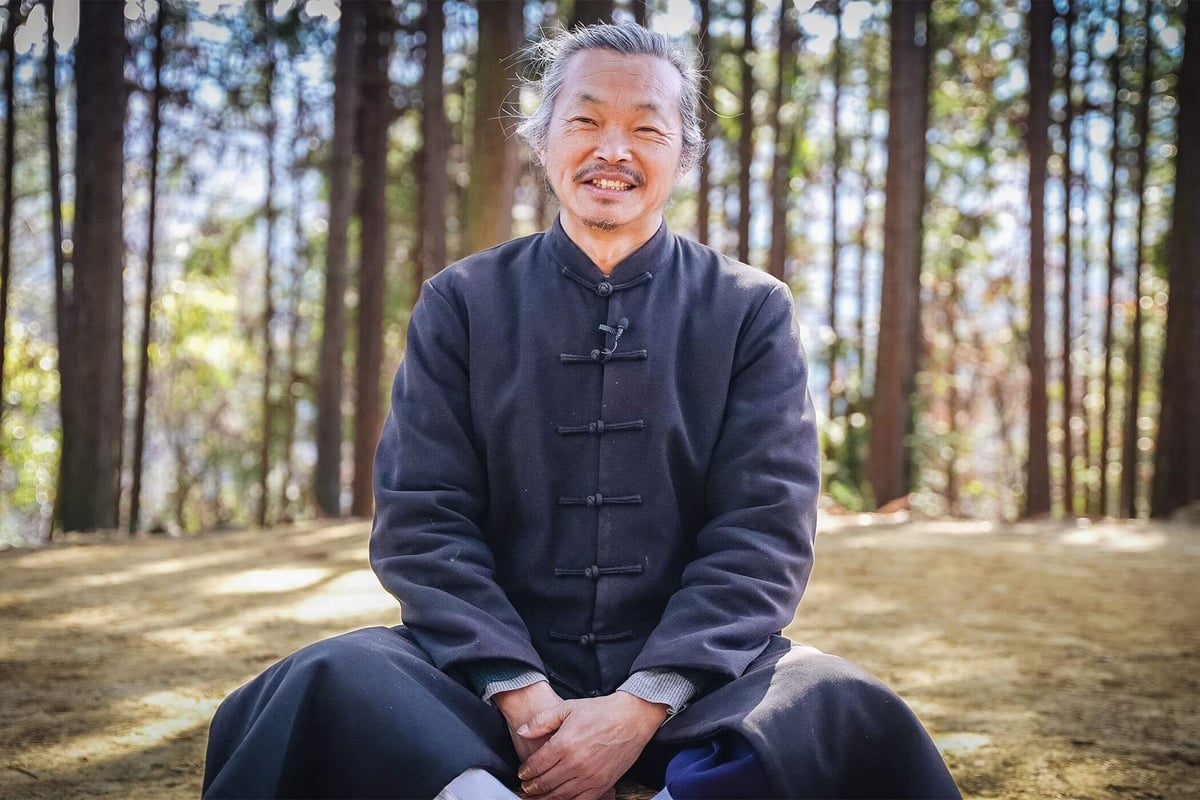
Many practitioners find that studying authentic teachings helps them recognise these patterns in their own lives. The Taoist Wellness Online Academy membership provides access to Master Gu's guidance on understanding these transformative cycles through direct experience in Tai Chi, Qi Gong, and meditation practice.
Working With Rather Than Against
Much yin yang wisdom emphasises acceptance, but not passive resignation. It's about recognising what you can actually influence. "The wise adapt themselves to circumstances, as water molds itself to the pitcher." That's yin wisdom supporting yang action.
Modern Interpretations and Applications
Ancient wisdom doesn't lose relevance. It gains depth as we discover new contexts where the same principles apply. Contemporary yin and yang quotes bridge traditional understanding with modern challenges.
Work and Rest
Work-life balance takes on new dimensions when viewed through yin yang principles. "Rest and activity are two sides of the same coin. You cannot have one without the other, and neither should dominate completely."
In 2026, when productivity culture often demands constant output, this perspective offers permission to honour natural rhythms. Your most creative work (yang) emerges from spaciousness (yin). Your deepest rest (yin) prepares you for focused action (yang).
| Life Area | Yin Quality | Yang Quality | Integration |
|---|---|---|---|
| Work | Reflection, planning | Execution, doing | Strategic action |
| Relationships | Receiving, listening | Giving, speaking | Mutual exchange |
| Health | Rest, recovery | Exercise, activity | Sustainable vitality |
| Learning | Absorption, contemplation | Practice, application | Embodied wisdom |
Relationships and Connection
"In love, as in all things, balance creates beauty. Too much yin creates dependency, too much yang creates distance." This speaks to something many people struggle with: how to be both independent and connected, strong and vulnerable.
The wisdom isn't about finding a perfect 50/50 split. It's about responding appropriately to what the moment requires. Sometimes relationships need more yin energy: softness, receptivity, allowing. Sometimes they need more yang: boundaries, clarity, directed intention.
Finding Your Own Balance Through Practice
Reading yin and yang quotes is one thing. Living the principles is another. That's where embodied practice becomes essential.
Physical Practice as Philosophy
When you actually move through Tai Chi forms or Qi Gong exercises, the quotes stop being abstract. Your body teaches you what balance feels like, what happens when you're too tense (excess yang) or too collapsed (excess yin).
"The body is the vehicle for understanding what words can only point toward." This is precisely why yin yang wisdom has endured for thousands of years - it isn't meant to be read and set aside, but felt, practised, and lived.
How practice brings quotes to life:
- You feel how relaxation (yin) enables power (yang)
- You notice how stillness contains potential movement
- You experience how effort without ease creates tension
- You discover how surrender isn't weakness but wisdom
Integration Over Time
Nobody masters yin yang balance overnight. It's a practice that deepens over decades. The journey itself teaches what the destination cannot.
"The Tao that can be told is not the eternal Tao." Yet we keep trying to put it into words because sometimes the right phrase arrives at exactly the moment you need it, pointing you back toward your own direct experience.
Wisdom for Difficult Times
When life gets challenging, yin and yang quotes offer more than comfort. They provide a framework for understanding what's happening and how to respond.
Navigating Adversity
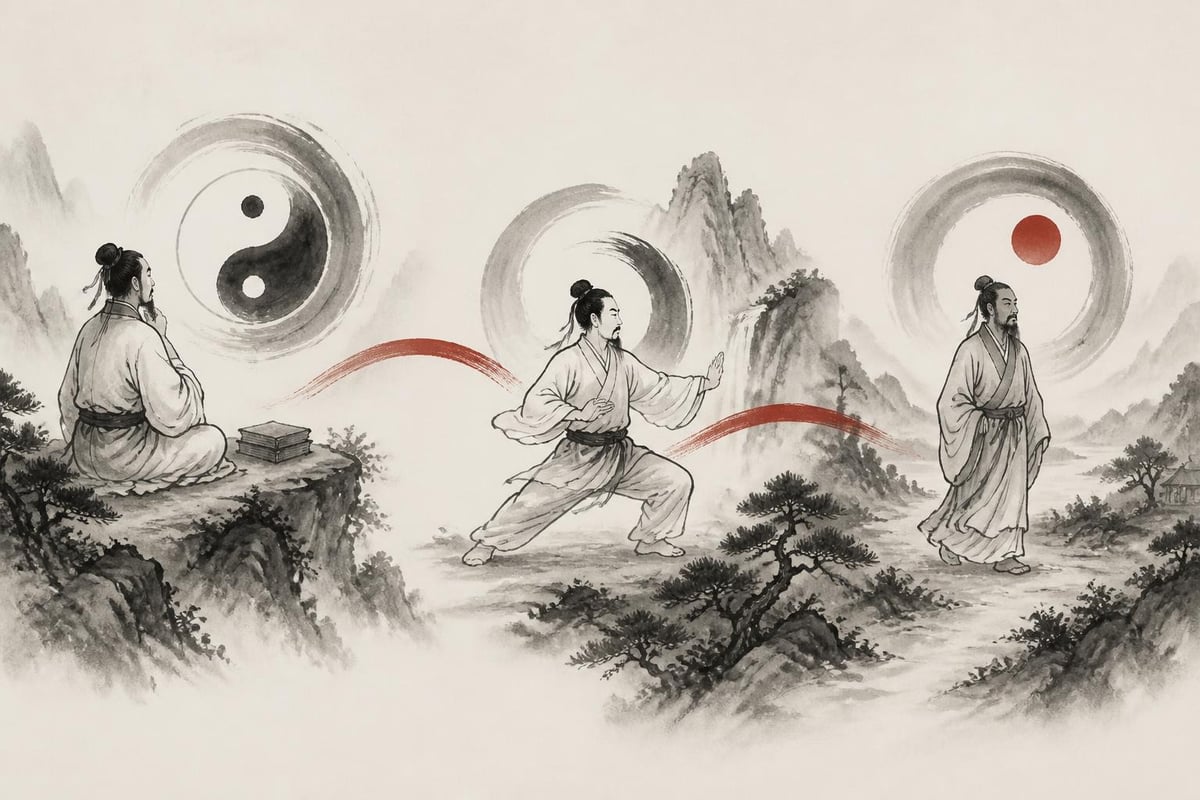
"In the depth of winter, I finally learned that within me there lay an invincible summer." This captures the yin yang principle beautifully - the darkest moments (yin) contain seeds of light (yang). The hardest challenges (yang) require the deepest surrender (yin).
This isn't toxic positivity. It's recognition that circumstances contain multiple aspects. You can acknowledge difficulty while also touching the resources that difficulty reveals. Our blog post on the Tai Chi Insomnia Study is a good example of how this yin-yang principle plays out in practice - rest and restoration as an active, purposeful quality rather than mere absence of activity.
The Gift of Opposition
Many inspiring yin and yang quotes point toward opposition as teacher rather than enemy. "Without the bitter, the sweet isn't as sweet." Your struggles aren't obstacles to your path. They are the path, showing you exactly where you need to develop capacity.
What opposition teaches:
- Where you're rigid and need softness
- Where you're scattered and need focus
- Where you've neglected one quality for another
- Where balance has shifted too far
Living Questions More Than Fixed Answers
The deepest yin and yang quotes don't provide answers. They pose questions that keep revealing new layers.
Ongoing Inquiry
"Is this situation calling for yin or yang energy right now?" That simple question, asked honestly throughout your day, transforms how you engage with everything. Sometimes you need to push (yang). Sometimes you need to yield (yin). Sometimes you need both simultaneously.
Personalised Understanding
What balance looks like for you won't look the same as for someone else. Your constitution, circumstances, and challenges are unique. Yin and yang quotes offer perspectives, but your own practice reveals what actually serves you.
Some people need more yin practices: meditation, restorative movement, inward focus. Others need more yang: vigorous exercise, outward engagement, active doing. Most need different things at different times. If you're wondering where to begin, our free 4-week Taoist Wellness course is a gentle, structured introduction to experiencing these principles in your own body.
The Symbol Itself as Teaching
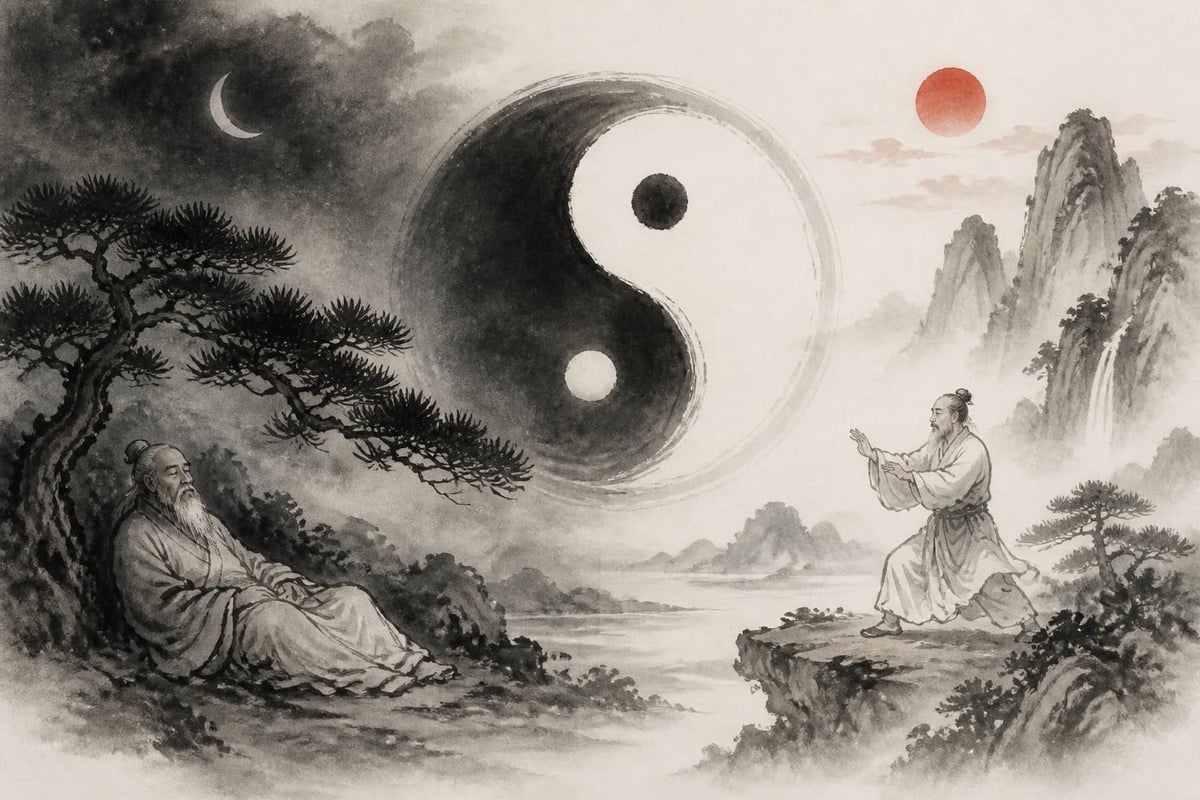
The classic yin yang symbol contains wisdom that words can barely touch. The curved boundary between dark and light shows these aren't separate territories but flowing transitions. The dot of light in darkness and darkness in light reveals that each contains its opposite.
Visual Wisdom
The ancient symbol, drawn from careful observation of nature, captured patterns that continue to reveal new dimensions the more deeply you study them. Seasonal changes, the cycle of day and night, the rhythm of breath - the yin yang symbol maps them all.
Beyond Dualism
"Yin and yang are not two. They are one expressing itself as two." This dissolves the trap of dualistic thinking where everything becomes either/or. Both/and thinking, rooted in yin yang understanding, creates space for complexity, paradox, and the messy beauty of real life.
The symbol shows this: not two separate pieces but one whole, each side existing only in relationship to the other, neither complete without its complement.
Practical Daily Applications
Philosophy only matters if it changes how you actually live. Yin and yang quotes become useful when they shift your choices, perspectives, and responses.
Morning and Evening Rhythms
Your day naturally contains yin and yang phases. Morning energy (yang) builds toward peak activity. Evening energy (yin) winds down toward rest. Working with these rhythms rather than against them creates ease.
"Rise with yang, rest with yin. Flow with the day's natural tide rather than swimming against it."
Decision Making
When facing choices, ask: "What does this situation need?" Sometimes it needs decisive action (yang). Sometimes it needs patient observation (yin). Sometimes it needs both in sequence.
Decision framework:
- Notice what's present (yin awareness)
- Clarify what's needed (yang analysis)
- Choose appropriate response (yin yang integration)
- Act with commitment (yang execution)
- Observe results (yin learning)
- Adjust as needed (ongoing balance)
Beyond the Quotes to Lived Experience
The most beautiful yin and yang quotes serve as doorways, not destinations. They point you toward direct experience where understanding deepens beyond what language can capture.
Words matter. They orient us, inspire us, remind us of what we know but forget. Yet the real teaching emerges when you close the book and step into practice, when you feel the principle in your body rather than just thinking about it.
That's where quotes stop being intellectual concepts and become lived reality. That's where balance stops being something you seek and becomes something you embody - moment by moment, breath by breath, in the continuous dance between yielding and acting, receiving and giving, being and doing.
These yin and yang quotes offer more than inspiration - they provide a framework for understanding the natural rhythms of energy that shape everything from your daily mood to your life's direction. When you're ready to move beyond reading about these principles and actually experience them in your own body, Taoist Wellness Online offers authentic guidance from Master Gu, a 15th-generation Wudang master who helps students worldwide integrate these ancient teachings into modern life through Tai Chi, Qi Gong, and Taoist meditation. Begin exploring how these timeless principles can transform your own experience of balance and vitality.