Tai Chi Insomnia Study: What Research Reveals
Jun 24, 2026
If you've been lying awake at night, wondering how to calm your body and quiet your mind, Tai Chi may offer a gentle place to begin. Research into Tai Chi and insomnia continues to support what Taoist practitioners have understood for centuries: slow, mindful movement can help the nervous system settle, release tension, and create better conditions for restorative rest. Rather than forcing sleep, Tai Chi encourages the body to return to balance.
What Tai Chi Insomnia Study Results Suggest
The evidence around Tai Chi and sleep is promising. Clinical studies have explored how regular Tai Chi practice may support people experiencing insomnia, especially older adults and those dealing with stress-related sleep disruption.
Key findings from sleep-focused Tai Chi research include:
- Participants practicing Tai Chi often report better sleep quality compared with control groups or standard activity programmes
- Some studies suggest improvements in sleep duration and reduced nighttime waking
- Benefits may continue beyond the initial study period when practice is maintained
- Side effects are generally minimal, making Tai Chi a low-impact option for many people
While Tai Chi should not be treated as a replacement for medical care where insomnia is severe or persistent, the research points to something valuable: gentle, consistent mind-body practice can become part of a sustainable approach to better sleep.
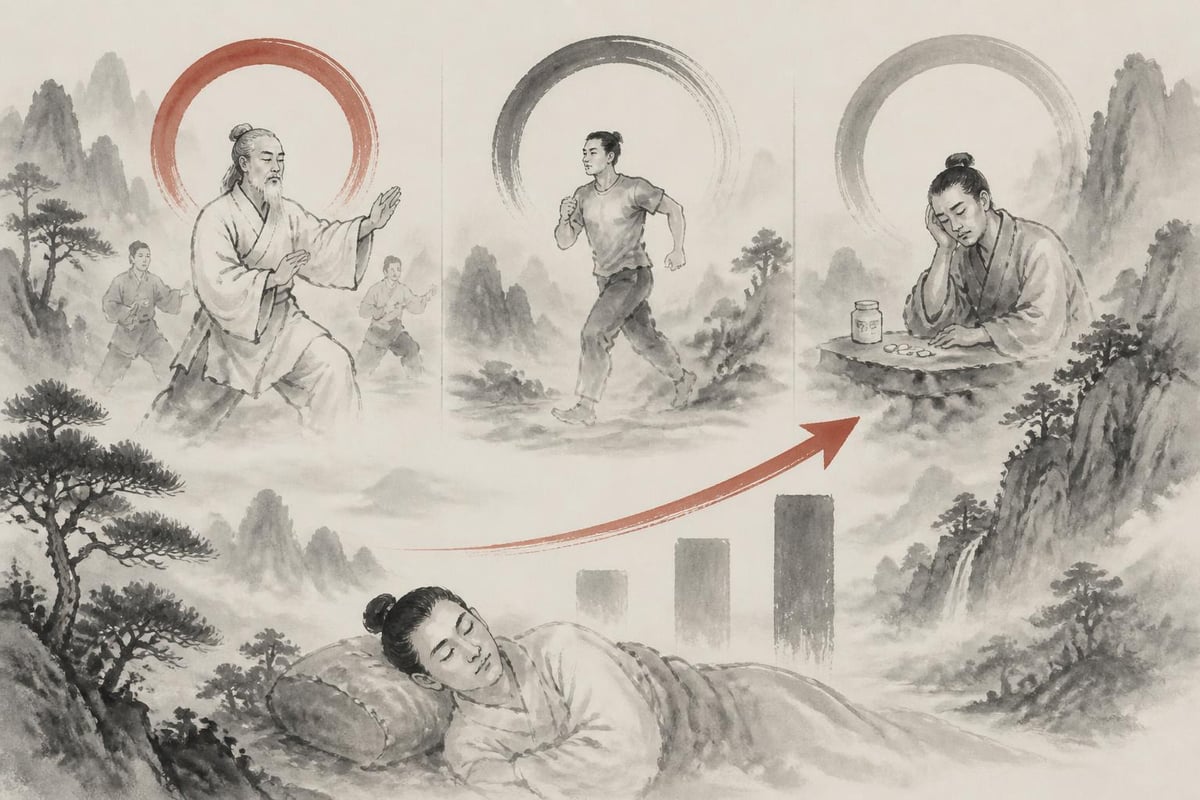
Understanding the Sleep-Enhancing Mechanisms
What makes Tai Chi helpful where other approaches can feel too forceful? The answer lies in how this practice addresses several common sleep disruptors at the same time.
Tai Chi works on several levels:
- Nervous system regulation: The slow, deliberate movements encourage the body to shift toward rest and recovery
- Stress reduction: Regular practice can help soften the stress response that often keeps people wired at night
- Mental quieting: The meditative focus gives the mind something gentle to rest on, rather than spiralling through thoughts
- Physical tension release: Gentle movement can ease muscular holding patterns that interfere with comfortable rest
Many people who practice Tai Chi for sleep describe feeling more settled in the evening, falling asleep more easily, and waking with a greater sense of restoration. These changes may be subtle at first, but they can become meaningful over time.
Comparing Tai Chi to Traditional Sleep Treatments
Tai Chi is not a quick sedative, and it does not work in the same way as sleep medication. Its value lies in helping the body relearn how to relax, regulate, and transition naturally into rest.
| Treatment Approach | Sleep Quality Support | Ease of Access | Side Effects | Long-Term Sustainability |
|---|---|---|---|---|
| Tai Chi | Gentle, cumulative support | High once learned | Minimal for most people | Excellent |
| Sleep Medications | Can be useful short-term under medical guidance | Requires prescription or professional advice | Possible side effects | Varies |
| Conventional Exercise | Helpful for many people | High | Low, depending on intensity | Good |
| Cognitive Behavioural Therapy for Insomnia | Strong evidence base | Depends on access | None | Excellent |
The beauty of Tai Chi lies in its cumulative benefits. Unlike a pill that works only while it is active in your system, Tai Chi helps build the inner conditions that support healthier sleep over time. You are not simply trying to knock yourself out at night; you are learning how to soften the patterns that keep your body alert when it longs for rest.
Specific Populations and Specialised Benefits
Different groups experience different sleep challenges, and Tai Chi can be adapted to meet many of those needs.
Older adults may struggle with lighter sleep, nighttime waking, discomfort, or changes in natural circadian rhythms. Tai Chi can be helpful because it supports balance, confidence, gentle mobility, and nervous system steadiness without placing excessive strain on the body.
Menopausal women may experience disrupted sleep due to hot flushes, hormonal shifts, anxiety, or restlessness. While Tai Chi cannot remove every cause of sleep disturbance, its calming and regulating qualities may help the body move toward rest with less resistance.
People dealing with chronic pain, anxiety, or stress-related tension may also find Tai Chi accessible when more vigorous exercise feels difficult. The practice meets the body gently, which is often exactly what an overstimulated system needs.
How to Practice Tai Chi for Better Sleep
Understanding the research is one thing. Applying it to your own life requires a simple, realistic practice rhythm. The good news is that you do not need years of training to begin experiencing the calming effects of Tai Chi.
Timing Your Practice
When you practice matters almost as much as how you practice. Many people find evening sessions helpful for sleep preparation, though morning practice can also support a steadier daily rhythm.
Recommended practice schedule:
- Evening session: 15-30 minutes of gentle flowing movement after the day's main demands are complete
- Avoid practicing immediately before bed: Give yourself at least an hour between movement practice and sleep
- Consistency over intensity: Daily 10-15 minute sessions are often more supportive than occasional long practices
- Morning option: 10 minutes upon waking can help set your rhythm for the day ahead
If you are unsure how to begin, our free 4-week Taoist Wellness introductory course offers simple Tai Chi, Qi Gong, and Taoist wellness practices with Master Gu to help you release tension, move with confidence, reclaim focus, and begin building a calmer daily routine.
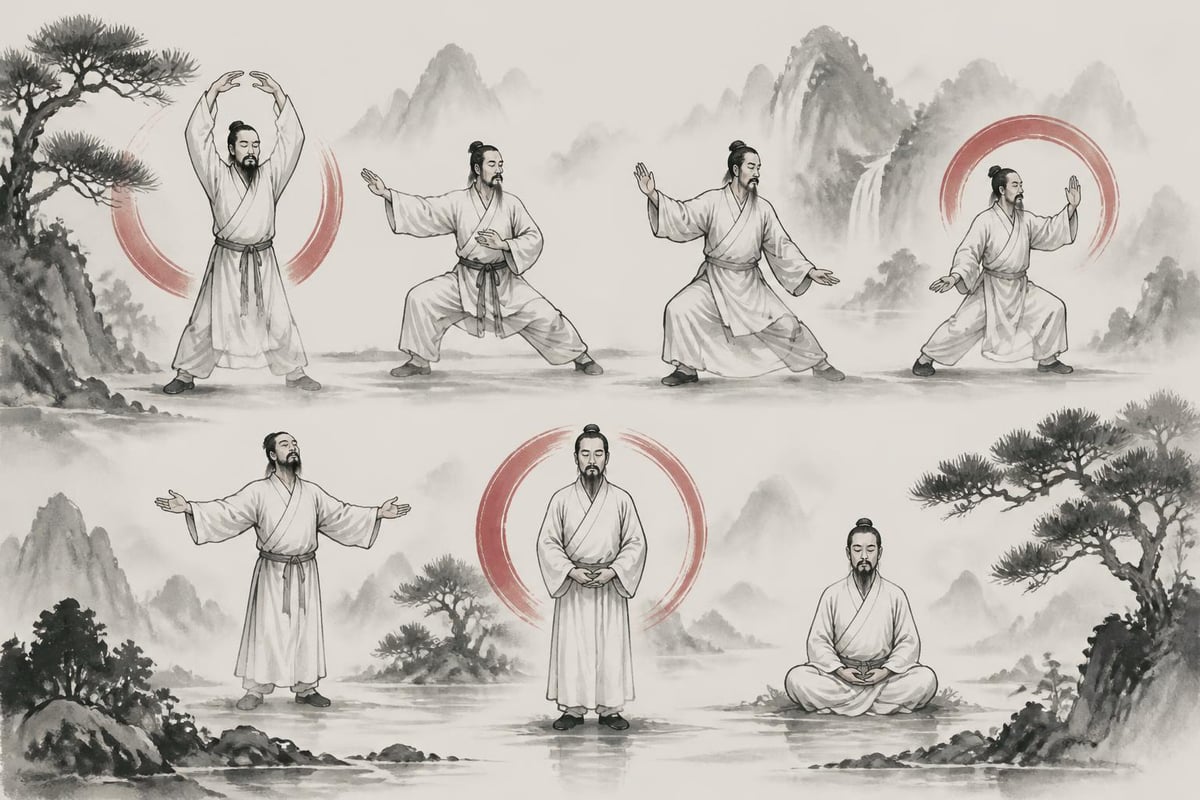
Essential Forms for Sleep Improvement
Not all Tai Chi movements affect the body in the same way. For sleep support, the emphasis should be on softness, steadiness, and internal awareness rather than technical perfection.
Sleep-supporting practices include:
- Cloud Hands: Continuous side-to-side movement that encourages rhythm and ease
- Part the Wild Horse's Mane: Expansive movement that can help release chest and shoulder tension
- Grasp the Bird's Tail: A flowing sequence that brings breath, weight shift, and awareness together
- Standing meditation: Simple but powerful stillness for quieting mental activity
The key is to perform these movements with softness and attention. You are cultivating a felt sense of calm, not trying to achieve technical mastery before you are allowed to benefit.
The Mind-Body Connection in Sleep Recovery
Tai Chi supports sleep because it does not treat the body and mind as separate problems. This aligns closely with Taoist understanding, where health is seen as a relationship between movement, breath, energy, emotion, and awareness.
When you practice Tai Chi, you are not just moving your body or calming your mind. You are training the connection between physical sensation, breath, and attention. This integration can be especially helpful when insomnia leaves you feeling fragmented, restless, or stuck in mental activity.
Breath Regulation and Sleep Chemistry
Every Tai Chi movement can be paired with relaxed, natural breathing. This is not arbitrary. Breath influences how safe, settled, and regulated your body feels.
Breathing benefits for sleep:
- Slower breathing encourages the body to shift toward rest
- Deep diaphragmatic breathing can reduce unnecessary tension
- Rhythmic breathing gives the mind a gentle point of focus
- Longer exhalations can support a feeling of release
A gentle night-time meditation practice can also complement Tai Chi by helping the mind transition out of the day and into a quieter state before bed.
Building a Sustainable Practice
Knowing that Tai Chi can help with sleep and actually experiencing those benefits requires bridging the gap between information and embodiment. This means developing a practice you can maintain long enough for the nervous system to respond.
In many studies, participants practised several times a week for multiple weeks before outcomes were measured. This makes sense. Sleep patterns do not usually change overnight. Your body needs repeated signals of safety, softness, and rhythm before new patterns become familiar.
| Practice Frequency | Typical Timeline for Sleep Support | Sustainability Rating |
|---|---|---|
| Daily, 10-20 minutes | 2-4 weeks for early changes | High |
| 4-5 times weekly | 4-6 weeks | High |
| 2-3 times weekly | 6-10 weeks | Moderate |
| Once weekly | Benefits may be slower or less noticeable | Low |
The most important thing is not perfection. It is return. Each time you come back to the practice, you remind your body that there is another way to move through stress, tension, and fatigue.
Overcoming Common Obstacles
Starting something new always brings challenges. Anticipating common obstacles helps you navigate them skillfully rather than abandoning your practice.
Typical challenges include:
- Feeling awkward or uncoordinated initially: This passes with repetition and patience
- Uncertainty about correct form: Guidance from experienced teachers can help you build confidence
- Difficulty finding practice time: Even 10 minutes can be enough to begin
- Impatience with gradual results: Sleep changes often accumulate subtly before they become obvious
Remember that perfect form matters less than consistent practice, especially when you are working with sleep issues. The nervous system responds to repetition, sincerity, and gentleness more than force.
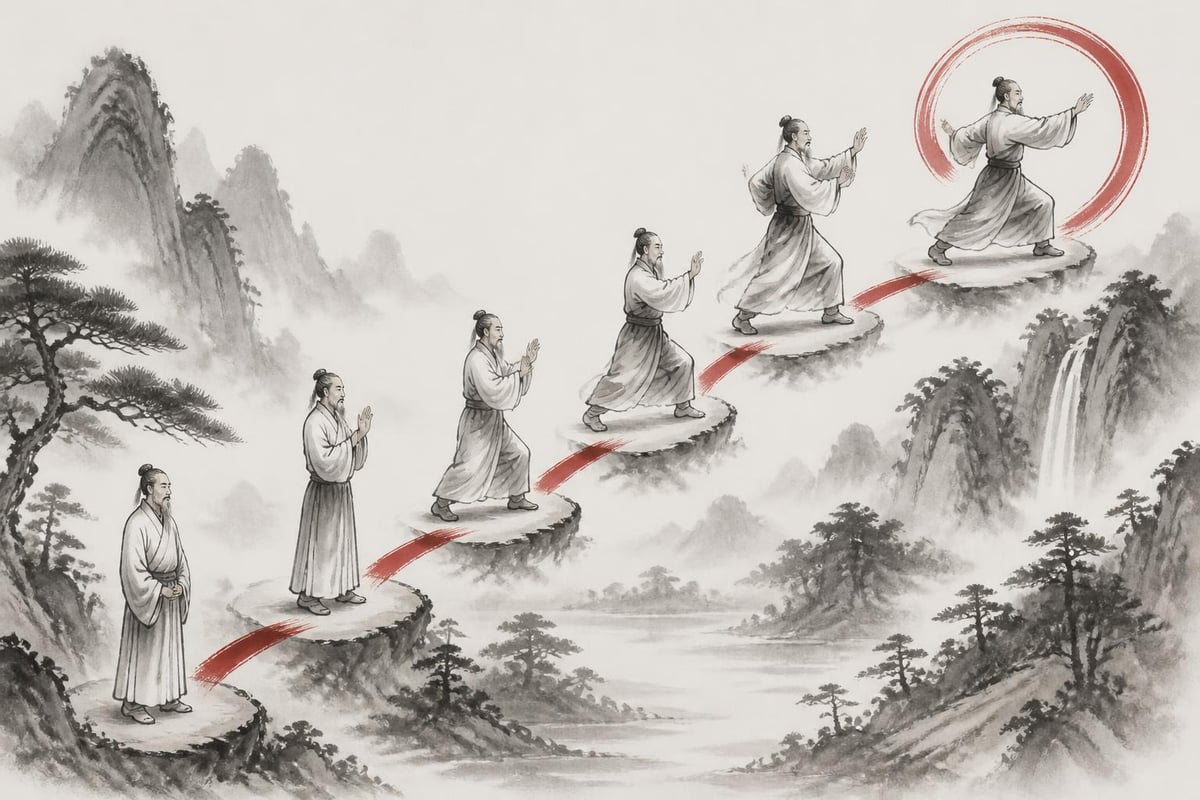
Integrating Taoist Wisdom with Modern Research
The research around Tai Chi and insomnia reflects something Taoist practice has long explored: health is not created through force alone. It emerges when the body can return to rhythm, balance, and ease.
Taoist philosophy understands sleep as a natural yielding to yin energy after yang activity. When you cannot sleep, it can feel as though the body is stuck in yang: doing, thinking, planning, controlling. Tai Chi helps train the shift between these complementary states.
Taoist principles for healthy sleep:
- Wu wei, or effortless action: Stop trying so hard to sleep; create the conditions and allow rest to arrive
- Yin-yang balance: Recognise rest as equally important to activity
- Following natural rhythms: Align your schedule with the body's daily cycles where possible
- Softness over force: Gentle, persistent practice often works better than intense effort
This is why Tai Chi is more than physical exercise. It is a way of practising harmony with natural principles that shape the body, mind, and daily life.
Qi Gong as a Complementary Practice
While Tai Chi forms provide flowing movement sequences, Qi Gong offers simpler practices that often focus on breath, posture, repetition, and internal awareness. Many practitioners combine both approaches for more rounded support.
Qi Gong can be especially helpful in the evening because it does not require intensity or complexity. Gentle standing, soft stretching, and slow breathing can all help prepare the body for rest.
Follow along with this 10-minute Evening Qi Gong routine with Master Gu to see for yourself.
The combination works beautifully. Tai Chi builds overall regulation through flowing movement, while Qi Gong offers simple ways to settle the breath and gather attention. Together, they can provide powerful support for sleep recovery.
Real-World Application and Success Stories
Numbers and studies matter, but personal experience brings the practice to life. Practitioners often describe falling asleep more easily, sleeping more deeply, waking less frequently, and feeling more refreshed upon waking.
What makes Tai Chi particularly valuable is accessibility. You do not need special equipment, athletic ability, or even much space. You need commitment, gentle persistence, and ideally some guidance from experienced teachers.
Student reviews and testimonials often mention wider changes such as better energy, more calm, improved consistency, and deeper connection to practice. Sleep may be one benefit, but it is often part of a broader shift toward balance and wellbeing.
Getting Started with Professional Guidance
While you can learn basic movements from videos and books, working with authentic teachers can help you avoid common mistakes and understand the deeper principles behind the practice.
Master Gu brings over 25 years of expertise from the Wudang tradition, offering authentic guidance rooted in lived practice. His teaching helps students connect not only with the outer movements, but with the internal qualities of softness, steadiness, and awareness.
Starting with a simple introductory practice can remove the pressure of needing to know everything at once. Begin gently, notice how your body responds, and let consistency do more of the work than intensity.
Beyond Insomnia: Comprehensive Health Benefits
While Tai Chi insomnia research focuses on sleep, practitioners often experience broader improvements alongside better rest. Better sleep affects every system in the body, and practices that support rest can naturally influence whole-person wellbeing.
Additional benefits often associated with regular Tai Chi practice include:
- Improved balance and physical confidence
- Reduced stress and emotional reactivity
- Greater body awareness and coordination
- Gentle strength and flexibility
- A calmer, steadier relationship with daily life
The beauty lies in simplicity. One practice, consistently applied, can ripple outward. Better sleep supports steadier energy. Steadier energy supports better choices. Better choices support deeper rest. Over time, this positive cycle can become part of how you live.
Personalisation and Individual Variation
Everyone's sleep challenges differ. Some people struggle to fall asleep. Others wake frequently or too early. Some experience poor sleep quality despite spending enough hours in bed. Tai Chi can support these different patterns because it works with overall regulation rather than only one symptom.
Your body then uses that steadier regulation in the way it most needs. Someone with anxiety-driven insomnia may benefit from the calming, meditative elements. Someone with pain-related sleep disruption may benefit from gentle movement and tension release. Someone whose sleep is disrupted by stress may benefit from having a daily practice that signals safety and routine.
Better sleep is not something you can force, but it is something you can gently prepare for through rhythm, softness, and consistent care. If Tai Chi feels like the kind of practice your body has been asking for, step into the Taoist Wellness Online Academy and begin exploring Tai Chi, Qi Gong, meditation, and Taoist wisdom with Master Gu and our teaching team. Your membership begins with a free 7-day trial, giving you space to experience the practice and see how it supports your own path back to rest.