Tai Chi Moves: A Beginner's Guide to Ancient Practice
Jul 06, 2026
The gentle, flowing practice of tai chi has captivated people worldwide for centuries, offering a pathway to better health, deeper calm, and stronger vitality. Whether you're seeking relief from chronic pain, hoping to improve your balance, or simply looking for a mindful movement practice that nourishes both body and spirit, understanding the fundamental tai chi moves provides your foundation. These movements aren't just exercises - they're a conversation between your breath, your intention, and the energy flowing through your body. Let's explore how these ancient forms can support your wellness journey today.
Understanding the Foundation of Tai Chi Movements
Tai chi moves emerge from centuries of Taoist wisdom and martial arts tradition. Each movement carries intention, connects breath with motion, and cultivates what practitioners call "qi" or life energy.
The beauty of tai chi lies in its accessibility. Unlike high-impact workouts that stress your joints, these movements work with your body's natural rhythms, improving strength, flexibility, and balance while reducing stress and anxiety.
The Basic Stance and Posture
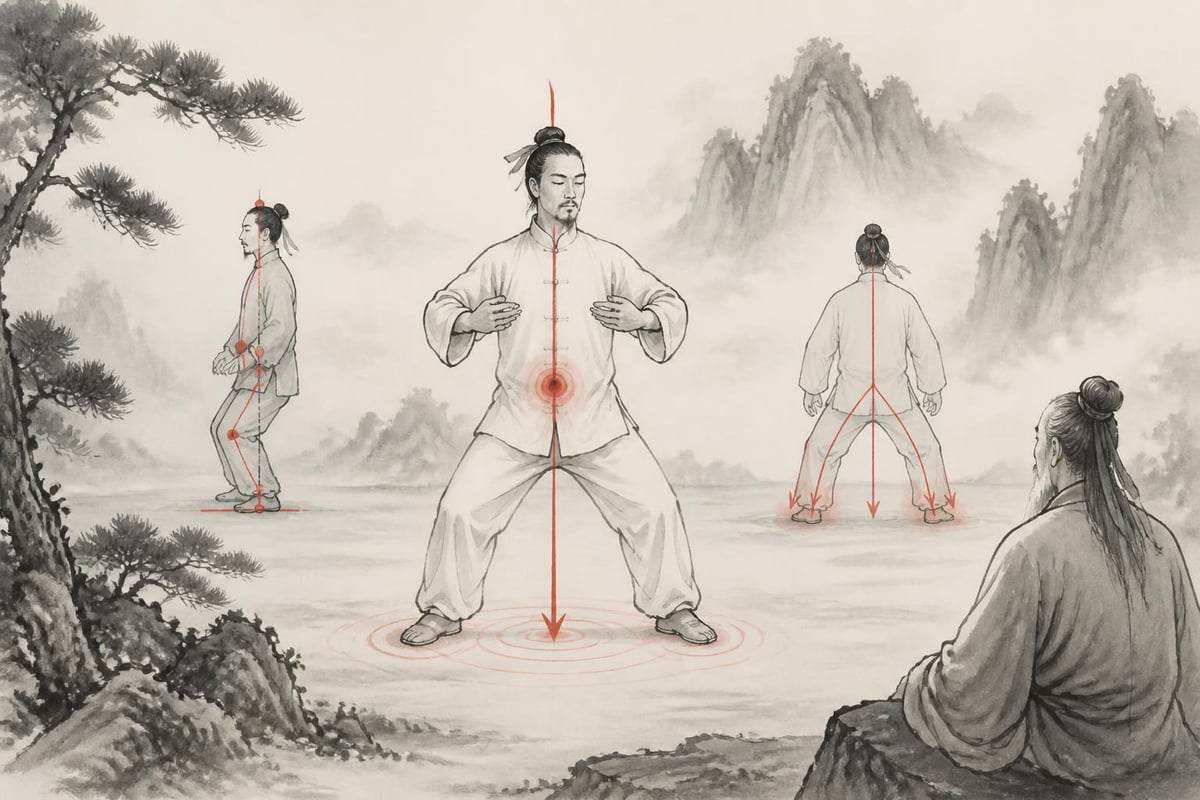
Before diving into specific movements, you need proper alignment. Your foundation determines everything that follows.
Key posture elements include:
- Feet shoulder-width apart, knees slightly bent
- Spine lengthened, tailbone tucked gently
- Shoulders relaxed and dropped away from ears
- Crown of head lifting toward sky
- Chin slightly tucked, gaze soft and forward
Think of your body as a bamboo stalk: rooted firmly yet flexible enough to sway with the wind. This imagery helps you maintain the balance between stability and fluidity that defines tai chi practice.
Essential Tai Chi Moves for Beginners
Starting your practice with fundamental movements builds confidence and understanding. These core tai chi moves appear in virtually every style and form.
Commencing Form (Beginning Posture)
This opening movement sets your intention and centres your awareness. Stand in your basic stance, arms relaxed at your sides. Slowly raise your arms forward to shoulder height, palms facing down, then gently lower them back down. This simple action teaches you to move from your centre, not just your limbs.
The commencing form reminds you that every journey begins with presence. You're not rushing toward a destination - you're arriving fully in this moment.
Parting the Wild Horse's Mane
One of the most recognisable tai chi moves, this sequence develops coordination between upper and lower body.
Steps to perform:
- Begin with weight on your right foot
- Draw hands together as if holding a ball (right hand on top)
- Step forward with left foot, shifting weight forward
- Separate hands diagonally, left palm forward at shoulder height, right palm down near hip
- Repeat on opposite side
This movement strengthens your legs while opening your chest and improving balance. The name evokes the image of gently stroking a horse's flowing mane, reminding you to keep movements smooth and continuous.
Wave Hands Like Clouds
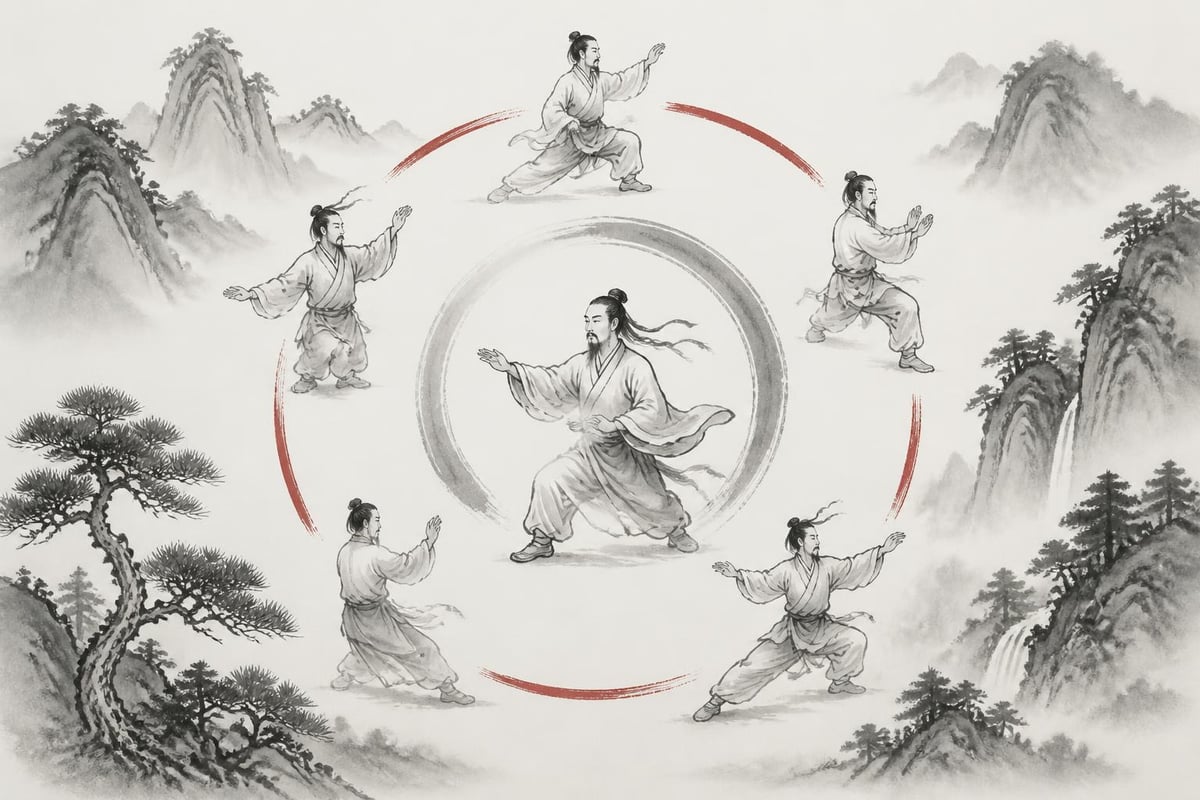
This lateral shifting movement improves weight transfer and spatial awareness. You move side to side, allowing your hands to float through space like clouds drifting across the sky.
Stand with feet wider than shoulder-width. Shift your weight to the right while your right hand rises to shoulder height, palm facing you. As you shift left, the left hand rises while the right descends. Your torso rotates gently, following your hands.
| Movement | Primary Benefits | Common Applications |
|---|---|---|
| Commencing Form | Centring, breath awareness | Opening any practice session |
| Wild Horse's Mane | Leg strength, coordination | Building lower body stability |
| Wave Hands Like Clouds | Weight shifting, flow | Developing smooth transitions |
| White Crane Spreads Wings | Balance, opening chest | Improving posture and grace |
White Crane Spreads Wings
This elegant movement challenges your balance while opening your upper body. From your basic stance, shift weight to your right leg as you raise your right arm overhead and lower your left hand toward your hip. Your left foot touches lightly beside your right, toe only.
The image of a crane standing on one leg, wings spread wide, captures the poise and strength this movement develops.
Breathing and Energy Flow in Movement
Your breath animates every tai chi movement. Without conscious breathing, you're simply performing empty gestures.
The Principle of Natural Breathing
Tai chi encourages what Taoists call "natural breathing": deep, diaphragmatic breaths that fill your lower belly rather than shallow chest breathing. As you practise your movements, your breath naturally coordinates with expansion and contraction.
Generally:
- Inhale during rising, opening, or gathering movements
- Exhale during lowering, closing, or extending movements
This pattern isn't rigid. Some practitioners develop their own breathing rhythms. The key is maintaining smooth, unforced breath that never strains or holds.
Cultivating Qi Through Movement
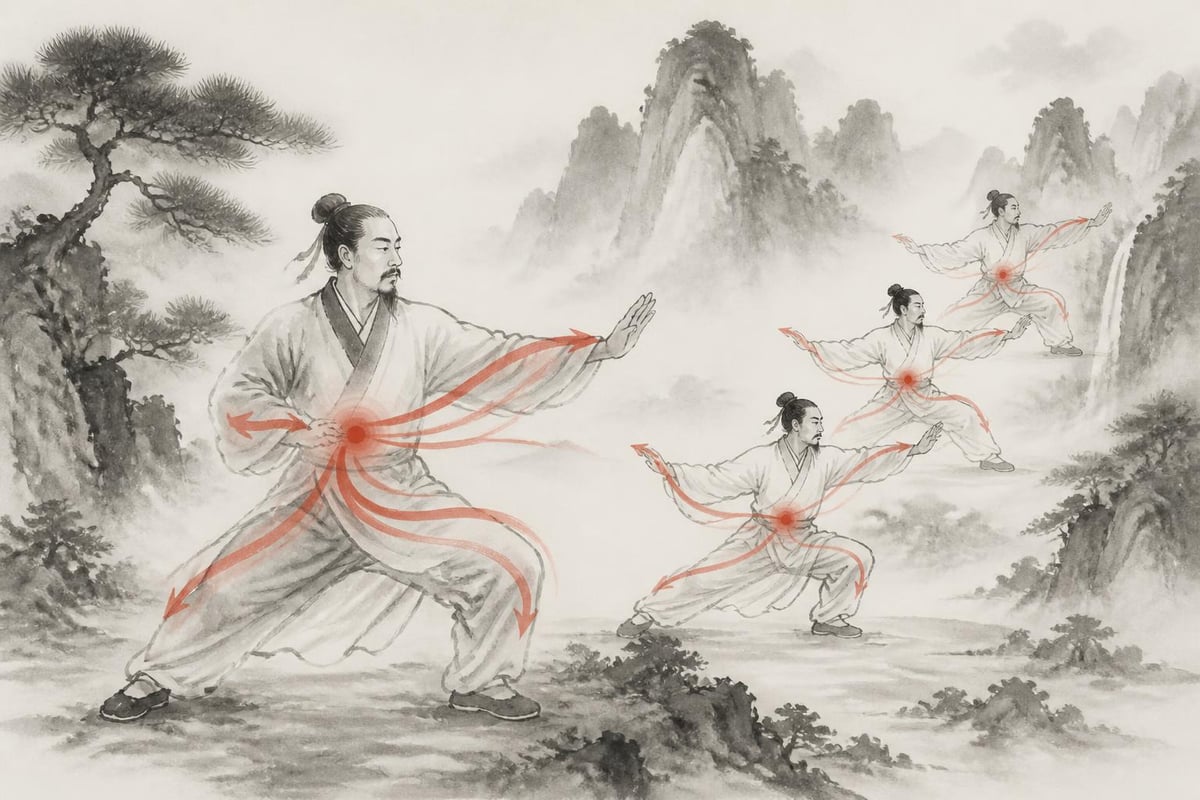
The concept of qi might seem abstract at first, but you'll likely feel it as warmth, tingling, or a sense of fullness in your hands and body as you practise. This isn't mystical - you're enhancing blood circulation, nerve sensitivity, and body awareness through consistent, mindful movement.
Building Your Practice: From Individual Moves to Forms
Individual tai chi moves become meaningful when woven together into forms or sequences. These choreographed patterns create flowing meditation in motion.
Understanding Traditional Forms
Different tai chi styles feature different numbers of movements. The Yang style, most common in the West, includes short forms with 24 movements and longer traditional sequences. Wudang traditions contain forms of varying lengths representing a complete, living practice.
Don't let these numbers overwhelm you. Master Gu's approach within the Tai Chi course at Taoist Wellness Online breaks down complex forms into digestible sections, allowing you to build competence gradually as part of your Academy membership.
Daily Practice Recommendations
For beginners:
- Start with 10-15 minutes daily
- Focus on 3-5 movements until comfortable
- Emphasise quality over quantity
- Practise at the same time each day when possible
As you progress:
- Extend practice to 20-30 minutes
- Work through complete short forms
- Add variations and deeper stances
- Explore the martial applications of movements
Consistency matters more than duration. Fifteen minutes every day creates more transformation than an hour once weekly.
Common Challenges and How to Navigate Them
Every practitioner faces obstacles. Understanding these challenges helps you move through them with patience and self-compassion.
Coordination and Memory
Learning tai chi moves can feel like learning a new language. Your body doesn't immediately understand what you're asking it to do.
Helpful strategies:
- Practise one movement until it feels natural before adding another
- Use mirrors to check alignment
- Record yourself to identify areas needing attention
- Join a community where you can ask questions and share experiences
Balance and Physical Limitations
You might worry that balance issues or physical conditions prevent you from practising tai chi moves. Actually, modified forms exist specifically for people with mobility challenges, including seated tai chi.
Listen to your body. If a movement causes pain (distinct from the gentle effort of building strength), adjust your stance or range of motion. Adaptations make this practice accessible to virtually everyone, regardless of age or fitness level.
Mental Restlessness
Your mind might resist the slow pace of tai chi, especially if you're accustomed to faster-paced activities. This restlessness is normal and actually part of what tai chi helps heal.
When your mind wanders, gently return attention to your breath and the sensation of your feet connecting with the ground. Each moment of noticing and returning strengthens your capacity for presence.
The Deeper Dimensions of Practice
As you continue exploring tai chi moves, you'll discover layers beyond physical exercise. These movements carry philosophical teachings that inform how you move through life.
Yin and Yang in Motion
Every tai chi movement expresses the Taoist principle of yin and yang: complementary opposites that create wholeness. Weight shifts from one leg to another. Arms rise and fall. You gather energy inward, then extend it outward.
This constant flowing between opposites teaches you that strength includes softness, that action includes rest, that effort includes ease. You stop fighting these apparent contradictions and start dancing with them.
| Yin Qualities in Movement | Yang Qualities in Movement |
|---|---|
| Gathering, closing | Extending, opening |
| Sinking, lowering | Rising, lifting |
| Softness, yielding | Firmness, directing |
| Inward focus | Outward expression |
| Receiving energy | Projecting energy |
Moving from Your Centre
Tai chi teaches that authentic power emerges from your centre (the lower abdomen area called "dantian"), not from isolated muscle groups. When you initiate movement from this core space, everything flows more efficiently.
This principle extends beyond practice. You learn to act from your centred values rather than scattered impulses, to respond rather than react, to move through challenges with rooted presence.
Integrating Tai Chi Into Modern Life
The traditional tai chi moves you practise on your mat prepare you for the real practice: bringing mindful movement into daily activities.
Applying Principles Throughout Your Day
Notice how you stand while waiting in line. Are you shifting weight restlessly or standing with the same rooted calm you cultivate in practice? Observe how you reach for objects. Can you move from your centre with the same grace you're developing?
These small applications transform ordinary moments into practice opportunities.
Complementary Practices
Tai chi naturally pairs with other Taoist arts. Many practitioners explore the Qi Gong course within the Academy, which focuses more specifically on energy cultivation, or deepen their inner awareness through the Taoist Meditation course.
The philosophical foundations supporting these practices also enrich your understanding. Exploring Taoist philosophy helps you grasp why you're making these specific movements and how they connect to a larger worldview. Our blog post on Tai Chi Qigong versus other practices is a useful read if you're weighing up how these disciplines complement each other.
Building Long-Term Sustainability
Creating a practice that lasts requires more than initial enthusiasm. You need structure, support, and ongoing learning.
Elements of sustainable practice:
- Regular schedule that fits your life rhythm
- Connection with teachers and community
- Access to resources when questions arise
- Opportunities to deepen understanding over time
- Celebration of progress, however small
Our free 4-week Taoist Wellness course allows you to experience structured guidance from Master Gu before committing to more extensive study.
Physical and Mental Health Benefits
The gentle nature of tai chi moves makes them particularly valuable for people seeking low-impact exercise with significant health returns.
Documented Physical Improvements
Regular tai chi practice is associated with a range of meaningful physical benefits:
- Reduced fall risk in older adults
- Improved cardiovascular function
- Alleviation of chronic pain conditions
- Enhanced flexibility and range of motion
- Strengthened muscles without joint stress
- Improved sleep quality
Many practitioners report noticeable changes within weeks of beginning regular practice.
Mental and Emotional Wellbeing
Beyond physical benefits, tai chi moves quiet mental chatter and reduce stress. The focused attention required to coordinate breath and movement naturally draws you into meditative states.
People dealing with anxiety often find relief through practice. The rhythmic, predictable nature of the movements provides a calm anchor when thoughts spin chaotically.
The Social Dimension
While you can practise solo, many people discover that joining a community of fellow practitioners adds motivation and joy. Sharing this journey with others creates connection and mutual support - something our Taoist Wellness Online community offers to students from over 70 countries. Master Gu's guidance, available through the Academy membership, brings authentic Wudang tradition to students worldwide.
Cultural Context and Respectful Practice
Understanding where tai chi moves originate enriches your practice with deeper meaning and respect.
The Evolution of Tai Chi
Tai chi evolved from martial arts and healing practices within Taoist traditions. The movements you learn today carry centuries of refinement, passed from master to student in an unbroken lineage. For a closer look at how this martial heritage shapes the practice today, our blog post on Martial Art Tai Chi: Ancient Practice for Modern Life explores this history in depth.
This doesn't mean you need to adopt Chinese culture wholesale. It means approaching practice with humility and appreciation for its roots.
Finding Authentic Instruction
Not all tai chi instruction maintains connection to traditional knowledge. Some modern adaptations dilute or misrepresent core principles. Seeking teachers with legitimate lineage ensures you're learning authentic practices.
Master Gu's training in the Wudang Mountains provides that authentic connection. A 15th-generation San Feng Pai Wudang Taoist Master - and the only one teaching in fluent English - his teaching brings traditional wisdom into accessible formats for contemporary students.
Advancing Your Practice Over Time
Your relationship with tai chi moves deepens through years of practice. What begins as learning choreography transforms into embodied wisdom.
Refining Movement Quality
Early practice focuses on remembering sequences and basic coordination. As movements become familiar, you refine details: weight distribution, hand positions, breathing coordination, energy flow.
This refinement never ends. Even advanced practitioners discover new layers in movements they've performed thousands of times.
Exploring Different Styles
While beginning with one style provides consistency, exploring others enriches your understanding. Yang, Chen, Wu, and Sun styles each emphasise different aspects of practice. Wudang forms connect most directly to Taoist roots.
Variety keeps practice fresh and reveals how the same principles express through different movements.
Opportunities for Immersion
Some practitioners eventually seek deeper immersion through retreats in the Wudang Mountains, where they can practise in the landscapes that inspired these movements and study directly with Master Gu in a traditional setting. Held twice a year in May and October, these retreats offer a rare opportunity to experience the living tradition first-hand.
The tai chi moves you're exploring offer more than exercise - they provide a complete path to integrated well-being that honours ancient wisdom while serving modern needs. Whether you're taking your first steps or deepening an established practice, authentic guidance makes all the difference. Taoist Wellness Online connects you with Master Gu's expertise, a supportive global community, and comprehensive resources that help you build a sustainable, transformative practice rooted in genuine Wudang tradition. New to it all? Start with our free 4-week course and take your first steps today.