Harmony and Nature: Ancient Wisdom for Modern Balance
Jul 02, 2026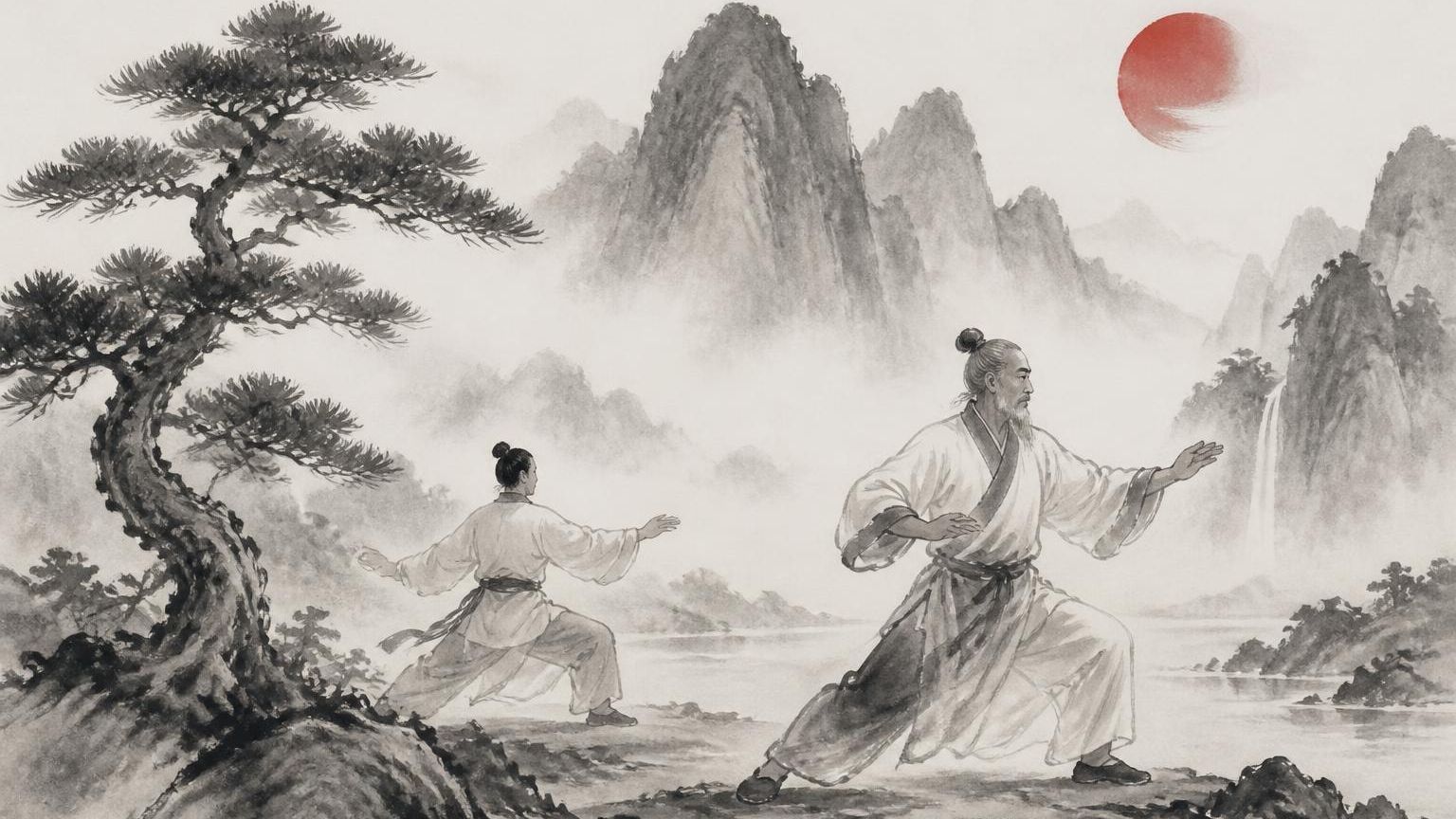
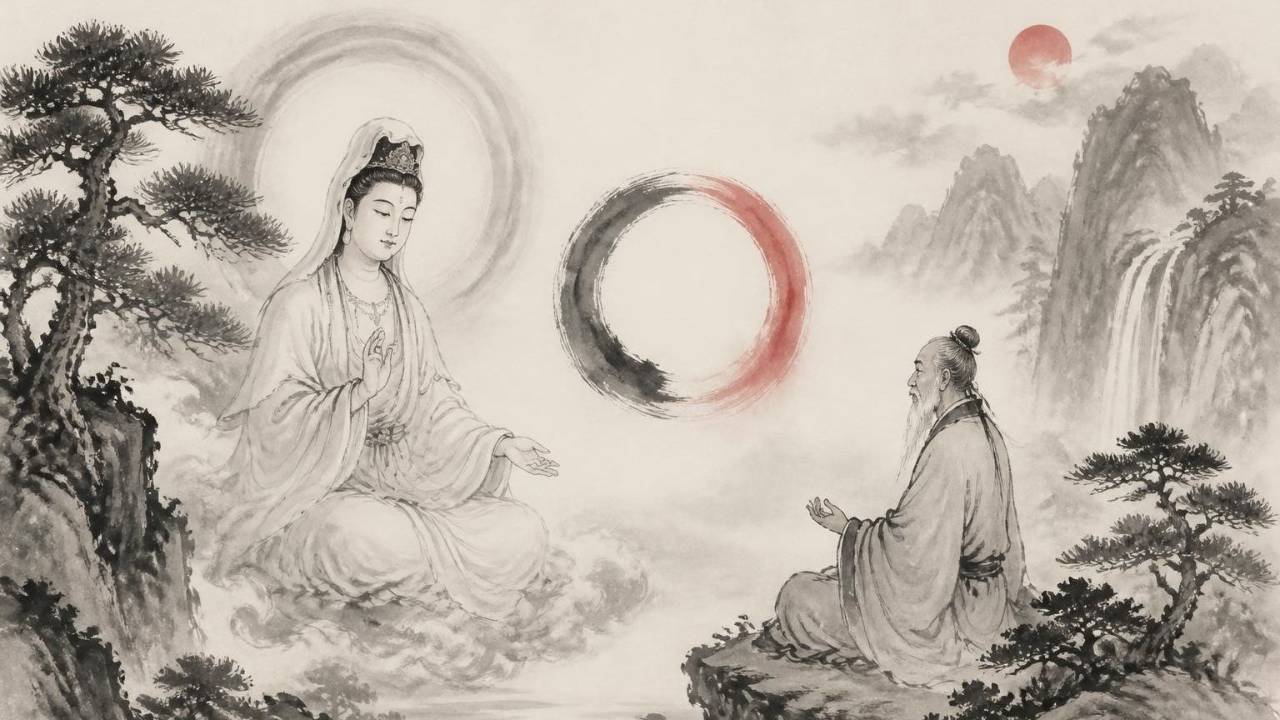
The ancient Taoists understood something modern science is only beginning to rediscover: we are not separate from nature, but rather an integral part of its rhythms, cycles, and energy flows. When we align ourselves with these natural patterns, we experience a profound sense of well-being that transcends what any conventional approach can offer. This relationship between harmony and nature forms the foundation of practices like Tai Chi and Qi Gong, where every movement reflects the organic flow of rivers, the strength of mountains, and the gentle persistence of wind shaping stone over time.
The Foundation of Harmony and Nature in Taoist Practice
In Taoist philosophy, harmony with nature isn't just a poetic concept but a practical framework for living. The ancient texts speak of wu wei, or effortless action, where we learn to move with life rather than against it. This principle appears in every Tai Chi form, where force meets flexibility and strength emerges from softness.
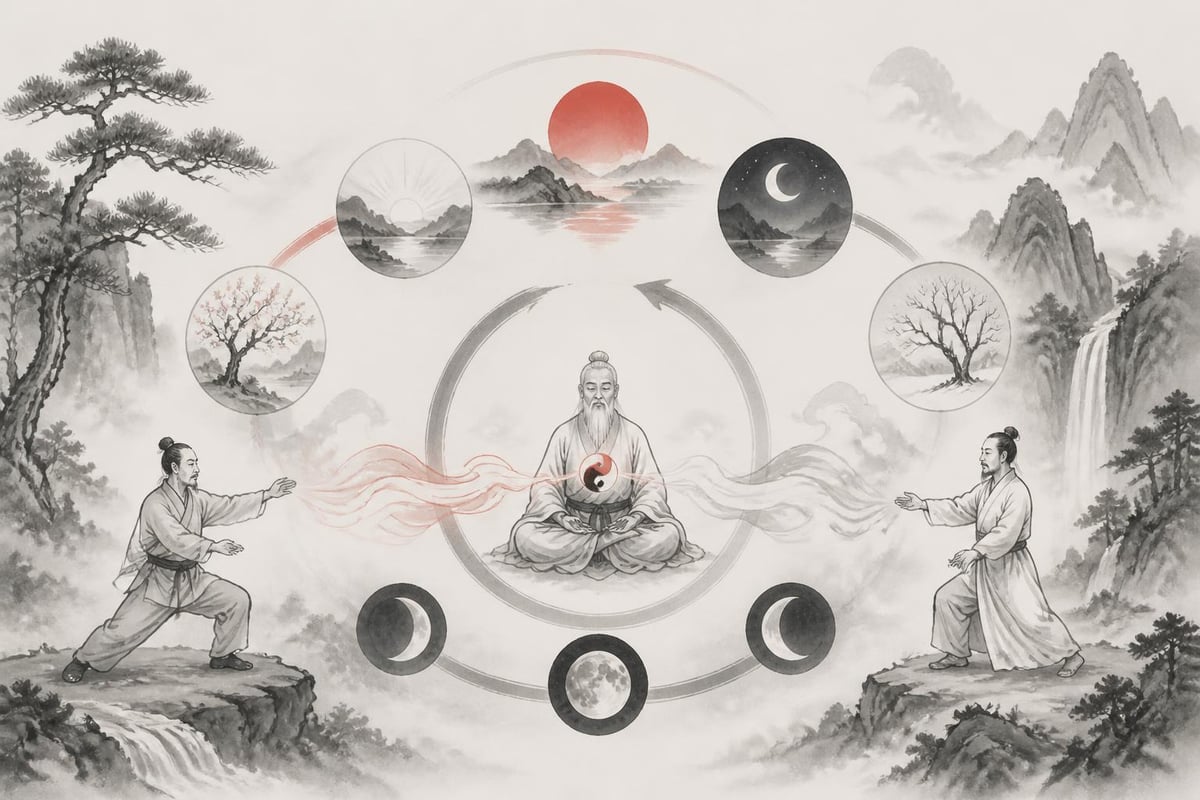
Traditional Taoist practices recognise that our bodies follow the same patterns as the natural world. We have internal seasons, daily cycles of energy, and rhythms that mirror the moon's phases and the sun's journey across the sky.
Understanding Natural Cycles in Your Practice
When you begin exploring Tai Chi, you're not just learning choreographed movements. You're discovering how to read your body's signals the way a farmer reads the weather.
Key natural cycles that influence your practice:
- Daily energy flow: Morning energy rises like dawn, midday peaks like the sun at zenith, evening settles like dusk
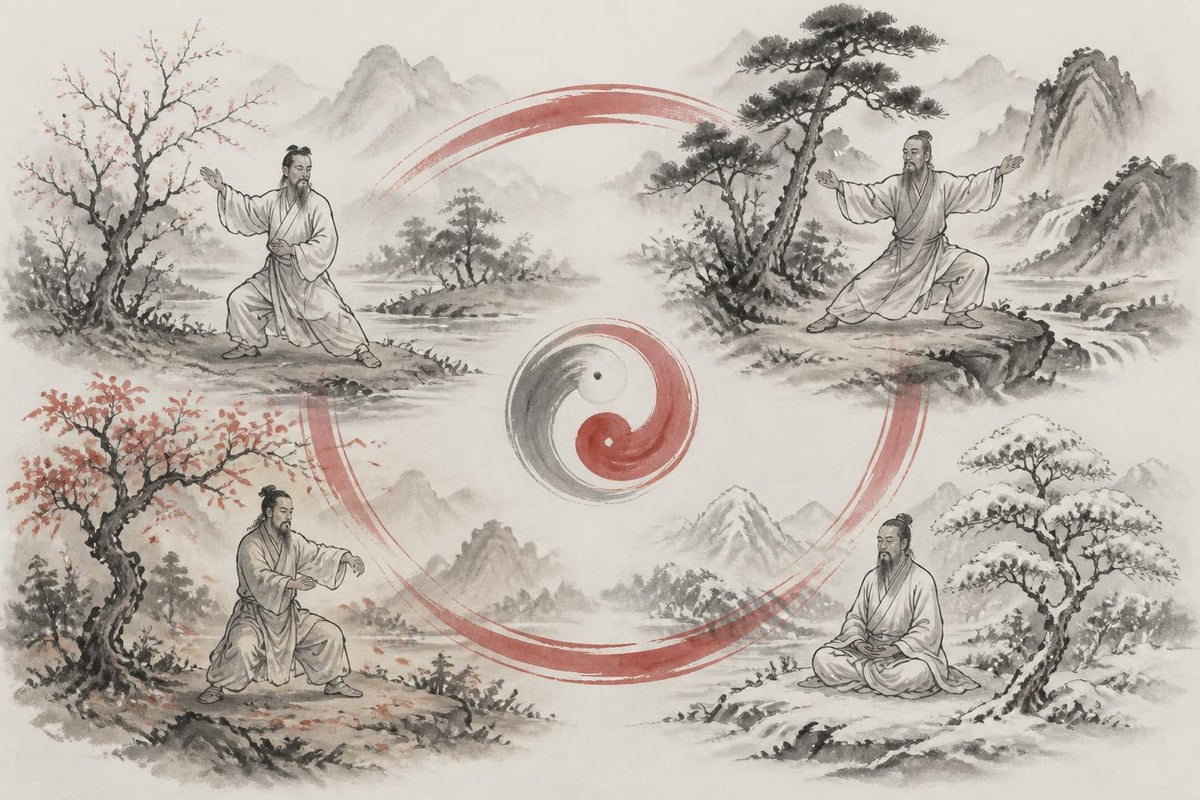
- Seasonal shifts: Spring brings renewal energy, summer expansion, autumn gathering, winter restoration
- Lunar rhythms: New moon for new beginnings, full moon for completion and release
- Breath patterns: Inhale draws in universal qi, exhale releases what no longer serves
These cycles aren't abstract ideas. They're tangible experiences you can feel during practice. When you move through a Qi Gong sequence at sunrise, you're literally synchronising with the earth's rotational energy.
Physical Alignment with Natural Principles
Your body is designed to move in harmony with gravitational forces, spatial geometry, and efficient energy transfer. Modern life often pulls us away from these natural alignments, creating tension, pain, and energy blockages. Qi Gong practices restore these fundamental relationships.
Consider how trees grow: roots anchor deeply while branches reach skyward, creating stability and flexibility simultaneously. This same principle appears in Tai Chi's rooting practice, where your lower body connects to earth energy while your upper body remains light and responsive.
The Body as Natural Architecture
| Natural Element | Body Correspondence | Practice Application |
|---|---|---|
| Earth | Legs, feet, lower dantian | Rooting, grounding, stability work |
| Water | Fluids, joints, flexibility | Flowing movements, adaptability |
| Fire | Metabolism, warmth, heart | Energy cultivation, vitality |
| Metal | Structure, bones, boundaries | Form integrity, clear intention |
| Wood | Growth, tendons, expansion | Flexibility, creative expression |
Master Gu teaches that understanding these correspondences transforms your practice from exercise into medicine. When you know that stiff shoulders relate to the metal element and boundary issues, you can address both physical tension and energetic imbalance simultaneously.
The beauty of working with natural principles is that your body already knows them. You're not imposing foreign concepts but remembering what you've always known at a cellular level.
Breathing with the Rhythm of Life
Breath is where harmony and nature become most immediately accessible. Every breath you take participates in a planetary exchange: trees release oxygen while you exhale carbon dioxide, creating a continuous cycle of mutual nourishment. This isn't metaphorical - it's biochemistry.
In Taoist meditation practice, breath becomes a bridge between conscious intention and unconscious wisdom. Natural breathing follows the pattern of ocean waves: a rising tide of inhalation, a moment of fullness, a releasing tide of exhalation, a pause of emptiness. If you'd like to explore this dimension of the practice more deeply, the Taoist Meditation course within the Academy guides you through these principles with Master Gu.
Essential breathing patterns from nature:
- Ocean breathing: Long, slow waves that massage internal organs
- Mountain breathing: Deep, stable, unchanging presence
- Wind breathing: Light, variable, responsive to immediate needs
- Earth breathing: Grounding exhales that release excess energy downward
These aren't techniques you force but qualities you cultivate. When you practise Tai Chi in a park, your breathing naturally synchronises with wind moving through leaves, water flowing in a nearby stream, or birds calling overhead.
Seasonal Practice Adjustments
Nature doesn't maintain the same energy year-round, and neither should your practice. Different seasons call for different approaches to cultivation - this is a core insight woven throughout Taoist teaching.
Spring is the time for beginning new practices, planting seeds of intention, and emphasising upward, outward movements. Summer supports full expression, longer practice sessions, and more vigorous forms. Autumn invites gathering energy inward, consolidating what you've learned, and preparing for winter's restorative stillness.
Adapting Your Practice Through the Year
Winter practice focuses on conservation rather than expenditure. This is when Qi Gong's standing meditation practices become most valuable, building deep reserves without depleting your energy. Many students discover that what feels like "doing nothing" in winter becomes the foundation for spring's vitality.
The Traditional Chinese Medicine calendar recognises five seasons rather than four, adding late summer as a transitional period associated with the earth element. This is when practices emphasising centre, balance, and digestive health become particularly beneficial.
The Environment as Teacher
One powerful aspect of exploring Taoist philosophy is learning to see every environment as a classroom. A windy day teaches you about yielding and flexibility. Rain demonstrates the power of gentleness over time. Sunlight reveals how stillness can be active and nourishing.
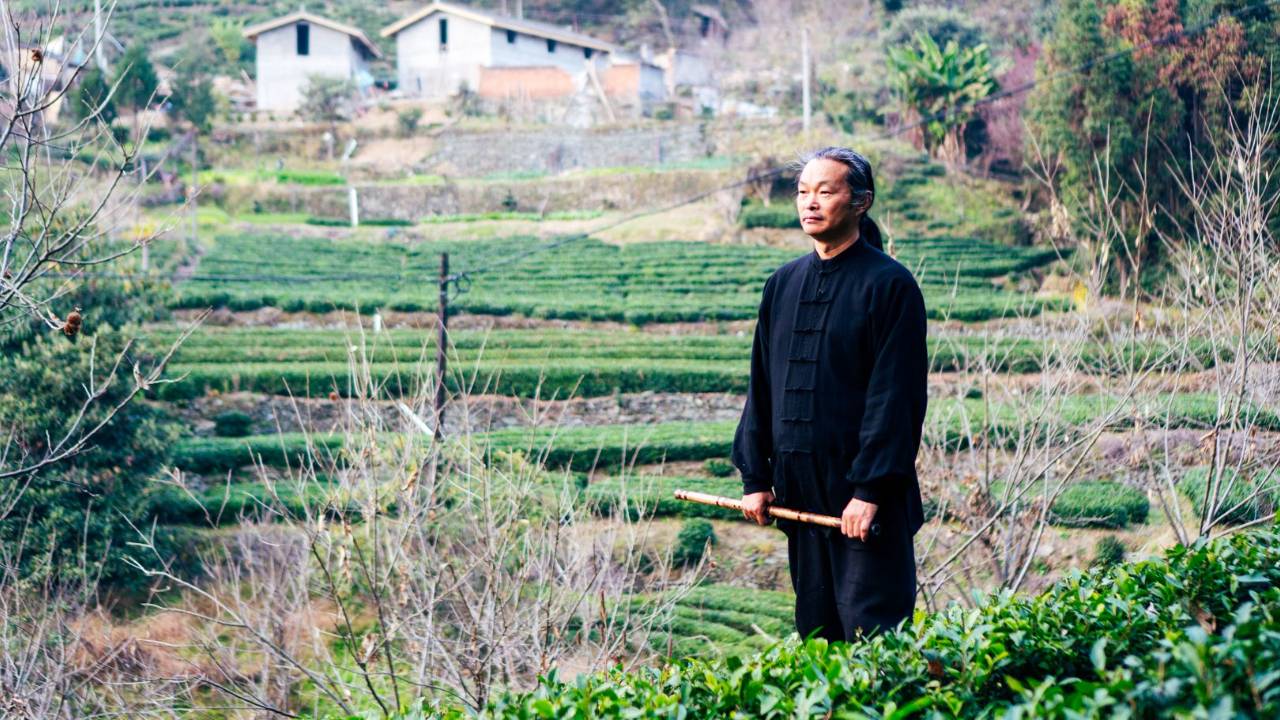
Master Gu often emphasises that while indoor practice builds foundation, outdoor practice completes the circle. When you practise Tai Chi outside, you're not just exercising in fresh air. You're engaging in a conversation with the living earth, adjusting your movements to uneven ground, feeling temperature changes, responding to sensory input that no studio can replicate.
What different environments teach:
- Parks and gardens: Cultivated harmony, balance between human and natural
- Forests: Deep yin energy, restoration, ancient wisdom
- Mountains: Stability, perspective, enduring strength
- Water settings: Flow, adaptability, continuous transformation
- Open fields: Expansiveness, possibility, unobstructed energy
Many practitioners report that their most profound breakthroughs happen not during formal classes but during spontaneous practice sessions outdoors, where the boundary between self and surroundings dissolves.
Community and Natural Harmony
Humans evolved as social creatures embedded in natural ecosystems. Communities such as ours at Taoist Wellness Online recognise that individual practice gains depth when shared within a supportive collective. Like a grove of aspen trees sharing a root system, practitioners support each other's growth.
When one person in a practice community makes a breakthrough, everyone benefits from the shift in collective energy. This is one of the reasons a living, active community matters as much as the courses themselves.
Building Practice Relationships
| Relationship Type | Natural Parallel | Practice Benefit |
|---|---|---|
| Teacher-student | Sun to seedling | Direction, warmth, growth |
| Peer practitioners | Trees in forest | Mutual support, shared resources |
| Individual-lineage | River to ocean | Connection to source, tradition |
| Practice-daily life | Root to flower | Integration, authentic expression |
The online format allows students worldwide to connect, creating a diversity that mirrors natural ecosystems. A practitioner in Norway shares winter solstice insights while someone in Australia experiences summer solstice, weaving together complementary perspectives.
Movement as Natural Expression
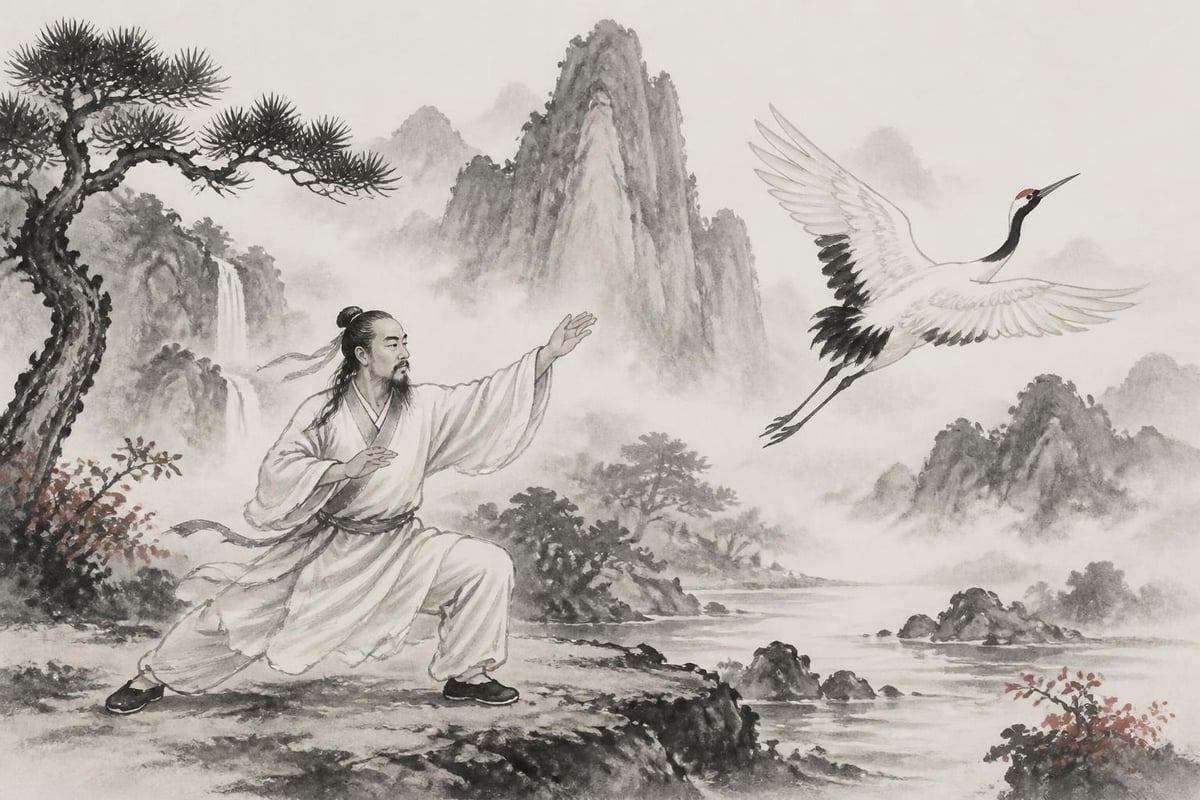
Every Tai Chi form contains movements derived from observing nature: "White Crane Spreads Wings," "Grasp the Sparrow's Tail," "Wave Hands Like Clouds." These aren't arbitrary names but precise descriptions of how natural forces manifest through human form.
When you practise "Snake Creeps Down," you're embodying the fluid, grounded intelligence of serpent movement. "Golden Rooster Stands on One Leg" teaches the balance and alertness of a bird maintaining stability while ready for instant action. These forms encode thousands of years of observation about how nature achieves efficiency, power, and grace. You can explore all of these movements as part of the Tai Chi course within the Academy membership.
To see what this looks like in its natural setting, our post on Wudang Tai Chi captures the art form in the mountains where it was born.
Energy Cultivation Follows Natural Law
Qi, or vital energy, moves through your body following the same principles that govern water flowing downhill, heat rising, and seeds germinating. When you understand these laws, energy cultivation becomes simple rather than mysterious - it's a matter of working with natural law rather than against it.
Traditional Chinese Medicine maps energy channels called meridians that follow predictable pathways through your body. These aren't arbitrary but reflect how embryonic development unfolds, how fascial networks connect, and how neural pathways communicate.
Natural laws governing energy flow:
- Energy follows attention: Where mind goes, qi flows
- Blockage creates pressure: Resistance generates tension and heat
- Stillness allows settling: Like sediment in water, clarity comes from rest
- Movement prevents stagnation: Flowing water stays fresh
- Balance self-regulates: Natural systems return to equilibrium when supported
These principles guide every aspect of practice, from how you hold your posture to how you sequence movements throughout a session.
Practical Integration into Modern Life
The challenge many students face isn't understanding harmony and nature conceptually but implementing it practically within demanding modern schedules. The wisdom here is that small, consistent actions aligned with natural principles create more change than sporadic intense efforts.
Morning practice, even just five minutes, synchronises your energy with the day's rising yang quality. Evening stretching helps transition from active yang to restful yin. These simple adjustments accumulate into significant shifts over time. The Qi Gong course within the Academy membership offers a structured way to build exactly this kind of daily practice, with guidance from Master Gu at every stage.
Daily Practices for Natural Alignment
Morning (5-10 minutes):
- Gentle stretching upon waking
- Three deep breaths at a window
- Simple Qi Gong warm-up sequence
Midday (2-3 minutes):
- Standing meditation at your desk
- Conscious breathing between tasks
- Shoulder and neck releases
Evening (10-15 minutes):
- Flowing Tai Chi form
- Seated meditation
- Gratitude reflection
Before sleep (3-5 minutes):
- Body scan relaxation
- Gentle twisting to release the day
- Calm breathing to settle the mind
These practices don't require special equipment, extensive time, or perfect conditions. They simply ask you to remember your connection to natural rhythms and honour it through small, intentional actions. For a structured approach to building this kind of daily rhythm, our Daily Morning Routine guide is a good place to start.
Technology and Natural Practice
Some students wonder whether online learning conflicts with principles of harmony and nature. The answer lies in how you use technology rather than whether you use it. Accessing guided sessions and exploring our blog extends your teacher's presence without requiring constant travel.
The key is maintaining awareness of when technology serves your practice and when it disrupts natural rhythms. Watching a lesson video while following along creates active learning. Mindlessly scrolling through content fragments attention. The technology itself is neutral - your relationship with it determines the outcome.
Master Gu teaches that every tool, including smartphones and computers, can be used with mindfulness or mindlessness. When you approach online learning as a doorway to practice rather than a replacement for it, technology supports rather than hinders your journey.
Deepening Your Understanding
As your practice matures, harmony and nature evolves from a concept you understand to an experience you embody. You begin noticing how your energy shifts with weather changes, how certain movements feel different at different times of day, how your body naturally craves specific practices during different life phases.
This deepening happens through consistent practice more than intellectual study. Your body becomes fluent in the language of natural harmony, responding appropriately without conscious deliberation. A tense situation naturally triggers a grounding breath. Fatigue prompts a restorative posture. Joy expresses through spontaneous movement.
Signs your practice is deepening:
- Intuitive knowing of what your body needs
- Natural timing without clock-watching
- Spontaneous application of principles to daily situations
- Reduced effort producing greater results
- Increased sensitivity to environmental energies
- Authentic movements replacing mechanical forms
This transformation doesn't require years of intensive practice. Many students report meaningful shifts within weeks of beginning regular practice, especially when guided by experienced teachers who understand the progression from concept to embodiment.
Questions and Exploration
Rather than seeking definitive answers, cultivating harmony and nature involves learning to ask better questions. What is my body telling me right now? How does this environment affect my energy? What natural cycle am I currently experiencing?
These questions open doorways to direct experience rather than secondhand knowledge. You become a researcher of your own being, discovering principles that books can only point toward. This active exploration transforms practice from obligation to adventure.
Our free 4-week Taoist Wellness course offers an accessible entry point for this exploration, providing foundational understanding while encouraging personal discovery. Master Gu emphasises that every student's journey is unique, reflecting their individual constitution, life circumstances, and natural tendencies.
Understanding and practising harmony and nature principles offers a path to well-being that feels sustainable rather than forced, nourishing rather than depleting. When you're ready to deepen your exploration through authentic instruction, Taoist Wellness Online provides comprehensive courses in Tai Chi, Qi Gong, and Taoist philosophy under the guidance of Master Gu - a 15th-generation San Feng Pai Wudang Taoist Master with over 25 years of teaching experience. Join a global community of practitioners discovering how these timeless practices create balance, vitality, and peace in modern life.