Tai Chi Walking: A Gentle Path to Better Balance
Jun 20, 2026
Walking is something most of us do without thinking. But what if your daily steps could become a moving meditation, a practice that cultivates balance, strength, and inner calm? Tai chi walking transforms the simple act of putting one foot in front of the other into a mindful discipline rooted in ancient Taoist wisdom. This gentle practice combines the core principles of tai chi-slow, deliberate movements, weight transfer, and focused awareness-with the functional movement of walking. Whether you're new to tai chi or looking to deepen your practice, tai chi walking offers a bridge between stillness and motion, meditation and movement.
Understanding the Foundation of Tai Chi Walking
Tai chi walking isn't just slow walking. It's a deliberate practice that builds upon fundamental tai chi principles to create a moving form of meditation and physical conditioning.
At its core, tai chi walking emphasizes weight shifting. Each step involves a complete transfer of weight from one leg to the other, creating a foundation of stability before the next movement begins. This isn't about speed or distance. Instead, it's about quality of movement, awareness, and the seamless flow of energy through your body.
Tai chi walking draws on the same core principles of tai chi, including rootedness, softness, continuity, and mindful awareness. You maintain a gentle bend in your knees, keep your spine aligned, and move from your centre-what Taoists call the dan tian, located in your lower abdomen. Your arms may hang naturally or move in coordination with your steps, depending on the style you're practicing.
Key Principles That Guide Your Practice
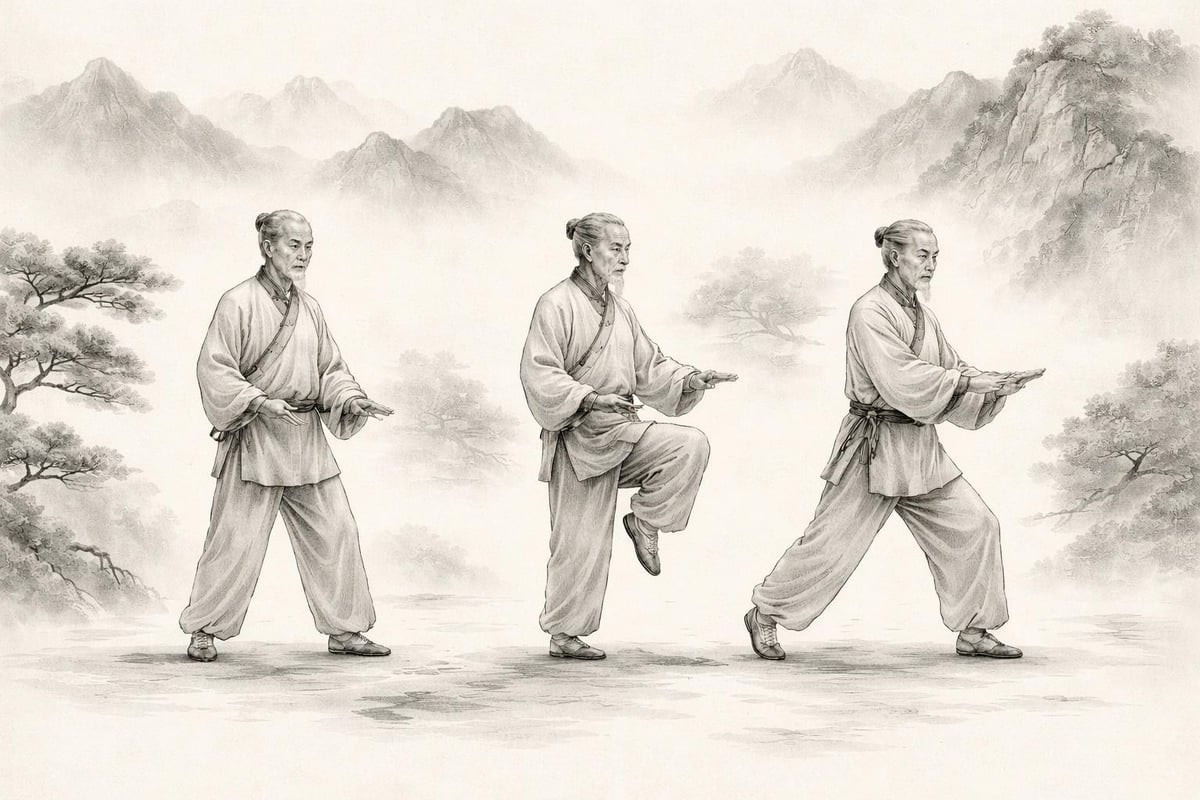
Several core principles guide effective tai chi walking:
-
Rootedness: Each foot connects fully to the ground before moving
-
Slowness: Movements are deliberate, giving you time to notice imbalances
-
Continuity: One step flows into the next without stopping or jerking
-
Mindfulness: Your attention stays with the physical sensations of movement
-
Softness: Muscles remain relaxed, not tense or rigid
These principles work together to create a practice that improves balance, flexibility, and strength while calming the mind. Research shows that tai chi-based practices offer measurable benefits for people of all ages and fitness levels.
Health Benefits That Extend Beyond Balance
The benefits of tai chi walking reach into multiple dimensions of wellness. Physical improvements are often the most noticeable, but the mental and emotional gains can be just as transformative.
Physical Advantages
Your body responds to tai chi walking in several beneficial ways:
|
Benefit Category |
Specific Improvements |
Time to Notice |
|---|---|---|
|
Balance |
Improved proprioception, reduced fall risk |
4-6 weeks |
|
Strength |
Enhanced leg stability, core engagement |
6-8 weeks |
|
Flexibility |
Increased ankle mobility, hip range of motion |
3-4 weeks |
|
Cardiovascular |
Better circulation, mild aerobic benefit |
8-12 weeks |
Studies have found that tai chi training significantly enhances walking ability, particularly for older adults who may struggle with balance or coordination. The slow, controlled movements build muscular endurance without the joint stress of high-impact exercise.
The practice also addresses posture. Many of us slouch or lean forward when we walk, creating tension in our backs and necks. Tai chi walking trains you to maintain an upright, aligned spine, which reduces strain and helps you move with greater efficiency.
Mental and Emotional Wellness
Beyond the physical, tai chi walking cultivates mental clarity and emotional balance. The focused attention required naturally quiets mental chatter. You're not thinking about your to-do list when you're concentrating on how your weight shifts from heel to toe.
This moving meditation reduces stress hormones and activates the parasympathetic nervous system-your body's rest-and-digest mode. Regular practice can help manage anxiety, improve mood, and enhance overall emotional resilience.
Getting Started with Your Practice
Beginning tai chi walking doesn't require special equipment or a gym membership. You need comfortable clothing, a safe space to walk, and a willingness to move slowly.
Your First Steps
Start with just five to ten minutes. Quality matters far more than quantity, especially as you're learning.
-
Find your stance: Stand with feet hip-width apart, knees slightly bent
-
Center yourself: Take three deep breaths, settling your awareness in your lower abdomen
-
Shift your weight: Move all your weight onto your left foot, keeping your right foot lightly touching the ground
-
Step mindfully: Lift your right foot and place it heel-first in front of you
-
Transfer completely: Gradually shift your weight forward until your right foot supports you fully
-
Repeat: Continue this pattern, maintaining slow, deliberate movement
Follow along with this beginner's tutorial by our co-founder George now:
Your breathing should remain natural and relaxed. Some practitioners coordinate breath with steps-inhaling as they shift weight, exhaling as they step-but this isn't required initially. Let your breath find its own rhythm.
If you're looking for more guidance, why not try our free Feel Better in 7 Days with Tai Chi Walking course, designed specifically for beginners to learn this wonderful practice!
Common Mistakes to Avoid
Even experienced practitioners sometimes fall into unhelpful patterns:
-
Rushing: Moving too quickly defeats the purpose of mindful movement
-
Holding your breath: Tension creeps in when breathing stops
-
Leaning forward: Keep your torso upright, not tipping toward the front foot
-
Double-weighting: Avoid having weight on both feet simultaneously during transitions
-
Locking knees: Maintain a soft bend throughout the practice
If you notice any of these patterns, simply acknowledge them without judgment and gently correct. This is practice, not perfection.
Variations and Advanced Techniques
Once you've established a basic tai chi walking practice, several variations can deepen your experience and challenge your skills.
Direction and Pattern Changes
Basic forward walking is just the beginning. You can practice:
-
Backward walking: Increases proprioception and challenges balance differently
-
Lateral stepping: Strengthens different muscle groups and improves agility
-
Circle walking: Common in certain tai chi styles, this creates continuous turning
-
Figure-eight patterns: Adds complexity and spatial awareness
Each variation emphasizes different aspects of balance and coordination. Tai chi walking for beginners typically focuses on straight-line forward movement before exploring these alternatives.
Arm Coordination
Adding arm movements transforms tai chi walking into a fuller body practice:
-
Natural swing: Let arms swing gently in opposition to legs
-
Qi gong arm positions: Raise arms to specific heights while stepping
-
Holding the ball: Maintain a sphere-holding position with both hands
-
Cloud hands walking: Integrate the classic tai chi cloud hands movement with steps
These additions require more coordination but also engage your upper body and enhance the meditative quality of the practice. If you're exploring tai chi courses that include walking forms, you'll likely encounter several of these variations.
Integrating Tai Chi Walking into Daily Life
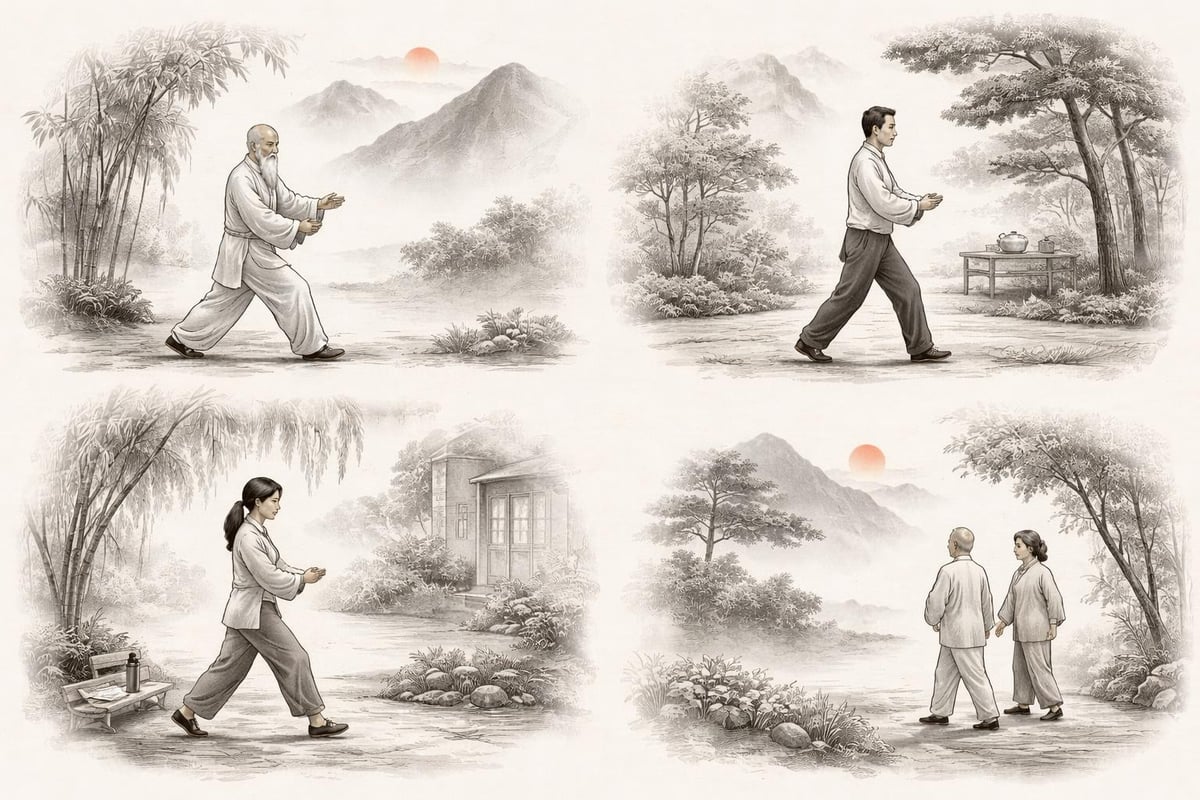
The beauty of tai chi walking lies in its accessibility. You don't need to set aside special time in a dedicated practice space, though that certainly helps. This practice can weave into your existing routine.
Practical Integration Strategies
Consider these approaches to make tai chi walking a regular part of your life:
Morning routine: Replace your first few minutes of walking the dog or getting the mail with mindful tai chi steps. This sets a calm, centered tone for the day.
Work breaks: A few minutes of tai chi walking during lunch or afternoon breaks can reset your energy and clear mental fog.
Evening wind-down: Use tai chi walking as a transition between your work day and personal time, helping you shed stress and arrive fully present for family or leisure activities.
Nature connection: Practice outdoors when possible - natural settings really do enhance the meditative benefits of this practice.
Creating Supportive Habits
Building a sustainable practice requires some structure:
|
Strategy |
Description |
Success Rate |
|---|---|---|
|
Same time daily |
Practice at a consistent hour |
High |
|
Accountability partner |
Share progress with a friend |
Medium-High |
|
Progress journal |
Track sensations and improvements |
Medium |
|
Join a community |
Connect with other practitioners |
Very High |
Our Taoist Wellness Online community offers connection with fellow students who can share experiences, offer encouragement, and inspire consistency in your practice.
Addressing Specific Health Concerns
Tai chi walking offers particular benefits for people dealing with certain health challenges. Its low-impact nature makes it accessible even when other forms of exercise aren't feasible.
Balance Issues and Fall Prevention
Falls are a serious concern, particularly for older adults. Research shows that tai chi enhances strength and reduces fall risk, making tai chi walking an excellent preventive practice.
The slow, controlled movements train your body to recover from small imbalances before they become falls. You develop what practitioners call "listening"-an enhanced awareness of your body's position in space and its relationship to gravity.
Chronic Pain Management
For those managing arthritis, fibromyalgia, or other chronic pain conditions, high-impact exercise often aggravates symptoms. Tai chi walking provides movement without jarring or stressing joints.
The gentle nature of the practice can actually reduce pain over time by:
-
Improving circulation to affected areas
-
Strengthening supporting muscles
-
Increasing synovial fluid production in joints
-
Reducing inflammation through stress reduction
Mental Health Support
Movement practices like tai chi walking serve as powerful tools for managing anxiety, depression, and stress-related conditions. The combination of physical movement, focused attention, and rhythmic breathing activates multiple pathways to improved mental health.
Unlike intense exercise that can sometimes increase anxiety in sensitive individuals, tai chi walking soothes the nervous system while still providing the mood-boosting benefits of movement.
Deepening Your Understanding Through Study
While you can begin tai chi walking on your own, studying with experienced teachers accelerates your progress and helps you avoid developing unhelpful habits.
Learning from Authentic Sources
Traditional tai chi comes from Taoist practice, and learning from teachers who understand this lineage provides context that purely physical instruction misses. Our founder here at Taoist Wellness Online, Master Gu brings authentic Wudang Mountain training to his teaching, connecting the physical practice to its philosophical roots.
This deeper understanding transforms tai chi walking from mere exercise into a genuine cultivation practice-what Taoists call yang sheng, or "nourishing life."
Resources for Continued Learning
Several pathways support ongoing development:
-
Video tutorials: Visual instruction helps you understand proper form. Why not follow along with our co-founder George Thompson here
-
Live sessions: Real-time feedback corrects errors before they become habits
-
Written materials: Books and articles on blogs such as ours will help deepen theoretical understanding
-
In-person workshops: Intensive study periods accelerate learning
-
Online courses: A comprehensive curriculum like ours at Taoist Wellness Online can guide systematic progression
Many students find that combining resources works best. You might follow video instruction for daily practice, attend monthly live sessions for feedback, and read about theory to contextualize what you're experiencing physically.
Measuring Progress and Setting Intentions
Unlike many fitness practices that focus on measurable external achievements-speed, distance, weight lifted-tai chi walking emphasizes internal qualities that aren't always easy to quantify.
Internal Markers of Development
Pay attention to these signs of progress:
-
Increased stability: You feel more grounded during practice and daily activities
-
Mental quiet: Your mind wanders less during practice
-
Smoother transitions: Weight shifts feel continuous rather than choppy
-
Natural breathing: Breath flows easily without conscious control
-
Enhanced awareness: You notice subtle sensations you previously missed
These improvements develop gradually. Some practitioners notice changes within weeks, while others need months of consistent practice.
External Indicators
You might also observe:
|
Area |
Improvement |
Typical Timeline |
|---|---|---|
|
Balance tests |
Longer single-leg stands |
6-8 weeks |
|
Flexibility |
Greater range of motion |
4-6 weeks |
|
Walking speed |
More efficient gait |
8-10 weeks |
|
Posture |
Better alignment |
3-5 weeks |
Keep expectations reasonable. This isn't a quick-fix practice. The benefits accumulate through regular, sustained effort.
Seasonal and Environmental Considerations
Your practice can and should adapt to changing conditions. Taoist philosophy emphasizes harmony with natural cycles, and your tai chi walking can reflect this wisdom.
Practicing Through the Seasons
Each season offers unique opportunities and challenges:
Spring: Longer days and warming weather invite outdoor practice. Focus on renewal and fresh energy in your movements.
Summer: Early morning or evening sessions avoid heat. Emphasize fluidity and ease to prevent overheating.
Fall: Cooler temperatures provide ideal conditions for longer practice sessions. Reflect the season's inward-turning energy.
Winter: Indoor practice may be necessary in harsh climates. Shorter, more focused sessions maintain consistency without exposure to dangerous cold.
Indoor Versus Outdoor Practice
Both settings have merit. Indoor practice eliminates weather variables and provides privacy for beginners who feel self-conscious. Outdoor practice connects you with nature's rhythms and provides varied terrain that challenges balance differently than flat, even floors.
Many practitioners maintain both options, choosing based on weather, time available, and personal energy levels.
Building a Supportive Practice Environment
Your practice space-whether a corner of your living room or a park path-influences your experience. Creating the right environment supports consistency and depth.
Physical Space Considerations
Choose locations that offer:
-
Sufficient length: At least 10-15 feet of unobstructed walking space
-
Stable surface: Even ground without trip hazards
-
Good lighting: Enough visibility to be aware of your surroundings
-
Minimal distractions: Reduced noise and visual interruptions
-
Pleasant temperature: Comfortable enough to move without tension
You don't need much space. A hallway, cleared living room, or quiet section of a park all work well.
Mental and Emotional Space
Physical environment matters, but so does mental preparation. Before beginning:
-
Set aside concerns about performance or achievement
-
Release expectations about how you "should" feel
-
Acknowledge that some days will feel easier than others
-
Commit to showing up regardless of mood or motivation
-
Remember that the practice itself is the goal, not some future outcome
This attitude of non-striving paradoxically leads to the deepest progress.
Connecting with Broader Tai Chi Practice
Tai chi walking serves as both a standalone practice and a complement to fuller tai chi forms. Many students discover tai chi walking first, then explore more comprehensive training.
How Walking Relates to Forms
Traditional tai chi forms-sequences of connected movements-include stepping patterns similar to tai chi walking. The walking practice isolates and refines these transitions, making them more accessible for detailed study.
When you eventually learn forms, your tai chi walking experience provides a foundation. You already understand weight shifting, rooting, and continuous movement. The forms simply expand these principles into more complex patterns.
Complementary Practices
Tai chi walking pairs well with:
-
Qi gong: Standing and moving exercises that cultivate energy
-
Meditation: Seated practices that train sustained attention
-
Taoist philosophy: Study that provides context and deeper meaning
-
Breathwork: Techniques that enhance the breath-movement connection
Tai chi walking is a simple but powerful way to bring more balance, awareness, and calm into the way you move through daily life. If you’d like to explore practices like this with authentic guidance, join us inside the Taoist Wellness Online Academy, where you’ll find Tai Chi, Qi Gong, meditation, and Taoist wisdom to support your journey toward greater strength, stillness, and wellbeing.