Origin of Taoism: Ancient Roots of a Living Tradition
Sep 18, 2026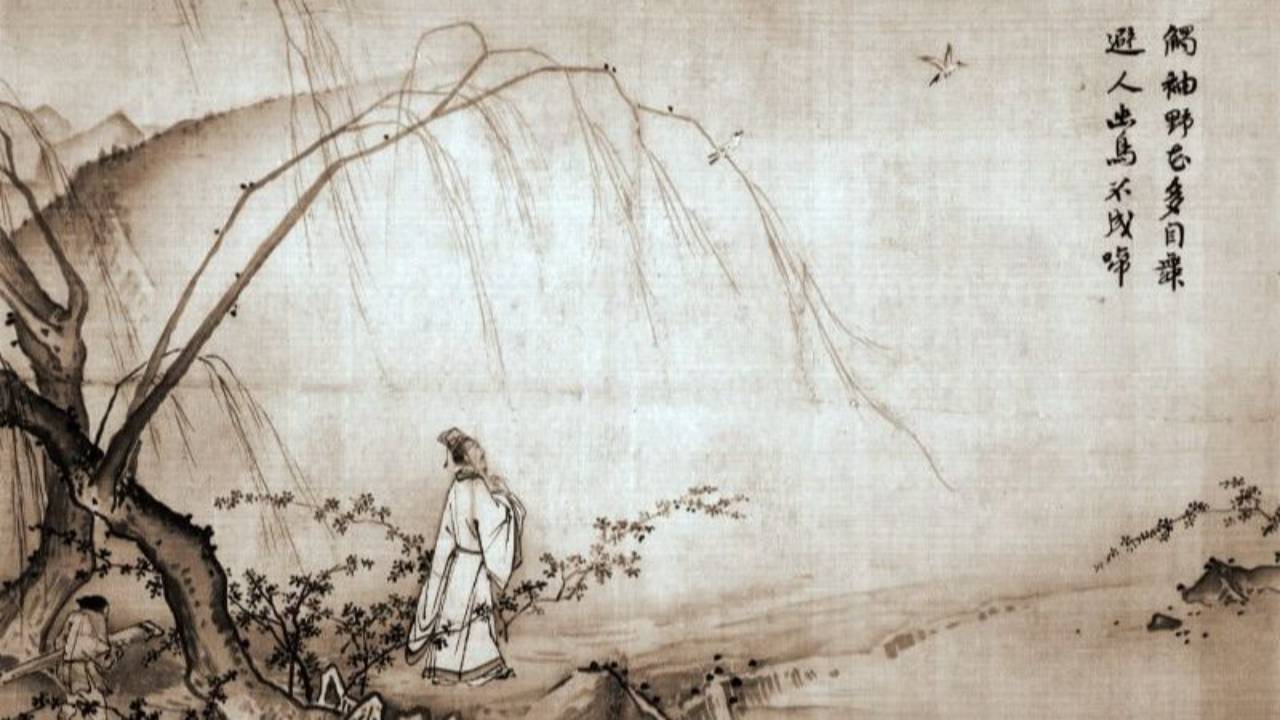
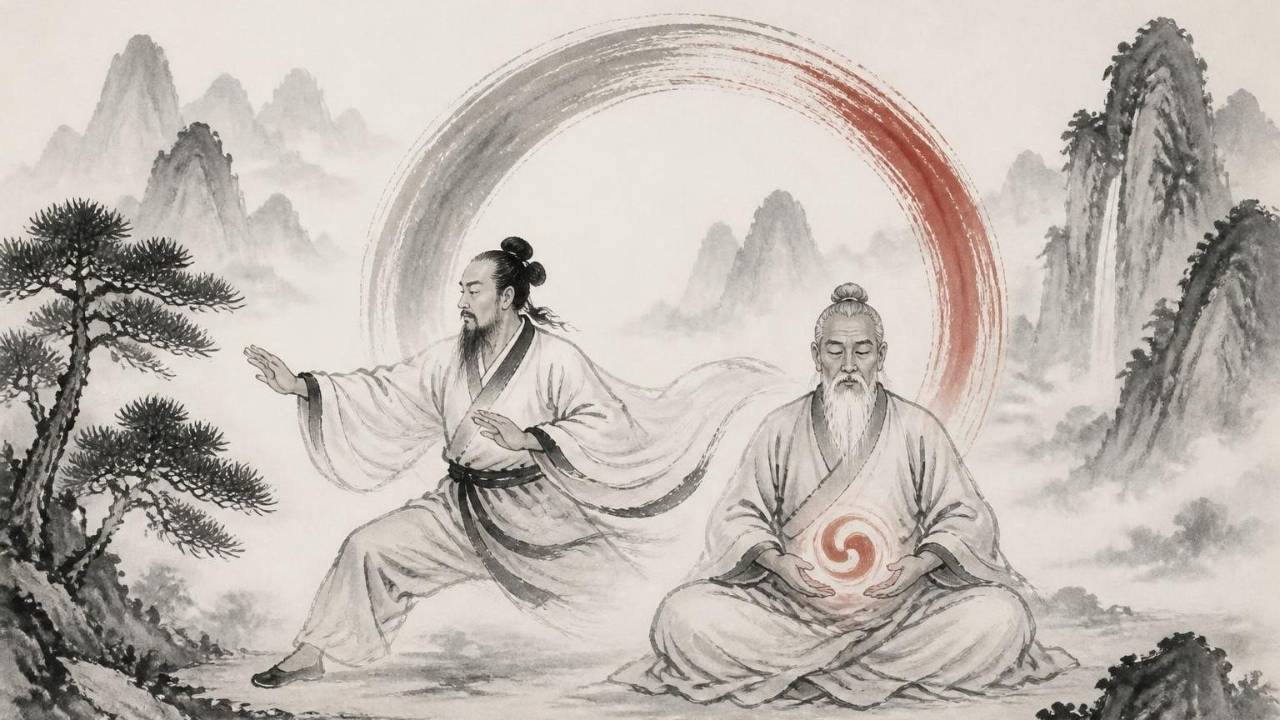
The origin of Taoism stretches back thousands of years into the mist of Chinese history, where philosophy, spirituality, and practical wisdom merged into one of the world's most enduring traditions. Unlike religions with a single founding moment or prophet, Taoism emerged gradually, weaving together folk beliefs, shamanic practices, and philosophical insights that spoke to the human search for harmony with the natural world. Understanding where this path began helps us appreciate the practices we engage with today, from Tai Chi's flowing movements to meditation's quiet stillness.
The Legendary Beginnings and Historical Context
The origin of Taoism is often traced to the legendary figure of Laozi (also spelled Lao-tzu), traditionally dated to the 6th century BCE. According to traditional accounts, Laozi served as an archivist in the Zhou dynasty court before growing disillusioned with society's corruption and choosing to leave civilisation behind.
The famous story tells how, as Laozi reached the western border of China riding a water buffalo, the gatekeeper Yin Xi recognised his wisdom and asked him to record his teachings before departing. In response, Laozi composed the Daodejing (Tao Te Ching), a brief text of roughly 5,000 Chinese characters that would become Taoism's foundational scripture.
Master Gu tells this very story from the Lao Tze temple in the Wudang Mountains in the video below.
Historical evidence paints a more complex picture. Modern scholars suggest the Daodejing was likely compiled over time by multiple authors, with the text taking shape between the 4th and 3rd centuries BCE rather than emerging fully formed from a single sage.
The Warring States Period and Philosophical Ferment
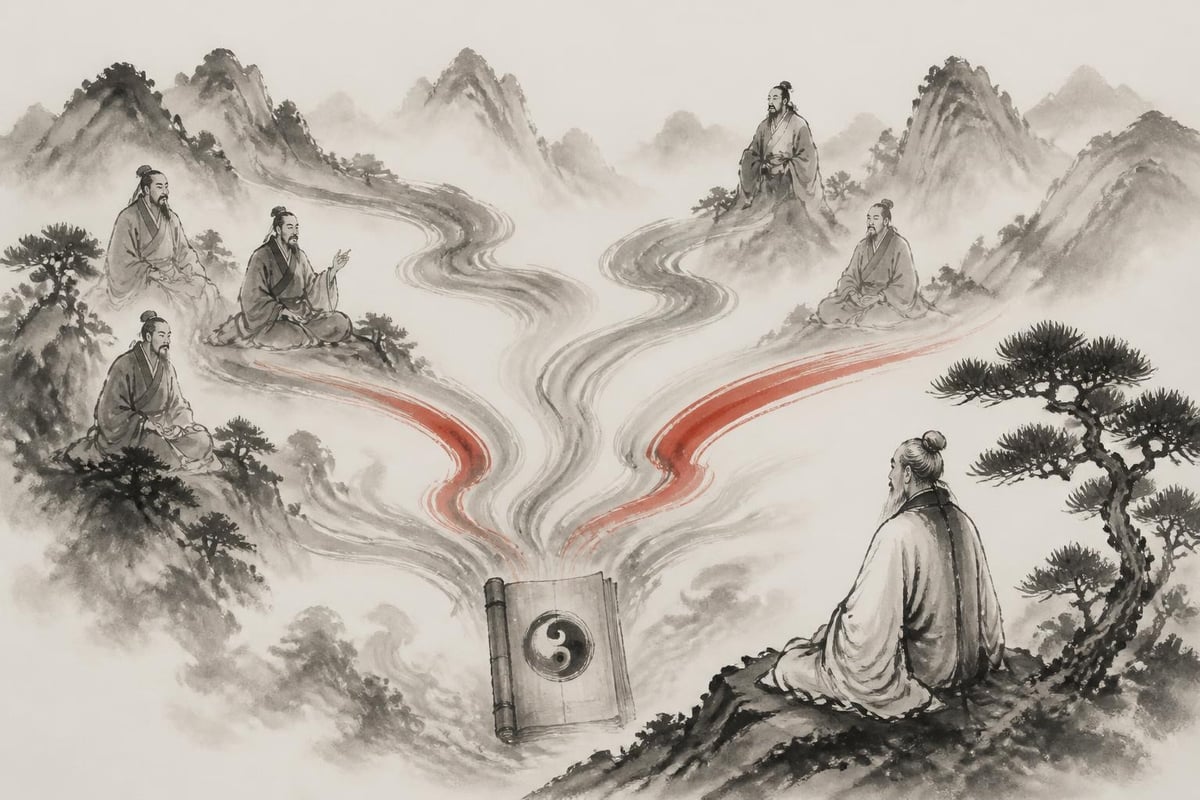
The origin of Taoism must be understood within the context of the Warring States period (475–221 BCE), an era of intense political fragmentation and philosophical creativity in ancient China. During this tumultuous time, numerous schools of thought emerged, each offering solutions to social chaos and moral questions.
Taoism arose alongside Confucianism, Legalism, and other philosophical movements, but distinguished itself through its emphasis on:
- Wu wei (effortless action or non-forcing)
- Naturalness over artificial social constructs
- Spontaneity rather than rigid ritual
- Harmony with the Dao (the Way) as the ultimate principle
While Confucians focused on social hierarchy and ritual propriety, early Taoist thinkers championed simplicity, humility, and alignment with nature's rhythms. This philosophical distinction shaped how Taoism would develop over the following centuries. Our article Taoism vs Confucianism explores this contrast in more depth if you'd like to understand it further.
The Sacred Texts and Their Formation
Understanding the origin of Taoism requires examining the texts that preserve its earliest teachings. Two works stand as philosophical pillars: the Daodejing and the Zhuangzi.
The Daodejing: Layers of Wisdom
The Daodejing (Classic of the Way and Its Power) presents profound paradoxes and poetic insights in remarkably condensed form. Its 81 short chapters explore the nature of the Dao, the virtue of yielding, and the power found in emptiness and stillness.
Archaeological discoveries have transformed our understanding of this text's formation. The Mawangdui silk manuscripts, discovered in 1973, and the Guodian bamboo slips, unearthed in 1993, provide versions of the Daodejing that predate the standard received text by centuries. These finds revealed significant variations in wording and chapter arrangement.
| Manuscript Discovery | Date | Significance |
|---|---|---|
| Guodian bamboo slips | c. 300 BCE | Oldest known version, showing textual fluidity |
| Mawangdui silk texts | c. 168 BCE | Two complete versions with reversed chapter order |
| Wang Bi edition | 3rd century CE | Standard received text used for centuries |
The variations among these versions demonstrate that the Daodejing evolved organically rather than appearing as a fixed revelation. This textual fluidity itself reflects Taoist principles of change and adaptation.
The Zhuangzi: Philosophical Exploration
The second pillar of early Taoist thought, the Zhuangzi, takes its name from the philosopher Zhuang Zhou (c. 369–286 BCE). This text employs humour, paradox, and imaginative storytelling to challenge conventional thinking and illustrate Taoist principles.
The Zhuangzi expands on themes introduced in the Daodejing through memorable parables and dialogues. Its most famous passages include the butterfly dream (questioning the nature of reality and identity) and discussions of the skilled butcher and wheelwright (illustrating the perfection found in harmonious, intuitive action).
Scholars generally agree that the "Inner Chapters" of the Zhuangzi (chapters 1-7) represent the work of Zhuangzi himself, while later chapters were added by his disciples and followers over subsequent centuries.
From Philosophy to Organised Religion
The origin of Taoism as philosophy differs significantly from its development into organised religion. This transformation represents one of the tradition's most fascinating evolutionary stages.
During the Han dynasty (206 BCE–220 CE), Taoist philosophy began merging with folk religious practices, immortality cults, and shamanic traditions already present in Chinese culture. The search for longevity and immortality became central concerns, leading to the development of:
- Alchemical practices (both external and internal)
- Breathing and meditation techniques
- Dietary regimens and herbal medicine
- Physical cultivation methods including early forms of Qi Gong
The Celestial Masters movement, founded by Zhang Daoling in 142 CE, marks the first organised Taoist religious community. This school established a hierarchical priesthood, community governance structures, and ritual practices that transformed Taoism from individual philosophical pursuit into communal religious expression. Our article Taoist Rituals traces how these traditions and customs have evolved since.
The Role of Immortality Seekers
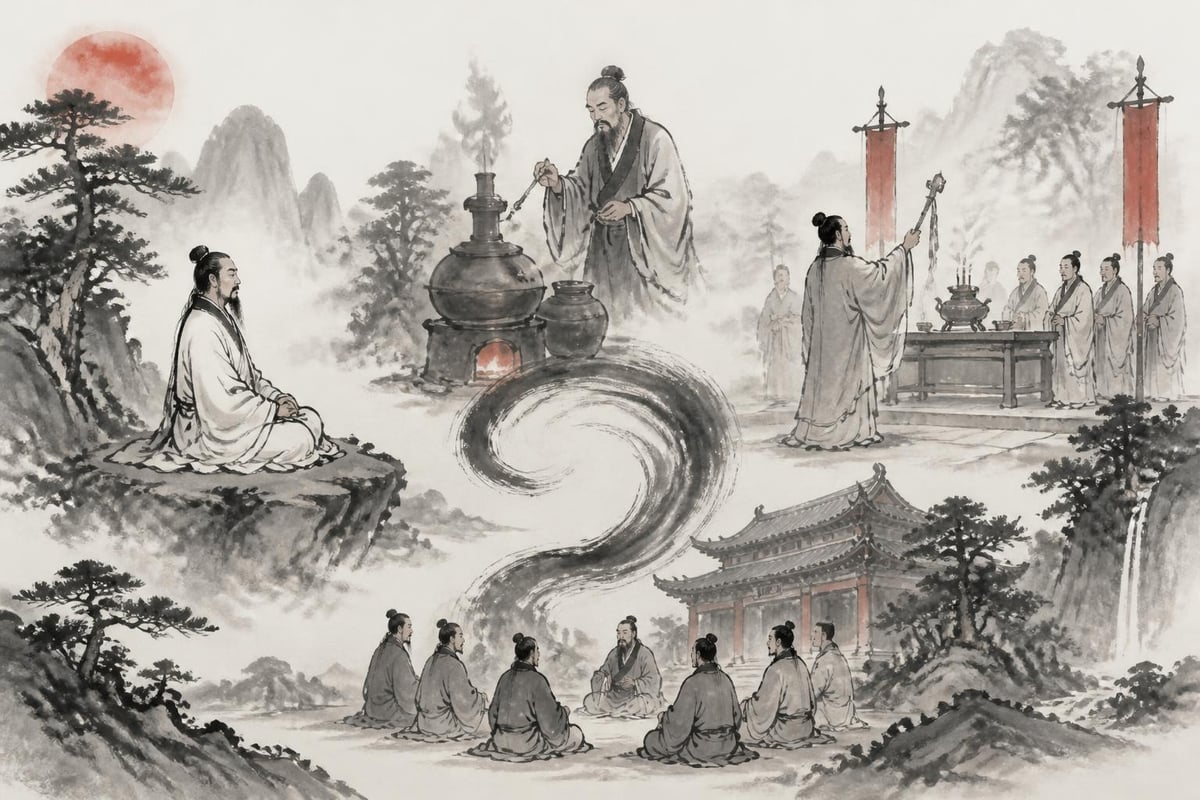
The quest for immortality deeply influenced the origin of Taoism as a religious system. Early practitioners believed that through correct practices, one could refine the body and spirit, eventually achieving physical immortality or transcendence.
This pursuit led to sophisticated developments:
- External alchemy (waidan) sought to create elixirs of immortality through mineral and herbal compounds
- Internal alchemy (neidan) focused on cultivating internal energies through meditation and breath work
- Physical practices refined the body through movement, diet, and energy cultivation
- Spiritual cultivation developed the heart-mind through meditation and philosophical study
These varied approaches to longevity and spiritual development laid the groundwork for practices we recognise today, including the Wudang forms of Tai Chi and Qi Gong that emphasise internal energy cultivation and harmonious movement.
The Wudang Mountain Tradition
The origin of Taoism includes multiple lineages and schools, but the Wudang tradition holds special significance for understanding how Taoist philosophy manifests in physical practice. The Wudang Mountains in Hubei Province became a centre for Taoist cultivation, particularly during the Song and Ming dynasties.
Legend attributes many Wudang martial and meditative arts to Zhang Sanfeng, a semi-legendary Taoist immortal said to have lived during the Song or Ming dynasty. Whether historical or mythological, Zhang Sanfeng represents the ideal of the complete Taoist practitioner who integrated martial skill, meditation, and philosophical understanding.
The Wudang approach emphasises internal cultivation over external force, mirroring the Daodejing's teaching that "the softest things in the world overcome the hardest." This principle infuses Wudang Tai Chi and Qi Gong with their characteristic qualities of flowing movement, internal energy awareness, and meditative focus.
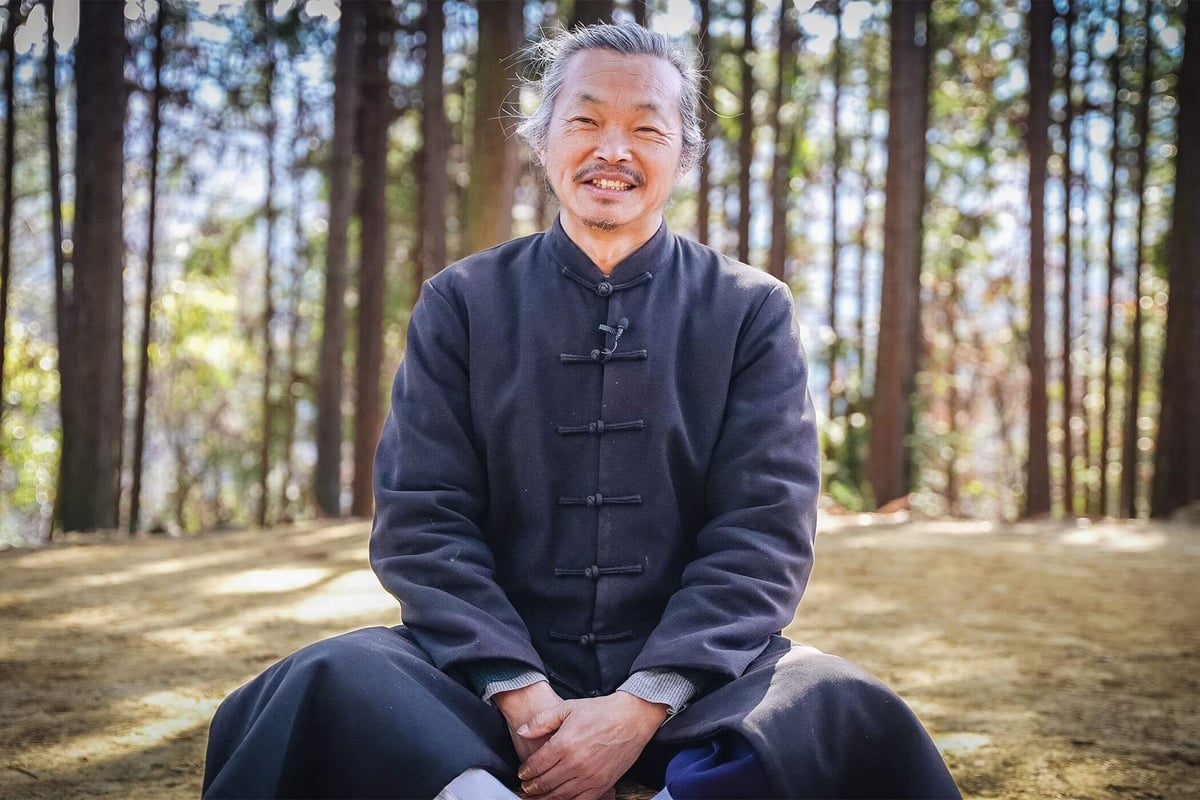
Those seeking to experience these authentic practices can explore how traditional teachings are preserved and shared through dedicated study. Our Taoist Wellness Academy Online Membership offers access to authentic Wudang teachings under the guidance of Master Gu, a 15th-generation Wudang master, bringing these ancient practices into accessible modern format.
Key Principles Established in Early Taoism
The origin of Taoism established several core principles that remain central to the tradition today, whether in philosophical study or physical practice.
The Dao: The Way Beyond Words
The Daodejing opens with the paradox: "The Dao that can be spoken is not the eternal Dao." This acknowledgment that ultimate reality transcends conceptual understanding runs through all Taoist thought. The Dao represents the source and pattern of all existence, the natural order underlying apparent chaos.
Rather than defining the Dao, early texts pointed toward it through metaphor:
- The uncarved block (simplicity and potential)
- The valley (receptivity and nourishment)
- Water (yielding strength and adaptability)
- The mysterious female (the gateway of creation)
Wu Wei: Effortless Action
Wu wei doesn't mean complete inaction but rather action aligned with natural rhythms, free from forcing or straining. It describes the state where effort becomes effortless, like water flowing downhill or a skilled craftsman working with the grain of wood rather than against it.
This principle deeply influences Wudang Tai Chi practice, where movements emerge from internal stillness and flow naturally from one form to the next without muscular forcing. Our Tai Chi course is a good place to experience this principle directly, rather than just read about it.
Yin and Yang: Complementary Opposites
While predating systematic Taoism, the concept of yin and yang became central to Taoist cosmology and practice. This recognition that apparent opposites (dark/light, soft/hard, passive/active) form complementary aspects of a unified whole informs everything from Taoist philosophy to movement arts.
| Concept | Application in Practice | Philosophical Meaning |
|---|---|---|
| Wu wei | Moving without forcing in Tai Chi | Alignment with natural flow |
| Yin-Yang | Balancing stillness and movement | Unity within apparent duality |
| Ziran (naturalness) | Breathing naturally in meditation | Return to original nature |
| De (virtue/power) | Cultivating internal energy | Natural excellence arising from the Dao |
Archaeological Evidence and Modern Understanding
Modern scholarship has significantly refined our understanding of the origin of Taoism through archaeological discoveries and textual analysis. The manuscript finds at Mawangdui and Guodian didn't just provide earlier versions of known texts, they revealed a more diverse early Taoist landscape than previously imagined.
These discoveries showed that multiple versions of key texts circulated simultaneously in ancient China, and that the boundaries between "Taoist" and other philosophical schools were more fluid than later categorisations suggested. Early Taoist thought drew from and influenced other traditions in an ongoing philosophical conversation.
Scholarship in this area emphasises:
- The gradual compilation of core texts over centuries
- The integration of various pre-existing practices and beliefs
- Regional variations in early Taoist communities
- The dynamic interaction between elite philosophical discourse and popular religious practice
This scholarly work doesn't diminish Taoism's wisdom but enriches our appreciation for how profound insights emerged from China's cultural and intellectual ferment.
Living Tradition: From Ancient Origins to Modern Practice
The origin of Taoism set patterns that continue shaping practice today. When we move through Tai Chi forms, sit in meditation, or study Taoist philosophy, we participate in a living tradition that has evolved continuously while maintaining connection to its ancient roots.
The Wudang lineage exemplifies this continuity. Masters pass teachings to dedicated students across generations, preserving not just techniques but the spirit of cultivation and the understanding that physical practice serves spiritual development. This transmission ensures that ancient wisdom remains accessible and relevant.
Modern practitioners benefit from both preservation and adaptation. The core principles established in the origin of Taoism remain constant, even as teaching methods evolve to meet contemporary needs. Online learning platforms now make authentic teachings available globally, connecting students with traditional masters regardless of geographic boundaries.
For those beginning to explore these practices, understanding Taoism's origins provides valuable context. The tradition didn't emerge as a rigid system but as a flexible path emphasising natural harmony, personal cultivation, and alignment with deeper patterns. This same flexibility allows Taoist practices to address modern challenges while maintaining their essential character.
Our community of practitioners studying Taoist arts today continues a conversation begun millennia ago, asking the same fundamental questions about how to live well, cultivate health and vitality, and align with the natural way. If you'd like a gentle way to begin, our free Taoist course covers Tai Chi, Qi Gong, Meditation, and Taoist Wisdom.
The Synthesis of Thought and Practice
What makes the origin of Taoism particularly relevant for modern practitioners is how it unified philosophical insight with practical application from the beginning. The tradition never separated theory from practice or body from spirit.
Early Taoist texts don't just present abstract philosophy; they offer guidance for living. The Daodejing's teachings on yielding strength and the power of softness directly inform Tai Chi's martial applications. The Zhuangzi's emphasis on skill developed through patient practice resonates in Qi Gong's cultivation methods.
This integration means that studying our Taoist Philosophy course naturally complements and deepens physical practice, while movement arts provide embodied experience of philosophical principles. Understanding the origin of Taoism helps practitioners recognise these connections and approach their practice with greater depth and intention.
The tradition's ancient origins don't make it outdated. Rather, the fundamental patterns observed by early Taoist sages, the rhythms of nature, the principle of balance, the power of stillness within movement, remain as relevant today as they were three thousand years ago. Human nature and the natural world follow the same essential patterns our ancestors recognised and encoded in practice and text.
Understanding the origin of Taoism reveals a rich tradition that emerged gradually from ancient China's philosophical ferment, evolved through organised religious development, and continues thriving today in authentic lineages. Whether you're drawn to the flowing movements of Tai Chi, the quiet cultivation of meditation, or the profound insights of Taoist philosophy, these practices connect you to wisdom tested across millennia. Taoist Wellness Online offers a comprehensive path to explore these transformative practices under the guidance of Master Gu, an authentic 15th-generation Wudang master, bringing ancient wisdom into accessible modern form for students worldwide seeking balance, vitality, and deeper understanding.