Best Books on Taoism: Essential Reading Guide 2026
Sep 20, 2026
Finding the best books on Taoism can feel overwhelming when you're standing in front of endless translations, interpretations, and commentaries. Whether you're just beginning your journey or deepening a long-standing practice, the right book becomes a companion, offering wisdom that meets you exactly where you are. This guide helps you navigate the essential texts that have guided practitioners for centuries, alongside modern works that make ancient teachings accessible and immediately useful today.
Understanding the Foundations: Why the Right Books Matter
Reading about Taoism is different from reading about philosophy or religion in the abstract sense. These texts aren't just meant to be understood intellectually. They're invitations to practice, to feel, to experience a different way of moving through the world.
The challenge is that translation matters enormously. A single Chinese character can carry layers of meaning that English struggles to capture. Some translators prioritise poetic beauty, others scholarly precision, and still others practical application.
When choosing among the best books on Taoism, consider:
- Your current relationship with Taoist practice (complete beginner, active practitioner, or scholar)
- Whether you're drawn more to philosophy, meditation, movement practices, or all three
- Your reading style (do you prefer poetic language or clear, direct explanations?)
- How you plan to use the book (daily reflection, study, or practice guidance)
The books that follow span these different needs, from foundational classics to practical modern guides.
The Essential Classical Texts
Tao Te Ching: The Heart of Taoist Wisdom
No list of the best books on Taoism would be complete without the Tao Te Ching. Written by Laozi (Lao Tzu) around 2,500 years ago, this slim collection of 81 verses remains startlingly relevant.
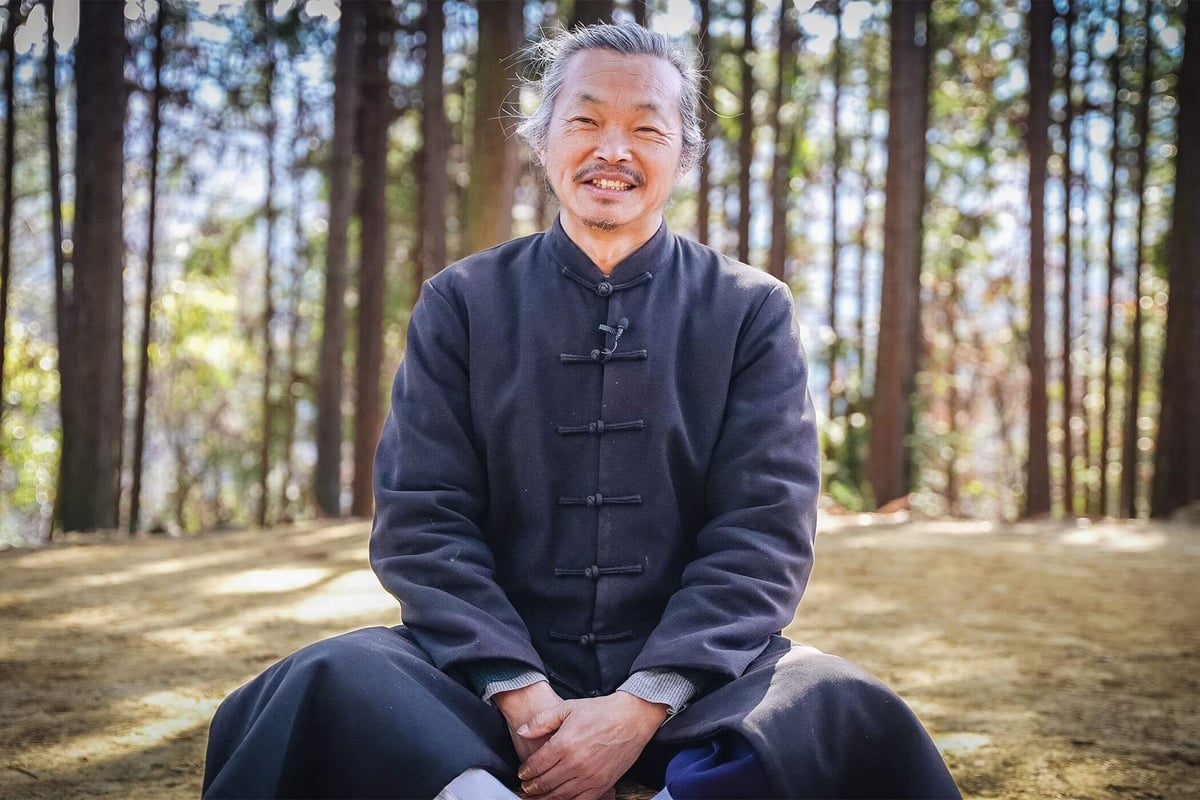
Master Gu shares three essential books for going deeper into Taoism, including this one, in the short video below.
But which translation should you choose? Each translator brings their own understanding, and reading multiple versions often reveals new dimensions of meaning.
| Translation | Strength | Best For |
|---|---|---|
| Stephen Mitchell | Poetic, accessible language | First-time readers, daily reflection |
| Ursula K. Le Guin | Feminist perspective, clear prose | Modern sensibility, gender-conscious readers |
| Derek Lin | Scholarly accuracy with practical notes | Serious students, those interested in Chinese culture |
| Red Pine (Bill Porter) | Includes classical commentaries | Deep study, historical context |
The Tao Te Ching doesn't give you step-by-step instructions. Instead, it works like water, seeping into your understanding gradually. Read a verse in the morning, carry it through your day, and notice what shifts. Our Tao Te Ching Chapter 1 - Explained is a useful starting point if you'd like to see this kind of close reading in practice.
Zhuangzi: Stories That Transform Understanding
The Zhuangzi (Chuang Tzu) takes a completely different approach from the Tao Te Ching. Where Laozi offers concise verses, Zhuangzi tells wild stories, jokes, and paradoxes that crack open your assumptions about reality.
Burton Watson's translation is widely considered among the most readable, capturing Zhuangzi's humour and philosophical depth. The Brook Ziporyn translation offers excellent scholarly notes for those who want to dig deeper into context and meaning.
Reading Zhuangzi feels less like studying and more like having a conversation with a wise friend who occasionally says things that make you laugh out loud, then quietly blow your mind. The famous butterfly dream sequence alone is worth the price of admission.
Modern Interpretations and Practical Guides
Books That Bridge Ancient and Contemporary
While classical texts provide the foundation, modern interpreters help us apply these teachings to today's life. The best books on Taoism from contemporary authors don't water down the tradition; they illuminate it.
Deng Ming-Dao's 365 Tao: Daily Meditations offers a verse for each day of the year, perfect for building a consistent contemplative practice. His writing combines traditional wisdom with observations from nature and daily life.
Eva Wong's work stands out for making esoteric Taoist cultivation practices accessible. Her book Cultivating Stillness presents classical texts on meditation with clear commentary that helps practitioners actually use these teachings.
For those interested in how Taoist philosophy connects to movement practices like Tai Chi and Qi Gong, understanding the theoretical foundation enriches physical training immensely. Our Taoist Philosophy course bridges this gap beautifully, showing how philosophical principles manifest in embodied practice.
The Practical Application Category
Some books focus less on philosophy and more on bringing Taoist principles into your everyday routine. These are the books you'll return to again and again for guidance.
-
"The Tao of Pooh" by Benjamin Hoff remains a delightful introduction that uses Winnie the Pooh stories to explain Taoist concepts. Don't let the whimsy fool you; it's genuinely insightful.
-
"The Way of Chuang Tzu" by Thomas Merton brings a contemplative Christian monk's perspective to Zhuangzi's teachings, showing how wisdom traditions converge.
-
"Chronicles of Tao" by Deng Ming-Dao tells the story of a Taoist master's training in early 20th-century China, offering both narrative and teaching.
Specialised Topics Worth Exploring
Inner Alchemy and Cultivation Practices
Once you've established a foundation, you might feel drawn toward the more esoteric aspects of Taoism. Inner alchemy (neidan) texts describe practices for cultivating energy, refining consciousness, and nurturing vitality.
"Taoist Yoga" by Charles Luk presents classical texts on inner alchemy with detailed commentary. This isn't yoga as Westerners typically understand it, but rather sophisticated energy cultivation practices. The language can be challenging, but the information is invaluable for serious practitioners.
Thomas Cleary's translations of Taoist meditation texts, including The Secret of the Golden Flower and Vitality, Energy, Spirit, offer windows into practices that have been transmitted through generations of masters.
These books work best alongside actual practice. Reading about inner alchemy without cultivating your energy through meditation and movement is like reading cookbooks without ever cooking.
Medicine, Health, and Longevity
Taoist approaches to health and longevity have captivated readers for millennia. These aren't quick-fix health fads but comprehensive systems for nurturing vitality.
- "The Web That Has No Weaver" by Ted Kaptchuk explains Chinese medicine through a Taoist lens, showing how diagnosis and treatment follow natural principles
- "Bone Marrow Washing" by Yang Jwing-Ming explores Qi Gong practices for building internal strength
- Works by Mantak Chia cover a wide range of Taoist health practices, though some find his approach more commercialised than traditional
The connection between Taoist philosophy and physical practice becomes especially clear in these texts. You begin to understand how our Qi Gong and Tai Chi courses aren't just exercises but embodied philosophy.
Academic and Scholarly Resources
For Those Who Want Historical Context
If you're fascinated by how Taoism developed, interacted with Buddhism and Confucianism, and evolved across dynasties, academic works provide essential context.
"Taoism: An Essential Guide" by Eva Wong offers comprehensive historical overview while remaining accessible to non-scholars. It covers philosophical Taoism, religious Taoism, and the relationship between them.
Livia Kohn's works, particularly Daoism and Chinese Culture, provide scholarly rigour with clear writing. She's produced numerous volumes on specific periods and practices within Taoist history.
Understanding the Broader Context
Taoism never existed in isolation. Understanding its dialogue with other traditions enriches your reading.
| Book | Focus | Why It Matters |
|---|---|---|
| "Sources of Chinese Tradition" (de Bary) | Primary source anthology | See Taoist texts alongside Confucian and Buddhist works |
| "The Taoist Experience" (Kohn) | Anthology of Taoist writings | Comprehensive sampling across time periods |
| "Early Daoist Scriptures" (Bokenkamp) | Pre-Tang dynasty texts | Understand how Taoism developed before its classical period |
These scholarly works might not be where you start, but they become invaluable as your interest deepens. They prevent misunderstandings and reveal layers you might miss in popular treatments.
Building Your Personal Taoist Library
Starting Your Collection Strategically
You don't need to buy everything at once. The best books on Taoism for you depend on where you are right now.
If you're completely new:
- Start with the Tao Te Ching (Stephen Mitchell or Ursula K. Le Guin translation)
- Add The Tao of Pooh for an easy, enjoyable introduction
- Consider a modern guide like Deng Ming-Dao's 365 Tao
If you're actively practising Tai Chi or Qi Gong:
- Read Yang Jwing-Ming's works on internal martial arts
- Explore Eva Wong's Cultivating Stillness
- Dive into the Zhuangzi to understand the philosophy behind the movement
If you're drawn to meditation and inner cultivation:
- Study Thomas Cleary's translations of meditation classics
- Read Taoist Yoga carefully and slowly
- Look into Livia Kohn's work on Taoist meditation traditions
Our reading list offers curated recommendations that align with authentic Wudang tradition, helping you avoid books that misrepresent or commercialise these practices. And if you'd rather begin with a guided practice than a book, our free Taoist course covers Tai Chi, Qi Gong, Meditation, and Taoist Wisdom.
How to Read These Books
Taoist texts reward a different kind of reading than most modern books. You're not racing to finish or trying to extract information to use later.
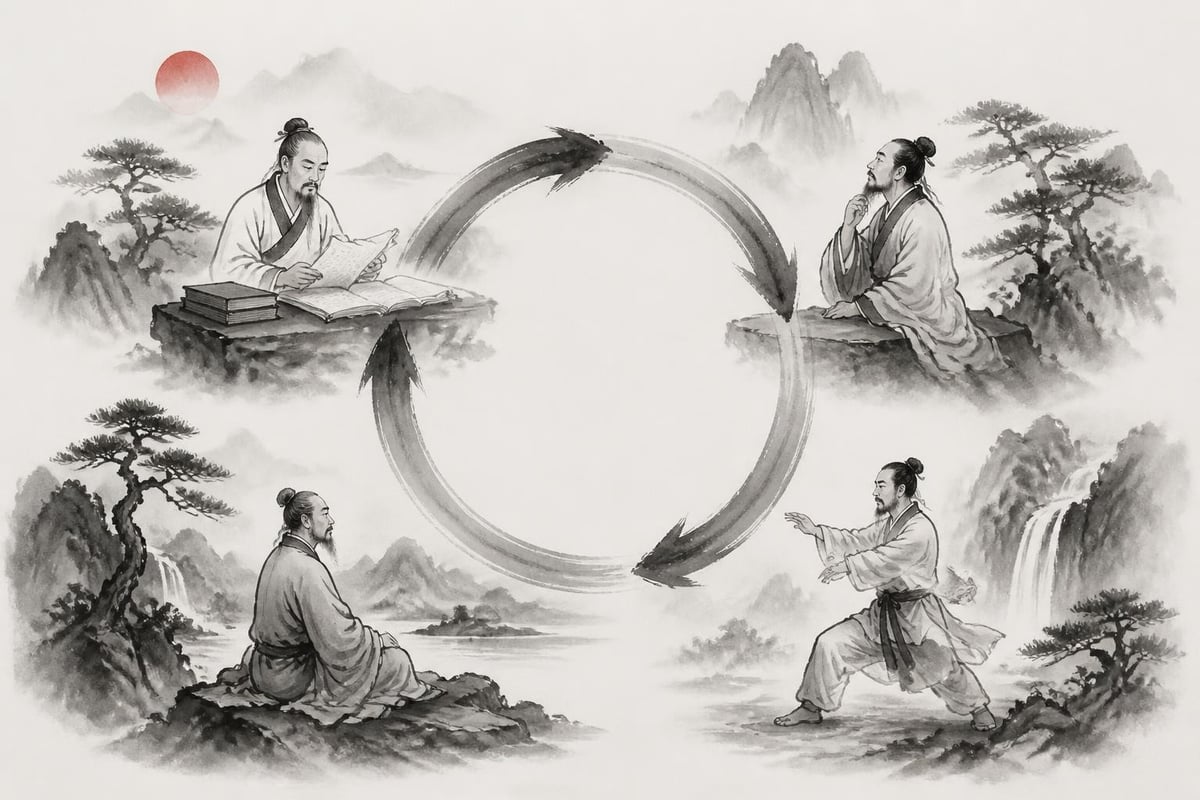
Try reading just one verse or passage in the morning. Carry it with you. Notice when it resonates with something you experience during the day. Let the teaching unfold naturally rather than forcing understanding.
Many practitioners keep a Tao Te Ching by their bedside, opening it randomly each night and seeing what verse appears. Our 20 Best Tao Te Ching Quotes is a good companion for exactly this kind of receptive, unsystematic reading.
Beyond Books: Living the Wisdom
When Reading Becomes Practice
The ultimate goal isn't to have read the most books or to quote verses impressively. It's to embody the wisdom, to move through life with greater ease, clarity, and naturalness.
Books point the way, but the path unfolds in your actual practice. This is where authentic instruction from experienced teachers becomes invaluable. Master Gu, a 15th-generation Wudang master, brings decades of transmitted wisdom that no book alone can provide.
The best books on Taoism create questions and curiosities that practice answers. You read about wu wei (effortless action), but you feel it in your body during Tai Chi. You encounter paradoxes in Zhuangzi, then experience them directly in meditation.
Connecting Text and Tradition
Reading widely helps you appreciate the depth and diversity within Taoist tradition. Not all Taoism is the same. The philosophical Taoism of Laozi and Zhuangzi differs from religious Taoism with its deities and rituals. Southern traditions emphasise different practices than northern schools. Wudang Taoism, which informs the teachings at our Academy, represents a specific lineage with its own characteristics.
Understanding these distinctions through reading prevents confusion and helps you find the approach that resonates with your own nature and needs. Some people are drawn to the intellectual clarity of philosophical texts. Others connect more deeply with devotional practices or internal alchemy.
There's no single correct path, but there is value in going deep rather than wide, especially once you've found what speaks to you.
Avoiding Common Pitfalls
When Books Mislead
Not every book claiming to teach Taoism represents authentic tradition. Some common issues to watch for:
Oversimplification: Books that reduce Taoism to "go with the flow" miss the sophisticated practices and principles that make these teachings transformative.
Cultural appropriation: Some Western authors cherry-pick appealing concepts while ignoring the cultural and historical context that gives them meaning.
Commercialisation: Beware of books promising quick enlightenment, instant health transformations, or secret techniques that masters supposedly don't want you to know.
Mixing traditions carelessly: Some books blend Taoism with Buddhism, New Age ideas, or Western psychology without acknowledging they're doing so, creating confusion about what's actually Taoist.
Look for authors who acknowledge their sources, respect the tradition, and don't promise more than these practices can deliver. The best books on Taoism show humility about what can be transmitted through words alone.
Building Discernment
As you read more, you'll develop a sense for what rings true. Pay attention to:
- Does the author have authentic training or are they synthesising from other books?
- Do they acknowledge the limits of translation and interpretation?
- Is there coherence between philosophical principles and practical instructions?
- Does the book encourage your own direct experience or demand you accept claims on authority?
The Taoist tradition values direct experience and natural verification. Good books encourage you to test teachings in your own life rather than just believing them because they're in print.
The best books on Taoism serve as guides and companions on a journey that ultimately unfolds within you. Start with the classics, explore modern interpretations that resonate, and let your reading deepen your practice rather than replace it. If you're ready to move from reading about these teachings to experiencing them directly through authentic Wudang Tai Chi, Qi Gong, and meditation practices, Taoist Wellness Online offers comprehensive training with Master Gu, bringing ancient wisdom into practical application for modern life.