The Butterfly Dream: Ancient Wisdom for Modern Life
Oct 02, 2026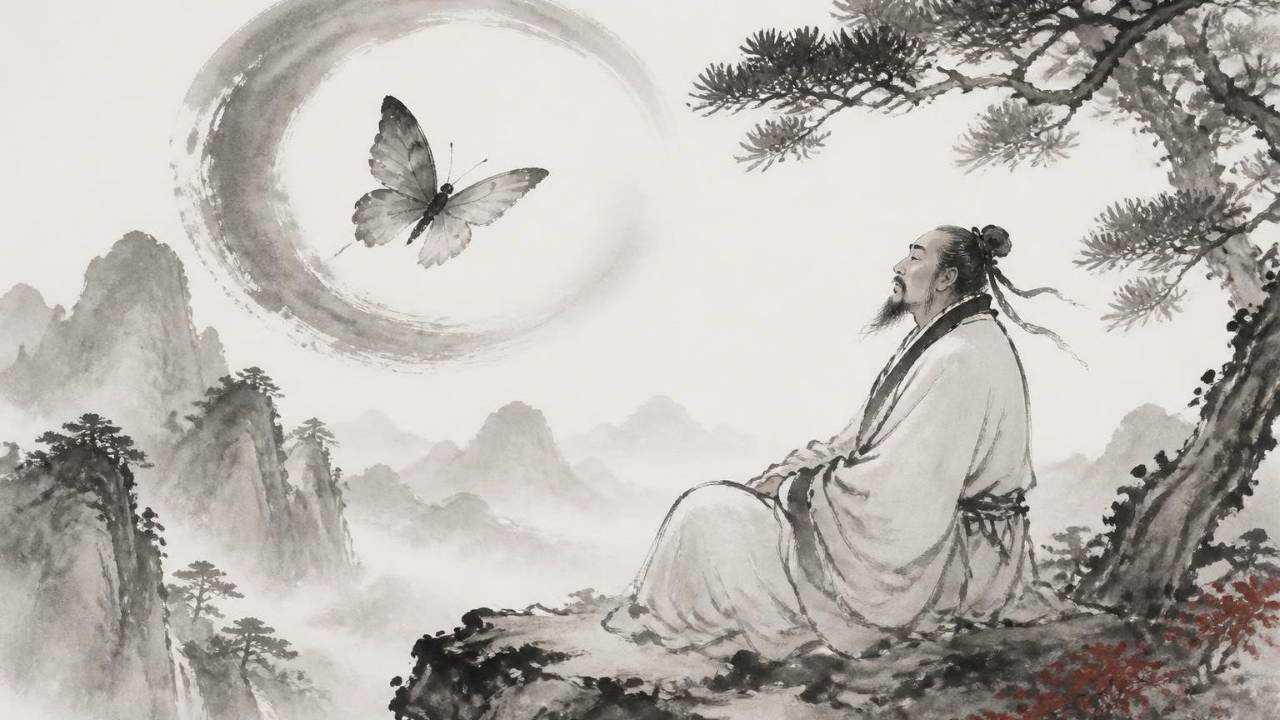
The butterfly dream remains one of the most captivating parables in Taoist philosophy, offering wisdom that feels as fresh today as it did over two thousand years ago. When the ancient sage Zhuangzi woke from a dream where he was a butterfly, he couldn't be certain whether he was a man who had dreamed of being a butterfly, or a butterfly now dreaming of being a man. This simple yet profound question has resonated through centuries, inviting us to reconsider our assumptions about identity, reality, and the nature of transformation itself.
Understanding the Original Butterfly Dream Parable
The butterfly dream appears in the second chapter of the Zhuangzi text, a foundational work of Taoist philosophy. In this brief passage, Zhuangzi describes dreaming that he was a butterfly, fluttering about happily and completely unaware of being Zhuangzi. Upon waking, he found himself confused about his true nature.
The Text and Its Context
The original passage is deceptively simple. Zhuangzi recounts experiencing complete identification with being a butterfly, feeling the freedom and lightness of flight, with no memory of his human identity. When he suddenly awakened, he was confronted with a puzzle: which state was real?
Key elements of the parable include:
- Complete immersion in the dream state
- Total identification with the butterfly's experience
- Sudden awakening and disorientation
- The philosophical question that follows
This parable serves as a cornerstone for understanding Taoist perspectives on transformation, identity, and the fluid nature of reality. Unlike many Western philosophical puzzles, the butterfly dream doesn't demand a logical resolution but instead invites us to sit with uncertainty.
What Makes This Dream Different
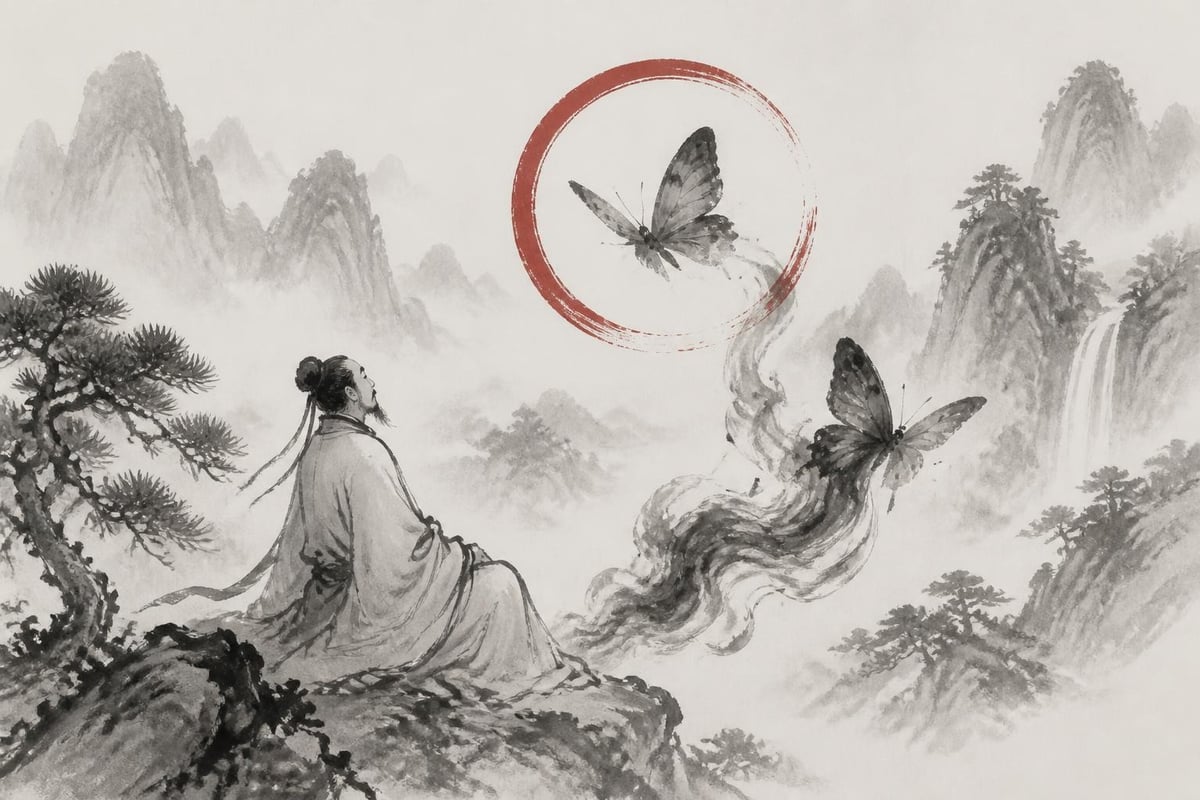
The butterfly dream stands apart from typical dream analysis or philosophical thought experiments. Zhuangzi isn't asking us to distinguish dream from reality in a binary way. Instead, he introduces the concept of transformation, or hua, suggesting that both states might be equally real manifestations of an underlying process.
The parable challenges several assumptions we typically hold:
| Common Assumption | Butterfly Dream Insight |
|---|---|
| Identity is fixed and stable | Identity may be fluid and transforming |
| Waking life is "more real" than dreams | Both states have their own reality |
| We can know our true nature with certainty | Certainty about identity may be illusory |
| Boundaries between self and other are clear | Boundaries may be permeable and shifting |
This teaching connects beautifully with the practices taught in our Taoist meditation course, where students learn to observe the shifting nature of thoughts, sensations, and identity without clinging to fixed concepts.
Philosophical Implications of the Butterfly Dream
The butterfly dream opens doorways into some of the deepest questions in Taoist philosophy. At its heart lies the concept of transformation, which appears throughout Zhuangzi's writings as a fundamental principle of existence.
Identity and the Nature of Self
When we examine the butterfly dream closely, we encounter questions about what we call "self." If Zhuangzi could so completely become a butterfly that he forgot his human identity, what does this suggest about the stability of selfhood? The parable invites us to consider that our sense of a fixed, unchanging self might be an idea we construct rather than a fundamental reality. Our Taoism and Buddhism article touches on how both traditions approach this same question of selfhood from slightly different angles.
In daily practice, this insight can be profoundly liberating. When we recognise that identity is more fluid than we typically assume, we become less attached to fixed ideas about who we are or must be. This flexibility allows for genuine growth and adaptation.
The butterfly dream suggests:
- Our identity may be more like a verb than a noun
- Consciousness can fully inhabit different forms
- The boundary between observer and observed isn't absolute
- Transformation happens continuously, whether we notice it or not
The Question of Reality
Zhuangzi doesn't answer his own question about whether he's a man dreaming of being a butterfly or vice versa. This refusal to resolve the paradox is intentional and instructive. The parable teaches us to become comfortable with uncertainty and to question our habitual insistence on definitive answers.
Modern practitioners of our Tai Chi and Qi Gong courses often discover this principle in their own bodies. During practice, the boundary between moving and being moved, between effort and effortlessness, becomes beautifully unclear. This embodied experience mirrors the butterfly dream's philosophical insight.
Transformation and Change in Taoist Practice
The concept of transformation that emerges from the butterfly dream isn't merely abstract philosophy. It has practical applications in how we approach change, challenge, and personal development.
Embracing Natural Transformation
Zhuangzi's writings consistently emphasise ziran, or naturalness. The butterfly dream illustrates this principle by showing transformation as something that simply happens, without force or resistance. The sage doesn't try to remain Zhuangzi or try to remain a butterfly; he experiences both states fully.
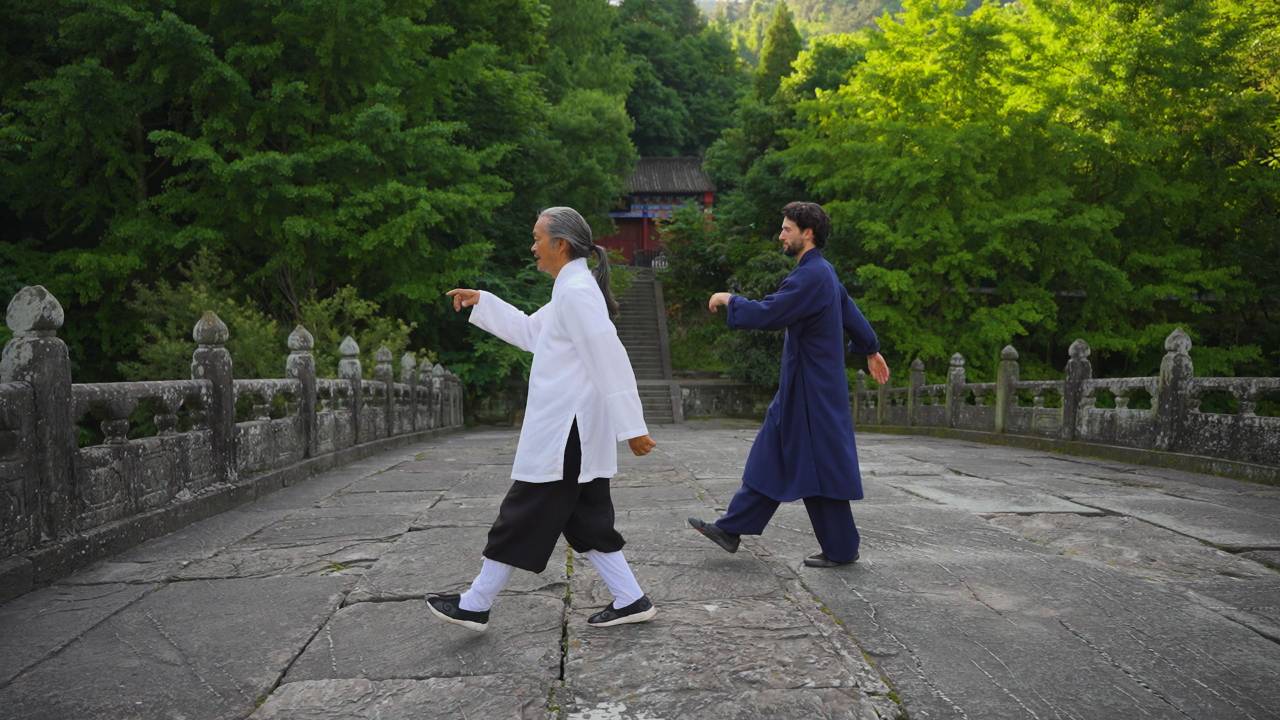
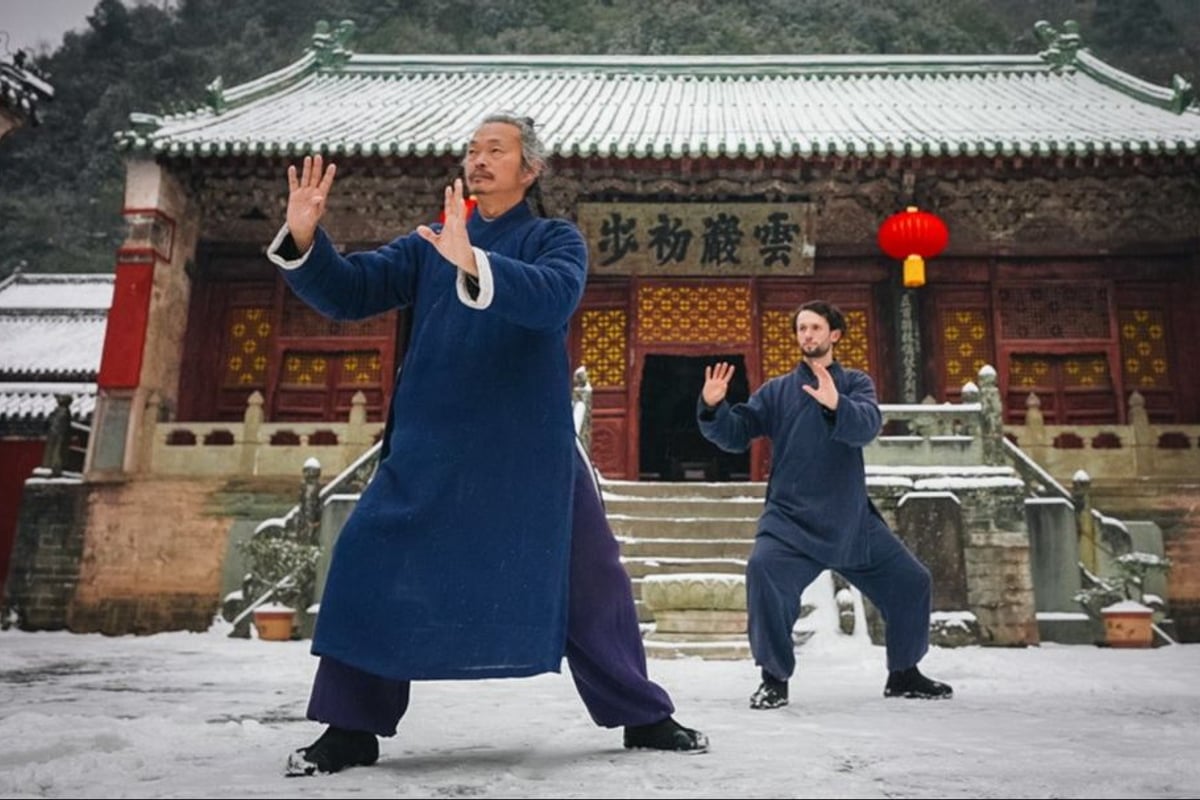
In Wudang traditions, this principle appears in the flowing movements that characterise authentic Tai Chi practice, which our Tai Chi Taoist article explores in more depth. Master Gu teaches students to allow movements to unfold naturally, without forcing or controlling. This approach cultivates the same quality of spontaneous transformation that the butterfly dream describes.
Practical applications include:
- Releasing rigid self-concepts that limit growth and adaptation
- Accepting change as a natural part of existence rather than a threat
- Cultivating flexibility in how we respond to circumstances
- Practising presence without attachment to particular outcomes
- Developing trust in natural processes of transformation
The Role of Dreaming and Consciousness
The butterfly dream also invites us to reconsider our relationship with different states of consciousness. Modern society tends to privilege waking consciousness as somehow more real or valuable than dreams, meditation states, or other altered states. Zhuangzi's parable challenges this hierarchy.
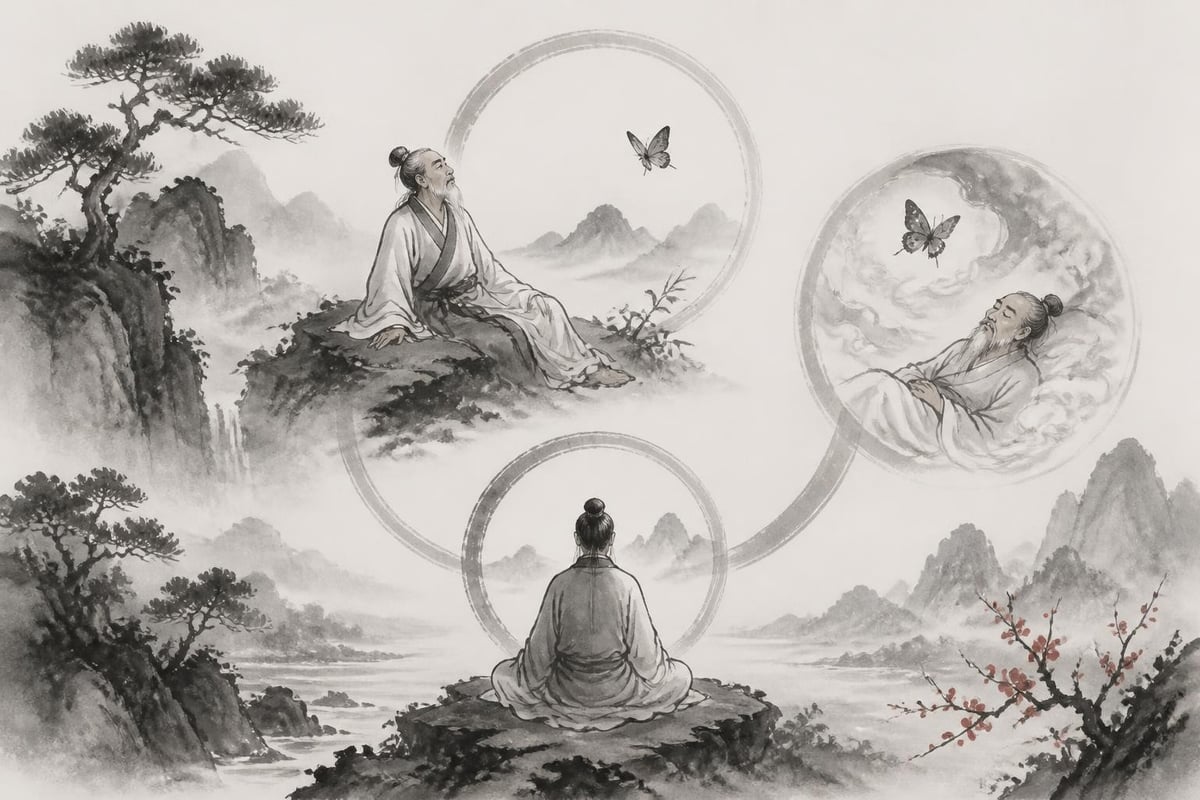
When we practise meditation or enter the flowing state during Tai Chi, we access different qualities of consciousness. These aren't "lesser" states but alternative ways of experiencing and knowing reality. The butterfly dream affirms the insights that can arise from these non-ordinary states.
Living with the Butterfly Dream's Wisdom
The real power of the butterfly dream emerges when we apply its insights to daily life. This ancient parable offers surprisingly practical guidance for navigating modern challenges.
Releasing Attachment to Fixed Identity
Many of our struggles arise from attachment to particular ideas about who we are. We suffer when reality doesn't match these self-concepts. The butterfly dream suggests a different approach: holding identity more lightly, allowing ourselves to transform as circumstances change.
This doesn't mean we lack integrity or consistency. Rather, it means we don't cling to outdated versions of ourselves or resist the natural evolution that life requires. Someone beginning our free Taoist course often discovers that their self-concept as "not flexible" or "not calm" begins to shift as they practise simple Tai Chi and Qi Gong movements. The butterfly dream affirms this kind of transformation.
Finding Freedom in Uncertainty
The butterfly dream's refusal to resolve its central paradox teaches us to become comfortable with not knowing. In a culture that prizes certainty and definitive answers, this can feel unsettling at first. Yet there's profound freedom in releasing the need to know everything for certain.
Benefits of embracing uncertainty:
- Reduced anxiety about the future
- Greater openness to new experiences
- Increased adaptability to change
- Less mental energy spent defending fixed positions
- More creativity and spontaneity
The Butterfly Dream in Contemporary Context
While the butterfly dream originated over two millennia ago, its relevance hasn't diminished. If anything, our modern context makes Zhuangzi's insights even more valuable.
Identity in a Digital Age
Today's world presents unprecedented challenges to stable identity. We maintain multiple online personas, shift between professional and personal roles, and encounter constant pressure to define and redefine ourselves. The butterfly dream offers a framework for navigating this complexity without losing our centre.
| Modern Challenge | Butterfly Dream Insight |
|---|---|
| Social media personas vs. authentic self | All versions may be real expressions |
| Career transitions and reinvention | Transformation is natural and continuous |
| Work-life balance | Fluid boundaries rather than rigid separation |
| Multiple roles and responsibilities | Capacity to fully inhabit different modes |
Transformation and Personal Growth
The self-help industry often promotes transformation as something we must force or manufacture through willpower and discipline. The butterfly dream suggests a different model: transformation as a natural process we can align with rather than control.
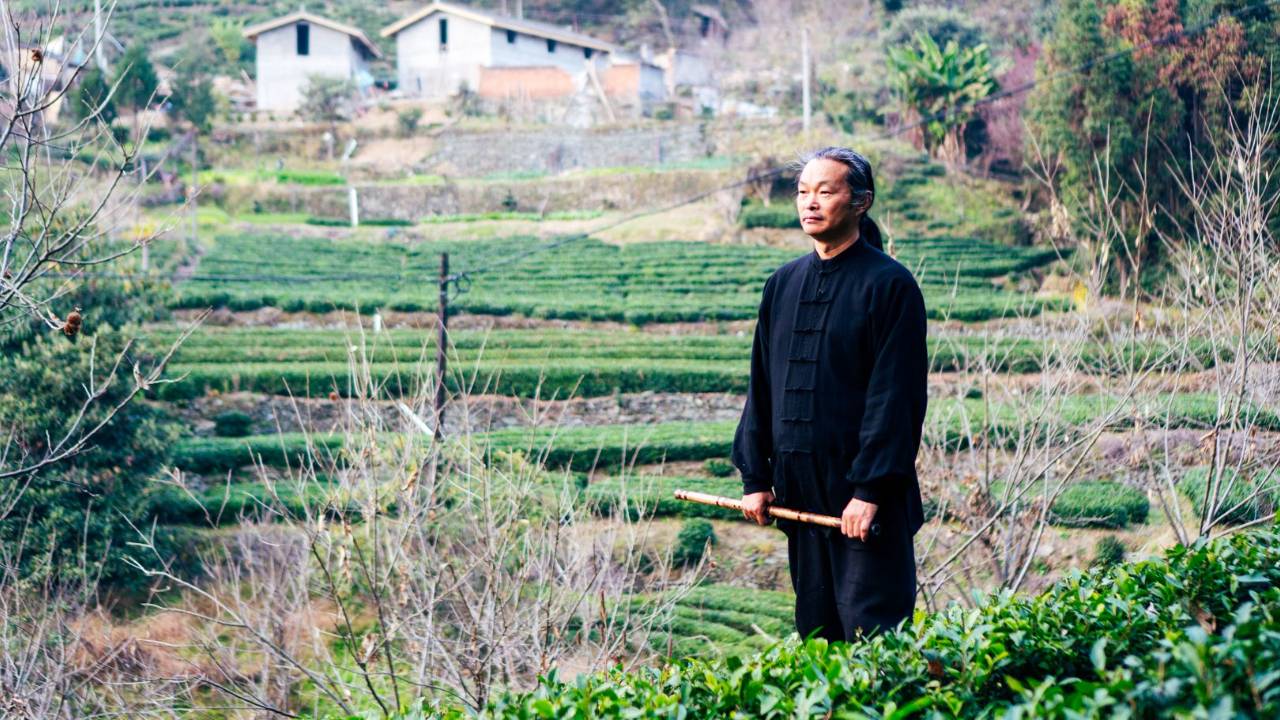
This perspective informs the teaching approach at Taoist Wellness Online, where Master Gu guides students to work with their natural rhythms and capacities rather than imposing external standards or forcing progress.
Deepening Your Understanding Through Practice
Reading about the butterfly dream provides intellectual understanding, but embodied practice brings its wisdom alive. The physical practices of Tai Chi, Qi Gong, and Taoist meditation offer direct experience of the principles Zhuangzi describes.
Movement as Transformation
In authentic Wudang Tai Chi, movements flow seamlessly into one another without sharp breaks or transitions. This mirrors the butterfly dream's teaching about the fluid nature of transformation. As you practise, you might notice moments where you're unsure whether you're moving or being moved, directing energy or receiving it.
These experiences aren't failures of technique but rather glimpses of the same insight Zhuangzi expressed through his parable. The boundary between self and movement becomes permeable, just as the boundary between Zhuangzi and the butterfly dissolved in the dream.
What practitioners often discover:
- Moments of complete absorption where self-consciousness disappears
- A sense of being both actor and observer simultaneously
- Physical sensations that challenge fixed body concepts
- Unexpected capabilities emerging naturally
Meditation and the Observer
Taoist meditation practices, particularly those focused on observing thoughts and sensations without attachment, directly cultivate the quality of awareness the butterfly dream describes. When you sit in meditation and watch thoughts arise and dissolve, you experience firsthand how fluid and transforming mental content can be.
The question "who is observing these thoughts?" echoes Zhuangzi's question about who is dreaming whom. This isn't a puzzle to solve through analysis but an inquiry that deepens awareness when held lightly.
Integration and Daily Application
The butterfly dream's wisdom becomes most valuable when integrated into everyday life. This doesn't require dramatic changes but rather subtle shifts in perspective and awareness.
Practical Daily Reminders
You can work with the butterfly dream's insights throughout your day:
- Morning transitions: Notice the shift from sleep to waking consciousness without privileging either state as more "real"
- Role changes: When moving between different contexts (parent to professional, friend to student), observe the transformation without resistance
- Challenging moments: Use difficulty as an opportunity to question fixed ideas about who you are or must be
- Evening reflection: Consider how the day's experiences might look from a butterfly's perspective
Building a Practice Foundation
While intellectual understanding of the butterfly dream has value, the deepest insights emerge through consistent practice. Many students find that beginning with foundational practices creates a container for philosophical teachings to come alive.
The combination of movement, breath, meditation, and philosophical study creates multiple entry points for understanding. What makes sense intellectually might first be felt in the body during Qi Gong practice, or recognised during meditation, or suddenly illuminated while studying our Taoist philosophy course.
The Ongoing Question
The butterfly dream doesn't offer closure or final answers. Instead, it opens an ongoing inquiry into the nature of identity, reality, and transformation. This inquiry isn't a problem to solve but a perspective to inhabit, a question to live with rather than answer definitively.
As you continue your own practice and study, you may find the butterfly dream revealing new layers of meaning. What seems like a simple parable about a confused dreamer gradually unfolds into a profound teaching about the nature of existence itself, relevant to everything from morning meditation to career transitions to how you hold your sense of self.
The wisdom of this ancient teaching continues to transform those who engage with it deeply, much as Zhuangzi himself was transformed by his mysterious dream all those centuries ago. Whether you're a man reading about a butterfly or a butterfly dreaming of reading, the practice remains the same: show up with presence, move with naturalness, and allow transformation to unfold in its own time.
The butterfly dream invites us to hold our identity more lightly and embrace transformation as a natural part of existence. These ancient insights come alive through practice, where movement, breath, and meditation offer direct experience of the fluid nature of self that Zhuangzi described. If you're ready to explore these teachings in depth and discover how Tai Chi, Qi Gong, and Taoist meditation can support your journey of transformation, Taoist Wellness Online offers authentic instruction with Master Gu, a 15th-generation Wudang master, along with a supportive community and comprehensive resources for students at every level.